POWER
SHARING
Day 1
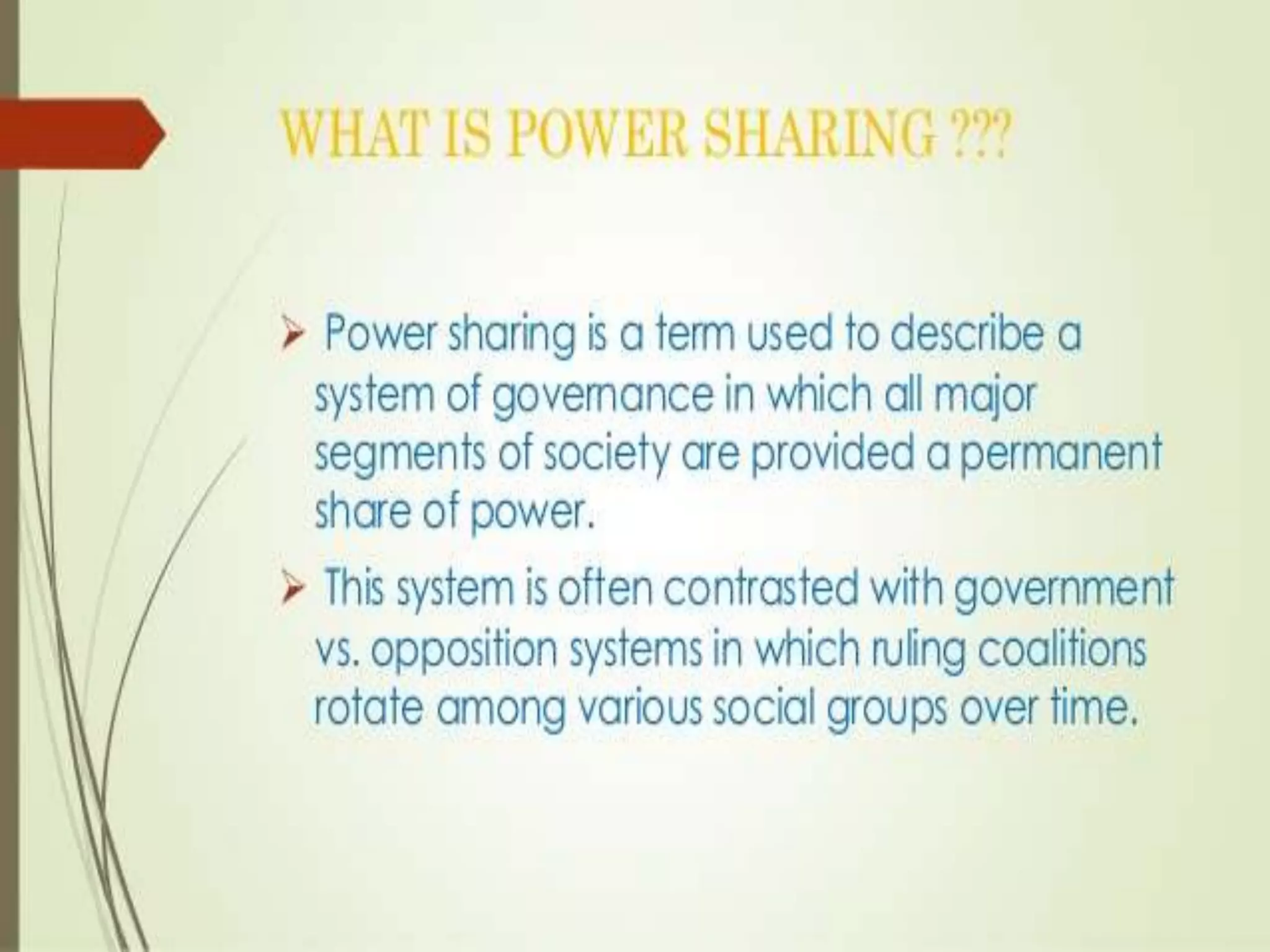
• What is power sharing
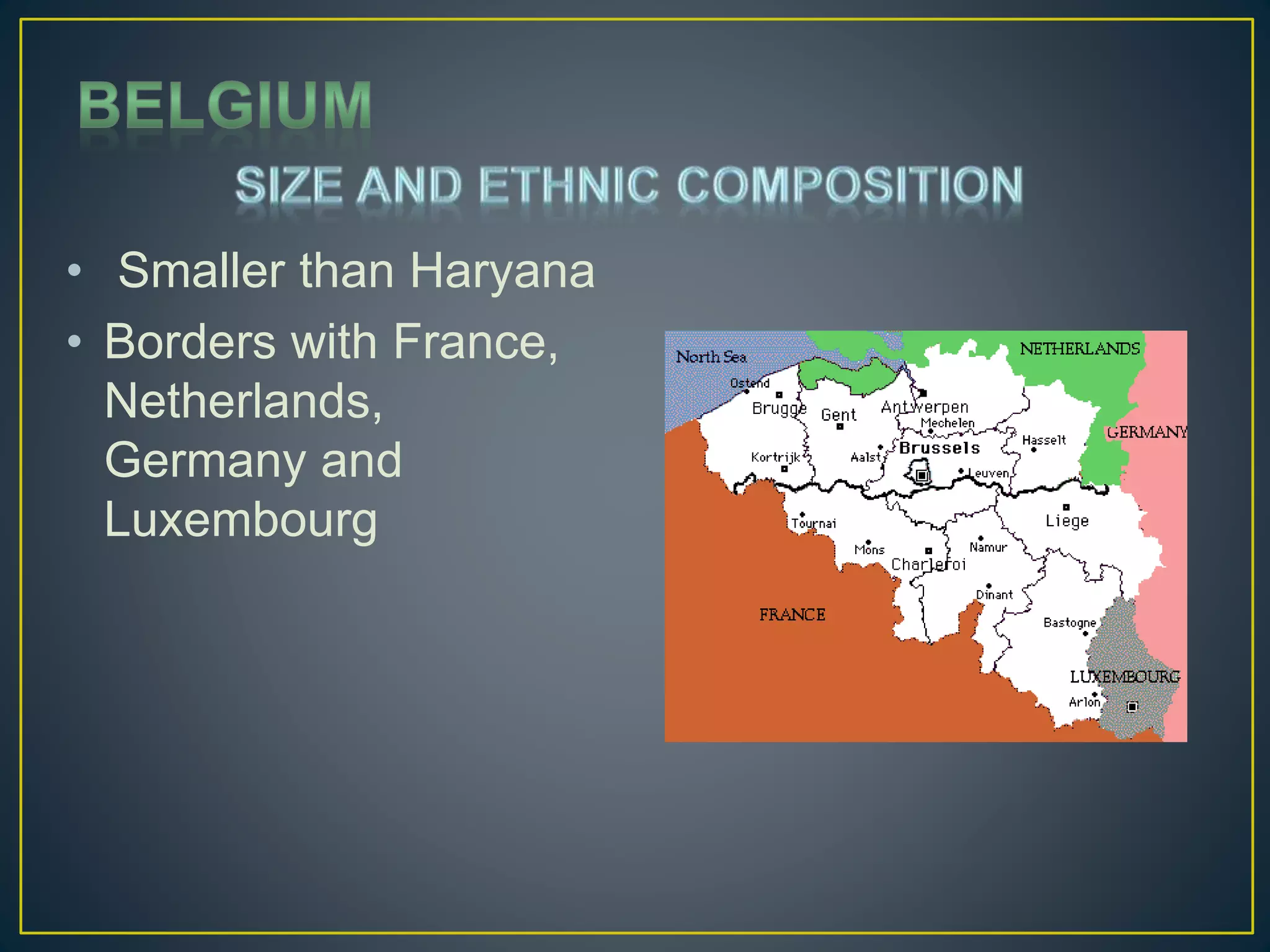
• Smaller than Haryana
• Borders with France,
Netherlands,
Germany and
Luxembourg
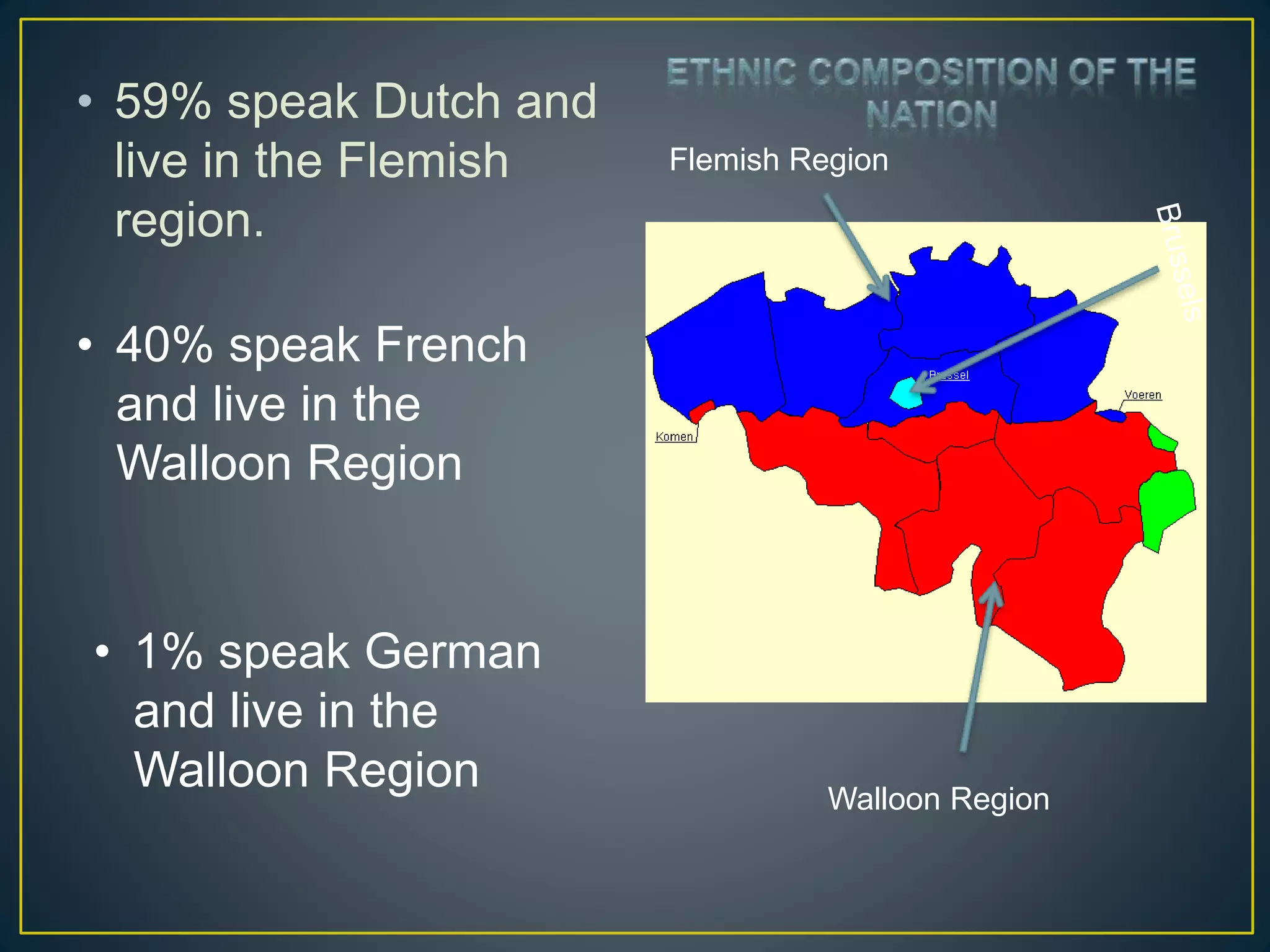
• 59% speak Dutch and
live in the Flemish
region.
Walloon Region
Flemish Region
• 40% speak French
and live in the
Walloon Region
• 1% speak German
and live in the
Walloon Region
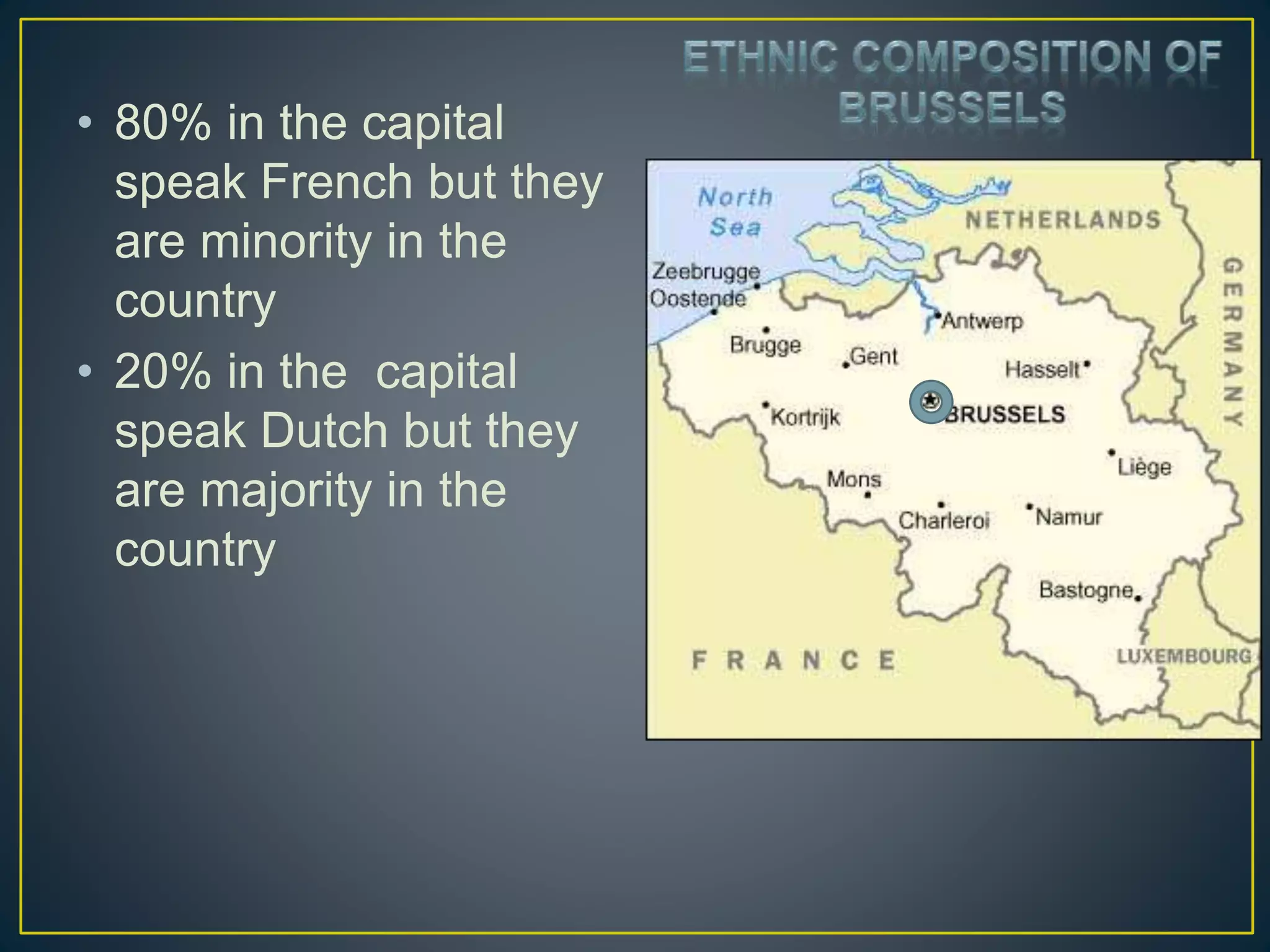
• 80% in the capital
speak French but they
are minority in the
country
• 20% in the capital
speak Dutch but they
are majority in the
country
• The minority French
were rich and
powerful
• The majority Dutch
got the benefit of
economic
development much
later.
• Between 1970 and 1993
the constitution was
amended four times to
accommodate social and
cultural diversities.
• This was done by sharing
power as follows.
There shall be equal
representation from both
communities in the central
council of ministers
The majority Dutch
accepted this
arrangement because
they were minority in the
nation
DAY 3
Some special laws require the support of majority from
both the communities
Many powers of the Central Government have been
transferred to State Governments and the State
Governments are not subordinate to the Central Govt.
There is third form of Govt. called ‘Community Govt.’
 It is elected by people belonging to one language community –
the Dutch, the French and the German speaking no matter
where they live.
 The community governments have power regarding cultural,
educational and language related issues.
Brussels has a separate Govt. with equal representation
from both the communities.
The majority French in Brussels accepted equal
representation in Brussels because the majority Dutch
accepted equal representation in eh central government.
Though complex, the
model has worked
well so far.
It has avoided civic
strife between the two
communities.
The European
Union chose to have
its parliament at
Brussels as Power
Sharing was practiced
DAY 2
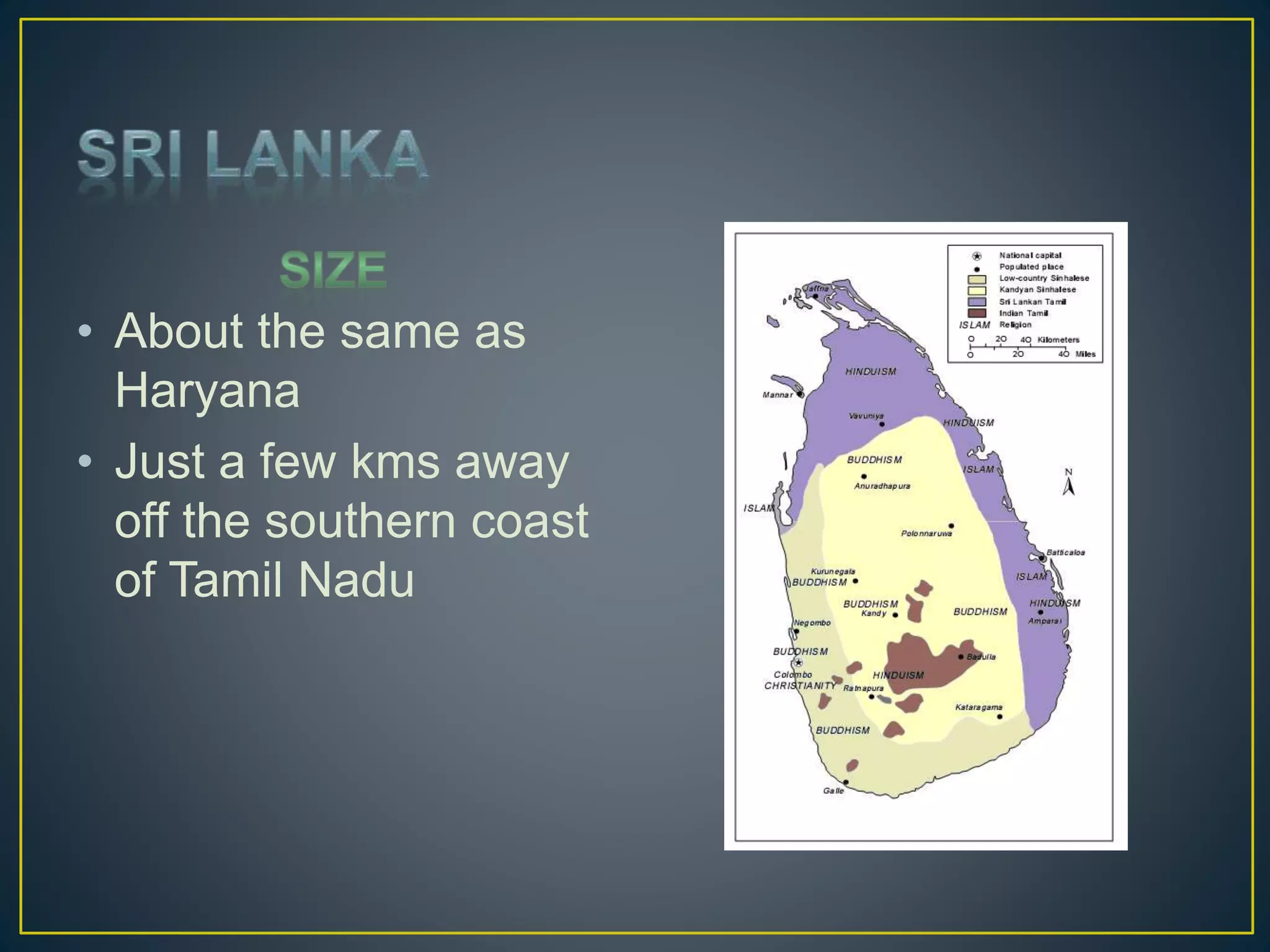
• About the same as
Haryana
• Just a few kms away
off the southern coast
of Tamil Nadu
• Sinhala Speakers:
74%. They are mostly
Buddhists
• Tamils Speakers:
18%. They are Hindus
and Muslims
13%
5%
Indian
Tamils
• They
migrated to
Sri Lanka as
Plantation
workers
during the
British Rule
Sri Lankan
Tamils
• Tamil
Natives
7% of the
Population
• Consists
Christians
who speak
both Sinhala
and Tamil
• After independence in
1948, Sri Lanka
adopted a series of
majoritarian
measures to establish
Sinhalese supremacy
over the Tamils
• In 1956, an Act was
passed to recognise
Sinhala as the only
official language
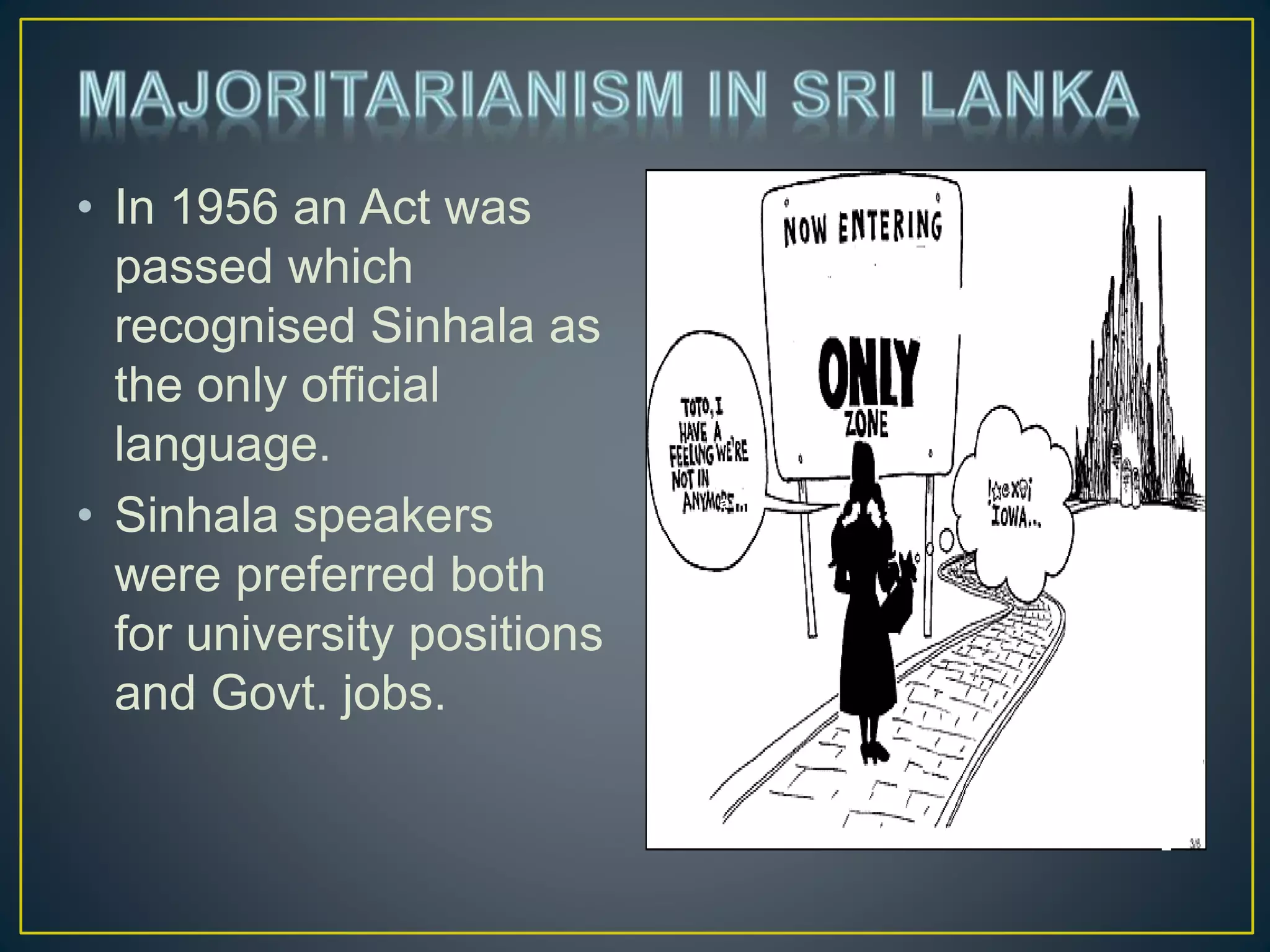
• In 1956 an Act was
passed which
recognised Sinhala as
the only official
language.
• Sinhala speakers
were preferred both
for university positions
and Govt. jobs.
Sinhala
Lank
a
DAY 4
• Constitution was
amended to protect
and strengthen
Sinhala Language.
• The Tamils felt
isolated
• They thought that
even the constitution
was against them.
• None of the Political
parties ever
considered their
needs.
• The Tamils formed
groups, organisations
and parties to fight for
rights
• Their demands for
recognition to their
language and
separate state with
autonomous status
were repeatedly
neglected.
• This made some
groups like the LTTE
to take violent actions.
DAY 5
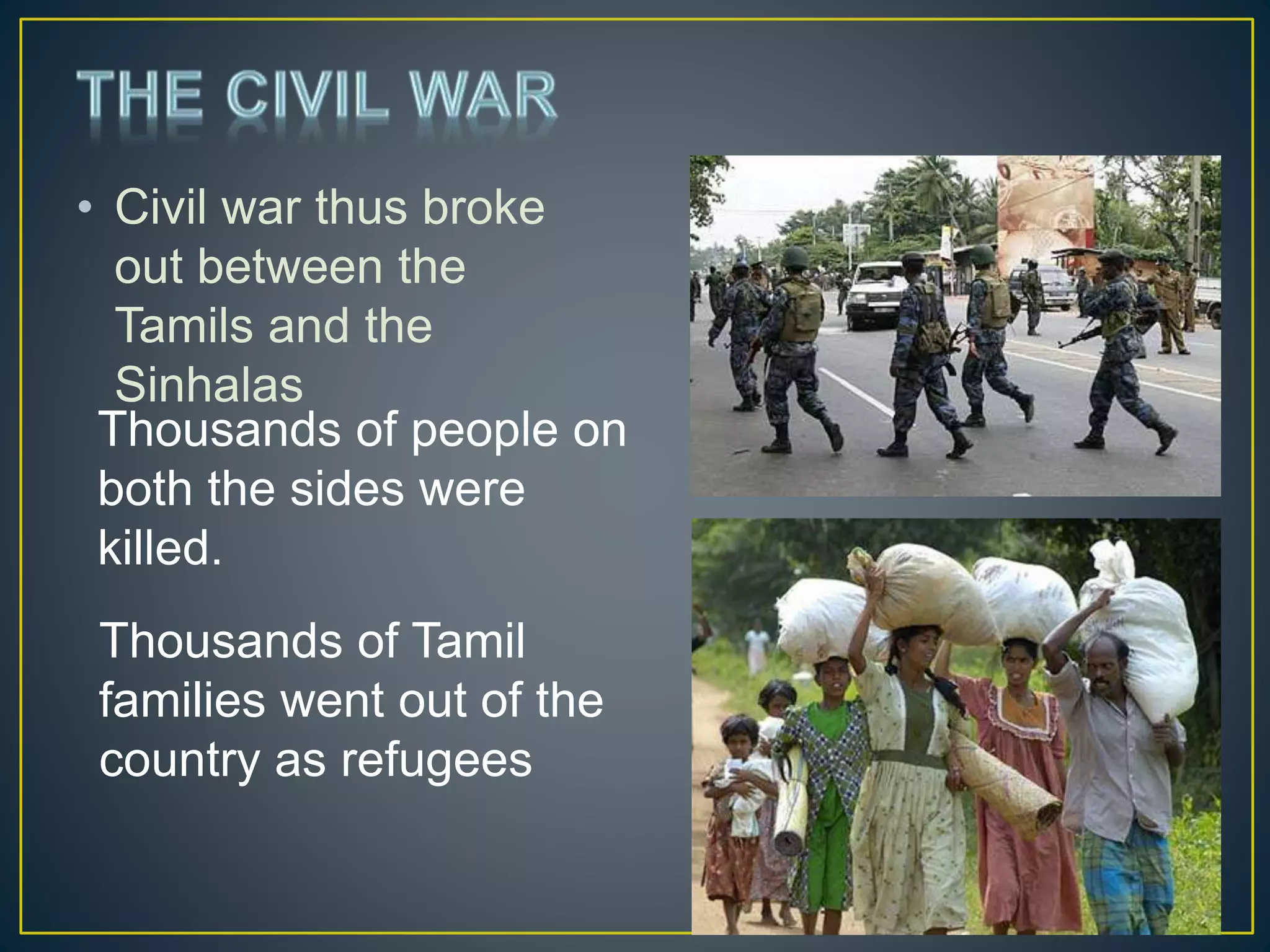
• Civil war thus broke
out between the
Tamils and the
Sinhalas
Thousands of people on
both the sides were
killed.
Thousands of Tamil
families went out of the
country as refugees
• Prudential Reasons
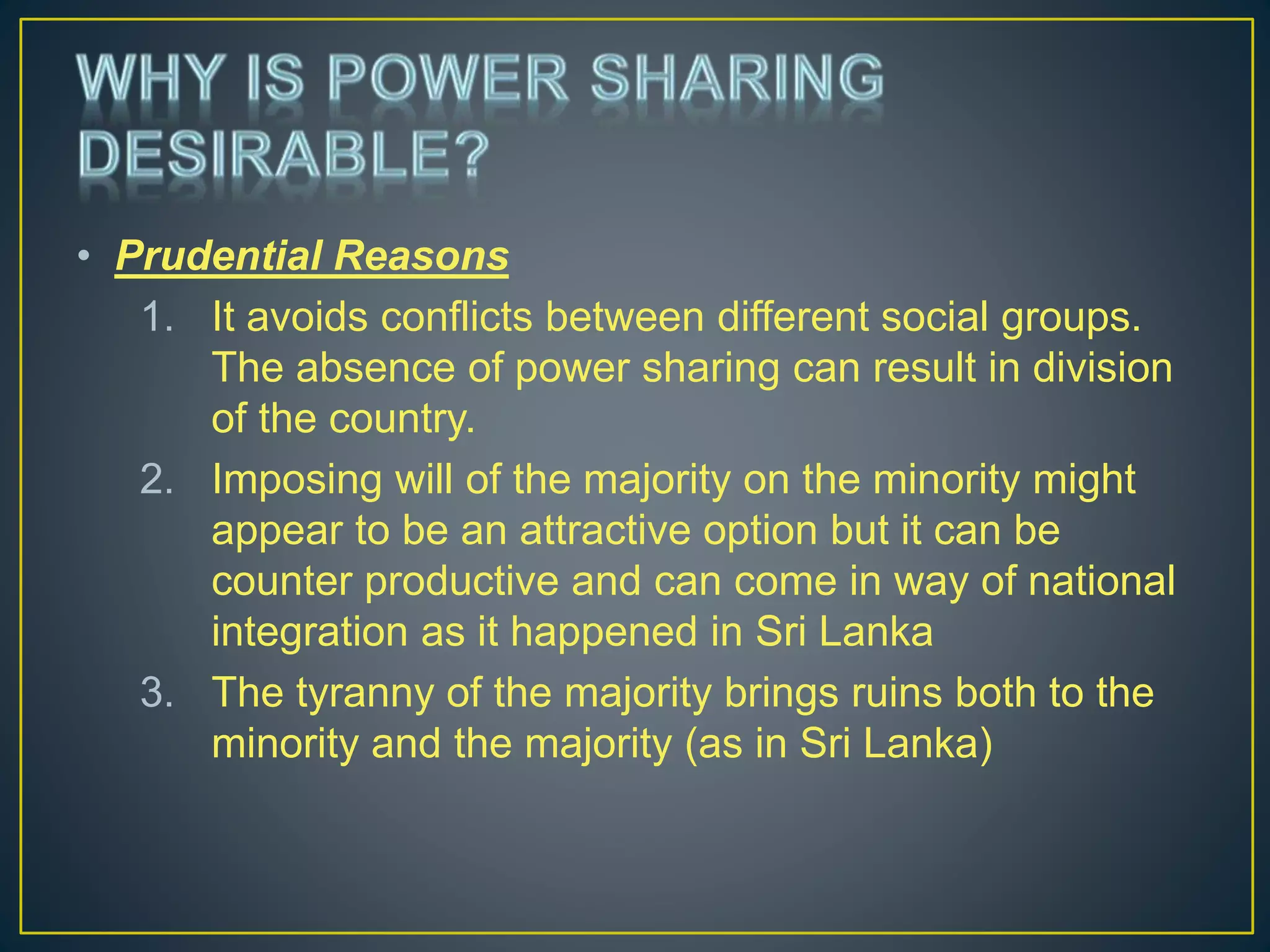
1. It avoids conflicts between different social groups.
The absence of power sharing can result in division
of the country.
2. Imposing will of the majority on the minority might
appear to be an attractive option but it can be
counter productive and can come in way of national
integration as it happened in Sri Lanka
3. The tyranny of the majority brings ruins both to the
minority and the majority (as in Sri Lanka)
DAY 5
• Moral Reasons
1. Power sharing is the very essence of democracy. In
an ideal democracy as many people as possible
should get a chance to enjoy power.
2. People are affected by all the policies of democratic
politics and they have to live with the effects. Hence
citizens need share in power.
3. A legitimate govt. is one where citizens, through
participation, acquire stake in power.
DAY 6
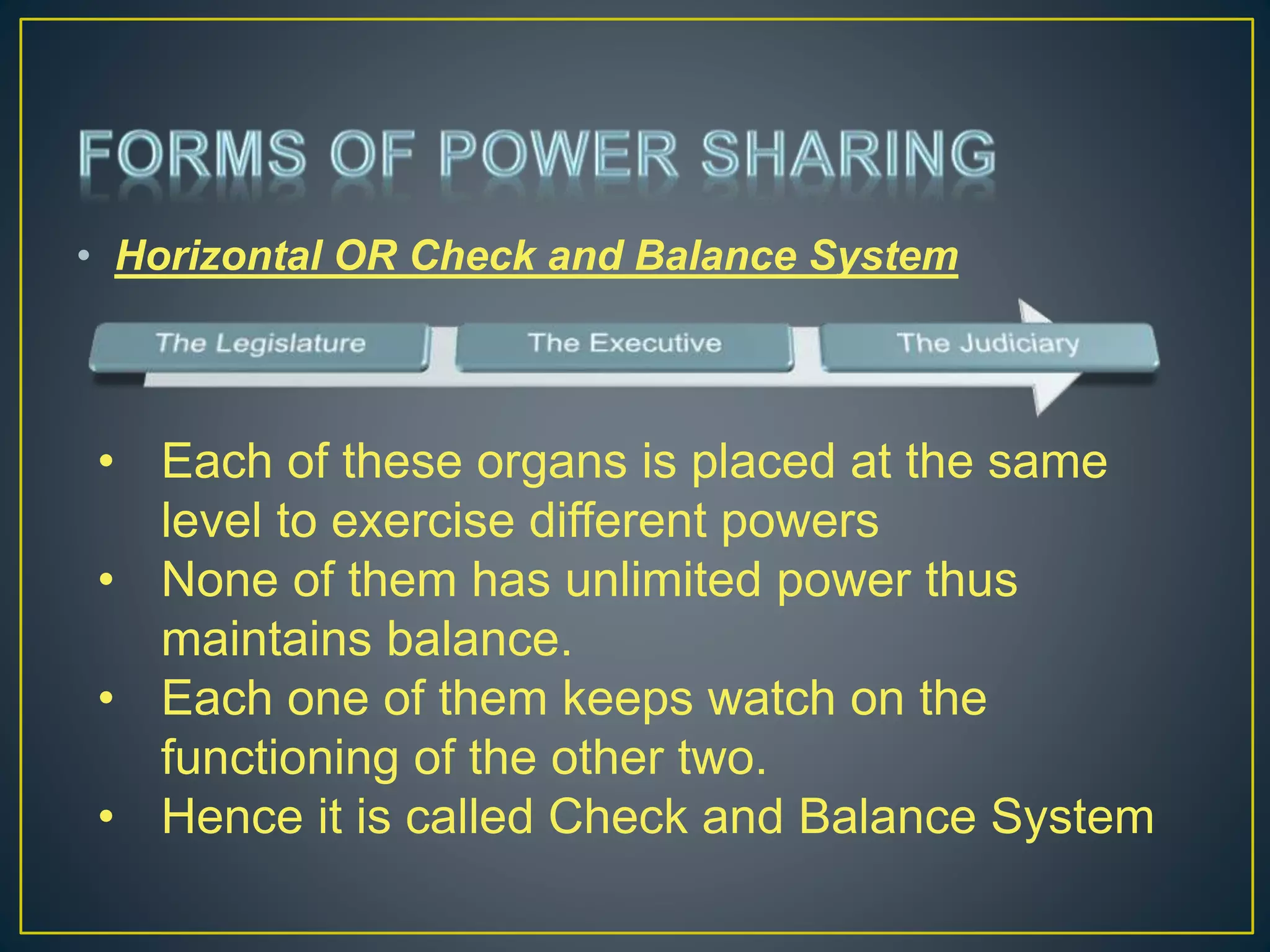
• Horizontal OR Check and Balance System
• Each of these organs is placed at the same
level to exercise different powers
• None of them has unlimited power thus
maintains balance.
• Each one of them keeps watch on the
functioning of the other two.
• Hence it is called Check and Balance System
• The Central Govt. is set up for the whole nation.
• The state/provincial govt. is set up for each
provinces/states.
• The central govt. transfers/shares some of the powers
to/with the state govt. (as in Belgium)
• In a big country like India, this type of two tier system is
not sufficient.
• So we have the third tier – the Local Self Govt.
• Both the Central and State govt. have transferred
power and resources to the Local bodies.
Central Govt.
State Govt.
Local Bodies
Vertical Power
Sharing
DAY 6
• Socially weaker sections also have to have share
in power.
• Community govt. in Belgium is one example for
this type of power sharing.
• In India, it is done by way of reservation.
• Constituencies and seats are reserved for women,
SCs and STs.
• Thus power is shared among different social
groups.
Power Sharing
among different
social groups
SCs
STs
Women
Power Sharing among
Political parties,
pressure groups and
movements
• No political party enjoys power for ever.
• It is for the people to decide who should be in
power.
• With the emergence of coalition govt. many parties
share power at the same time.
• Pressure groups and movements have share in
power by exerting pressure on the govt.
• They exert pressure by various means and get
policies framed in their favour.
Power sharing

Power sharing

  • 1.
  • 2.
  • 3.
    • What ispower sharing
  • 5.
    • Smaller thanHaryana • Borders with France, Netherlands, Germany and Luxembourg
  • 6.
    • 59% speakDutch and live in the Flemish region. Walloon Region Flemish Region • 40% speak French and live in the Walloon Region • 1% speak German and live in the Walloon Region
  • 7.
    • 80% inthe capital speak French but they are minority in the country • 20% in the capital speak Dutch but they are majority in the country
  • 8.
    • The minorityFrench were rich and powerful • The majority Dutch got the benefit of economic development much later.
  • 9.
    • Between 1970and 1993 the constitution was amended four times to accommodate social and cultural diversities. • This was done by sharing power as follows. There shall be equal representation from both communities in the central council of ministers The majority Dutch accepted this arrangement because they were minority in the nation
  • 10.
  • 11.
    Some special lawsrequire the support of majority from both the communities Many powers of the Central Government have been transferred to State Governments and the State Governments are not subordinate to the Central Govt. There is third form of Govt. called ‘Community Govt.’  It is elected by people belonging to one language community – the Dutch, the French and the German speaking no matter where they live.  The community governments have power regarding cultural, educational and language related issues.
  • 12.
    Brussels has aseparate Govt. with equal representation from both the communities. The majority French in Brussels accepted equal representation in Brussels because the majority Dutch accepted equal representation in eh central government.
  • 13.
    Though complex, the modelhas worked well so far. It has avoided civic strife between the two communities. The European Union chose to have its parliament at Brussels as Power Sharing was practiced
  • 14.
  • 15.
    • About thesame as Haryana • Just a few kms away off the southern coast of Tamil Nadu
  • 16.
    • Sinhala Speakers: 74%.They are mostly Buddhists • Tamils Speakers: 18%. They are Hindus and Muslims 13% 5%
  • 17.
    Indian Tamils • They migrated to SriLanka as Plantation workers during the British Rule Sri Lankan Tamils • Tamil Natives 7% of the Population • Consists Christians who speak both Sinhala and Tamil
  • 18.
    • After independencein 1948, Sri Lanka adopted a series of majoritarian measures to establish Sinhalese supremacy over the Tamils • In 1956, an Act was passed to recognise Sinhala as the only official language
  • 19.
    • In 1956an Act was passed which recognised Sinhala as the only official language. • Sinhala speakers were preferred both for university positions and Govt. jobs. Sinhala Lank a
  • 20.
  • 21.
    • Constitution was amendedto protect and strengthen Sinhala Language.
  • 22.
    • The Tamilsfelt isolated • They thought that even the constitution was against them. • None of the Political parties ever considered their needs. • The Tamils formed groups, organisations and parties to fight for rights
  • 23.
    • Their demandsfor recognition to their language and separate state with autonomous status were repeatedly neglected. • This made some groups like the LTTE to take violent actions.
  • 24.
  • 25.
    • Civil warthus broke out between the Tamils and the Sinhalas Thousands of people on both the sides were killed. Thousands of Tamil families went out of the country as refugees
  • 26.
    • Prudential Reasons 1.It avoids conflicts between different social groups. The absence of power sharing can result in division of the country. 2. Imposing will of the majority on the minority might appear to be an attractive option but it can be counter productive and can come in way of national integration as it happened in Sri Lanka 3. The tyranny of the majority brings ruins both to the minority and the majority (as in Sri Lanka)
  • 27.
  • 28.
    • Moral Reasons 1.Power sharing is the very essence of democracy. In an ideal democracy as many people as possible should get a chance to enjoy power. 2. People are affected by all the policies of democratic politics and they have to live with the effects. Hence citizens need share in power. 3. A legitimate govt. is one where citizens, through participation, acquire stake in power.
  • 29.
  • 30.
    • Horizontal ORCheck and Balance System • Each of these organs is placed at the same level to exercise different powers • None of them has unlimited power thus maintains balance. • Each one of them keeps watch on the functioning of the other two. • Hence it is called Check and Balance System
  • 31.
    • The CentralGovt. is set up for the whole nation. • The state/provincial govt. is set up for each provinces/states. • The central govt. transfers/shares some of the powers to/with the state govt. (as in Belgium) • In a big country like India, this type of two tier system is not sufficient. • So we have the third tier – the Local Self Govt. • Both the Central and State govt. have transferred power and resources to the Local bodies. Central Govt. State Govt. Local Bodies Vertical Power Sharing
  • 32.
  • 33.
    • Socially weakersections also have to have share in power. • Community govt. in Belgium is one example for this type of power sharing. • In India, it is done by way of reservation. • Constituencies and seats are reserved for women, SCs and STs. • Thus power is shared among different social groups. Power Sharing among different social groups SCs STs Women
  • 34.
    Power Sharing among Politicalparties, pressure groups and movements • No political party enjoys power for ever. • It is for the people to decide who should be in power. • With the emergence of coalition govt. many parties share power at the same time. • Pressure groups and movements have share in power by exerting pressure on the govt. • They exert pressure by various means and get policies framed in their favour.