NAZIMA MAZHAR HUSSAIN . K
HOD : Dept of Social Science
VELAMMAL BODHI CAMPUS
POSTED – 22/12/19
Introduction
• The slideshow throws light upon the
importance of Power Sharing. A comparative
explanation of Power Sharing in Belgium and
Sri Lanka is given. It is supplied with colourful
pictures of maps and the places of visit, of
both the countries..
• Happy Learning….
Contents
1. Belgium
• Positioning
• Area & population
• Ethnic composition(Language)
• Ethnic composition in Capital(Brussels)
2. Srilanka
• Positioning
• Population
• Ethnic composition(Language)
• Religion
3. Accomodation in Belgium
4. Majoritarianism in Sri Lanka:
5. Power sharing (two reasons make power
sharing desirable)
• Prudential
• Moral
6. Forms of Power sharing
• Social Movements
• Organs of government
• Pressure groups
• Political Parties
• Social Groups
• Government at different levels
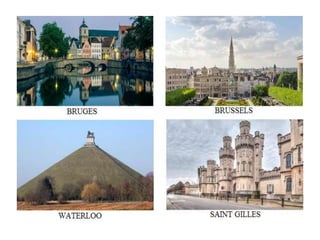
BELGIUM
Places of visit
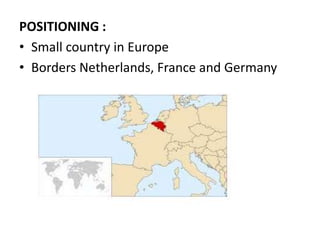
POSITIONING :
• Small country in Europe
• Borders Netherlands, France and Germany
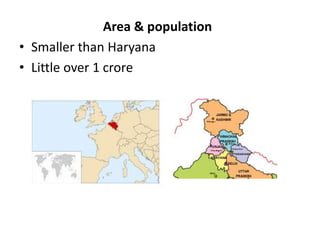
Area & population
• Smaller than Haryana
• Little over 1 crore
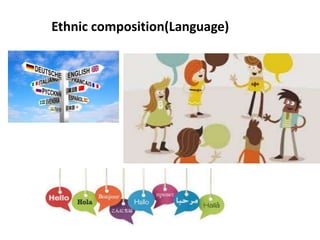
Ethnic composition(Language)
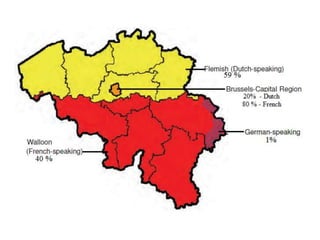
Ethnic composition(Language) :
• 59% - Dutch
• 40 % - French
• 1% - German
Ethnic composition in Capital(Brussels):
• 20% - Dutch
• 80 % - French
Accomodation in Belgium
•Constitution prescribes
that the number of Dutch
and French-speaking
ministers shall be equal in
the central government.
• Special laws to become Acts need
majority from each language group.
• State government are not made
subordinate to central government.
• - Many powers of the central
government have been given to
states government of the two of the
regions of the country.
• Brussels has separate government in
which both the communities have equal
representation.
• Third kind of government elected by
Dutch, French and German speakers. This
is community government.
Incharge of – Language, Cultural and
educational issues.
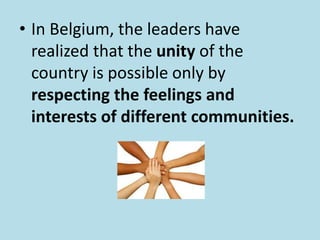
• In Belgium, the leaders have
realized that the unity of the
country is possible only by
respecting the feelings and
interests of different communities.
SRI LANKA
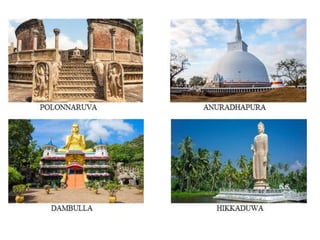
Places of visit
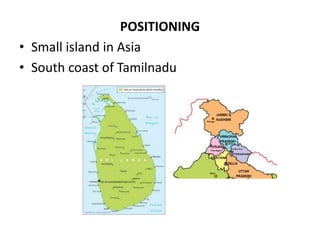
POSITIONING
• Small island in Asia
• South coast of Tamilnadu
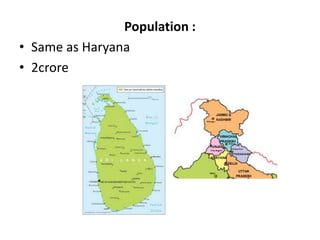
Population :
• Same as Haryana
• 2crore
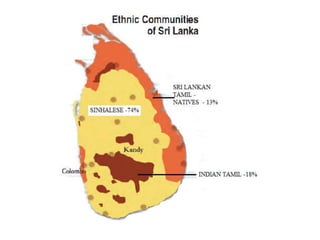
Ethnic composition(Language) :
• 74% - Sinhalese
• 18 % - Tamil (Indian tamils)
• 13% - Sri Lankan tamil (Natives)
Religion
• Most Sinhalese speakers are
Buddhist
• Most Tamil speakers are Hindus
or Muslims
Majoritarianism in Sri Lanka:
• Sri Lankan emerged as an
independent country in 1948.
• The leaders of the Sinhala
community sought to secure
dominance over the government
by virtue of their majority.
• In 1956, an Act was passed to
recognize Sinhala as the only official
language, thus disregarding Tamil.
• A new constitution stipulated that
the state shall protect and foster
Buddhism.
• As a result, the relations
between the Sinhala and Tamil
communities strained over
time.
• The Sri Lankan Tamils launched
parties and struggles.
• The distrust between the two
communities turned into widespread
conflict. It soon turned into CIVIL
WAR.
• The civil war caused a terrible
setback to the social, cultural and
economic life of the country.
• Power sharing (two reasons make power
sharing desirable)
Prudential
• Reduces possibility of conflicts between social
groups.
• Social conflicts lead to violence and instability.
• Prevents groups from over stepping their
rights to enhance their own power.
• Stress that power sharing will bring better
outcomes.
Moral
• The spirit of democracy calls for power
sharing.
• People have the right to be consulted on how
they are to be governed.
• Emphasis the very act of power sharing is
valuable.
• Forms of Power sharing
Social Movements
• Force the government to change laws.
• Dowry, Early marriage
Organs of government
• Legislative
• Executive
• Judiciary
Pressure groups
• They force the government to change their
policies.
• They are famous workers and industrialist.
Political Parties
• Lead the competition.
• Coalition is formed if any party fails to get
majority.
• Parties have to perform to remain in power.
Social Groups
• Religious
• Linguistic
Government at different levels
• Central ,State government
• Municipality , Panchayat , Local self
government(Federalism)
Presented by
Nazima Hussain K
Mcom.,Mphil.,B.Ed.,GNIIT.,PGDCA.,
MA(Eng).,MA(His).,BA(Hin)

Power sharing

  • 1.
    NAZIMA MAZHAR HUSSAIN. K HOD : Dept of Social Science VELAMMAL BODHI CAMPUS POSTED – 22/12/19
  • 2.
    Introduction • The slideshowthrows light upon the importance of Power Sharing. A comparative explanation of Power Sharing in Belgium and Sri Lanka is given. It is supplied with colourful pictures of maps and the places of visit, of both the countries.. • Happy Learning….
  • 3.
    Contents 1. Belgium • Positioning •Area & population • Ethnic composition(Language) • Ethnic composition in Capital(Brussels) 2. Srilanka • Positioning • Population • Ethnic composition(Language) • Religion
  • 4.
    3. Accomodation inBelgium 4. Majoritarianism in Sri Lanka: 5. Power sharing (two reasons make power sharing desirable) • Prudential • Moral
  • 5.
    6. Forms ofPower sharing • Social Movements • Organs of government • Pressure groups • Political Parties • Social Groups • Government at different levels
  • 6.
  • 7.
  • 9.
    POSITIONING : • Smallcountry in Europe • Borders Netherlands, France and Germany
  • 10.
    Area & population •Smaller than Haryana • Little over 1 crore
  • 11.
  • 13.
    Ethnic composition(Language) : •59% - Dutch • 40 % - French • 1% - German Ethnic composition in Capital(Brussels): • 20% - Dutch • 80 % - French
  • 14.
    Accomodation in Belgium •Constitutionprescribes that the number of Dutch and French-speaking ministers shall be equal in the central government.
  • 15.
    • Special lawsto become Acts need majority from each language group. • State government are not made subordinate to central government. • - Many powers of the central government have been given to states government of the two of the regions of the country.
  • 16.
    • Brussels hasseparate government in which both the communities have equal representation. • Third kind of government elected by Dutch, French and German speakers. This is community government. Incharge of – Language, Cultural and educational issues.
  • 17.
    • In Belgium,the leaders have realized that the unity of the country is possible only by respecting the feelings and interests of different communities.
  • 18.
  • 19.
  • 21.
    POSITIONING • Small islandin Asia • South coast of Tamilnadu
  • 22.
    Population : • Sameas Haryana • 2crore
  • 23.
    Ethnic composition(Language) : •74% - Sinhalese • 18 % - Tamil (Indian tamils) • 13% - Sri Lankan tamil (Natives)
  • 25.
    Religion • Most Sinhalesespeakers are Buddhist • Most Tamil speakers are Hindus or Muslims
  • 26.
    Majoritarianism in SriLanka: • Sri Lankan emerged as an independent country in 1948. • The leaders of the Sinhala community sought to secure dominance over the government by virtue of their majority.
  • 27.
    • In 1956,an Act was passed to recognize Sinhala as the only official language, thus disregarding Tamil. • A new constitution stipulated that the state shall protect and foster Buddhism.
  • 28.
    • As aresult, the relations between the Sinhala and Tamil communities strained over time. • The Sri Lankan Tamils launched parties and struggles.
  • 29.
    • The distrustbetween the two communities turned into widespread conflict. It soon turned into CIVIL WAR. • The civil war caused a terrible setback to the social, cultural and economic life of the country.
  • 30.
    • Power sharing(two reasons make power sharing desirable) Prudential • Reduces possibility of conflicts between social groups. • Social conflicts lead to violence and instability. • Prevents groups from over stepping their rights to enhance their own power. • Stress that power sharing will bring better outcomes.
  • 31.
    Moral • The spiritof democracy calls for power sharing. • People have the right to be consulted on how they are to be governed. • Emphasis the very act of power sharing is valuable.
  • 32.
    • Forms ofPower sharing Social Movements • Force the government to change laws. • Dowry, Early marriage Organs of government • Legislative • Executive • Judiciary
  • 33.
    Pressure groups • Theyforce the government to change their policies. • They are famous workers and industrialist. Political Parties • Lead the competition. • Coalition is formed if any party fails to get majority. • Parties have to perform to remain in power.
  • 34.
    Social Groups • Religious •Linguistic Government at different levels • Central ,State government • Municipality , Panchayat , Local self government(Federalism)
  • 35.
    Presented by Nazima HussainK Mcom.,Mphil.,B.Ed.,GNIIT.,PGDCA., MA(Eng).,MA(His).,BA(Hin)