ORGANIZATIONAL BEHAVIOR S T E P H E N  P.  R O B B I N S W W W . P R E N H A L L . C O M / R O B B I N S T  E  N  T  H  E  D  I  T  I  O  N © 2003 Prentice Hall Inc. All rights reserved. PowerPoint Presentation by Charlie Cook
AFTER STUDYING THIS CHAPTER, YOU SHOULD BE ABLE TO: Contrast leadership and power. Define the four bases of power. Clarify what creates dependency in power relationships. List seven power tactics and their contingencies. Explain how sexual harassment is about the abuse of power. Describe the importance of a political perspective. L E A R N I N G  O B J E C T I V E S
AFTER STUDYING THIS CHAPTER, YOU SHOULD BE ABLE TO: List the individual and organizational factors that stimulate political behaviors. Identify seven techniques for managing the impression one makes on others. Explain how defensive behaviors can protect an individual’s self-interest. List the three questions that can help determine if a political action is ethical. L E A R N I N G  O B J E C T I V E S (cont’d)
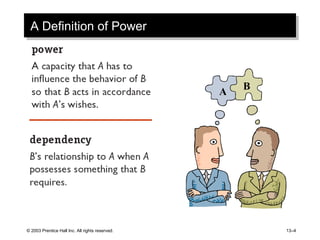
A Definition of Power A B
Contrasting Leadership and Power Leadership Focuses on goal achievement. Requires goal compatibility with followers. Focuses influence downward. Research Focus Leadership styles and relationships with followers. Power Used as a means for achieving goals. Requires follower dependency. Used to gain lateral and upward influence. Research Focus Power tactics for gaining compliance.
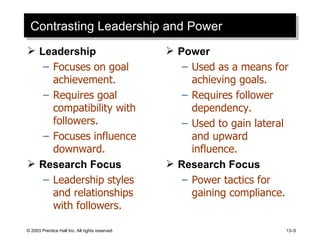
Bases of Power
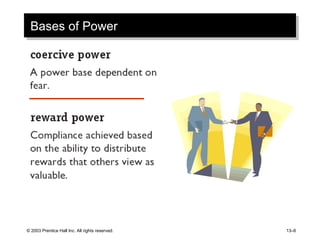
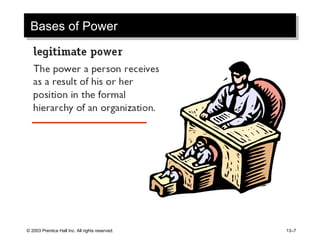
Bases of Power
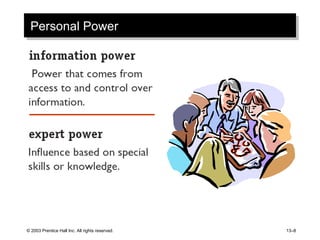
Personal Power
Personal Power
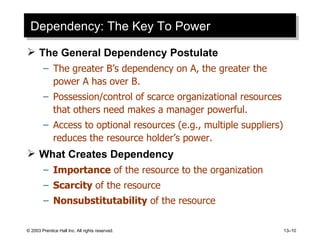
Dependency: The Key To Power The General Dependency Postulate The greater B’s dependency on A, the greater the power A has over B. Possession/control of scarce organizational resources that others need makes a manager powerful. Access to optional resources (e.g., multiple suppliers) reduces the resource holder’s power. What Creates Dependency Importance  of the resource to the organization Scarcity  of the resource Nonsubstitutability  of the resource
Power Tactics Tactical Dimensions : Reason Friendliness Coalition Bargaining Assertiveness Higher authority Sanctions
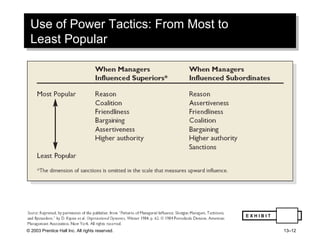
Use of Power Tactics: From Most to  Least Popular E X H I B I T 13-2
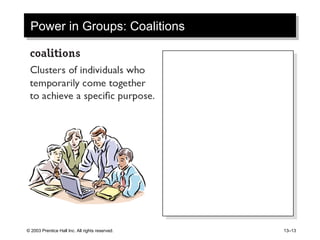
Power in Groups: Coalitions Seek to maximize their size to attain influence. Seek a broad and diverse constituency for support of their objectives. Occur more frequently in organizations with high task and resource interdependencies. Occur more frequently if tasks are standardized and routine.
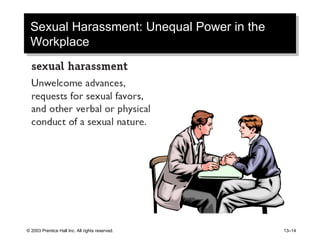
Sexual Harassment: Unequal Power in the Workplace
Politics: Power in Action
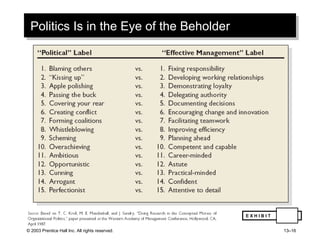
Politics Is in the Eye of the Beholder E X H I B I T 13-3
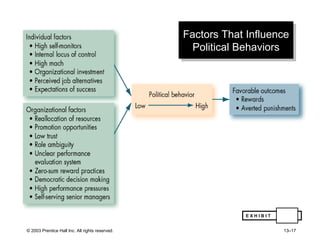
Factors That Influence Political Behaviors E X H I B I T 13-4
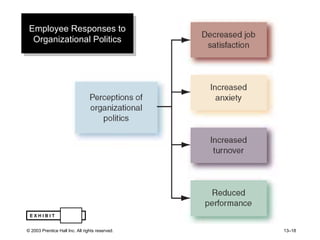
Employee Responses to Organizational Politics E X H I B I T 13-5
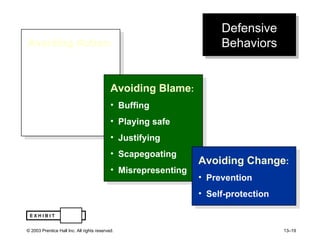
Defensive Behaviors Avoiding Action : Overconforming Buck passing Playing dumb Stretching Stalling Avoiding Blame : Buffing Playing safe Justifying Scapegoating Misrepresenting Avoiding Change : Prevention Self-protection E X H I B I T 13-6
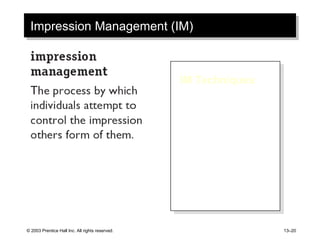
Impression Management (IM) IM Techniques : Conformity Excuses Apologies Self-Promotion Flattery Favors Association
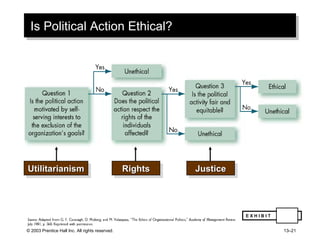
Is Political Action Ethical? E X H I B I T 13-8 Utilitarianism Rights Justice

Ch13 Power & Politics

  • 1.
    ORGANIZATIONAL BEHAVIOR ST E P H E N P. R O B B I N S W W W . P R E N H A L L . C O M / R O B B I N S T E N T H E D I T I O N © 2003 Prentice Hall Inc. All rights reserved. PowerPoint Presentation by Charlie Cook
  • 2.
    AFTER STUDYING THISCHAPTER, YOU SHOULD BE ABLE TO: Contrast leadership and power. Define the four bases of power. Clarify what creates dependency in power relationships. List seven power tactics and their contingencies. Explain how sexual harassment is about the abuse of power. Describe the importance of a political perspective. L E A R N I N G O B J E C T I V E S
  • 3.
    AFTER STUDYING THISCHAPTER, YOU SHOULD BE ABLE TO: List the individual and organizational factors that stimulate political behaviors. Identify seven techniques for managing the impression one makes on others. Explain how defensive behaviors can protect an individual’s self-interest. List the three questions that can help determine if a political action is ethical. L E A R N I N G O B J E C T I V E S (cont’d)
  • 4.
    A Definition ofPower A B
  • 5.
    Contrasting Leadership andPower Leadership Focuses on goal achievement. Requires goal compatibility with followers. Focuses influence downward. Research Focus Leadership styles and relationships with followers. Power Used as a means for achieving goals. Requires follower dependency. Used to gain lateral and upward influence. Research Focus Power tactics for gaining compliance.
  • 6.
  • 7.
  • 8.
  • 9.
  • 10.
    Dependency: The KeyTo Power The General Dependency Postulate The greater B’s dependency on A, the greater the power A has over B. Possession/control of scarce organizational resources that others need makes a manager powerful. Access to optional resources (e.g., multiple suppliers) reduces the resource holder’s power. What Creates Dependency Importance of the resource to the organization Scarcity of the resource Nonsubstitutability of the resource
  • 11.
    Power Tactics TacticalDimensions : Reason Friendliness Coalition Bargaining Assertiveness Higher authority Sanctions
  • 12.
    Use of PowerTactics: From Most to Least Popular E X H I B I T 13-2
  • 13.
    Power in Groups:Coalitions Seek to maximize their size to attain influence. Seek a broad and diverse constituency for support of their objectives. Occur more frequently in organizations with high task and resource interdependencies. Occur more frequently if tasks are standardized and routine.
  • 14.
    Sexual Harassment: UnequalPower in the Workplace
  • 15.
  • 16.
    Politics Is inthe Eye of the Beholder E X H I B I T 13-3
  • 17.
    Factors That InfluencePolitical Behaviors E X H I B I T 13-4
  • 18.
    Employee Responses toOrganizational Politics E X H I B I T 13-5
  • 19.
    Defensive Behaviors AvoidingAction : Overconforming Buck passing Playing dumb Stretching Stalling Avoiding Blame : Buffing Playing safe Justifying Scapegoating Misrepresenting Avoiding Change : Prevention Self-protection E X H I B I T 13-6
  • 20.
    Impression Management (IM)IM Techniques : Conformity Excuses Apologies Self-Promotion Flattery Favors Association
  • 21.
    Is Political ActionEthical? E X H I B I T 13-8 Utilitarianism Rights Justice