Power and Politics
Presented By
Fatima Zahoor
Iqra Ameen
Ammara Farooq
Zain ul Abideen
Muhammad Ghufran
Samad A. Pirzada
Fahad Butt
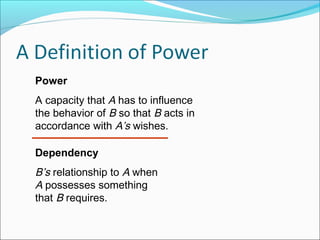
Power
A capacity that A has to influence
the behavior of B so that B acts in
accordance with A’s wishes.
Dependency

B’s relationship to A when
A possesses something
that B requires.
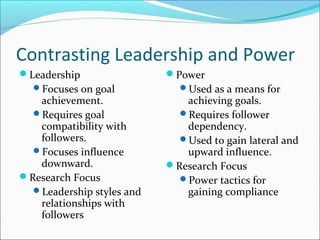
Contrasting Leadership and Power
Leadership
Focuses on goal

achievement.
Requires goal
compatibility with
followers.
Focuses influence
downward.
Research Focus
Leadership styles and
relationships with
followers

Power
Used as a means for

achieving goals.
Requires follower
dependency.
Used to gain lateral and
upward influence.
Research Focus
Power tactics for
gaining compliance
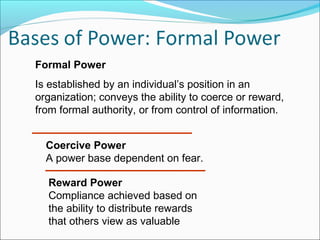
Formal Power
Is established by an individual’s position in an
organization; conveys the ability to coerce or reward,
from formal authority, or from control of information.
Coercive Power
A power base dependent on fear.
Reward Power
Compliance achieved based on
the ability to distribute rewards
that others view as valuable
Legitimate Power
The power a person receives as a
result of his or her position in the formal
hierarchy of an organization.
Expert Power
Influence based on special
skills or knowledge.
Referent Power
Influence based on possession
by an individual of desirable
resources or personal traits.
Dependency: The Key To Power
The General Dependency Postulate
 The greater B’s dependency on A, the greater the power A
has over B.
 Possession/control of scarce organizational resources that
others need makes a manager powerful.
 Access to optional resources (e.g., multiple suppliers)
reduces the resource holder’s power.
What Creates Dependency
 Importance of the resource to the organization
 Scarcity of the resource
 Nonsubstitutability of the resource
Influence Tactics: :
Influence Tactics
• • Legitimacy
Legitimacy

Power Tactics
Ways in which
individuals translate
power bases into
specific actions.

• • Rational persuasion
Rational persuasion
• • Inspirational appeals
Inspirational appeals
• • Consultation
Consultation
• • Exchange
Exchange
• • Personal appeals
Personal appeals
• • Ingratiation
Ingratiation
• • Pressure
Pressure
• • Coalitions
Coalitions
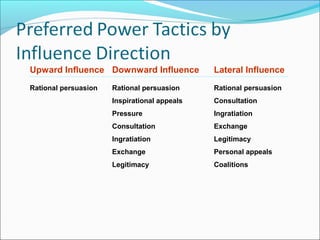
Upward Influence Downward Influence

Lateral Influence

Rational persuasion

Rational persuasion

Rational persuasion

Inspirational appeals

Consultation

Pressure

Ingratiation

Consultation

Exchange

Ingratiation

Legitimacy

Exchange

Personal appeals

Legitimacy

Coalitions
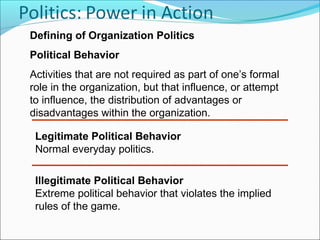
Defining of Organization Politics
Political Behavior
Activities that are not required as part of one’s formal
role in the organization, but that influence, or attempt
to influence, the distribution of advantages or
disadvantages within the organization.
Legitimate Political Behavior
Normal everyday politics.
Illegitimate Political Behavior
Extreme political behavior that violates the implied
rules of the game.
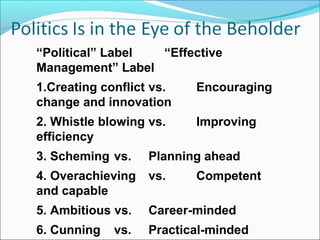
“Political” Label
“Effective
Management” Label
1.Creating conflict vs.
change and innovation

Encouraging

2. Whistle blowing vs.
efficiency

Improving

3. Scheming vs.

Planning ahead

4. Overachieving
and capable

vs.

5. Ambitious vs.

Career-minded

6. Cunning

Practical-minded

vs.

Competent
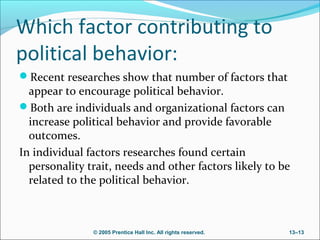
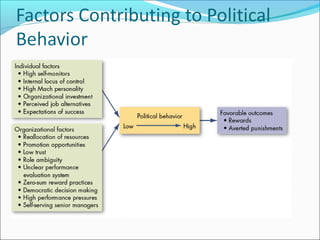
Which factor contributing to
political behavior:
Recent researches show that number of factors that

appear to encourage political behavior.
Both are individuals and organizational factors can
increase political behavior and provide favorable
outcomes.
In individual factors researches found certain
personality trait, needs and other factors likely to be
related to the political behavior.

© 2005 Prentice Hall Inc. All rights reserved.

13–13
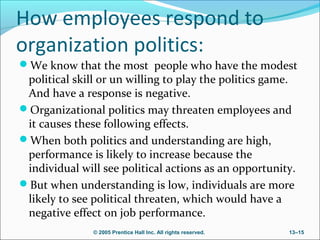
How employees respond to
organization politics:
We know that the most people who have the modest

political skill or un willing to play the politics game.
And have a response is negative.
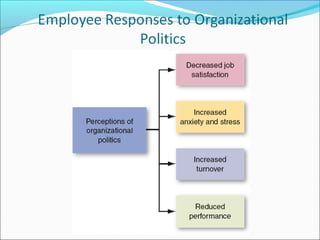
Organizational politics may threaten employees and
it causes these following effects.
When both politics and understanding are high,
performance is likely to increase because the
individual will see political actions as an opportunity.
But when understanding is low, individuals are more
likely to see political threaten, which would have a
negative effect on job performance.
© 2005 Prentice Hall Inc. All rights reserved.

13–15
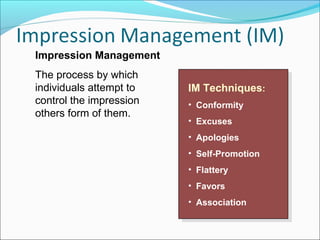
Impression Management
The process by which
individuals attempt to
control the impression
others form of them.

IM Techniques: :
IM Techniques
• • Conformity
Conformity
• • Excuses
Excuses
• • Apologies
Apologies
• • Self-Promotion
Self-Promotion
• • Flattery
Flattery
• • Favors
Favors
• • Association
Association
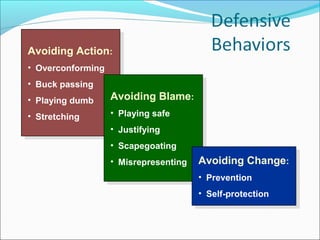
Avoiding Action: :
Avoiding Action
• • Overconforming
Overconforming
• • Buck passing
Buck passing
• • Playing dumb
Playing dumb
• • Stretching
Stretching

Avoiding Blame: :
Avoiding Blame
• • Playing safe
Playing safe
• • Justifying
Justifying
• • Scapegoating
Scapegoating
• • Misrepresenting
Misrepresenting

Avoiding Change: :
Avoiding Change
• • Prevention
Prevention
• • Self-protection
Self-protection
A major theme of this chapter is that power and
political behavior are natural process in any group or
organization given that you need to know how power
is acquired and exercised if you are to fully understand
organizational behavior although you may heard the
phrase POWER CORRUPTS AND ABSOLUTE POWER
CORRUPTS ASLOUTELY Power is not always bad as
one author has noted that medicine can kill if taken in
the wrong amount. Moreover learning how power
works in organization you will be better able to use
your knowledge to become a more effective manager
Power & Politics

Power & Politics

  • 2.
    Power and Politics PresentedBy Fatima Zahoor Iqra Ameen Ammara Farooq Zain ul Abideen Muhammad Ghufran Samad A. Pirzada Fahad Butt
  • 3.
    Power A capacity thatA has to influence the behavior of B so that B acts in accordance with A’s wishes. Dependency B’s relationship to A when A possesses something that B requires.
  • 4.
    Contrasting Leadership andPower Leadership Focuses on goal achievement. Requires goal compatibility with followers. Focuses influence downward. Research Focus Leadership styles and relationships with followers Power Used as a means for achieving goals. Requires follower dependency. Used to gain lateral and upward influence. Research Focus Power tactics for gaining compliance
  • 5.
    Formal Power Is establishedby an individual’s position in an organization; conveys the ability to coerce or reward, from formal authority, or from control of information. Coercive Power A power base dependent on fear. Reward Power Compliance achieved based on the ability to distribute rewards that others view as valuable
  • 6.
    Legitimate Power The powera person receives as a result of his or her position in the formal hierarchy of an organization.
  • 7.
    Expert Power Influence basedon special skills or knowledge. Referent Power Influence based on possession by an individual of desirable resources or personal traits.
  • 8.
    Dependency: The KeyTo Power The General Dependency Postulate  The greater B’s dependency on A, the greater the power A has over B.  Possession/control of scarce organizational resources that others need makes a manager powerful.  Access to optional resources (e.g., multiple suppliers) reduces the resource holder’s power. What Creates Dependency  Importance of the resource to the organization  Scarcity of the resource  Nonsubstitutability of the resource
  • 9.
    Influence Tactics: : InfluenceTactics • • Legitimacy Legitimacy Power Tactics Ways in which individuals translate power bases into specific actions. • • Rational persuasion Rational persuasion • • Inspirational appeals Inspirational appeals • • Consultation Consultation • • Exchange Exchange • • Personal appeals Personal appeals • • Ingratiation Ingratiation • • Pressure Pressure • • Coalitions Coalitions
  • 10.
    Upward Influence DownwardInfluence Lateral Influence Rational persuasion Rational persuasion Rational persuasion Inspirational appeals Consultation Pressure Ingratiation Consultation Exchange Ingratiation Legitimacy Exchange Personal appeals Legitimacy Coalitions
  • 11.
    Defining of OrganizationPolitics Political Behavior Activities that are not required as part of one’s formal role in the organization, but that influence, or attempt to influence, the distribution of advantages or disadvantages within the organization. Legitimate Political Behavior Normal everyday politics. Illegitimate Political Behavior Extreme political behavior that violates the implied rules of the game.
  • 12.
    “Political” Label “Effective Management” Label 1.Creatingconflict vs. change and innovation Encouraging 2. Whistle blowing vs. efficiency Improving 3. Scheming vs. Planning ahead 4. Overachieving and capable vs. 5. Ambitious vs. Career-minded 6. Cunning Practical-minded vs. Competent
  • 13.
    Which factor contributingto political behavior: Recent researches show that number of factors that appear to encourage political behavior. Both are individuals and organizational factors can increase political behavior and provide favorable outcomes. In individual factors researches found certain personality trait, needs and other factors likely to be related to the political behavior. © 2005 Prentice Hall Inc. All rights reserved. 13–13
  • 15.
    How employees respondto organization politics: We know that the most people who have the modest political skill or un willing to play the politics game. And have a response is negative. Organizational politics may threaten employees and it causes these following effects. When both politics and understanding are high, performance is likely to increase because the individual will see political actions as an opportunity. But when understanding is low, individuals are more likely to see political threaten, which would have a negative effect on job performance. © 2005 Prentice Hall Inc. All rights reserved. 13–15
  • 17.
    Impression Management The processby which individuals attempt to control the impression others form of them. IM Techniques: : IM Techniques • • Conformity Conformity • • Excuses Excuses • • Apologies Apologies • • Self-Promotion Self-Promotion • • Flattery Flattery • • Favors Favors • • Association Association
  • 18.
    Avoiding Action: : AvoidingAction • • Overconforming Overconforming • • Buck passing Buck passing • • Playing dumb Playing dumb • • Stretching Stretching Avoiding Blame: : Avoiding Blame • • Playing safe Playing safe • • Justifying Justifying • • Scapegoating Scapegoating • • Misrepresenting Misrepresenting Avoiding Change: : Avoiding Change • • Prevention Prevention • • Self-protection Self-protection
  • 19.
    A major themeof this chapter is that power and political behavior are natural process in any group or organization given that you need to know how power is acquired and exercised if you are to fully understand organizational behavior although you may heard the phrase POWER CORRUPTS AND ABSOLUTE POWER CORRUPTS ASLOUTELY Power is not always bad as one author has noted that medicine can kill if taken in the wrong amount. Moreover learning how power works in organization you will be better able to use your knowledge to become a more effective manager