POSTPARTUM
PSYCHIATRIC
DISORDERS
DR PARUL PRASAD
MBBS, MD, FGMH, MIPS
ASSISTANT PROFESSOR (PSYCHIATRY)
CIMS&H, LUCKNOW
Adapted from: Wisner KL, Sit DKY, McShea MC, et al. (2013). Onset Timing, Thoughts of Self-harm, and Diagnoses in Postpartum
Women With Screen-Positive Depression Findings. JAMA Psychiatry. 70(5):490–498.
ONSET OF MENTAL HEALTH SYMPTOMS
33%
27%
40% Prenatal
Prior to Pregnancy
Postpartum
THE POSTPARTUM PERIOD
During the postpartum period, about 85% of women experience some
type of mood disturbance.
Postpartum period is a risky period for psychiatric diseases.
Women experience 22 times more psychotic or mania episodes in
postpartum period than in any other periods of their lives
For most the symptoms are mild and short-lived; however, 10 to 15%
of women develop more significant symptoms of depression or
anxiety.
PSYCHOLOGICAL DISTURBANCES DURING
PUERPERIUM
Postpartum Blues
Postpartum
Depression
Puerperal
psychosis
INCIDENCE OF PSYCHIATRIC ILLNESS
DURING PUERPERIUM
85
10
0.1
0
10
20
30
40
50
60
70
80
90
Category 1 Category 2 Category 3
Postpartum Blues Postpartum Depression Postpartum Psychosis
POSTPARTUM
“BLUES”
Low mood and mild depressive symptoms that are transient and self-
limited
These symptoms typically develop within 2-3 days of childbirth, peak
over the next few days, and resolve by themselves within two weeks
of their onset.
About 50 to 85% of women experience postpartum blues during the
first few weeks after delivery.
Tearfulness
Decreased sleep
Labile mood
Irritability
Anxiety
Exhaustion
EPIDEMIOLOGY
Postpartum blues are extremely common and are estimated to occur in
about 50% or more of women
 Within the first few weeks after delivery.
 Postpartum major depression is approximately 4 to 11 times more
common among women who have postpartum blues
ETIOPATHOGENESIS
Hormonal changes have long been suggested as one of the primary
causative factors in developing postpartum mood changes.
Typically, there is a drastic decrease in estradiol, progesterone, and
prolactin in the time following delivery.
Various studies have also proposed that elevated monoamine oxidase
levels or decreased serotoninergic activity in the immediate
postpartum period are significant risk factors that could predispose a
woman to the development of postpartum blues
RISK
FACTORS
H/O menstrual
cycle related
mood changes
H/O major
depression or
dysthymia
Mood changes
associated
with
pregnancy
A larger
number of
lifetime
pregnancies
Family H/O
post-partum
depression
TREATMENT
By its diagnostic criteria, postpartum blues are transient and self-
limited.
Therefore, it resolves on its own and requires no treatment other than
validation, education, reassurance, and psychosocial support
 They should be carefully evaluated to see if the diagnostic criteria for
postpartum depression are met.
Patients should be carefully screened for suicidal ideation, paranoia,
or homicidal ideation towards the infant.
If insomnia persists, cognitive therapy and/or pharmacotherapy can be
recommended.
PROGNOSIS
Postpartum blues involve mood changes that are typically mild,
transient, and self-limited.
However, a diagnosis of postpartum blues can predispose an
individual to postpartum depression or postpartum anxiety disorders.
The risk of postpartum depression in an individual with “baby blues”
significantly increases in those who had mood or anxiety symptoms
during pregnancy
POSTPARTUM DEPRESSION
PPD typically emerges over the first 2-3 postpartum months but may
occur at any point after delivery.
Postpartum depression is clinically indistinguishable from depression
occurring at other times during a woman’s life.
Persistent
sadness
Feelings of guilt
Hopelessness,
helplessness &
wortlessness
Inability to
concentrate
Thoughts of
harming the
baby
Suicidal
thoughts
Sleep/appetite
changes
Loss of pleasure
in activities
Anger
Significant anxiety symptoms may also occur.
Generalized anxiety is common, but some women also develop panic
attacks or hypochondriasis.
Postpartum obsessive-compulsive disorder has also been reported,
where women report disturbing and intrusive thoughts of harming
their infant.
EPIDEMIOLOGY
Postpartum depression (PPD) is the most common medical
complication of childbearing
PPD occurs in 10 to 15% of new mothers
One of every 7 to 10 pregnant women and 1 of every 5 to 8
postpartum women develop a depressive disorder
No race or socioeconomic group is spared
Adapted from: Ayoub, Khubaib. (2015). prevalence of postpartum depression among Palestinian Women.
ETIOPATHOGENESIS
The postpartum period is characterized by a rapid shift in the
hormonal environment.
Within the first 48 hours after delivery, estrogen and progesterone
concentrations fall dramatically.
While it appears that there is no consistent correlation between serum
levels of estrogen, progesterone, cortisol, or thyroid hormones and the
occurrence of postpartum mood disturbance, a subgroup of women are
particularly sensitive to the hormonal changes that take place after
delivery.
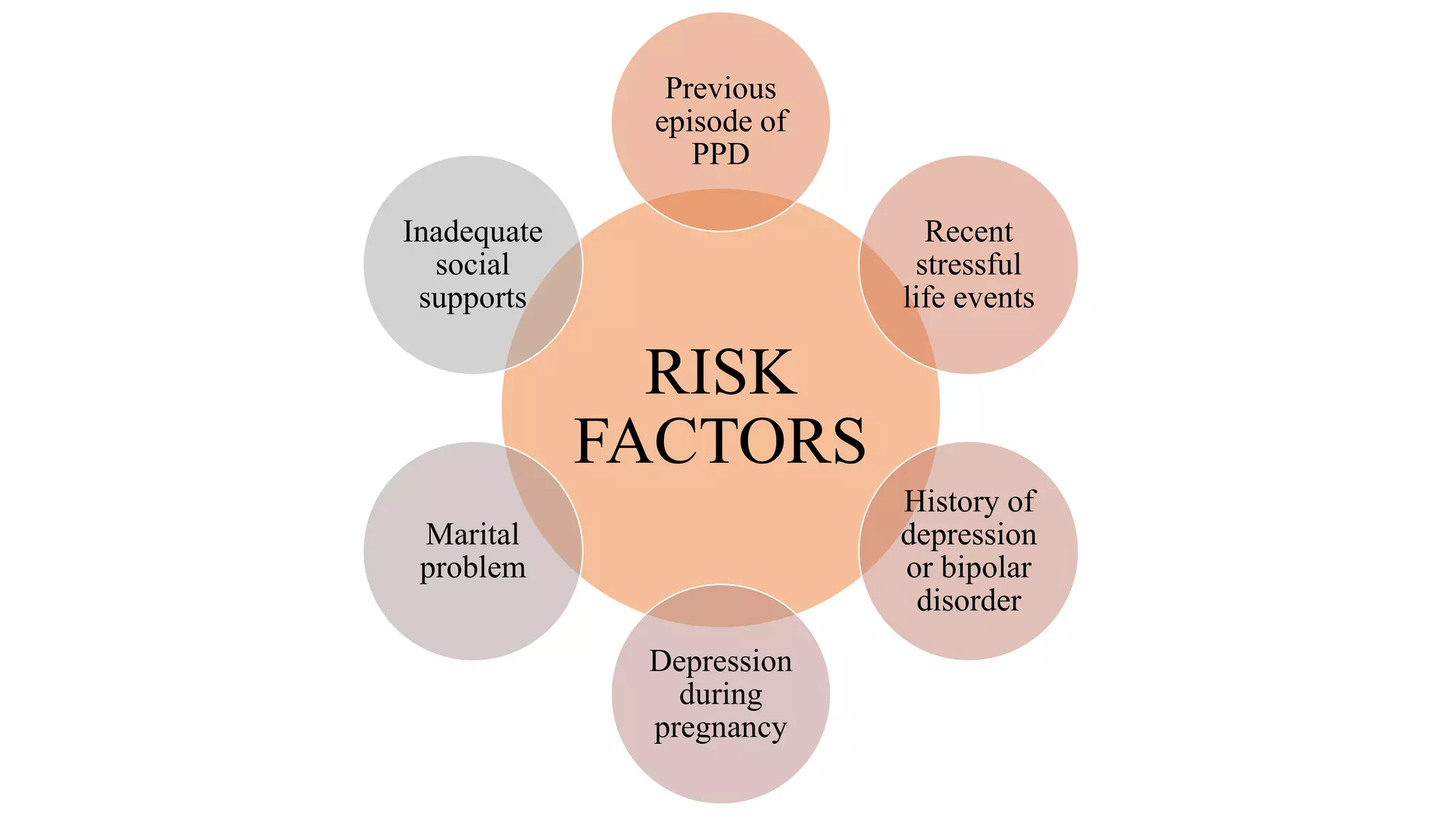
RISK
FACTORS
Previous
episode of
PPD
Recent
stressful
life events
History of
depression
or bipolar
disorder
Depression
during
pregnancy
Marital
problem
Inadequate
social
supports
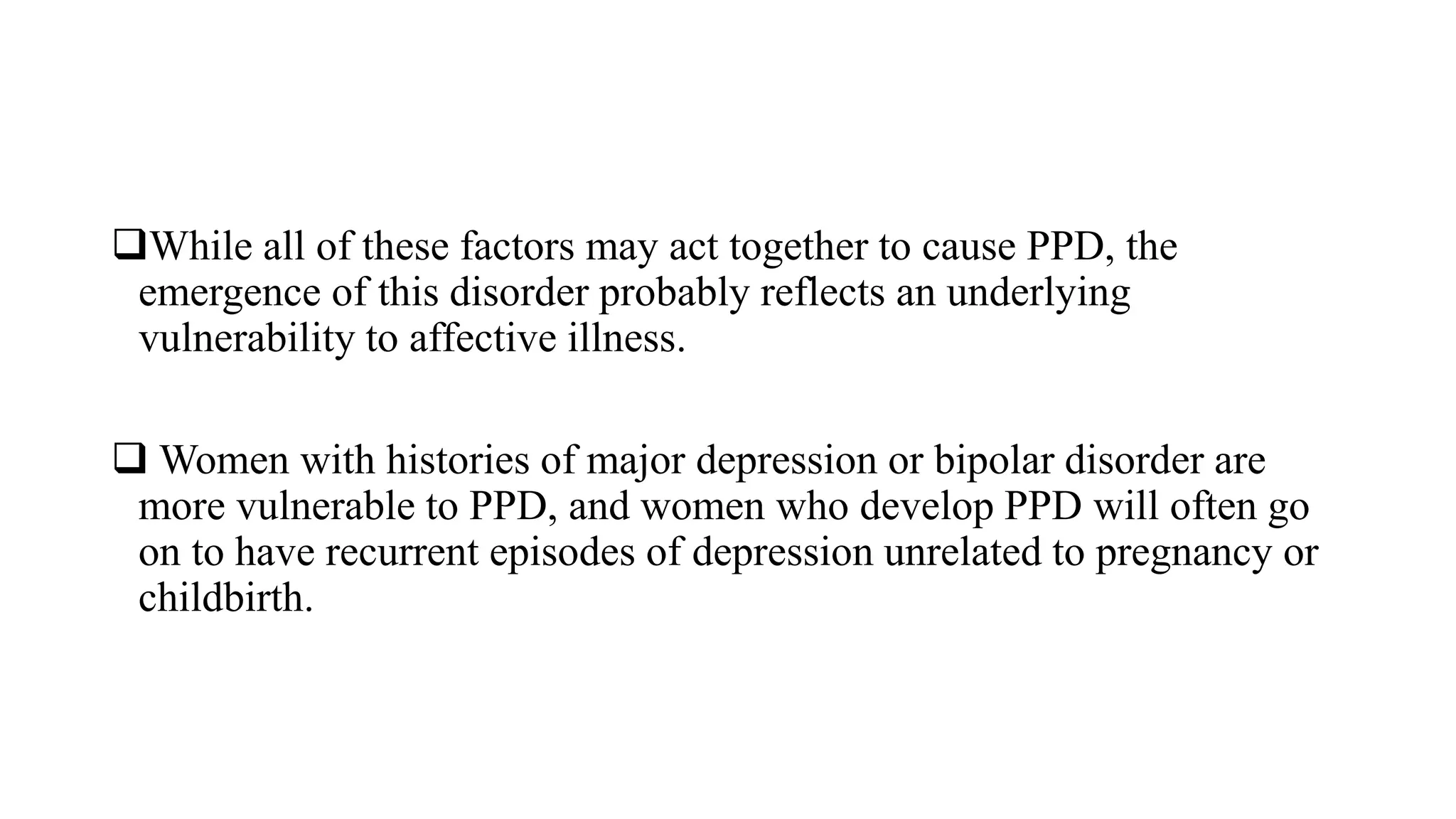
While all of these factors may act together to cause PPD, the
emergence of this disorder probably reflects an underlying
vulnerability to affective illness.
 Women with histories of major depression or bipolar disorder are
more vulnerable to PPD, and women who develop PPD will often go
on to have recurrent episodes of depression unrelated to pregnancy or
childbirth.
Postpartum depression presents along a continuum, and the type of
treatment selected is based on the severity and type of symptoms
present.
However, before initiating psychiatric treatment, medical causes for
mood disturbance must be excluded.
 Initial evaluation should include a thorough history, physical
examination, and routine laboratory tests.
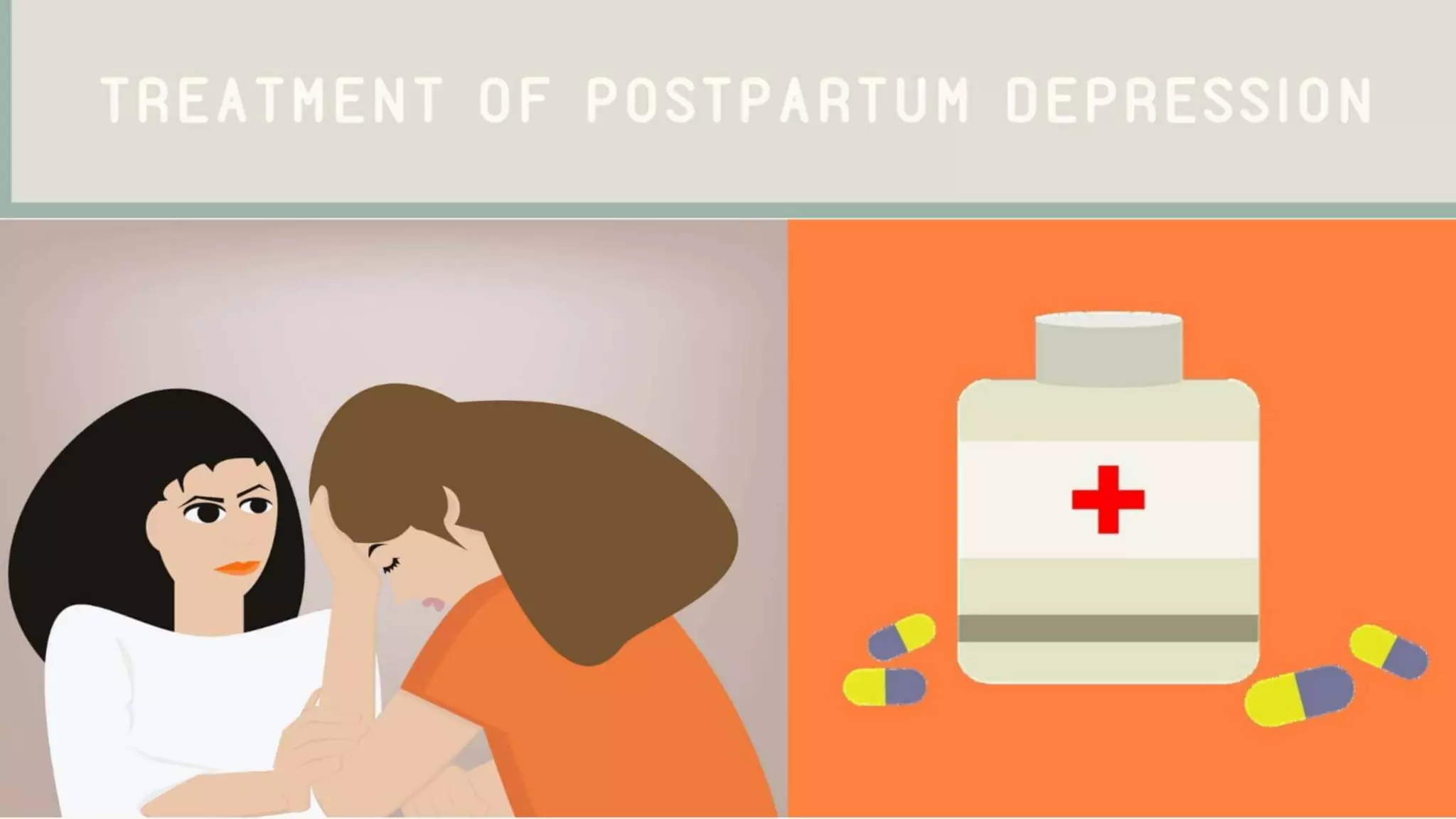
Non-pharmacological therapies are useful in the treatment of
postpartum depression.
Interpersonal therapy (IPT) has also been shown to be effective for
the treatment of women with mild to moderate postpartum depression.
These non-pharmacological interventions may be particularly
attractive to those patients who are reluctant to use psychotropic
medications
Women with more severe postpartum depression may choose to
receive pharmacological treatment
PHARMACOLOGICAL MANAGEMENT
Specific serotonin reuptake inhibitors (SSRIs)
Tricyclic antidepressants (TCAs)
Benzodiazepine
Brexanolone
Canadian Network for Mood and Anxiety Treatments (CANMAT) 2016 Clinical Guidelines for
the Management of Adults with Major Depressive Disorder
1st line Monotherapy: cognitive behavioural therapy (CBT), interpersonal
psychotherapy (IPT) (individual or group)
2nd line Monotherapy: citalopram, escitalopram, sertraline
Combination therapy: combination SSRI + CBT or IPT
3rd line (in order of evidence) • Structured exercise, acupuncture (depression specific), bright-light
therapy
• Bupropion, desvenlafaxine, duloxetine, fluoxetine, fluvoxamine, m
irtazapine, TCAs (caution with clomipramine due to risk of cardiac
malformations!), venlafaxine
• Electroconvulsive therapy (for severe, psychotic, or treatment-
resistant depression)
• Therapist-assisted Internet CBT, mindfulness-
based CBT, supportive psychotherapy, couples
therapy, psychodynamic psychotherapy, rTMS
• Combination SSRI + CBT or IPT
How Long Should Antidepressant Use Continue?
Based on recommendations and studies from the general adult
population, it is recommended that women for low risk of relapse
remain on antidepressants for another 6 to 12 months after achieving
remission of symptoms
PREVENTION OF PPD
Prophylactic interventions may be instituted near or at the time of
delivery to decrease the risk of postpartum illness.
Women with histories of bipolar disorder or puerperal psychosis
benefit from prophylactic treatment with lithium instituted either prior
to delivery (at 36 weeks gestation) or no later than the first 48 hours
postpartum.
For women with histories of postpartum depression, prophylactic
antidepressant (either TCAs or SSRIs) administered after delivery.
• “…I was so tired of being in pain. Of sleeping on the couch. Of waking up
throughout the night. Of throwing up. Of taking things out on the wrong people.
Of not enjoying life. Of not seeing my friends. Of not having the energy to take my
baby for a stroll. My doctor pulled out a book and started listing symptoms. And I
was like, “Yep, yep, yep.” I got my diagnosis: postpartum depression and anxiety.”
• Chrissy Teigen
• Glamour Magazine, March 6, 2017
POSTPARTUM PSYCHOSIS
Postpartum psychosis is the most severe form of
postpartum psychiatric illness.
The prevalence of postpartum psychosis has been
reported to be 0.1-0.2%
The nosological status of postpartum psychosis remains
doubtful; however, evidence indicates most episodes to be
manifestations of bipolar disorder
In DSM-5, classified in the "short psychotic disorder" section of the
schizophrenia spectrum and other psychotic disorders.
Its presentation is often dramatic, with onset of symptoms as early as
the first 48 to 72 hours after delivery.
The majority of women with puerperal psychosis develop symptoms
within the first two postpartum weeks.
The mean age of onset in PP is 26.3 years
SYMPTOMS
Early manifestations include symptoms such as insomnia, mood
changes, obsessive thoughts about baby, and later delusions,
hallucinations, disorganized behavior, psychomotor agitation, food
rejection, catatonia, and severe mood changes.
Delusion of reference, persecution, jealousy, grandiosity that are
incompatible with mood.
Delusions often have a bizarre character.
Tactile and visual hallucinations that point to the organic syndrome
Severe mood symptoms such as depression, mania or mixed episodes
Sometimes atypical cognitive symptoms such as disorientation, confusion
Due to cognitive disorganization, patients may neglect the newborn and/or
dangerous practices may arise while they are meeting the baby's needs .
Strange beliefs and thoughts about birth or baby
The risk of suicide increased by 70 times in the first year after birth.
Suicidal attempts may be aggressive and irreversible.
Although rare, the prevalence of infanticide, which is the most dramatic
picture, has been reported to be 4% and is associated with the denial of the
pregnancy.
Phenomenology
Mania/mixed mood state
Depression
Anxiety
Perplexity
”Kaleidoscopic” presentation
Psychotic symptoms
Mood lability
Prevalence 0.001–0.002% (1–2/1000)
Peak timing of postpartum onset Days 1–14
Duration Weeks to months
Risk
factors
Primiparity
Puerperal
hormone
changes
H/o bipolar
disorder
PP episode
history
Congenital
malformation
Perinatal
death during
delivery
Increased
environmental
stress
Sleep
deprivation
ETIOPATHOGENESIS
The temporal proximity of PP onset to childbirth, its high relapse rate,
and its relatively stable prevalence and nature across societies and
cultures, indicates that risk for the condition may be substantially
influenced by biological factors
 The maternal body undergoes extreme physiological changes in the
postpartum period, notably a massive drop in circulating oestrogens
upon expulsion of the placenta.
 Abnormal sensitivity to this endocrinological disturbance may confer
vulnerability to PP in some women, an idea supported by the fact that
oestrogen supplementation may be beneficial to some patients
Abnormal serotonergic and/or dopaminergic function may play a role
in its pathogenesis; there is a well-established link between oestrogen
levels and serotonergic function
Immune system dysfunction
TREATMENT
PP is an emergency that requires immediate medical intervention and
hospital admission.
 The patient must be hospitalized for maternal care and for the safety
of the baby.
Mood stabilizers, antipsychotics, ECT and benzodiazepines are used.
PROGNOSIS
Longitudinal studies indicate a good prognosis for women who have
experienced PP following bipolar disorder diagnosis.
 After a single PP episode, 75-86% of the symptoms are fully
recovered
 Of the patients diagnosed with schizophrenia; 50% recovered after
PP episode, 33% had recurrent PP episodes and 5% became treatment
resistant after a large number of puerperal and non-puerperal
recurrence
PP has been reported to recur in 65% of long-term follow-up studies
REFERENCES
Batt MM, Duffy KA, Novick AM, Metcalf CA, Epperson CN. Is Postpartum Depression Different From
Depression Occurring Outside of the Perinatal Period? A Review of the Evidence. Focus (Am Psychiatr
Publ). 2020;18(2):106-119. doi:10.1176/appi.focus.20190045
Balaram K, Marwaha R. Postpartum Blues. [Updated 2022 Feb 7]. In: StatPearls [Internet]. Treasure Island
(FL): StatPearls Publishing; 2022 Jan-. Available from: https://www.ncbi.nlm.nih.gov/books/NBK554546/
 Gavin NI, Gaynes BN, Lohr KN, et al. : Perinatal depression: a systematic review of prevalence and
incidence. Obstet Gynecol 2005; 106:1071–1083 10.1097/01.AOG.0000183597.31630.db
MacQueen GM, Frey BN, Ismail Z, et al. Canadian Network for Mood and Anxiety Treatments (CANMAT)
2016 Clinical Guidelines for the Management of Adults with Major Depressive Disorder: Section 6. Special
Populations: Youth, Women, and the Elderly. The Canadian Journal of Psychiatry. 2016;61(9):588-603.
doi:10.1177/070674371665927
Mesut Işık. Postpartum Psychosis. Eastern J Med. 2018; 23(1): 60-63
Milgrom J, Gemmill AW, Ericksen J, et al. : Treatment of postnatal depression with cognitive behavioural
therapy, sertraline and combination therapy: a randomised controlled trial. Aust N Z J
Psychiatry 2015; 49:236–245 10.1177/0004867414565474
Perry A, Gordon-Smith K, Jones L, Jones I. Phenomenology, Epidemiology and Aetiology of Postpartum
Psychosis: A Review. Brain Sciences. 2021; 11(1):47. https://doi.org/10.3390/brainsci11010047
Protheroe C. Puerperal psychosis: A long-term study 1927–1961. Br J
Psychiatry. 1969;111:9. [PubMed] [Google Scholar]
Van Niel MS, Payne JL. Perinatal depression: A review. Cleve Clin J Med. 2020 May;87(5):273-277. doi:
10.3949/ccjm.87a.19054. PMID: 32357982
Wisner KL, Moses-Kolko EL, Sit DKY: Postpartum depression: a disorder in search of a definition. Arch
Women Ment Health 2010; 13:37–40 10.1007/s00737-009-0119-9
POSTPARTUM PSYCHIATRIC DISORDERS.pptx

POSTPARTUM PSYCHIATRIC DISORDERS.pptx

  • 1.
    POSTPARTUM PSYCHIATRIC DISORDERS DR PARUL PRASAD MBBS,MD, FGMH, MIPS ASSISTANT PROFESSOR (PSYCHIATRY) CIMS&H, LUCKNOW
  • 3.
    Adapted from: WisnerKL, Sit DKY, McShea MC, et al. (2013). Onset Timing, Thoughts of Self-harm, and Diagnoses in Postpartum Women With Screen-Positive Depression Findings. JAMA Psychiatry. 70(5):490–498. ONSET OF MENTAL HEALTH SYMPTOMS 33% 27% 40% Prenatal Prior to Pregnancy Postpartum
  • 4.
    THE POSTPARTUM PERIOD Duringthe postpartum period, about 85% of women experience some type of mood disturbance. Postpartum period is a risky period for psychiatric diseases. Women experience 22 times more psychotic or mania episodes in postpartum period than in any other periods of their lives For most the symptoms are mild and short-lived; however, 10 to 15% of women develop more significant symptoms of depression or anxiety.
  • 5.
    PSYCHOLOGICAL DISTURBANCES DURING PUERPERIUM PostpartumBlues Postpartum Depression Puerperal psychosis
  • 6.
    INCIDENCE OF PSYCHIATRICILLNESS DURING PUERPERIUM 85 10 0.1 0 10 20 30 40 50 60 70 80 90 Category 1 Category 2 Category 3 Postpartum Blues Postpartum Depression Postpartum Psychosis
  • 7.
  • 8.
    Low mood andmild depressive symptoms that are transient and self- limited These symptoms typically develop within 2-3 days of childbirth, peak over the next few days, and resolve by themselves within two weeks of their onset. About 50 to 85% of women experience postpartum blues during the first few weeks after delivery.
  • 9.
  • 10.
    EPIDEMIOLOGY Postpartum blues areextremely common and are estimated to occur in about 50% or more of women  Within the first few weeks after delivery.  Postpartum major depression is approximately 4 to 11 times more common among women who have postpartum blues
  • 11.
    ETIOPATHOGENESIS Hormonal changes havelong been suggested as one of the primary causative factors in developing postpartum mood changes. Typically, there is a drastic decrease in estradiol, progesterone, and prolactin in the time following delivery. Various studies have also proposed that elevated monoamine oxidase levels or decreased serotoninergic activity in the immediate postpartum period are significant risk factors that could predispose a woman to the development of postpartum blues
  • 12.
    RISK FACTORS H/O menstrual cycle related moodchanges H/O major depression or dysthymia Mood changes associated with pregnancy A larger number of lifetime pregnancies Family H/O post-partum depression
  • 13.
    TREATMENT By its diagnosticcriteria, postpartum blues are transient and self- limited. Therefore, it resolves on its own and requires no treatment other than validation, education, reassurance, and psychosocial support  They should be carefully evaluated to see if the diagnostic criteria for postpartum depression are met.
  • 14.
    Patients should becarefully screened for suicidal ideation, paranoia, or homicidal ideation towards the infant. If insomnia persists, cognitive therapy and/or pharmacotherapy can be recommended.
  • 15.
    PROGNOSIS Postpartum blues involvemood changes that are typically mild, transient, and self-limited. However, a diagnosis of postpartum blues can predispose an individual to postpartum depression or postpartum anxiety disorders. The risk of postpartum depression in an individual with “baby blues” significantly increases in those who had mood or anxiety symptoms during pregnancy
  • 16.
  • 17.
    PPD typically emergesover the first 2-3 postpartum months but may occur at any point after delivery. Postpartum depression is clinically indistinguishable from depression occurring at other times during a woman’s life.
  • 18.
    Persistent sadness Feelings of guilt Hopelessness, helplessness& wortlessness Inability to concentrate Thoughts of harming the baby Suicidal thoughts Sleep/appetite changes Loss of pleasure in activities Anger
  • 19.
    Significant anxiety symptomsmay also occur. Generalized anxiety is common, but some women also develop panic attacks or hypochondriasis. Postpartum obsessive-compulsive disorder has also been reported, where women report disturbing and intrusive thoughts of harming their infant.
  • 20.
    EPIDEMIOLOGY Postpartum depression (PPD)is the most common medical complication of childbearing PPD occurs in 10 to 15% of new mothers One of every 7 to 10 pregnant women and 1 of every 5 to 8 postpartum women develop a depressive disorder No race or socioeconomic group is spared
  • 21.
    Adapted from: Ayoub,Khubaib. (2015). prevalence of postpartum depression among Palestinian Women.
  • 22.
    ETIOPATHOGENESIS The postpartum periodis characterized by a rapid shift in the hormonal environment. Within the first 48 hours after delivery, estrogen and progesterone concentrations fall dramatically. While it appears that there is no consistent correlation between serum levels of estrogen, progesterone, cortisol, or thyroid hormones and the occurrence of postpartum mood disturbance, a subgroup of women are particularly sensitive to the hormonal changes that take place after delivery.
  • 23.
    RISK FACTORS Previous episode of PPD Recent stressful life events Historyof depression or bipolar disorder Depression during pregnancy Marital problem Inadequate social supports
  • 24.
    While all ofthese factors may act together to cause PPD, the emergence of this disorder probably reflects an underlying vulnerability to affective illness.  Women with histories of major depression or bipolar disorder are more vulnerable to PPD, and women who develop PPD will often go on to have recurrent episodes of depression unrelated to pregnancy or childbirth.
  • 26.
    Postpartum depression presentsalong a continuum, and the type of treatment selected is based on the severity and type of symptoms present. However, before initiating psychiatric treatment, medical causes for mood disturbance must be excluded.  Initial evaluation should include a thorough history, physical examination, and routine laboratory tests.
  • 27.
    Non-pharmacological therapies areuseful in the treatment of postpartum depression. Interpersonal therapy (IPT) has also been shown to be effective for the treatment of women with mild to moderate postpartum depression. These non-pharmacological interventions may be particularly attractive to those patients who are reluctant to use psychotropic medications Women with more severe postpartum depression may choose to receive pharmacological treatment
  • 28.
    PHARMACOLOGICAL MANAGEMENT Specific serotoninreuptake inhibitors (SSRIs) Tricyclic antidepressants (TCAs) Benzodiazepine Brexanolone
  • 29.
    Canadian Network forMood and Anxiety Treatments (CANMAT) 2016 Clinical Guidelines for the Management of Adults with Major Depressive Disorder 1st line Monotherapy: cognitive behavioural therapy (CBT), interpersonal psychotherapy (IPT) (individual or group) 2nd line Monotherapy: citalopram, escitalopram, sertraline Combination therapy: combination SSRI + CBT or IPT 3rd line (in order of evidence) • Structured exercise, acupuncture (depression specific), bright-light therapy • Bupropion, desvenlafaxine, duloxetine, fluoxetine, fluvoxamine, m irtazapine, TCAs (caution with clomipramine due to risk of cardiac malformations!), venlafaxine • Electroconvulsive therapy (for severe, psychotic, or treatment- resistant depression) • Therapist-assisted Internet CBT, mindfulness- based CBT, supportive psychotherapy, couples therapy, psychodynamic psychotherapy, rTMS • Combination SSRI + CBT or IPT
  • 30.
    How Long ShouldAntidepressant Use Continue? Based on recommendations and studies from the general adult population, it is recommended that women for low risk of relapse remain on antidepressants for another 6 to 12 months after achieving remission of symptoms
  • 31.
    PREVENTION OF PPD Prophylacticinterventions may be instituted near or at the time of delivery to decrease the risk of postpartum illness. Women with histories of bipolar disorder or puerperal psychosis benefit from prophylactic treatment with lithium instituted either prior to delivery (at 36 weeks gestation) or no later than the first 48 hours postpartum. For women with histories of postpartum depression, prophylactic antidepressant (either TCAs or SSRIs) administered after delivery.
  • 33.
    • “…I wasso tired of being in pain. Of sleeping on the couch. Of waking up throughout the night. Of throwing up. Of taking things out on the wrong people. Of not enjoying life. Of not seeing my friends. Of not having the energy to take my baby for a stroll. My doctor pulled out a book and started listing symptoms. And I was like, “Yep, yep, yep.” I got my diagnosis: postpartum depression and anxiety.” • Chrissy Teigen • Glamour Magazine, March 6, 2017
  • 34.
  • 35.
    Postpartum psychosis isthe most severe form of postpartum psychiatric illness. The prevalence of postpartum psychosis has been reported to be 0.1-0.2% The nosological status of postpartum psychosis remains doubtful; however, evidence indicates most episodes to be manifestations of bipolar disorder
  • 36.
    In DSM-5, classifiedin the "short psychotic disorder" section of the schizophrenia spectrum and other psychotic disorders. Its presentation is often dramatic, with onset of symptoms as early as the first 48 to 72 hours after delivery. The majority of women with puerperal psychosis develop symptoms within the first two postpartum weeks. The mean age of onset in PP is 26.3 years
  • 38.
    SYMPTOMS Early manifestations includesymptoms such as insomnia, mood changes, obsessive thoughts about baby, and later delusions, hallucinations, disorganized behavior, psychomotor agitation, food rejection, catatonia, and severe mood changes. Delusion of reference, persecution, jealousy, grandiosity that are incompatible with mood. Delusions often have a bizarre character. Tactile and visual hallucinations that point to the organic syndrome Severe mood symptoms such as depression, mania or mixed episodes
  • 39.
    Sometimes atypical cognitivesymptoms such as disorientation, confusion Due to cognitive disorganization, patients may neglect the newborn and/or dangerous practices may arise while they are meeting the baby's needs . Strange beliefs and thoughts about birth or baby The risk of suicide increased by 70 times in the first year after birth. Suicidal attempts may be aggressive and irreversible. Although rare, the prevalence of infanticide, which is the most dramatic picture, has been reported to be 4% and is associated with the denial of the pregnancy.
  • 40.
    Phenomenology Mania/mixed mood state Depression Anxiety Perplexity ”Kaleidoscopic”presentation Psychotic symptoms Mood lability Prevalence 0.001–0.002% (1–2/1000) Peak timing of postpartum onset Days 1–14 Duration Weeks to months
  • 41.
  • 42.
    ETIOPATHOGENESIS The temporal proximityof PP onset to childbirth, its high relapse rate, and its relatively stable prevalence and nature across societies and cultures, indicates that risk for the condition may be substantially influenced by biological factors  The maternal body undergoes extreme physiological changes in the postpartum period, notably a massive drop in circulating oestrogens upon expulsion of the placenta.  Abnormal sensitivity to this endocrinological disturbance may confer vulnerability to PP in some women, an idea supported by the fact that oestrogen supplementation may be beneficial to some patients
  • 43.
    Abnormal serotonergic and/ordopaminergic function may play a role in its pathogenesis; there is a well-established link between oestrogen levels and serotonergic function Immune system dysfunction
  • 44.
    TREATMENT PP is anemergency that requires immediate medical intervention and hospital admission.  The patient must be hospitalized for maternal care and for the safety of the baby. Mood stabilizers, antipsychotics, ECT and benzodiazepines are used.
  • 45.
    PROGNOSIS Longitudinal studies indicatea good prognosis for women who have experienced PP following bipolar disorder diagnosis.  After a single PP episode, 75-86% of the symptoms are fully recovered  Of the patients diagnosed with schizophrenia; 50% recovered after PP episode, 33% had recurrent PP episodes and 5% became treatment resistant after a large number of puerperal and non-puerperal recurrence PP has been reported to recur in 65% of long-term follow-up studies
  • 46.
    REFERENCES Batt MM, DuffyKA, Novick AM, Metcalf CA, Epperson CN. Is Postpartum Depression Different From Depression Occurring Outside of the Perinatal Period? A Review of the Evidence. Focus (Am Psychiatr Publ). 2020;18(2):106-119. doi:10.1176/appi.focus.20190045 Balaram K, Marwaha R. Postpartum Blues. [Updated 2022 Feb 7]. In: StatPearls [Internet]. Treasure Island (FL): StatPearls Publishing; 2022 Jan-. Available from: https://www.ncbi.nlm.nih.gov/books/NBK554546/  Gavin NI, Gaynes BN, Lohr KN, et al. : Perinatal depression: a systematic review of prevalence and incidence. Obstet Gynecol 2005; 106:1071–1083 10.1097/01.AOG.0000183597.31630.db MacQueen GM, Frey BN, Ismail Z, et al. Canadian Network for Mood and Anxiety Treatments (CANMAT) 2016 Clinical Guidelines for the Management of Adults with Major Depressive Disorder: Section 6. Special Populations: Youth, Women, and the Elderly. The Canadian Journal of Psychiatry. 2016;61(9):588-603. doi:10.1177/070674371665927
  • 47.
    Mesut Işık. PostpartumPsychosis. Eastern J Med. 2018; 23(1): 60-63 Milgrom J, Gemmill AW, Ericksen J, et al. : Treatment of postnatal depression with cognitive behavioural therapy, sertraline and combination therapy: a randomised controlled trial. Aust N Z J Psychiatry 2015; 49:236–245 10.1177/0004867414565474 Perry A, Gordon-Smith K, Jones L, Jones I. Phenomenology, Epidemiology and Aetiology of Postpartum Psychosis: A Review. Brain Sciences. 2021; 11(1):47. https://doi.org/10.3390/brainsci11010047 Protheroe C. Puerperal psychosis: A long-term study 1927–1961. Br J Psychiatry. 1969;111:9. [PubMed] [Google Scholar] Van Niel MS, Payne JL. Perinatal depression: A review. Cleve Clin J Med. 2020 May;87(5):273-277. doi: 10.3949/ccjm.87a.19054. PMID: 32357982 Wisner KL, Moses-Kolko EL, Sit DKY: Postpartum depression: a disorder in search of a definition. Arch Women Ment Health 2010; 13:37–40 10.1007/s00737-009-0119-9