Postpartum Depression
UYANGA BAYANDALAI
SPRING 2016
Postpartum depression
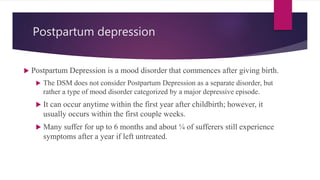
 Postpartum Depression is a mood disorder that commences after giving birth.
 The DSM does not consider Postpartum Depression as a separate disorder, but
rather a type of mood disorder categorized by a major depressive episode.
 It can occur anytime within the first year after childbirth; however, it
usually occurs within the first couple weeks.
 Many suffer for up to 6 months and about ¼ of sufferers still experience
symptoms after a year if left untreated.
Etiology
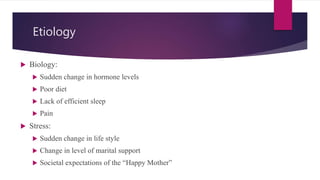
 Biology:
 Sudden change in hormone levels
 Poor diet
 Lack of efficient sleep
 Pain
 Stress:
 Sudden change in life style
 Change in level of marital support
 Societal expectations of the “Happy Mother”
Risk factors
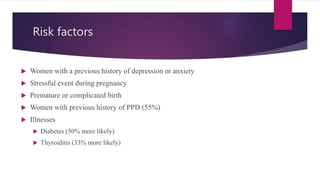
 Women with a previous history of depression or anxiety
 Stressful event during pregnancy
 Premature or complicated birth
 Women with previous history of PPD (55%)
 Illnesses
 Diabetes (50% more likely)
 Thyroiditis (33% more likely)
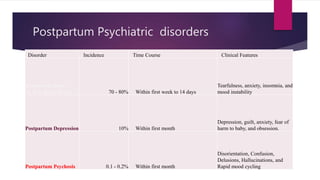
Postpartum Psychiatric disorders
Disorder Incidence Time Course Clinical Features
Postpartum Blues
(A.K.A. Baby Blues) 70 - 80% Within first week to 14 days
Tearfulness, anxiety, insomnia, and
mood instability
Postpartum Depression 10% Within first month
Depression, guilt, anxiety, fear of
harm to baby, and obsession.
Postpartum Psychosis 0.1 - 0.2% Within first month
Disorientation, Confusion,
Delusions, Hallucinations, and
Rapid mood cycling
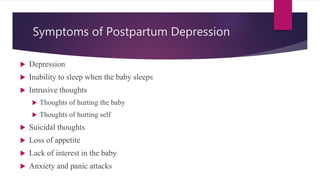
Symptoms of Postpartum Depression
 Depression
 Inability to sleep when the baby sleeps
 Intrusive thoughts
 Thoughts of hurting the baby
 Thoughts of hurting self
 Suicidal thoughts
 Loss of appetite
 Lack of interest in the baby
 Anxiety and panic attacks
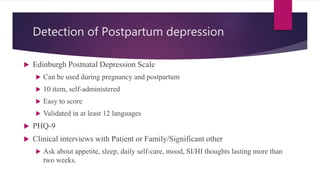
Detection of Postpartum depression
 Edinburgh Postnatal Depression Scale
 Can be used during pregnancy and postpartum
 10 item, self-administered
 Easy to score
 Validated in at least 12 languages
 PHQ-9
 Clinical interviews with Patient or Family/Significant other
 Ask about appetite, sleep, daily self-care, mood, SI/HI thoughts lasting more than
two weeks.
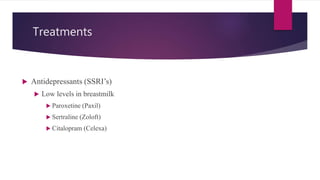
Treatments
 Antidepressants (SSRI’s)
 Low levels in breastmilk
 Paroxetine (Paxil)
 Sertraline (Zoloft)
 Citalopram (Celexa)
Treatments continued..
 Cognitive Behavioral Therapy
 Effective in targeting negative thoughts
 Teaches about:
 Automatic thoughts
 Common cognitive distortions
 Assumptions and beliefs.
 Skills:
 Examining and challenging cognitive distortions
 Thought records
 Cost-benefit analysis
 Asking for things that are important to me
Treatments continued..
 Self Help Support
 Depression after delivery: National foundation that provides support and information for PPD.
http://www.depressionafterdelivery.com
 Postpartum Progress: the most widely read US based blog. http://postpartumprogress.typepad.com/weblog/
 Marce Society: http://www.marcesociety.com
Postpartum depression in fathers
 More common than you would think
 10.4% overall from 1st trimester to 1 year after delivery
 25.6% at 3-6 months
 The biggest correlation is with depression in the partner
 But also associated with marriage problems.
 Life style change
 Role with partner and child. Sharing attention
 Stress at work
 Feeling physically separated
Postpartum depression affects children
 Behavioral problems: sleep problems, aggression and hyperactivity
 Cognitive delays: walk and talk later, problems in school
 Social problems: difficulty developing relationships, socially withdrawn,
aggressively act out
 Emotional problems: lower self-esteem, higher levels of anxiety
 Psychological problems: high risk of developing depression.
Major issues in PPD
 Loss of Autonomy (Personal Freedom) and Time
 Loss of Loss of Loss of Sexuality, Femininity, Appearance
 Loss of Occupational identity
 Debate whether or not to go back to work or to stay at home with the child. Many have
feelings of guilt.
 The women have feelings of loss concerning:
 Loss of power
 Loss of opportunity
 Loss of relationship with partners, friends
 Loss of Finances.
References
 US Department of Health and Human Services:
http://www.womenshealth.gov/faq/depression-pregnancy.cfm
 American Academy of Family Medicine:
http://familydoctor.org/online/famdocen/home/women/pregnancy/ppd/general/
379.html
 National Institute of Mental Health:
http://newsinhealth.nih.gov/2005/December2005/docs/01features_02.htm
 International Lactation Consultant Association: http://www.ilca.org
 Postpartum Support International: http://postpartum.net/resources/

Postpartum depression

  • 1.
  • 2.
    Postpartum depression  PostpartumDepression is a mood disorder that commences after giving birth.  The DSM does not consider Postpartum Depression as a separate disorder, but rather a type of mood disorder categorized by a major depressive episode.  It can occur anytime within the first year after childbirth; however, it usually occurs within the first couple weeks.  Many suffer for up to 6 months and about ¼ of sufferers still experience symptoms after a year if left untreated.
  • 3.
    Etiology  Biology:  Suddenchange in hormone levels  Poor diet  Lack of efficient sleep  Pain  Stress:  Sudden change in life style  Change in level of marital support  Societal expectations of the “Happy Mother”
  • 4.
    Risk factors  Womenwith a previous history of depression or anxiety  Stressful event during pregnancy  Premature or complicated birth  Women with previous history of PPD (55%)  Illnesses  Diabetes (50% more likely)  Thyroiditis (33% more likely)
  • 5.
    Postpartum Psychiatric disorders DisorderIncidence Time Course Clinical Features Postpartum Blues (A.K.A. Baby Blues) 70 - 80% Within first week to 14 days Tearfulness, anxiety, insomnia, and mood instability Postpartum Depression 10% Within first month Depression, guilt, anxiety, fear of harm to baby, and obsession. Postpartum Psychosis 0.1 - 0.2% Within first month Disorientation, Confusion, Delusions, Hallucinations, and Rapid mood cycling
  • 6.
    Symptoms of PostpartumDepression  Depression  Inability to sleep when the baby sleeps  Intrusive thoughts  Thoughts of hurting the baby  Thoughts of hurting self  Suicidal thoughts  Loss of appetite  Lack of interest in the baby  Anxiety and panic attacks
  • 7.
    Detection of Postpartumdepression  Edinburgh Postnatal Depression Scale  Can be used during pregnancy and postpartum  10 item, self-administered  Easy to score  Validated in at least 12 languages  PHQ-9  Clinical interviews with Patient or Family/Significant other  Ask about appetite, sleep, daily self-care, mood, SI/HI thoughts lasting more than two weeks.
  • 8.
    Treatments  Antidepressants (SSRI’s) Low levels in breastmilk  Paroxetine (Paxil)  Sertraline (Zoloft)  Citalopram (Celexa)
  • 9.
    Treatments continued..  CognitiveBehavioral Therapy  Effective in targeting negative thoughts  Teaches about:  Automatic thoughts  Common cognitive distortions  Assumptions and beliefs.  Skills:  Examining and challenging cognitive distortions  Thought records  Cost-benefit analysis  Asking for things that are important to me
  • 10.
    Treatments continued..  SelfHelp Support  Depression after delivery: National foundation that provides support and information for PPD. http://www.depressionafterdelivery.com  Postpartum Progress: the most widely read US based blog. http://postpartumprogress.typepad.com/weblog/  Marce Society: http://www.marcesociety.com
  • 11.
    Postpartum depression infathers  More common than you would think  10.4% overall from 1st trimester to 1 year after delivery  25.6% at 3-6 months  The biggest correlation is with depression in the partner  But also associated with marriage problems.  Life style change  Role with partner and child. Sharing attention  Stress at work  Feeling physically separated
  • 12.
    Postpartum depression affectschildren  Behavioral problems: sleep problems, aggression and hyperactivity  Cognitive delays: walk and talk later, problems in school  Social problems: difficulty developing relationships, socially withdrawn, aggressively act out  Emotional problems: lower self-esteem, higher levels of anxiety  Psychological problems: high risk of developing depression.
  • 13.
    Major issues inPPD  Loss of Autonomy (Personal Freedom) and Time  Loss of Loss of Loss of Sexuality, Femininity, Appearance  Loss of Occupational identity  Debate whether or not to go back to work or to stay at home with the child. Many have feelings of guilt.  The women have feelings of loss concerning:  Loss of power  Loss of opportunity  Loss of relationship with partners, friends  Loss of Finances.
  • 14.
    References  US Departmentof Health and Human Services: http://www.womenshealth.gov/faq/depression-pregnancy.cfm  American Academy of Family Medicine: http://familydoctor.org/online/famdocen/home/women/pregnancy/ppd/general/ 379.html  National Institute of Mental Health: http://newsinhealth.nih.gov/2005/December2005/docs/01features_02.htm  International Lactation Consultant Association: http://www.ilca.org  Postpartum Support International: http://postpartum.net/resources/