PSYCHOLOGICAL
COMPLICATIONSDURING
PREGNANCY
Here is where your presentation begins
PRESENTEDBY
NANCY MAURYA
(BSC HONS NURSING 4TH YEAR)
INTRODUCTION
Pregnancy is the most cherished goal of almost all married
women. But many psychiatric conditions such as mood and
anxiety disorder cluster in women during child bearing
years.
Psychiatric disorder is more common in the 1st and 3rd
trimester of pregnancy than in 2nd .
In 1st trimester unwanted pregnancies are associated with
anxiety and depression. The sense of loss due to 1st
trimester abortion in sometimes profound in some women.
MATERNITY
BLUES
01
POSTPARTUM
DEPRESSION
POSTPARTUM
PSYCHOSIS
02
03
CLASSIFICATIONS
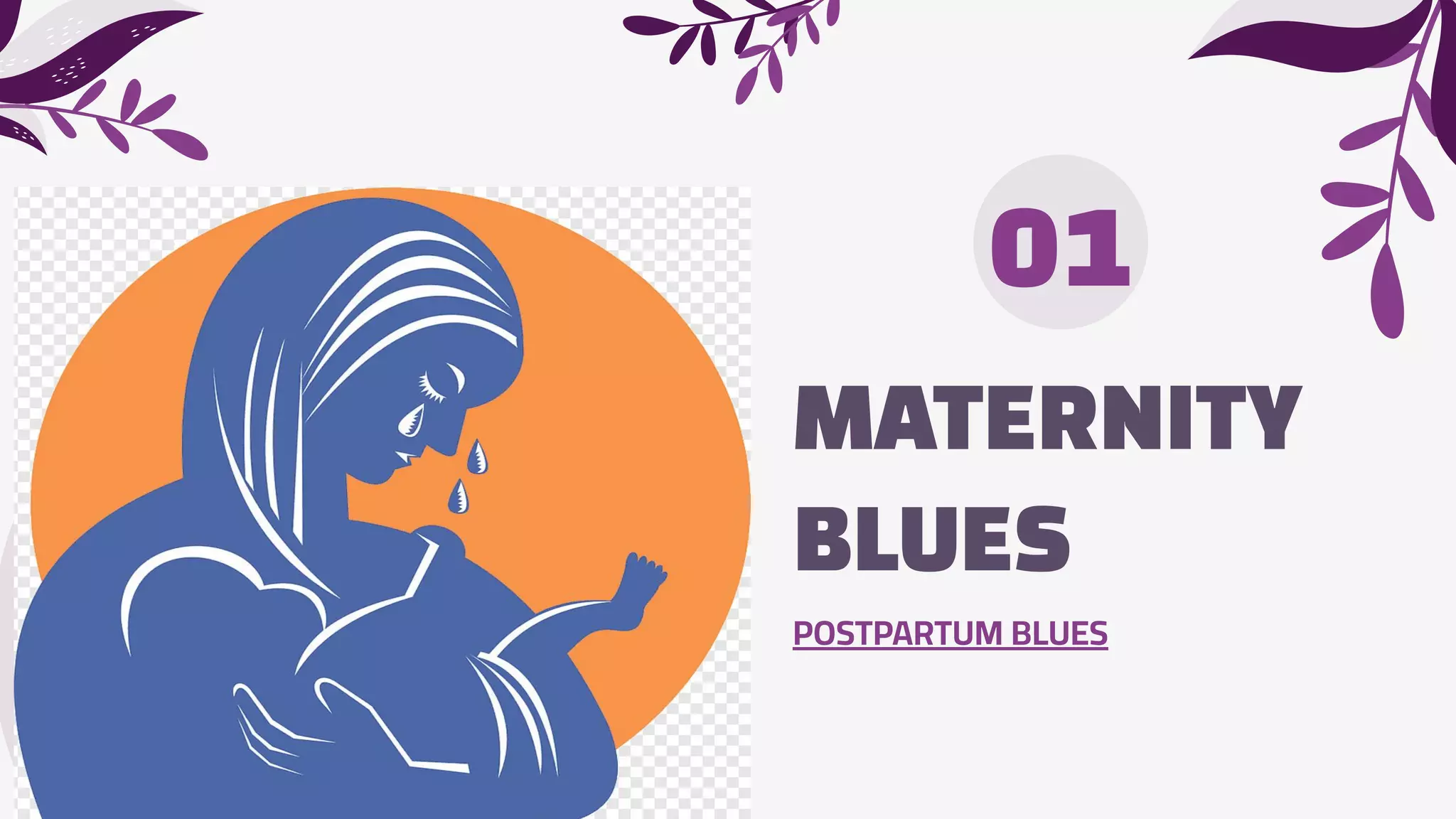
MATERNITY
BLUES
01
POSTPARTUM BLUES
MATERNALBLUES
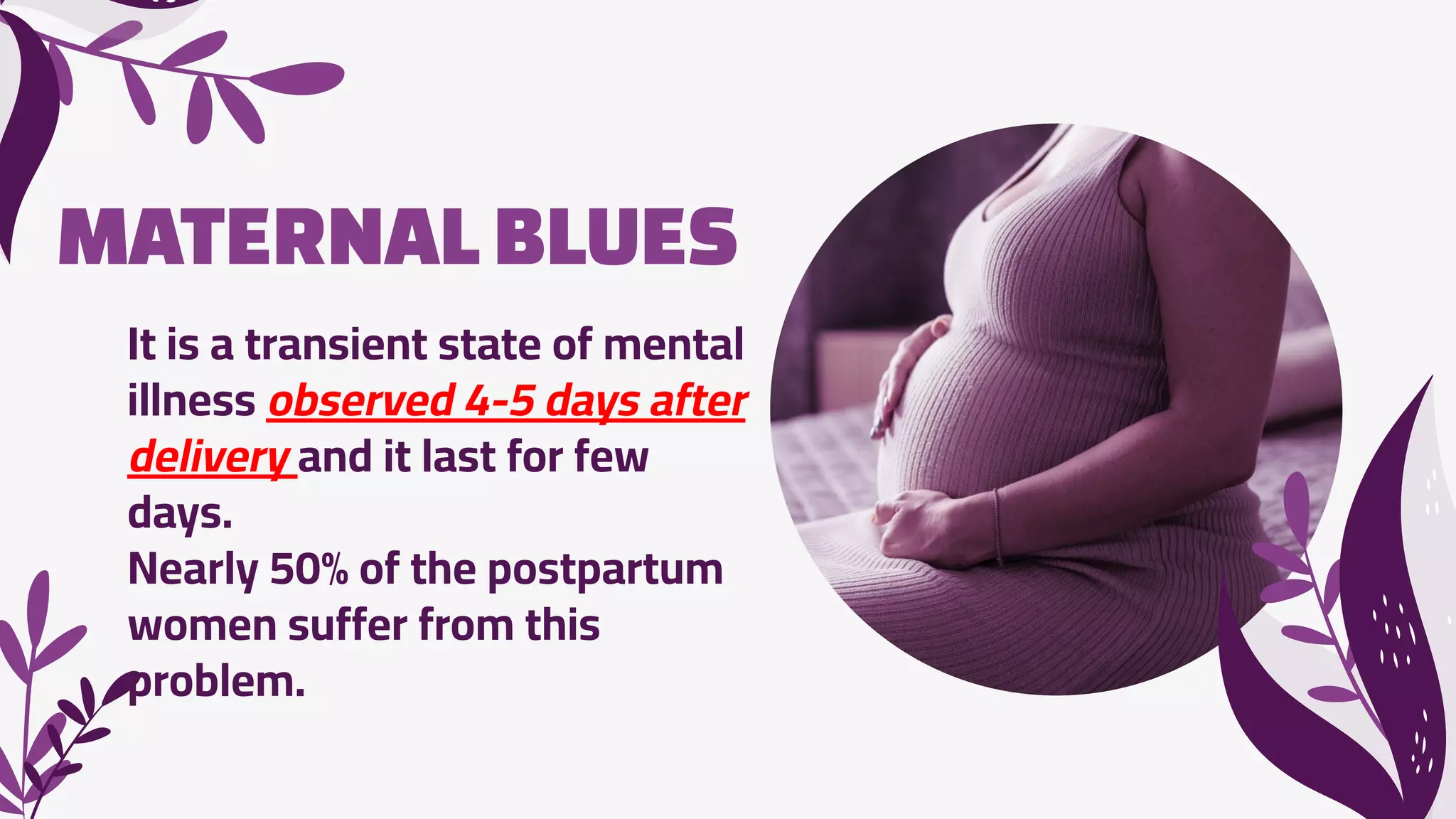
It is a transient state of mental
illness observed 4-5 days after
delivery and it last for few
days.
Nearly 50% of the postpartum
women suffer from this
problem.
CLINICAL FEATURES
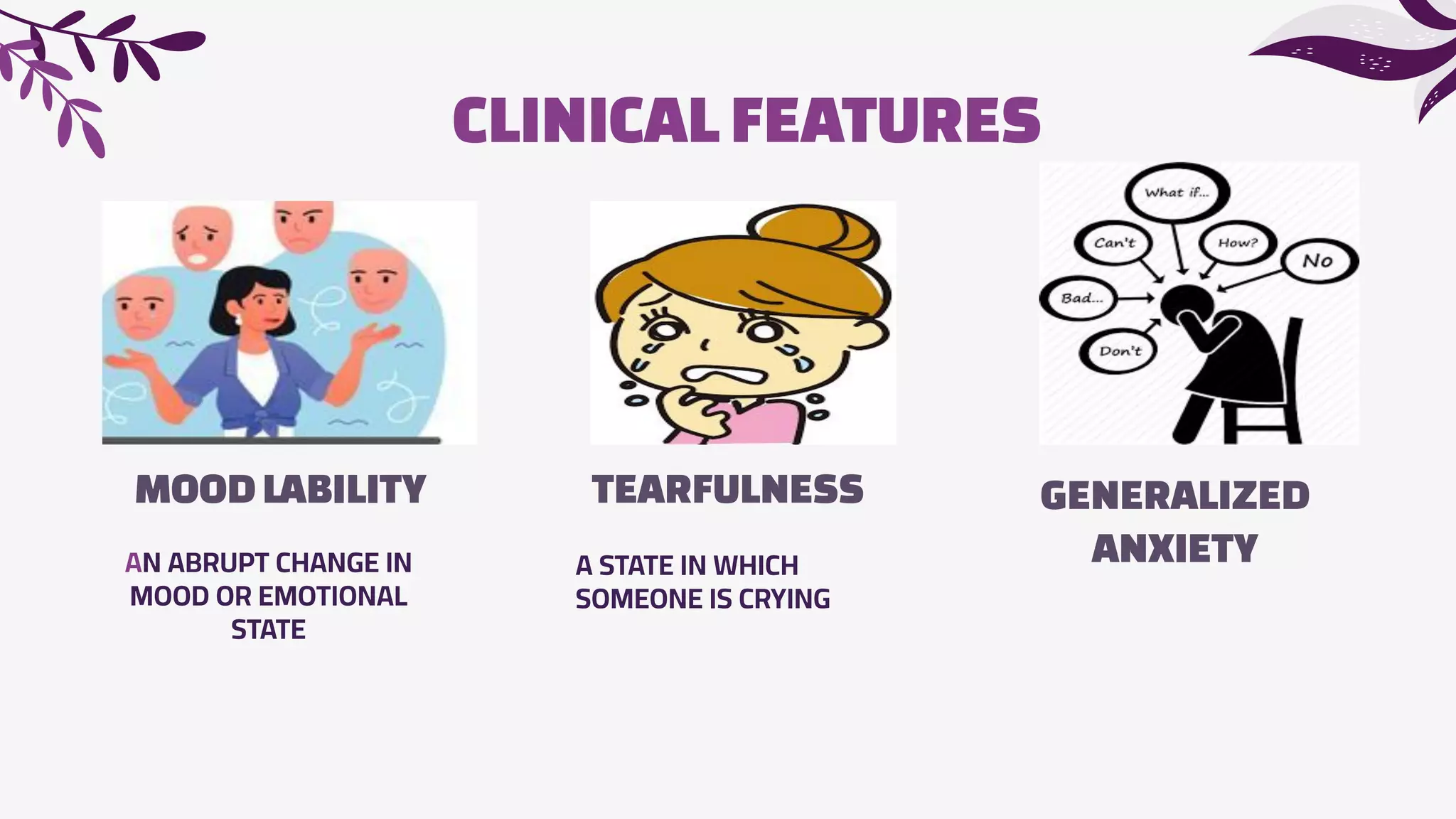
MOODLABILITY
AN ABRUPT CHANGE IN
MOOD OR EMOTIONAL
STATE
TEARFULNESS
A STATE IN WHICH
SOMEONE IS CRYING
GENERALIZED
ANXIETY
CLINICAL FEATURES
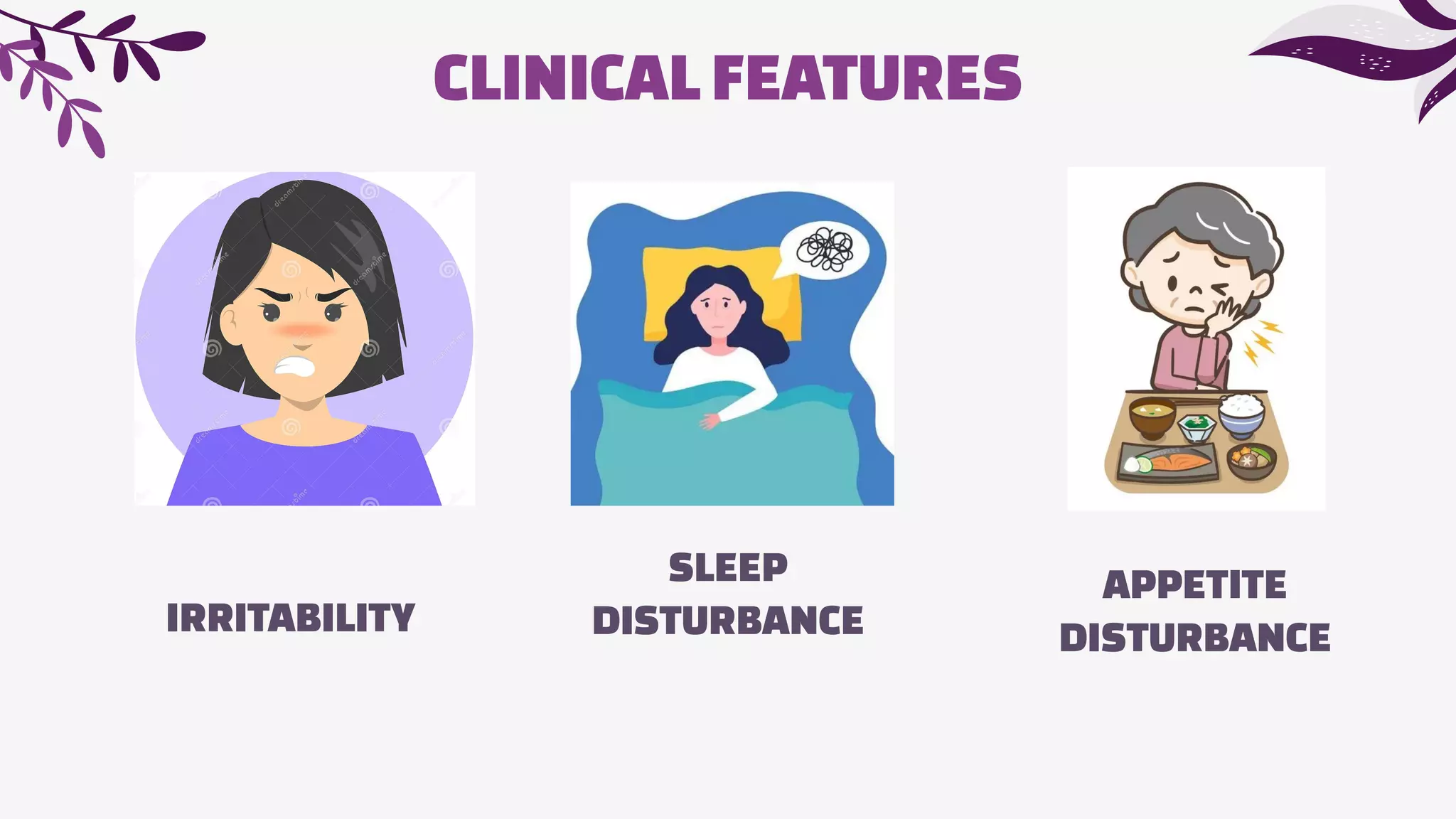
IRRITABILITY
SLEEP
DISTURBANCE
APPETITE
DISTURBANCE
TREATMENT
● SUPPORT, REASSURANCE AND
ASSISTANCE are generally sufficient.
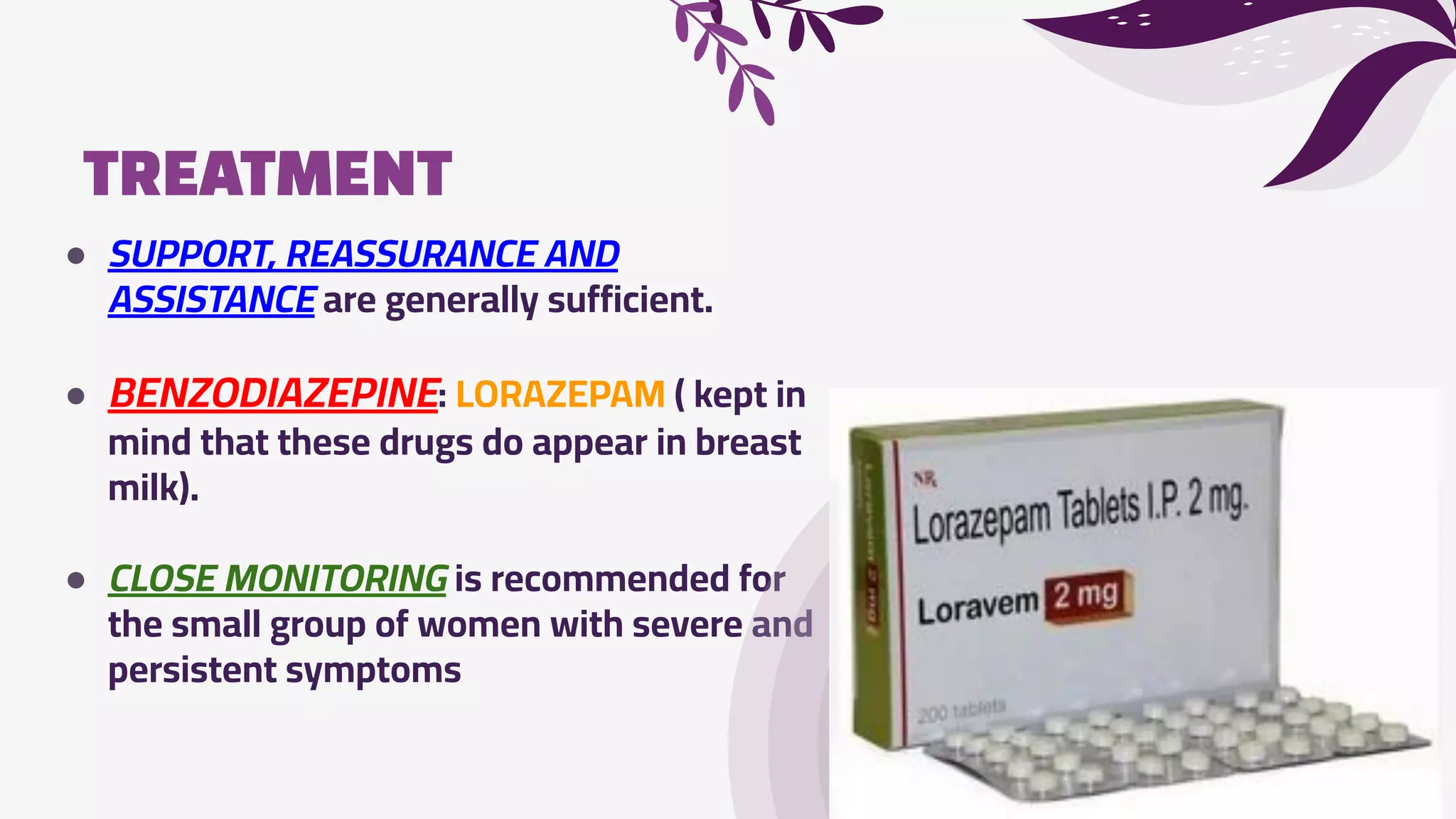
● BENZODIAZEPINE: LORAZEPAM ( kept in
mind that these drugs do appear in breast
milk).
● CLOSE MONITORING is recommended for
the small group of women with severe and
persistent symptoms
POSTPARTUM
DEPRESSION
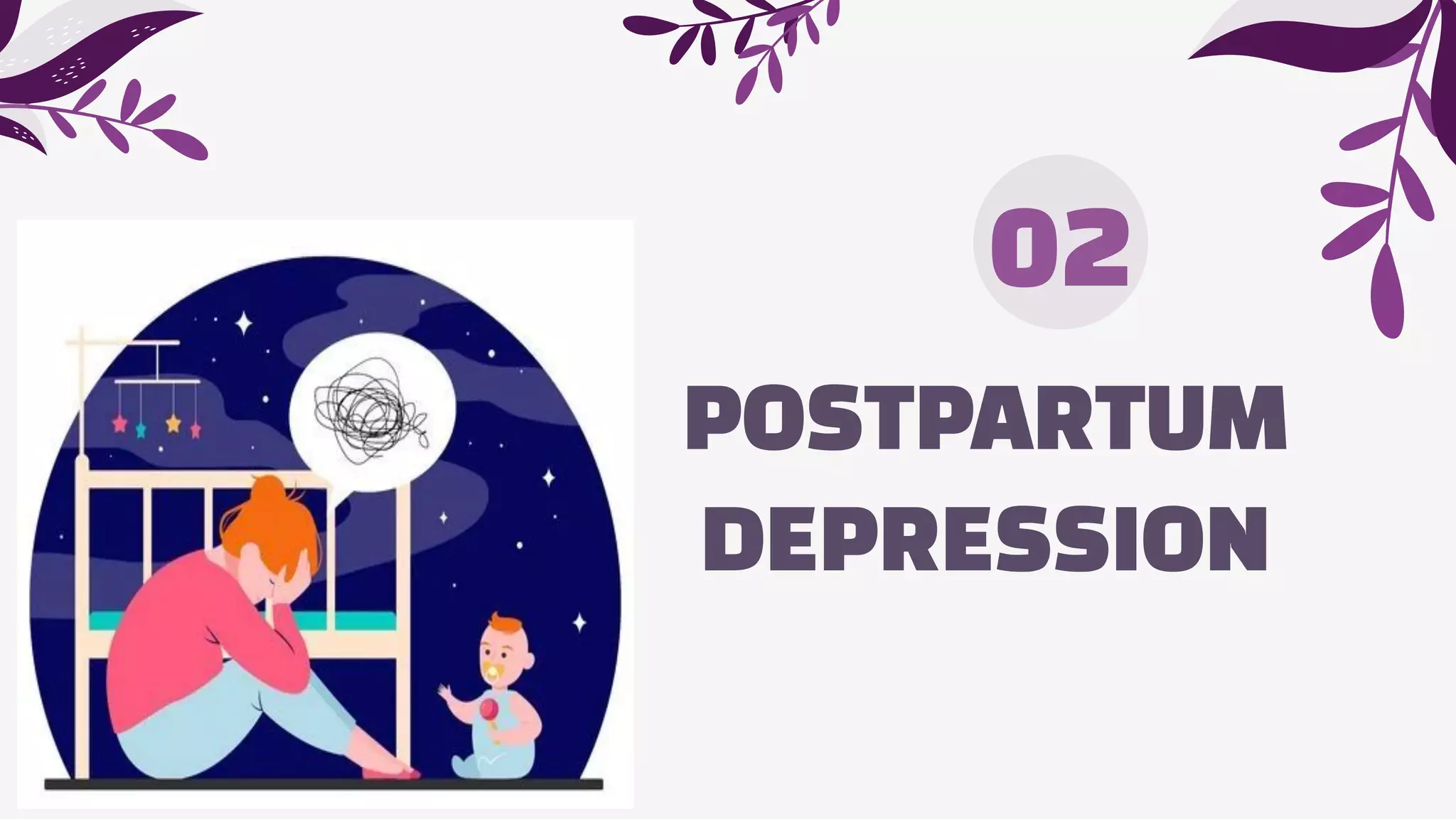
02
POSTPARTUM
DEPRESSION
● It is observed in 10-20% of mother.
● It is more gradual in onset over the first
4-6 months following delivery or abortion.
● Changes in hypothalmopituitary adrenal
axis may be a cause.
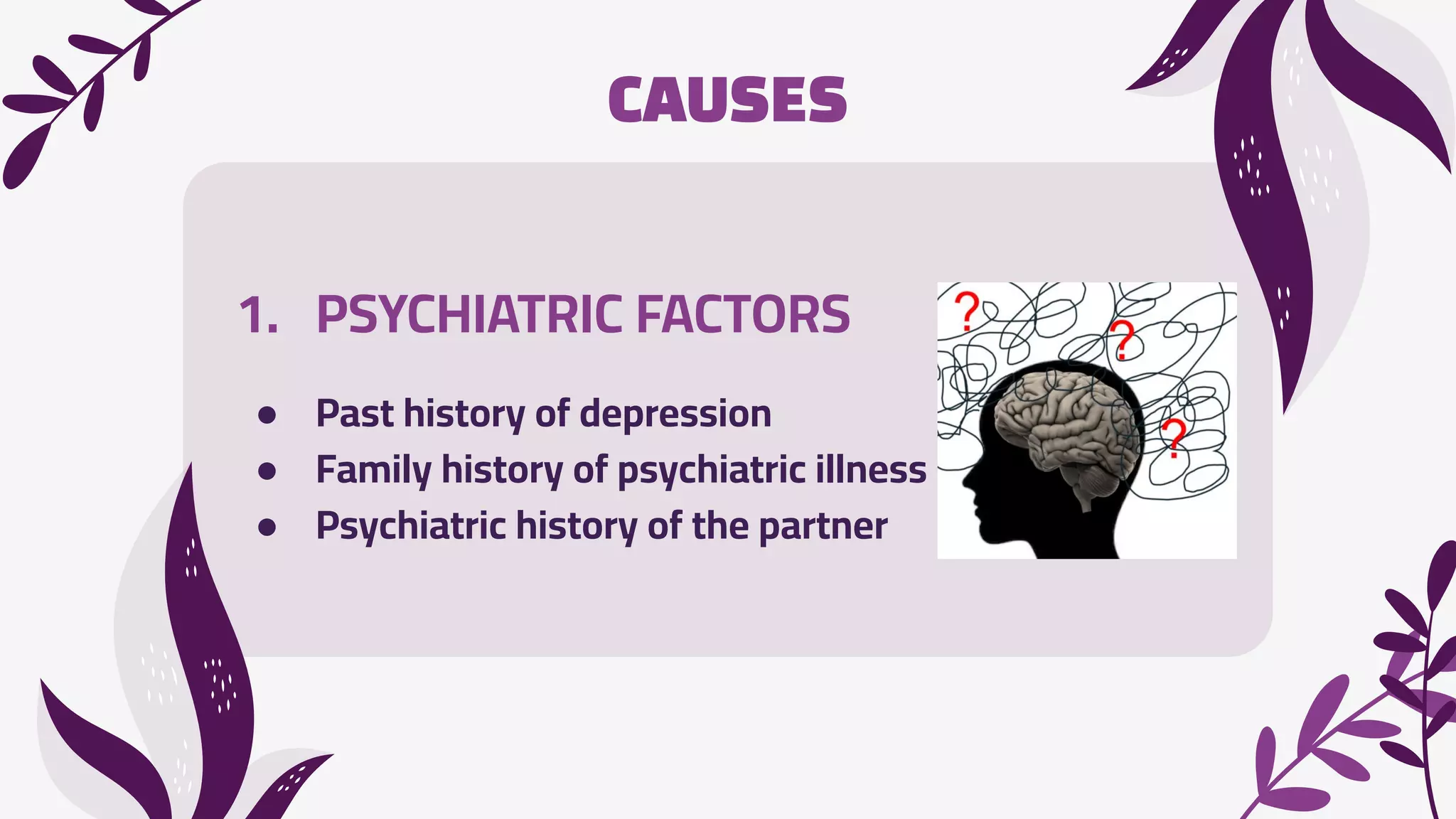
1. PSYCHIATRIC FACTORS
● Past history of depression
● Family history of psychiatric illness
● Psychiatric history of the partner
CAUSES
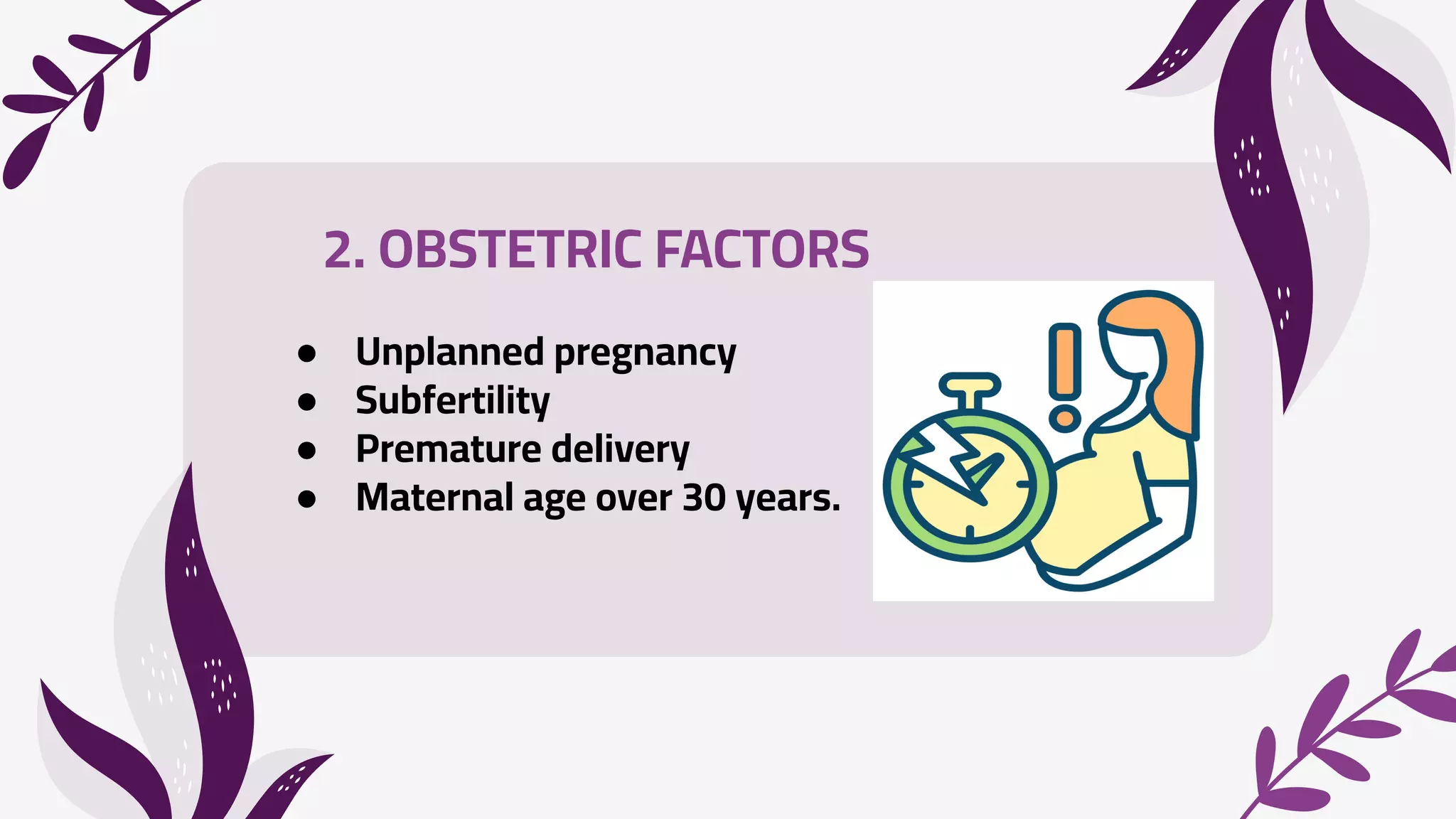
2. OBSTETRIC FACTORS
● Unplanned pregnancy
● Subfertility
● Premature delivery
● Maternal age over 30 years.
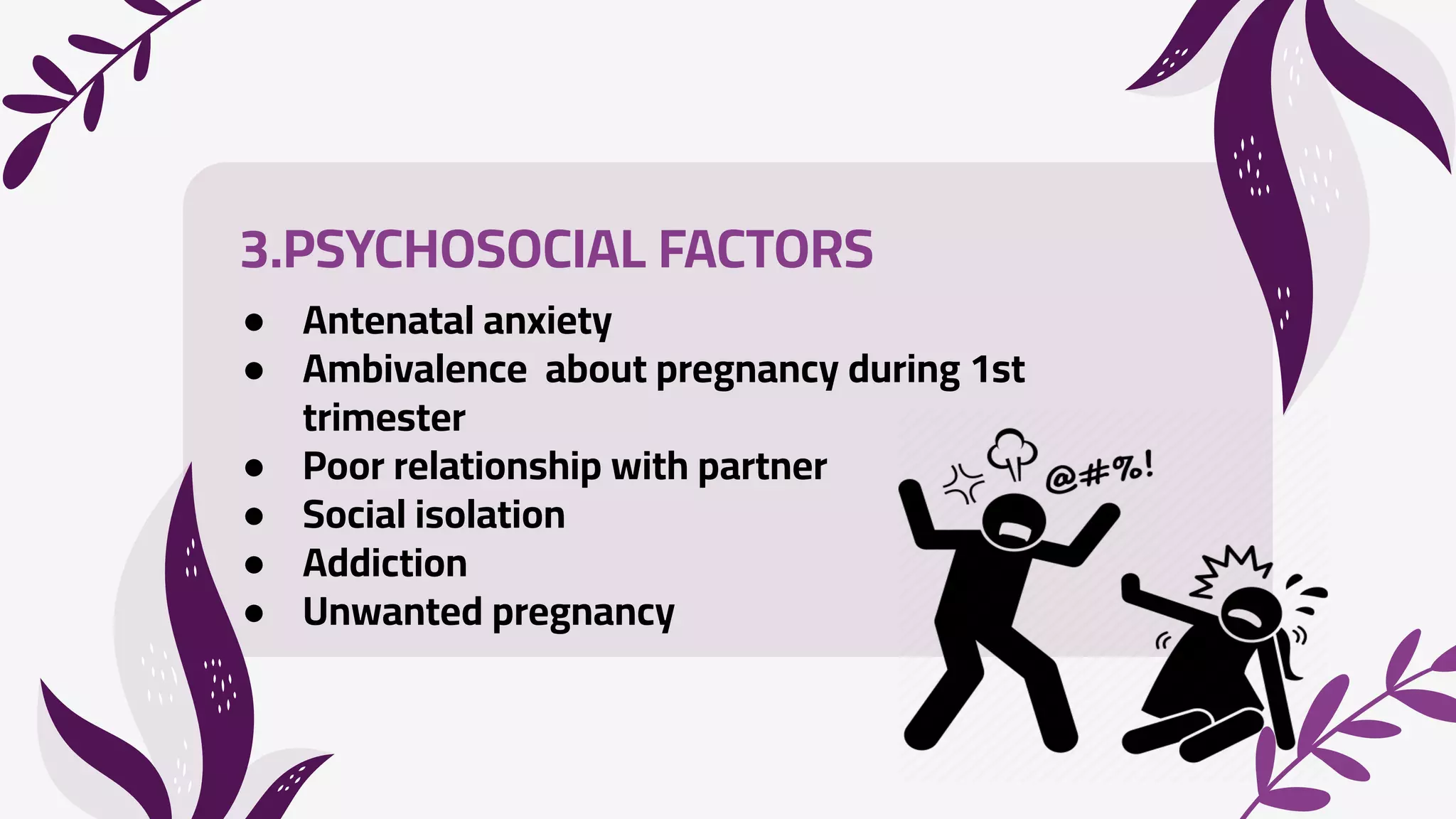
3.PSYCHOSOCIAL FACTORS
● Antenatal anxiety
● Ambivalence about pregnancy during 1st
trimester
● Poor relationship with partner
● Social isolation
● Addiction
● Unwanted pregnancy
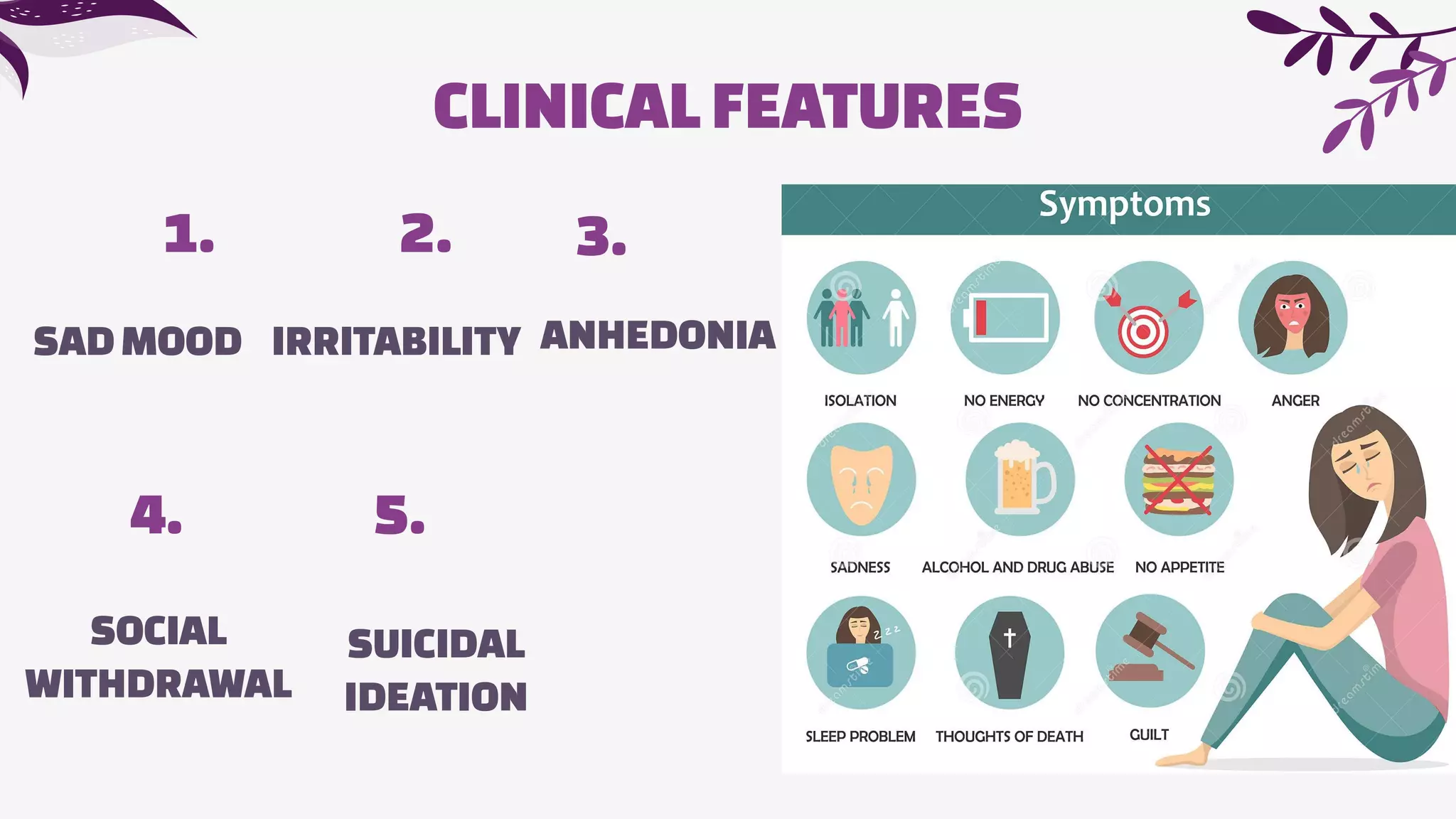
SADMOOD
1.
IRRITABILITY
2.
ANHEDONIA
3.
SOCIAL
WITHDRAWAL
4.
SUICIDAL
IDEATION
5.
CLINICAL FEATURES
TREATMENT
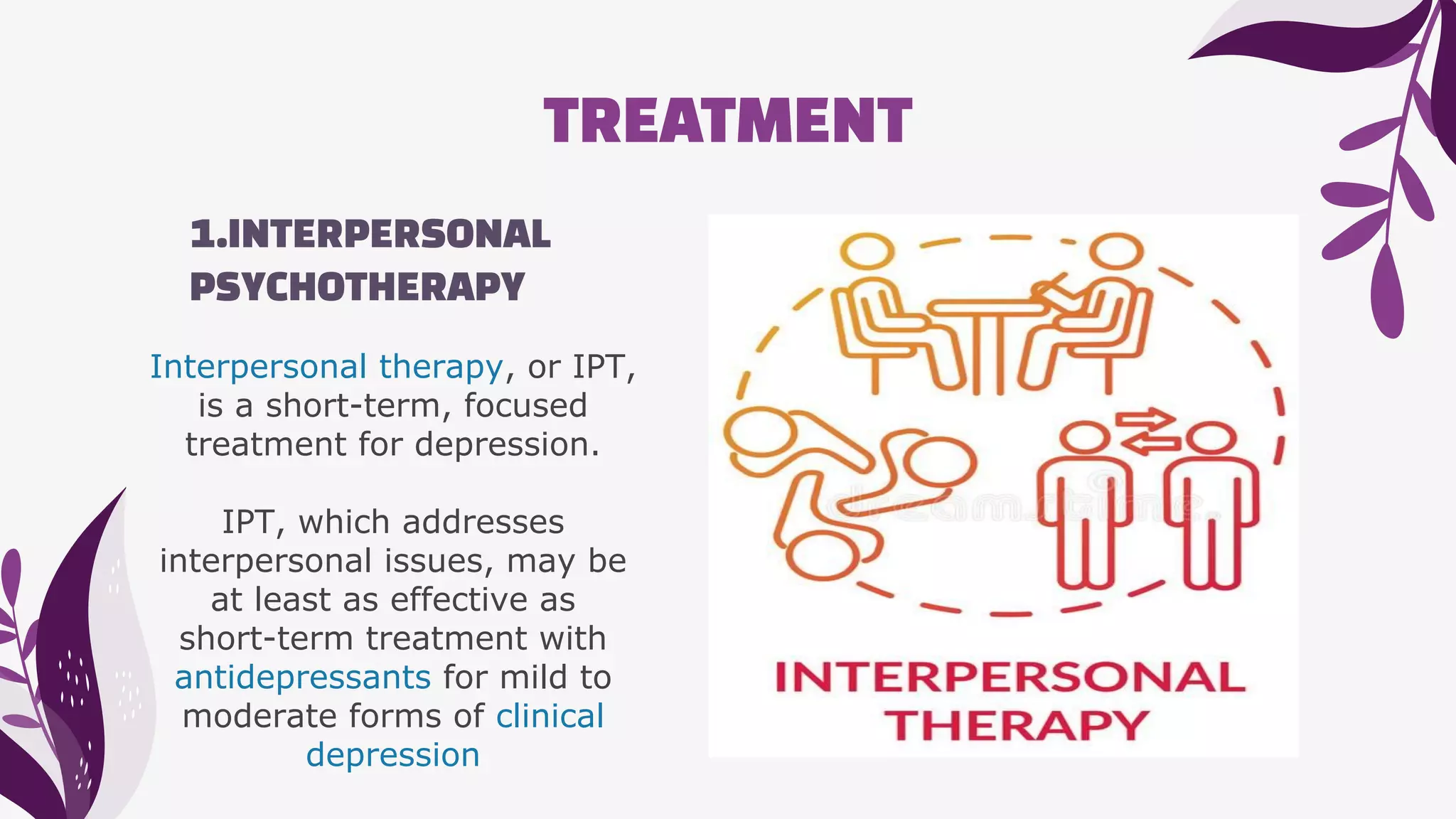
1.INTERPERSONAL
PSYCHOTHERAPY
Interpersonal therapy, or IPT,
is a short-term, focused
treatment for depression.
IPT, which addresses
interpersonal issues, may be
at least as effective as
short-term treatment with
antidepressants for mild to
moderate forms of clinical
depression
TREATMENT
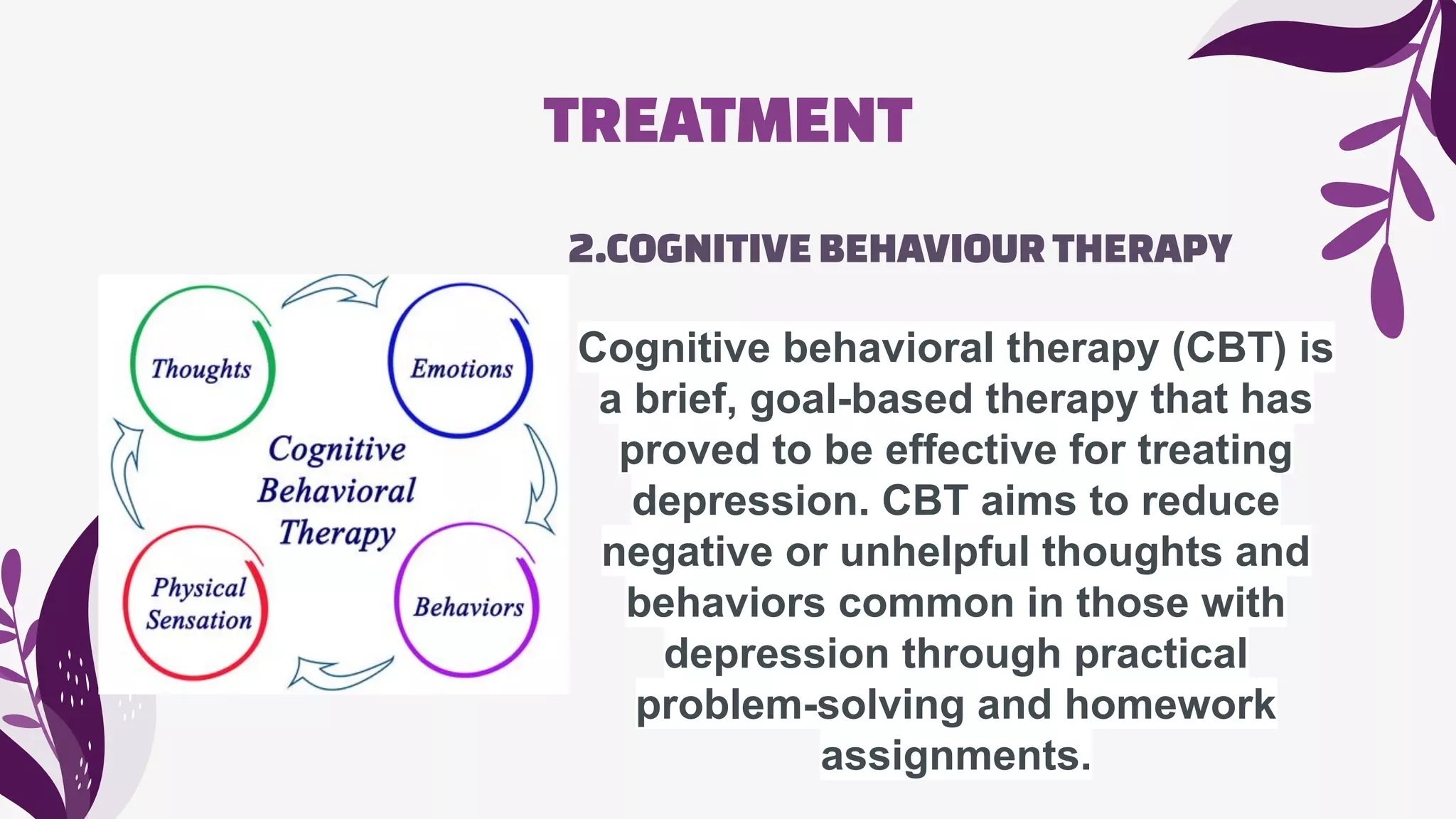
2.COGNITIVEBEHAVIOURTHERAPY
Cognitive behavioral therapy (CBT) is
a brief, goal-based therapy that has
proved to be effective for treating
depression. CBT aims to reduce
negative or unhelpful thoughts and
behaviors common in those with
depression through practical
problem-solving and homework
assignments.
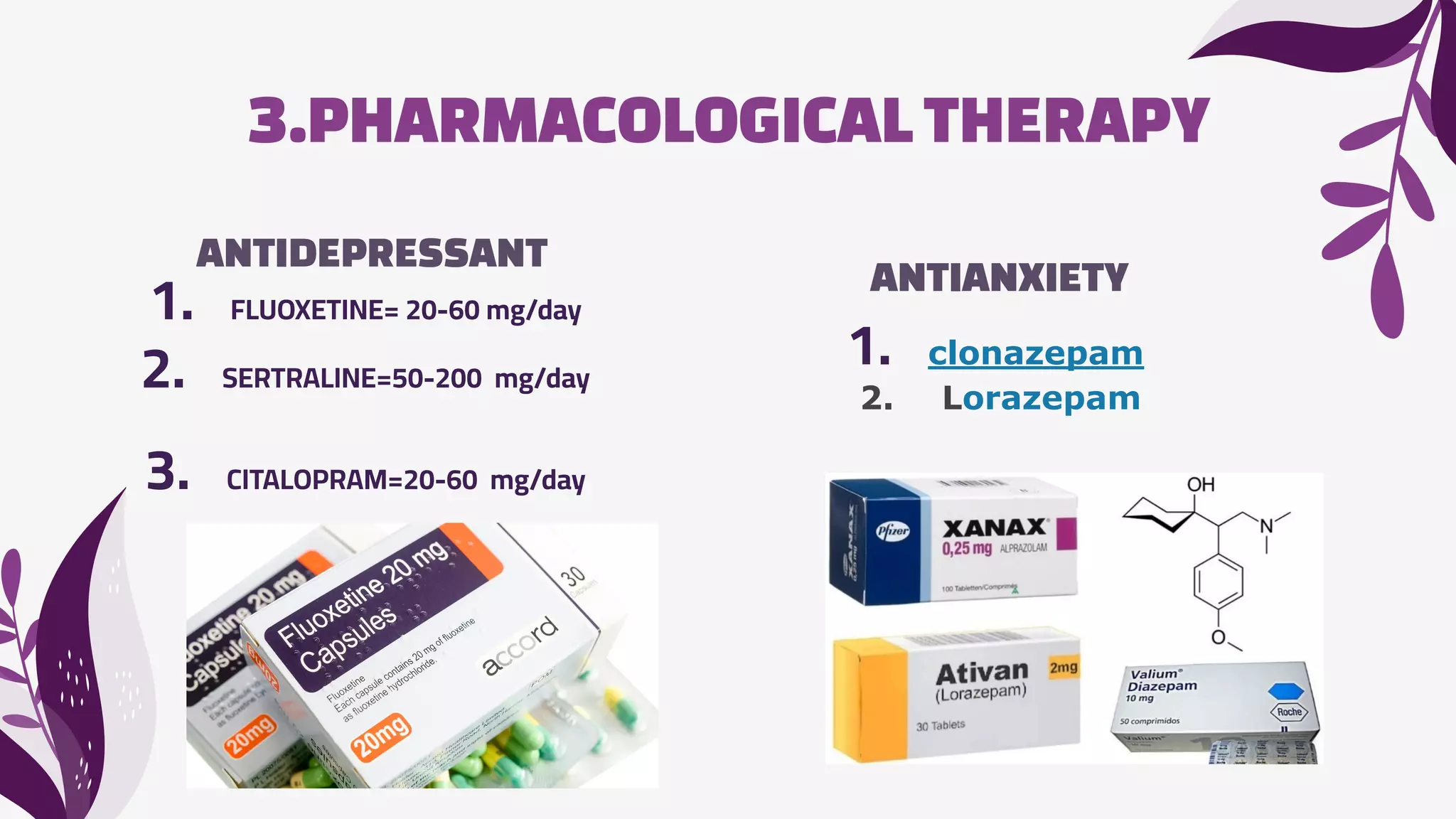
3.PHARMACOLOGICAL THERAPY
ANTIDEPRESSANT
ANTIANXIETY
1. clonazepam
2. Lorazepam
1. FLUOXETINE= 20-60 mg/day
2. SERTRALINE=50-200 mg/day
3. CITALOPRAM=20-60 mg/day
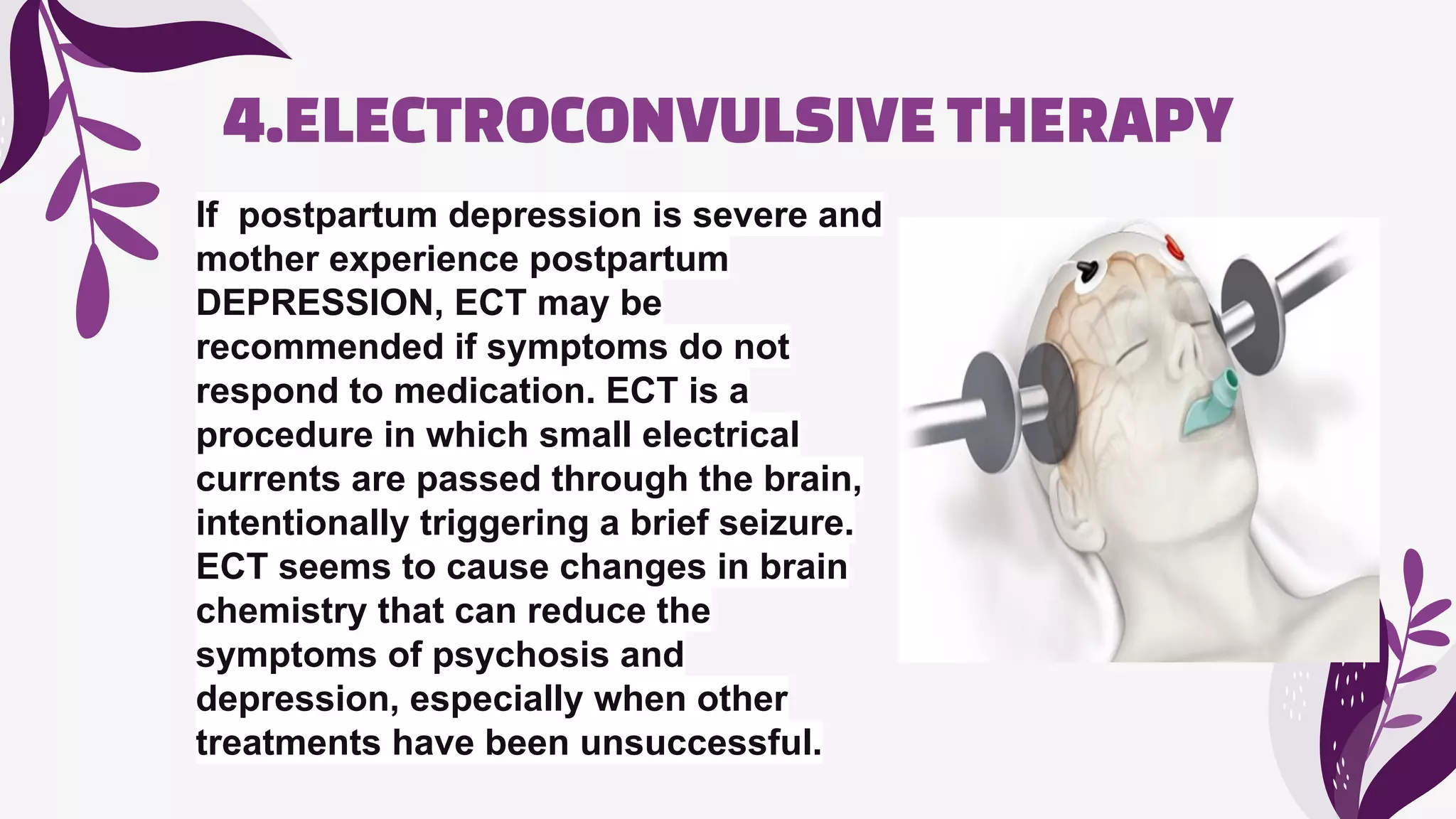
4.ELECTROCONVULSIVE THERAPY
If postpartum depression is severe and
mother experience postpartum
DEPRESSION, ECT may be
recommended if symptoms do not
respond to medication. ECT is a
procedure in which small electrical
currents are passed through the brain,
intentionally triggering a brief seizure.
ECT seems to cause changes in brain
chemistry that can reduce the
symptoms of psychosis and
depression, especially when other
treatments have been unsuccessful.
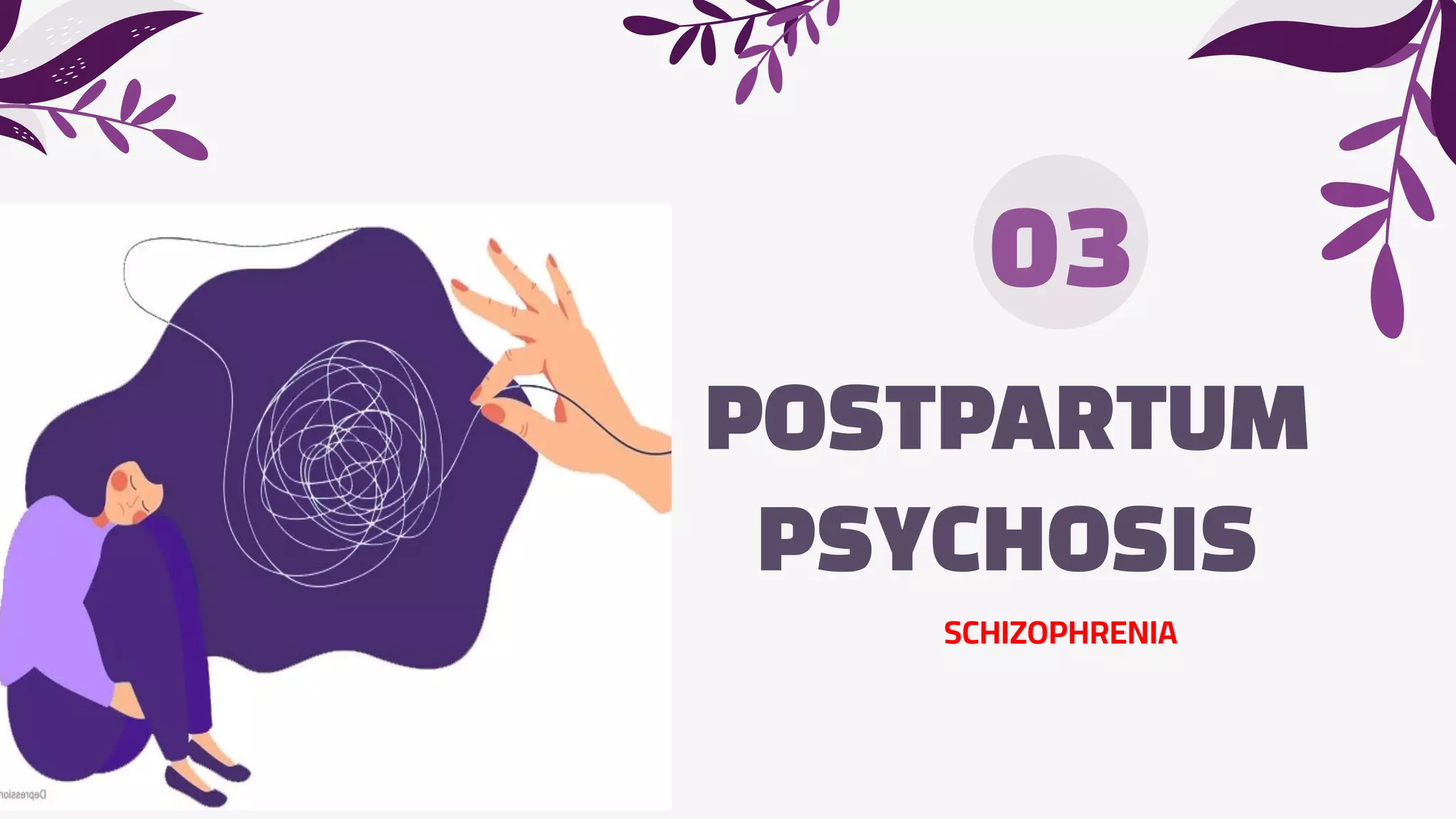
POSTPARTUM
PSYCHOSIS
03
SCHIZOPHRENIA
POSTPARTUM PSYCHOSIS
Postpartum is a psychiatric emergency
that typically require hospitalisation.
It is a rare event that occur in
approximately 1-2% per 100 women
after childbirth.
Onset is relatively sudden usually within
4 days of delivery.
AFFECTIVE
01
SCHIZOPHRENIFORM
02
ACUTEORGANIC
PSYCHOSIS
03
CLINICAL FEATURES
AFFECTIVE
CLINICALFEATURES
TREATMENT
● CONSULT PSYCHIATRIST URGENTLY
● ADMISSION IS NEEDED
● CHLORPROMAZINE: 150MG STAT,
50-150 mg tds/day
● ELECTROCONVULSIVE THERAPY
● LITHIUM: IS INDICATED N MANIC
DEPRESSIVE PSYCHOSIS
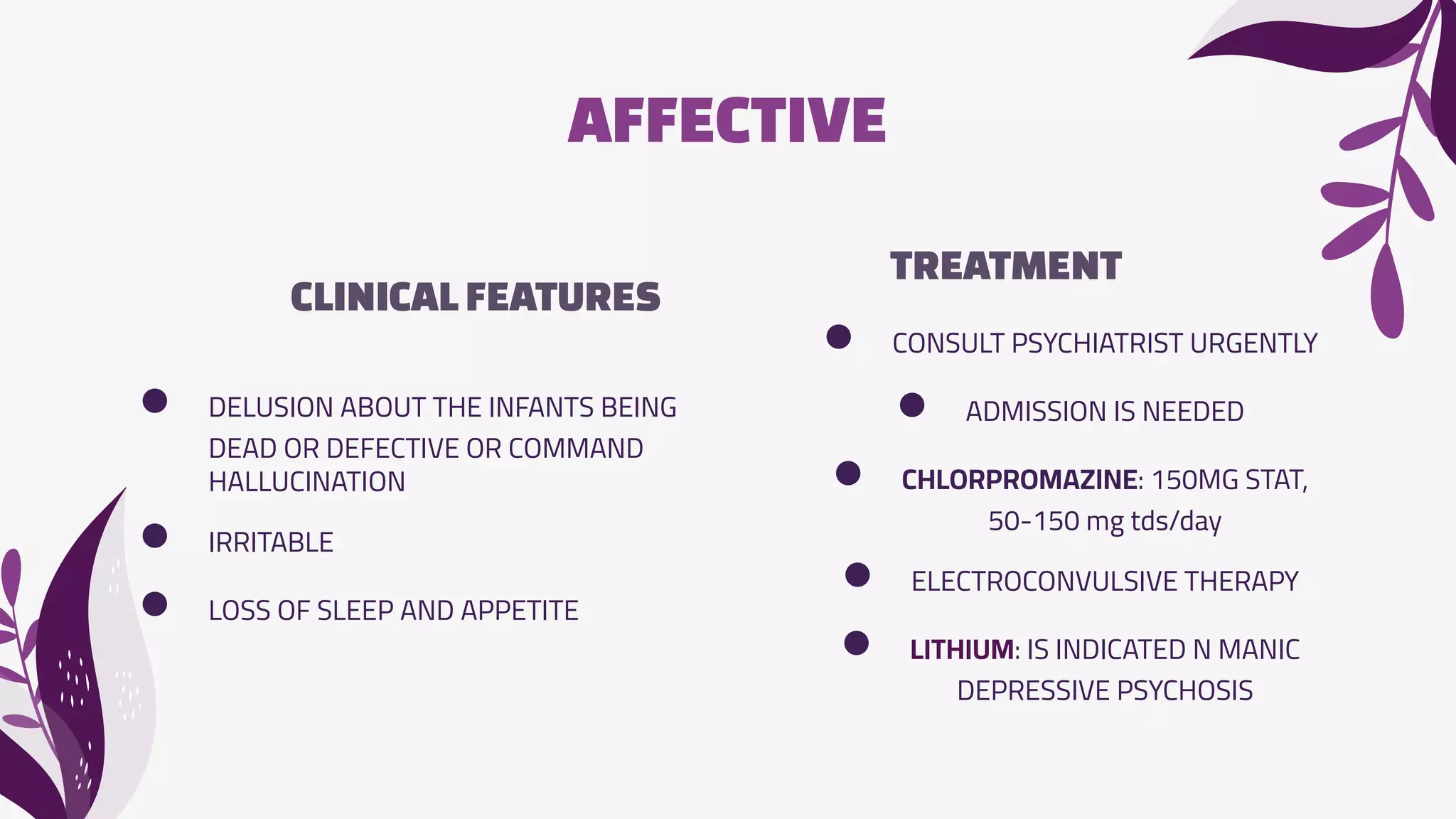
● DELUSION ABOUT THE INFANTS BEING
DEAD OR DEFECTIVE OR COMMAND
HALLUCINATION
● IRRITABLE
● LOSS OF SLEEP AND APPETITE
SCHIZOPHRENIFORM
CLINICALFEATURES
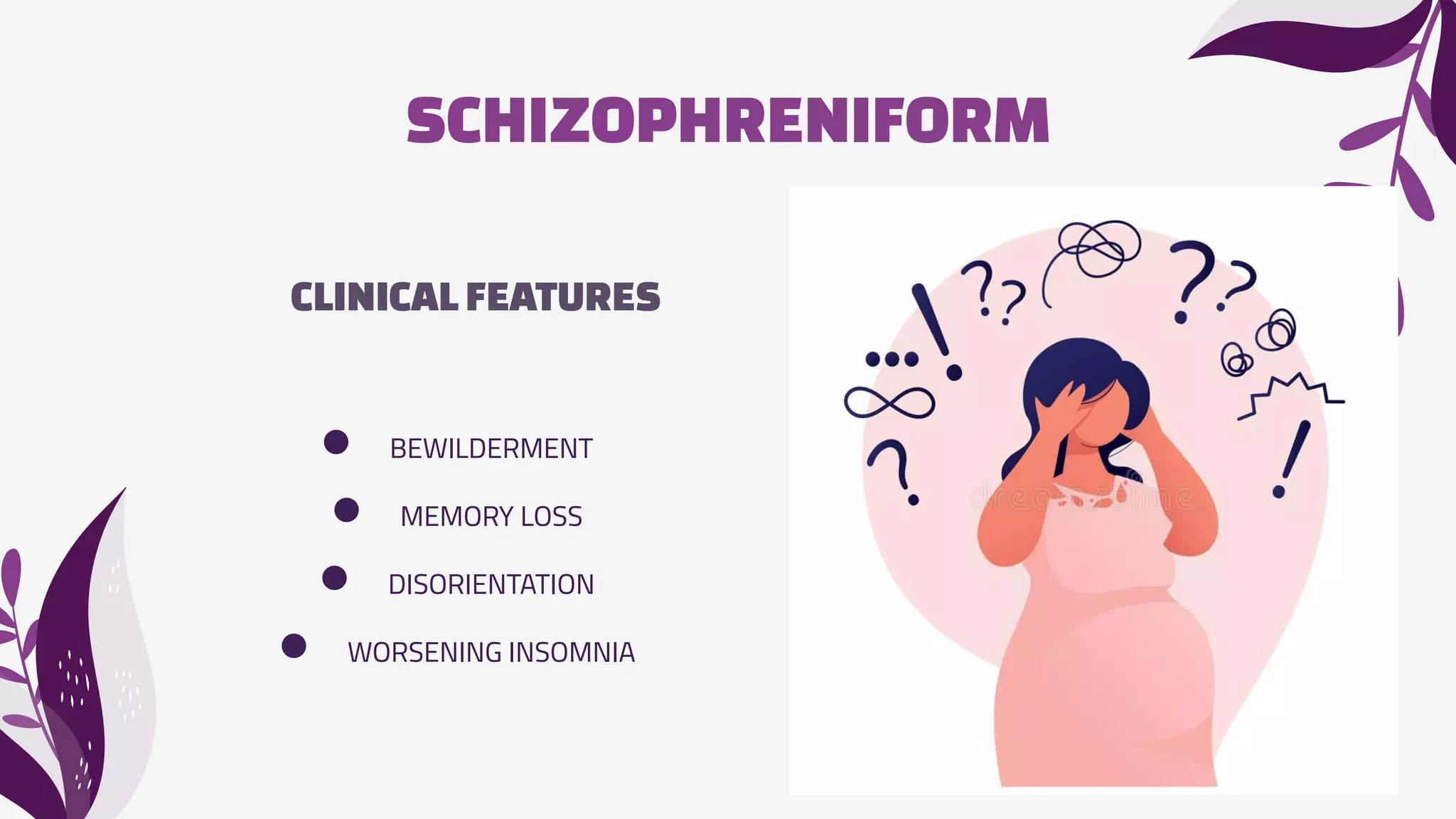
● BEWILDERMENT
● MEMORY LOSS
● DISORIENTATION
● WORSENING INSOMNIA
ACUTEORGANIC PSYCHOSIS
CLINICALFEATURES
● PSYCHOMOTOR PSYCHOSIS
● PERPLEXITY
● SUICIDE AND INFANTICIDE MAY BE
A SIGNIFICANT PROBLEM
CAUSES
1. Previous family history of psychosis
2. Low level of estrogen: reduction in serum estrogen is
associated with the development of postsynaptic dopamine
receptor supersenstivity with may precipitate the onset of
psychosis in vulnerable individual.
NURSINGMANAGEMENT
● Listen to the women regarding her adjustment to role
of mother and observe for any clinical manifestation
suggesting depression.
● Ask the women about the infant’s behaviour. Negative
statements about the infant may suggest that the
women is having difficulty in coping.
● Providing support and encourage husband,family and
friends to support and assist with the infant and
mother.
NURSINGMANAGEMENT(CONT…)
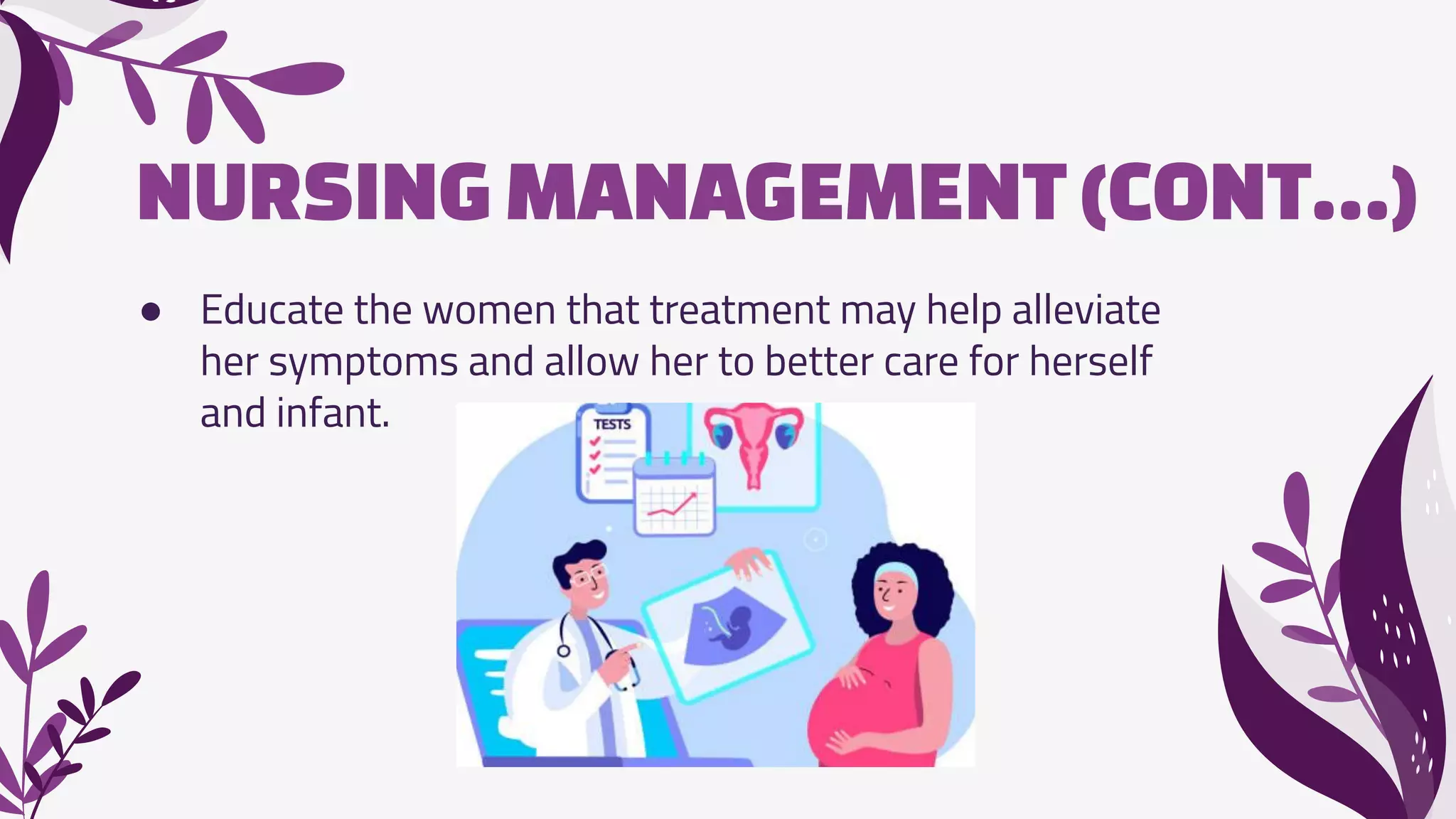
● Educate the women that treatment may help alleviate
her symptoms and allow her to better care for herself
and infant.
NURSINGDIAGNOSIS
● IMPAIRED PARENTING RELATED TO
DEPRESSION
● RISK FOR INEFFECTIVE COPING RELATED
TO DEPRESSION
● RISK FOR MATERNAL ROLE ATTAINMENT
RELATED TO PSYCHOSIS
PREVENTION
It is not possible to reliably predict which women in general
population will experience postpartum mood disturbance.
However it is possible to identify certain high risk subgroups;
women with histories of affective illness are at particular risk
for puerperal worsening of mood.
The identification of women at greater risk for puerperal
illness improves the likelihood of early diagnosis and
treatment and provide an opportunity to limit morbidity in
mother and her infant.
DISCUSSION
SUMMARY
We had discussed about the
● INTRODUCTION
● CLASSIFICATION-
Maternity blue,
postpartum depression,
postpartum psychosis
● CLINICAL; FEATURES AND
TREATMENT
● NURSING MANAGEMENT
● NURSING DIAGNOSIS
● PREVENTION
EVALUATION
1. CLASSIFICATION OF MENTAL DISORDER DIVIDED INTO HOW MANY
CATEGORIES?
2. DEFINE MATERNITY BLUES.
3. WHAT ARE THE CLINICAL FEATURES OF MATERNITY BLUES?
4. WHICH DRUG IS GIVEN FOR THE TREATMENT OF THE MATERNITY
BLUES?
5. WHAT IS POSTPARTUM DEPRESSION?
6. ENLIST THE CAUSE OF POSTPARTUM DEPRESSION.
7. NAME ANY 2 CLINICAL FEATURES OF POSTPARTUM DEPRESSION.
EVALUATION(CONT.)
8. HOW POSTPARTUM DEPRESSION CAN BE TREATED?
9. POSTPARTUM PSYCHOSIS OCCUR IN APPROX.____________PER
1000 WOMEN AFTER CHILDBIRTH.
10. LIST DOWN THE CLINICAL FEATURES OF POSTPARTUM
PSYCHOSIS.
11. ENLIST THE NURSING MANAGEMENT OF PSYCHOLOGICAL
COMPLICATIONS DURING PREGNANCY.
12.HOW PSYCHOLOGICAL COMPLICATIONS DURING PREGNANCY CAN
BE PREVENTED?
PSYCHOLOGICAL COMPLICATION DURING PREGNANCY.pdf

PSYCHOLOGICAL COMPLICATION DURING PREGNANCY.pdf