Downloaded 27 times


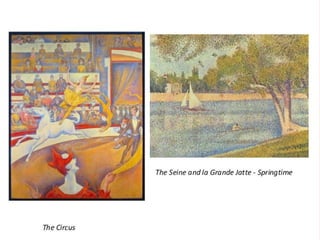


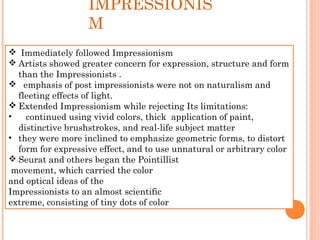


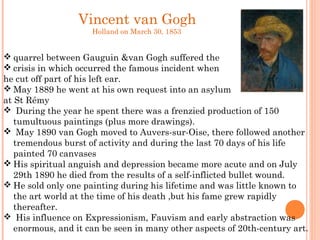


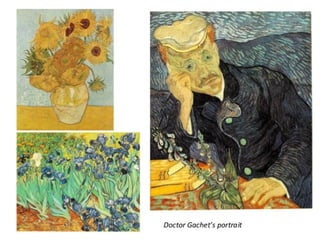


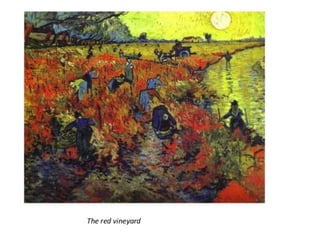

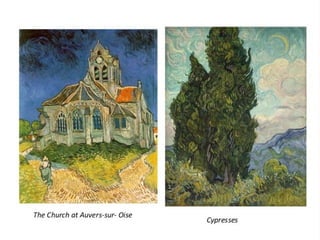


Neo-Impressionism and Post-Impressionism developed in France between 1885-1910 as artists extended Impressionism while rejecting its limitations. Pointillism carried Impressionism's color and optical ideas to a scientific extreme using tiny dots of paint. Paul Gauguin rejected Impressionism's naturalism, developing a Primitivist style influenced by folk art with exaggerated proportions and stark contrasts. His bold colors helped achieve success. Vincent van Gogh's emotional works had a frenzied production and immense influence despite selling few in his lifetime. Paul Cézanne's still lifes and landscapes formed a bridge between Impressionism and early 20th century Cubism.


