RE-INTERPRET
WELL-KNOWN PAINTINGS
ARTS & CRAFTS
Narval School, 1ºC ESO
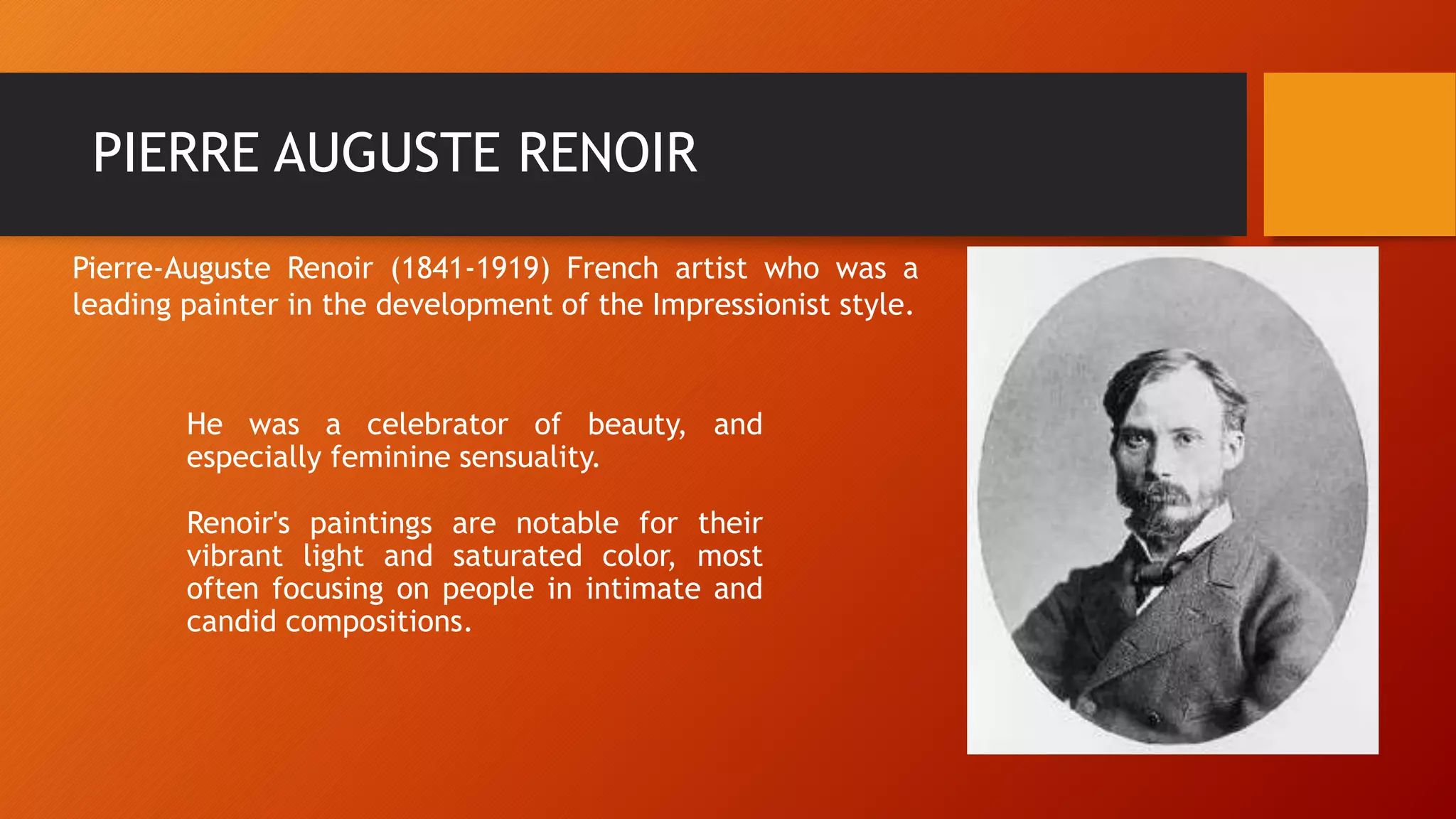
PIERRE AUGUSTE RENOIR
He was a celebrator of beauty, and
especially feminine sensuality.
Renoir's paintings are notable for their
vibrant light and saturated color, most
often focusing on people in intimate and
candid compositions.
Pierre-Auguste Renoir (1841-1919) French artist who was a
leading painter in the development of the Impressionist style.
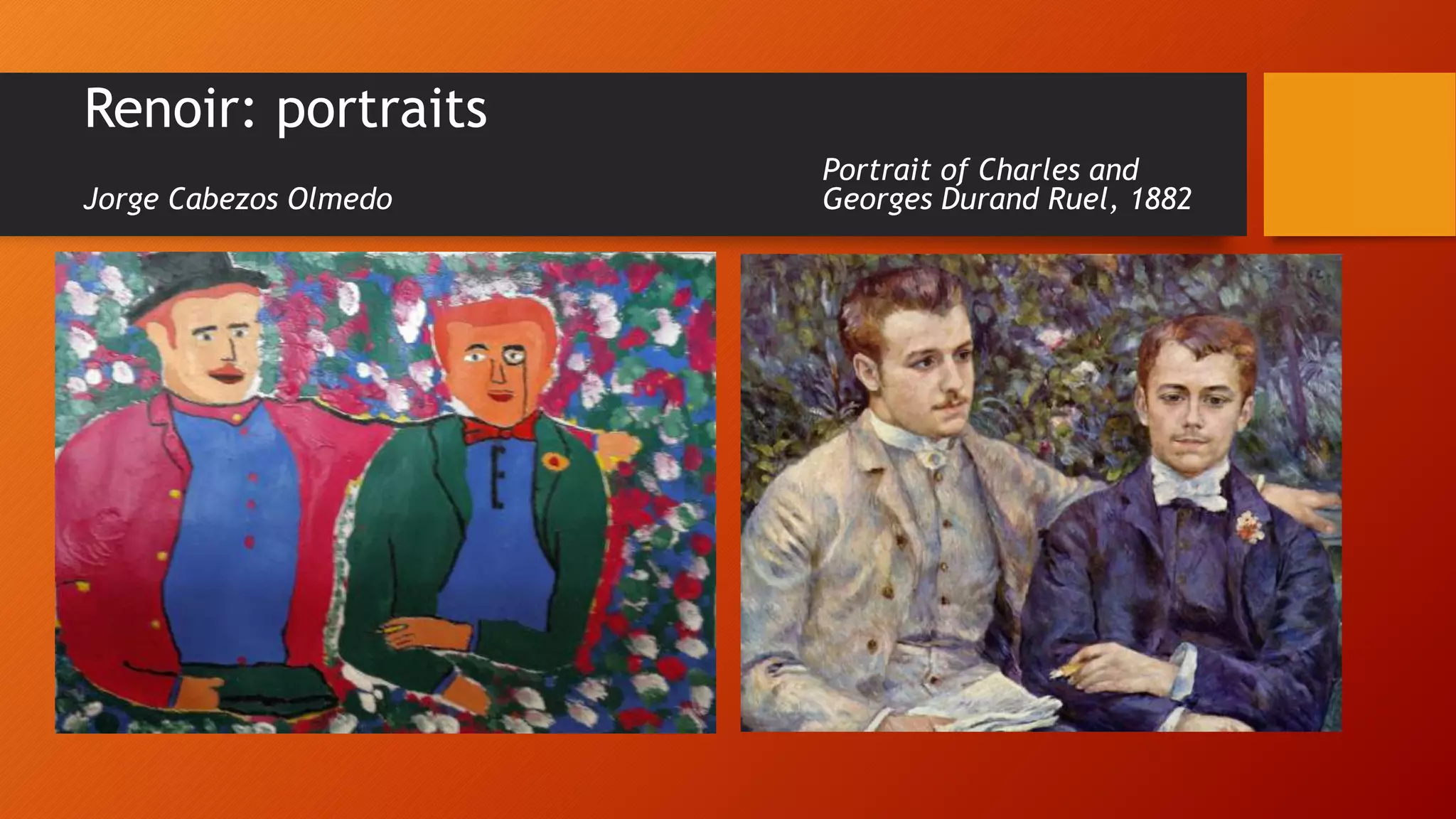
Renoir: portraits
Jorge Cabezos Olmedo
Portrait of Charles and
Georges Durand Ruel, 1882
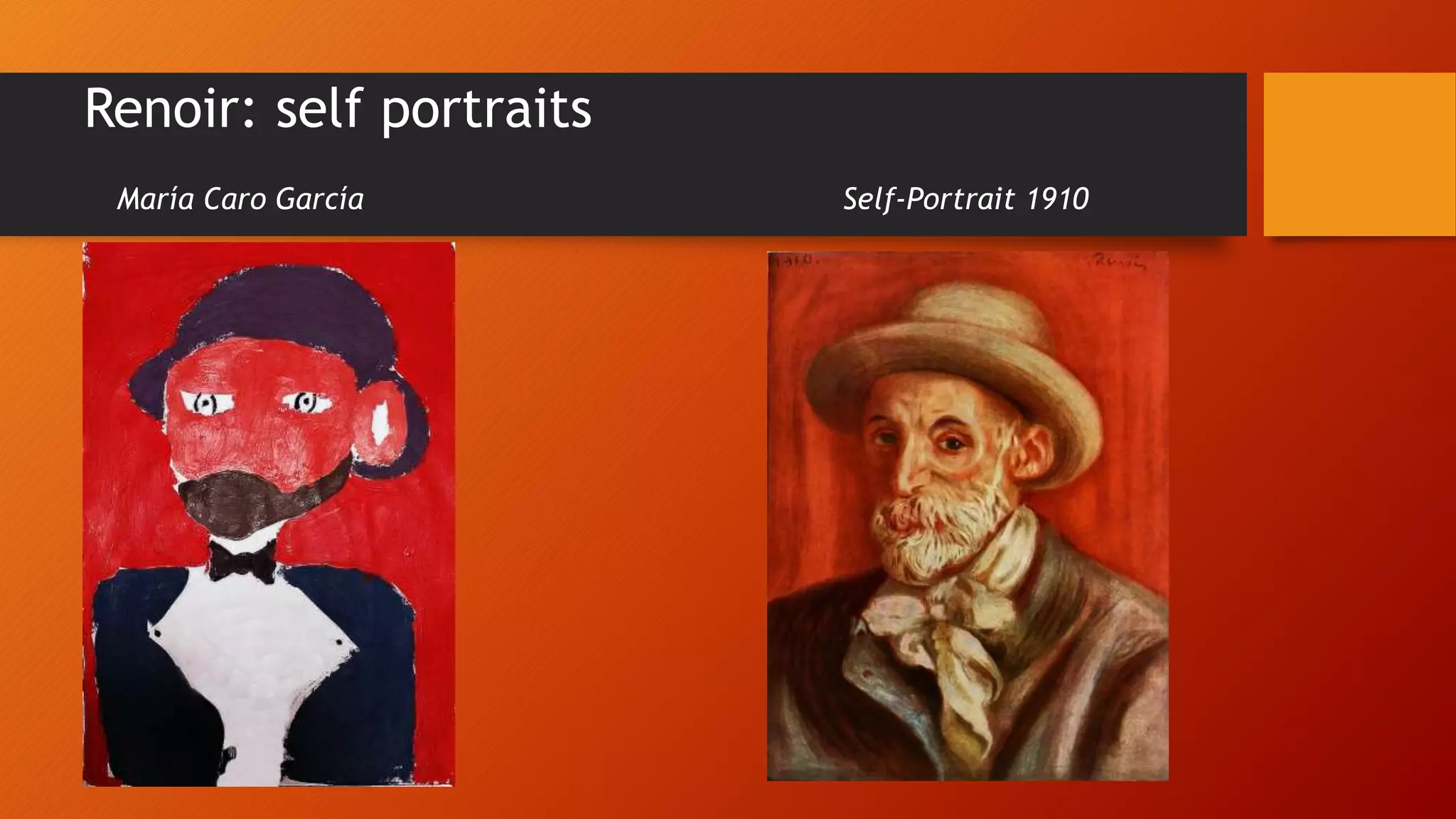
Renoir: self portraits
María Caro García Self-Portrait 1910
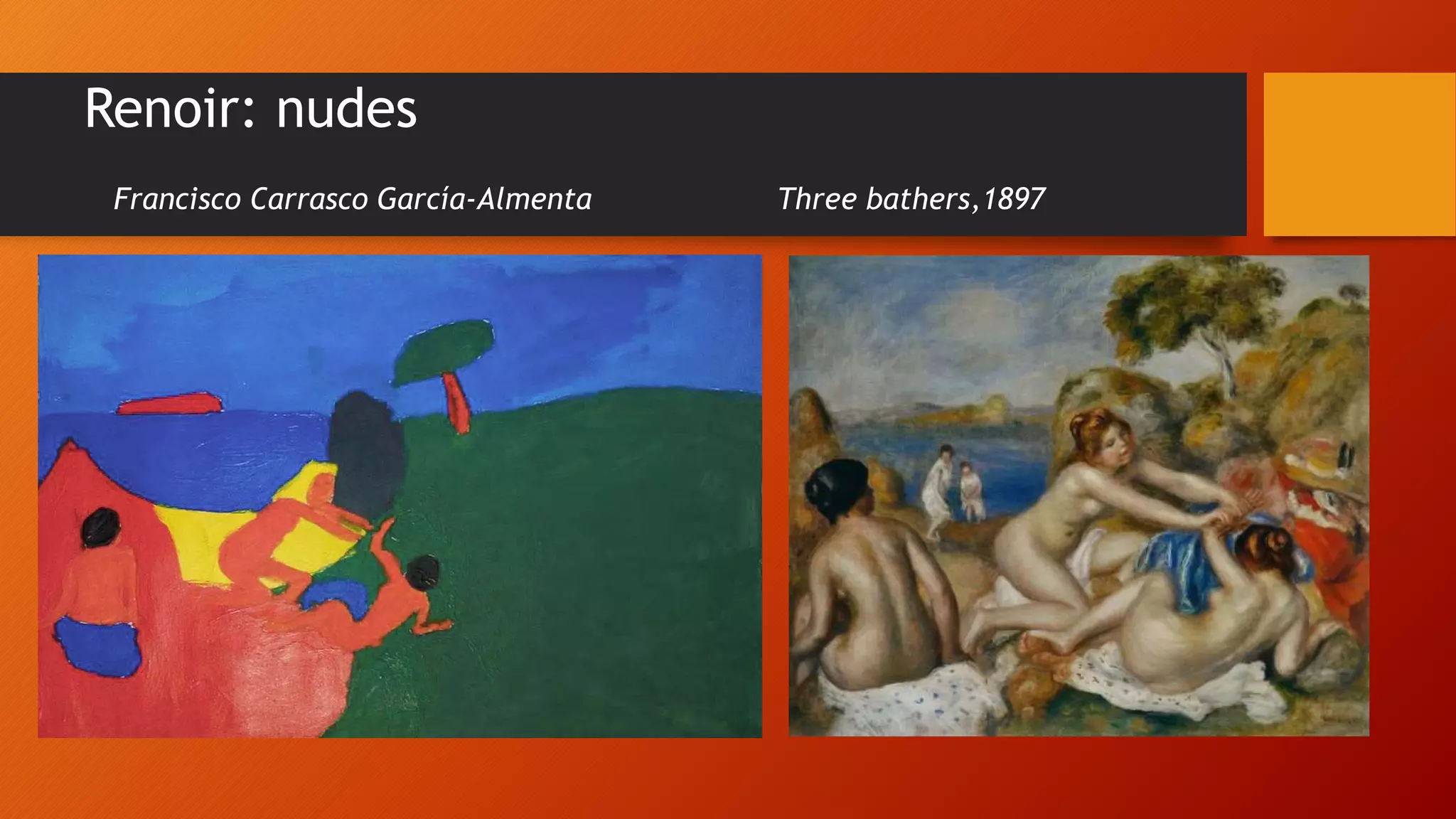
Renoir: nudes
Francisco Carrasco García-Almenta Three bathers,1897
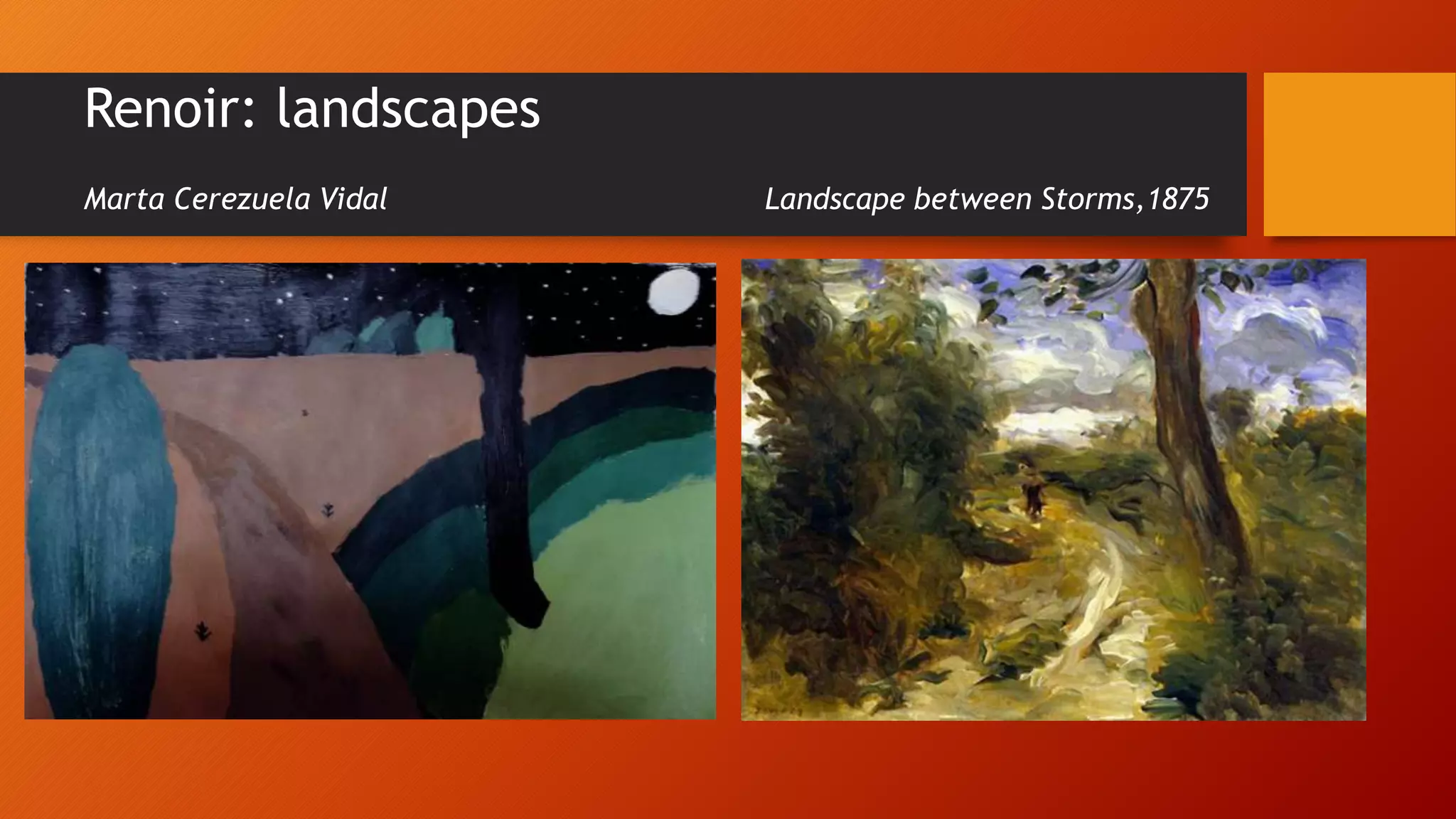
Renoir: landscapes
Marta Cerezuela Vidal Landscape between Storms,1875
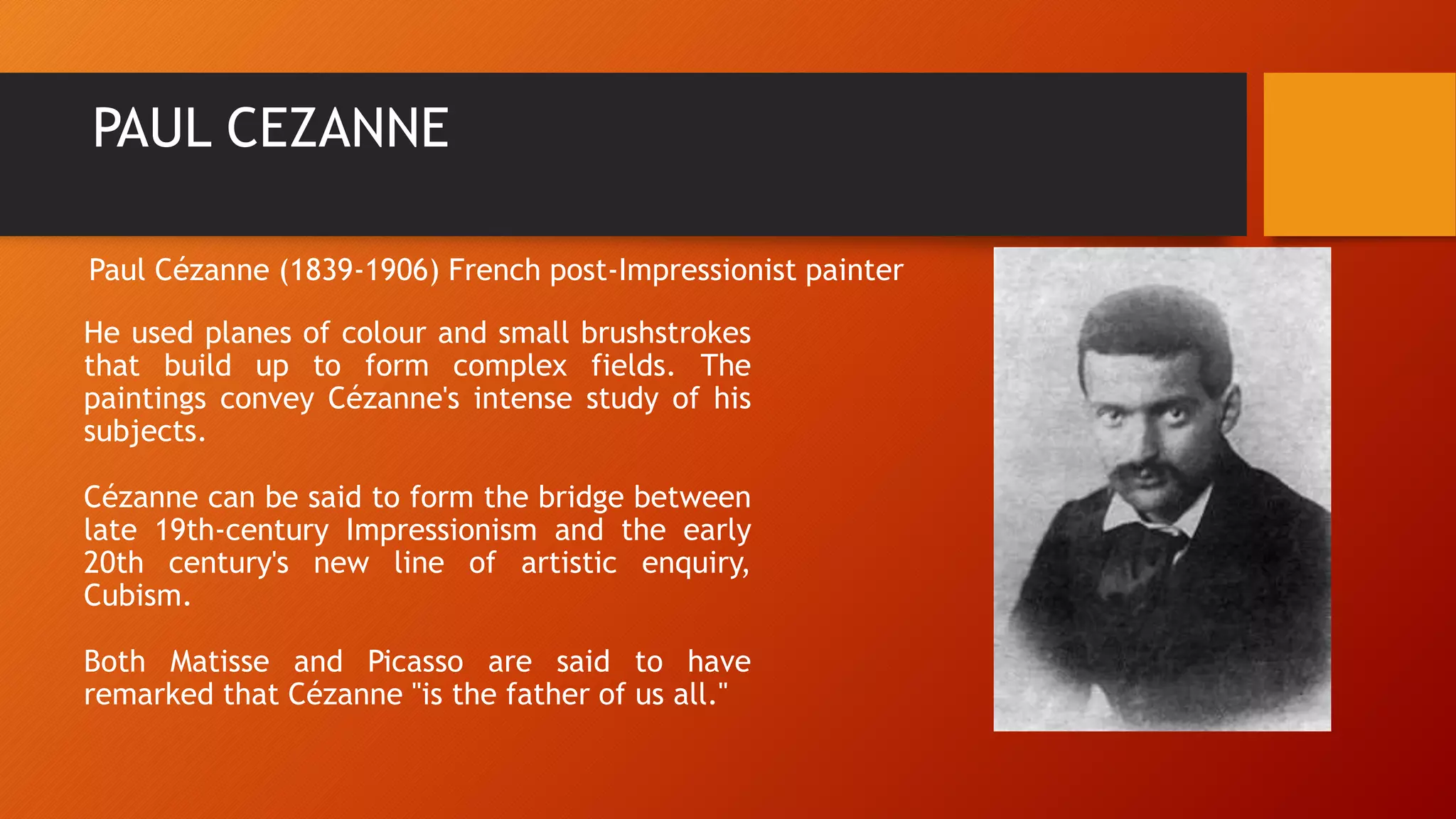
PAUL CEZANNE
He used planes of colour and small brushstrokes
that build up to form complex fields. The
paintings convey Cézanne's intense study of his
subjects.
Cézanne can be said to form the bridge between
late 19th-century Impressionism and the early
20th century's new line of artistic enquiry,
Cubism.
Both Matisse and Picasso are said to have
remarked that Cézanne "is the father of us all."
Paul Cézanne (1839-1906) French post-Impressionist painter
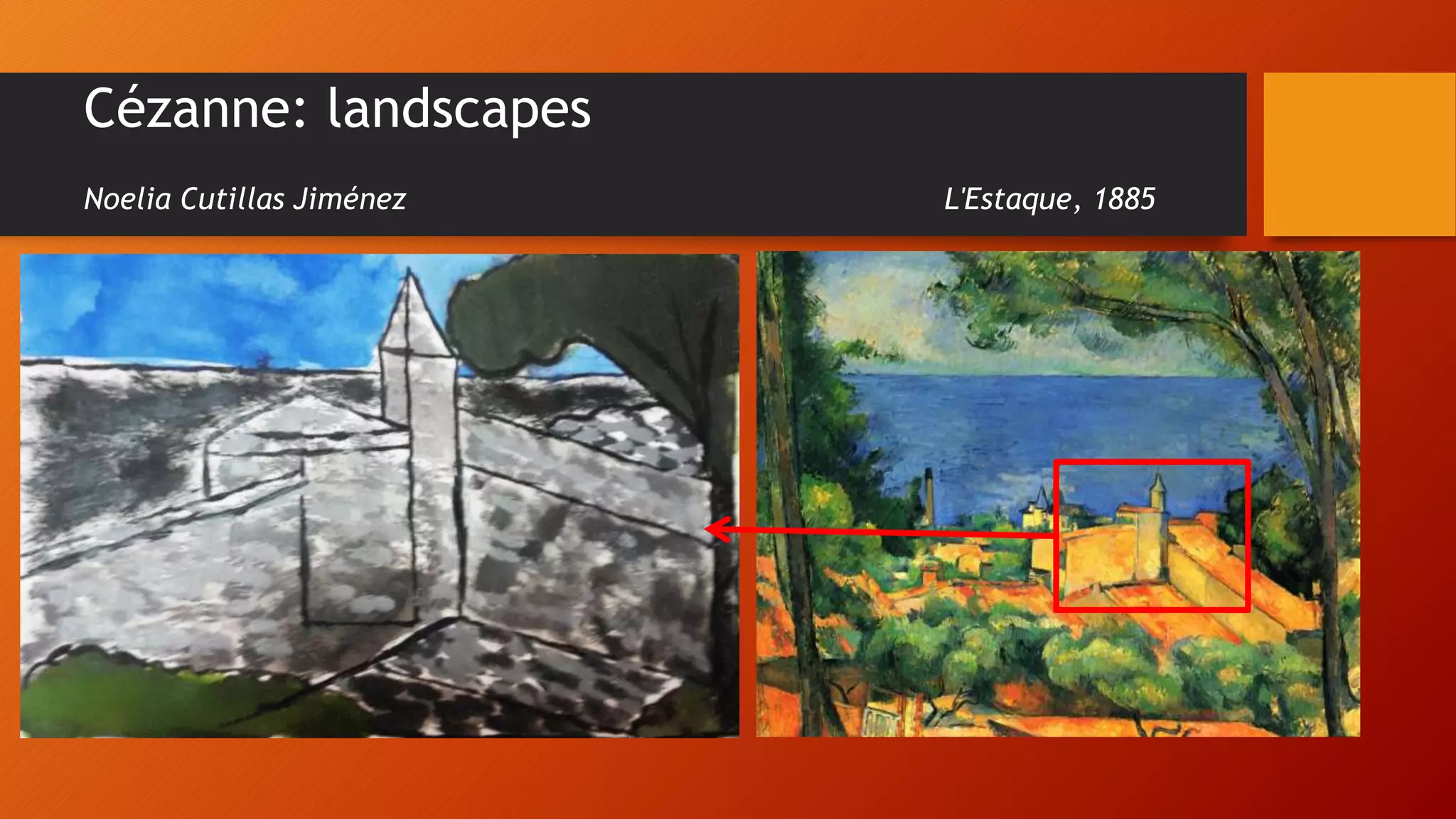
Cézanne: landscapes
Noelia Cutillas Jiménez L'Estaque, 1885
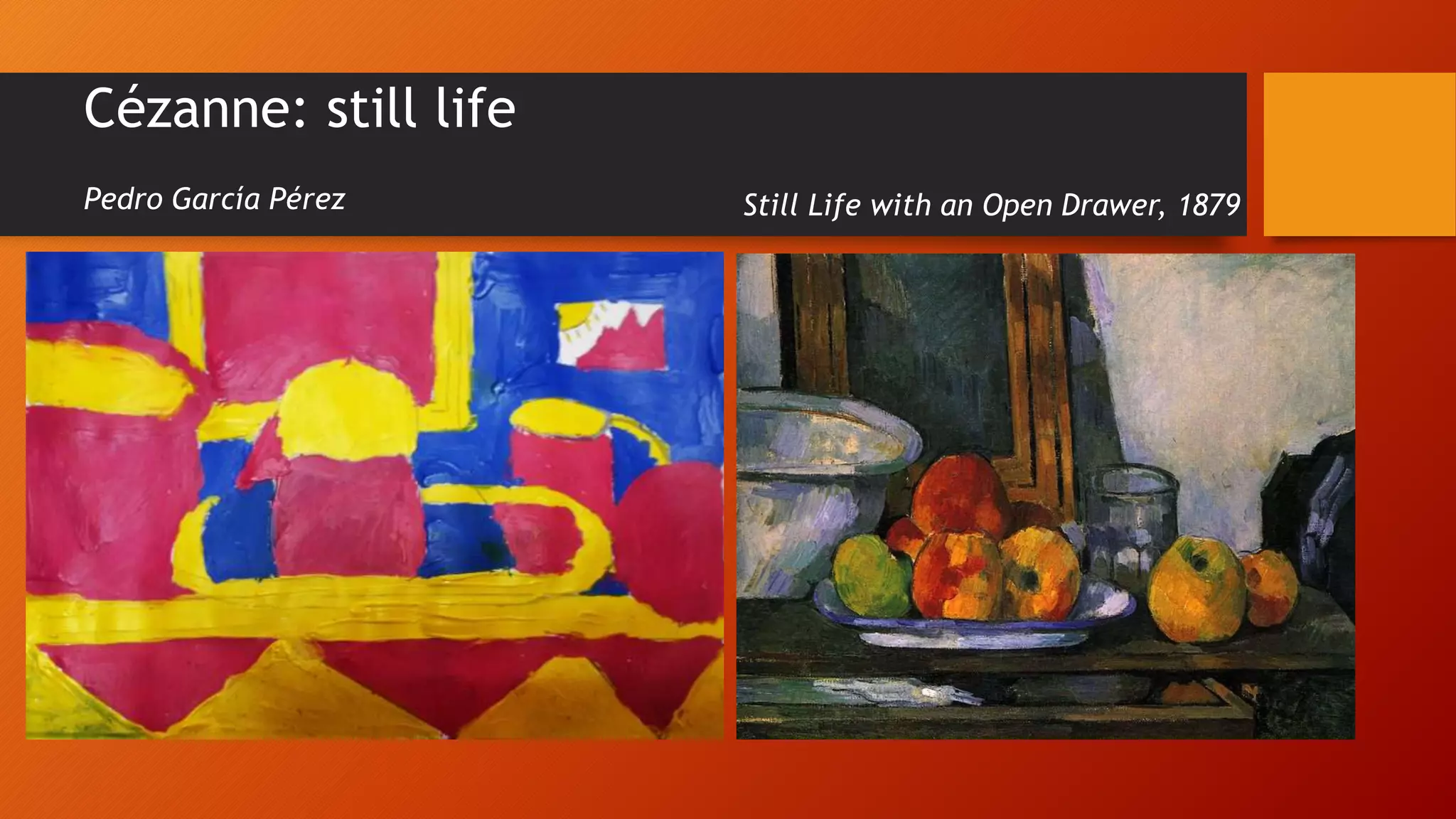
Cézanne: still life
Pedro García Pérez Still Life with an Open Drawer, 1879
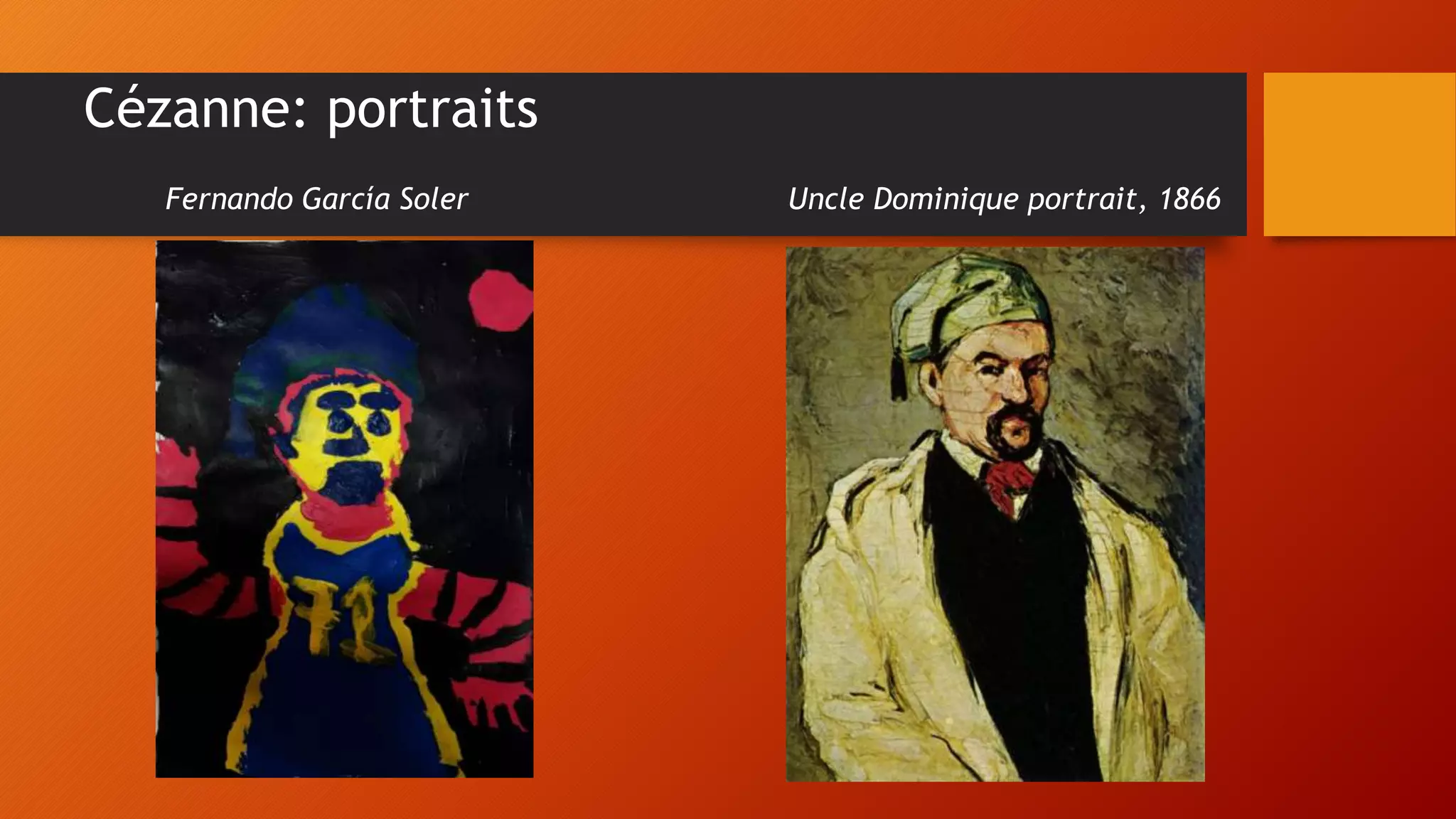
Cézanne: portraits
Fernando García Soler Uncle Dominique portrait, 1866
VINCENT VAN GOGH
His work had a great influence on 20th century art.
He moved to Paris and discovered the French Impressionists.
During his life he suffered frequent bouts of mental illness.
He produced over 2,500 artworks
He died aged 37 from a gunshot wound, generally accepted to
be self-inflicted (although no gun was ever found).
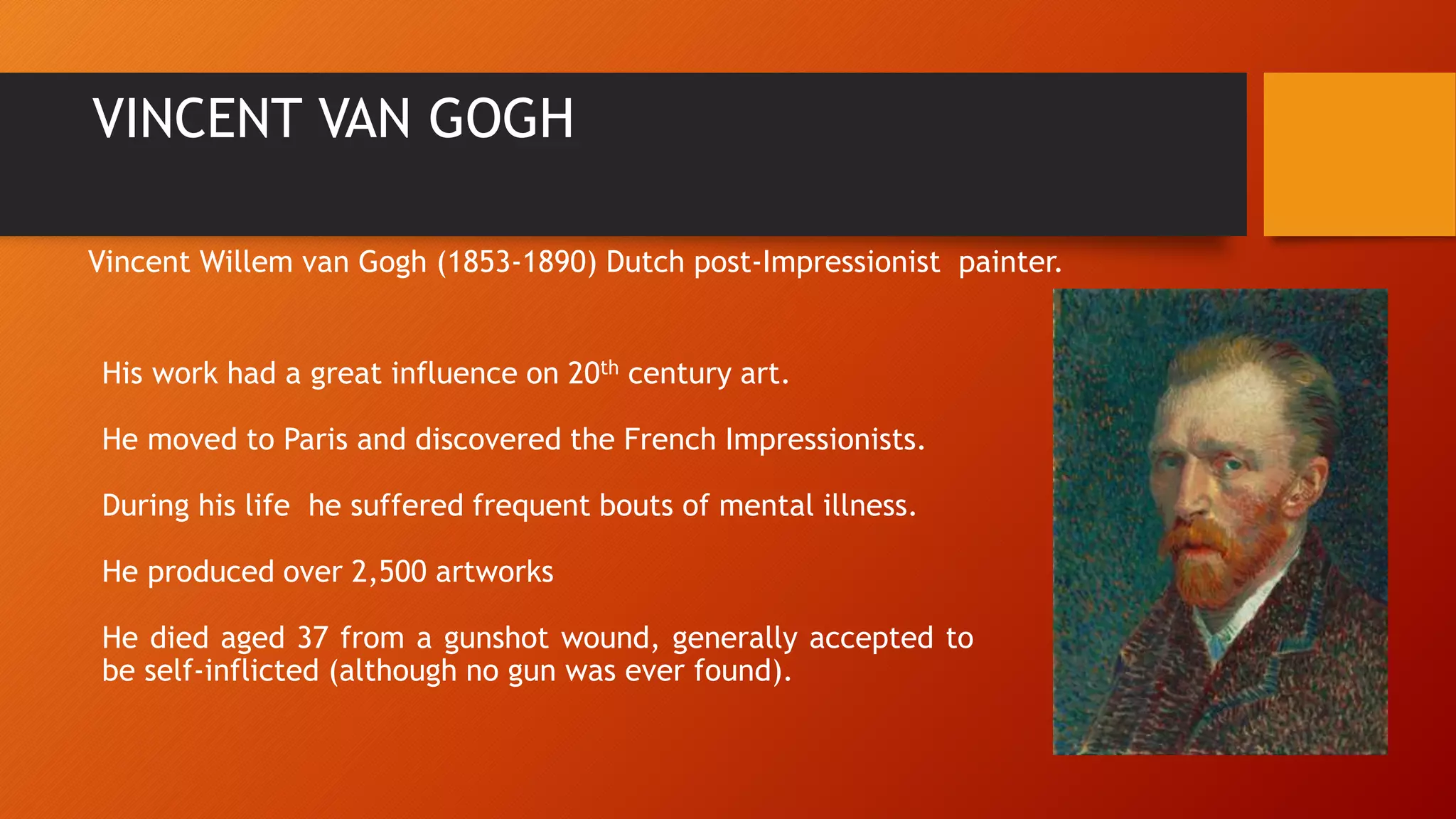
Vincent Willem van Gogh (1853-1890) Dutch post-Impressionist painter.
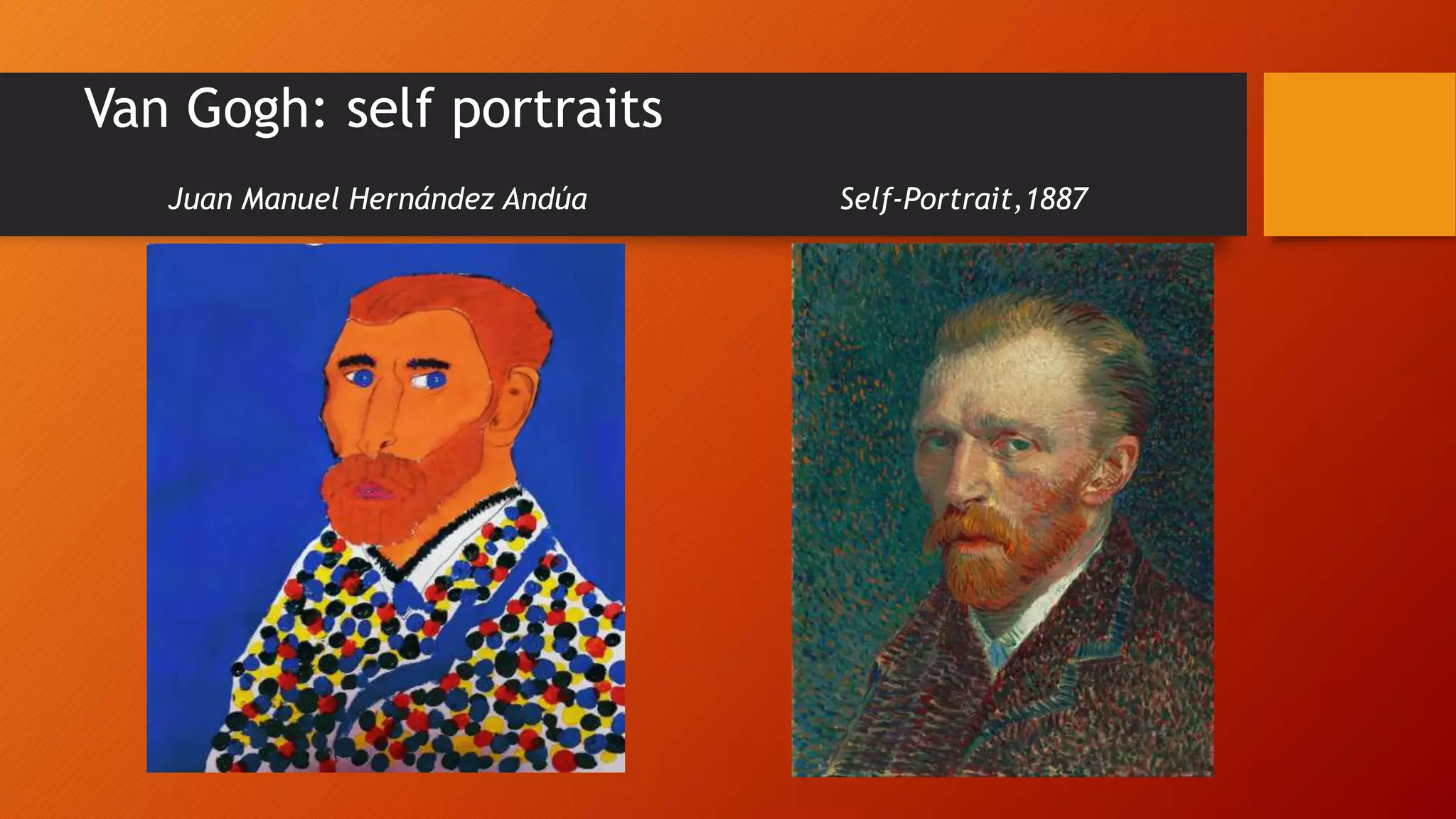
Van Gogh: self portraits
Juan Manuel Hernández Andúa Self-Portrait,1887
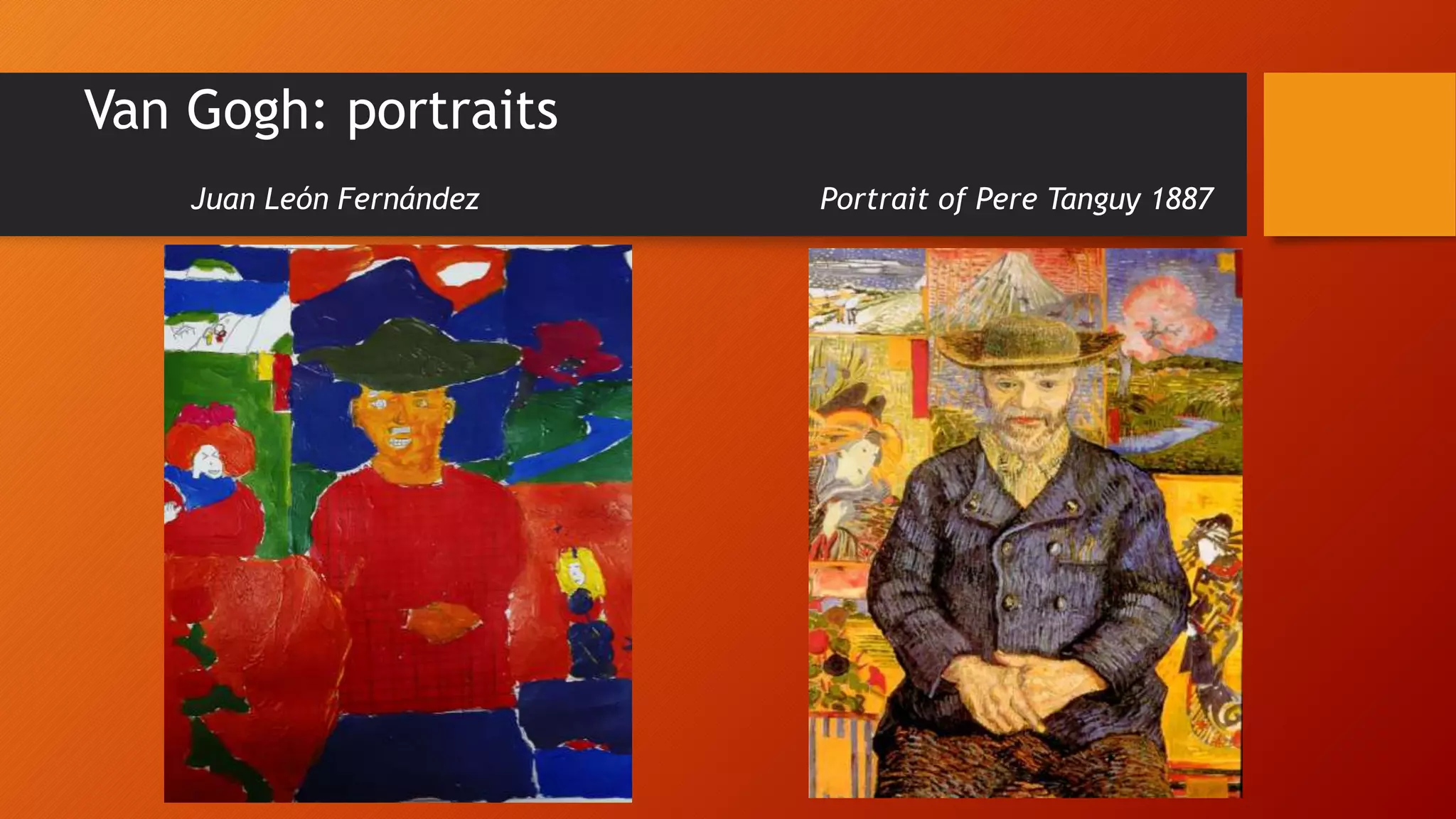
Van Gogh: portraits
Juan León Fernández Portrait of Pere Tanguy 1887
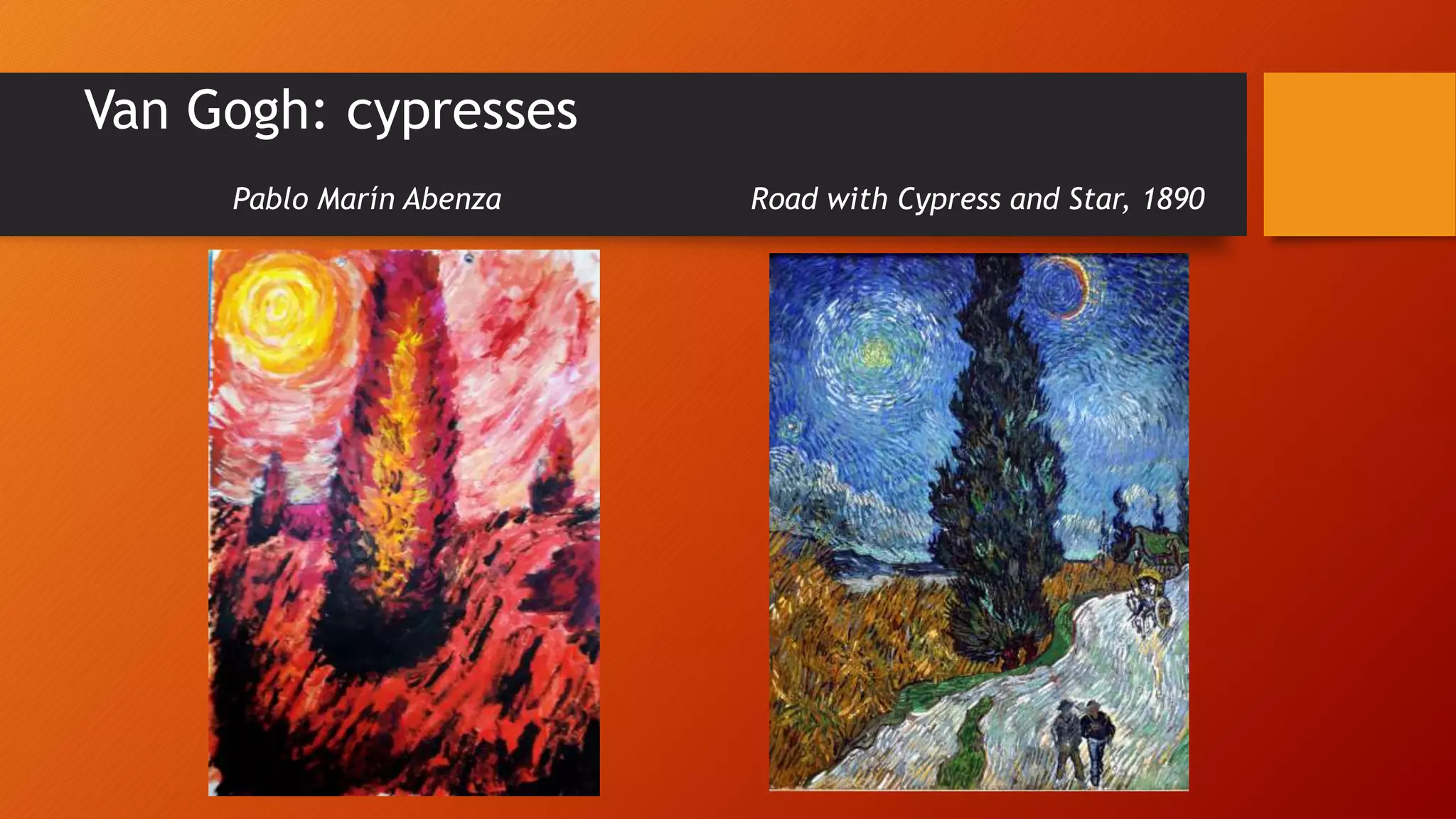
Van Gogh: cypresses
Pablo Marín Abenza Road with Cypress and Star, 1890
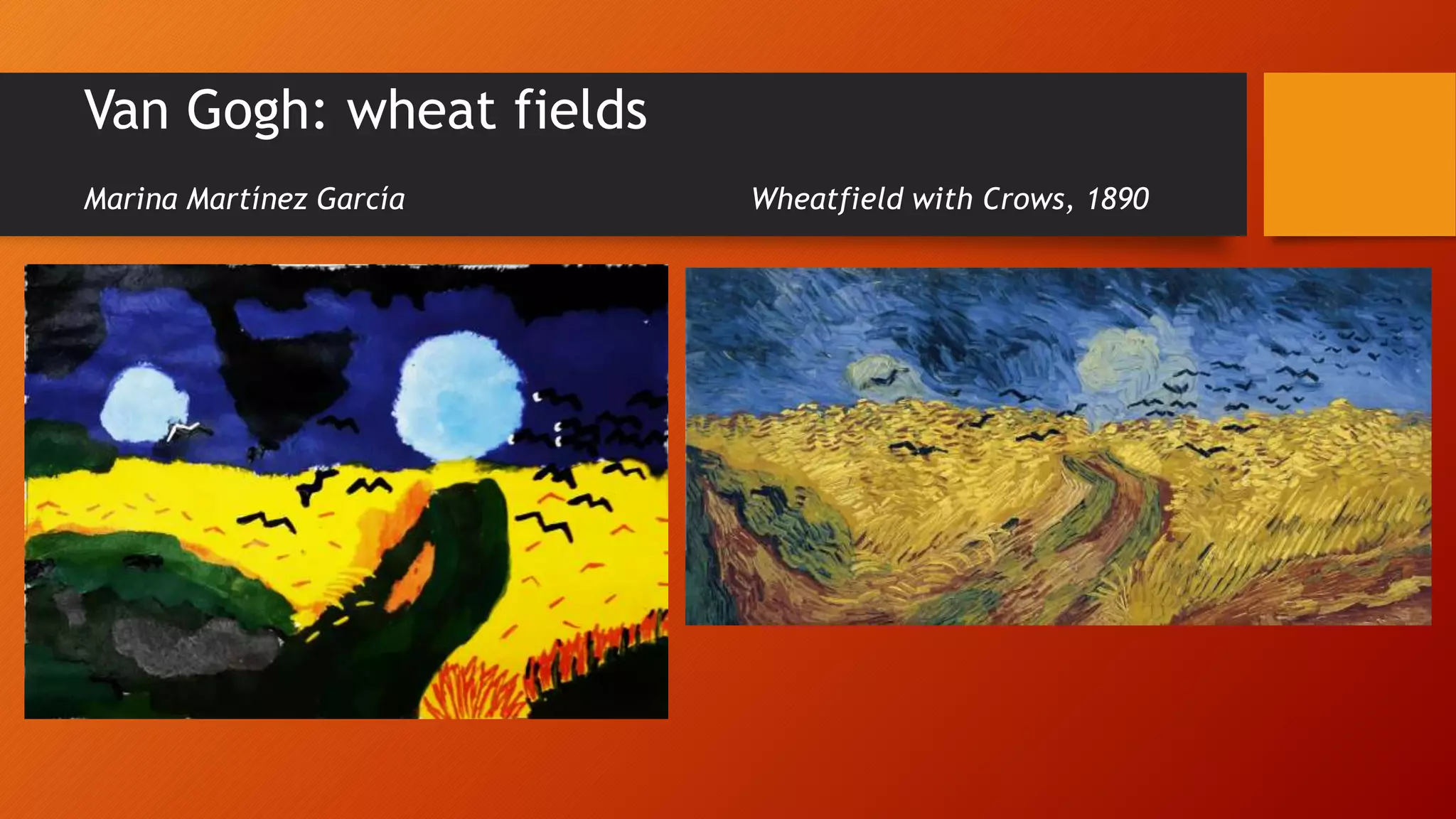
Van Gogh: wheat fields
Marina Martínez García Wheatfield with Crows, 1890
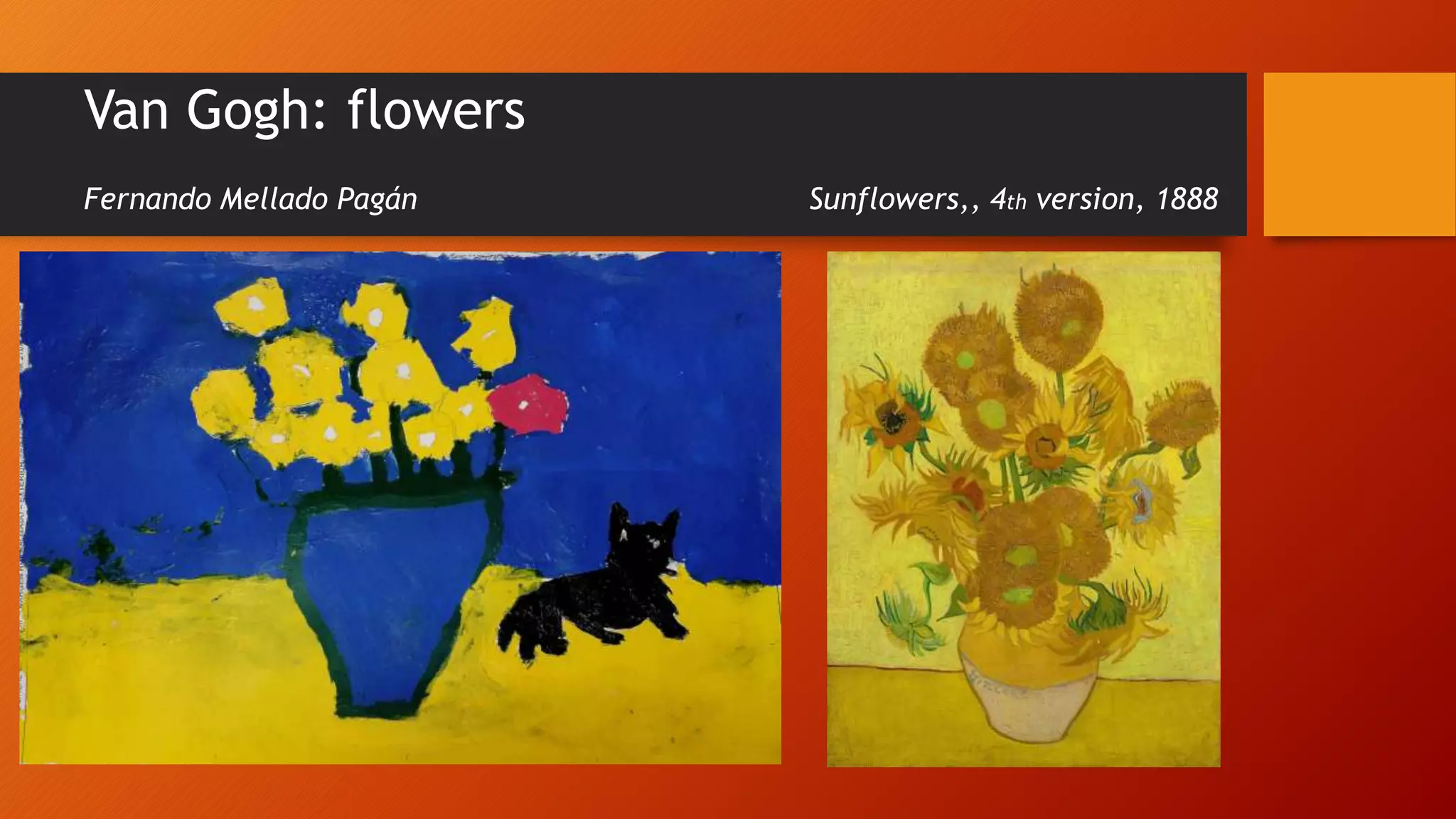
Van Gogh: flowers
Fernando Mellado Pagán Sunflowers,, 4th version, 1888
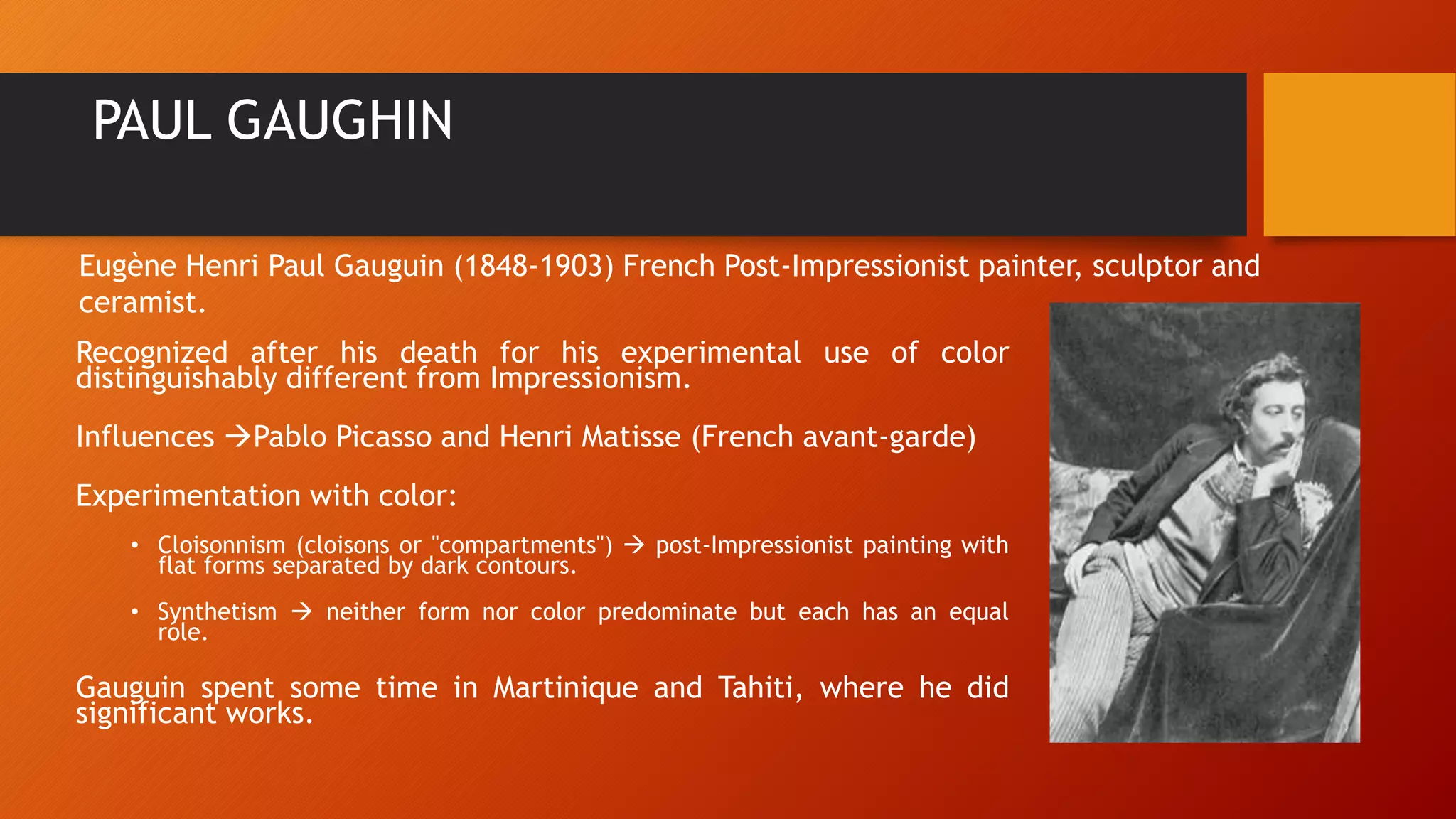
PAUL GAUGHIN
Recognized after his death for his experimental use of color
distinguishably different from Impressionism.
Influences Pablo Picasso and Henri Matisse (French avant-garde)
Experimentation with color:
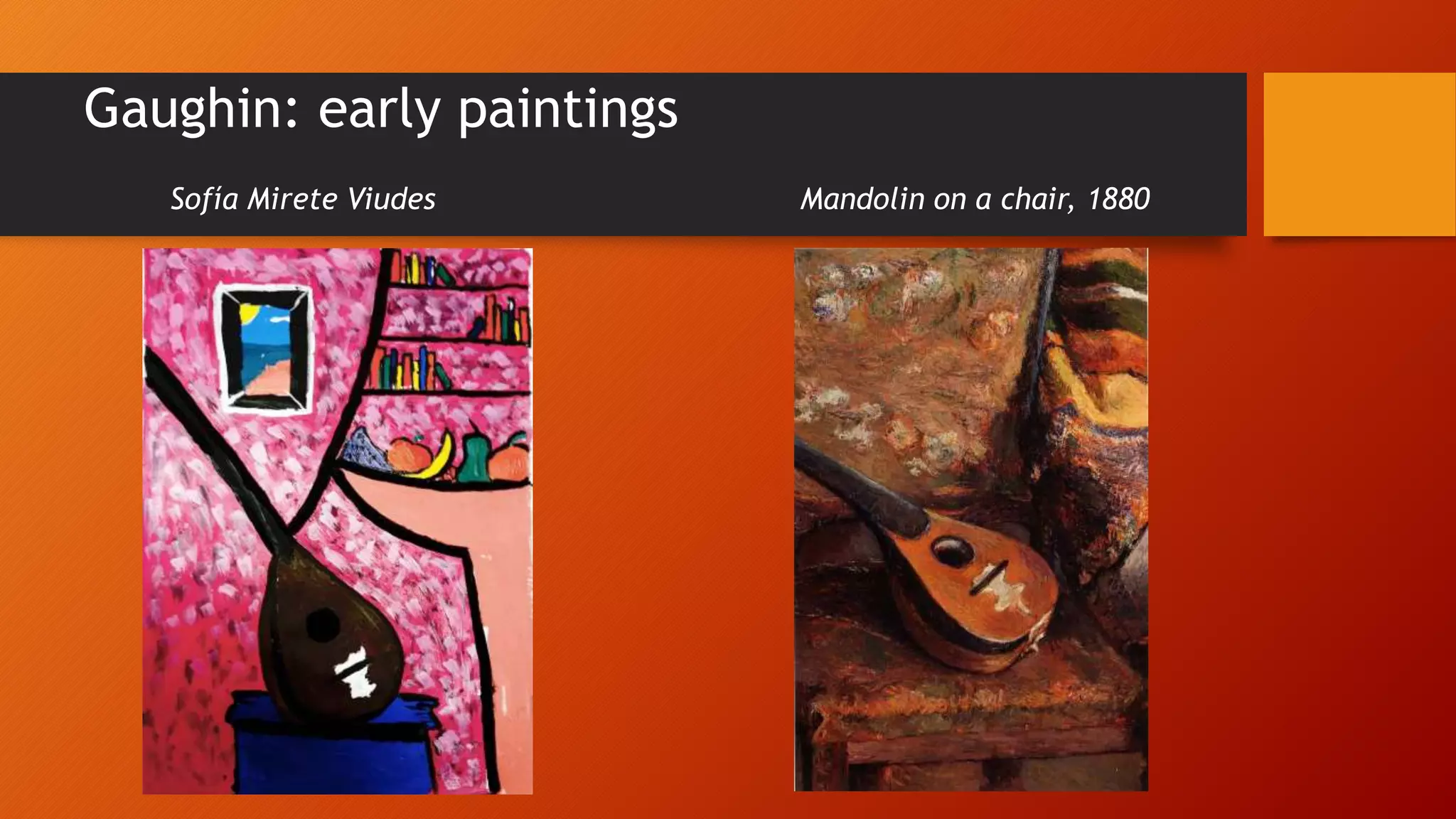
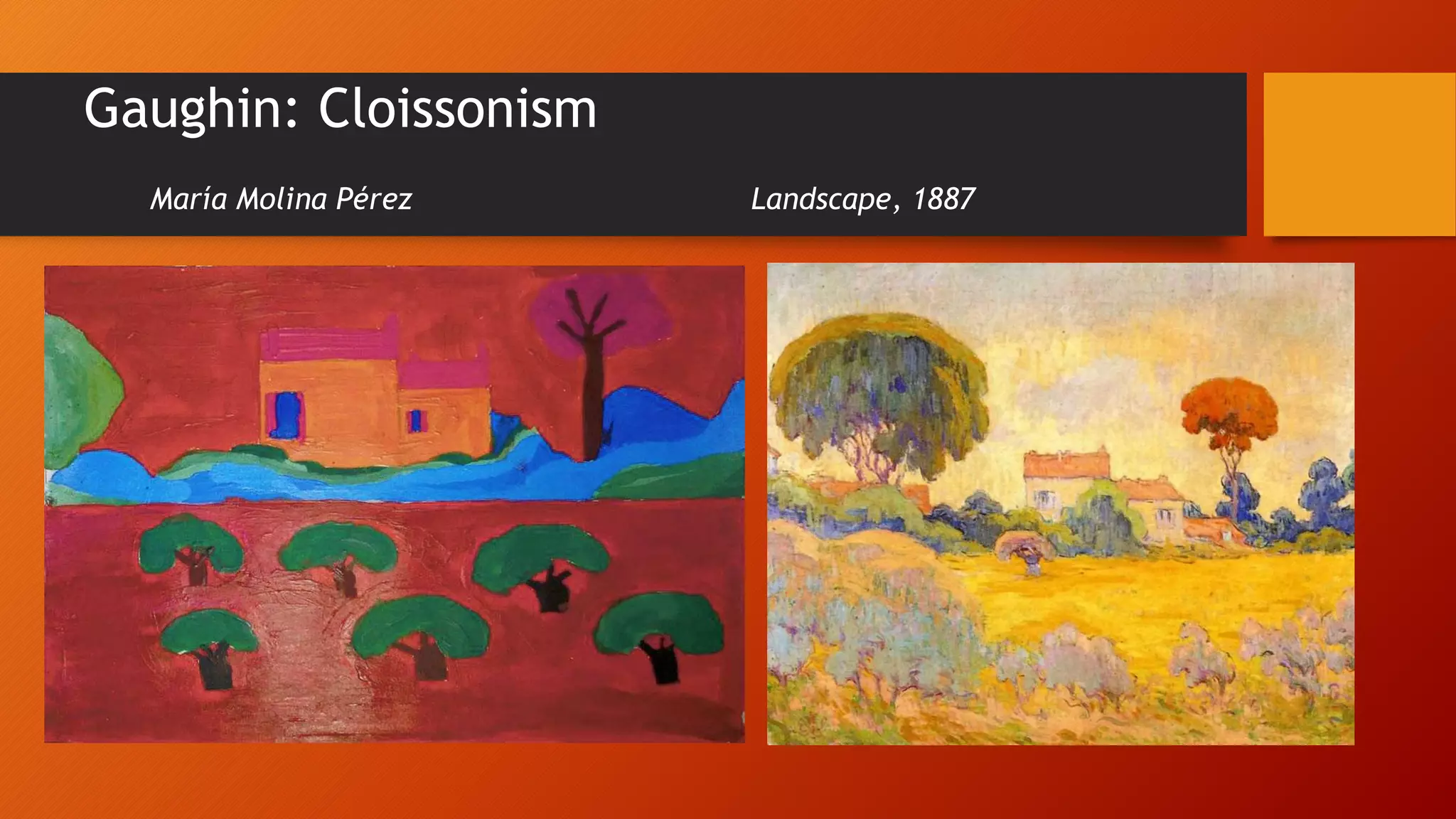
• Cloisonnism (cloisons or "compartments")  post-Impressionist painting with
flat forms separated by dark contours.
• Synthetism  neither form nor color predominate but each has an equal
role.
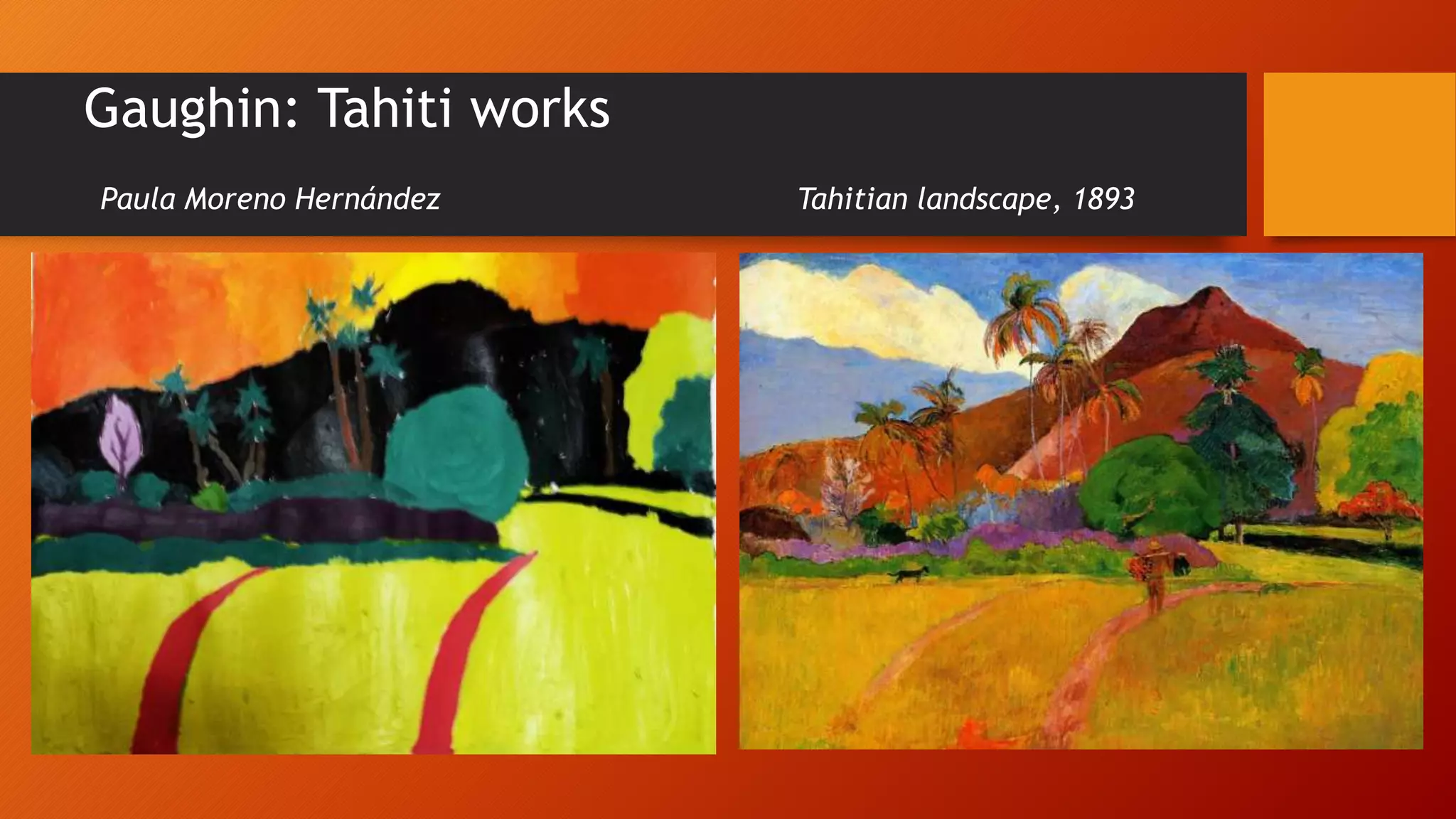
Gauguin spent some time in Martinique and Tahiti, where he did
significant works.
Eugène Henri Paul Gauguin (1848-1903) French Post-Impressionist painter, sculptor and
ceramist.
Gaughin: early paintings
Sofía Mirete Viudes Mandolin on a chair, 1880
Gaughin: Cloissonism
María Molina Pérez Landscape, 1887
Gaughin: Tahiti works
Paula Moreno Hernández Tahitian landscape, 1893
HENRY MATISSE
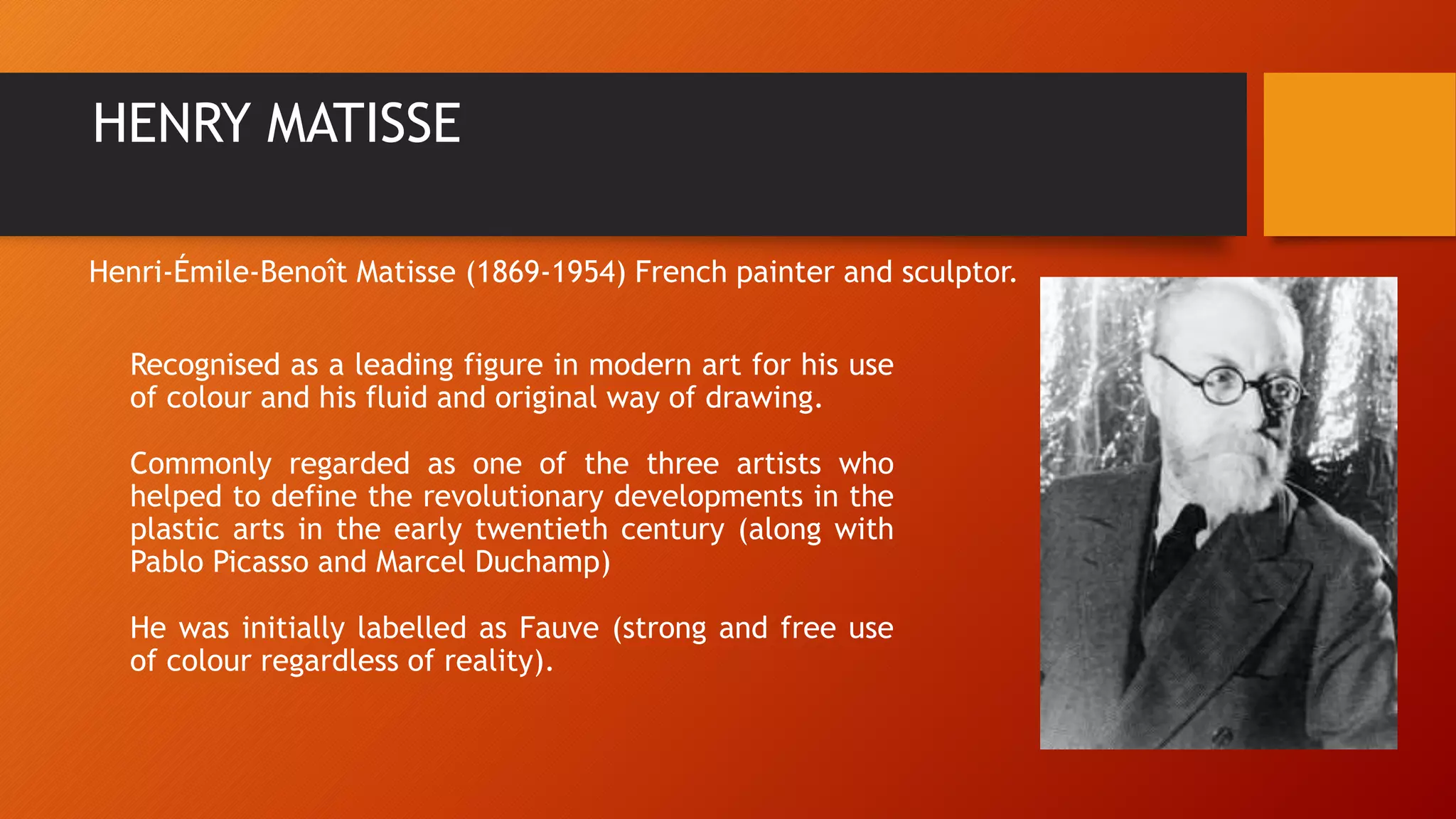
Recognised as a leading figure in modern art for his use
of colour and his fluid and original way of drawing.
Commonly regarded as one of the three artists who
helped to define the revolutionary developments in the
plastic arts in the early twentieth century (along with
Pablo Picasso and Marcel Duchamp)
He was initially labelled as Fauve (strong and free use
of colour regardless of reality).
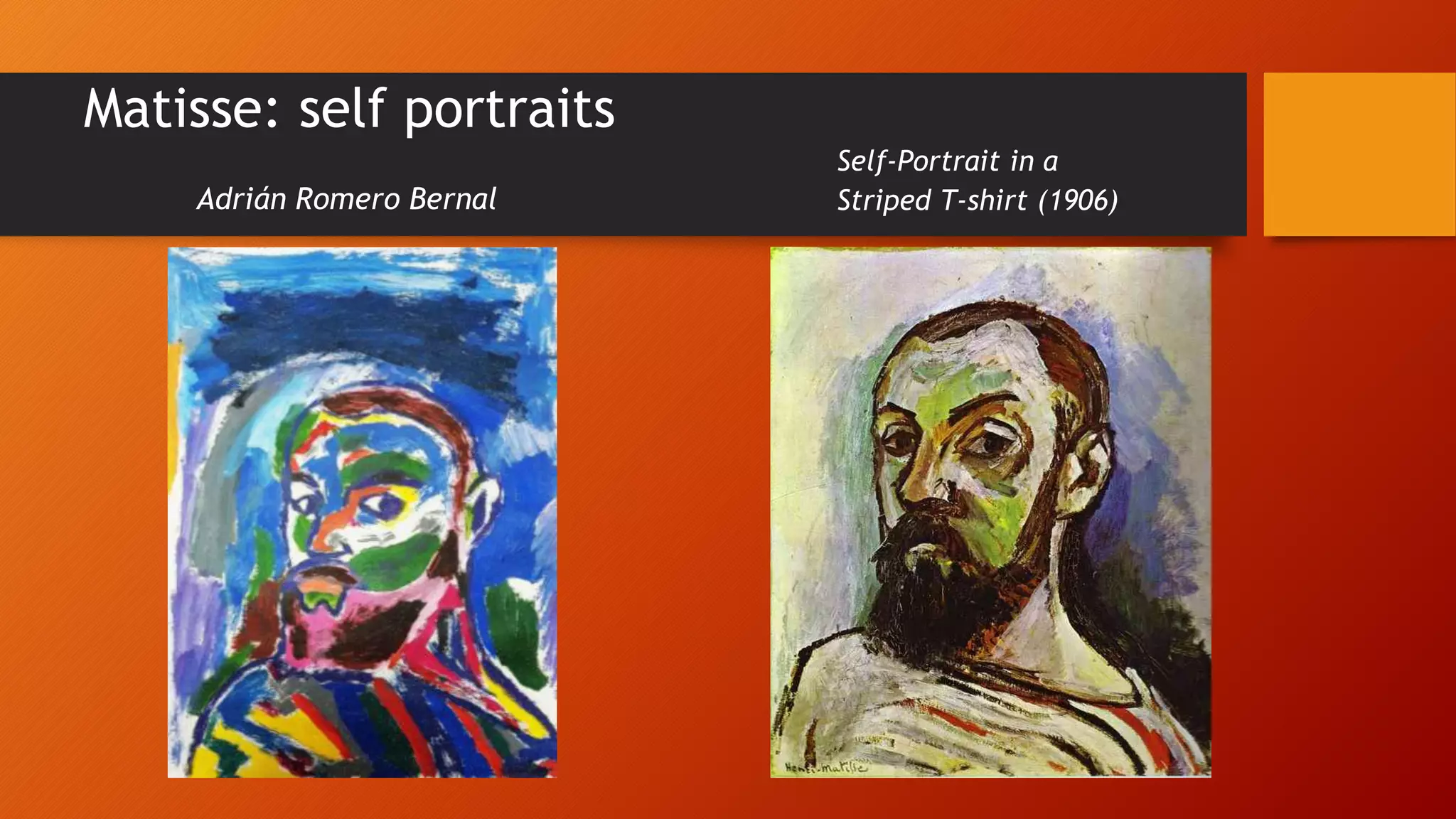
Henri-Émile-Benoît Matisse (1869-1954) French painter and sculptor.
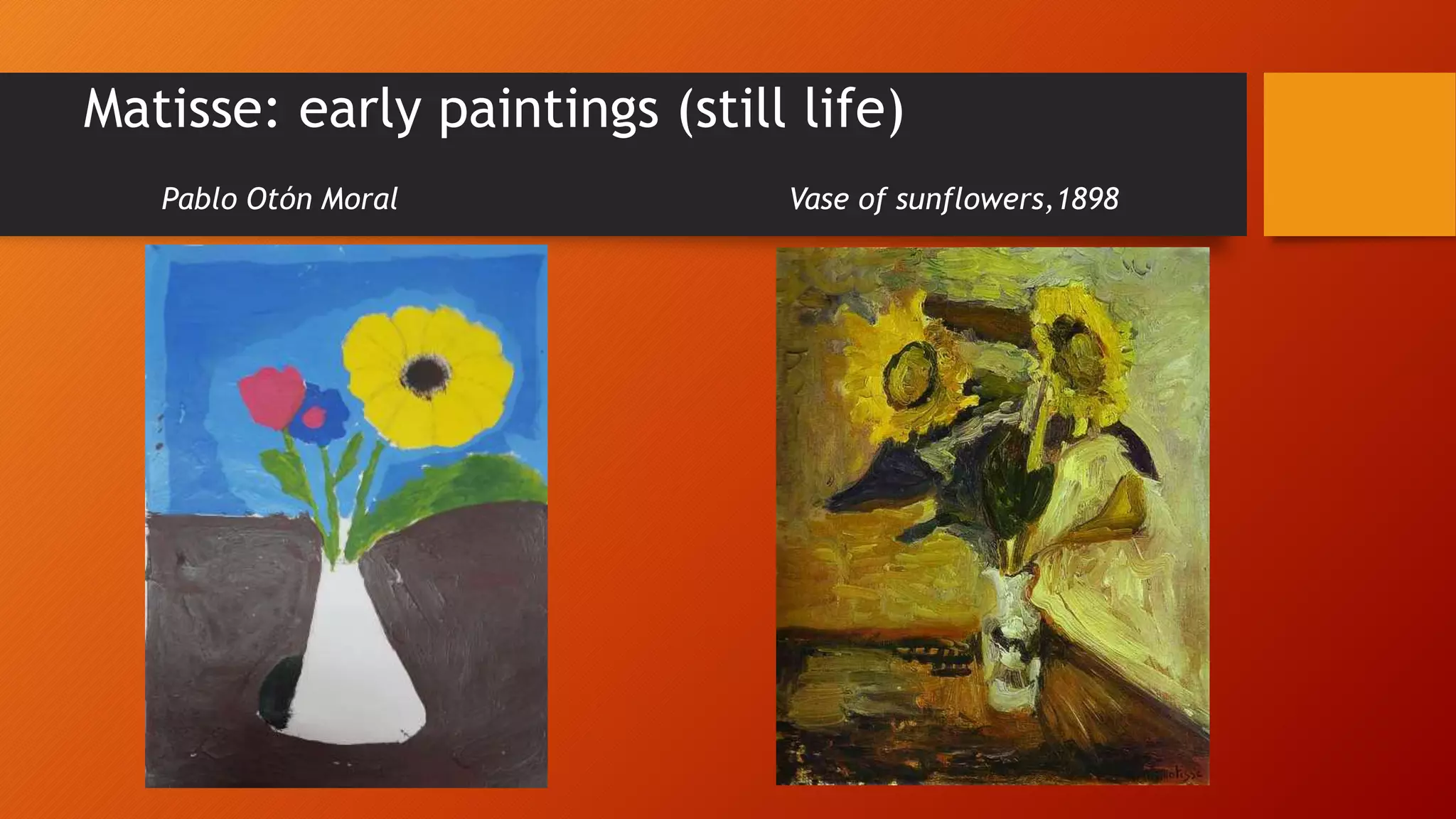
Matisse: early paintings (still life)
Pablo Otón Moral Vase of sunflowers,1898
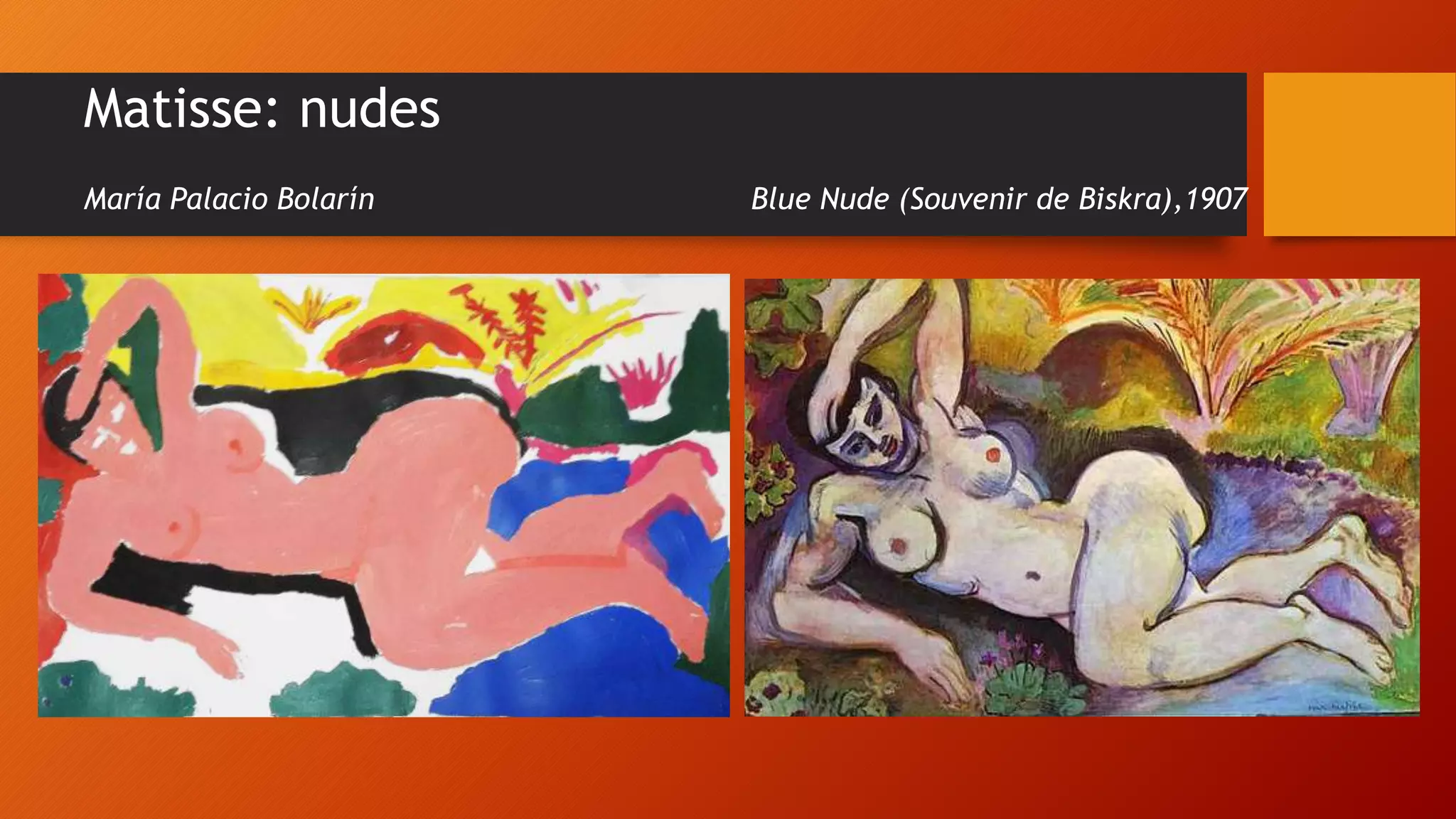
Matisse: nudes
María Palacio Bolarín Blue Nude (Souvenir de Biskra),1907
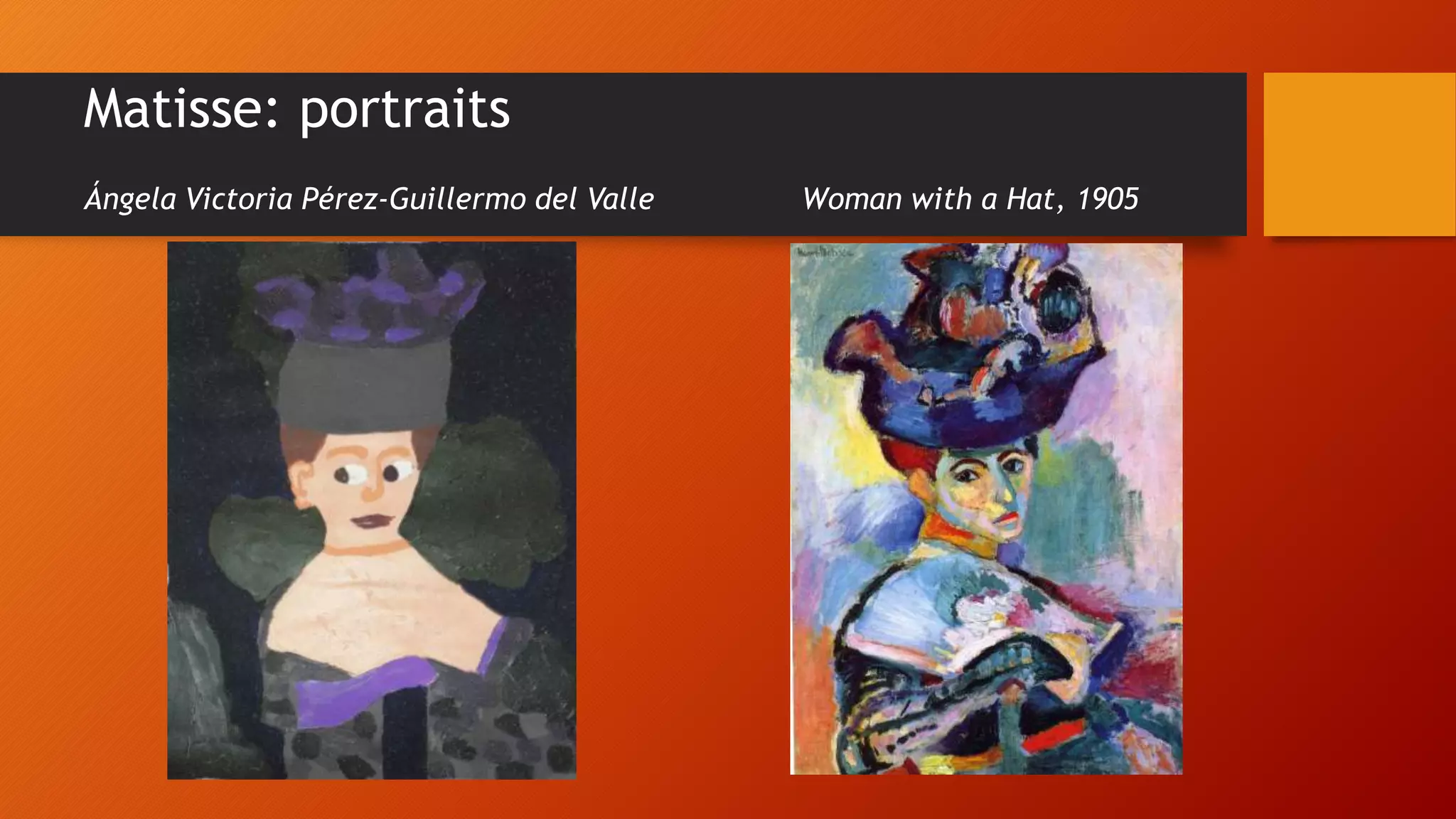
Matisse: portraits
Ángela Victoria Pérez-Guillermo del Valle Woman with a Hat, 1905
Matisse: self portraits
Adrián Romero Bernal
Self-Portrait in a
Striped T-shirt (1906)
PABLO RUIZ PICASSO
Early years  extraordinary artistic talent
(realistic manner).
Before 1900  his style changed as he
experimented with different theories,
techniques, and ideas.
His work is often categorised into periods.
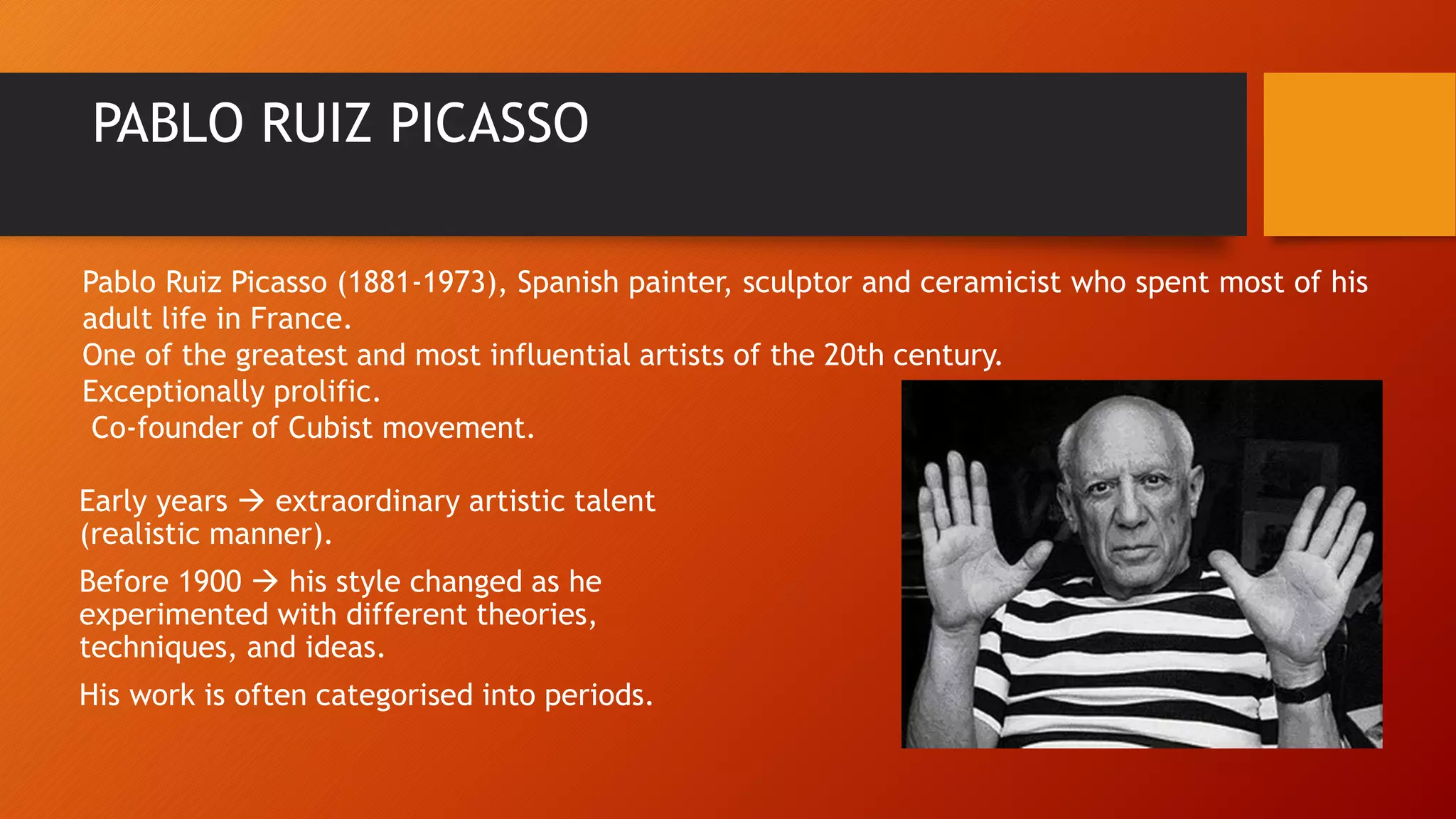
Pablo Ruiz Picasso (1881-1973), Spanish painter, sculptor and ceramicist who spent most of his
adult life in France.
One of the greatest and most influential artists of the 20th century.
Exceptionally prolific.
Co-founder of Cubist movement.
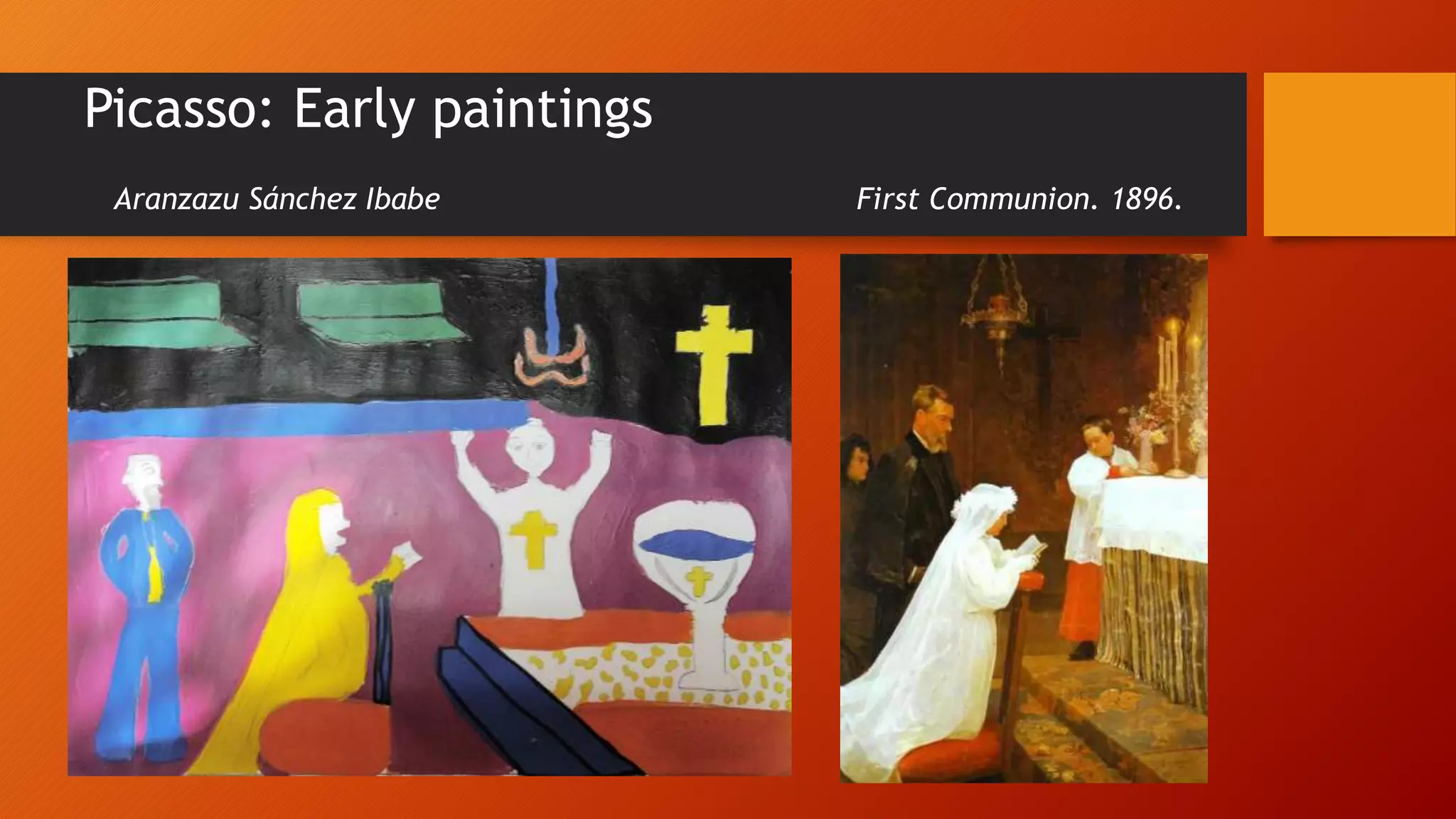
Picasso: Early paintings
Aranzazu Sánchez Ibabe First Communion. 1896.
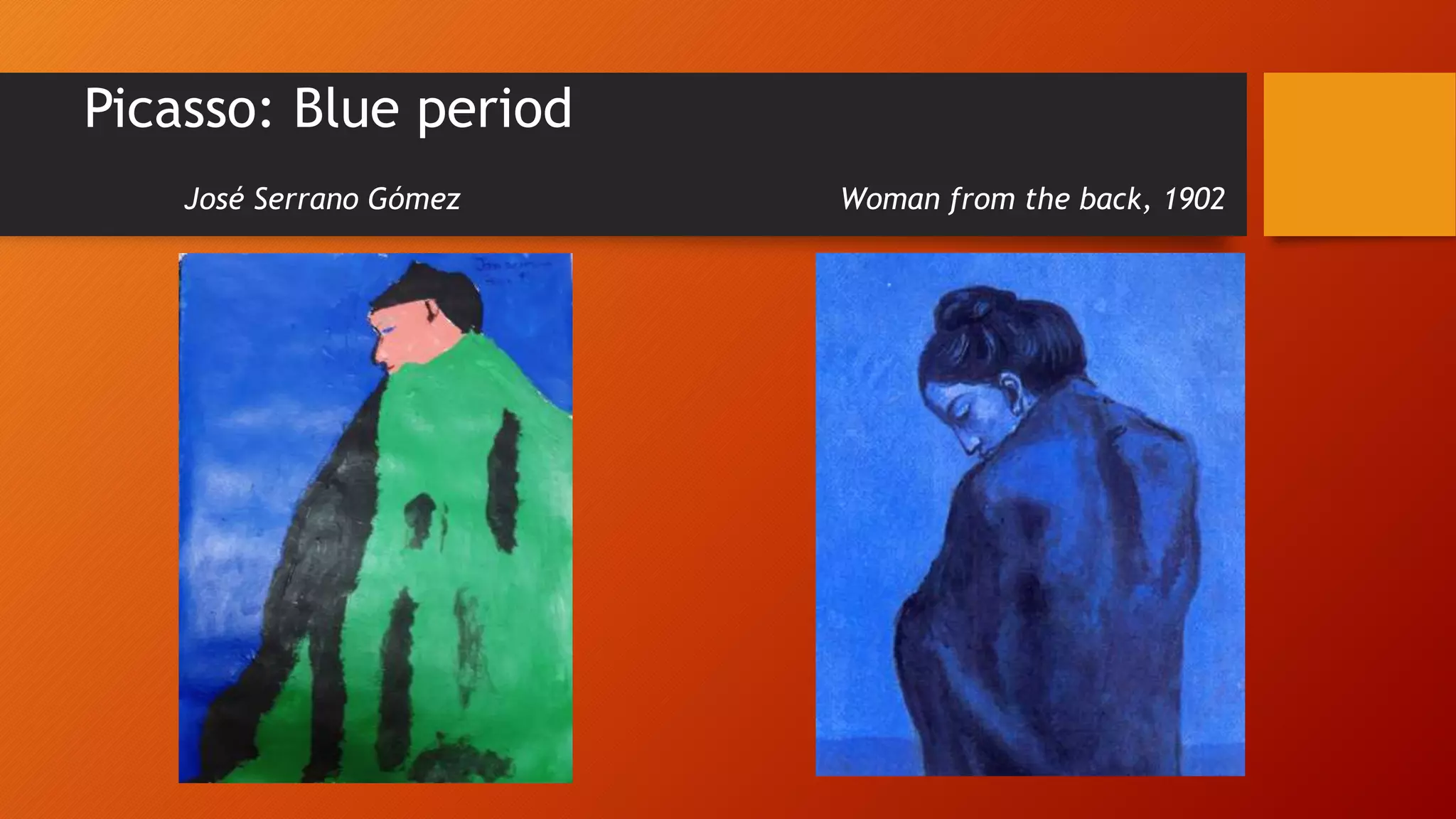
Picasso: Blue period
José Serrano Gómez Woman from the back, 1902
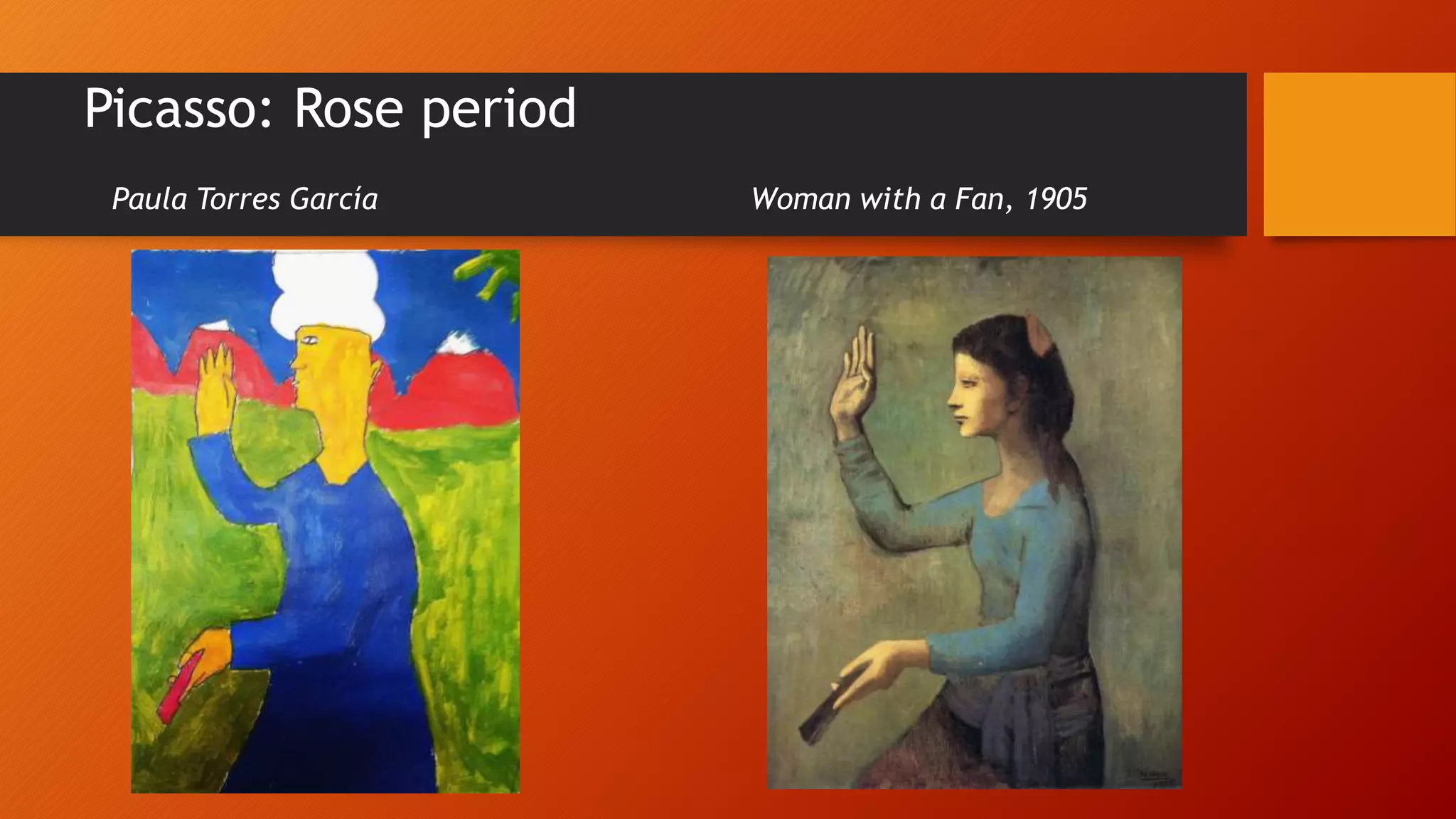
Picasso: Rose period
Paula Torres García Woman with a Fan, 1905
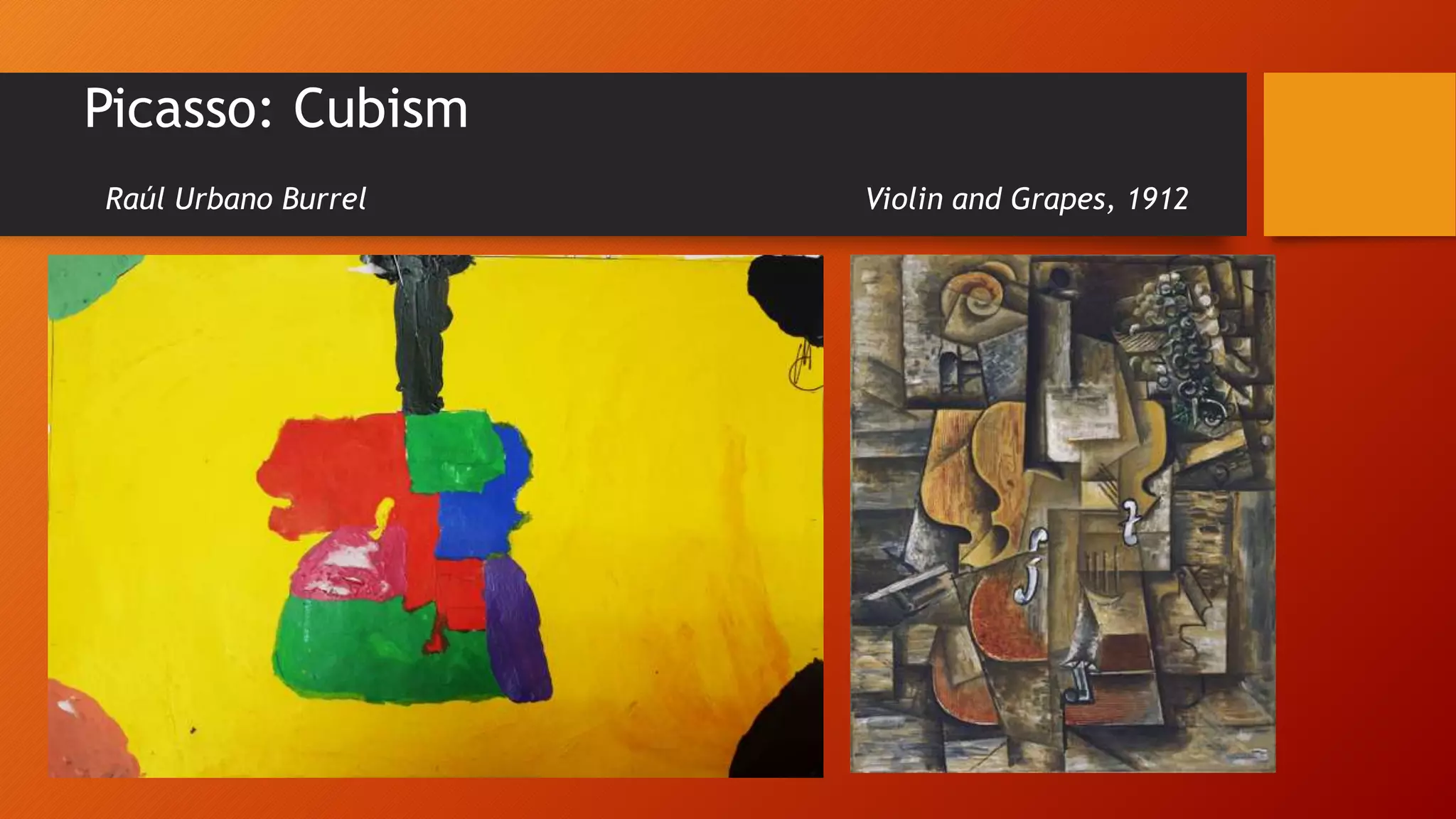
Picasso: Cubism
Raúl Urbano Burrel Violin and Grapes, 1912
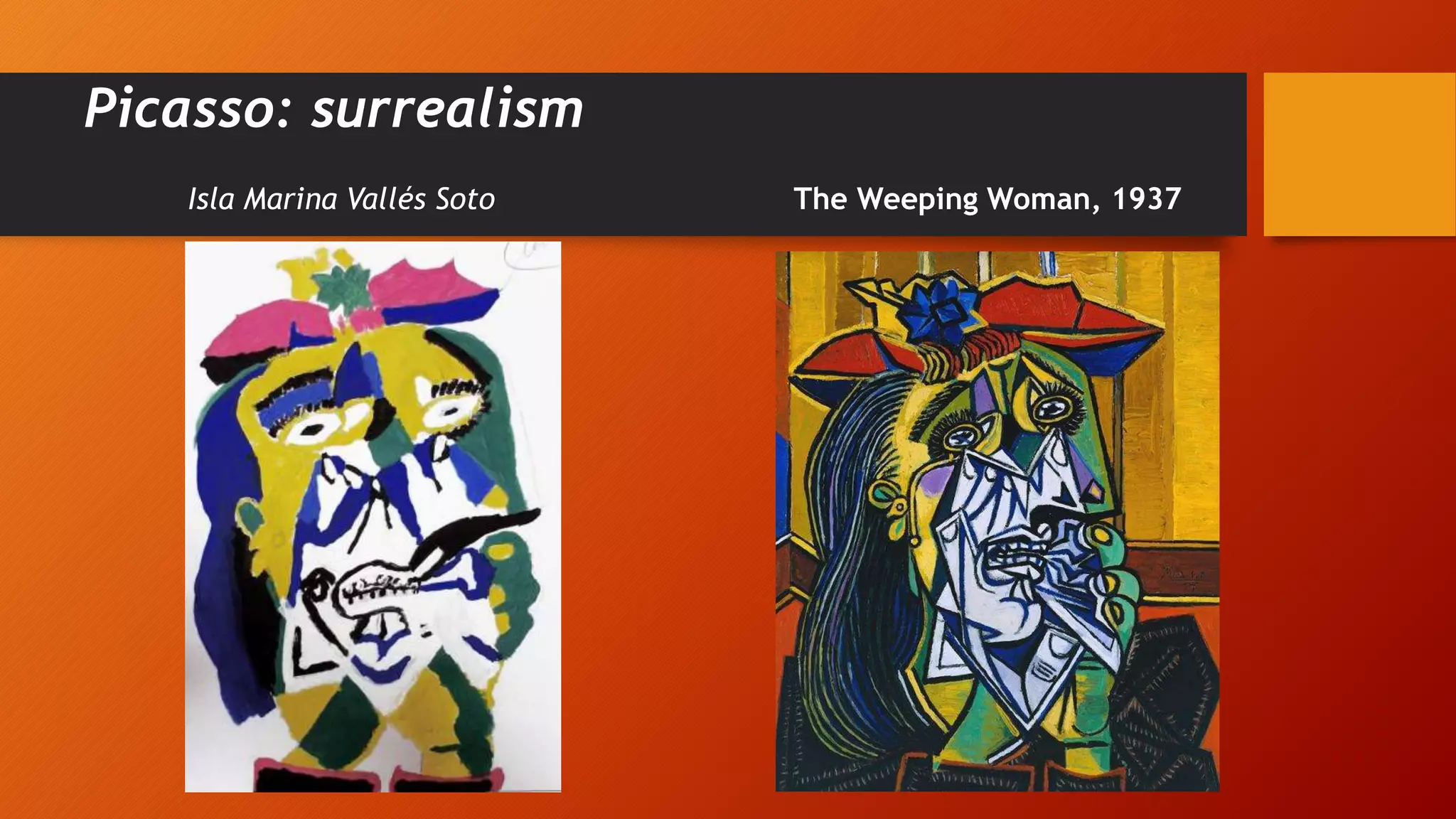
Picasso: surrealism
Isla Marina Vallés Soto The Weeping Woman, 1937
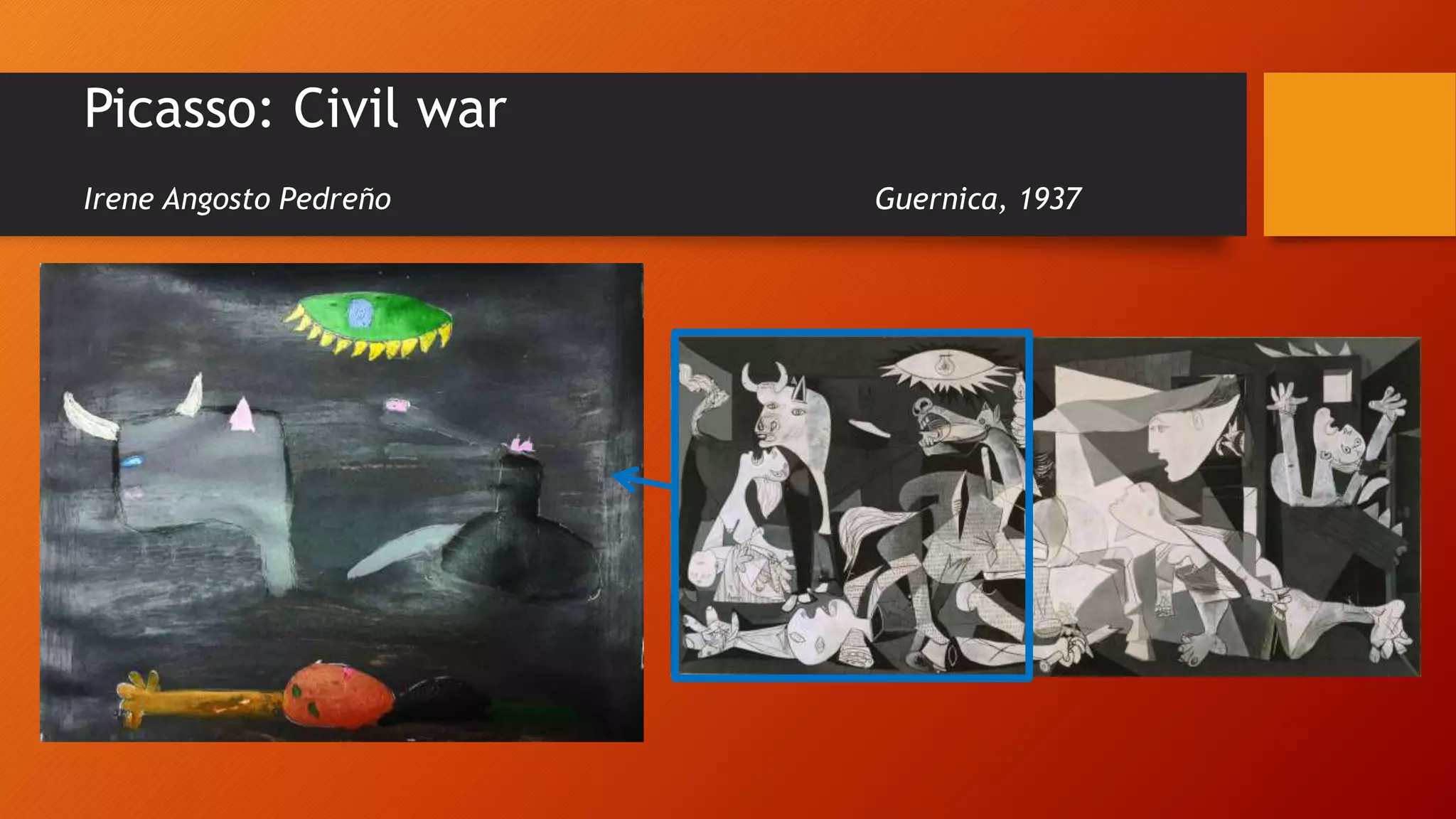
Picasso: Civil war
Irene Angosto Pedreño Guernica, 1937
Arts & crafts
NarvalSchool,1ºC

Re-interpret a well-known Master. 1ºC

  • 1.
    RE-INTERPRET WELL-KNOWN PAINTINGS ARTS &CRAFTS Narval School, 1ºC ESO
  • 2.
    PIERRE AUGUSTE RENOIR Hewas a celebrator of beauty, and especially feminine sensuality. Renoir's paintings are notable for their vibrant light and saturated color, most often focusing on people in intimate and candid compositions. Pierre-Auguste Renoir (1841-1919) French artist who was a leading painter in the development of the Impressionist style.
  • 3.
    Renoir: portraits Jorge CabezosOlmedo Portrait of Charles and Georges Durand Ruel, 1882
  • 4.
    Renoir: self portraits MaríaCaro García Self-Portrait 1910
  • 5.
    Renoir: nudes Francisco CarrascoGarcía-Almenta Three bathers,1897
  • 6.
    Renoir: landscapes Marta CerezuelaVidal Landscape between Storms,1875
  • 7.
    PAUL CEZANNE He usedplanes of colour and small brushstrokes that build up to form complex fields. The paintings convey Cézanne's intense study of his subjects. Cézanne can be said to form the bridge between late 19th-century Impressionism and the early 20th century's new line of artistic enquiry, Cubism. Both Matisse and Picasso are said to have remarked that Cézanne "is the father of us all." Paul Cézanne (1839-1906) French post-Impressionist painter
  • 8.
    Cézanne: landscapes Noelia CutillasJiménez L'Estaque, 1885
  • 9.
    Cézanne: still life PedroGarcía Pérez Still Life with an Open Drawer, 1879
  • 10.
    Cézanne: portraits Fernando GarcíaSoler Uncle Dominique portrait, 1866
  • 11.
    VINCENT VAN GOGH Hiswork had a great influence on 20th century art. He moved to Paris and discovered the French Impressionists. During his life he suffered frequent bouts of mental illness. He produced over 2,500 artworks He died aged 37 from a gunshot wound, generally accepted to be self-inflicted (although no gun was ever found). Vincent Willem van Gogh (1853-1890) Dutch post-Impressionist painter.
  • 12.
    Van Gogh: selfportraits Juan Manuel Hernández Andúa Self-Portrait,1887
  • 13.
    Van Gogh: portraits JuanLeón Fernández Portrait of Pere Tanguy 1887
  • 14.
    Van Gogh: cypresses PabloMarín Abenza Road with Cypress and Star, 1890
  • 15.
    Van Gogh: wheatfields Marina Martínez García Wheatfield with Crows, 1890
  • 16.
    Van Gogh: flowers FernandoMellado Pagán Sunflowers,, 4th version, 1888
  • 17.
    PAUL GAUGHIN Recognized afterhis death for his experimental use of color distinguishably different from Impressionism. Influences Pablo Picasso and Henri Matisse (French avant-garde) Experimentation with color: • Cloisonnism (cloisons or "compartments")  post-Impressionist painting with flat forms separated by dark contours. • Synthetism  neither form nor color predominate but each has an equal role. Gauguin spent some time in Martinique and Tahiti, where he did significant works. Eugène Henri Paul Gauguin (1848-1903) French Post-Impressionist painter, sculptor and ceramist.
  • 18.
    Gaughin: early paintings SofíaMirete Viudes Mandolin on a chair, 1880
  • 19.
    Gaughin: Cloissonism María MolinaPérez Landscape, 1887
  • 20.
    Gaughin: Tahiti works PaulaMoreno Hernández Tahitian landscape, 1893
  • 21.
    HENRY MATISSE Recognised asa leading figure in modern art for his use of colour and his fluid and original way of drawing. Commonly regarded as one of the three artists who helped to define the revolutionary developments in the plastic arts in the early twentieth century (along with Pablo Picasso and Marcel Duchamp) He was initially labelled as Fauve (strong and free use of colour regardless of reality). Henri-Émile-Benoît Matisse (1869-1954) French painter and sculptor.
  • 22.
    Matisse: early paintings(still life) Pablo Otón Moral Vase of sunflowers,1898
  • 23.
    Matisse: nudes María PalacioBolarín Blue Nude (Souvenir de Biskra),1907
  • 24.
    Matisse: portraits Ángela VictoriaPérez-Guillermo del Valle Woman with a Hat, 1905
  • 25.
    Matisse: self portraits AdriánRomero Bernal Self-Portrait in a Striped T-shirt (1906)
  • 26.
    PABLO RUIZ PICASSO Earlyyears  extraordinary artistic talent (realistic manner). Before 1900  his style changed as he experimented with different theories, techniques, and ideas. His work is often categorised into periods. Pablo Ruiz Picasso (1881-1973), Spanish painter, sculptor and ceramicist who spent most of his adult life in France. One of the greatest and most influential artists of the 20th century. Exceptionally prolific. Co-founder of Cubist movement.
  • 27.
    Picasso: Early paintings AranzazuSánchez Ibabe First Communion. 1896.
  • 28.
    Picasso: Blue period JoséSerrano Gómez Woman from the back, 1902
  • 29.
    Picasso: Rose period PaulaTorres García Woman with a Fan, 1905
  • 30.
    Picasso: Cubism Raúl UrbanoBurrel Violin and Grapes, 1912
  • 31.
    Picasso: surrealism Isla MarinaVallés Soto The Weeping Woman, 1937
  • 32.
    Picasso: Civil war IreneAngosto Pedreño Guernica, 1937
  • 33.