Effect of  Positioning Shaswat Shaswat
It is a  non invasive  physiotherapy intervention that can augment arterial oxygenation so that invasive, mechanical and pharmacological forms of respiratory support can be  postponed, reduced or avoided . Shaswat Shaswat
Clinically Significant Effects To  improve  oxygen transport in acute, post - acute and chronic stages of  cardiopulmonary dysfunction. To  prevent  the negative effects of  restricted mobility . Shaswat Shaswat
Different positions Supine lying Side lying Prone lying  Head down tilt position Lean forward position Upside down position Upright position Shaswat Shaswat
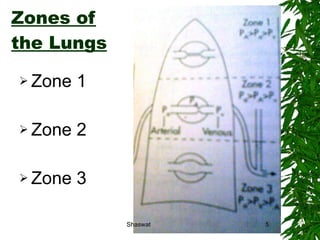
Zones of the Lungs Zone 1 Zone 2 Zone 3 Shaswat Shaswat
Effect of Different Positions Shaswat Shaswat
Supine Position Position of Diaphragms  - Cephalad Alters the chest wall configuration Intrathoracic pressure Central shift of blood volume Decrease lung compliance Increase airway resistance Increase pre and after load on ® heart Shaswat Increase WOB  and  airway closure Shaswat
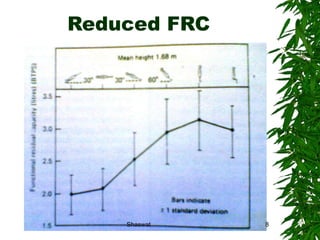
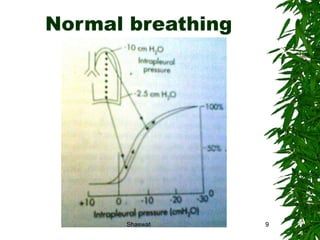
Reduced FRC Shaswat Shaswat
Normal breathing Shaswat Shaswat
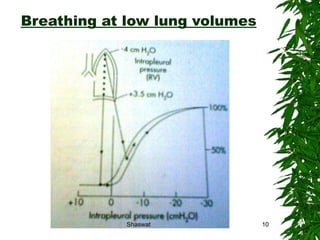
Breathing at low lung volumes Shaswat Shaswat
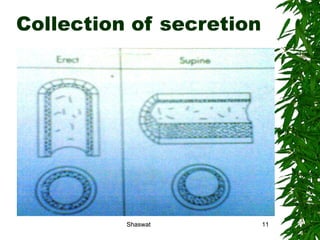
Collection of secretion Shaswat Shaswat
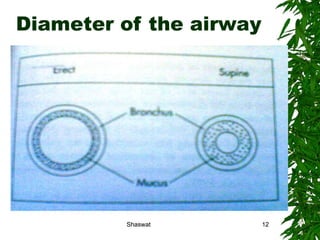
Diameter of the airway Shaswat Shaswat
Benefits Distribution of V/Q  BUT Associated with  Decrease FRC Decrease VC Increase area of dependent lung Increase closure of airways Shaswat Shaswat
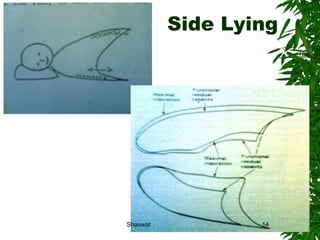
Side Lying Shaswat Shaswat
Side Lying Position Dependent hemi diaphragm is highest ever and non dependent diaphragm is the lowest ever. Effects on the dependent lung Low lung volume and compliance Largest excursion of diaphragm More ventilation    Good V/Q ratio Shaswat Shaswat
Unilateral Lung pathology Bilateral lung pathology Shaswat Shaswat
Prone Lying Improves lung compliance Stabilize anterior chest wall Increase diaphragmatic excursion Increase TV, FRC Decrease airway closure Prone  ABDOMEN FREE  position SEMI PRONE  position Shaswat Shaswat
Head down Tilt Position Position of diaphragm Advantages Dyspnea Accessory muscle use Reduce Upper chest breathing pattern Lung pathology to basal zones Disadvantages Shaswat Shaswat
Lean Forward position Position of diaphragm WOB Effect on dyspnea Shaswat Shaswat
Position Down Upside Shaswat Shaswat
Upright Position V/Q ratio Lung volumes and capacities Diameter of airways  (Airway closure) Compression of heart and lung Sympathetic nervous system Augment the effects of potent sympathomimetic agents such that dosage of drugs can be reduced. Shaswat Shaswat
Other Effects Postural Drainage Technique Inhibits Bacterial Colonization Redistribute Compression forces acting on the diaphragm, myocardium. Shaswat Shaswat
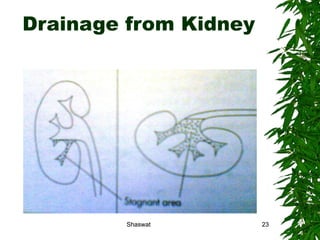
Drainage from Kidney Shaswat Shaswat
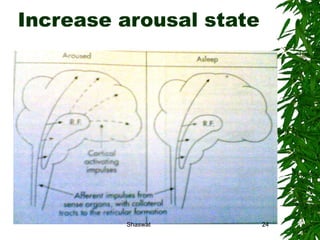
Increase arousal state Shaswat Shaswat
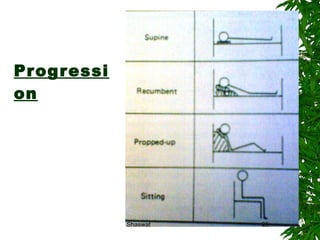
Progression Shaswat Shaswat
Effect of Mobilization Acute effects Chronic effects Shaswat
Acute Effect Increase TV  Increase breathing frequency Increase CO, SV, HR, BP Increase coronary and peripheral muscle perfusion Increase O2 binding in blood Increase O2 dissociation and extraction at tissue level. Shaswat
Decrease pulmonary complications Decrease bed sores Decrease contractures Coughing is facilitated Decrease WOB Decrease work of heart Shaswat
Chronic Effects Increase capacity for gas exchange Decrease WOB, MV, Breathing frequency Increase O2 extraction capacity Decrease work of heart, HR, BP, CO Shaswat
Prevent negative effect of restricted mobility Decrease airway closure Decrease secretion pooling Alters preload and afterload Lymphatic drainage. Shaswat
THANK YOU Shaswat Shaswat

Positioning And Mobilization

  • 1.
    Effect of Positioning Shaswat Shaswat
  • 2.
    It is a non invasive physiotherapy intervention that can augment arterial oxygenation so that invasive, mechanical and pharmacological forms of respiratory support can be postponed, reduced or avoided . Shaswat Shaswat
  • 3.
    Clinically Significant EffectsTo improve oxygen transport in acute, post - acute and chronic stages of cardiopulmonary dysfunction. To prevent the negative effects of restricted mobility . Shaswat Shaswat
  • 4.
    Different positions Supinelying Side lying Prone lying Head down tilt position Lean forward position Upside down position Upright position Shaswat Shaswat
  • 5.
    Zones of theLungs Zone 1 Zone 2 Zone 3 Shaswat Shaswat
  • 6.
    Effect of DifferentPositions Shaswat Shaswat
  • 7.
    Supine Position Positionof Diaphragms - Cephalad Alters the chest wall configuration Intrathoracic pressure Central shift of blood volume Decrease lung compliance Increase airway resistance Increase pre and after load on ® heart Shaswat Increase WOB and airway closure Shaswat
  • 8.
  • 9.
  • 10.
    Breathing at lowlung volumes Shaswat Shaswat
  • 11.
    Collection of secretionShaswat Shaswat
  • 12.
    Diameter of theairway Shaswat Shaswat
  • 13.
    Benefits Distribution ofV/Q BUT Associated with Decrease FRC Decrease VC Increase area of dependent lung Increase closure of airways Shaswat Shaswat
  • 14.
  • 15.
    Side Lying PositionDependent hemi diaphragm is highest ever and non dependent diaphragm is the lowest ever. Effects on the dependent lung Low lung volume and compliance Largest excursion of diaphragm More ventilation  Good V/Q ratio Shaswat Shaswat
  • 16.
    Unilateral Lung pathologyBilateral lung pathology Shaswat Shaswat
  • 17.
    Prone Lying Improveslung compliance Stabilize anterior chest wall Increase diaphragmatic excursion Increase TV, FRC Decrease airway closure Prone ABDOMEN FREE position SEMI PRONE position Shaswat Shaswat
  • 18.
    Head down TiltPosition Position of diaphragm Advantages Dyspnea Accessory muscle use Reduce Upper chest breathing pattern Lung pathology to basal zones Disadvantages Shaswat Shaswat
  • 19.
    Lean Forward positionPosition of diaphragm WOB Effect on dyspnea Shaswat Shaswat
  • 20.
    Position Down UpsideShaswat Shaswat
  • 21.
    Upright Position V/Qratio Lung volumes and capacities Diameter of airways (Airway closure) Compression of heart and lung Sympathetic nervous system Augment the effects of potent sympathomimetic agents such that dosage of drugs can be reduced. Shaswat Shaswat
  • 22.
    Other Effects PosturalDrainage Technique Inhibits Bacterial Colonization Redistribute Compression forces acting on the diaphragm, myocardium. Shaswat Shaswat
  • 23.
    Drainage from KidneyShaswat Shaswat
  • 24.
    Increase arousal stateShaswat Shaswat
  • 25.
  • 26.
    Effect of MobilizationAcute effects Chronic effects Shaswat
  • 27.
    Acute Effect IncreaseTV Increase breathing frequency Increase CO, SV, HR, BP Increase coronary and peripheral muscle perfusion Increase O2 binding in blood Increase O2 dissociation and extraction at tissue level. Shaswat
  • 28.
    Decrease pulmonary complicationsDecrease bed sores Decrease contractures Coughing is facilitated Decrease WOB Decrease work of heart Shaswat
  • 29.
    Chronic Effects Increasecapacity for gas exchange Decrease WOB, MV, Breathing frequency Increase O2 extraction capacity Decrease work of heart, HR, BP, CO Shaswat
  • 30.
    Prevent negative effectof restricted mobility Decrease airway closure Decrease secretion pooling Alters preload and afterload Lymphatic drainage. Shaswat
  • 31.