S.VENKATA SUBRAMANIAM.,
MPT(CARDIO),MBA(HM), CYP-HRD
Goals
 Maintain or improve mobility of the chest wall trunk
and shoulders when it affects respiration. For example,
a patient with tightness of the trunk muscles on one
side of the body will not expand that part of the chest
fully during inspiration. Exercises that combine
stretching of these muscles with deep breathing will
improve ventilation on that side of the chest.
Reinforce or emphasize the depth of inspiration or
controlled expiration. For example, a patient can
improve expiration by leaning forward at the hips or
flexing the spine as he or she breathes out. This pushes
the viscera superiorly into the diaphragm and further
reinforces expiration.
 1. Flexion and extension
 2. Lateral flexion
 3. Trunk rotation
 There has been no information on the
indication for chest mobilization before,
which gives a tendency for limitation of
chest movement; either structurally or
physiologically. However, this technique can
be used for various conditions such as COPD,
prolonged bed rest, abnormal spine,
deconditioning and aging. The contra-
indications for using this method are listed
(Viekk, 1991) below:
 Severe and unstable rib fracture
 Metastasis bone cancer
 Tuberculosis spondylitis
 Severe osteoporesis
 Herination
 Severe pain
 Unstable vital signs
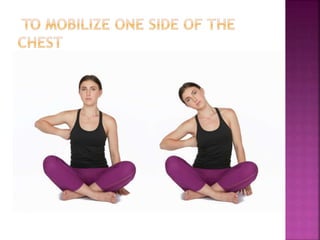
1. To mobilize one side of the chest.
While sitting, have the patient bend away from
the tight side to lengthen tight structures and
expand that side of the chest during inspiration.
Then, have the patient push the fisted hand into
the lateral aspect of the chest, as he or she
bends toward the tight side and breathes out.
Progress by having he patient raise the arm on
the tight side of the chest over the head and
side bend away from the tight side, This will
place an additional stretch on the tight tissues.
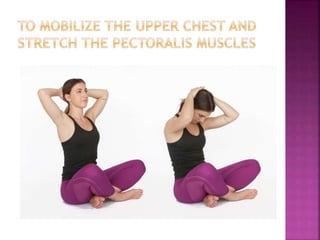
while the patient is sitting in a chair with
hands clasped behind the head, have him or
her horizontally abduct the arms (elongating
the pectoralis muscles) during a deep
inspiration.
With patient sitting in a chair, have him or
her reach with both arms over head (180
degrees bilateral shoulder flexion and slight
abduction) during inspiration. Then have the
patient bend forward at the hips and reach
for the floor during expiration.
Have the patient breathe in while in a hook
lying position (hips and knees are slightly
flexed)
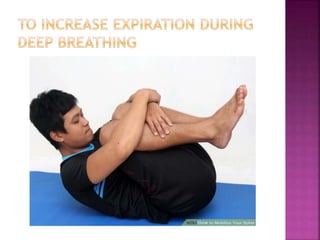
Then instruct the patient to pull both knees
to the chest (one at a time to protect the
low back) during expiration (picture). This
pushes the abdominal contents superiorly
into the diaphragm to assist with expiration.
Chest mobilization techniques

Chest mobilization techniques

  • 1.
  • 2.
    Goals  Maintain orimprove mobility of the chest wall trunk and shoulders when it affects respiration. For example, a patient with tightness of the trunk muscles on one side of the body will not expand that part of the chest fully during inspiration. Exercises that combine stretching of these muscles with deep breathing will improve ventilation on that side of the chest. Reinforce or emphasize the depth of inspiration or controlled expiration. For example, a patient can improve expiration by leaning forward at the hips or flexing the spine as he or she breathes out. This pushes the viscera superiorly into the diaphragm and further reinforces expiration.
  • 3.
     1. Flexionand extension  2. Lateral flexion  3. Trunk rotation
  • 4.
     There hasbeen no information on the indication for chest mobilization before, which gives a tendency for limitation of chest movement; either structurally or physiologically. However, this technique can be used for various conditions such as COPD, prolonged bed rest, abnormal spine, deconditioning and aging. The contra- indications for using this method are listed (Viekk, 1991) below:
  • 5.
     Severe andunstable rib fracture  Metastasis bone cancer  Tuberculosis spondylitis  Severe osteoporesis  Herination  Severe pain  Unstable vital signs
  • 6.
    1. To mobilizeone side of the chest. While sitting, have the patient bend away from the tight side to lengthen tight structures and expand that side of the chest during inspiration. Then, have the patient push the fisted hand into the lateral aspect of the chest, as he or she bends toward the tight side and breathes out. Progress by having he patient raise the arm on the tight side of the chest over the head and side bend away from the tight side, This will place an additional stretch on the tight tissues.
  • 8.
    while the patientis sitting in a chair with hands clasped behind the head, have him or her horizontally abduct the arms (elongating the pectoralis muscles) during a deep inspiration.
  • 10.
    With patient sittingin a chair, have him or her reach with both arms over head (180 degrees bilateral shoulder flexion and slight abduction) during inspiration. Then have the patient bend forward at the hips and reach for the floor during expiration.
  • 12.
    Have the patientbreathe in while in a hook lying position (hips and knees are slightly flexed) Then instruct the patient to pull both knees to the chest (one at a time to protect the low back) during expiration (picture). This pushes the abdominal contents superiorly into the diaphragm to assist with expiration.