U G S T U D E N T
J S S C P T , M Y S U R U
RELAXATION POSITIONS
FOR BREATHELESS
PATIENT
Content
 Objectives
 Introduction
 Definition
 Summary
 References
Basic principle behind...
 There are positions which optimize the length
tension status of the diaphragm (Sharp et al
1980, O'Neill & McCarthy 1983, Dean 1985).
 By sitting or standing leaning forward, the abdominal
contents raise the anterior part of the
diaphragm, possibly facilitating its contraction
during inspiration.
(M.O.Segizbaeva 2013)
 A similar effect can be seen
in the side lying and high side lying positions
where the curvature of the dependent part of
the diaphragm is increased.
 This effect combined
with relaxation of the head, neck and
shoulders promotes the control in breathing
Stand leaning backwards or sideways
against a wall
 Have your feet slightly apart, about one foot or
30cms away from the wall. Relax your hands down
by your sides. If you prefer, rest your hands or
thumbs in your waistband
Relaxation positions depends on the lung conditions:
1. Positions for obstructive lung conditions
2. Positions for restrictive lung conditions
Positions for obstructive lung
conditions
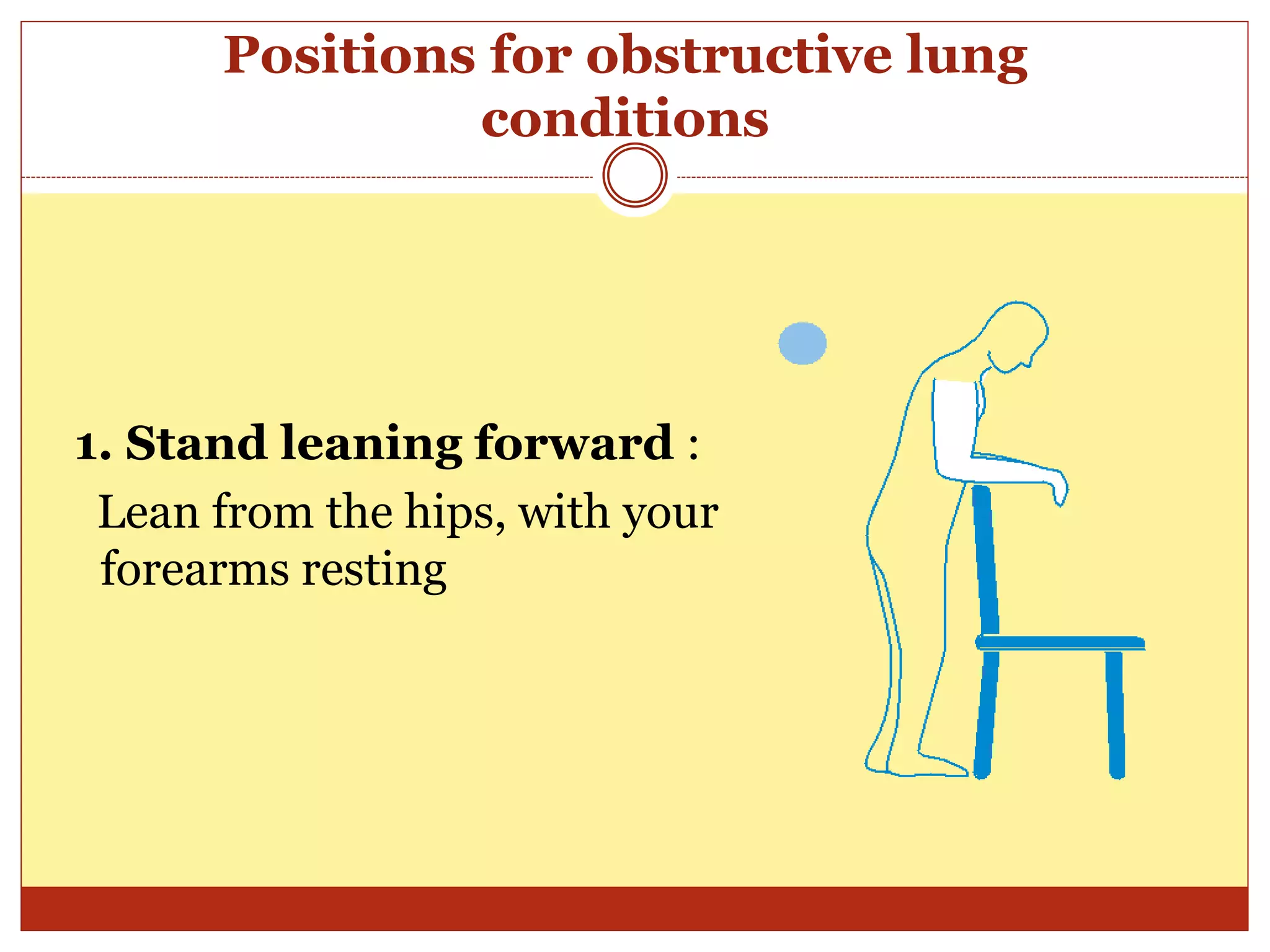
1. Stand leaning forward :
Lean from the hips, with your
forearms resting
2. Sit leaning forward :
lean resting your elbows on
your knees
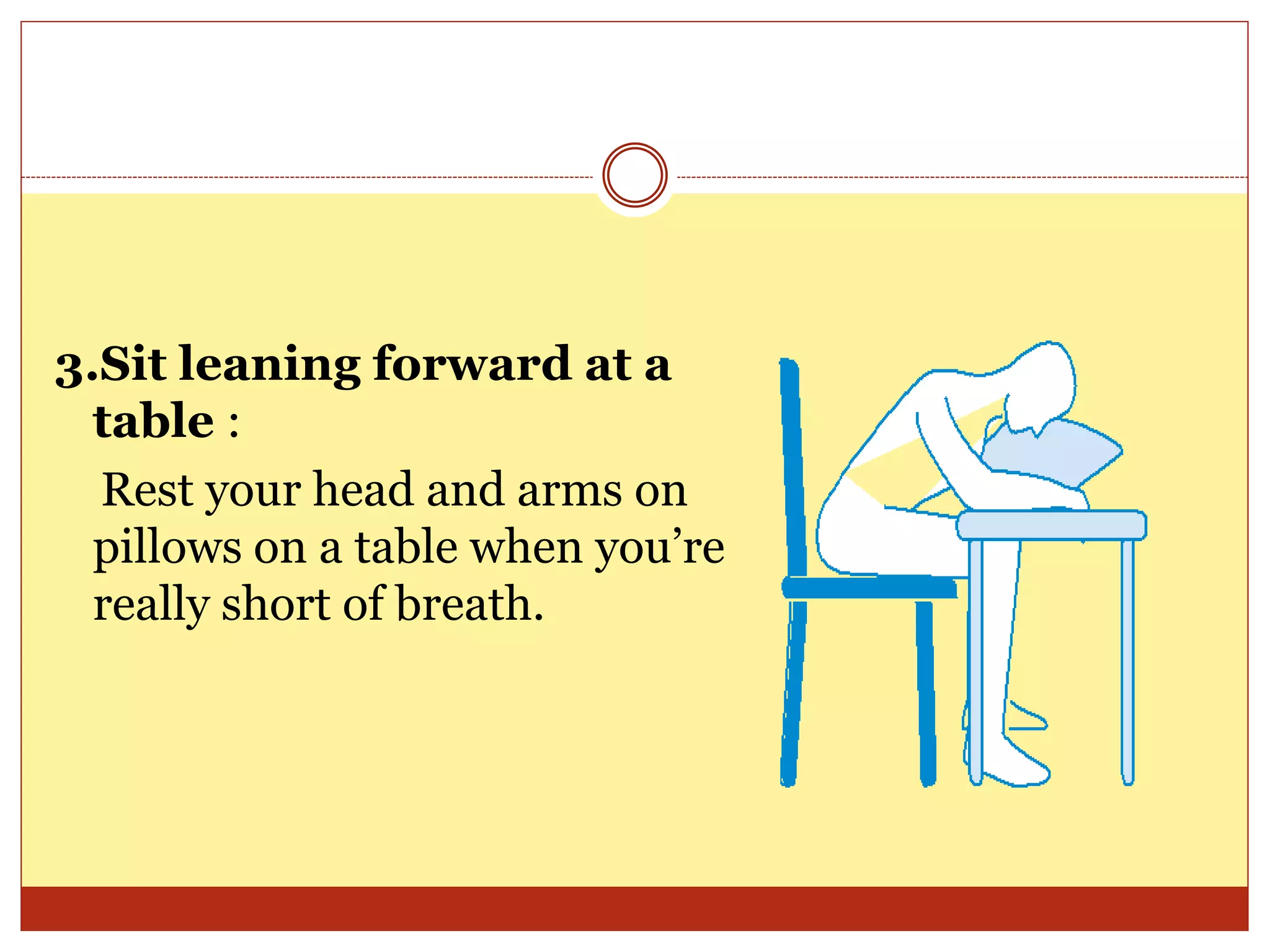
3.Sit leaning forward at a
table :
Rest your head and arms on
pillows on a table when you’re
really short of breath.
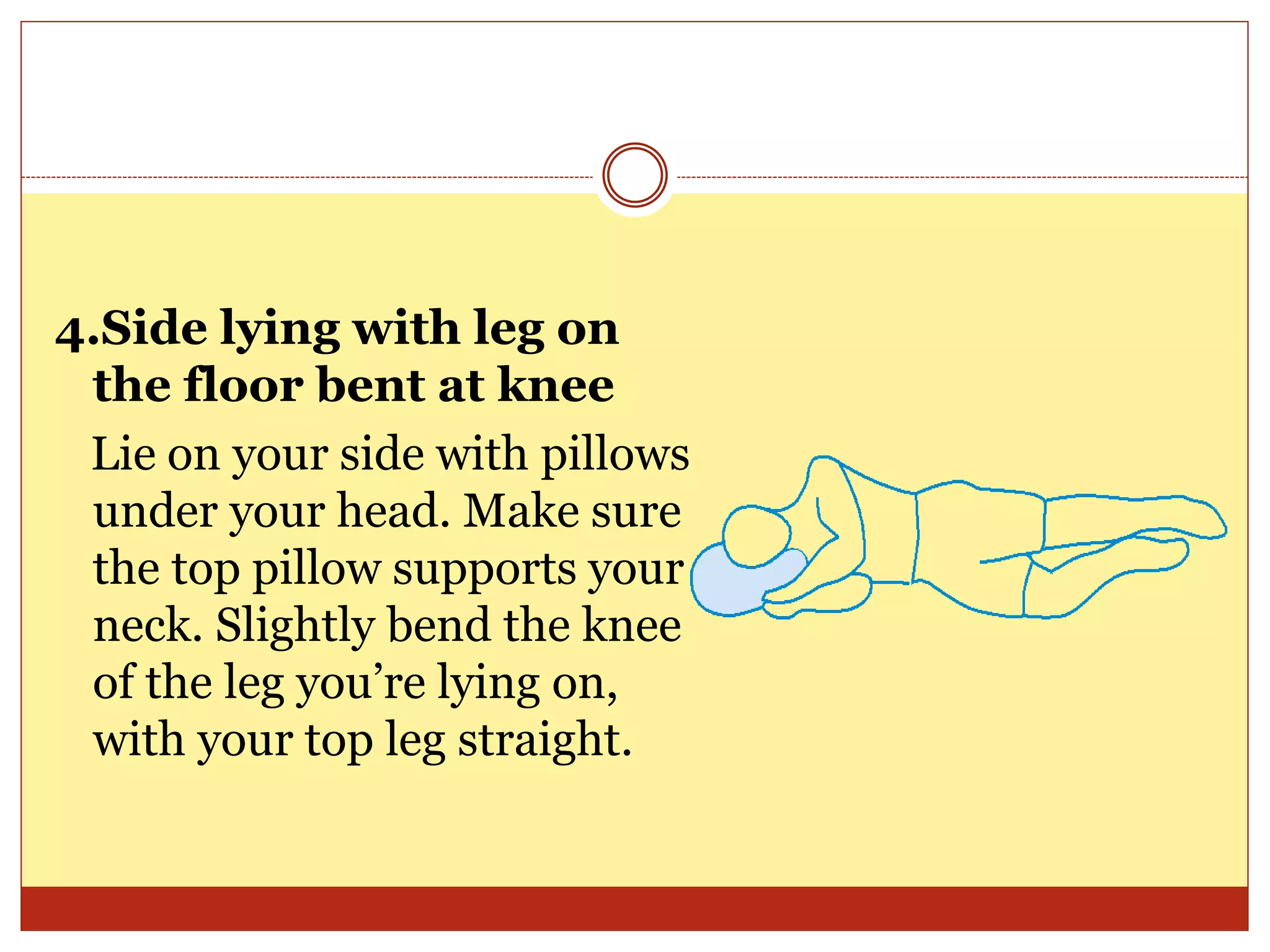
4.Side lying with leg on
the floor bent at knee
Lie on your side with pillows
under your head. Make sure
the top pillow supports your
neck. Slightly bend the knee
of the leg you’re lying on,
with your top leg straight.
Positions for restrictive lung conditions
1.Sit upright in a firm chair :
If your chair doesn’t have
arms, rest your arms on your
thighs. Let your wrists and
hands go limp.
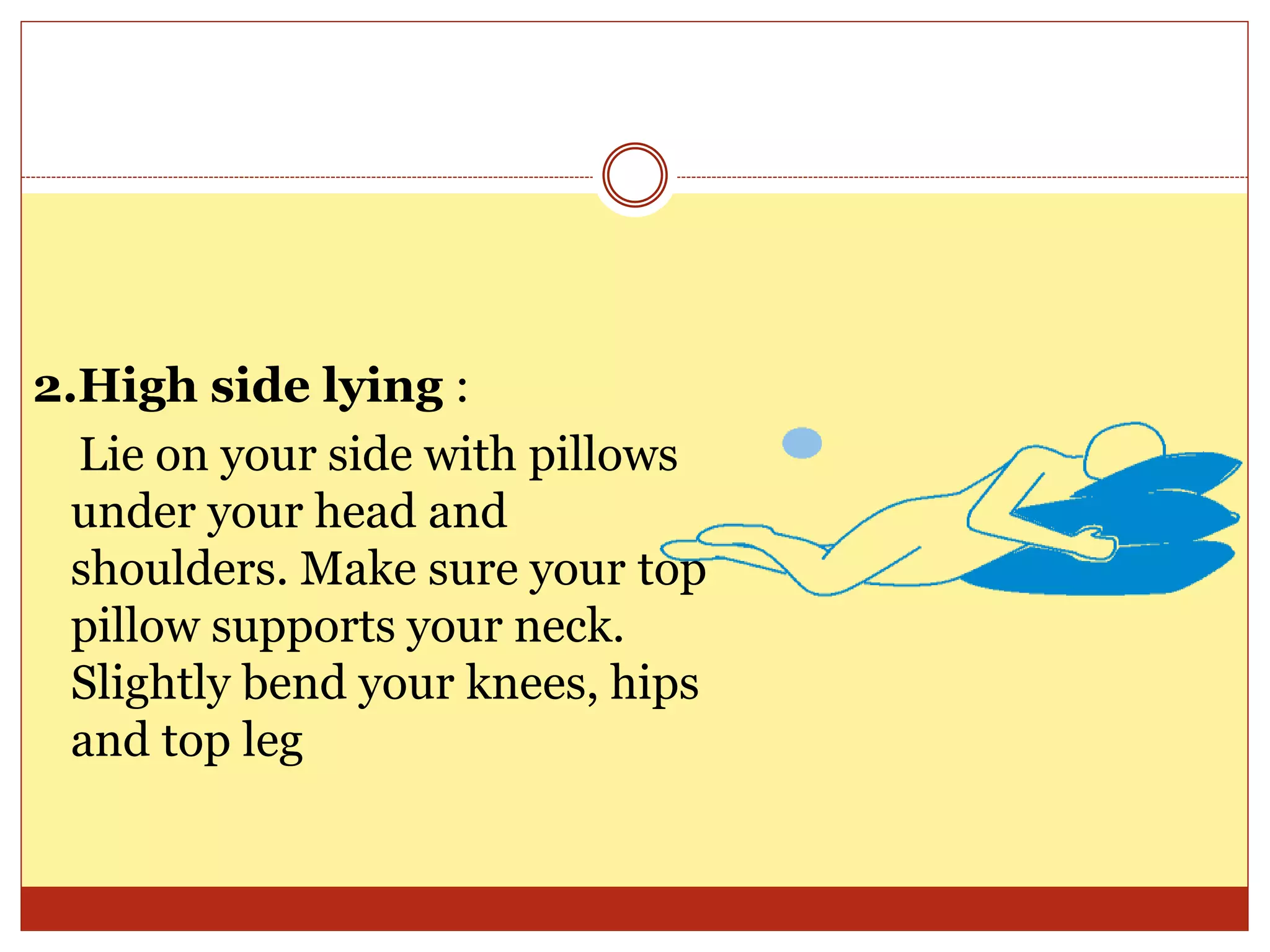
2.High side lying :
Lie on your side with pillows
under your head and
shoulders. Make sure your top
pillow supports your neck.
Slightly bend your knees, hips
and top leg
Position for Breathless children
1.Forward kneeling
References
1. Physiotherapy for Respiratory and Cardiac
Problems,2nd edition ,Jennifer A Pryor
2. British Lung Foundation 2017,
blf.org.uk/breathlessness

Relaxation positions for breathelessness patients

  • 1.
    U G ST U D E N T J S S C P T , M Y S U R U RELAXATION POSITIONS FOR BREATHELESS PATIENT
  • 2.
    Content  Objectives  Introduction Definition  Summary  References
  • 3.
    Basic principle behind... There are positions which optimize the length tension status of the diaphragm (Sharp et al 1980, O'Neill & McCarthy 1983, Dean 1985).  By sitting or standing leaning forward, the abdominal contents raise the anterior part of the diaphragm, possibly facilitating its contraction during inspiration. (M.O.Segizbaeva 2013)
  • 4.
     A similareffect can be seen in the side lying and high side lying positions where the curvature of the dependent part of the diaphragm is increased.  This effect combined with relaxation of the head, neck and shoulders promotes the control in breathing
  • 5.
    Stand leaning backwardsor sideways against a wall  Have your feet slightly apart, about one foot or 30cms away from the wall. Relax your hands down by your sides. If you prefer, rest your hands or thumbs in your waistband
  • 6.
    Relaxation positions dependson the lung conditions: 1. Positions for obstructive lung conditions 2. Positions for restrictive lung conditions
  • 7.
    Positions for obstructivelung conditions 1. Stand leaning forward : Lean from the hips, with your forearms resting
  • 8.
    2. Sit leaningforward : lean resting your elbows on your knees
  • 9.
    3.Sit leaning forwardat a table : Rest your head and arms on pillows on a table when you’re really short of breath.
  • 10.
    4.Side lying withleg on the floor bent at knee Lie on your side with pillows under your head. Make sure the top pillow supports your neck. Slightly bend the knee of the leg you’re lying on, with your top leg straight.
  • 11.
    Positions for restrictivelung conditions 1.Sit upright in a firm chair : If your chair doesn’t have arms, rest your arms on your thighs. Let your wrists and hands go limp.
  • 12.
    2.High side lying: Lie on your side with pillows under your head and shoulders. Make sure your top pillow supports your neck. Slightly bend your knees, hips and top leg
  • 13.
    Position for Breathlesschildren 1.Forward kneeling
  • 14.
    References 1. Physiotherapy forRespiratory and Cardiac Problems,2nd edition ,Jennifer A Pryor 2. British Lung Foundation 2017, blf.org.uk/breathlessness

Editor's Notes

  • #8 on something at the right height, such as a chair or kitchen work surface.
  • #11 This can help when you’re breathless when you’re resting, such as when your symptoms flare up.