Dr.S.Sethupathy,M.D,Ph.D.,
Professor and HOD
Dept. of Biochemistry
RMMC,AU
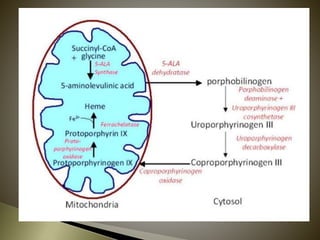
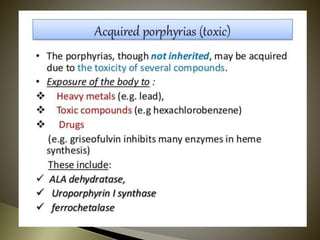
A group of rare disorders caused by deficiencies of
enzymes of the heme biosynthetic pathway
Affected individuals have an accumulation of heme
precursors (porphyrins), which are toxic at high
concentrations
Attacks of the disease are triggered by certain drugs,
chemicals, and foods, and also by exposure to sun
 Treatment involves administration of hemin, which
provides negative feedback for the heme biosynthetic
pathway, and therefore, prevents accumulation of heme
precursors
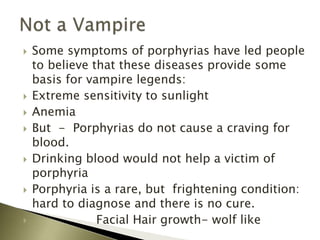
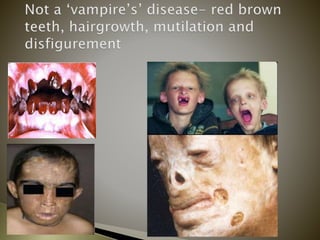
 Some symptoms of porphyrias have led people
to believe that these diseases provide some
basis for vampire legends:
 Extreme sensitivity to sunlight
 Anemia
 But - Porphyrias do not cause a craving for
blood.
 Drinking blood would not help a victim of
porphyria
 Porphyria is a rare, but frightening condition:
hard to diagnose and there is no cure.
 Facial Hair growth- wolf like
 Porphyria is a group of syndromes, largely
hereditary
 Due to defective enzymes involved in heme
synthesis
 Manifest clinically in an acute or a chronic
manner
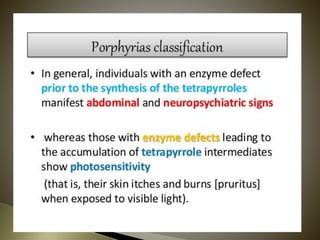
 Signs and symptoms predominantly
cutaneous, neurovisceral or neurologic,
psychiatric, or combination of those

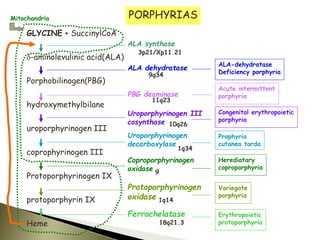
PORPHYRIAS
GLYCINE + SuccinylCoA
d-aminolevulinic acid(ALA)
Porphobilinogen(PBG)
hydroxymethylbilane
uroporphyrinogen III
coprophyrinogen III
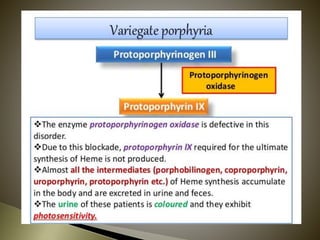
Protoporphyrinogen IX
protoporphyrin IX
Heme
ALA synthase
ALA dehydratase
PBG deaminase
Uroporphyrinogen III
cosynthase
Uroporphyrinogen
decarboxylase
Coproporphyrinogen
oxidase
Protoporphyrinogen
oxidase
Ferrochelatase
ALA-dehydratase
Deficiency porphyria
Acute intermittent
porphyria
Congenital erythropoietic
porphyria
Prophyria
cutanea tarda
Herediatary
coproporphyria
Variegate
porphyria
Erythropoietic
protoporphyria
Mitochondria
9q34
11q23
10q26
1q34
9
1q14
18q21.3
3p21/Xp11.21
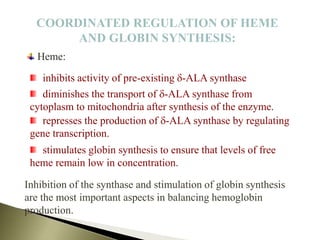
COORDINATED REGULATION OF HEME
AND GLOBIN SYNTHESIS:
Heme:
Inhibition of the synthase and stimulation of globin synthesis
are the most important aspects in balancing hemoglobin
production.
diminishes the transport of d-ALA synthase from
cytoplasm to mitochondria after synthesis of the enzyme.
represses the production of d-ALA synthase by regulating
gene transcription.
inhibits activity of pre-existing d-ALA synthase
stimulates globin synthesis to ensure that levels of free
heme remain low in concentration.
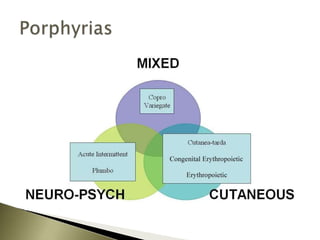
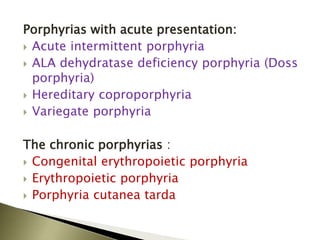
Porphyrias with acute presentation:
 Acute intermittent porphyria
 ALA dehydratase deficiency porphyria (Doss
porphyria)
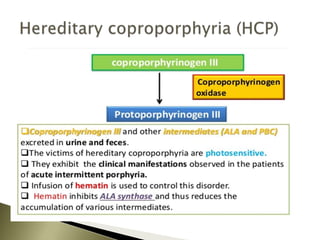
 Hereditary coproporphyria
 Variegate porphyria
The chronic porphyrias :
 Congenital erythropoietic porphyria
 Erythropoietic porphyria
 Porphyria cutanea tarda
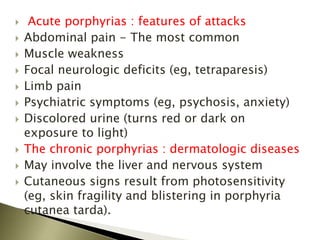
 Acute porphyrias : features of attacks
 Abdominal pain - The most common
 Muscle weakness
 Focal neurologic deficits (eg, tetraparesis)
 Limb pain
 Psychiatric symptoms (eg, psychosis, anxiety)
 Discolored urine (turns red or dark on
exposure to light)
 The chronic porphyrias : dermatologic diseases
 May involve the liver and nervous system
 Cutaneous signs result from photosensitivity
(eg, skin fragility and blistering in porphyria
cutanea tarda).
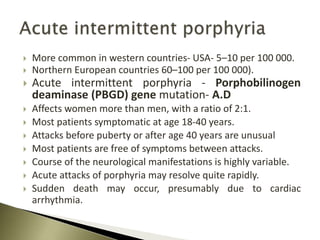
 More common in western countries- USA- 5–10 per 100 000.
 Northern European countries 60–100 per 100 000).
 Acute intermittent porphyria - Porphobilinogen
deaminase (PBGD) gene mutation- A.D
 Affects women more than men, with a ratio of 2:1.
 Most patients symptomatic at age 18-40 years.
 Attacks before puberty or after age 40 years are unusual
 Most patients are free of symptoms between attacks.
 Course of the neurological manifestations is highly variable.
 Acute attacks of porphyria may resolve quite rapidly.
 Sudden death may occur, presumably due to cardiac
arrhythmia.
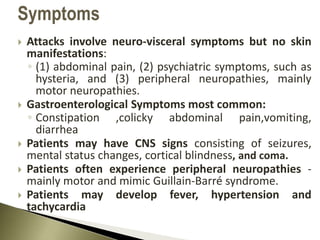
 Attacks involve neuro-visceral symptoms but no skin
manifestations:
◦ (1) abdominal pain, (2) psychiatric symptoms, such as
hysteria, and (3) peripheral neuropathies, mainly
motor neuropathies.
 Gastroenterological Symptoms most common:
◦ Constipation ,colicky abdominal pain,vomiting,
diarrhea
 Patients may have CNS signs consisting of seizures,
mental status changes, cortical blindness, and coma.
 Patients often experience peripheral neuropathies -
mainly motor and mimic Guillain-Barré syndrome.
 Patients may develop fever, hypertension and
tachycardia
Symptoms
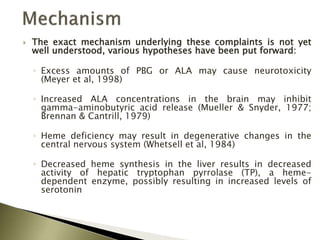
 The exact mechanism underlying these complaints is not yet
well understood, various hypotheses have been put forward:
◦ Excess amounts of PBG or ALA may cause neurotoxicity
(Meyer et al, 1998)
◦ Increased ALA concentrations in the brain may inhibit
gamma-aminobutyric acid release (Mueller & Snyder, 1977;
Brennan & Cantrill, 1979)
◦ Heme deficiency may result in degenerative changes in the
central nervous system (Whetsell et al, 1984)
◦ Decreased heme synthesis in the liver results in decreased
activity of hepatic tryptophan pyrrolase (TP), a heme-
dependent enzyme, possibly resulting in increased levels of
serotonin
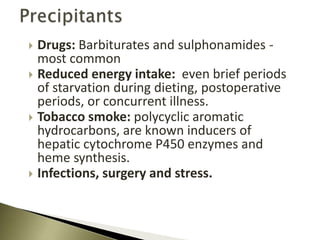
 Drugs: Barbiturates and sulphonamides -
most common
 Reduced energy intake: even brief periods
of starvation during dieting, postoperative
periods, or concurrent illness.
 Tobacco smoke: polycyclic aromatic
hydrocarbons, are known inducers of
hepatic cytochrome P450 enzymes and
heme synthesis.
 Infections, surgery and stress.
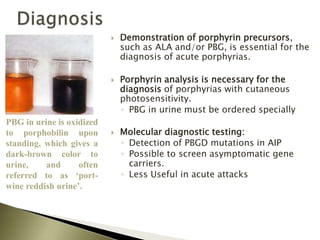
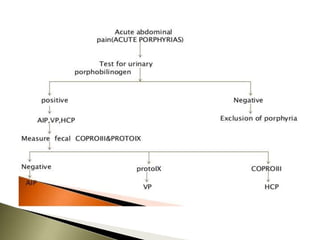
 Demonstration of porphyrin precursors,
such as ALA and/or PBG, is essential for the
diagnosis of acute porphyrias.
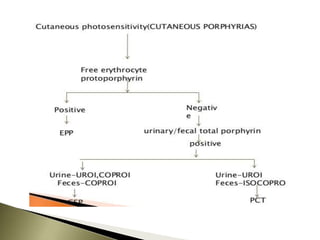
 Porphyrin analysis is necessary for the
diagnosis of porphyrias with cutaneous
photosensitivity.
◦ PBG in urine must be ordered specially
 Molecular diagnostic testing:
◦ Detection of PBGD mutations in AIP
◦ Possible to screen asymptomatic gene
carriers.
◦ Less Useful in acute attacks
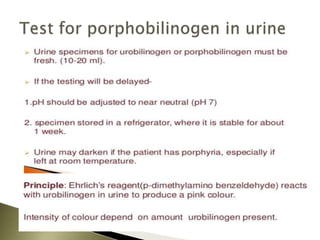
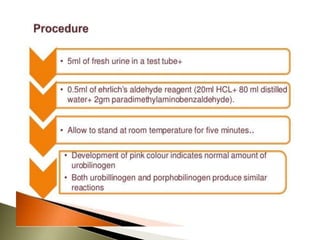
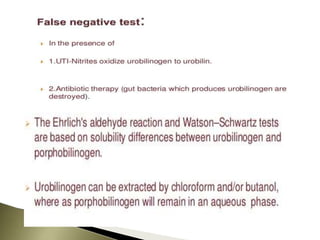
PBG in urine is oxidized
to porphobilin upon
standing, which gives a
dark-brown color to
urine, and often
referred to as ‘port-
wine reddish urine’.
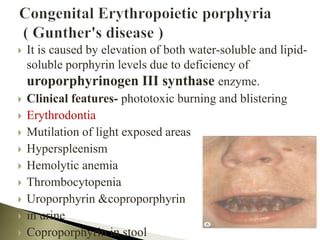
 It is caused by elevation of both water-soluble and lipid-
soluble porphyrin levels due to deficiency of
uroporphyrinogen III synthase enzyme.
 Clinical features- phototoxic burning and blistering
 Erythrodontia
 Mutilation of light exposed areas
 Hyperspleenism
 Hemolytic anemia
 Thrombocytopenia
 Uroporphyrin &coproporphyrin
 in urine
 Coproporphyrin in stool
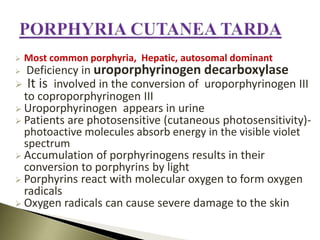
 Most common porphyria, Hepatic, autosomal dominant
 Deficiency in uroporphyrinogen decarboxylase
 It is involved in the conversion of uroporphyrinogen III
to coproporphyrinogen III
 Uroporphyrinogen appears in urine
 Patients are photosensitive (cutaneous photosensitivity)-
photoactive molecules absorb energy in the visible violet
spectrum
 Accumulation of porphyrinogens results in their
conversion to porphyrins by light
 Porphyrins react with molecular oxygen to form oxygen
radicals
 Oxygen radicals can cause severe damage to the skin
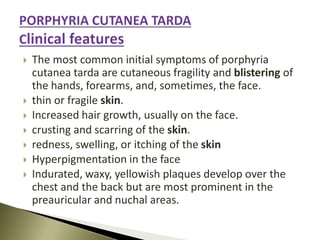
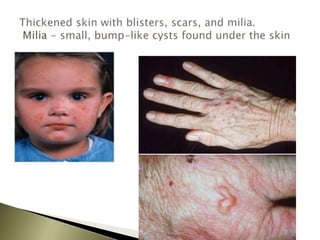
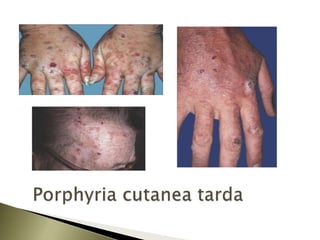
 The most common initial symptoms of porphyria
cutanea tarda are cutaneous fragility and blistering of
the hands, forearms, and, sometimes, the face.
 thin or fragile skin.
 Increased hair growth, usually on the face.
 crusting and scarring of the skin.
 redness, swelling, or itching of the skin
 Hyperpigmentation in the face
 Indurated, waxy, yellowish plaques develop over the
chest and the back but are most prominent in the
preauricular and nuchal areas.
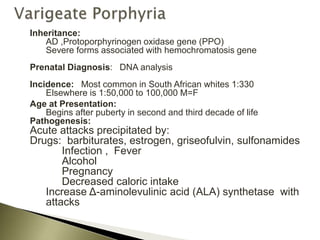
Inheritance:
AD ,Protoporphyrinogen oxidase gene (PPO)
Severe forms associated with hemochromatosis gene
Prenatal Diagnosis: DNA analysis
Incidence: Most common in South African whites 1:330
Elsewhere is 1:50,000 to 100,000 M=F
Age at Presentation:
Begins after puberty in second and third decade of life
Pathogenesis:
Acute attacks precipitated by:
Drugs: barbiturates, estrogen, griseofulvin, sulfonamides
Infection , Fever
Alcohol
Pregnancy
Decreased caloric intake
Increase Δ-aminolevulinic acid (ALA) synthetase with
attacks
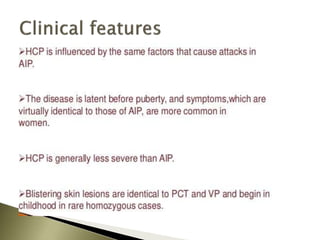
 Clinical picture:
◦ Skin:
 Identical to PCT with bullae, erosions, skin fragility,
scarring, hypertrichosis, hyperpigmentation on
photodistributed face, neck and dorsum of hands
◦ Acute Attacks (i.e., Acute Intermittent Porphyria
and Hereditary Coproporphyria):
 Gastrointestinal:
 Colickly abdominal pain, nausea, vomiting, constipation
 CNS:
 Peripheral neuropathy with pain, weakness, paralysis
 Confusional state, anxiety, depression, delerium
 Seizures, coma
 CV:
 Tachycardia, hypertension
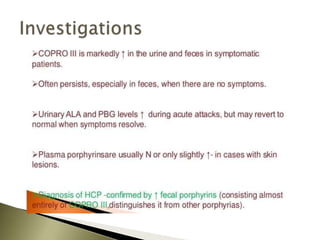
 Laboratory Data:
Plasma porphyrin fluorescence
spectrum—626 nm is diagnostic
24 hour urine porphyrin levels:
coproprophyrin = or > uroporphyrin
Urine ALA and porphobillinogen (PBG)
levels increased during attacks
Fecal prophyrin levels: markedly
elevated, protoporphyrin>coproporphyrin
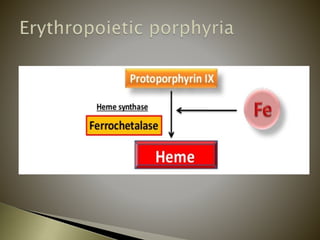
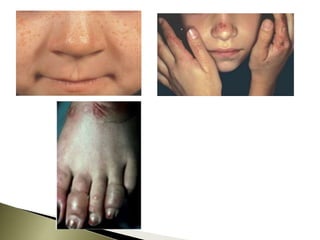
 It is the most common childhood porphyria
due to deficiency of ferrochelatase . AD
 It is usually evident by 2 years of age.
 Clinical features - skin – pain and burning in
sunlight
 Erythema, purpura, swelling
 Erosions in exposed areas – face, hands
 Scarring, waxy thickening of the skin
 Complications-
 Anemia, liver failure, gall stones
 Investigations
 Complete blood count
 Quantitavive porphyrins in RBCs
 Ferritin
 LFT once in a year
 USG/CT/MRI of liver
 Liver biopsy
 Delta-aminolevulinic acid dehydratase
(ALAD), also known as porphobilinogen
synthase
 Deficiency causes ALAD deficiency porphyria
(ADP), an extremely rare cause of acute
porphyria.
 Autosomal recessive
 Only neurovisceral manifestations.
 Confirmed by mutation analysis
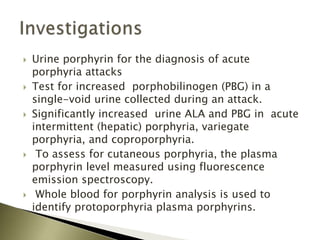
 Urine porphyrin for the diagnosis of acute
porphyria attacks
 Test for increased porphobilinogen (PBG) in a
single-void urine collected during an attack.
 Significantly increased urine ALA and PBG in acute
intermittent (hepatic) porphyria, variegate
porphyria, and coproporphyria.
 To assess for cutaneous porphyria, the plasma
porphyrin level measured using fluorescence
emission spectroscopy.
 Whole blood for porphyrin analysis is used to
identify protoporphyria plasma porphyrins.
 Stool studies: The ratio of fecal
coproporphyrin & protoporphyrin analysis
 Fecal protoporphyrin always exceeds
coproporphyrin (P > C = V) in variegate
porphyria, whereas the reverse is true in
hereditary coproprophyria.
 Erythrocyte uroporphyrinogen
decarboxylase activity is a reliable
diagnostic test for porphyria cutanea tarda.
 Acute attacks- pain management
 Stopping of drugs
 IV glucose or oral glucose
 Control of infections
 IV fluids for dehydration
 IV injections of Hemin
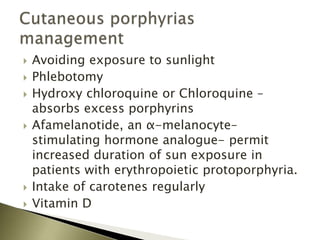
 Avoiding exposure to sunlight
 Phlebotomy
 Hydroxy chloroquine or Chloroquine –
absorbs excess porphyrins
 Afamelanotide, an α-melanocyte–
stimulating hormone analogue- permit
increased duration of sun exposure in
patients with erythropoietic protoporphyria.
 Intake of carotenes regularly
 Vitamin D
Porphyrias
Porphyrias
Porphyrias
Porphyrias
Porphyrias
Porphyrias
Porphyrias
Porphyrias
Porphyrias
Porphyrias
Porphyrias
Porphyrias
Porphyrias
Porphyrias

Porphyrias

  • 1.
  • 2.
    A group ofrare disorders caused by deficiencies of enzymes of the heme biosynthetic pathway Affected individuals have an accumulation of heme precursors (porphyrins), which are toxic at high concentrations Attacks of the disease are triggered by certain drugs, chemicals, and foods, and also by exposure to sun  Treatment involves administration of hemin, which provides negative feedback for the heme biosynthetic pathway, and therefore, prevents accumulation of heme precursors
  • 3.
     Some symptomsof porphyrias have led people to believe that these diseases provide some basis for vampire legends:  Extreme sensitivity to sunlight  Anemia  But - Porphyrias do not cause a craving for blood.  Drinking blood would not help a victim of porphyria  Porphyria is a rare, but frightening condition: hard to diagnose and there is no cure.  Facial Hair growth- wolf like
  • 5.
     Porphyria isa group of syndromes, largely hereditary  Due to defective enzymes involved in heme synthesis  Manifest clinically in an acute or a chronic manner  Signs and symptoms predominantly cutaneous, neurovisceral or neurologic, psychiatric, or combination of those 
  • 7.
    PORPHYRIAS GLYCINE + SuccinylCoA d-aminolevulinicacid(ALA) Porphobilinogen(PBG) hydroxymethylbilane uroporphyrinogen III coprophyrinogen III Protoporphyrinogen IX protoporphyrin IX Heme ALA synthase ALA dehydratase PBG deaminase Uroporphyrinogen III cosynthase Uroporphyrinogen decarboxylase Coproporphyrinogen oxidase Protoporphyrinogen oxidase Ferrochelatase ALA-dehydratase Deficiency porphyria Acute intermittent porphyria Congenital erythropoietic porphyria Prophyria cutanea tarda Herediatary coproporphyria Variegate porphyria Erythropoietic protoporphyria Mitochondria 9q34 11q23 10q26 1q34 9 1q14 18q21.3 3p21/Xp11.21
  • 8.
    COORDINATED REGULATION OFHEME AND GLOBIN SYNTHESIS: Heme: Inhibition of the synthase and stimulation of globin synthesis are the most important aspects in balancing hemoglobin production. diminishes the transport of d-ALA synthase from cytoplasm to mitochondria after synthesis of the enzyme. represses the production of d-ALA synthase by regulating gene transcription. inhibits activity of pre-existing d-ALA synthase stimulates globin synthesis to ensure that levels of free heme remain low in concentration.
  • 10.
    Porphyrias with acutepresentation:  Acute intermittent porphyria  ALA dehydratase deficiency porphyria (Doss porphyria)  Hereditary coproporphyria  Variegate porphyria The chronic porphyrias :  Congenital erythropoietic porphyria  Erythropoietic porphyria  Porphyria cutanea tarda
  • 11.
     Acute porphyrias: features of attacks  Abdominal pain - The most common  Muscle weakness  Focal neurologic deficits (eg, tetraparesis)  Limb pain  Psychiatric symptoms (eg, psychosis, anxiety)  Discolored urine (turns red or dark on exposure to light)  The chronic porphyrias : dermatologic diseases  May involve the liver and nervous system  Cutaneous signs result from photosensitivity (eg, skin fragility and blistering in porphyria cutanea tarda).
  • 14.
     More commonin western countries- USA- 5–10 per 100 000.  Northern European countries 60–100 per 100 000).  Acute intermittent porphyria - Porphobilinogen deaminase (PBGD) gene mutation- A.D  Affects women more than men, with a ratio of 2:1.  Most patients symptomatic at age 18-40 years.  Attacks before puberty or after age 40 years are unusual  Most patients are free of symptoms between attacks.  Course of the neurological manifestations is highly variable.  Acute attacks of porphyria may resolve quite rapidly.  Sudden death may occur, presumably due to cardiac arrhythmia.
  • 15.
     Attacks involveneuro-visceral symptoms but no skin manifestations: ◦ (1) abdominal pain, (2) psychiatric symptoms, such as hysteria, and (3) peripheral neuropathies, mainly motor neuropathies.  Gastroenterological Symptoms most common: ◦ Constipation ,colicky abdominal pain,vomiting, diarrhea  Patients may have CNS signs consisting of seizures, mental status changes, cortical blindness, and coma.  Patients often experience peripheral neuropathies - mainly motor and mimic Guillain-Barré syndrome.  Patients may develop fever, hypertension and tachycardia Symptoms
  • 16.
     The exactmechanism underlying these complaints is not yet well understood, various hypotheses have been put forward: ◦ Excess amounts of PBG or ALA may cause neurotoxicity (Meyer et al, 1998) ◦ Increased ALA concentrations in the brain may inhibit gamma-aminobutyric acid release (Mueller & Snyder, 1977; Brennan & Cantrill, 1979) ◦ Heme deficiency may result in degenerative changes in the central nervous system (Whetsell et al, 1984) ◦ Decreased heme synthesis in the liver results in decreased activity of hepatic tryptophan pyrrolase (TP), a heme- dependent enzyme, possibly resulting in increased levels of serotonin
  • 17.
     Drugs: Barbituratesand sulphonamides - most common  Reduced energy intake: even brief periods of starvation during dieting, postoperative periods, or concurrent illness.  Tobacco smoke: polycyclic aromatic hydrocarbons, are known inducers of hepatic cytochrome P450 enzymes and heme synthesis.  Infections, surgery and stress.
  • 18.
     Demonstration ofporphyrin precursors, such as ALA and/or PBG, is essential for the diagnosis of acute porphyrias.  Porphyrin analysis is necessary for the diagnosis of porphyrias with cutaneous photosensitivity. ◦ PBG in urine must be ordered specially  Molecular diagnostic testing: ◦ Detection of PBGD mutations in AIP ◦ Possible to screen asymptomatic gene carriers. ◦ Less Useful in acute attacks PBG in urine is oxidized to porphobilin upon standing, which gives a dark-brown color to urine, and often referred to as ‘port- wine reddish urine’.
  • 19.
     It iscaused by elevation of both water-soluble and lipid- soluble porphyrin levels due to deficiency of uroporphyrinogen III synthase enzyme.  Clinical features- phototoxic burning and blistering  Erythrodontia  Mutilation of light exposed areas  Hyperspleenism  Hemolytic anemia  Thrombocytopenia  Uroporphyrin &coproporphyrin  in urine  Coproporphyrin in stool
  • 20.
     Most commonporphyria, Hepatic, autosomal dominant  Deficiency in uroporphyrinogen decarboxylase  It is involved in the conversion of uroporphyrinogen III to coproporphyrinogen III  Uroporphyrinogen appears in urine  Patients are photosensitive (cutaneous photosensitivity)- photoactive molecules absorb energy in the visible violet spectrum  Accumulation of porphyrinogens results in their conversion to porphyrins by light  Porphyrins react with molecular oxygen to form oxygen radicals  Oxygen radicals can cause severe damage to the skin
  • 21.
     The mostcommon initial symptoms of porphyria cutanea tarda are cutaneous fragility and blistering of the hands, forearms, and, sometimes, the face.  thin or fragile skin.  Increased hair growth, usually on the face.  crusting and scarring of the skin.  redness, swelling, or itching of the skin  Hyperpigmentation in the face  Indurated, waxy, yellowish plaques develop over the chest and the back but are most prominent in the preauricular and nuchal areas.
  • 28.
    Inheritance: AD ,Protoporphyrinogen oxidasegene (PPO) Severe forms associated with hemochromatosis gene Prenatal Diagnosis: DNA analysis Incidence: Most common in South African whites 1:330 Elsewhere is 1:50,000 to 100,000 M=F Age at Presentation: Begins after puberty in second and third decade of life Pathogenesis: Acute attacks precipitated by: Drugs: barbiturates, estrogen, griseofulvin, sulfonamides Infection , Fever Alcohol Pregnancy Decreased caloric intake Increase Δ-aminolevulinic acid (ALA) synthetase with attacks
  • 29.
     Clinical picture: ◦Skin:  Identical to PCT with bullae, erosions, skin fragility, scarring, hypertrichosis, hyperpigmentation on photodistributed face, neck and dorsum of hands ◦ Acute Attacks (i.e., Acute Intermittent Porphyria and Hereditary Coproporphyria):  Gastrointestinal:  Colickly abdominal pain, nausea, vomiting, constipation  CNS:  Peripheral neuropathy with pain, weakness, paralysis  Confusional state, anxiety, depression, delerium  Seizures, coma  CV:  Tachycardia, hypertension
  • 30.
     Laboratory Data: Plasmaporphyrin fluorescence spectrum—626 nm is diagnostic 24 hour urine porphyrin levels: coproprophyrin = or > uroporphyrin Urine ALA and porphobillinogen (PBG) levels increased during attacks Fecal prophyrin levels: markedly elevated, protoporphyrin>coproporphyrin
  • 31.
     It isthe most common childhood porphyria due to deficiency of ferrochelatase . AD  It is usually evident by 2 years of age.  Clinical features - skin – pain and burning in sunlight  Erythema, purpura, swelling  Erosions in exposed areas – face, hands  Scarring, waxy thickening of the skin
  • 33.
     Complications-  Anemia,liver failure, gall stones  Investigations  Complete blood count  Quantitavive porphyrins in RBCs  Ferritin  LFT once in a year  USG/CT/MRI of liver  Liver biopsy
  • 35.
     Delta-aminolevulinic aciddehydratase (ALAD), also known as porphobilinogen synthase  Deficiency causes ALAD deficiency porphyria (ADP), an extremely rare cause of acute porphyria.  Autosomal recessive  Only neurovisceral manifestations.  Confirmed by mutation analysis
  • 37.
     Urine porphyrinfor the diagnosis of acute porphyria attacks  Test for increased porphobilinogen (PBG) in a single-void urine collected during an attack.  Significantly increased urine ALA and PBG in acute intermittent (hepatic) porphyria, variegate porphyria, and coproporphyria.  To assess for cutaneous porphyria, the plasma porphyrin level measured using fluorescence emission spectroscopy.  Whole blood for porphyrin analysis is used to identify protoporphyria plasma porphyrins.
  • 38.
     Stool studies:The ratio of fecal coproporphyrin & protoporphyrin analysis  Fecal protoporphyrin always exceeds coproporphyrin (P > C = V) in variegate porphyria, whereas the reverse is true in hereditary coproprophyria.  Erythrocyte uroporphyrinogen decarboxylase activity is a reliable diagnostic test for porphyria cutanea tarda.
  • 39.
     Acute attacks-pain management  Stopping of drugs  IV glucose or oral glucose  Control of infections  IV fluids for dehydration  IV injections of Hemin
  • 40.
     Avoiding exposureto sunlight  Phlebotomy  Hydroxy chloroquine or Chloroquine – absorbs excess porphyrins  Afamelanotide, an α-melanocyte– stimulating hormone analogue- permit increased duration of sun exposure in patients with erythropoietic protoporphyria.  Intake of carotenes regularly  Vitamin D

Editor's Notes