KURSK STATE MEDICAL
UNIVERSITY

DEPARTMENT OF SKIN AND VENEREAL
DISEASES
HEAD OF THE DEPT.-Prof. Silina L.V.
TEACHER- E.I.Sirotkina

Porphyria Cutanea Tarda
Presented by :
Aayupta Mohanty
4th year ,group 5
2013
Introduction


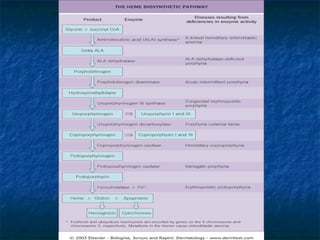
The porphyrias are caused by deficiencies
of enzymes involved in heme biosynthesis
which lead to blockade of the porphyrin
pathway and subsequent accumulation of
porphyrins and their precursors.
Introduction




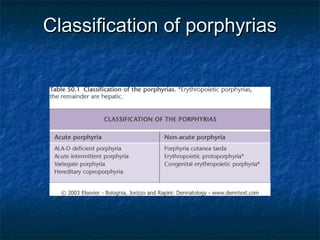
Seven major types of porhyria are now
recognized .
They include acute and non-acute
forms.
Classification of porphyrias
Introduction




Cutaneous features are not seen in acute
intermittent porphyria (AIP) or the
very
rare aminolevulinic acid dehydratase
(ALA-D) deficient porphyria.
Erythropoietic protoporphyria and
congenital erythropoietic porphyria are
characterized by porphyrins produced
mainly in the bone marrow. The
reminder are primarily hepatic porhyrias.
Introduction



Excessive concentrations of porhyrins
exposed to day-light generate free
radicals, leading to cell membrane
damage and cell death.
Introduction


The type of cellular damage depends on
the solubility and tissue distribution of the
porphyrins. Two main patterns of skin
damage are seen in the porphyries:
1.

accumulation of water soluble uro- and
coproporphyrins leads to blistering.

2.

accumulation of the lipophilic
protoporphyrins leads to burning
PORPHYRIA
CUTANEA TARDA
:
Epidimiology








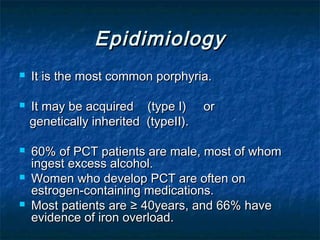
It is the most common porphyria.
It may be acquired (type I)
genetically inherited (typeII).

or

60% of PCT patients are male, most of whom
ingest excess alcohol.
Women who develop PCT are often on
estrogen-containing medications.
Most patients are ≥ 40years, and 66% have
evidence of iron overload.
Pathogenesis




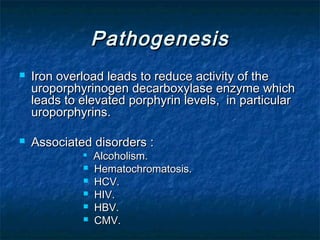
Iron overload leads to reduce activity of the
uroporphyrinogen decarboxylase enzyme which
leads to elevated porphyrin levels, in particular
uroporphyrins.
Associated disorders :








Alcoholism.
Hematochromatosis.
HCV.
HIV.
HBV.
CMV.
Pathogenesis






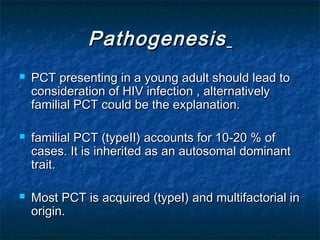
PCT presenting in a young adult should lead to
consideration of HIV infection , alternatively
familial PCT could be the explanation.
familial PCT (typeII) accounts for 10-20 % of
cases. It is inherited as an autosomal dominant
trait.
Most PCT is acquired (typeI) and multifactorial in
origin.



Diagnostic Considerations
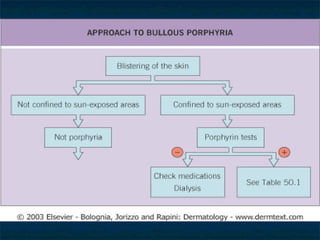
Other porphyrias, pseudoporphyrias, and photoaggravated bullous
dermatoses can manifest with clinical features indistinguishable
from those of porphyria cutanea tarda. Failure to obtain sufficient
biochemical confirmation of the diagnosis can lead to inappropriate
treatment of non–porphyria cutanea tarda disorders.



Differential Diagnoses



Epidermolysis Bullosa



Epidermolysis Bullosa Acquisita



Erythropoietic Porphyria



Hydroa Vacciniforme



Lupus Erythematosus, Bullous


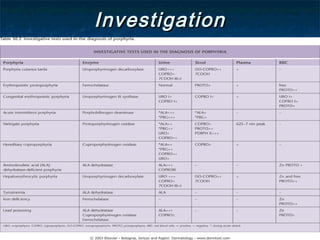
Investigation
Pathology



Subepidermal blister with minimal
“cell-poor ” dermal inflammatory infiltrate.
Treatment

Porphyria

  • 1.
    KURSK STATE MEDICAL UNIVERSITY DEPARTMENTOF SKIN AND VENEREAL DISEASES HEAD OF THE DEPT.-Prof. Silina L.V. TEACHER- E.I.Sirotkina Porphyria Cutanea Tarda Presented by : Aayupta Mohanty 4th year ,group 5 2013
  • 2.
    Introduction  The porphyrias arecaused by deficiencies of enzymes involved in heme biosynthesis which lead to blockade of the porphyrin pathway and subsequent accumulation of porphyrins and their precursors.
  • 4.
    Introduction   Seven major typesof porhyria are now recognized . They include acute and non-acute forms.
  • 5.
  • 6.
    Introduction   Cutaneous features arenot seen in acute intermittent porphyria (AIP) or the very rare aminolevulinic acid dehydratase (ALA-D) deficient porphyria. Erythropoietic protoporphyria and congenital erythropoietic porphyria are characterized by porphyrins produced mainly in the bone marrow. The reminder are primarily hepatic porhyrias.
  • 7.
    Introduction  Excessive concentrations ofporhyrins exposed to day-light generate free radicals, leading to cell membrane damage and cell death.
  • 8.
    Introduction  The type ofcellular damage depends on the solubility and tissue distribution of the porphyrins. Two main patterns of skin damage are seen in the porphyries: 1. accumulation of water soluble uro- and coproporphyrins leads to blistering. 2. accumulation of the lipophilic protoporphyrins leads to burning
  • 11.
  • 12.
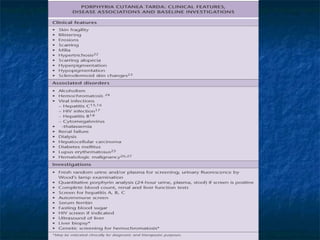
    Epidimiology      It is themost common porphyria. It may be acquired (type I) genetically inherited (typeII). or 60% of PCT patients are male, most of whom ingest excess alcohol. Women who develop PCT are often on estrogen-containing medications. Most patients are ≥ 40years, and 66% have evidence of iron overload.
  • 13.
    Pathogenesis   Iron overload leadsto reduce activity of the uroporphyrinogen decarboxylase enzyme which leads to elevated porphyrin levels, in particular uroporphyrins. Associated disorders :       Alcoholism. Hematochromatosis. HCV. HIV. HBV. CMV.
  • 14.
    Pathogenesis    PCT presenting ina young adult should lead to consideration of HIV infection , alternatively familial PCT could be the explanation. familial PCT (typeII) accounts for 10-20 % of cases. It is inherited as an autosomal dominant trait. Most PCT is acquired (typeI) and multifactorial in origin.
  • 20.
      Diagnostic Considerations Other porphyrias,pseudoporphyrias, and photoaggravated bullous dermatoses can manifest with clinical features indistinguishable from those of porphyria cutanea tarda. Failure to obtain sufficient biochemical confirmation of the diagnosis can lead to inappropriate treatment of non–porphyria cutanea tarda disorders.  Differential Diagnoses  Epidermolysis Bullosa  Epidermolysis Bullosa Acquisita  Erythropoietic Porphyria  Hydroa Vacciniforme  Lupus Erythematosus, Bullous 
  • 21.
  • 22.
    Pathology  Subepidermal blister withminimal “cell-poor ” dermal inflammatory infiltrate.
  • 24.