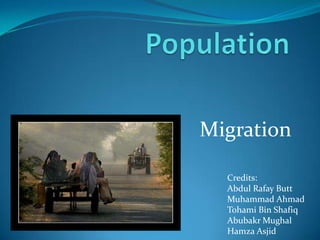
Migration
Credits:
Abdul Rafay Butt
Muhammad Ahmad
Tohami Bin Shafiq
Abubakr Mughal
Hamza Asjid
Migration
 Movement of people from one area to another.

Types of migration
 In-migration: people arriving in the area from other

places. (Immigrants)
 Out-migration: People leaving the area to go to other
areas. (emigrants)
 Migration can be internal, within a country such as
rural to urban.
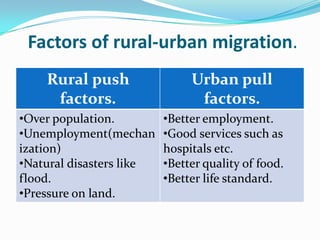
Factors of rural-urban migration.
Rural push
factors.
•Over population.
•Unemployment(mechan
ization)
•Natural disasters like
flood.
•Pressure on land.

Urban pull
factors.
•Better employment.
•Good services such as
hospitals etc.
•Better quality of food.
•Better life standard.
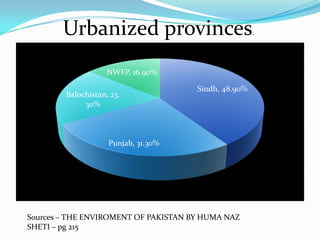
Urbanized provinces
NWFP, 16.90%
Balochistan, 23.
30%

Sindh, 48.90%

Punjab, 31.30%

Sources – THE ENVIROMENT OF PAKISTAN BY HUMA NAZ
SHETI – pg 215

.
Problems resulting from RuralUrban Migration
Housing
Problems:
 Deterioration of living
conditions
 Increased Health
hazards.
 The rapid growth of
slums.

Environmental
Problems:
 Air, water and land
pollution is caused by
high population in urban
areas.
 Surface and ground
water is contaminated by
dumping of industrial
waste.
Pressure on
infrastructure
facilities:
 Rural to urban migration

overburdens all the
resources of urban areas
such as the food supply.
 The infrastructure system
of urban areas is normally
not designed to cope with
the needs of growing
population.

Increase in crime rate
and terrorist attacks:
 Due to lack of employment

opportunities and greater
exposure to the
media, young people are
getting involved in crimes.
 Terrorist organizations use
the employed youth for
terrorist activities.
Social and Psychological
problems:

The unplanned growth
of cities:

 Rural to urban migration

 The unplanned

disturbs the Social
structure.
 A number of people get
indulged in child abuse
and drugs.

construction by the
commercial companies is
posing another threat to
the civic facilities.
 The composition of the
rural population is also
disturbed as more men
migrate to urban areas
than women.
Out-Migration From Pakistan
 Developmental projects in the Middle East attracted

the skilled and unskilled laborers.
 The glamorous lifestyle of the advanced countries has
attracted people.
 High crime rates and terrorists activities in Pakistan
have created unrest among people.
 Depopulation in other countries like Canada
encourage emigrantssa from Pakistan.
Sustainable Population Growth
 It refers to a size of population that can be effectively

supported by an economies resources at all times.
 Achieved when rate of population is proportionate to
development of resources.

What happens if the population growth is not
sustainable?





Over population can decrease economy growth.
Burden on facilities such as education institutions.
Outgoes basic necessities such as water, electricity etc.
Pollution.
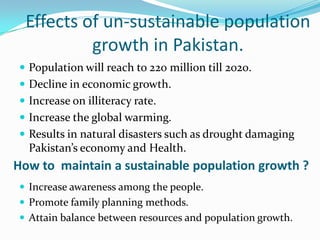
Effects of un-sustainable population
growth in Pakistan.
 Population will reach to 220 million till 2020.

 Decline in economic growth.
 Increase on illiteracy rate.
 Increase the global warming.
 Results in natural disasters such as drought damaging

Pakistan’s economy and Health.

How to maintain a sustainable population growth ?
 Increase awareness among the people.
 Promote family planning methods.
 Attain balance between resources and population growth.
Population: Migration in Pakistan

Population: Migration in Pakistan

  • 1.
    Migration Credits: Abdul Rafay Butt MuhammadAhmad Tohami Bin Shafiq Abubakr Mughal Hamza Asjid
  • 2.
    Migration  Movement ofpeople from one area to another. Types of migration  In-migration: people arriving in the area from other places. (Immigrants)  Out-migration: People leaving the area to go to other areas. (emigrants)  Migration can be internal, within a country such as rural to urban.
  • 3.
    Factors of rural-urbanmigration. Rural push factors. •Over population. •Unemployment(mechan ization) •Natural disasters like flood. •Pressure on land. Urban pull factors. •Better employment. •Good services such as hospitals etc. •Better quality of food. •Better life standard.
  • 4.
    Urbanized provinces NWFP, 16.90% Balochistan,23. 30% Sindh, 48.90% Punjab, 31.30% Sources – THE ENVIROMENT OF PAKISTAN BY HUMA NAZ SHETI – pg 215 .
  • 5.
    Problems resulting fromRuralUrban Migration Housing Problems:  Deterioration of living conditions  Increased Health hazards.  The rapid growth of slums. Environmental Problems:  Air, water and land pollution is caused by high population in urban areas.  Surface and ground water is contaminated by dumping of industrial waste.
  • 6.
    Pressure on infrastructure facilities:  Ruralto urban migration overburdens all the resources of urban areas such as the food supply.  The infrastructure system of urban areas is normally not designed to cope with the needs of growing population. Increase in crime rate and terrorist attacks:  Due to lack of employment opportunities and greater exposure to the media, young people are getting involved in crimes.  Terrorist organizations use the employed youth for terrorist activities.
  • 7.
    Social and Psychological problems: Theunplanned growth of cities:  Rural to urban migration  The unplanned disturbs the Social structure.  A number of people get indulged in child abuse and drugs. construction by the commercial companies is posing another threat to the civic facilities.  The composition of the rural population is also disturbed as more men migrate to urban areas than women.
  • 8.
    Out-Migration From Pakistan Developmental projects in the Middle East attracted the skilled and unskilled laborers.  The glamorous lifestyle of the advanced countries has attracted people.  High crime rates and terrorists activities in Pakistan have created unrest among people.  Depopulation in other countries like Canada encourage emigrantssa from Pakistan.
  • 9.
    Sustainable Population Growth It refers to a size of population that can be effectively supported by an economies resources at all times.  Achieved when rate of population is proportionate to development of resources. What happens if the population growth is not sustainable?     Over population can decrease economy growth. Burden on facilities such as education institutions. Outgoes basic necessities such as water, electricity etc. Pollution.
  • 10.
    Effects of un-sustainablepopulation growth in Pakistan.  Population will reach to 220 million till 2020.  Decline in economic growth.  Increase on illiteracy rate.  Increase the global warming.  Results in natural disasters such as drought damaging Pakistan’s economy and Health. How to maintain a sustainable population growth ?  Increase awareness among the people.  Promote family planning methods.  Attain balance between resources and population growth.