D O N E B Y G R O U P A L P H A
Types of Forests
Syed Hasan Bari
Alpine Forests
 Northern Areas (Chitral, Dir and Kohistan)
 Found on high altitude areas
 Trees with stunted growth, due to low temperature
and less sunlight.
 Normally upward branches to attain maximum
sunlight.
 Essential to obtain fuel wood only.
Example of an Alpine Forest
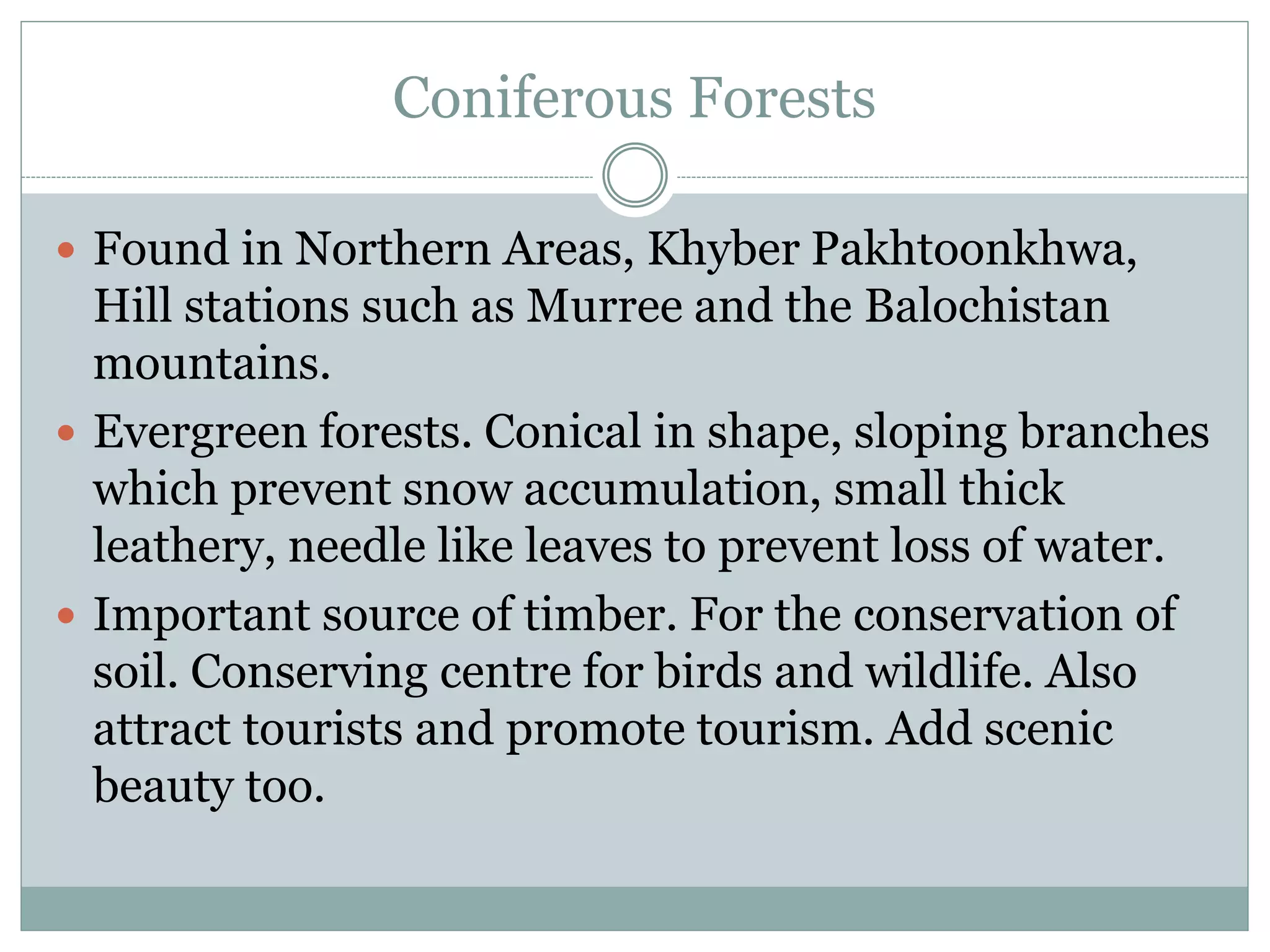
Coniferous Forests
 Found in Northern Areas, Khyber Pakhtoonkhwa,
Hill stations such as Murree and the Balochistan
mountains.
 Evergreen forests. Conical in shape, sloping branches
which prevent snow accumulation, small thick
leathery, needle like leaves to prevent loss of water.
 Important source of timber. For the conservation of
soil. Conserving centre for birds and wildlife. Also
attract tourists and promote tourism. Add scenic
beauty too.
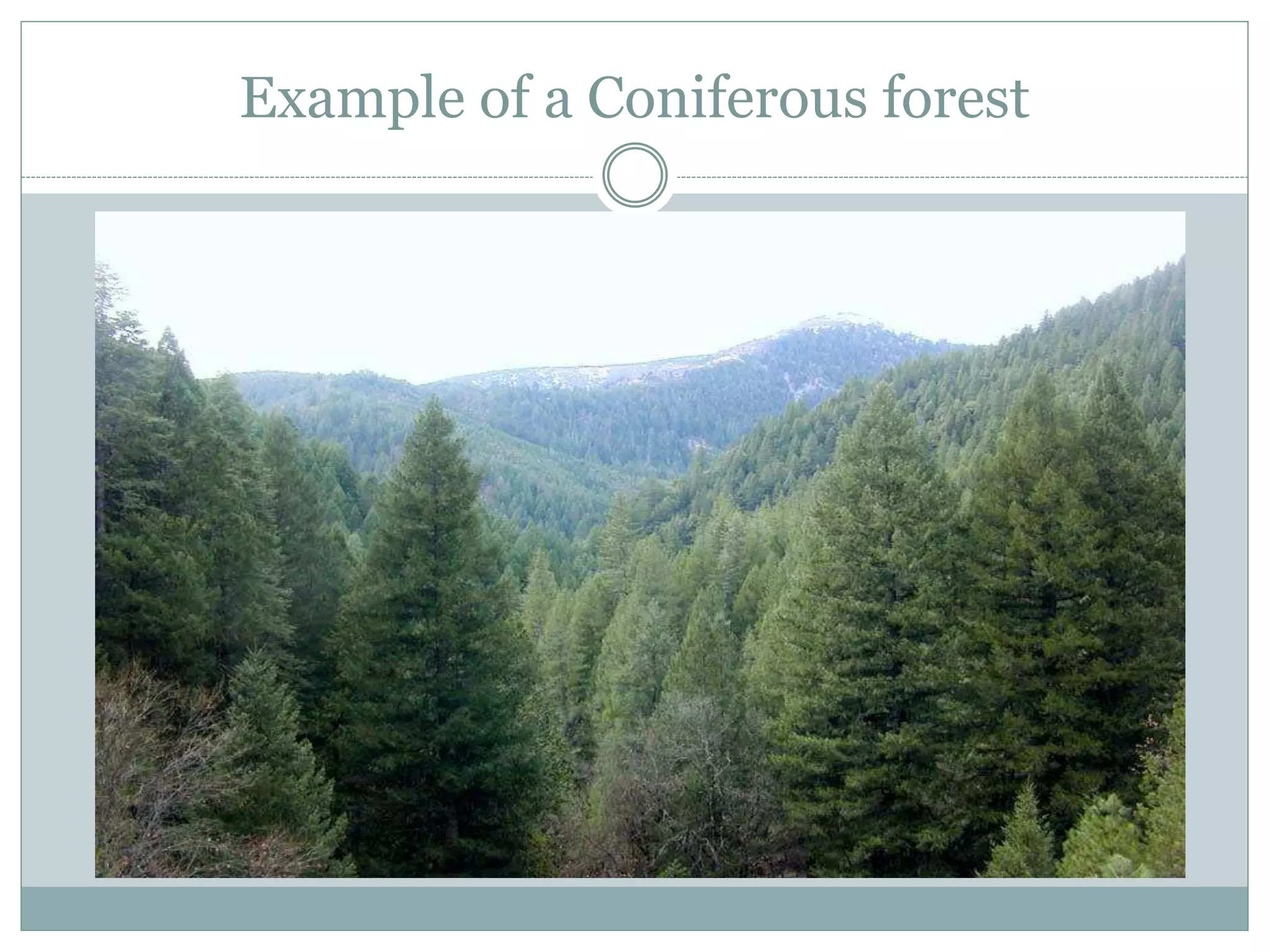
Example of a Coniferous forest
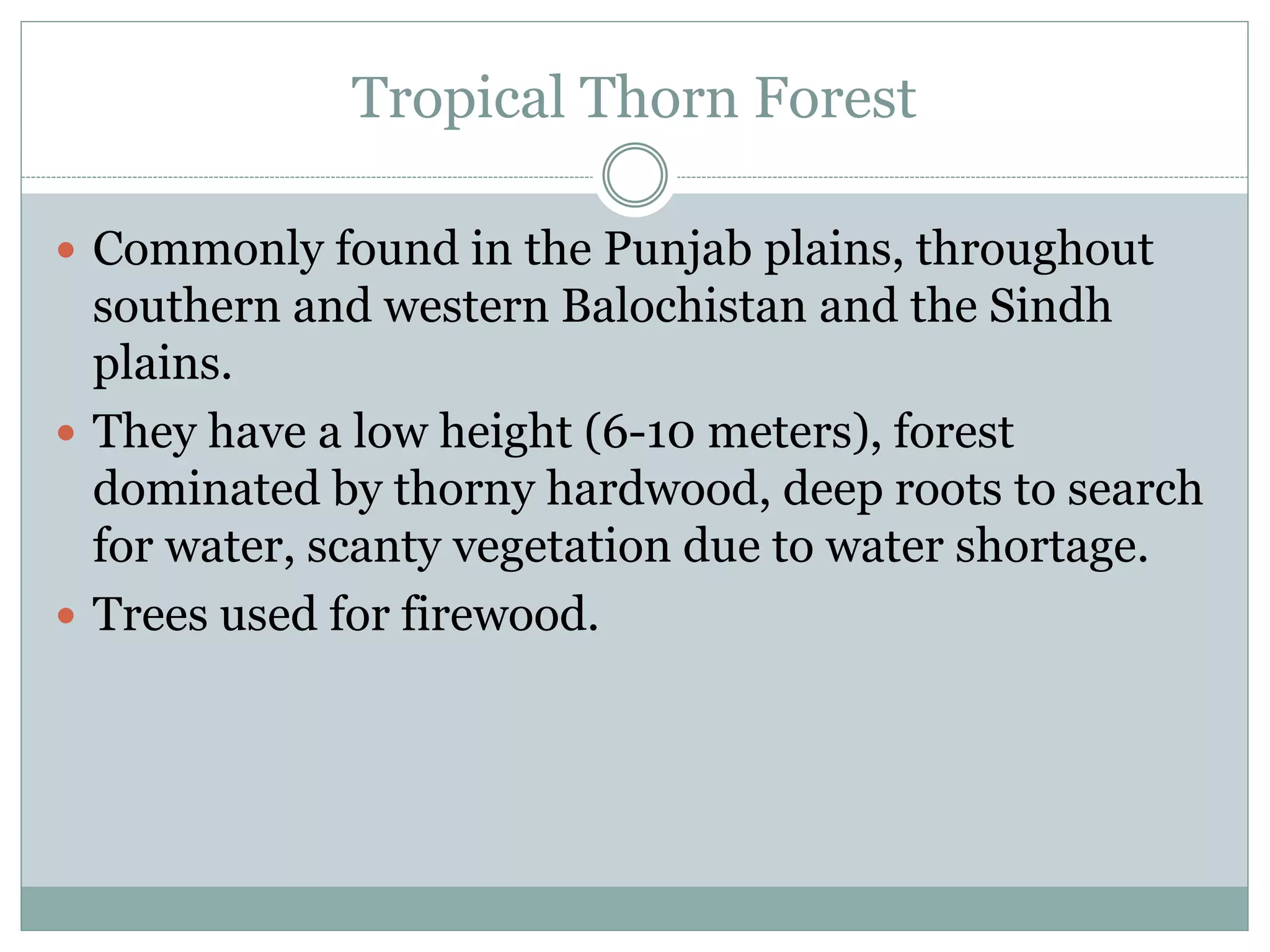
Tropical Thorn Forest
 Commonly found in the Punjab plains, throughout
southern and western Balochistan and the Sindh
plains.
 They have a low height (6-10 meters), forest
dominated by thorny hardwood, deep roots to search
for water, scanty vegetation due to water shortage.
 Trees used for firewood.
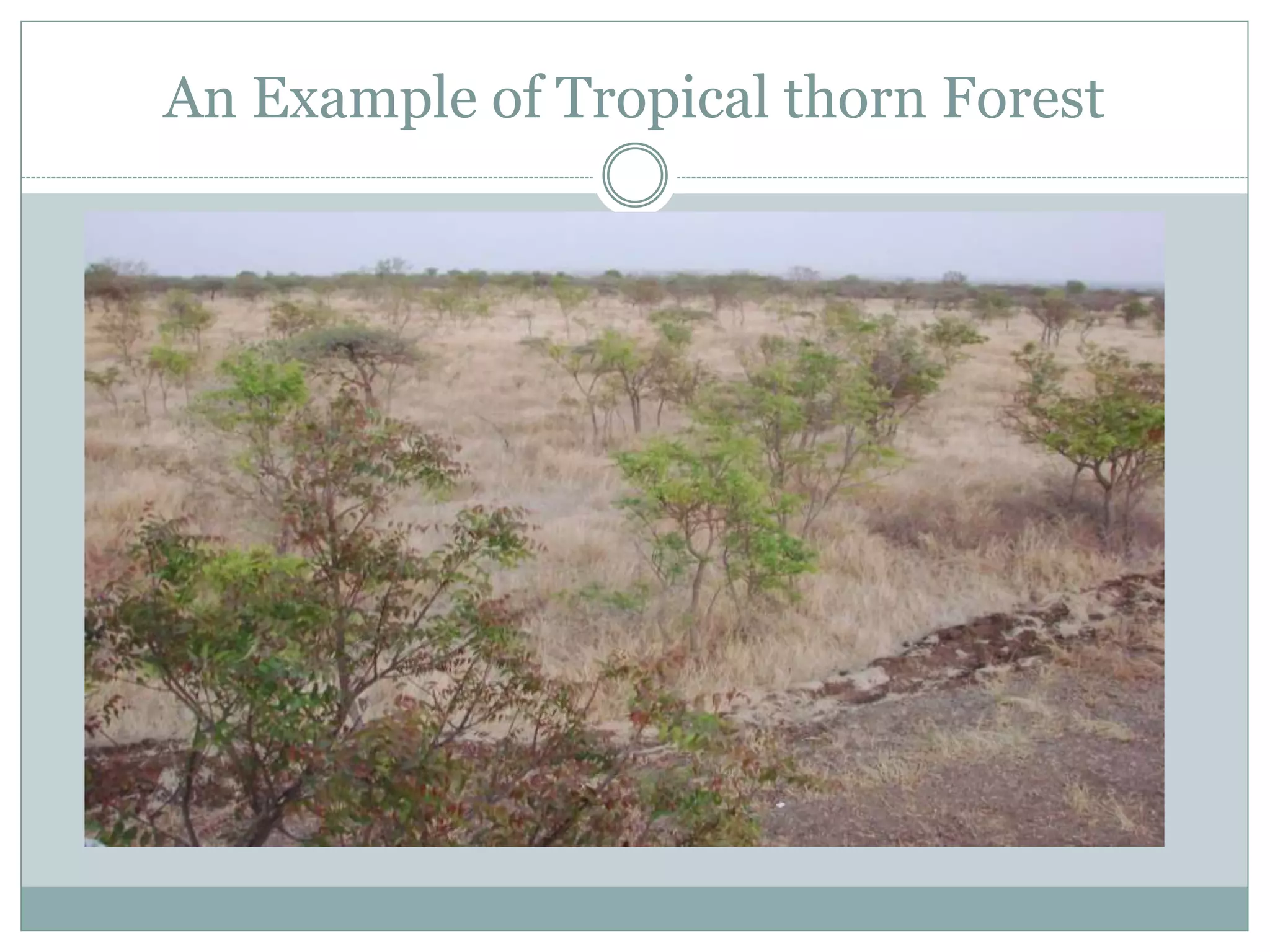
An Example of Tropical thorn Forest
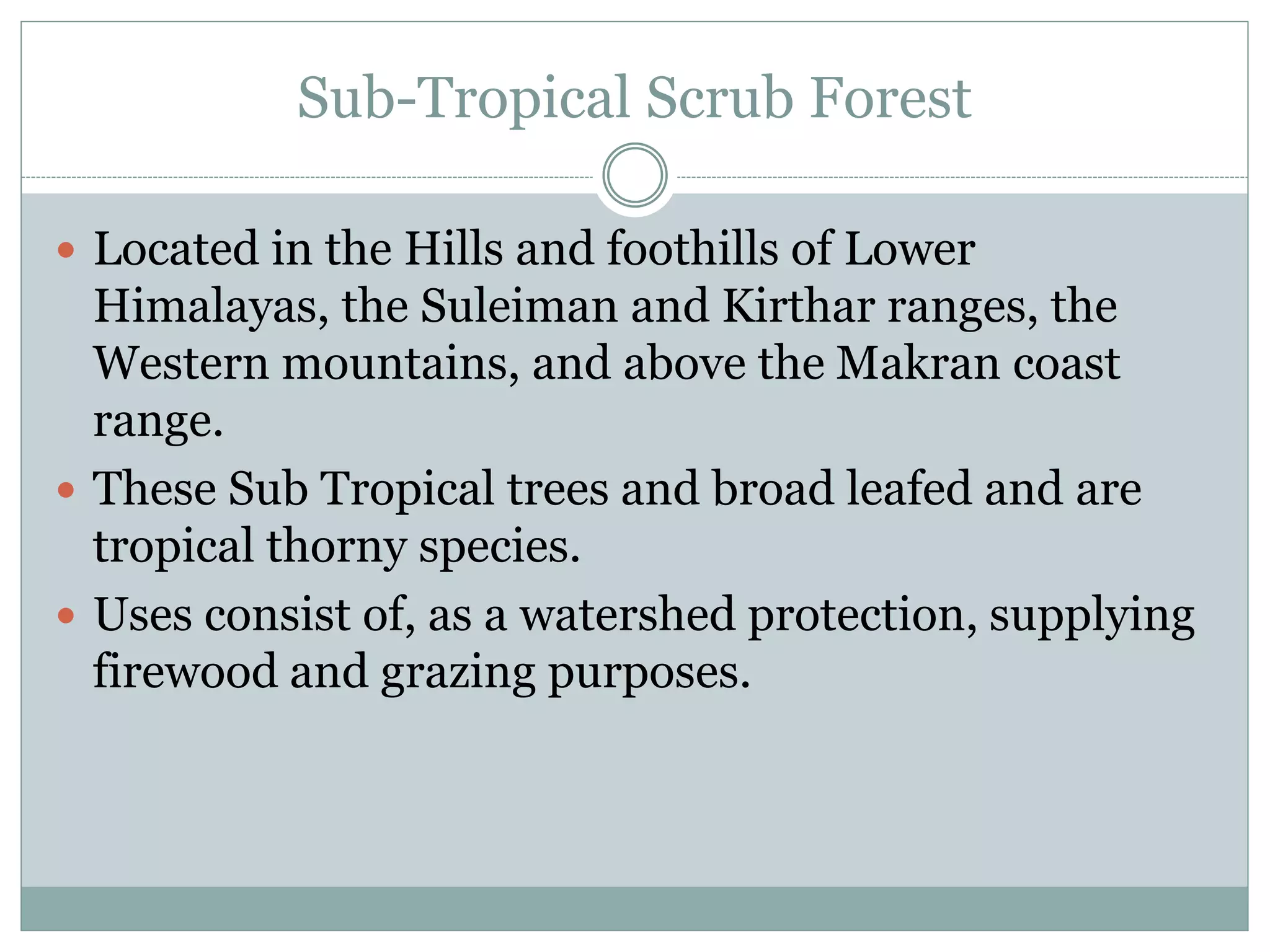
Sub-Tropical Scrub Forest
 Located in the Hills and foothills of Lower
Himalayas, the Suleiman and Kirthar ranges, the
Western mountains, and above the Makran coast
range.
 These Sub Tropical trees and broad leafed and are
tropical thorny species.
 Uses consist of, as a watershed protection, supplying
firewood and grazing purposes.
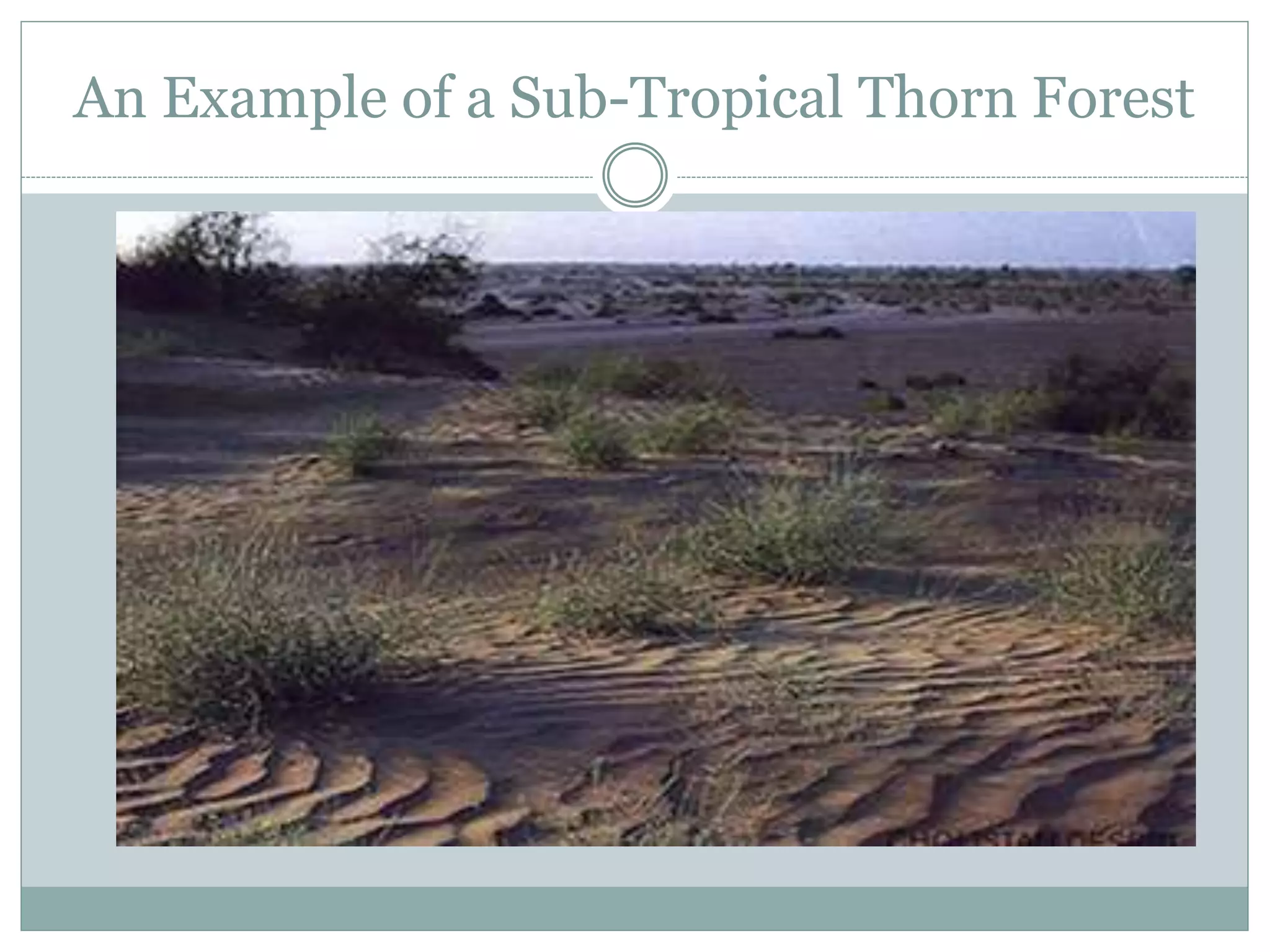
An Example of a Sub-Tropical Thorn Forest
Riverain or Bela Forest
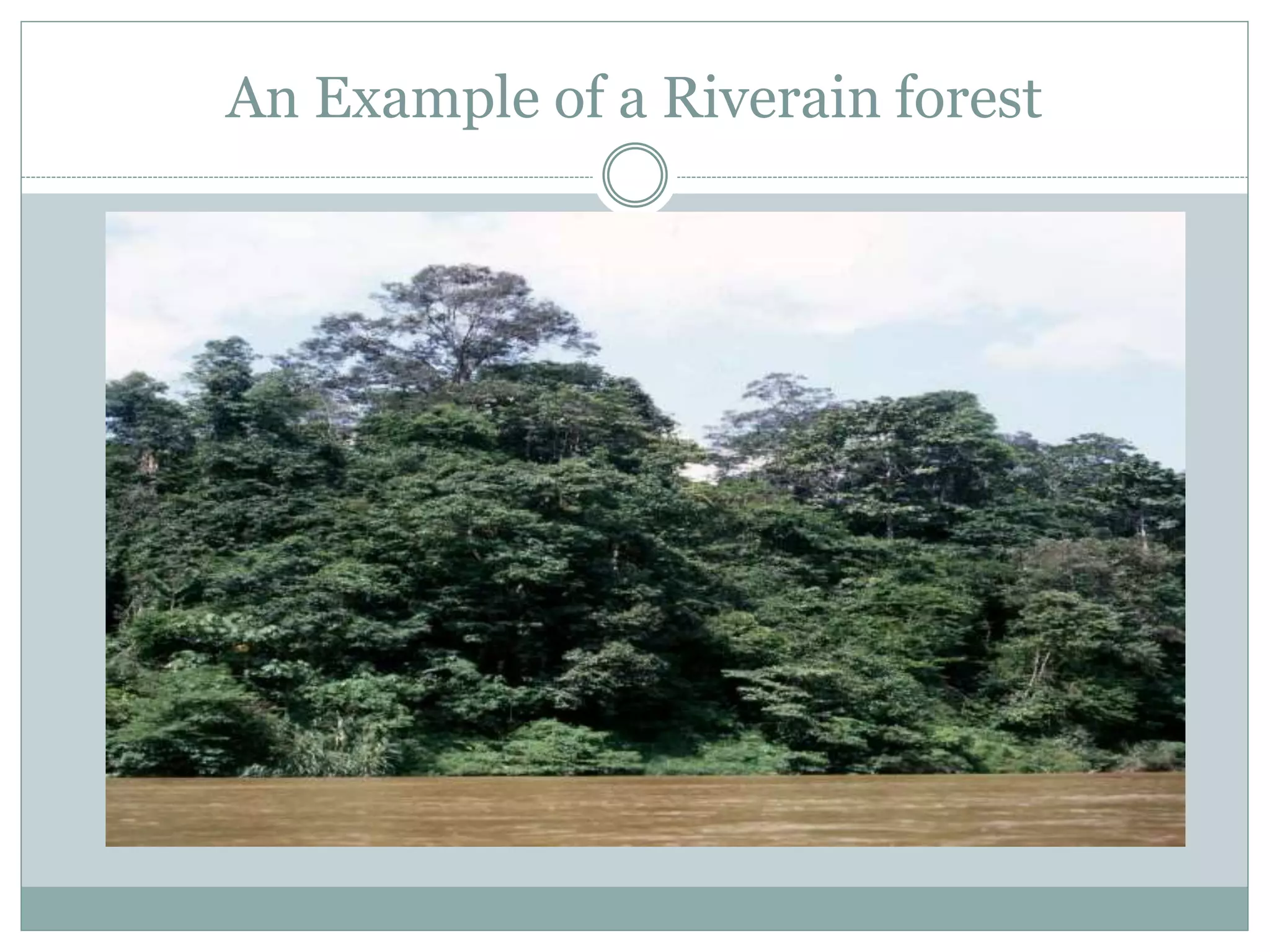
 Located near River Indus and its tributaries
 Linear plantation along the banks of rivers, normally
high yielding commercial hardwood species.
 They provide Shishum and Babul, two valuable
species, which are used for making furniture and are
also for agricultural implements.
An Example of a Riverain forest
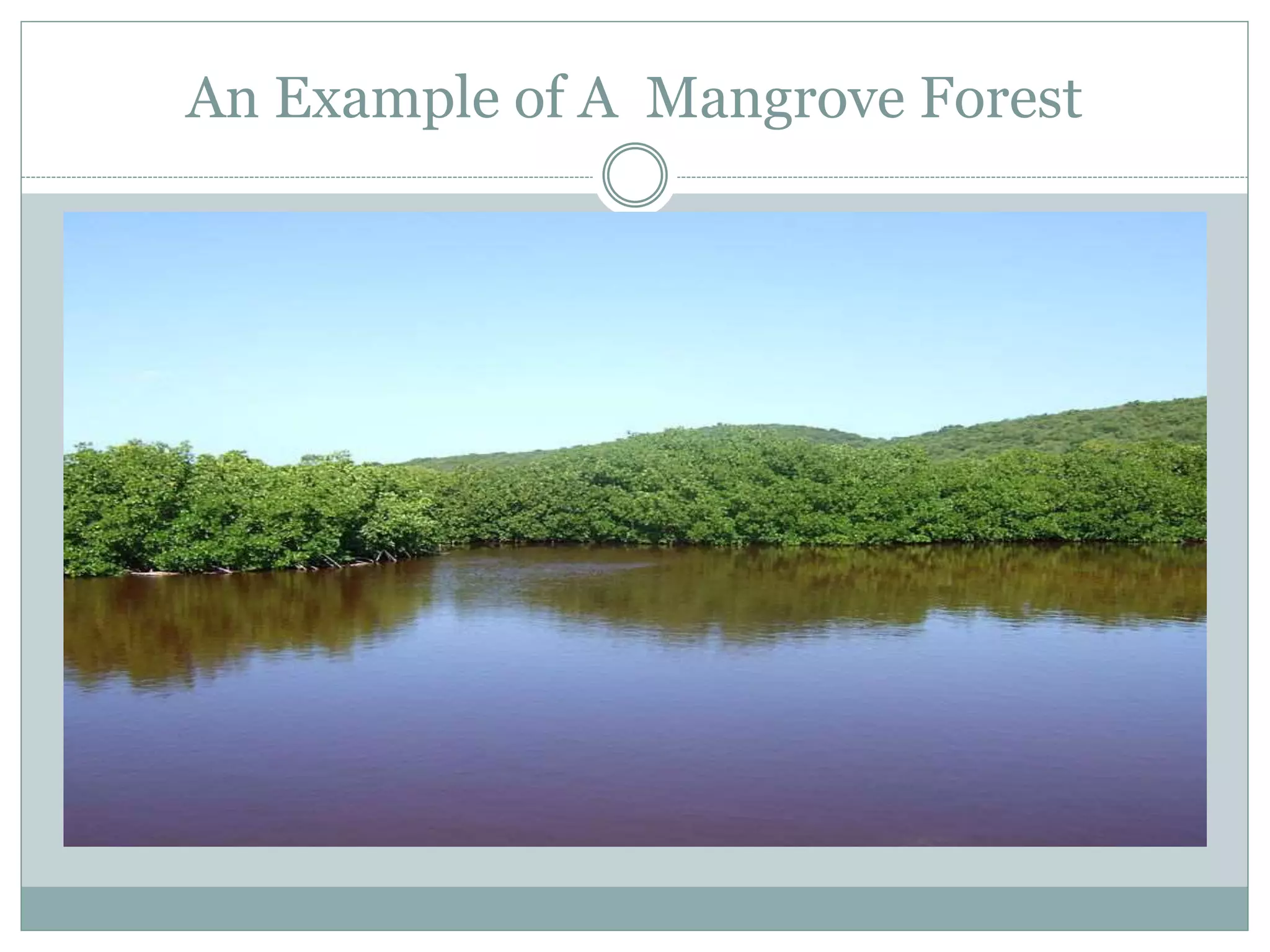
Mangrove Forests
 Located in the coastal areas of Sindh and the coastal
areas of Baluchistan.
 They have broad leaves with drip tips, leathery
textures to minimize transpiration, low trees and
shrubs grown on the tidal mud flats. Mangrove roots
spread into sea water and survive in salty water. The
trees rise to 6-8 meters but general hieght is 3
meters. Stunted growth of trees in Indus and the
Hub delta. Limited number of species in polluted
water.
Importance of Mangrove Forests
 Supply firewood
 Coastal Communities use these forests for timber.
 Breeding grounds for fish and shrimps. Livestock
feed on the leaves too
 Fallen leaves provide nutrition for marine life
 Protect coastline from erosion and other damage
 Act as barrier against intensity of Earthquakes and
tsunamis by absorbing shock waves
An Example of A Mangrove Forest
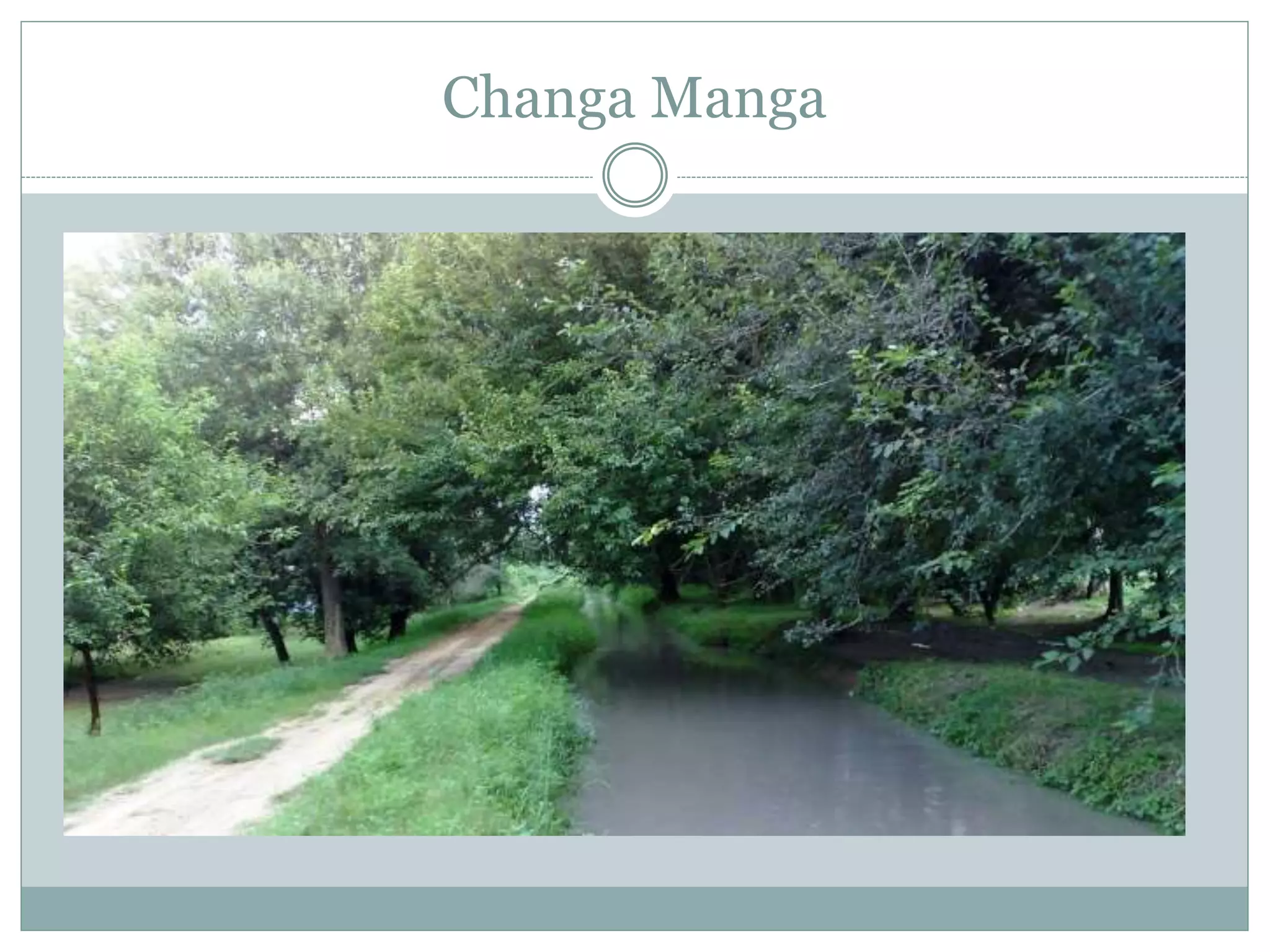
Irrigated Forest
 Changa Manga, Wan Bachran in the Thal Area,
Chicha Watni in the Sahiwal district and Guddu
barrages and Ghulam Muhammed district
 Economically important species are planted in large
blocks. Shisham, Babul and Eucalyptus are normally
preferred.
 Important sources of timber, firewood. When
planted in linear form they provide shade.
Changa Manga

Types of Forests in Pakistan

  • 1.
    D O NE B Y G R O U P A L P H A Types of Forests Syed Hasan Bari
  • 2.
    Alpine Forests  NorthernAreas (Chitral, Dir and Kohistan)  Found on high altitude areas  Trees with stunted growth, due to low temperature and less sunlight.  Normally upward branches to attain maximum sunlight.  Essential to obtain fuel wood only.
  • 3.
    Example of anAlpine Forest
  • 4.
    Coniferous Forests  Foundin Northern Areas, Khyber Pakhtoonkhwa, Hill stations such as Murree and the Balochistan mountains.  Evergreen forests. Conical in shape, sloping branches which prevent snow accumulation, small thick leathery, needle like leaves to prevent loss of water.  Important source of timber. For the conservation of soil. Conserving centre for birds and wildlife. Also attract tourists and promote tourism. Add scenic beauty too.
  • 5.
    Example of aConiferous forest
  • 6.
    Tropical Thorn Forest Commonly found in the Punjab plains, throughout southern and western Balochistan and the Sindh plains.  They have a low height (6-10 meters), forest dominated by thorny hardwood, deep roots to search for water, scanty vegetation due to water shortage.  Trees used for firewood.
  • 7.
    An Example ofTropical thorn Forest
  • 8.
    Sub-Tropical Scrub Forest Located in the Hills and foothills of Lower Himalayas, the Suleiman and Kirthar ranges, the Western mountains, and above the Makran coast range.  These Sub Tropical trees and broad leafed and are tropical thorny species.  Uses consist of, as a watershed protection, supplying firewood and grazing purposes.
  • 9.
    An Example ofa Sub-Tropical Thorn Forest
  • 10.
    Riverain or BelaForest  Located near River Indus and its tributaries  Linear plantation along the banks of rivers, normally high yielding commercial hardwood species.  They provide Shishum and Babul, two valuable species, which are used for making furniture and are also for agricultural implements.
  • 11.
    An Example ofa Riverain forest
  • 12.
    Mangrove Forests  Locatedin the coastal areas of Sindh and the coastal areas of Baluchistan.  They have broad leaves with drip tips, leathery textures to minimize transpiration, low trees and shrubs grown on the tidal mud flats. Mangrove roots spread into sea water and survive in salty water. The trees rise to 6-8 meters but general hieght is 3 meters. Stunted growth of trees in Indus and the Hub delta. Limited number of species in polluted water.
  • 13.
    Importance of MangroveForests  Supply firewood  Coastal Communities use these forests for timber.  Breeding grounds for fish and shrimps. Livestock feed on the leaves too  Fallen leaves provide nutrition for marine life  Protect coastline from erosion and other damage  Act as barrier against intensity of Earthquakes and tsunamis by absorbing shock waves
  • 14.
    An Example ofA Mangrove Forest
  • 15.
    Irrigated Forest  ChangaManga, Wan Bachran in the Thal Area, Chicha Watni in the Sahiwal district and Guddu barrages and Ghulam Muhammed district  Economically important species are planted in large blocks. Shisham, Babul and Eucalyptus are normally preferred.  Important sources of timber, firewood. When planted in linear form they provide shade.
  • 16.