Mustheena k
B.Ed English
Population explosion is not only a
problem in India, but all over the world.
The population of India was around 361
million during the census of 1951. It
reached over 1.34 billion now.
India, is the second most populous
country in the world, while China is on the
top.
With the population growth rate at 1.2%,
India is predicted to have more than 1.53
billion people by the end of 2030.
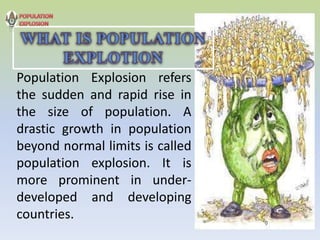
Population Explosion refers
the sudden and rapid rise in
the size of population. A
drastic growth in population
beyond normal limits is called
population explosion. It is
more prominent in under-
developed and developing
countries.
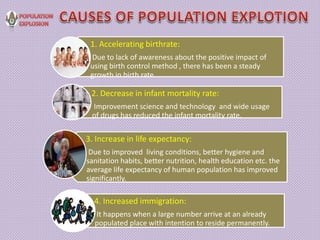
1. Accelerating birthrate:
• Due to lack of awareness about the positive impact of
using birth control method , there has been a steady
growth in birth rate.
2. Decrease in infant mortality rate:
• Improvement science and technology and wide usage
of drugs has reduced the infant mortality rate.
3. Increase in life expectancy:
• Due to improved living conditions, better hygiene and
sanitation habits, better nutrition, health education etc. the
average life expectancy of human population has improved
significantly.
4. Increased immigration:
• It happens when a large number arrive at an already
populated place with intention to reside permanently.
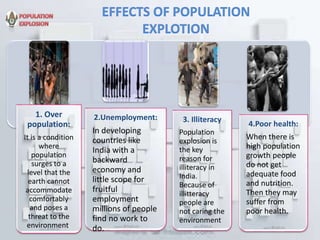
1. Over
population:
It is a condition
where
population
surges to a
level that the
earth cannot
accommodate
comfortably
and poses a
threat to the
environment.
2.Unemployment:
In developing
countries like
India with a
backward
economy and
little scope for
fruitful
employment
millions of people
find no work to
do.
3. Illiteracy
Population
explosion is
the key
reason for
illiteracy in
India.
Because of
illitteracy
people are
not caring the
environment
4.Poor health:
When there is
high population
growth people
do not get
adequate food
and nutrition.
Then they may
suffer from
poor health.
More population means more mouths to eat food
which requires more agricultural production. More
cultivable land has been made available by clearing
forests and by reclaiming wet lands and ponds.
Advanced agriculture requires utilization of more
water, more fertilizers and more pesticides. And it
demands more space to construct houses and
availability of more consumer goods. It also requires
more means of transport, more consumption of fossil
fuels, and more pollution of land, air and water thus
growth of population leads to pollution of land, water
and air
Generation of waste
AIR POLLUTION
Water pollution
DEFORESTATION
DEPLETION OF
OZONE LAYER
EXTINCTION OF
SPECIES
LAND/SOIL
DEGRADATION
Industrialization
Urbanization
Transport development
Climatic Change
Measures
to control
polpulation
Social
measure
Economic
measure
Other
measure
Social
measures
 Minimum age of
marriage
 Rising the status
of women
 Spread of
education
 Adoption
 Change in social
outlook
 Social security
Economic
measures
 More
employment
opportunities.
 Development
of agriculture
and industry
 Standard of
living
Other
measures
 Late marriage
 Self control
 Family planning
 Recreational
facilities
 Publicity
 Incentives
 Employment to
women

Population explosion

  • 1.
  • 2.
    Population explosion isnot only a problem in India, but all over the world. The population of India was around 361 million during the census of 1951. It reached over 1.34 billion now. India, is the second most populous country in the world, while China is on the top. With the population growth rate at 1.2%, India is predicted to have more than 1.53 billion people by the end of 2030.
  • 3.
    Population Explosion refers thesudden and rapid rise in the size of population. A drastic growth in population beyond normal limits is called population explosion. It is more prominent in under- developed and developing countries.
  • 4.
    1. Accelerating birthrate: •Due to lack of awareness about the positive impact of using birth control method , there has been a steady growth in birth rate. 2. Decrease in infant mortality rate: • Improvement science and technology and wide usage of drugs has reduced the infant mortality rate. 3. Increase in life expectancy: • Due to improved living conditions, better hygiene and sanitation habits, better nutrition, health education etc. the average life expectancy of human population has improved significantly. 4. Increased immigration: • It happens when a large number arrive at an already populated place with intention to reside permanently.
  • 5.
    1. Over population: It isa condition where population surges to a level that the earth cannot accommodate comfortably and poses a threat to the environment. 2.Unemployment: In developing countries like India with a backward economy and little scope for fruitful employment millions of people find no work to do. 3. Illiteracy Population explosion is the key reason for illiteracy in India. Because of illitteracy people are not caring the environment 4.Poor health: When there is high population growth people do not get adequate food and nutrition. Then they may suffer from poor health.
  • 6.
    More population meansmore mouths to eat food which requires more agricultural production. More cultivable land has been made available by clearing forests and by reclaiming wet lands and ponds. Advanced agriculture requires utilization of more water, more fertilizers and more pesticides. And it demands more space to construct houses and availability of more consumer goods. It also requires more means of transport, more consumption of fossil fuels, and more pollution of land, air and water thus growth of population leads to pollution of land, water and air
  • 7.
  • 8.
  • 9.
  • 10.
  • 11.
  • 12.
  • 13.
  • 14.
  • 15.
  • 16.
  • 17.
  • 18.
  • 19.
    Social measures  Minimum ageof marriage  Rising the status of women  Spread of education  Adoption  Change in social outlook  Social security
  • 20.
    Economic measures  More employment opportunities.  Development ofagriculture and industry  Standard of living
  • 21.
    Other measures  Late marriage Self control  Family planning  Recreational facilities  Publicity  Incentives  Employment to women