

MUSTHEENA K
B.Ed ENGLISH
TEACHING AND LEARNING
RESOURCES IN FORMAL
CONTEXT
• Formal learning resource occurs in
institutional settings such as schools and
colleges where learning is a major goal.
• Formal education is classroom based
education provided by trained teachers.
• Somecourses may adopt a more learner
centered approach focussing on the goals
of the learners.
• An established curriculum will be there.
1. TEXT BOOK .
2. COURSE BOOK
3. STORY BOOK
4. DICTIONARY
5. SOURCE BOOK
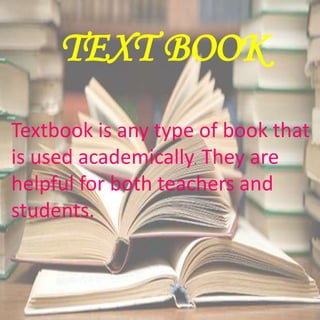
TEXT BOOK
Textbook is any type of book that
is used academically. They are
helpful for both teachers and
students.
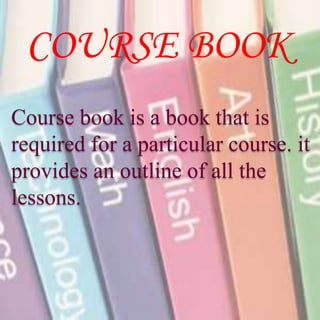
COURSE BOOK
Course book is a book that is
required for a particular course. it
provides an outline of all the
lessons.
STORY BOOK
In storybooks some abstract
concepts are symbolised
using text and images.
DICTIONARY
Dictionaries are handy resources
for researching different
meanings, collections, examples
of use and standard
pronounciation.
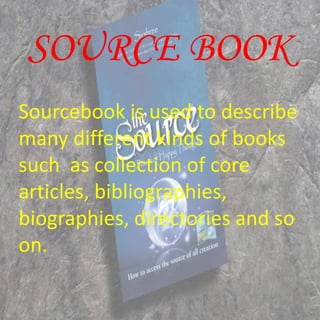
SOURCE BOOK
Sourcebook is used to describe
many different kinds of books
such as collection of core
articles, bibliographies,
biographies, directories and so
on.
TEACHING AND LEARNING
RESOURCES IN INFORMAL
CONTEXT
• Informal learning is referred to as
learning by experience or just as
experience.
• Informal learning is related to
incidental learning.
• It usually takes place outside
educational establishments.
• It is often spontaneous and there
is no formal curriculum.
• It has no set objective and is
never intentional from the
learner’s standpoint.
1. LIBRARY
2. E-BOOK
3. FILM
4. BLOG
5. LANGUAGE INSTITUTION
6. MUSEUMS
7. SPOKEN ENGLISH CENTRES
8. LITERARY CLUBS
9. THEATRE
10. E-LIBRARY
11. SOCIETY AS LANGUAGE LAB
LIBRARY
FILM
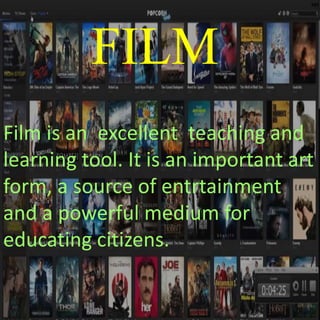
Film is an excellent teaching and
learning tool. It is an important art
form, a source of entrtainment
and a powerful medium for
educating citizens.
LANGUAGE LAB
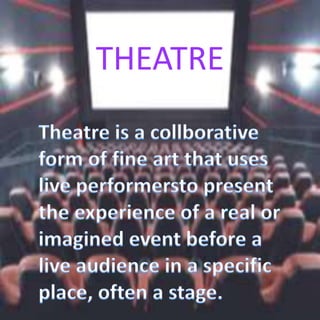
THEATRE
The knowledge about teaching-
learning resources helps the
teachers to make the language
teaching more effective through
text books, e-library, films etc.
CONCLUSION
TEACHING AND LEARNING RESOURCES: FORMAL AND INFORMAL CONTEXT

TEACHING AND LEARNING RESOURCES: FORMAL AND INFORMAL CONTEXT

  • 2.
  • 3.
  • 4.
    • Formal learningresource occurs in institutional settings such as schools and colleges where learning is a major goal. • Formal education is classroom based education provided by trained teachers. • Somecourses may adopt a more learner centered approach focussing on the goals of the learners. • An established curriculum will be there.
  • 5.
    1. TEXT BOOK. 2. COURSE BOOK 3. STORY BOOK 4. DICTIONARY 5. SOURCE BOOK
  • 6.
    TEXT BOOK Textbook isany type of book that is used academically. They are helpful for both teachers and students.
  • 7.
    COURSE BOOK Course bookis a book that is required for a particular course. it provides an outline of all the lessons.
  • 8.
    STORY BOOK In storybookssome abstract concepts are symbolised using text and images.
  • 9.
    DICTIONARY Dictionaries are handyresources for researching different meanings, collections, examples of use and standard pronounciation.
  • 10.
    SOURCE BOOK Sourcebook isused to describe many different kinds of books such as collection of core articles, bibliographies, biographies, directories and so on.
  • 11.
  • 12.
    • Informal learningis referred to as learning by experience or just as experience. • Informal learning is related to incidental learning. • It usually takes place outside educational establishments. • It is often spontaneous and there is no formal curriculum. • It has no set objective and is never intentional from the learner’s standpoint.
  • 13.
    1. LIBRARY 2. E-BOOK 3.FILM 4. BLOG 5. LANGUAGE INSTITUTION 6. MUSEUMS 7. SPOKEN ENGLISH CENTRES 8. LITERARY CLUBS 9. THEATRE 10. E-LIBRARY 11. SOCIETY AS LANGUAGE LAB
  • 14.
  • 15.
    FILM Film is anexcellent teaching and learning tool. It is an important art form, a source of entrtainment and a powerful medium for educating citizens.
  • 18.
  • 19.
  • 20.
    The knowledge aboutteaching- learning resources helps the teachers to make the language teaching more effective through text books, e-library, films etc. CONCLUSION