SOUND
SUBMITTED BY
SUMAYYA.K
PHYSICAL SCIENCE
SOUND
 Sound is a form of energy which give
us the sensation of hearing.
 In physics, sound is a vibration that
propagates as a typically
audible mechanical wave
of pressure and displacement, through
a medium such as air or water.
Source of sound
 Sound is produced by vibration of
objects. Objects that produce sound
are known as the source of sound.
Two types source of sound
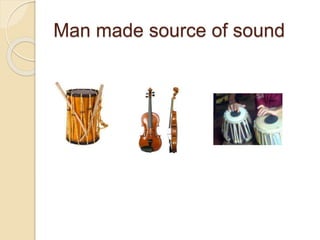
 Man-made source of sound
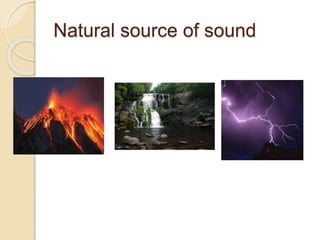
 Natural
Man made source of sound
Natural source of sound
Natural frequency
 Natural frequency is the frequency at
which a system tends to oscillate in
the absence of any driving
or damping force.
 Free vibrations of any elastic body is
called natural vibration, and happens
at a frequency called natural
frequency.
 When a body is set into vibration ,it
vibrates with a particular frequency of
its own. This frequency is it’s natural
frequency.
Simple pendulum
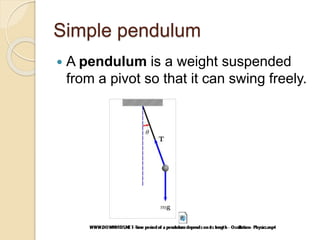
 A pendulum is a weight suspended
from a pivot so that it can swing freely.
Frequency
 The number of oscillations made by
the simple pendulum by the simple
pendulum in one second is its
frequency.
 The unit of frequency is hertz(Hz).
 Frequency (f) = n/t
where, n - Number of oscillation.
t - Time
Characteristics of sound
 Pitch
the sharpness of sound heard is
the pitch.
It depends on the frequency of sound.
 Two types:
Low pitch : eg male voice
High pitch: eg female voice
 Loudness
Loudness is the measure of audibility
of a person .this depends mainly on the
frequency of vibration and the sensory
ability of the ear.
The unit of loudness is decibel (dB)
This is measured using a device named
decibal meter.
Propagation of sound
 Propagate means to move through a
medium.
 A medium is necessary for the
propagation of sound which means a
medium is necessary for sound to
travel.
Hearing
 Hearing is the ability to perceive sound by
detecting vibrations, changes in the
pressure of the surrounding medium
through time, through an organ such as
the ear.
 Sound may be heard through solid, liquid,
or gaseous matter.
 Partial or total inability to hear is
called hearing loss.
damage
Limits of audibility
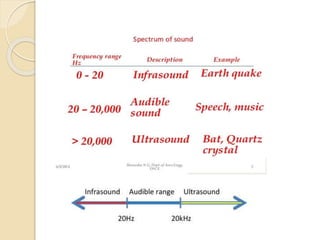
 Normal hearing: 20-20,000 Hz
 Lower limit audibility :Below 20 Hz
 Higher limit of audibility: Above
20,000Hz
Limits of audibility
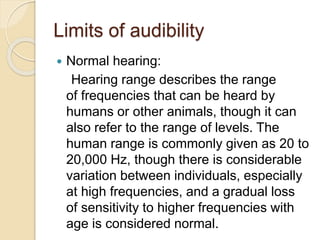
 Normal hearing:
Hearing range describes the range
of frequencies that can be heard by
humans or other animals, though it can
also refer to the range of levels. The
human range is commonly given as 20 to
20,000 Hz, though there is considerable
variation between individuals, especially
at high frequencies, and a gradual loss
of sensitivity to higher frequencies with
age is considered normal.
Hearing Aid
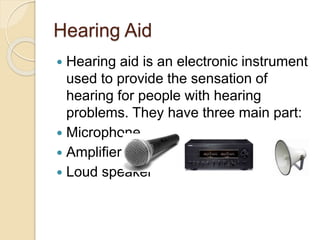
 Hearing aid is an electronic instrument
used to provide the sensation of
hearing for people with hearing
problems. They have three main part:
 Microphone
 Amplifier
 Loud speaker
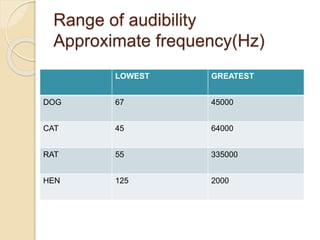
Range of audibility
Approximate frequency(Hz)
LOWEST GREATEST
DOG 67 45000
CAT 45 64000
RAT 55 335000
HEN 125 2000
USES OF ULTRASONIC
WAVES
 Ultrasonic waves are used in the
instrument SONAR(Sound Navigation
and Ranging) to measure the depth of
the ocean.
 Ultrasonic waves are also used in the
medical field for diagnosis and
treatment.
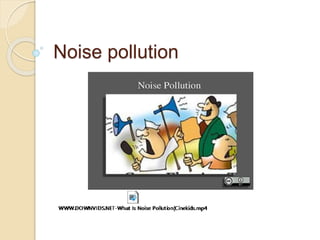
Noise pollution
Noise pollution
 Noise pollution or noise
disturbance is the disturbing or
excessive noise that may harm the
activity or balance of human or animal
life. The source of most outdoor noise
worldwide is mainly caused by
machines and transportation systems,
motor vehicles, aircraft, and trains .
WHAT IS NOISE POLLUTION?
 Sound that is unwanted or disrupts one’s quality of
life is called as noise. When there is lot of noise in
the environment, it is termed as noise pollution.
 Sound becomes undesirable when it disturbs the
normal activities such as working, sleeping, and
during conversations.
 It is an underrated environmental problem because
of the fact that we can’t see, smell, or taste it.
 World Health Organization stated that “Noise must
be recognized as a major threat to human well-
being”.
Sources of Noise Pollution
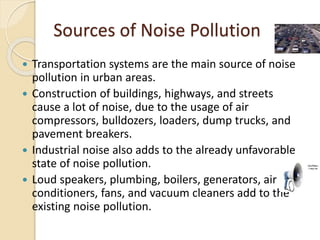
 Transportation systems are the main source of noise
pollution in urban areas.
 Construction of buildings, highways, and streets
cause a lot of noise, due to the usage of air
compressors, bulldozers, loaders, dump trucks, and
pavement breakers.
 Industrial noise also adds to the already unfavorable
state of noise pollution.
 Loud speakers, plumbing, boilers, generators, air
conditioners, fans, and vacuum cleaners add to the
existing noise pollution.
Solutions of noise pollution
 Use of air horns in vehicle is prohibited
by law.
 Box type loud speaker must be used in
place of horn type loudspeaker.
 Ensure that silencers in vehicles work
properly.
 Loud speakers should not be used in
public places before 6am and 10 pm.
 Do not make sounds above 50dB in the
premises of hospitals educational
institution.
Solutions for Noise Pollution
 Planting bushes and trees in and around
sound generating sources is an effective
solution for noise pollution.
 Buildings can be designed with suitable
noise absorbing material for the walls,
windows, and ceilings.
 Workers should be provided with
equipments such as ear plugs and earmuffs
for hearing protection.
THE END

Sound

  • 1.
  • 2.
    SOUND  Sound isa form of energy which give us the sensation of hearing.  In physics, sound is a vibration that propagates as a typically audible mechanical wave of pressure and displacement, through a medium such as air or water.
  • 3.
    Source of sound Sound is produced by vibration of objects. Objects that produce sound are known as the source of sound. Two types source of sound  Man-made source of sound  Natural
  • 4.
  • 5.
  • 6.
    Natural frequency  Naturalfrequency is the frequency at which a system tends to oscillate in the absence of any driving or damping force.  Free vibrations of any elastic body is called natural vibration, and happens at a frequency called natural frequency.  When a body is set into vibration ,it vibrates with a particular frequency of its own. This frequency is it’s natural frequency.
  • 7.
    Simple pendulum  Apendulum is a weight suspended from a pivot so that it can swing freely.
  • 8.
    Frequency  The numberof oscillations made by the simple pendulum by the simple pendulum in one second is its frequency.  The unit of frequency is hertz(Hz).  Frequency (f) = n/t where, n - Number of oscillation. t - Time
  • 9.
    Characteristics of sound Pitch the sharpness of sound heard is the pitch. It depends on the frequency of sound.  Two types: Low pitch : eg male voice High pitch: eg female voice
  • 10.
     Loudness Loudness isthe measure of audibility of a person .this depends mainly on the frequency of vibration and the sensory ability of the ear. The unit of loudness is decibel (dB) This is measured using a device named decibal meter.
  • 11.
    Propagation of sound Propagate means to move through a medium.  A medium is necessary for the propagation of sound which means a medium is necessary for sound to travel.
  • 12.
    Hearing  Hearing isthe ability to perceive sound by detecting vibrations, changes in the pressure of the surrounding medium through time, through an organ such as the ear.  Sound may be heard through solid, liquid, or gaseous matter.  Partial or total inability to hear is called hearing loss. damage
  • 13.
    Limits of audibility Normal hearing: 20-20,000 Hz  Lower limit audibility :Below 20 Hz  Higher limit of audibility: Above 20,000Hz
  • 14.
    Limits of audibility Normal hearing: Hearing range describes the range of frequencies that can be heard by humans or other animals, though it can also refer to the range of levels. The human range is commonly given as 20 to 20,000 Hz, though there is considerable variation between individuals, especially at high frequencies, and a gradual loss of sensitivity to higher frequencies with age is considered normal.
  • 16.
    Hearing Aid  Hearingaid is an electronic instrument used to provide the sensation of hearing for people with hearing problems. They have three main part:  Microphone  Amplifier  Loud speaker
  • 17.
    Range of audibility Approximatefrequency(Hz) LOWEST GREATEST DOG 67 45000 CAT 45 64000 RAT 55 335000 HEN 125 2000
  • 18.
    USES OF ULTRASONIC WAVES Ultrasonic waves are used in the instrument SONAR(Sound Navigation and Ranging) to measure the depth of the ocean.  Ultrasonic waves are also used in the medical field for diagnosis and treatment.
  • 19.
  • 20.
    Noise pollution  Noisepollution or noise disturbance is the disturbing or excessive noise that may harm the activity or balance of human or animal life. The source of most outdoor noise worldwide is mainly caused by machines and transportation systems, motor vehicles, aircraft, and trains .
  • 21.
    WHAT IS NOISEPOLLUTION?  Sound that is unwanted or disrupts one’s quality of life is called as noise. When there is lot of noise in the environment, it is termed as noise pollution.  Sound becomes undesirable when it disturbs the normal activities such as working, sleeping, and during conversations.  It is an underrated environmental problem because of the fact that we can’t see, smell, or taste it.  World Health Organization stated that “Noise must be recognized as a major threat to human well- being”.
  • 22.
    Sources of NoisePollution  Transportation systems are the main source of noise pollution in urban areas.  Construction of buildings, highways, and streets cause a lot of noise, due to the usage of air compressors, bulldozers, loaders, dump trucks, and pavement breakers.  Industrial noise also adds to the already unfavorable state of noise pollution.  Loud speakers, plumbing, boilers, generators, air conditioners, fans, and vacuum cleaners add to the existing noise pollution.
  • 23.
    Solutions of noisepollution  Use of air horns in vehicle is prohibited by law.  Box type loud speaker must be used in place of horn type loudspeaker.  Ensure that silencers in vehicles work properly.  Loud speakers should not be used in public places before 6am and 10 pm.  Do not make sounds above 50dB in the premises of hospitals educational institution.
  • 24.
    Solutions for NoisePollution  Planting bushes and trees in and around sound generating sources is an effective solution for noise pollution.  Buildings can be designed with suitable noise absorbing material for the walls, windows, and ceilings.  Workers should be provided with equipments such as ear plugs and earmuffs for hearing protection.
  • 25.