PRESENTATION 
ON 
ILLITERACY IN 
INDIA 
BY:-VAIBHAV GAUR
INTRODUCTION 
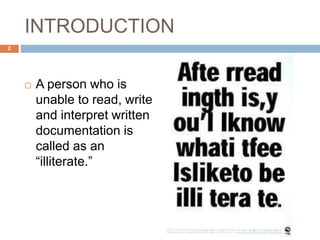
 A person who is 
unable to read, write 
and interpret written 
documentation is 
called as an 
“illiterate.” 
2
3 Causes of Illiteracy 
1. Socio-cultural Barriers. 
2. Economic Barriers. 
3. Illiterate Parents/Guardians. 
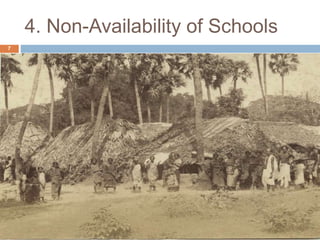
4. Non-Availability of educational institutes in 
rural areas.
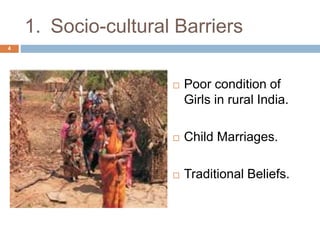
1. Socio-cultural Barriers 
 Poor condition of 
Girls in rural India. 
 Child Marriages. 
 Traditional Beliefs. 
4
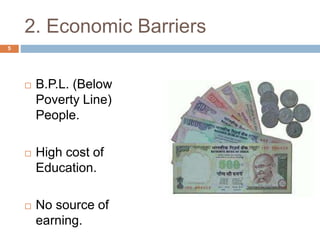
2. Economic Barriers 
 B.P.L. (Below 
Poverty Line) 
People. 
 High cost of 
Education. 
 No source of 
earning. 
5
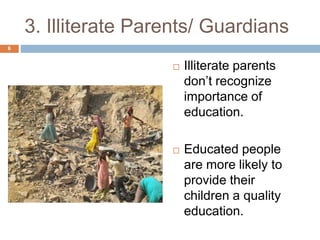
3. Illiterate Parents/ Guardians 
 Illiterate parents 
don’t recognize 
importance of 
education. 
 Educated people 
are more likely to 
provide their 
children a quality 
education. 
6
4. Non-Availability of Schools 
7
8 Effects of illiteracy 
1. Child Labor. 
2. Criminality. 
3. Child Marriage. 
4. Unemployment.
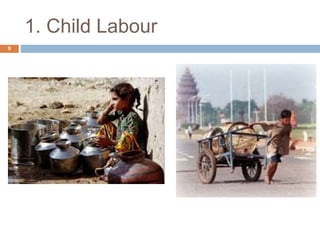
1. Child Labour 
9
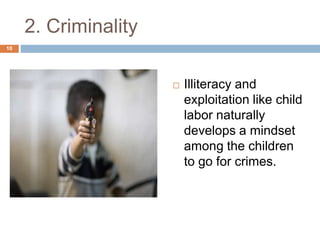
2. Criminality 
 Illiteracy and 
exploitation like child 
labor naturally 
develops a mindset 
among the children 
to go for crimes. 
10
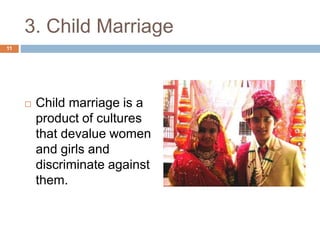
3. Child Marriage 
 Child marriage is a 
product of cultures 
that devalue women 
and girls and 
discriminate against 
them. 
11
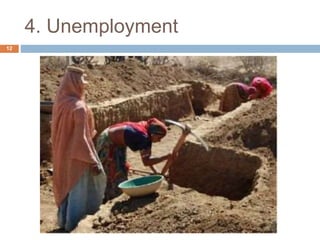
4. Unemployment 
12
Govt. Initiatives for Child 
Literacy 
1. Sarva shiksha Abhiyan. 
2. Anganwadi kendra. 
3. Mahila Sashakt Yojna. 
4. Scholarship Programs. 
5. Free Mid-Day Meals. 
6. Free study material distribution in govt. 
schools. 
7. Reserved Quota for underdeveloped sections 
of society. 
13
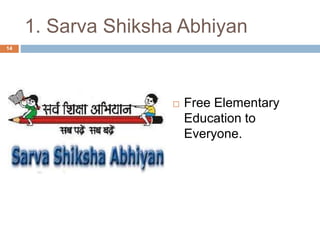
1. Sarva Shiksha Abhiyan 
 Free Elementary 
Education to 
Everyone. 
14
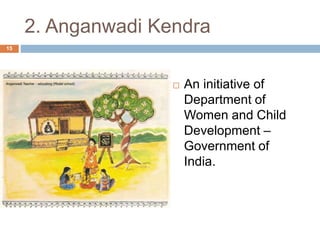
2. Anganwadi Kendra 
 An initiative of 
Department of 
Women and Child 
Development – 
Government of 
India. 
15
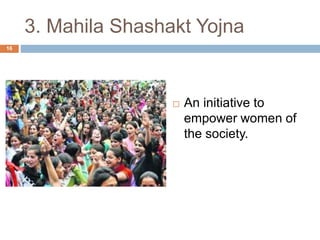
3. Mahila Shashakt Yojna 
 An initiative to 
empower women of 
the society. 
16
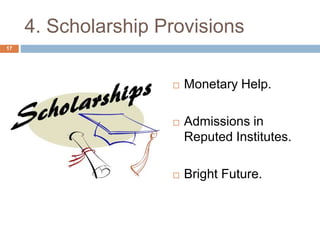
4. Scholarship Provisions 
 Monetary Help. 
 Admissions in 
Reputed Institutes. 
 Bright Future. 
17
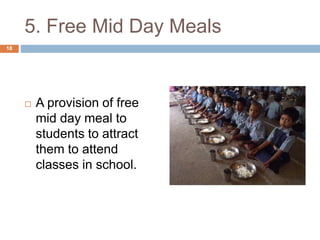
5. Free Mid Day Meals 
 A provision of free 
mid day meal to 
students to attract 
them to attend 
classes in school. 
18
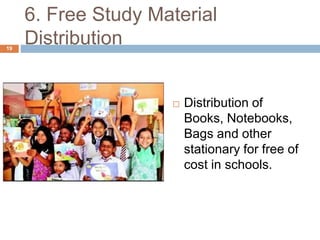
6. Free Study Material 
Distribution 
 Distribution of 
Books, Notebooks, 
Bags and other 
stationary for free of 
cost in schools. 
19
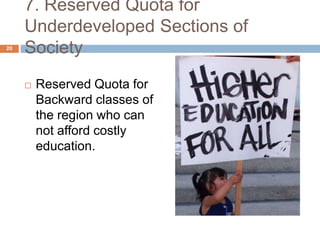
7. Reserved Quota for 
Underdeveloped Sections of 
Society 
 Reserved Quota for 
Backward classes of 
the region who can 
not afford costly 
education. 
20
Conclusion 
 Education plays very supportive role in 
developing the strong foundation for the 
exploration of the new horizons. Education not 
only fulfills the academic requirements but also 
empowers one with the logical wisdom to think 
out of the box and beyond the numbers. 
THANK YOU… 
21

Illiteracy in India

  • 1.
    PRESENTATION ON ILLITERACYIN INDIA BY:-VAIBHAV GAUR
  • 2.
    INTRODUCTION  Aperson who is unable to read, write and interpret written documentation is called as an “illiterate.” 2
  • 3.
    3 Causes ofIlliteracy 1. Socio-cultural Barriers. 2. Economic Barriers. 3. Illiterate Parents/Guardians. 4. Non-Availability of educational institutes in rural areas.
  • 4.
    1. Socio-cultural Barriers  Poor condition of Girls in rural India.  Child Marriages.  Traditional Beliefs. 4
  • 5.
    2. Economic Barriers  B.P.L. (Below Poverty Line) People.  High cost of Education.  No source of earning. 5
  • 6.
    3. Illiterate Parents/Guardians  Illiterate parents don’t recognize importance of education.  Educated people are more likely to provide their children a quality education. 6
  • 7.
  • 8.
    8 Effects ofilliteracy 1. Child Labor. 2. Criminality. 3. Child Marriage. 4. Unemployment.
  • 9.
  • 10.
    2. Criminality Illiteracy and exploitation like child labor naturally develops a mindset among the children to go for crimes. 10
  • 11.
    3. Child Marriage  Child marriage is a product of cultures that devalue women and girls and discriminate against them. 11
  • 12.
  • 13.
    Govt. Initiatives forChild Literacy 1. Sarva shiksha Abhiyan. 2. Anganwadi kendra. 3. Mahila Sashakt Yojna. 4. Scholarship Programs. 5. Free Mid-Day Meals. 6. Free study material distribution in govt. schools. 7. Reserved Quota for underdeveloped sections of society. 13
  • 14.
    1. Sarva ShikshaAbhiyan  Free Elementary Education to Everyone. 14
  • 15.
    2. Anganwadi Kendra  An initiative of Department of Women and Child Development – Government of India. 15
  • 16.
    3. Mahila ShashaktYojna  An initiative to empower women of the society. 16
  • 17.
    4. Scholarship Provisions  Monetary Help.  Admissions in Reputed Institutes.  Bright Future. 17
  • 18.
    5. Free MidDay Meals  A provision of free mid day meal to students to attract them to attend classes in school. 18
  • 19.
    6. Free StudyMaterial Distribution  Distribution of Books, Notebooks, Bags and other stationary for free of cost in schools. 19
  • 20.
    7. Reserved Quotafor Underdeveloped Sections of Society  Reserved Quota for Backward classes of the region who can not afford costly education. 20
  • 21.
    Conclusion  Educationplays very supportive role in developing the strong foundation for the exploration of the new horizons. Education not only fulfills the academic requirements but also empowers one with the logical wisdom to think out of the box and beyond the numbers. THANK YOU… 21