Learning theory-
Behaviorism
By Britany Popovich
Table of Contents


 What is behaviorism?
 B.F Skinner
 How would behaviorism be observed in the classroom?
 Behaviorism in my classroom
What is Behaviorism?

 Behaviorism is a
  developmental theory
  primarily introduced by
  B.F Skinner
 It measures observable
  behaviors produced by a
  learners response to
  stimuli
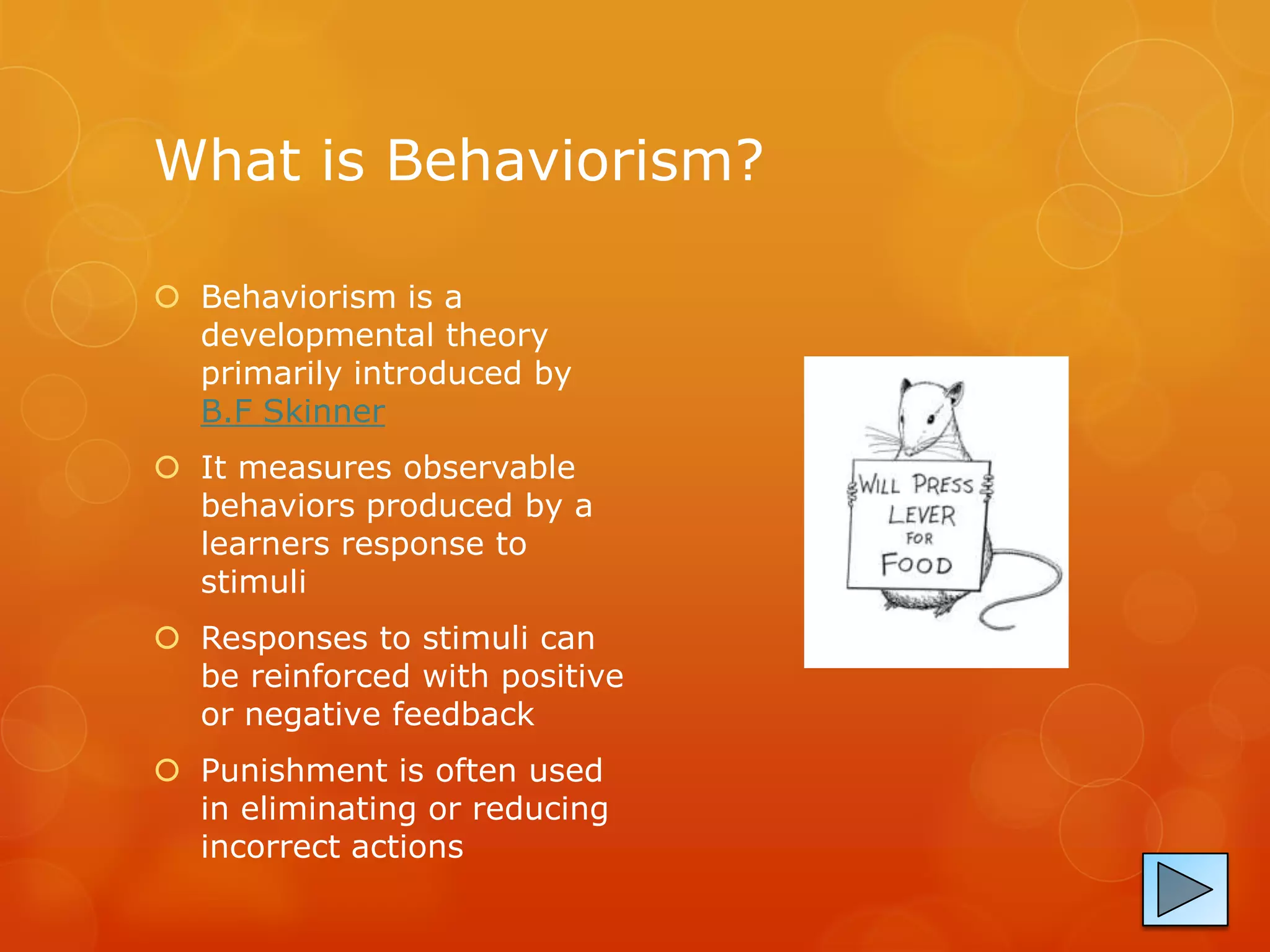
 Responses to stimuli can
  be reinforced with positive
  or negative feedback
 Punishment is often used
  in eliminating or reducing
  incorrect actions
What is Behaviorism? Cont.
 In behaviorism, learning is
  the acquisition of new
  behavior through
  conditioning
 There are two types of
  conditioning; classical and
  operant conditioning
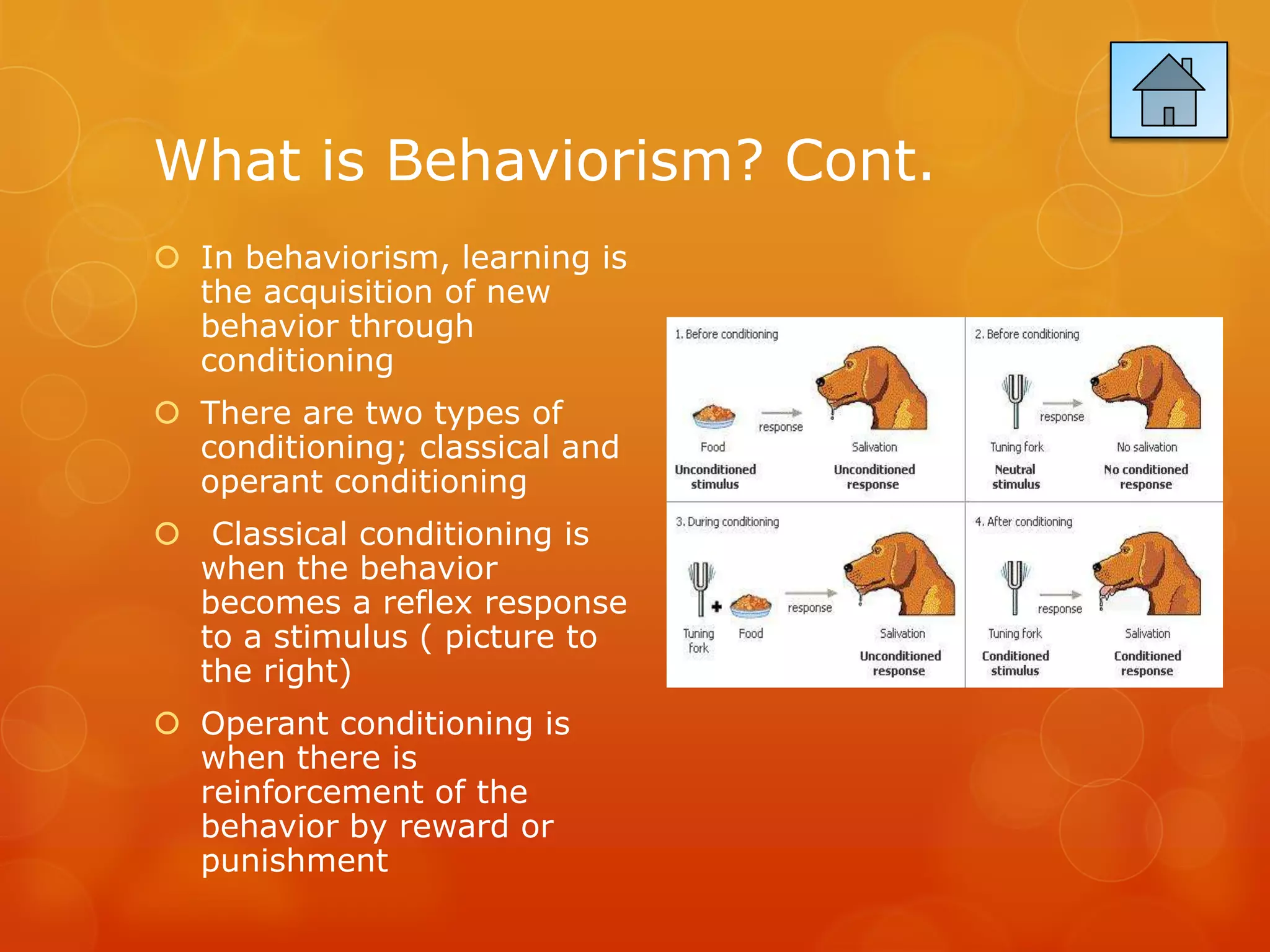
 Classical conditioning is
  when the behavior
  becomes a reflex response
  to a stimulus ( picture to
  the right)
 Operant conditioning is
  when there is
  reinforcement of the
  behavior by reward or
  punishment
B.F Skinner
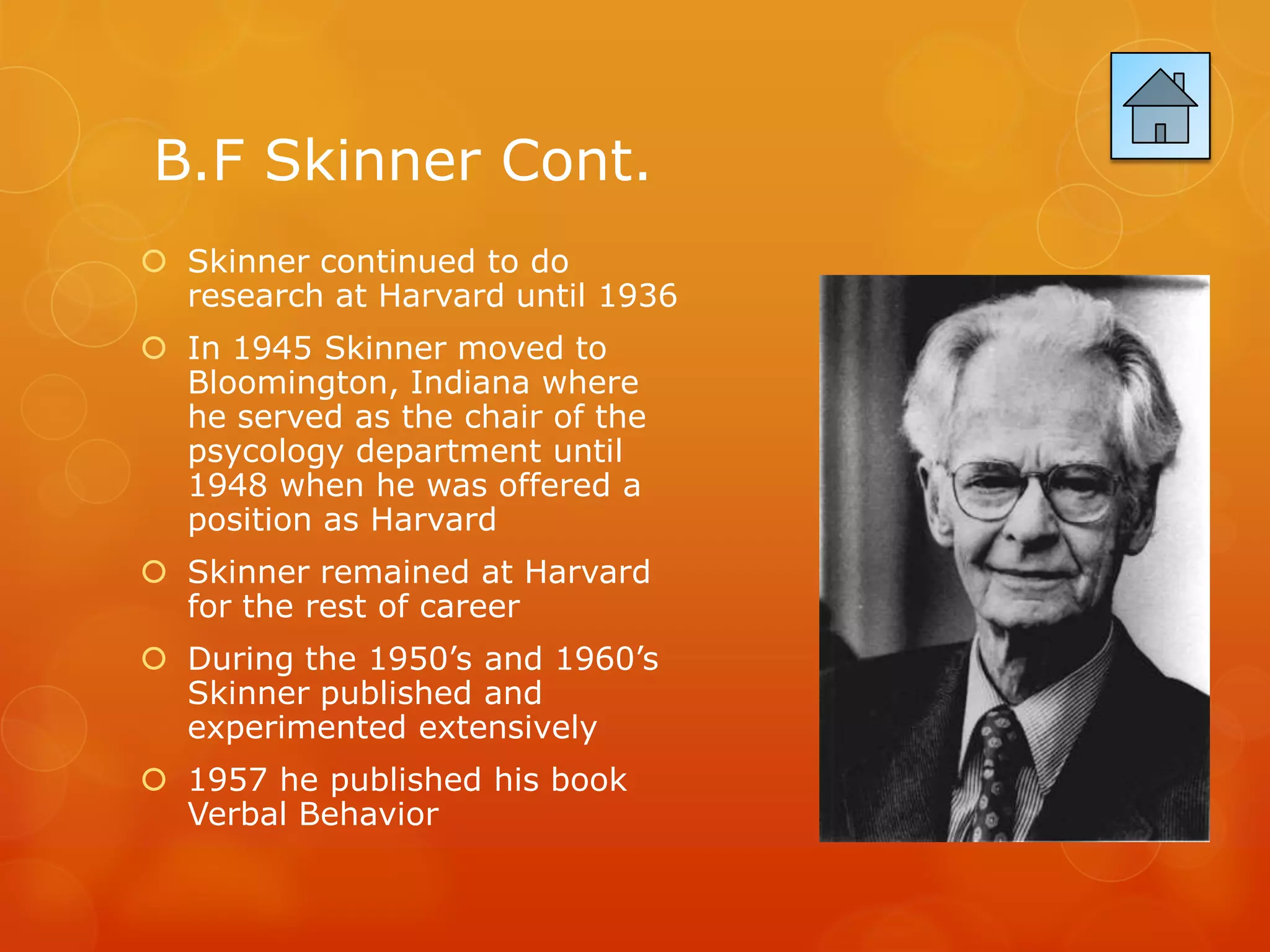
 Burrhus Frederic Skinner was born
  and raised in Susquehanna,
  Pennslyvania.
 At the age of 24 he applied and
  was accepted to the psychology
  program at Harvard
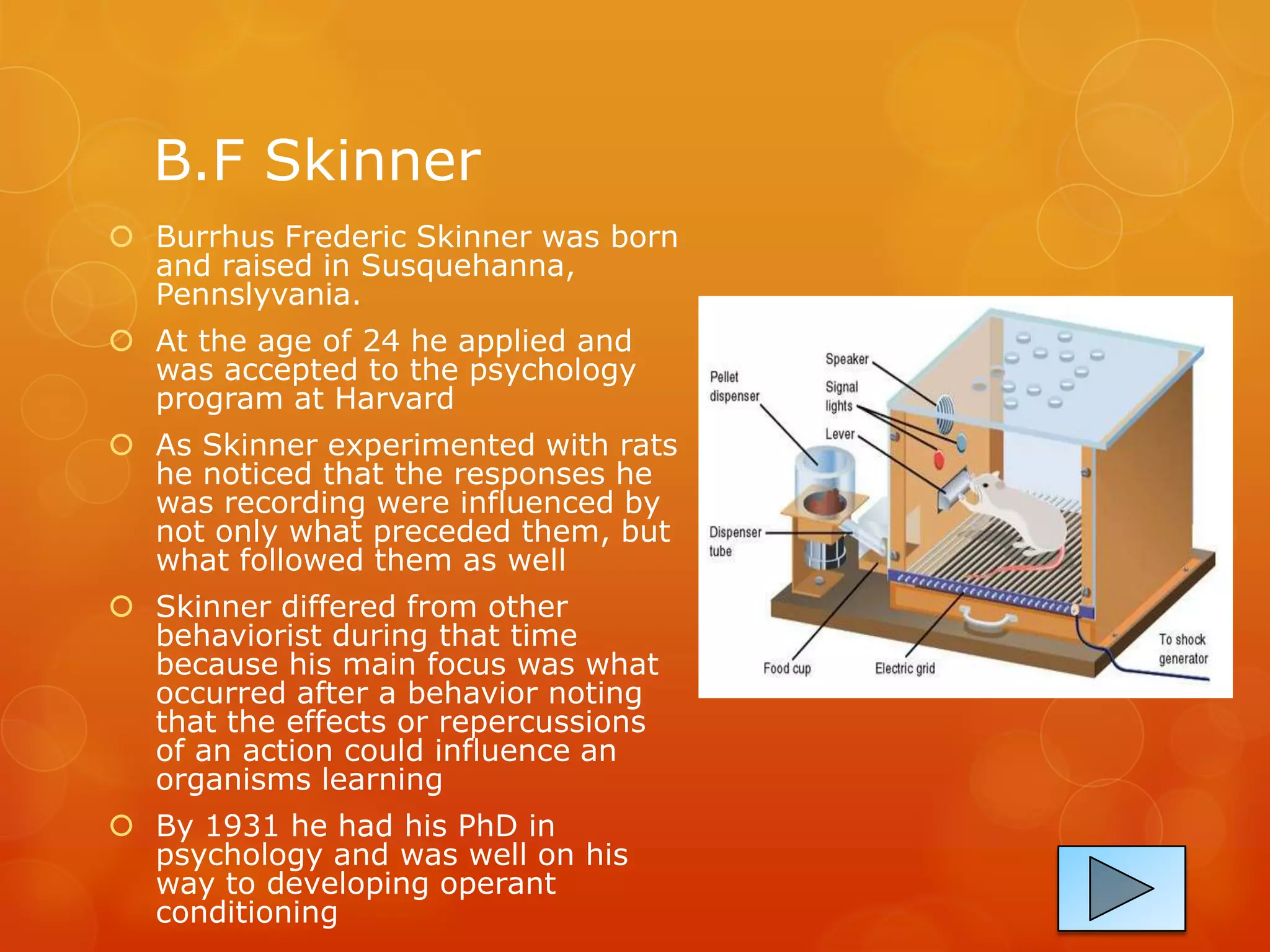
 As Skinner experimented with rats
  he noticed that the responses he
  was recording were influenced by
  not only what preceded them, but
  what followed them as well
 Skinner differed from other
  behaviorist during that time
  because his main focus was what
  occurred after a behavior noting
  that the effects or repercussions
  of an action could influence an
  organisms learning
 By 1931 he had his PhD in
  psychology and was well on his
  way to developing operant
  conditioning
B.F Skinner Cont.
 Skinner continued to do
  research at Harvard until 1936
 In 1945 Skinner moved to
  Bloomington, Indiana where
  he served as the chair of the
  psycology department until
  1948 when he was offered a
  position as Harvard
 Skinner remained at Harvard
  for the rest of career
 During the 1950’s and 1960’s
  Skinner published and
  experimented extensively
 1957 he published his book
  Verbal Behavior
How would it be observed in the
classroom?
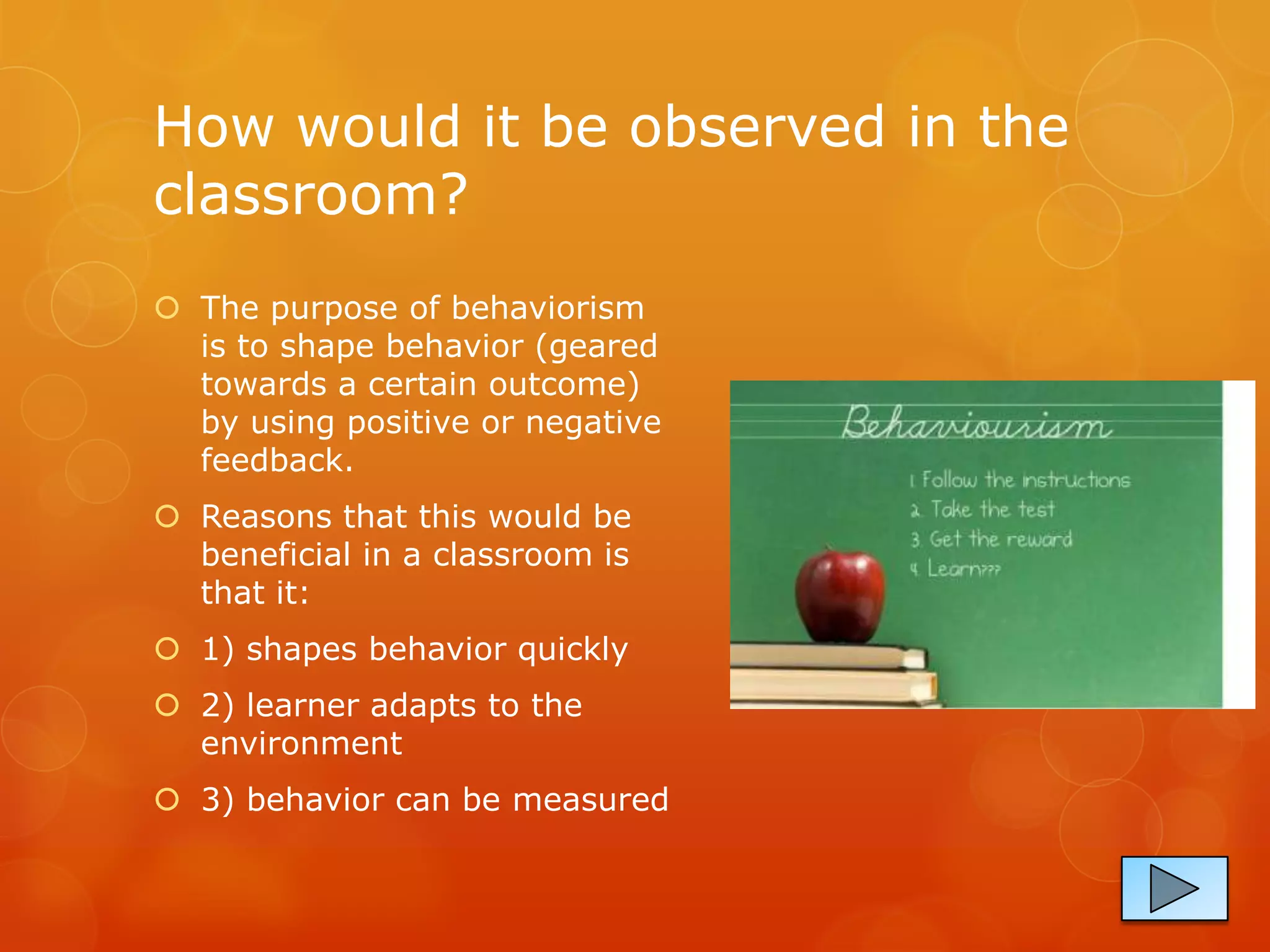
 The purpose of behaviorism
  is to shape behavior (geared
  towards a certain outcome)
  by using positive or negative
  feedback.
 Reasons that this would be
  beneficial in a classroom is
  that it:
 1) shapes behavior quickly
 2) learner adapts to the
  environment
 3) behavior can be measured
How would it be observed in the
 classroom? Cont.
 An example of how behaviorism
  would be used in the classroom to
  shape behavior quickly could involve
  a teacher giving “on-time” points to
  students that arrived to class on
  time that allowed them to purchase
  something from the school store.
 An example of how behaviorism
  allows the learner to adapt would be
  that students learn to write in their
  journals every day for this they
  would receive a sticker
 An example of how behaviorism
  allows the teacher to measure
  behavior would be students taking
  tests to whether or not they could
  answer the questions correctly.
Behaviorism in my classroom


 I am a main supporter of behaviorism in the classroom
  and will be using this learning theory daily.
 I plan to incorporate behaviorism in my own class from
  the very first day.
 I believe that this learning theory is most effective in
  gaining a desired outcome from students.
 I hope that I can incorporate behaviorism in my
  classroom in a very fun way!
Behaviorism in my classroom
continued

 Some ways I wish to incorporate behaviorism in my
  classroom is by having certain rewards set up around
  the school year that students may or may not earn
  depending on their behavior.
 An example of this could be students will receive a
  special reward after receiving 10 A’s in a row on
  multiplication quizzes
 Another example could include the student that
  observed the best behavior that week will be allowed
  special privileges for the following week ( such as line
  leader, teacher’s helper, etc.)

Popovich behaviorism

  • 1.
  • 2.
    Table of Contents What is behaviorism?  B.F Skinner  How would behaviorism be observed in the classroom?  Behaviorism in my classroom
  • 3.
    What is Behaviorism? Behaviorism is a developmental theory primarily introduced by B.F Skinner  It measures observable behaviors produced by a learners response to stimuli  Responses to stimuli can be reinforced with positive or negative feedback  Punishment is often used in eliminating or reducing incorrect actions
  • 4.
    What is Behaviorism?Cont.  In behaviorism, learning is the acquisition of new behavior through conditioning  There are two types of conditioning; classical and operant conditioning  Classical conditioning is when the behavior becomes a reflex response to a stimulus ( picture to the right)  Operant conditioning is when there is reinforcement of the behavior by reward or punishment
  • 5.
    B.F Skinner  BurrhusFrederic Skinner was born and raised in Susquehanna, Pennslyvania.  At the age of 24 he applied and was accepted to the psychology program at Harvard  As Skinner experimented with rats he noticed that the responses he was recording were influenced by not only what preceded them, but what followed them as well  Skinner differed from other behaviorist during that time because his main focus was what occurred after a behavior noting that the effects or repercussions of an action could influence an organisms learning  By 1931 he had his PhD in psychology and was well on his way to developing operant conditioning
  • 6.
    B.F Skinner Cont. Skinner continued to do research at Harvard until 1936  In 1945 Skinner moved to Bloomington, Indiana where he served as the chair of the psycology department until 1948 when he was offered a position as Harvard  Skinner remained at Harvard for the rest of career  During the 1950’s and 1960’s Skinner published and experimented extensively  1957 he published his book Verbal Behavior
  • 7.
    How would itbe observed in the classroom?  The purpose of behaviorism is to shape behavior (geared towards a certain outcome) by using positive or negative feedback.  Reasons that this would be beneficial in a classroom is that it:  1) shapes behavior quickly  2) learner adapts to the environment  3) behavior can be measured
  • 8.
    How would itbe observed in the classroom? Cont.  An example of how behaviorism would be used in the classroom to shape behavior quickly could involve a teacher giving “on-time” points to students that arrived to class on time that allowed them to purchase something from the school store.  An example of how behaviorism allows the learner to adapt would be that students learn to write in their journals every day for this they would receive a sticker  An example of how behaviorism allows the teacher to measure behavior would be students taking tests to whether or not they could answer the questions correctly.
  • 9.
    Behaviorism in myclassroom  I am a main supporter of behaviorism in the classroom and will be using this learning theory daily.  I plan to incorporate behaviorism in my own class from the very first day.  I believe that this learning theory is most effective in gaining a desired outcome from students.  I hope that I can incorporate behaviorism in my classroom in a very fun way!
  • 10.
    Behaviorism in myclassroom continued  Some ways I wish to incorporate behaviorism in my classroom is by having certain rewards set up around the school year that students may or may not earn depending on their behavior.  An example of this could be students will receive a special reward after receiving 10 A’s in a row on multiplication quizzes  Another example could include the student that observed the best behavior that week will be allowed special privileges for the following week ( such as line leader, teacher’s helper, etc.)