MPA 210 ( Strategic Planning Management)
Presenter: BJORN KAYE T. NICOLAS, EMT, RN, MSN
Policy
Formulation
Topic Outline:
• Understanding the meaning of Policy and
Policy Formulation
• Characteristics of a good Policy
• Steps in making a Policy
What is a
policy?
• Is a principle or rule to guide decisions and
achieve rational outcomes.
• Is a statement of intent and is implemented as
a procedure or protocol.
• Is a statement that provides for decision
making by members of the organization
charged with the responsibility of operating
the organization as a system with the purpose
of attaining the establishment objectives of
the organization.
• It contains the “what” and the “why” (needs
to be done
What is policy
formulation?
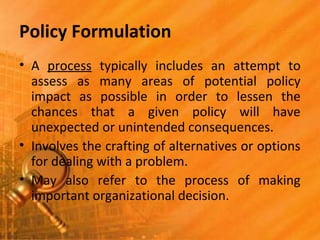
Policy Formulation
• A process typically includes an attempt to
assess as many areas of potential policy
impact as possible in order to lessen the
chances that a given policy will have
unexpected or unintended consequences.
• Involves the crafting of alternatives or options
for dealing with a problem.
• May also refer to the process of making
important organizational decision.
Cont.
• Is the development of effective and
acceptable courses of action for addressing
what has been placed on the policy agenda.
Why formulate
policy?
Why the
need for
policies and
procedures
in a
workplace?
Purpose is to
–Ensure a safe, organize, warm,
friendly, hospitable, empowering,
non-discrematory work place.
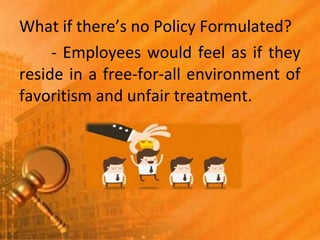
What if there’s no Policy Formulated?
- Employees would feel as if they
reside in a free-for-all environment of
favoritism and unfair treatment.
Policy is necessary
• To comply with government policies and laws.
• To establish consistent work standards, rules
and regulations.
• To provide consistent and fair treatment for
employees.
Functions of Policy
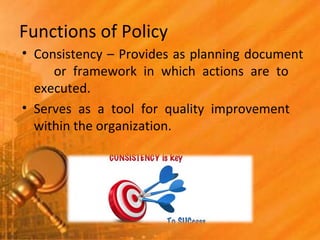
• Consistency – Provides as planning document
or framework in which actions are to
executed.
• Serves as a tool for quality improvement
within the organization.
• Predictable Behavior – policies provide an
important method of letting personnel
know what is expected of them. Thereby
increasing predictability of desired
behavior.
• Delegation – Policies promote delegation
making to the level in the management
hierarchy must face the problem when it
arises.
• Communication – Policies reduce
communication relating to routine decisions.
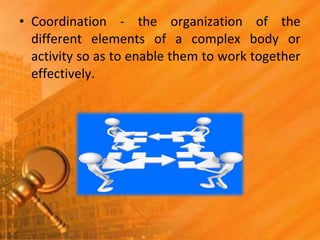
• Coordination - the organization of the
different elements of a complex body or
activity so as to enable them to work together
effectively.
Characteristics of a good Policy
• Clear and Simple.
• Assumptions are clear and explicit.
• There is linkage to organizational direction.
• Both efficient and effective.
• Clearly indicates the condition to whom and
to what extent it applies.
• Outcomes are stated are clearly stated.
Cont.’
• It has been appropriately funded and
supported by resources.
• It does not conflict with the cooperative
policies identify.
• It is enforceable.
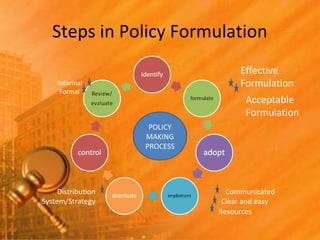
Steps in Policy Formulation
Effective
Formulation
Acceptable
Formulation
Clear and easy
Communicated
Resources
Distribution
System/Strategy
Informal
Formal
POLICY
MAKING
PROCESS
References:
• http:/www.entretrain.net/UK/distribution-policy
• http:/www.businessdictionary.com/definition/distribution-policy.html
• http:/www.paloaltonetworks.com/features/policy-control
• http://searchcompliance.techtarget.com/definition/IT-controls
• https://courses.lumenlearning.com/boundless-
politicalscience/chapter/the-policy-making-process/
Policy Formulation

Policy Formulation

  • 1.
    MPA 210 (Strategic Planning Management) Presenter: BJORN KAYE T. NICOLAS, EMT, RN, MSN Policy Formulation
  • 2.
    Topic Outline: • Understandingthe meaning of Policy and Policy Formulation • Characteristics of a good Policy • Steps in making a Policy
  • 3.
  • 4.
    • Is aprinciple or rule to guide decisions and achieve rational outcomes. • Is a statement of intent and is implemented as a procedure or protocol. • Is a statement that provides for decision making by members of the organization charged with the responsibility of operating the organization as a system with the purpose of attaining the establishment objectives of the organization. • It contains the “what” and the “why” (needs to be done
  • 5.
  • 6.
    Policy Formulation • Aprocess typically includes an attempt to assess as many areas of potential policy impact as possible in order to lessen the chances that a given policy will have unexpected or unintended consequences. • Involves the crafting of alternatives or options for dealing with a problem. • May also refer to the process of making important organizational decision.
  • 7.
    Cont. • Is thedevelopment of effective and acceptable courses of action for addressing what has been placed on the policy agenda.
  • 8.
  • 9.
    Why the need for policiesand procedures in a workplace?
  • 10.
    Purpose is to –Ensurea safe, organize, warm, friendly, hospitable, empowering, non-discrematory work place.
  • 11.
    What if there’sno Policy Formulated? - Employees would feel as if they reside in a free-for-all environment of favoritism and unfair treatment.
  • 12.
    Policy is necessary •To comply with government policies and laws. • To establish consistent work standards, rules and regulations. • To provide consistent and fair treatment for employees.
  • 13.
    Functions of Policy •Consistency – Provides as planning document or framework in which actions are to executed. • Serves as a tool for quality improvement within the organization.
  • 14.
    • Predictable Behavior– policies provide an important method of letting personnel know what is expected of them. Thereby increasing predictability of desired behavior.
  • 15.
    • Delegation –Policies promote delegation making to the level in the management hierarchy must face the problem when it arises.
  • 16.
    • Communication –Policies reduce communication relating to routine decisions.
  • 17.
    • Coordination -the organization of the different elements of a complex body or activity so as to enable them to work together effectively.
  • 18.
    Characteristics of agood Policy • Clear and Simple. • Assumptions are clear and explicit. • There is linkage to organizational direction. • Both efficient and effective. • Clearly indicates the condition to whom and to what extent it applies. • Outcomes are stated are clearly stated.
  • 19.
    Cont.’ • It hasbeen appropriately funded and supported by resources. • It does not conflict with the cooperative policies identify. • It is enforceable.
  • 20.
    Steps in PolicyFormulation Effective Formulation Acceptable Formulation Clear and easy Communicated Resources Distribution System/Strategy Informal Formal POLICY MAKING PROCESS
  • 21.
    References: • http:/www.entretrain.net/UK/distribution-policy • http:/www.businessdictionary.com/definition/distribution-policy.html •http:/www.paloaltonetworks.com/features/policy-control • http://searchcompliance.techtarget.com/definition/IT-controls • https://courses.lumenlearning.com/boundless- politicalscience/chapter/the-policy-making-process/