P R E S E N T A T I O N T E M P L A T E
S D
T
-
Government Economic Stimulus
Program for MSMEs
 Micro, Small and Medium Enterprises
MPA 209 Professor
Presented by: Reynald Barrera Josefina B. Bitonio, DPA
What Is an MSME?
 An MSME in the Philippines is defined as any business activity or
enterprise engaged in industry, agri-business and/or services that
has: (1) an asset size (less land) of up to PhP100 million; and (2)
an employment size with less than 200 employees. 1 Based on
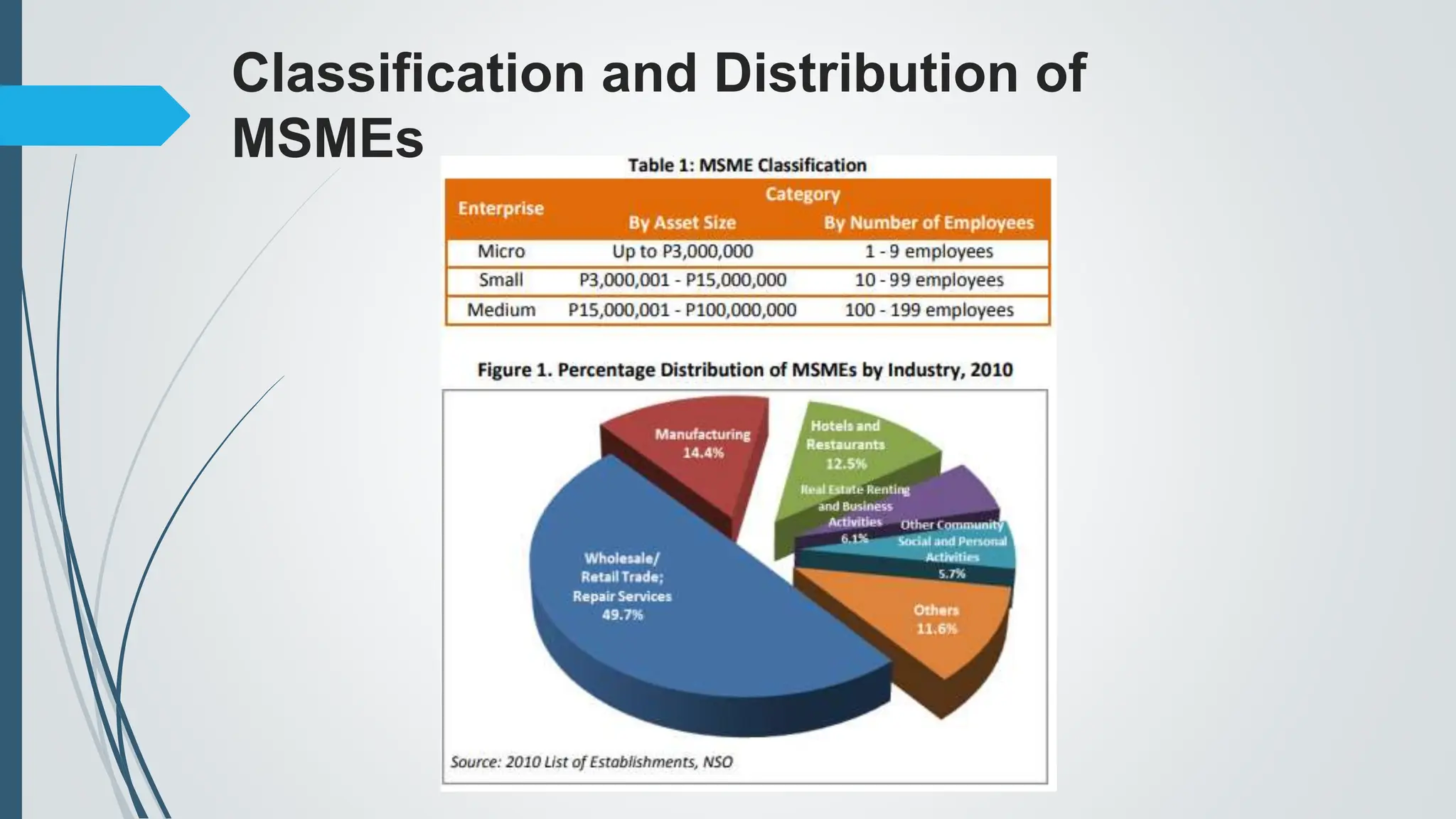
these categories, it is classified as micro, small or medium (Table 1)
regardless of the type of business ownership (i.e., single
proprietorship, cooperative, partnership or corporation).
Why are MSMEs Important?
 Micro, small and medium enterprises (MSMEs) have a very important
role in developing the Philippine economy. They help reduce poverty
by creating jobs for the country’s growing labor force. They stimulate
economic development in rural and far-flung areas. They serve as
valuable partners to large enterprises as suppliers and providers of
support services. They serve as breeding ground for new
entrepreneurs and large corporations. A vibrant MSME sector is thus
an indication of a thriving and growing economy. Despite policies that
aim to provide an enabling environment for MSME development, the
sector still faces various constraints that prevent it from realizing its
full growth and potential.
Classification and Distribution of
MSMEs
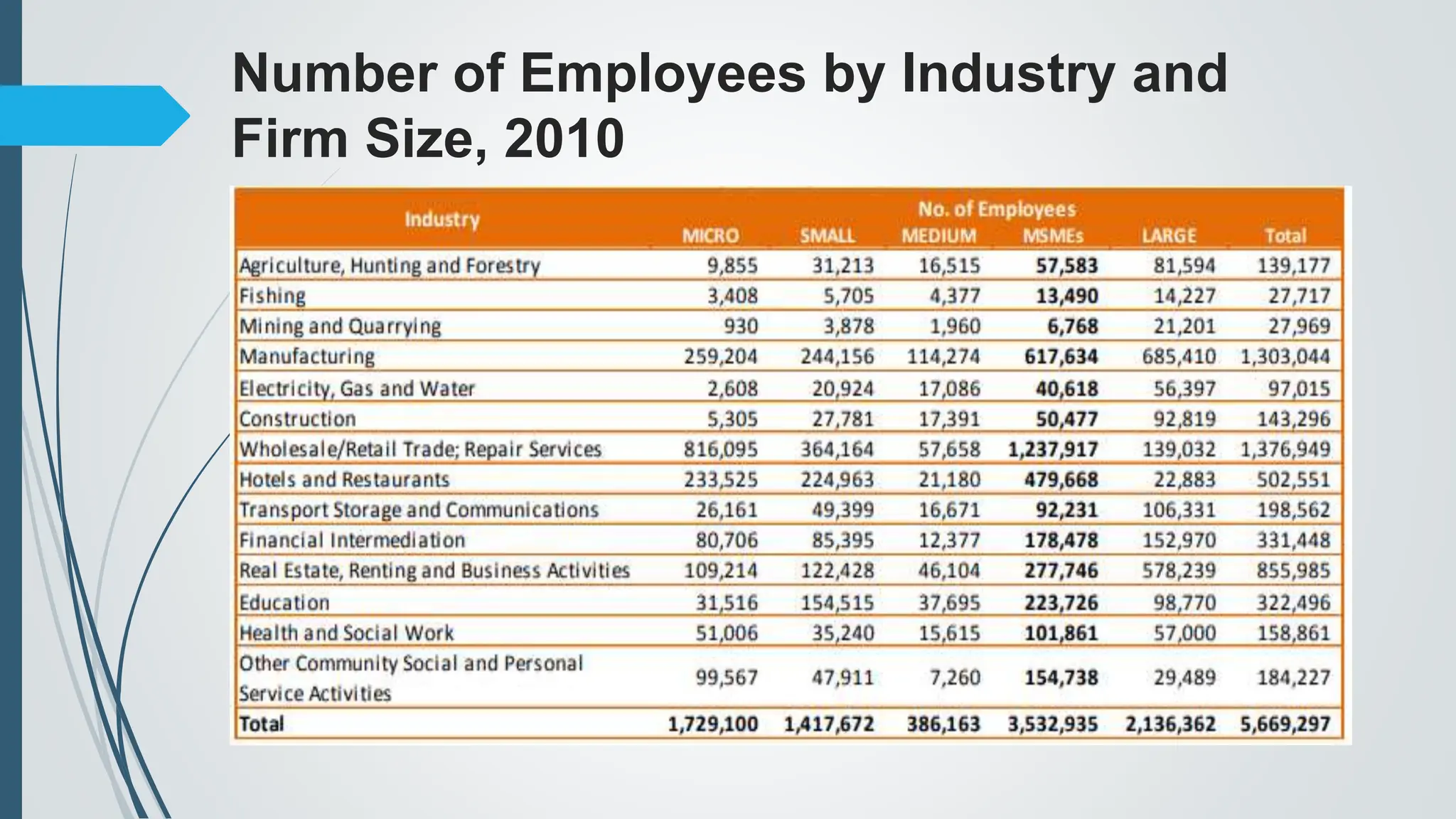
Number of Employees by Industry and
Firm Size, 2010
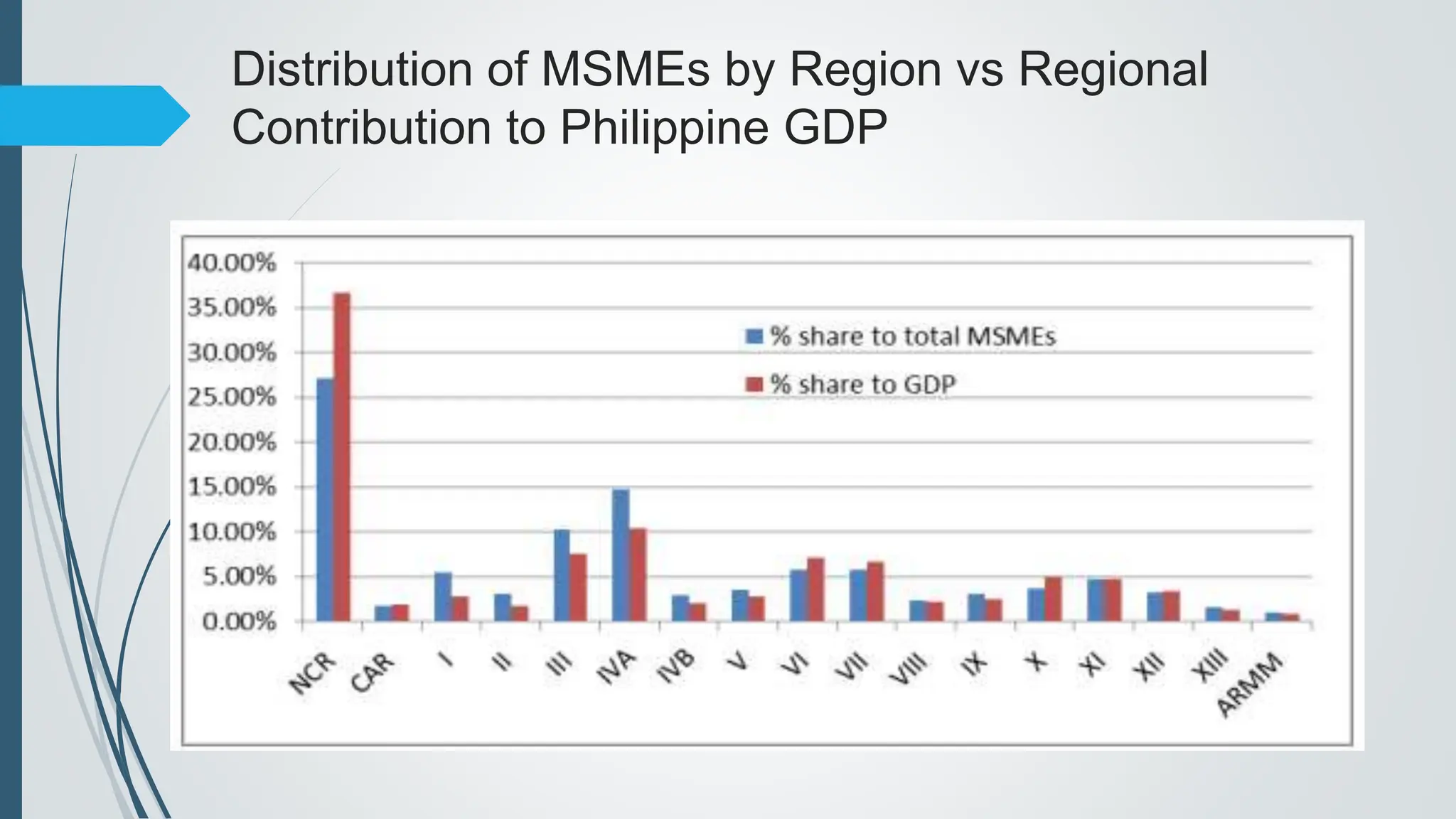
Distribution of MSMEs by Region vs Regional
Contribution to Philippine GDP
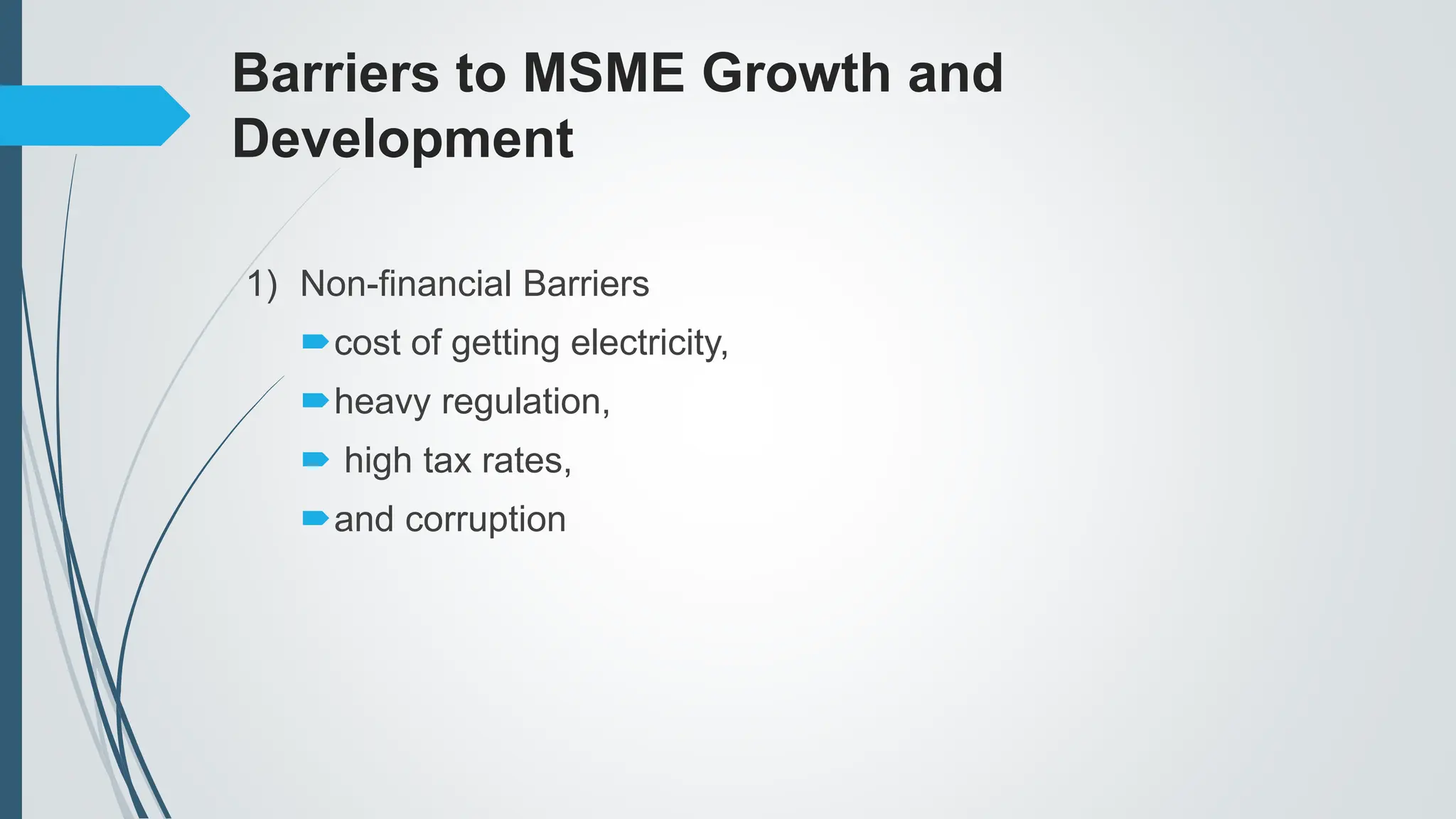
Barriers to MSME Growth and
Development
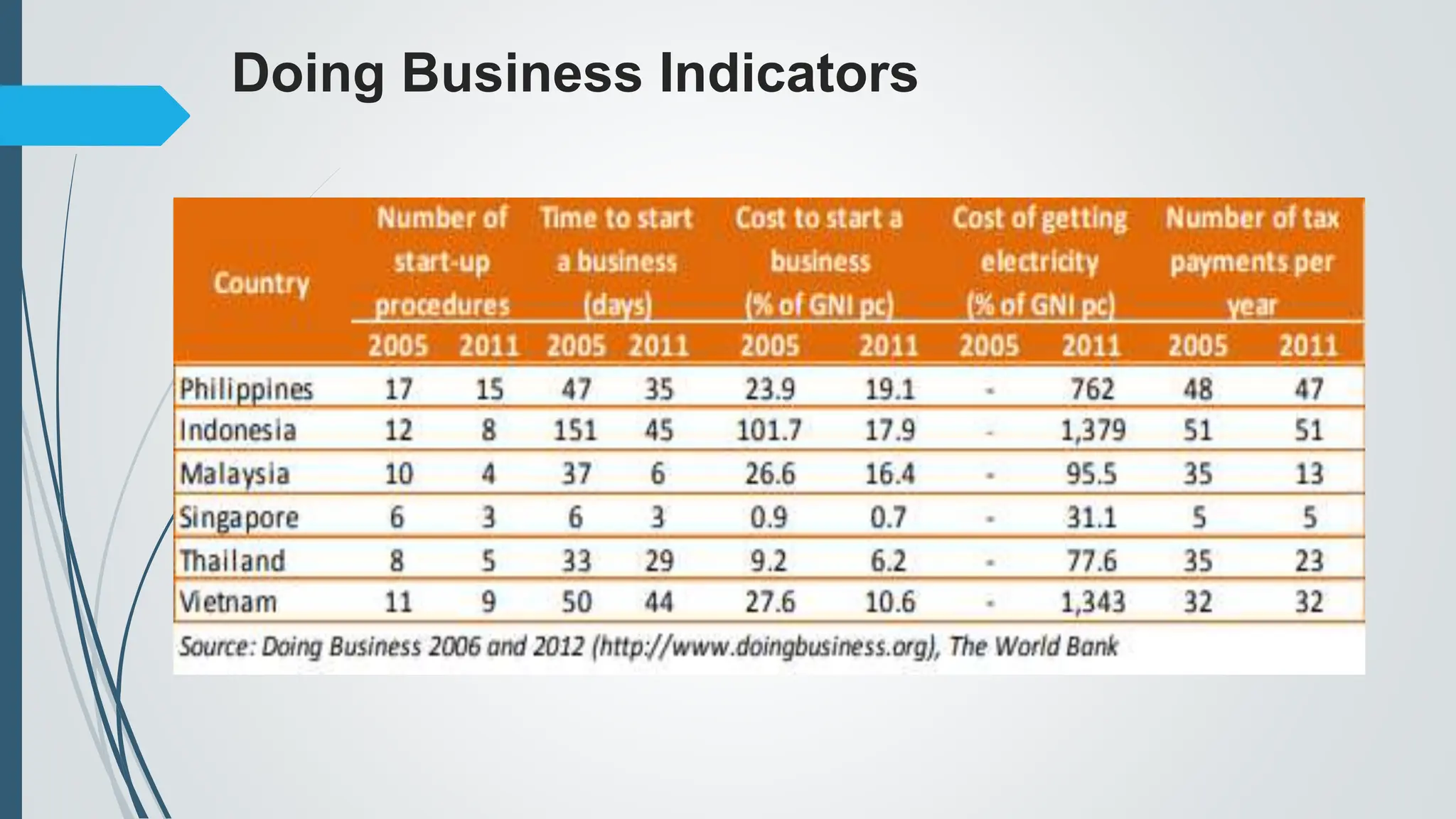
1) Non-financial Barriers
cost of getting electricity,
heavy regulation,
 high tax rates,
and corruption
Barriers to MSME Growth and
Development
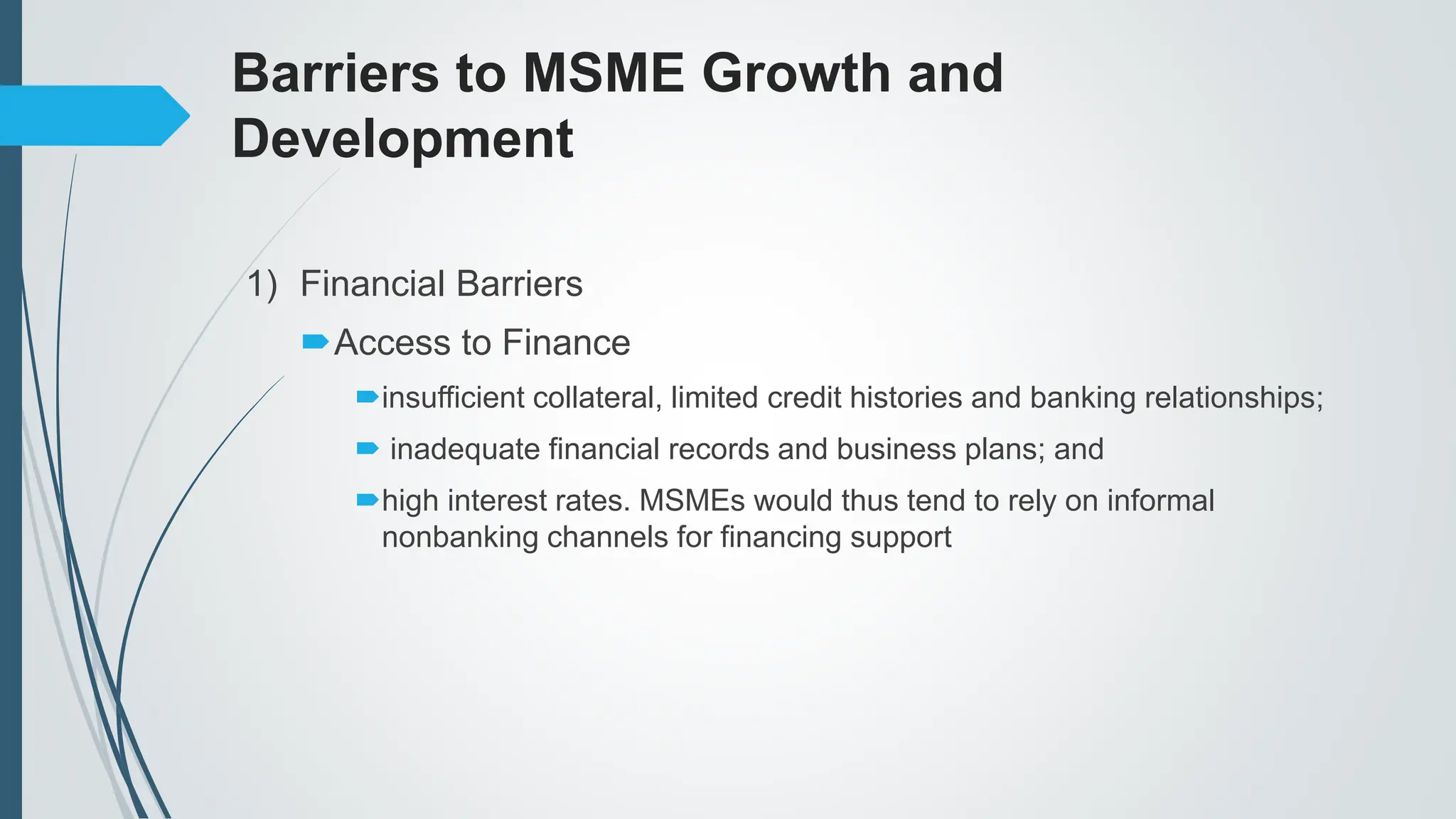
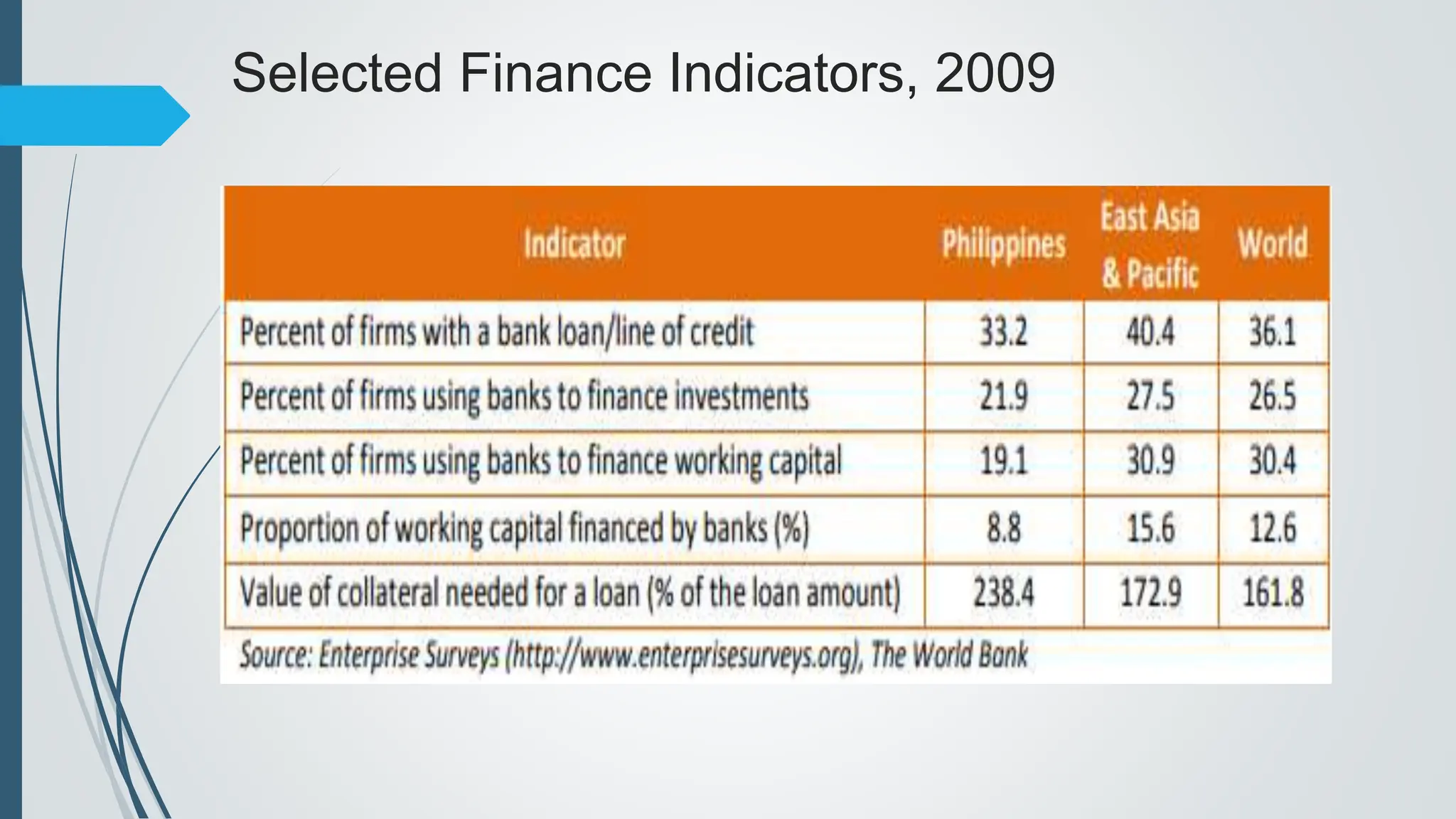
1) Financial Barriers
Access to Finance
insufficient collateral, limited credit histories and banking relationships;
 inadequate financial records and business plans; and
high interest rates. MSMEs would thus tend to rely on informal
nonbanking channels for financing support
Doing Business Indicators
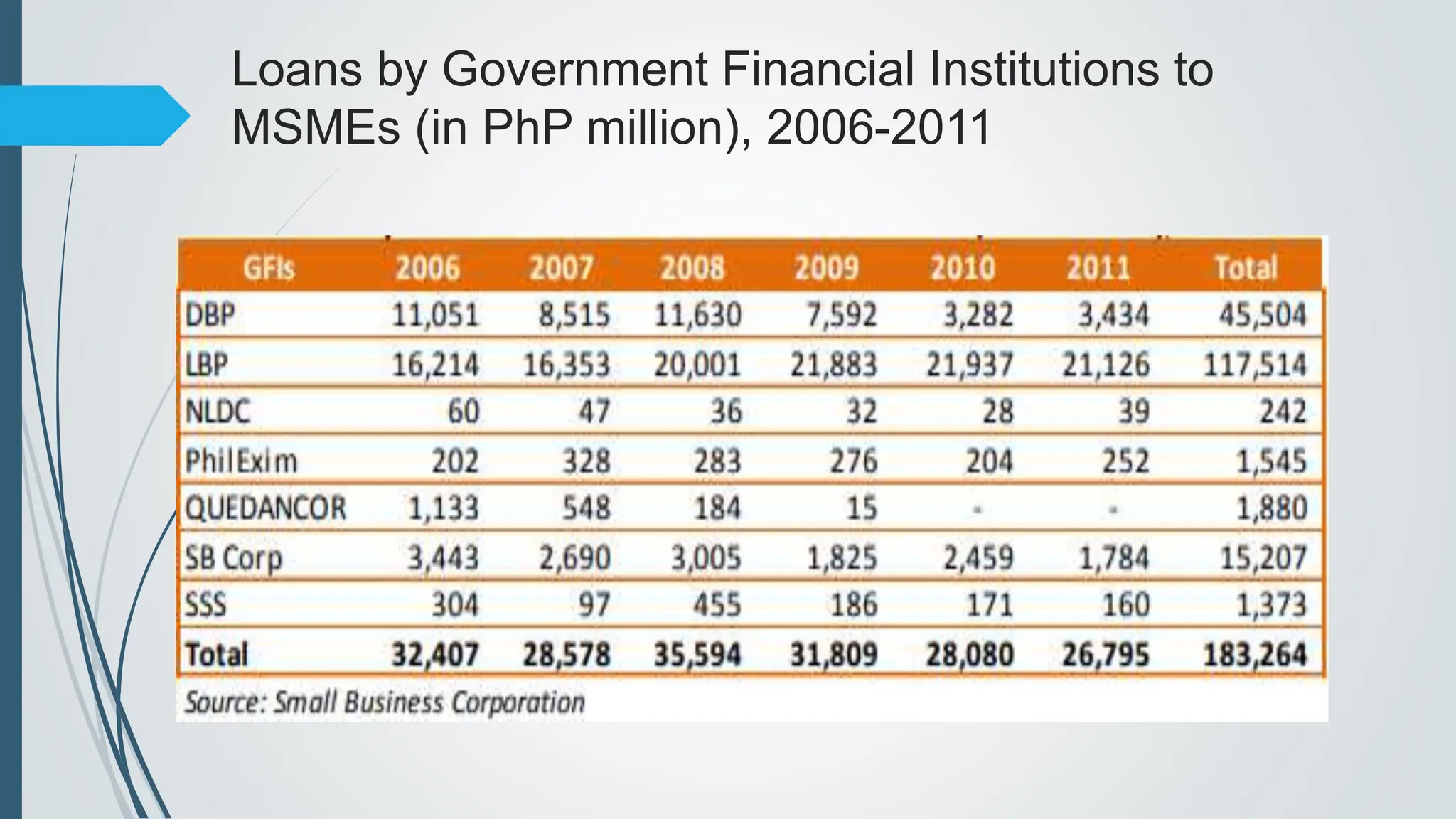
Loans by Government Financial Institutions to
MSMEs (in PhP million), 2006-2011
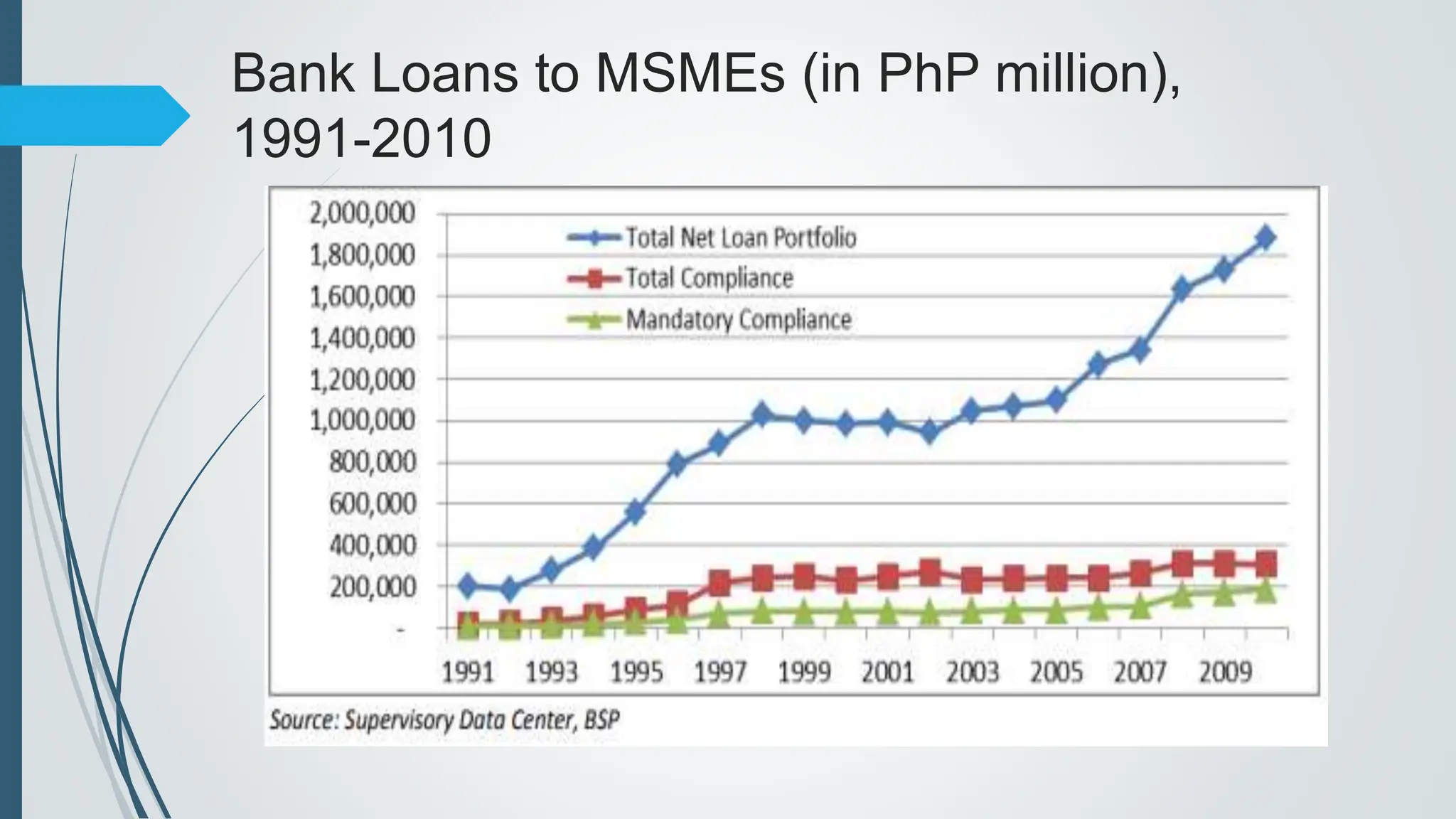
Bank Loans to MSMEs (in PhP million),
1991-2010
Selected Finance Indicators, 2009
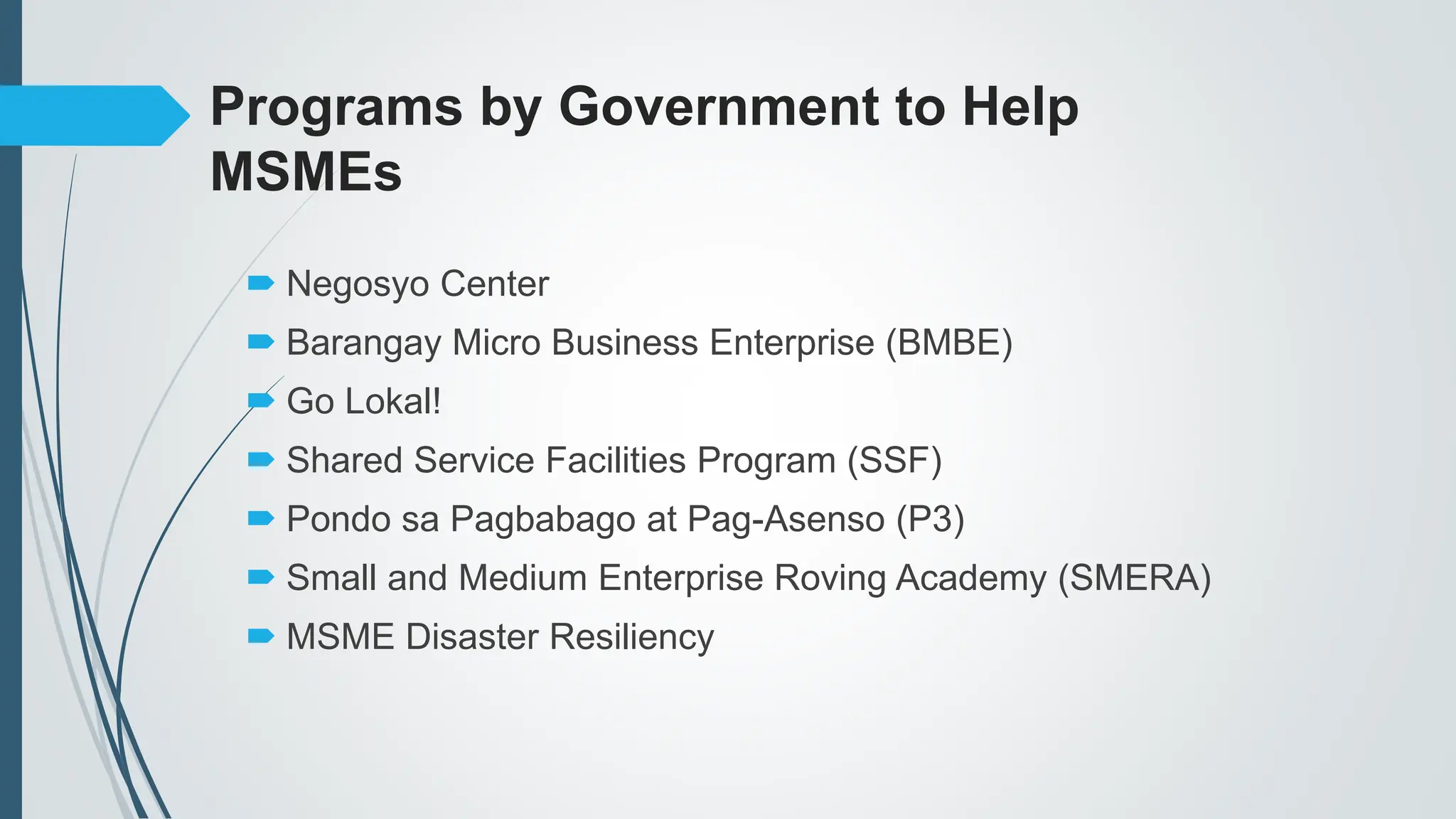
Programs by Government to Help
MSMEs
 Negosyo Center
 Barangay Micro Business Enterprise (BMBE)
 Go Lokal!
 Shared Service Facilities Program (SSF)
 Pondo sa Pagbabago at Pag-Asenso (P3)
 Small and Medium Enterprise Roving Academy (SMERA)
 MSME Disaster Resiliency

Government Stimulus Program for MSMEs

  • 1.
    P R ES E N T A T I O N T E M P L A T E S D T - Government Economic Stimulus Program for MSMEs  Micro, Small and Medium Enterprises MPA 209 Professor Presented by: Reynald Barrera Josefina B. Bitonio, DPA
  • 2.
    What Is anMSME?  An MSME in the Philippines is defined as any business activity or enterprise engaged in industry, agri-business and/or services that has: (1) an asset size (less land) of up to PhP100 million; and (2) an employment size with less than 200 employees. 1 Based on these categories, it is classified as micro, small or medium (Table 1) regardless of the type of business ownership (i.e., single proprietorship, cooperative, partnership or corporation).
  • 3.
    Why are MSMEsImportant?  Micro, small and medium enterprises (MSMEs) have a very important role in developing the Philippine economy. They help reduce poverty by creating jobs for the country’s growing labor force. They stimulate economic development in rural and far-flung areas. They serve as valuable partners to large enterprises as suppliers and providers of support services. They serve as breeding ground for new entrepreneurs and large corporations. A vibrant MSME sector is thus an indication of a thriving and growing economy. Despite policies that aim to provide an enabling environment for MSME development, the sector still faces various constraints that prevent it from realizing its full growth and potential.
  • 4.
  • 5.
    Number of Employeesby Industry and Firm Size, 2010
  • 6.
    Distribution of MSMEsby Region vs Regional Contribution to Philippine GDP
  • 7.
    Barriers to MSMEGrowth and Development 1) Non-financial Barriers cost of getting electricity, heavy regulation,  high tax rates, and corruption
  • 8.
    Barriers to MSMEGrowth and Development 1) Financial Barriers Access to Finance insufficient collateral, limited credit histories and banking relationships;  inadequate financial records and business plans; and high interest rates. MSMEs would thus tend to rely on informal nonbanking channels for financing support
  • 9.
  • 10.
    Loans by GovernmentFinancial Institutions to MSMEs (in PhP million), 2006-2011
  • 11.
    Bank Loans toMSMEs (in PhP million), 1991-2010
  • 12.
  • 13.
    Programs by Governmentto Help MSMEs  Negosyo Center  Barangay Micro Business Enterprise (BMBE)  Go Lokal!  Shared Service Facilities Program (SSF)  Pondo sa Pagbabago at Pag-Asenso (P3)  Small and Medium Enterprise Roving Academy (SMERA)  MSME Disaster Resiliency