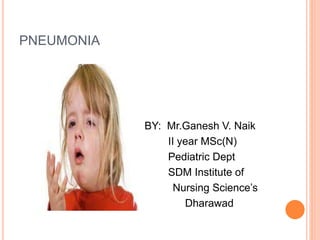
PNEUMONIA
BY: Mr.Ganesh V. Naik
II year MSc(N)
Pediatric Dept
SDM Institute of
Nursing Science’s
Dharawad
INTRODUCTION
 Pneumonia is a form of acute respiratory infection that
affects the lungs.
 Pneumonia accounts for 15% of all death of under five
year age of children
DEFINITION
Pneumonia is defined as acute inflammation and
consolidation of lung parenchyma (i.e. alveoli rather than
the bronchi)
INCIDENCE
 1/3rd of all hospital out patients include respiratory
tract infection of which nearly 30% have pneumonia
 It is second leading cause of death in children
under five years of age
CLASSIFICATION
 Classification on anatomical basis
 Lobar or lobular pneumonia: One or more lobes of
lungs are involved
 Interstial pneumonia: Interstial tissues of lungs are
involved
 Bronchopneumonia: Patchy consolidation of lungs
is known as bronchopneumonia
CONT…
 Classification on etiological basis
 Bacterial pneumonia: It may be caused by
Pneumococcus, Streptococcus, Staphylococcus,
Hemophilus influenzae and H.pertusis
 Viral pneumonia :It is caused by viruses like
influenza, Measles, Adenovirus and Respiratory
Syncytial Virus.
 Fungal pneumonia: It may be caused by
histoplasmosis and Coccidiomycosis.
 Protozoal pneumonia:It is caused by
Pneumocystitis carini, Entamoeba histolytica.
CONT…
 Miscellaneous types
1. Aspiration Pneumonia:
• It is caused by aspiration of food, nasal drops,
amniotic fluid by newborn, water(drowning) and
chemicals like kerosene oil etc.
2. Loffler’s pneumonia:
• In which eosinophils accumulate in the lungs in
response to parasitic infection
• It may be caused by parasites like Ascaris
lumbricoides .
CONT…
3. Hypersensitivity pnemonitis:
• It is an inflammation of alveoli within the lungs
caused by hypersensitivity to inhaled dust
4. Hypostatic pneumonia:
• It results from collection of fluid in dorsal region of
lungs and occurs especially in those confined to
bed for long time( bedridden)
ETIOLOGY
 VIRUSES: Includes
 Adenovirus
 Rhinovirus
 Influenza virus
 Respiratory Syncytial Virus(RSV)
 Parainfluenza virus
 Bacterias: Includes
 Group B Streptococci
 Streptococcus pneumoniae
 Staphylococcus
 Upper respiratory tract infection
CONT….
 People with weak immune system including people
undergoing chemotherapy are more susceptible to
pneumonia
 Self infection : Vomiting occurs and the person
breathes in harmful bacteria contents from his own
stomach developing pneumonia
PATHOPHYSIOLOGY
 Alteration in net bacterial lung resistance caused by
either:
 Decreased bactericidal ability of the alveolar
macrophages
 Extreme virulence of the bacteria
 Increased susceptibility of host to infection
Acute inflammation occurs that caused excess water
and plasma proteins go to the development areas
of the lower lobes
CONT…….
RBC’s fibrin and polymorphonuclear leukocytes
infiltrate the alveoli
Containment of the bacteria within the segments of
pulmonary lobes by cellular recruitment
Consolidation of leukocytes and fibrin within the
affected area
Stage of congestion
Engorgement of alveolar spaces with fluid and
CONT…..
The disease in number of RBC in the exudates is
replaced by neutrophils which infiltrate the alveoli
making the lung tissue to be solid and grayish in
color
Pneumonia
CONT…
 It includes 4 stages
 congestion
 red hepatization
 gray hepatization
 resolution
CONGESTION
 After the pneumococcus organism reaches the
alveoli, there is an outpouring of fluids into alveoli.
 The organism multiplies in the serous fluid and
infection spreads
RED HEPATIZATION
 The massive dilation of the capillaries and alveoli
that are filled with this organism, neutrophils, RBC,
and fibrin.
 The lung appears red and granular, similar to that of
liver which is why the process is called
hepatization.
GREY HEPATIZATION
 Blood flow decreases and leukocytes and fibrin
consolidate in the affected part of lung.
RESOLUTION
 Complete resolution and healing occurs if there is
no complications.
 The exudates become lysed and is processed by
macrophages.
 The normal lung tissue is restored and the persons
gas exchange ability returns to normal.
CLINICAL FEATURES
 Early signs and symptoms
 Sudden onset of High fever with chills
 Cough with thick sputum
 Increased respiration rate
 Grunting respiration
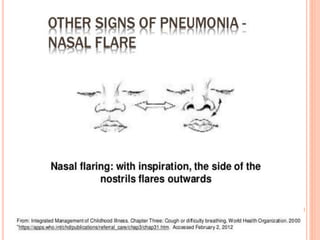
 Nasal flaring
 Running nose
 Irritability
 Malaise
 Sore throat
 Anorexia
CONT…..
 Late signs and symptoms include:
 Drowsiness
 Inability to drink from mouth
 Chest indrawing
 Wheezing
 Hoarseness of voice
 Cyanosis
 Pleural pain which may be increased by deep
breathing
DIAGNOSTIC EVALUATION
 History collection
 Physical examination
 Complete blood count: to check white blood cell
count
 Arterial Blood Gas
 Pulse oximetry
 Sputum culture
 Bronchoscopic examination
 Chest X-ray- shows patchy consolidation
 Computed Tomography Scan of chest
LOBAR PNEUMONIA
Lobarpneumonia
MANAGEMENT
 Therapeutic Management
 Antimicrobial therapy effective treatment
 Oral amoxicillin is used for infants and children
younger than 5years
 Erythromycin is the drug of choice for older children
 Administration of antipyretics for fever
 Hospitalization is indicated when the pleural
effusion or empyema accompanies disease and
also for staphylococcal pneumoniae
 Oxygen may be required if the child is respiratory
distress
PREVENTION
 Exclusive breastfeeding for first 6months of life.
 Weaning to solid foods after 6 months of age
preferably with homemade foods.
 Avoidance of risk factors like overcrowded
environment exposure to pollution and bottle
feeding.
 Protection from malnutrition and supplementation of
vitamin A and D.
 Optimum immunization with Diptheria, Pertusis-
Tetanus(DPT), measles, Haemophilus
influenzae(Hib), Pneumococcal vaccines at
appropriate age.
CONT….
 Two vaccines are available to prevent
pneumococcal disease
 Pneumococcal Conjugate Vaccine(PCV)
 Pneumococcal Polysaccharide
Vaccine(Pneumovax)
 Pneumococcal Conjugate Vaccine(PCV) is
recommended for all children <2years of age.
 This vaccine should be repeated every 5-7years of
age.
COMPLICATIONS
 Pleural effusion
 Emphysema
 Bronchiectasis
 Thank u

Pneumonia

  • 1.
    PNEUMONIA BY: Mr.Ganesh V.Naik II year MSc(N) Pediatric Dept SDM Institute of Nursing Science’s Dharawad
  • 2.
    INTRODUCTION  Pneumonia isa form of acute respiratory infection that affects the lungs.  Pneumonia accounts for 15% of all death of under five year age of children
  • 3.
    DEFINITION Pneumonia is definedas acute inflammation and consolidation of lung parenchyma (i.e. alveoli rather than the bronchi)
  • 6.
    INCIDENCE  1/3rd ofall hospital out patients include respiratory tract infection of which nearly 30% have pneumonia  It is second leading cause of death in children under five years of age
  • 7.
    CLASSIFICATION  Classification onanatomical basis  Lobar or lobular pneumonia: One or more lobes of lungs are involved  Interstial pneumonia: Interstial tissues of lungs are involved  Bronchopneumonia: Patchy consolidation of lungs is known as bronchopneumonia
  • 9.
    CONT…  Classification onetiological basis  Bacterial pneumonia: It may be caused by Pneumococcus, Streptococcus, Staphylococcus, Hemophilus influenzae and H.pertusis  Viral pneumonia :It is caused by viruses like influenza, Measles, Adenovirus and Respiratory Syncytial Virus.  Fungal pneumonia: It may be caused by histoplasmosis and Coccidiomycosis.  Protozoal pneumonia:It is caused by Pneumocystitis carini, Entamoeba histolytica.
  • 10.
    CONT…  Miscellaneous types 1.Aspiration Pneumonia: • It is caused by aspiration of food, nasal drops, amniotic fluid by newborn, water(drowning) and chemicals like kerosene oil etc. 2. Loffler’s pneumonia: • In which eosinophils accumulate in the lungs in response to parasitic infection • It may be caused by parasites like Ascaris lumbricoides .
  • 11.
    CONT… 3. Hypersensitivity pnemonitis: •It is an inflammation of alveoli within the lungs caused by hypersensitivity to inhaled dust 4. Hypostatic pneumonia: • It results from collection of fluid in dorsal region of lungs and occurs especially in those confined to bed for long time( bedridden)
  • 12.
    ETIOLOGY  VIRUSES: Includes Adenovirus  Rhinovirus  Influenza virus  Respiratory Syncytial Virus(RSV)  Parainfluenza virus  Bacterias: Includes  Group B Streptococci  Streptococcus pneumoniae  Staphylococcus  Upper respiratory tract infection
  • 13.
    CONT….  People withweak immune system including people undergoing chemotherapy are more susceptible to pneumonia  Self infection : Vomiting occurs and the person breathes in harmful bacteria contents from his own stomach developing pneumonia
  • 14.
    PATHOPHYSIOLOGY  Alteration innet bacterial lung resistance caused by either:  Decreased bactericidal ability of the alveolar macrophages  Extreme virulence of the bacteria  Increased susceptibility of host to infection Acute inflammation occurs that caused excess water and plasma proteins go to the development areas of the lower lobes
  • 15.
    CONT……. RBC’s fibrin andpolymorphonuclear leukocytes infiltrate the alveoli Containment of the bacteria within the segments of pulmonary lobes by cellular recruitment Consolidation of leukocytes and fibrin within the affected area Stage of congestion Engorgement of alveolar spaces with fluid and
  • 16.
    CONT….. The disease innumber of RBC in the exudates is replaced by neutrophils which infiltrate the alveoli making the lung tissue to be solid and grayish in color Pneumonia
  • 17.
    CONT…  It includes4 stages  congestion  red hepatization  gray hepatization  resolution
  • 18.
    CONGESTION  After thepneumococcus organism reaches the alveoli, there is an outpouring of fluids into alveoli.  The organism multiplies in the serous fluid and infection spreads
  • 19.
    RED HEPATIZATION  Themassive dilation of the capillaries and alveoli that are filled with this organism, neutrophils, RBC, and fibrin.  The lung appears red and granular, similar to that of liver which is why the process is called hepatization.
  • 20.
    GREY HEPATIZATION  Bloodflow decreases and leukocytes and fibrin consolidate in the affected part of lung.
  • 21.
    RESOLUTION  Complete resolutionand healing occurs if there is no complications.  The exudates become lysed and is processed by macrophages.  The normal lung tissue is restored and the persons gas exchange ability returns to normal.
  • 22.
    CLINICAL FEATURES  Earlysigns and symptoms  Sudden onset of High fever with chills  Cough with thick sputum  Increased respiration rate  Grunting respiration  Nasal flaring  Running nose  Irritability  Malaise  Sore throat  Anorexia
  • 23.
    CONT…..  Late signsand symptoms include:  Drowsiness  Inability to drink from mouth  Chest indrawing  Wheezing  Hoarseness of voice  Cyanosis  Pleural pain which may be increased by deep breathing
  • 27.
    DIAGNOSTIC EVALUATION  Historycollection  Physical examination  Complete blood count: to check white blood cell count  Arterial Blood Gas  Pulse oximetry  Sputum culture  Bronchoscopic examination  Chest X-ray- shows patchy consolidation  Computed Tomography Scan of chest
  • 28.
  • 29.
    MANAGEMENT  Therapeutic Management Antimicrobial therapy effective treatment  Oral amoxicillin is used for infants and children younger than 5years  Erythromycin is the drug of choice for older children  Administration of antipyretics for fever  Hospitalization is indicated when the pleural effusion or empyema accompanies disease and also for staphylococcal pneumoniae  Oxygen may be required if the child is respiratory distress
  • 30.
    PREVENTION  Exclusive breastfeedingfor first 6months of life.  Weaning to solid foods after 6 months of age preferably with homemade foods.  Avoidance of risk factors like overcrowded environment exposure to pollution and bottle feeding.  Protection from malnutrition and supplementation of vitamin A and D.  Optimum immunization with Diptheria, Pertusis- Tetanus(DPT), measles, Haemophilus influenzae(Hib), Pneumococcal vaccines at appropriate age.
  • 31.
    CONT….  Two vaccinesare available to prevent pneumococcal disease  Pneumococcal Conjugate Vaccine(PCV)  Pneumococcal Polysaccharide Vaccine(Pneumovax)  Pneumococcal Conjugate Vaccine(PCV) is recommended for all children <2years of age.  This vaccine should be repeated every 5-7years of age.
  • 32.
    COMPLICATIONS  Pleural effusion Emphysema  Bronchiectasis
  • 33.