How PMBOK’s Risk Management can
be applied in Safety Health and
Environment?
Ujjwal Kumar Joshi
6/21/2013
1
Agenda
• Risk Management
• Safety, Health and Environment (SHE)
• Practical Implementation
• Case Study
▫ HSE in Catering
2
6/21/2013
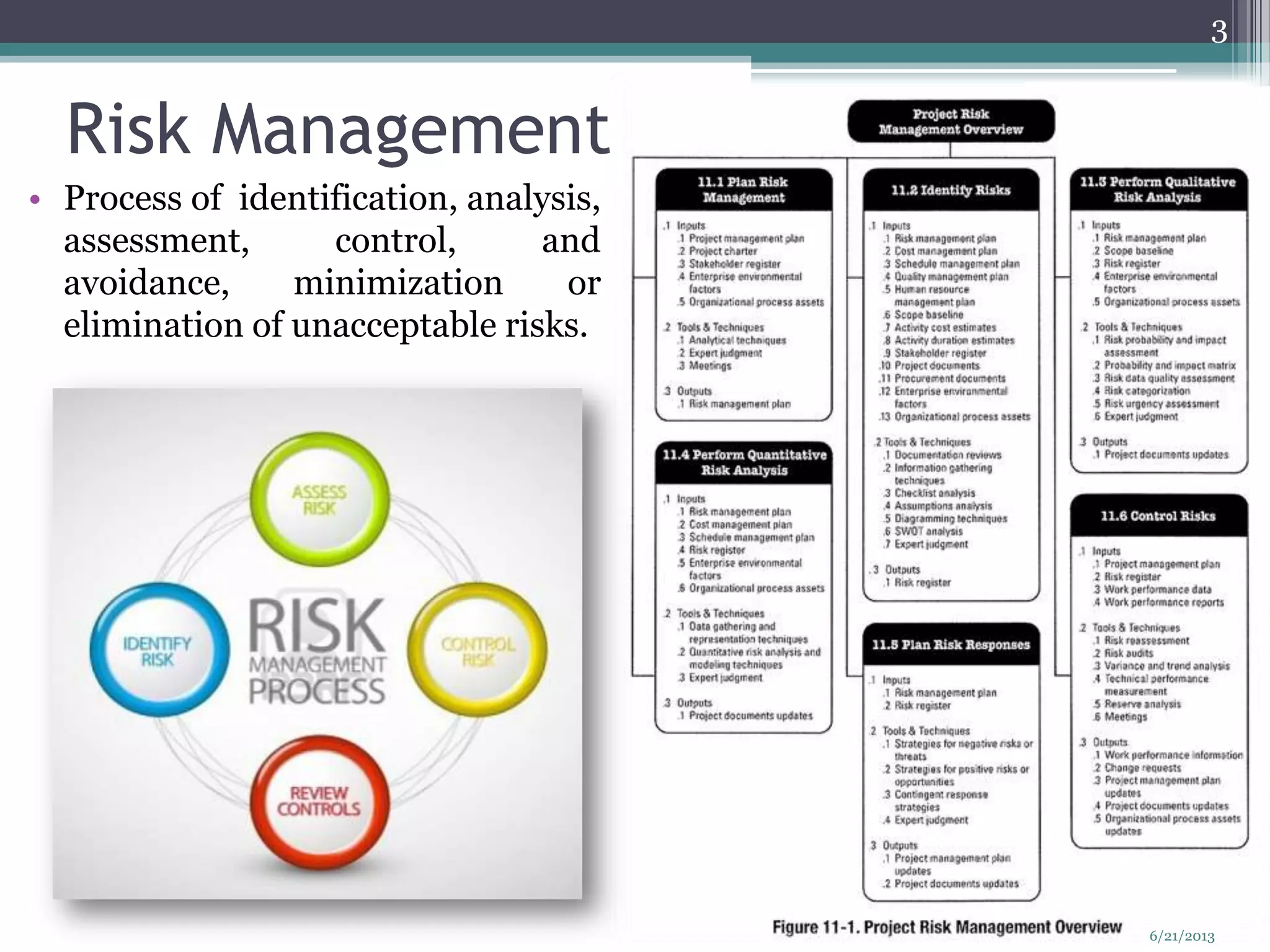
Risk Management
• Process of identification, analysis,
assessment, control, and
avoidance, minimization or
elimination of unacceptable risks.
3
6/21/2013
Safety, Health and
Environment
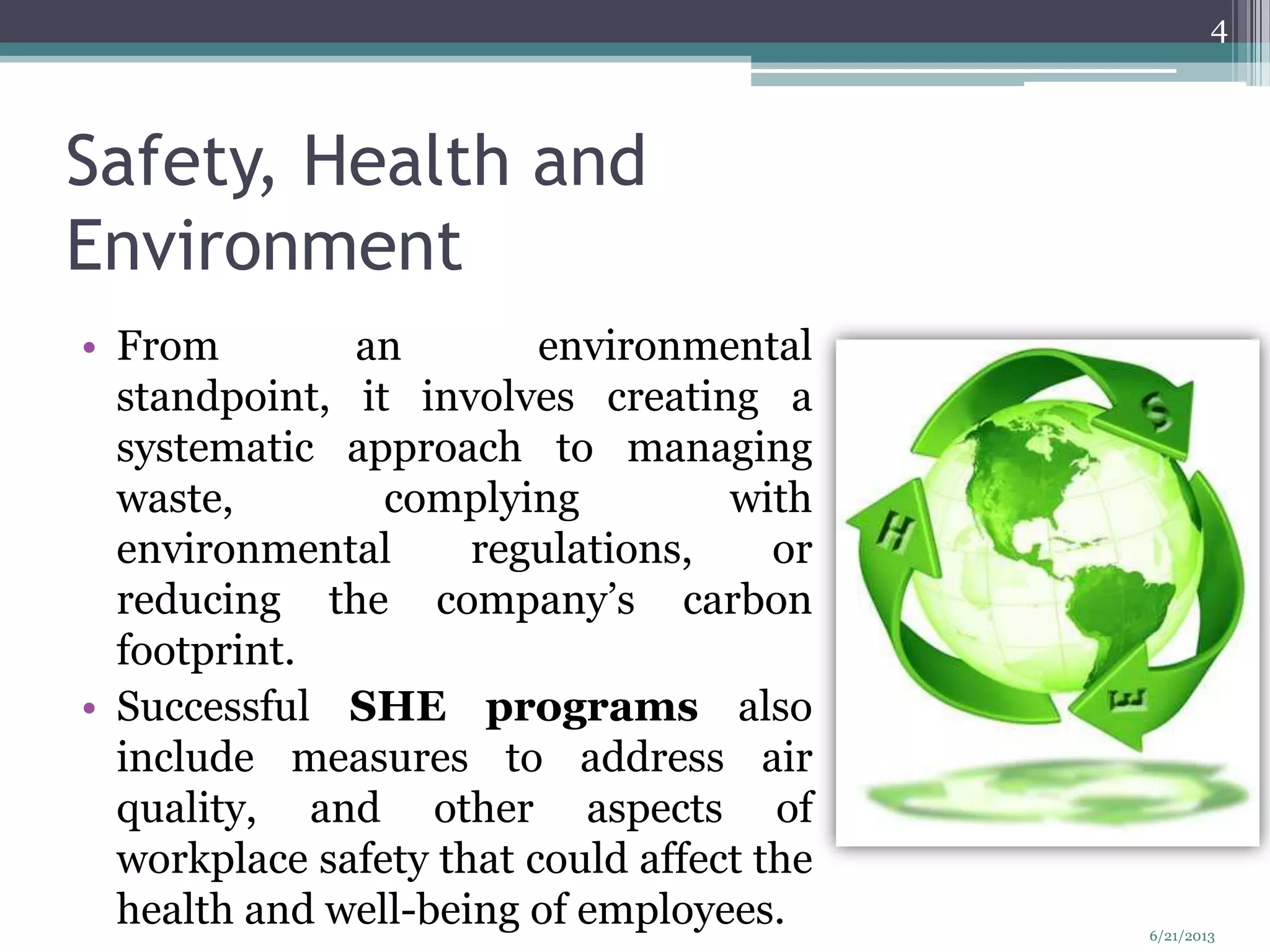
• From an environmental
standpoint, it involves creating a
systematic approach to managing
waste, complying with
environmental regulations, or
reducing the company’s carbon
footprint.
• Successful SHE programs also
include measures to address air
quality, and other aspects of
workplace safety that could affect the
health and well-being of employees.
4
6/21/2013
How RM and SHE can be applied in real
world?
• Develop, promote and implement best practices in loss
prevention, mitigation and operational risk management.
• Manage the organization's overall health and safety program with the
goal of preventing occupational injuries and illness.
• It is also important to use the risk management approach when
designing and planning products, processes or places used for
work, because it is often easier and more effective to eliminate
hazards before they are introduced into a workplace by incorporating
safety features at the design stage.
5
6/21/2013
Health and Safety in Catering
Major Risk Areas and Prevention
Case study
6
6/21/2013
About HSE
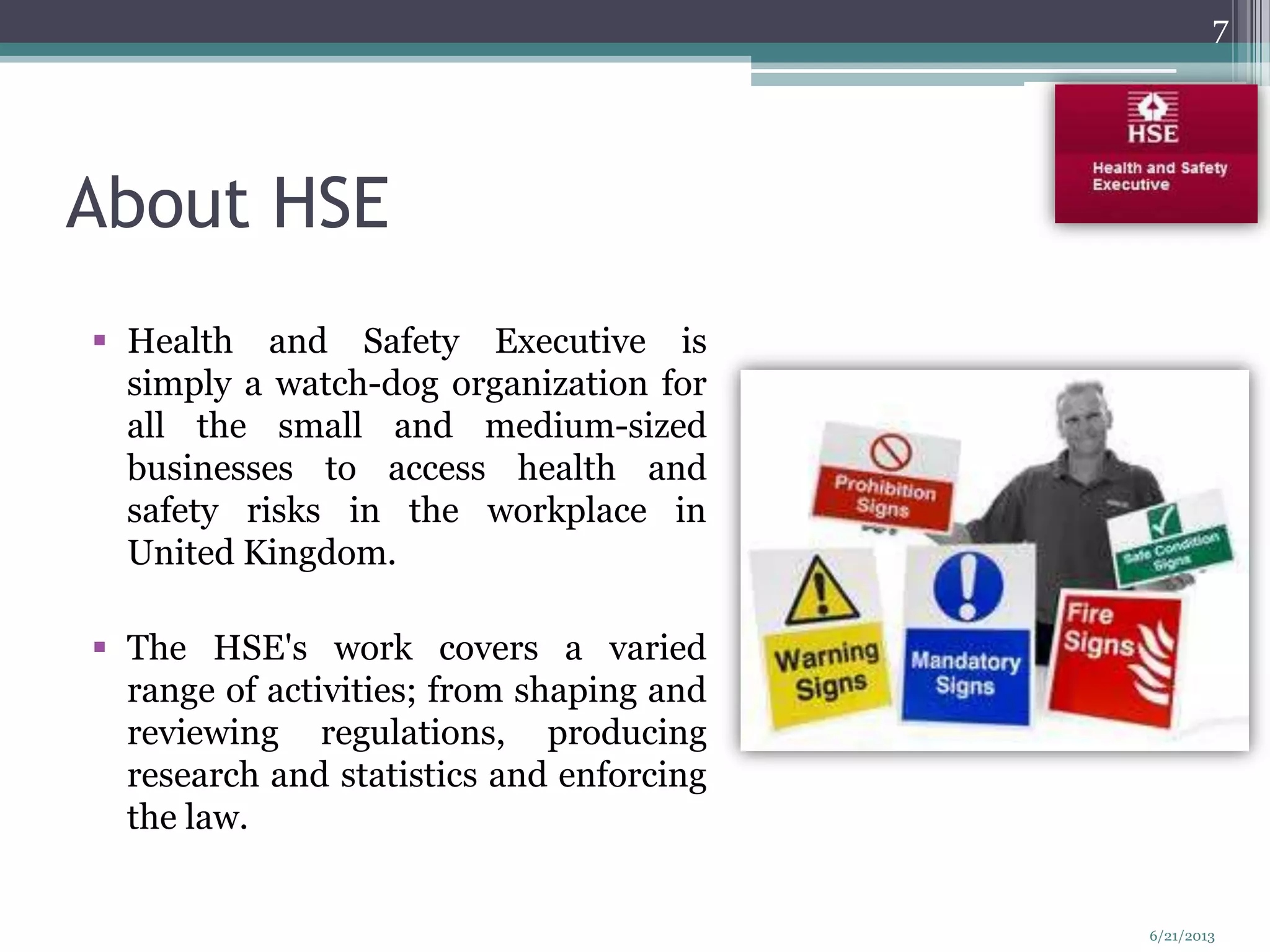
 Health and Safety Executive is
simply a watch-dog organization for
all the small and medium-sized
businesses to access health and
safety risks in the workplace in
United Kingdom.
 The HSE's work covers a varied
range of activities; from shaping and
reviewing regulations, producing
research and statistics and enforcing
the law.
7
6/21/2013
Mission
• The major mission of the HSE is to prevent death,
injuries and ill health in the Great Britain’s workplaces.
• To develop the standards to maintain the quality of the
workplace
• To share responsibility for regulating health, safety and
welfare for those at work and for those affected by work
activity, including the public.
8
6/21/2013
Catering Industry
 HSE provides information for
people working in the catering
and hospitality industry on how
to comply with health and safety
law.
 The industry covers people
working in commercial
kitchens, hotels, restaurants, caf
es, fast food outlets, pubs and
clubs and those working as
contract caterers to other
industries.
9
6/21/2013
Major Problem in Catering
Industry
 Absence or Poor maintenance of
standards are the main cause for
accidents.
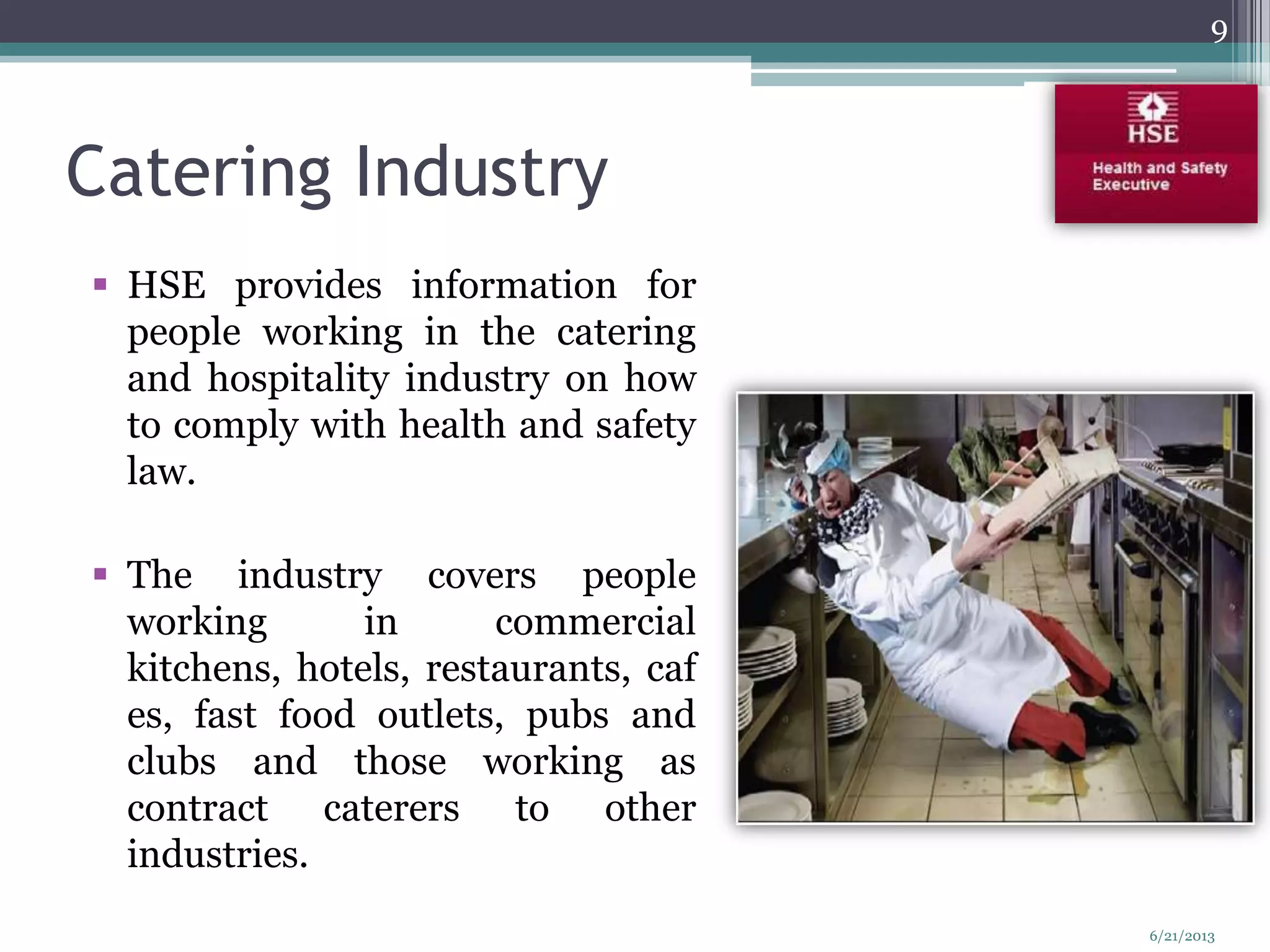
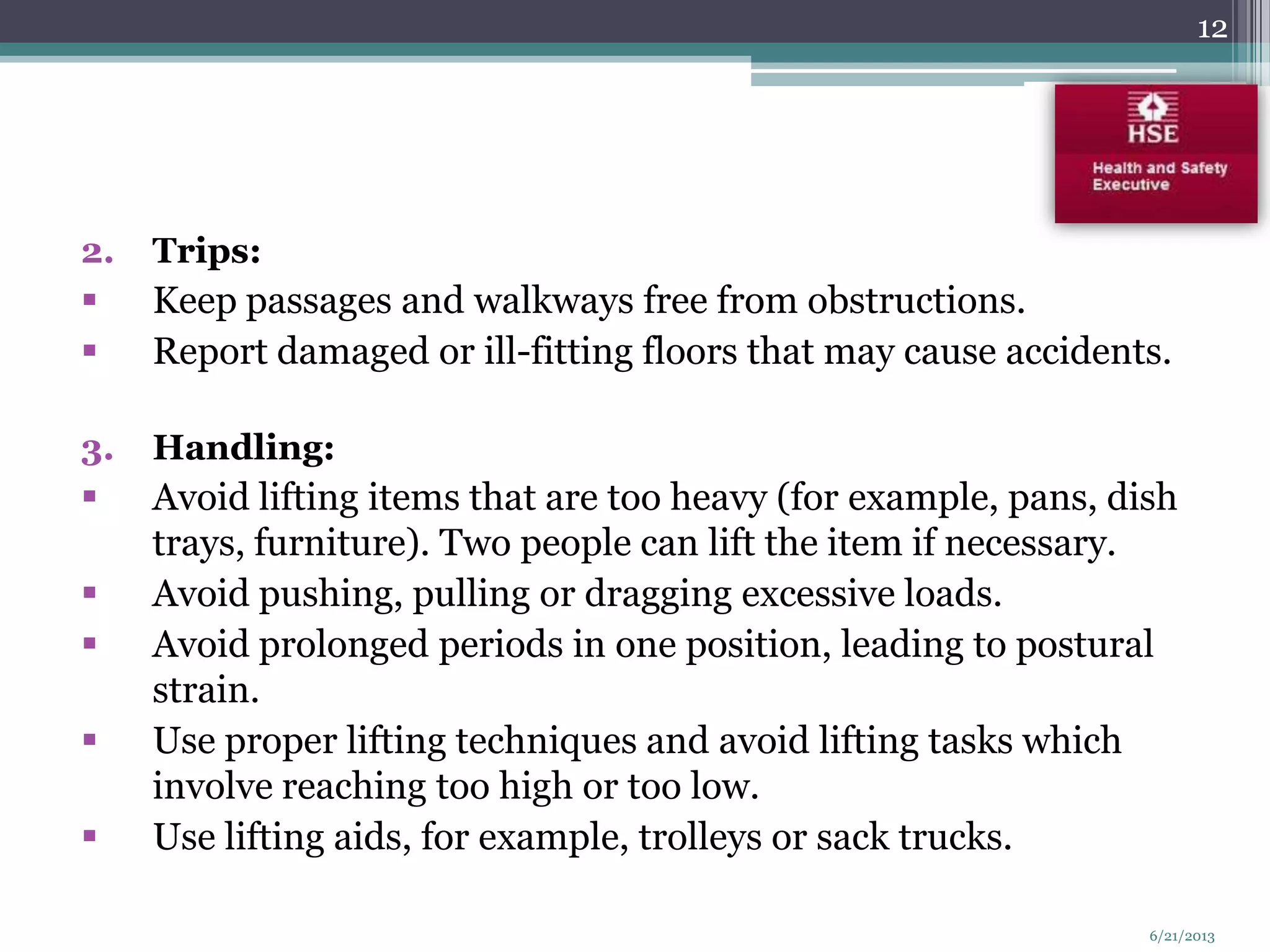
 The main areas for accident are slips,
trips, handling, cuts and exposure to
hot and harmful substances.
 Work related contact dermatitis is a
major health issue for the staffs.
10
6/21/2013
Prevention for the problem areas
1. Slips:
 Prevent contamination and you reduce or even eliminate the
slip risk.
 Avoid spillage and leakage onto the floor.
 Most slip injuries happen on wet floors, so clean up spills
immediately.
 Dry floors after wet cleaning, for example, after mopping.
 Selecting and using the most appropriate footwear for the
work environment can reduce the slip risk.
 The floor in a workplace must be suitable for the type of work
activity taking
 place on it - sensible floor choices mean the risks to those
who ultimately use the floor can be managed more
effectively.
11
6/21/2013
2. Trips:
 Keep passages and walkways free from obstructions.
 Report damaged or ill-fitting floors that may cause accidents.
3. Handling:
 Avoid lifting items that are too heavy (for example, pans, dish
trays, furniture). Two people can lift the item if necessary.
 Avoid pushing, pulling or dragging excessive loads.
 Avoid prolonged periods in one position, leading to postural
strain.
 Use proper lifting techniques and avoid lifting tasks which
involve reaching too high or too low.
 Use lifting aids, for example, trolleys or sack trucks.
12
6/21/2013
4. Cuts
 Cuts from sharp objects, including from handling knives and glass,
account for
 about one third of manual handling accidents.
 Be aware of risks and safe procedures when using knives.
 Be aware of risks and safe procedures when handling glass.
5. Exposure to hot and harmful substances
• Be aware of risks posed by hot surfaces or equipment. Hot oil or fluids
are particularly hazardous, cover all equipment containing hot oil or
fluids when not in use.
• Avoid carrying hot liquids and materials if there is a risk of splashes.
• Follow safe procedures for opening steam oven doors.
• Follow safe procedures for cleaning and draining fat fryers.
• Follow safe systems of work in using and storing cleaning substances.
• Ensure personal protective equipment (PPE) is worn where required.
13
6/21/2013
6. Work – related contact dermatitis
 Avoid contact with cleaning products, food and water where
possible, eg use a dishwasher rather than washing up by hand, use
utensils rather than hands to handle food.
 Protect your skin. Where you can, wear gloves when working with
substances that can cause dermatitis and moisturize your hands
to replenish the skin’s natural oils.
 Check your hands regularly for the early stages of dermatitis, ie
itchy, dry or red skin. These symptoms should be reported to a
supervisor, as treatment is much more effective if dermatitis is
caught early
14
6/21/2013
Maintenance to be considered
• Cleaning
• Routine checks to detect wear and tear &
damage.
• Planned maintenance
• Breakdown maintenance
• Inspections and tests
15
6/21/2013
Precaution is better than cure!
6/21/2013
16
- Edward Coke

PMBOK Risk Management and Safety Health and Environment

  • 1.
    How PMBOK’s RiskManagement can be applied in Safety Health and Environment? Ujjwal Kumar Joshi 6/21/2013 1
  • 2.
    Agenda • Risk Management •Safety, Health and Environment (SHE) • Practical Implementation • Case Study ▫ HSE in Catering 2 6/21/2013
  • 3.
    Risk Management • Processof identification, analysis, assessment, control, and avoidance, minimization or elimination of unacceptable risks. 3 6/21/2013
  • 4.
    Safety, Health and Environment •From an environmental standpoint, it involves creating a systematic approach to managing waste, complying with environmental regulations, or reducing the company’s carbon footprint. • Successful SHE programs also include measures to address air quality, and other aspects of workplace safety that could affect the health and well-being of employees. 4 6/21/2013
  • 5.
    How RM andSHE can be applied in real world? • Develop, promote and implement best practices in loss prevention, mitigation and operational risk management. • Manage the organization's overall health and safety program with the goal of preventing occupational injuries and illness. • It is also important to use the risk management approach when designing and planning products, processes or places used for work, because it is often easier and more effective to eliminate hazards before they are introduced into a workplace by incorporating safety features at the design stage. 5 6/21/2013
  • 6.
    Health and Safetyin Catering Major Risk Areas and Prevention Case study 6 6/21/2013
  • 7.
    About HSE  Healthand Safety Executive is simply a watch-dog organization for all the small and medium-sized businesses to access health and safety risks in the workplace in United Kingdom.  The HSE's work covers a varied range of activities; from shaping and reviewing regulations, producing research and statistics and enforcing the law. 7 6/21/2013
  • 8.
    Mission • The majormission of the HSE is to prevent death, injuries and ill health in the Great Britain’s workplaces. • To develop the standards to maintain the quality of the workplace • To share responsibility for regulating health, safety and welfare for those at work and for those affected by work activity, including the public. 8 6/21/2013
  • 9.
    Catering Industry  HSEprovides information for people working in the catering and hospitality industry on how to comply with health and safety law.  The industry covers people working in commercial kitchens, hotels, restaurants, caf es, fast food outlets, pubs and clubs and those working as contract caterers to other industries. 9 6/21/2013
  • 10.
    Major Problem inCatering Industry  Absence or Poor maintenance of standards are the main cause for accidents.  The main areas for accident are slips, trips, handling, cuts and exposure to hot and harmful substances.  Work related contact dermatitis is a major health issue for the staffs. 10 6/21/2013
  • 11.
    Prevention for theproblem areas 1. Slips:  Prevent contamination and you reduce or even eliminate the slip risk.  Avoid spillage and leakage onto the floor.  Most slip injuries happen on wet floors, so clean up spills immediately.  Dry floors after wet cleaning, for example, after mopping.  Selecting and using the most appropriate footwear for the work environment can reduce the slip risk.  The floor in a workplace must be suitable for the type of work activity taking  place on it - sensible floor choices mean the risks to those who ultimately use the floor can be managed more effectively. 11 6/21/2013
  • 12.
    2. Trips:  Keeppassages and walkways free from obstructions.  Report damaged or ill-fitting floors that may cause accidents. 3. Handling:  Avoid lifting items that are too heavy (for example, pans, dish trays, furniture). Two people can lift the item if necessary.  Avoid pushing, pulling or dragging excessive loads.  Avoid prolonged periods in one position, leading to postural strain.  Use proper lifting techniques and avoid lifting tasks which involve reaching too high or too low.  Use lifting aids, for example, trolleys or sack trucks. 12 6/21/2013
  • 13.
    4. Cuts  Cutsfrom sharp objects, including from handling knives and glass, account for  about one third of manual handling accidents.  Be aware of risks and safe procedures when using knives.  Be aware of risks and safe procedures when handling glass. 5. Exposure to hot and harmful substances • Be aware of risks posed by hot surfaces or equipment. Hot oil or fluids are particularly hazardous, cover all equipment containing hot oil or fluids when not in use. • Avoid carrying hot liquids and materials if there is a risk of splashes. • Follow safe procedures for opening steam oven doors. • Follow safe procedures for cleaning and draining fat fryers. • Follow safe systems of work in using and storing cleaning substances. • Ensure personal protective equipment (PPE) is worn where required. 13 6/21/2013
  • 14.
    6. Work –related contact dermatitis  Avoid contact with cleaning products, food and water where possible, eg use a dishwasher rather than washing up by hand, use utensils rather than hands to handle food.  Protect your skin. Where you can, wear gloves when working with substances that can cause dermatitis and moisturize your hands to replenish the skin’s natural oils.  Check your hands regularly for the early stages of dermatitis, ie itchy, dry or red skin. These symptoms should be reported to a supervisor, as treatment is much more effective if dermatitis is caught early 14 6/21/2013
  • 15.
    Maintenance to beconsidered • Cleaning • Routine checks to detect wear and tear & damage. • Planned maintenance • Breakdown maintenance • Inspections and tests 15 6/21/2013
  • 16.
    Precaution is betterthan cure! 6/21/2013 16 - Edward Coke