Introduction of SAP BI
In
COCA-COLA Co. LTD.
Agenda
1. Overview of the Company
 Organizational Structure
 Overview of the problem
2. Implementation of SAP BI
 Components of SAP BI
 Functions of components
 System Architecture
3. Benefits
 Example of Coca-Cola Hellinic
12/12/2013

Implementation of SAP BI

2
Overview of the company

12/12/2013

Implementation of SAP BI

3
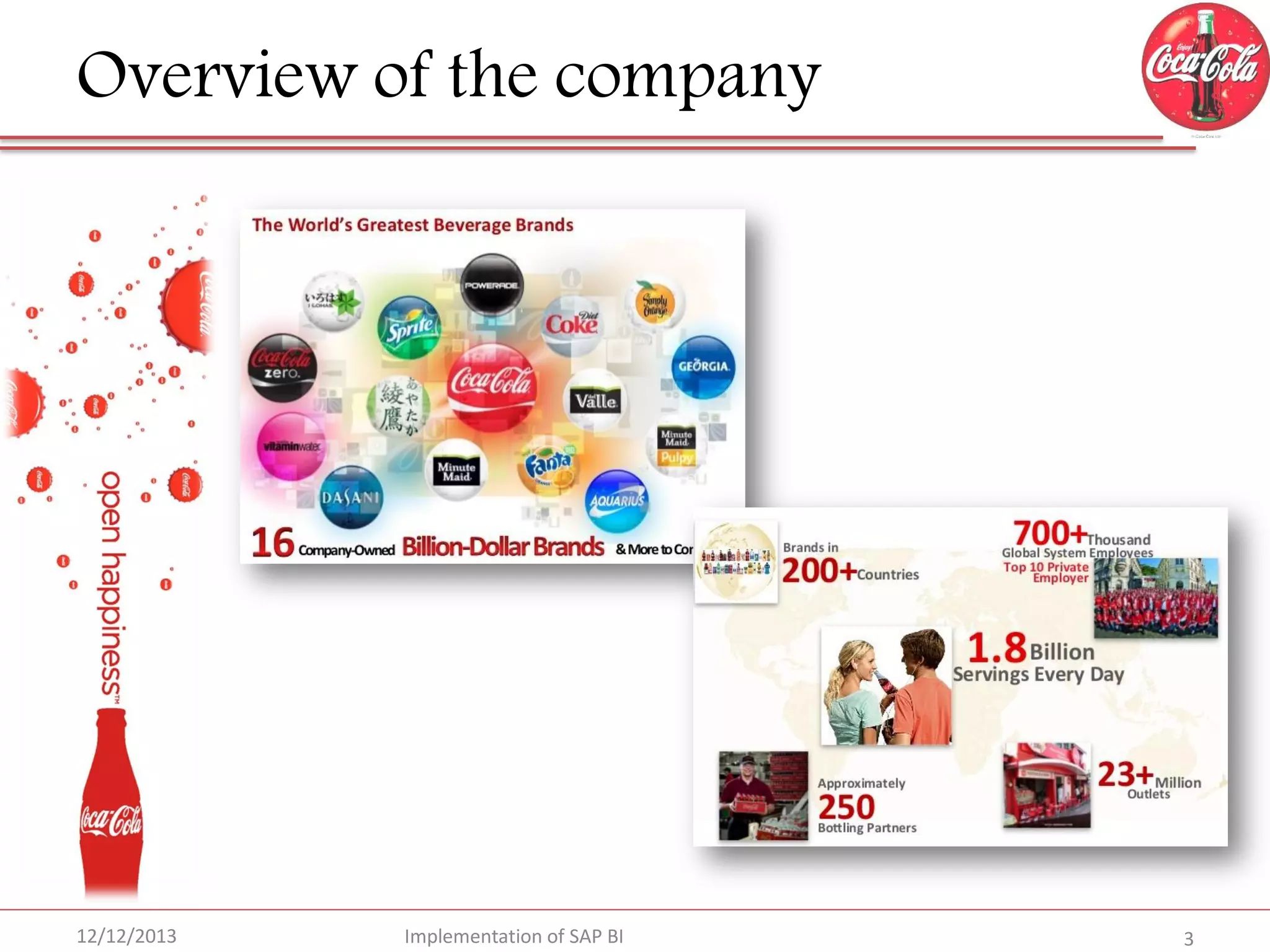
Overview of the company
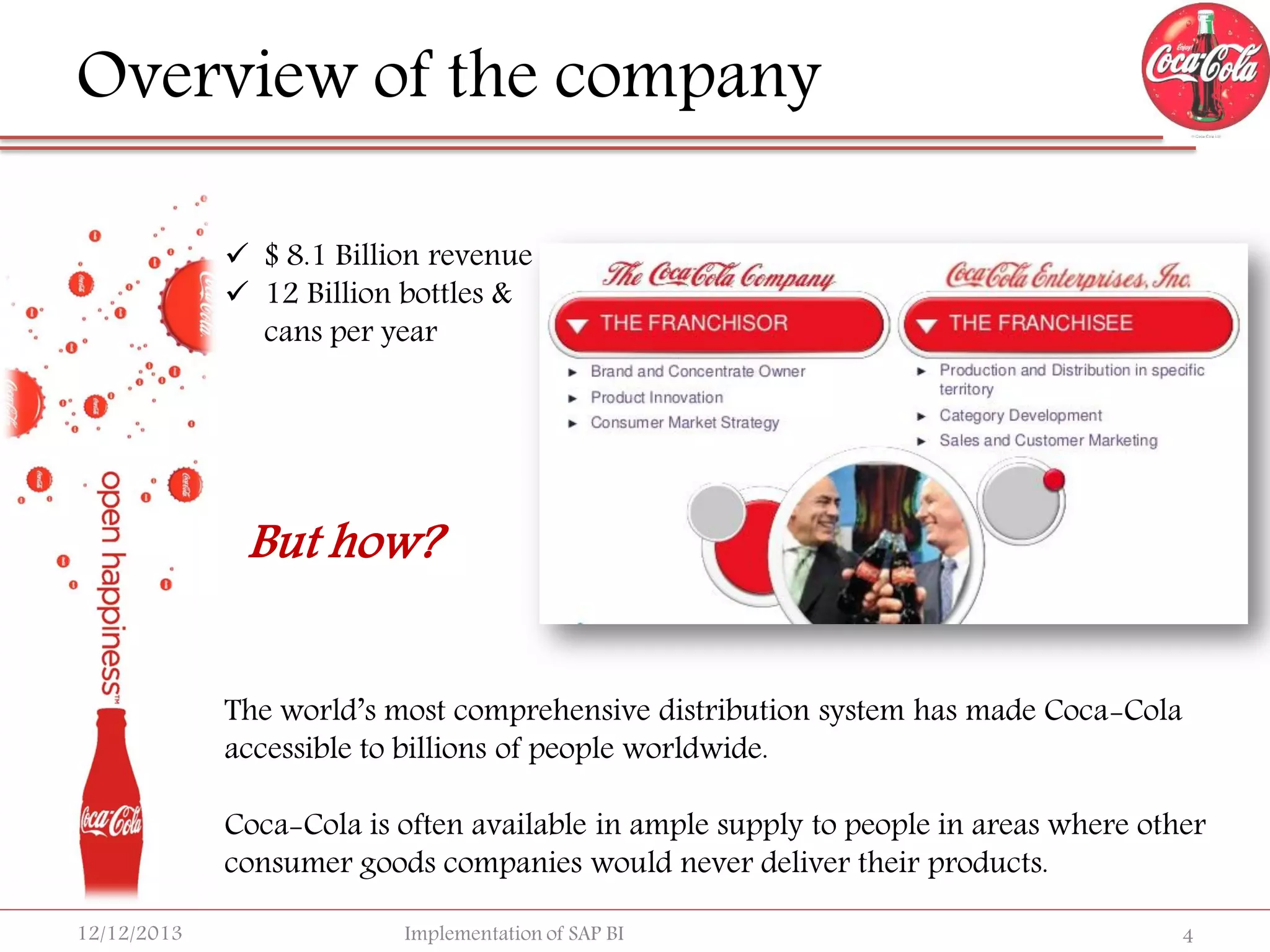
 $ 8.1 Billion revenue
 12 Billion bottles &
cans per year

But how?
The world’s most comprehensive distribution system has made Coca-Cola
accessible to billions of people worldwide.
Coca-Cola is often available in ample supply to people in areas where other
consumer goods companies would never deliver their products.
12/12/2013

Implementation of SAP BI

4
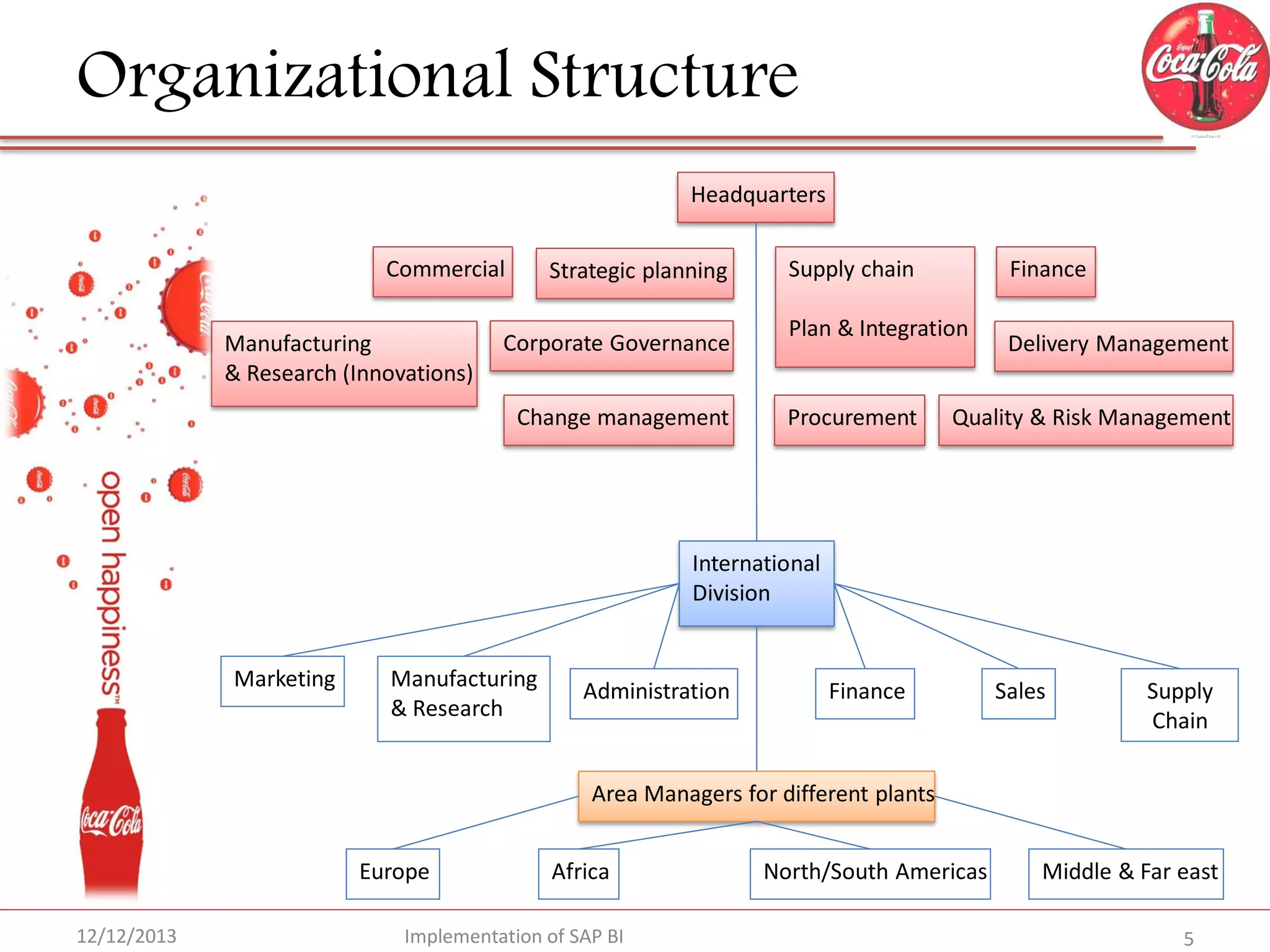
Organizational Structure
Headquarters
Commercial

Manufacturing
& Research (Innovations)

Strategic planning

Corporate Governance
Change management

Supply chain

Finance

Plan & Integration

Procurement

Delivery Management

Quality & Risk Management

International
Division
Marketing

Manufacturing
& Research

Administration

Finance

Sales

Supply
Chain

Area Managers for different plants
Europe
12/12/2013

Africa

Implementation of SAP BI

North/South Americas

Middle & Far east
5
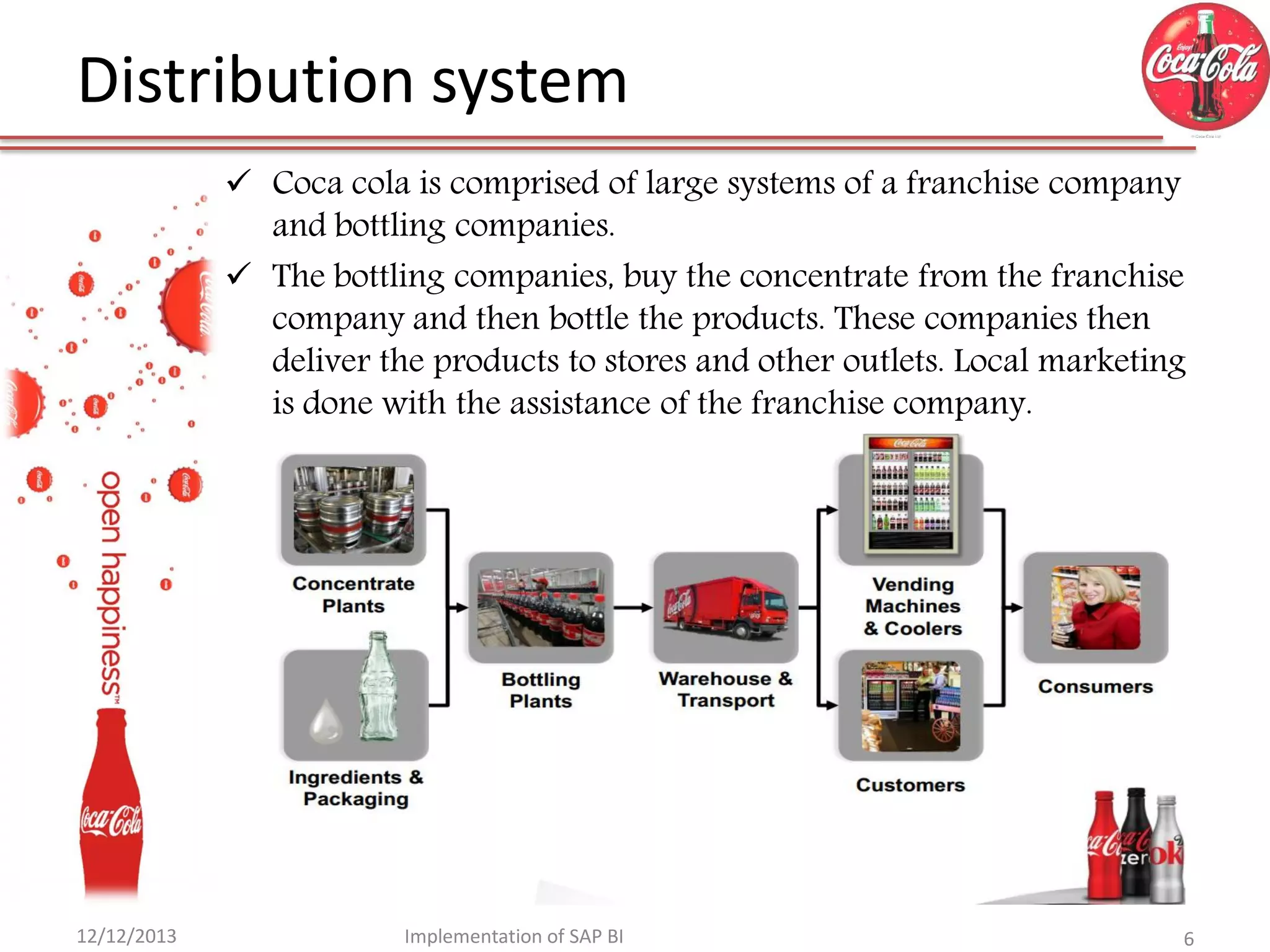
Distribution system
 Coca cola is comprised of large systems of a franchise company
and bottling companies.
 The bottling companies, buy the concentrate from the franchise
company and then bottle the products. These companies then
deliver the products to stores and other outlets. Local marketing
is done with the assistance of the franchise company.

12/12/2013

Implementation of SAP BI

6
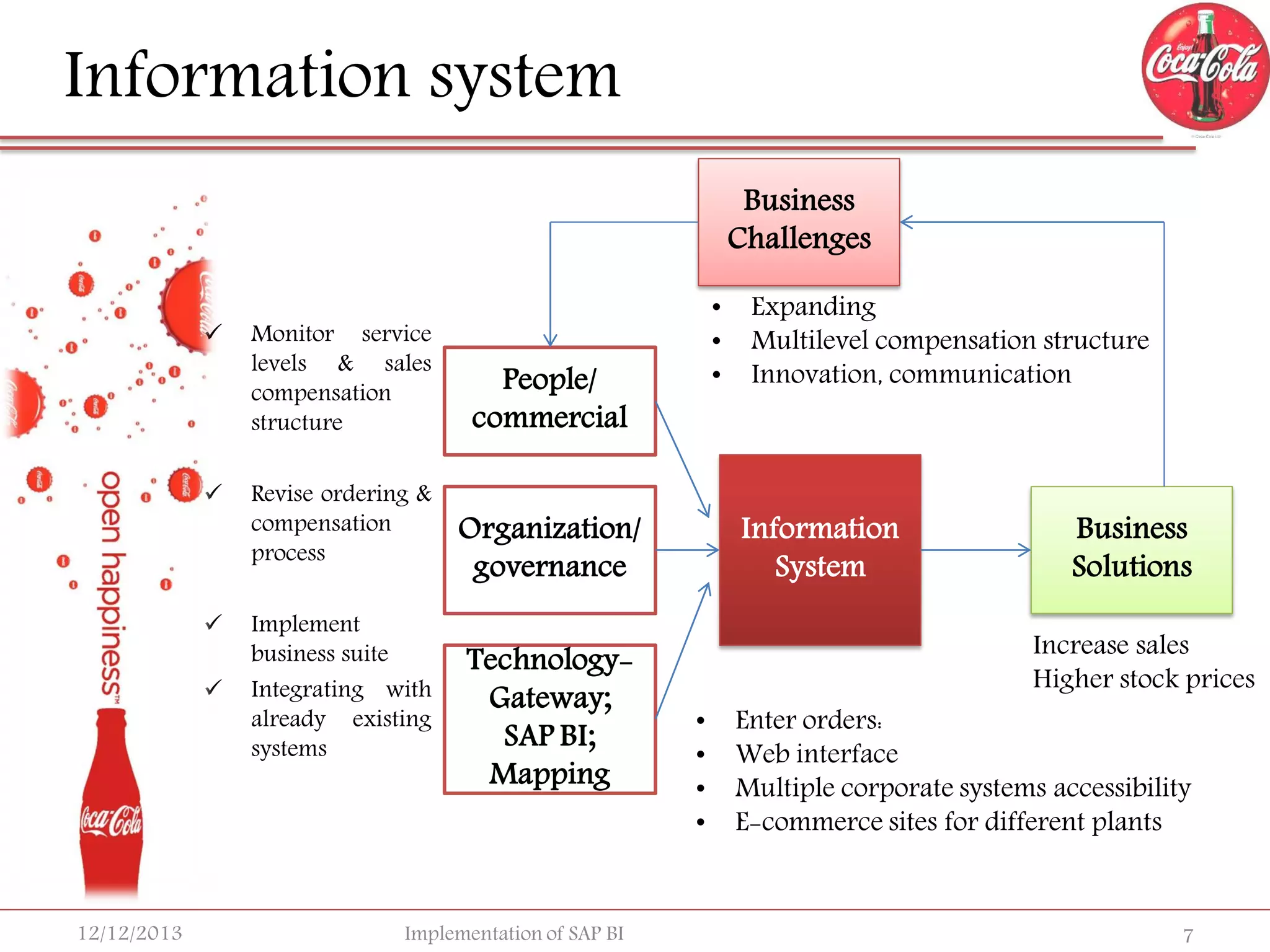
Information system
Business
Challenges


Monitor service
levels & sales
compensation
structure



Revise ordering &
compensation
process



Implement
business suite
Integrating with
already existing
systems



12/12/2013

•
•
•

People/
commercial
Organization/
governance
TechnologyGateway;
SAP BI;
Mapping

Implementation of SAP BI

Expanding
Multilevel compensation structure
Innovation, communication

Information
System

Business
Solutions
Increase sales
Higher stock prices

•
•
•
•

Enter orders:
Web interface
Multiple corporate systems accessibility
E-commerce sites for different plants

7
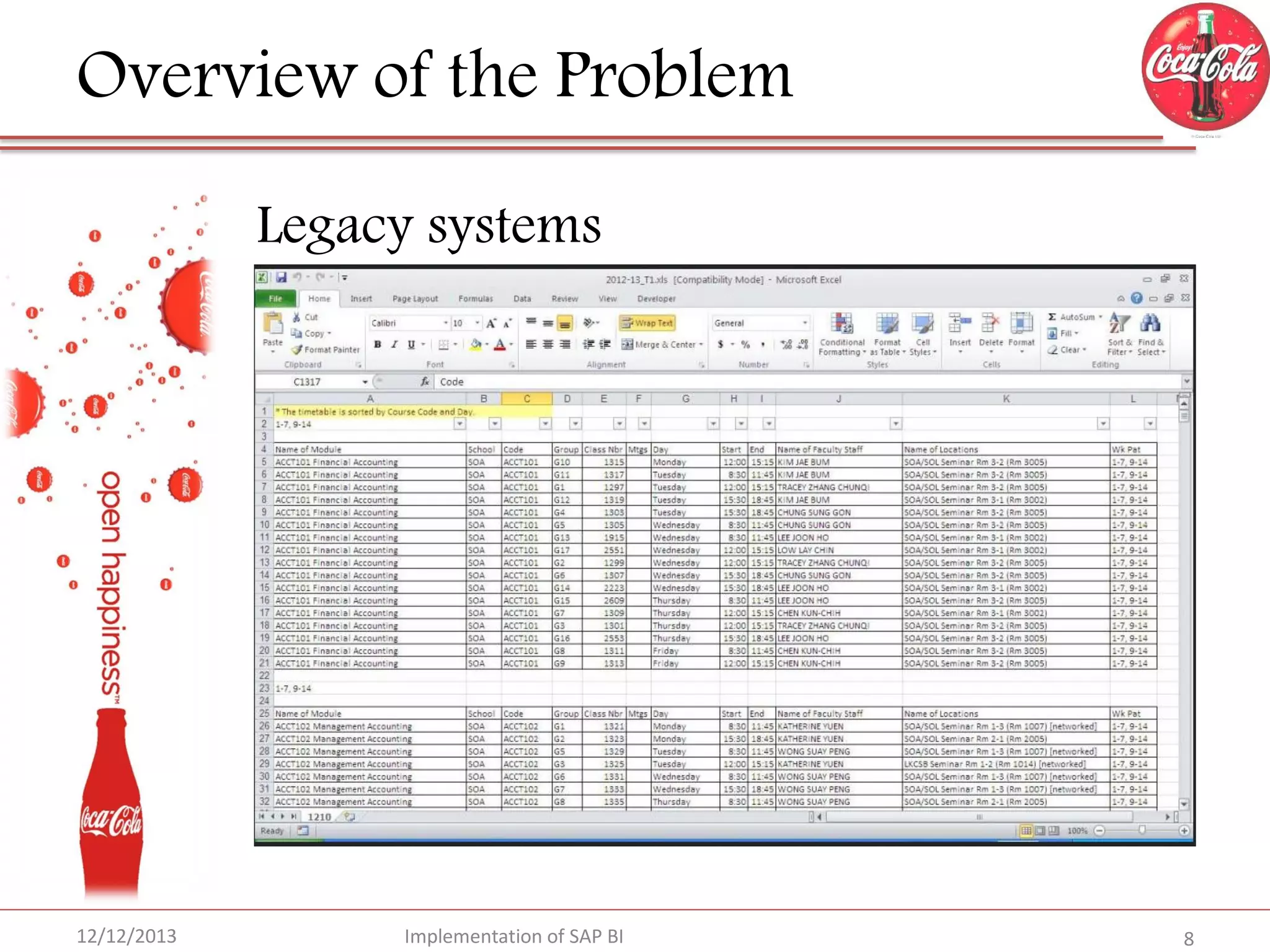
Overview of the Problem
Legacy systems

12/12/2013

Implementation of SAP BI

8
Overview of the Problem
Legacy systems
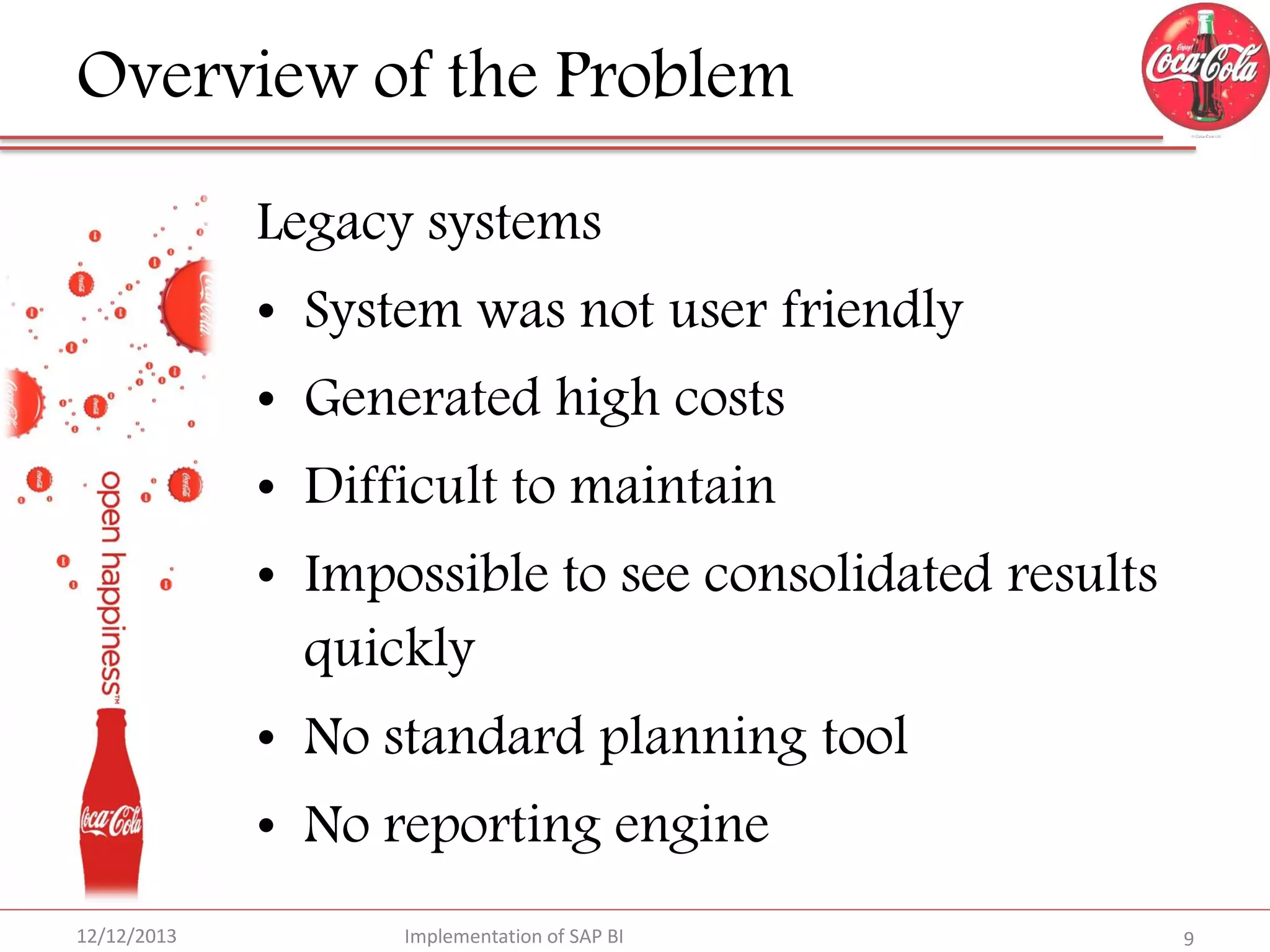
• System was not user friendly
• Generated high costs
• Difficult to maintain
• Impossible to see consolidated results
quickly

• No standard planning tool
• No reporting engine
12/12/2013

Implementation of SAP BI

9
Overview of the Problem
Challenges
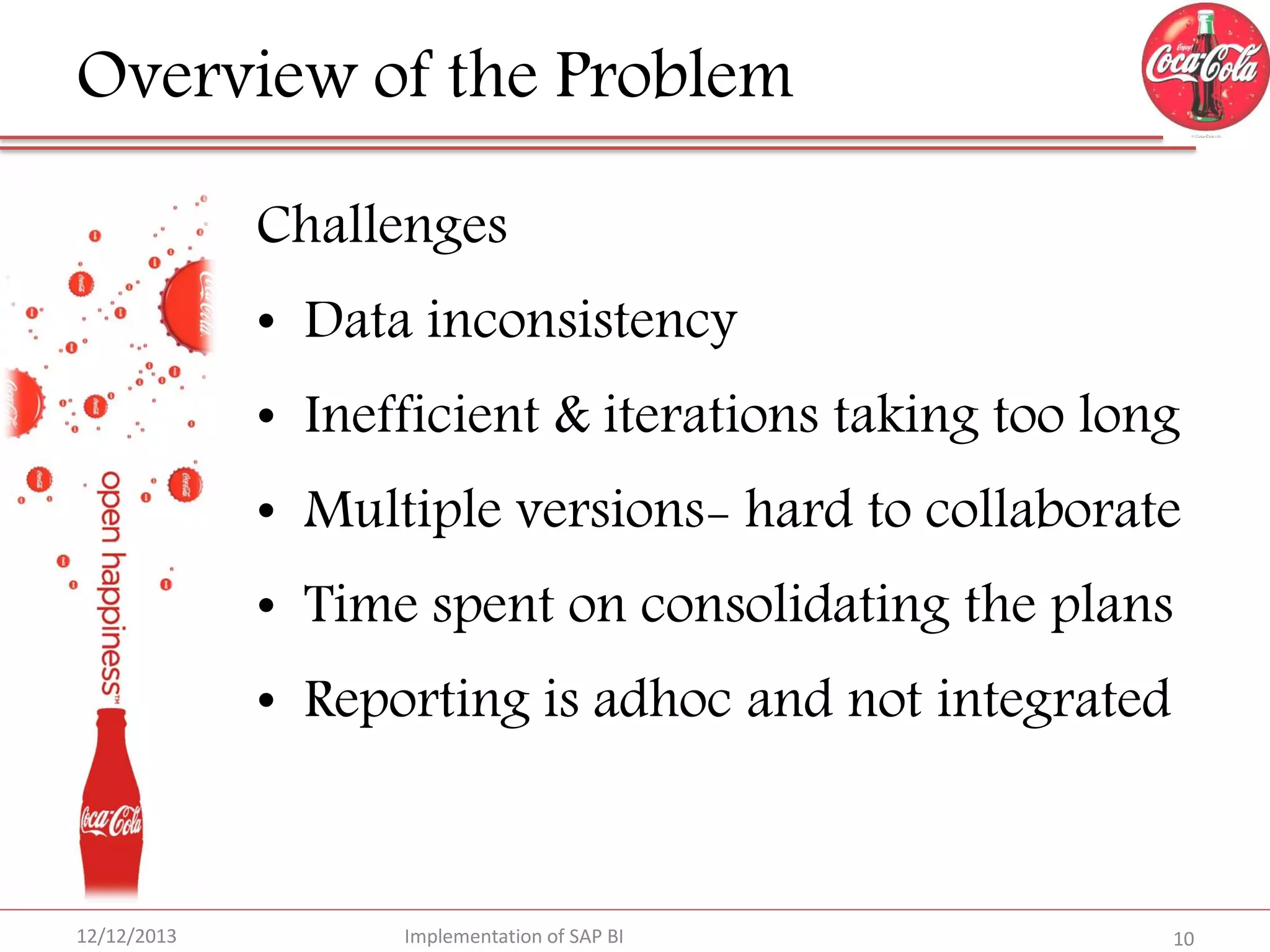
• Data inconsistency

• Inefficient & iterations taking too long
• Multiple versions- hard to collaborate
• Time spent on consolidating the plans
• Reporting is adhoc and not integrated

12/12/2013

Implementation of SAP BI

10
Components of SAP BI
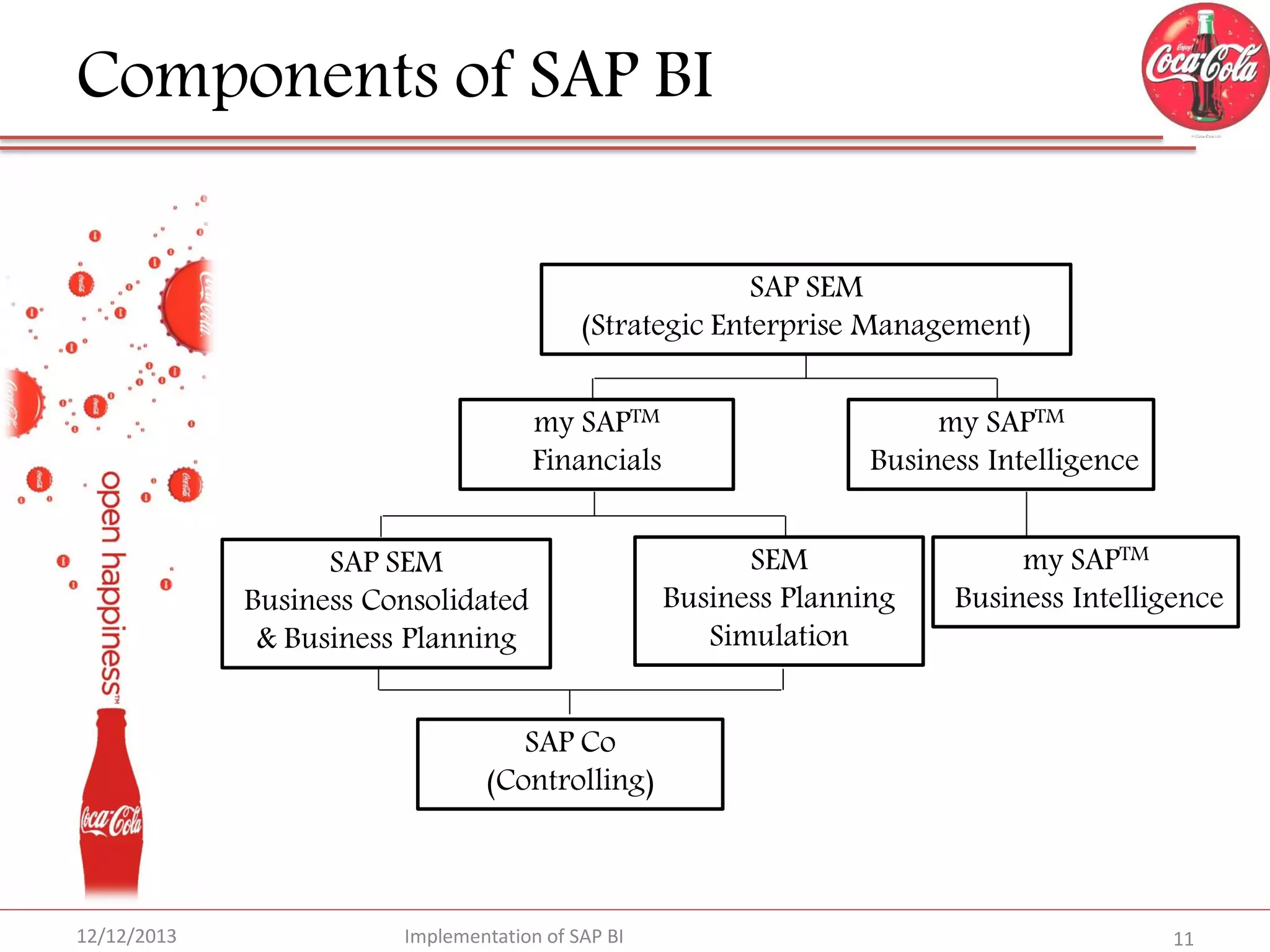
SAP SEM
(Strategic Enterprise Management)
my SAPTM
Financials
SAP SEM
Business Consolidated
& Business Planning

my SAPTM
Business Intelligence
SEM
Business Planning
Simulation

my SAPTM
Business Intelligence

SAP Co
(Controlling)

12/12/2013

Implementation of SAP BI

11
Functions of each SAP BI Components
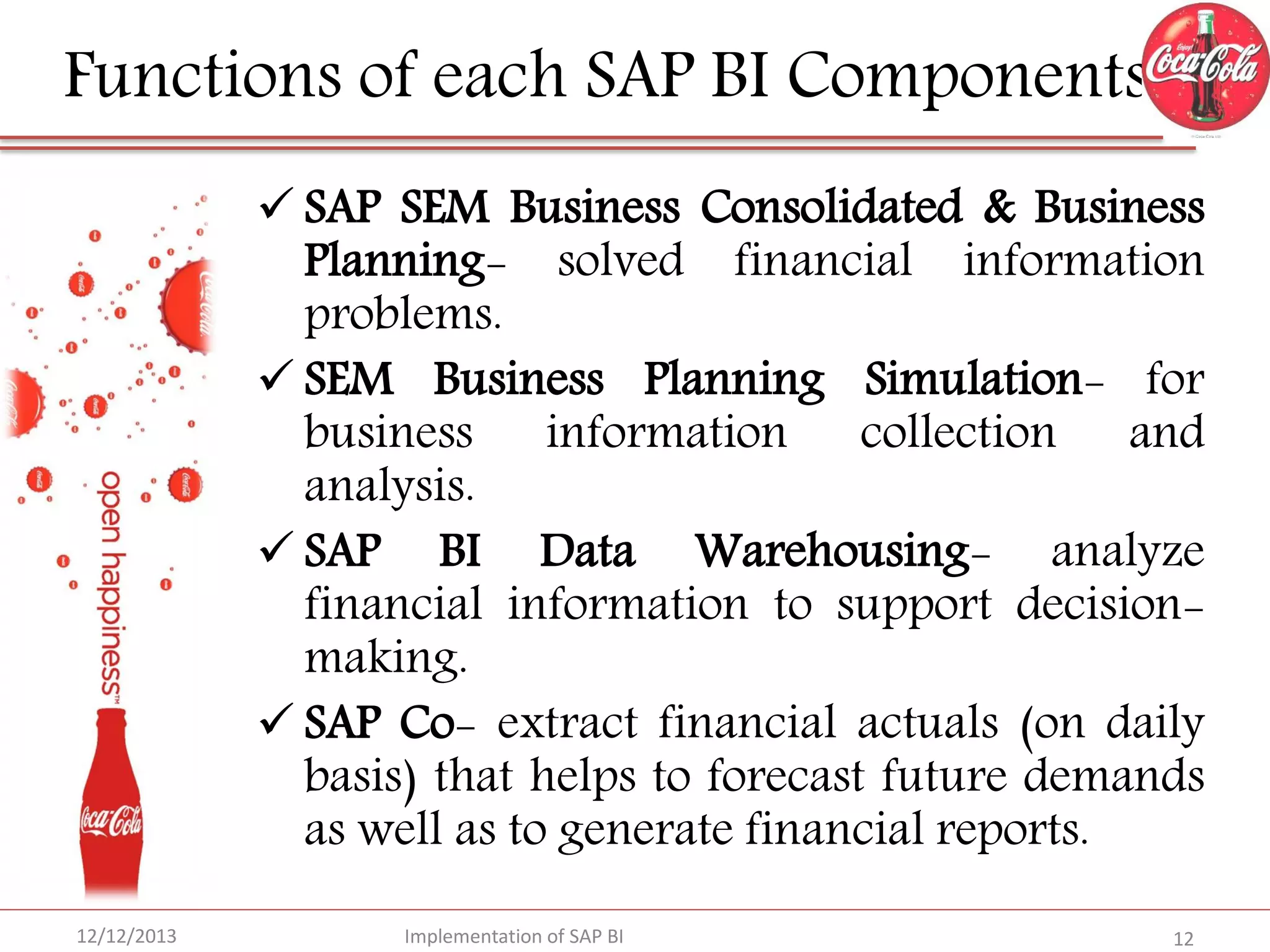
 SAP SEM Business Consolidated & Business
Planning- solved financial information
problems.
 SEM Business Planning Simulation- for
business information collection and
analysis.
 SAP BI Data Warehousing- analyze
financial information to support decisionmaking.
 SAP Co- extract financial actuals (on daily
basis) that helps to forecast future demands
as well as to generate financial reports.
12/12/2013

Implementation of SAP BI

12
Design Principles
• Integrated core ERP/Data warehousing
platforms and leveraging existing master
data and hierarchies.
• Driver-based approach with the ability to
allocate, spread and extrapolate.
• Perform and save multiple iterations.
• Ability to manage and consolidate business
unit plans quickly and efficiently.
• Consolidate reports to analyze the plan data
and perform plan/actual comparison.
12/12/2013

Implementation of SAP BI

13
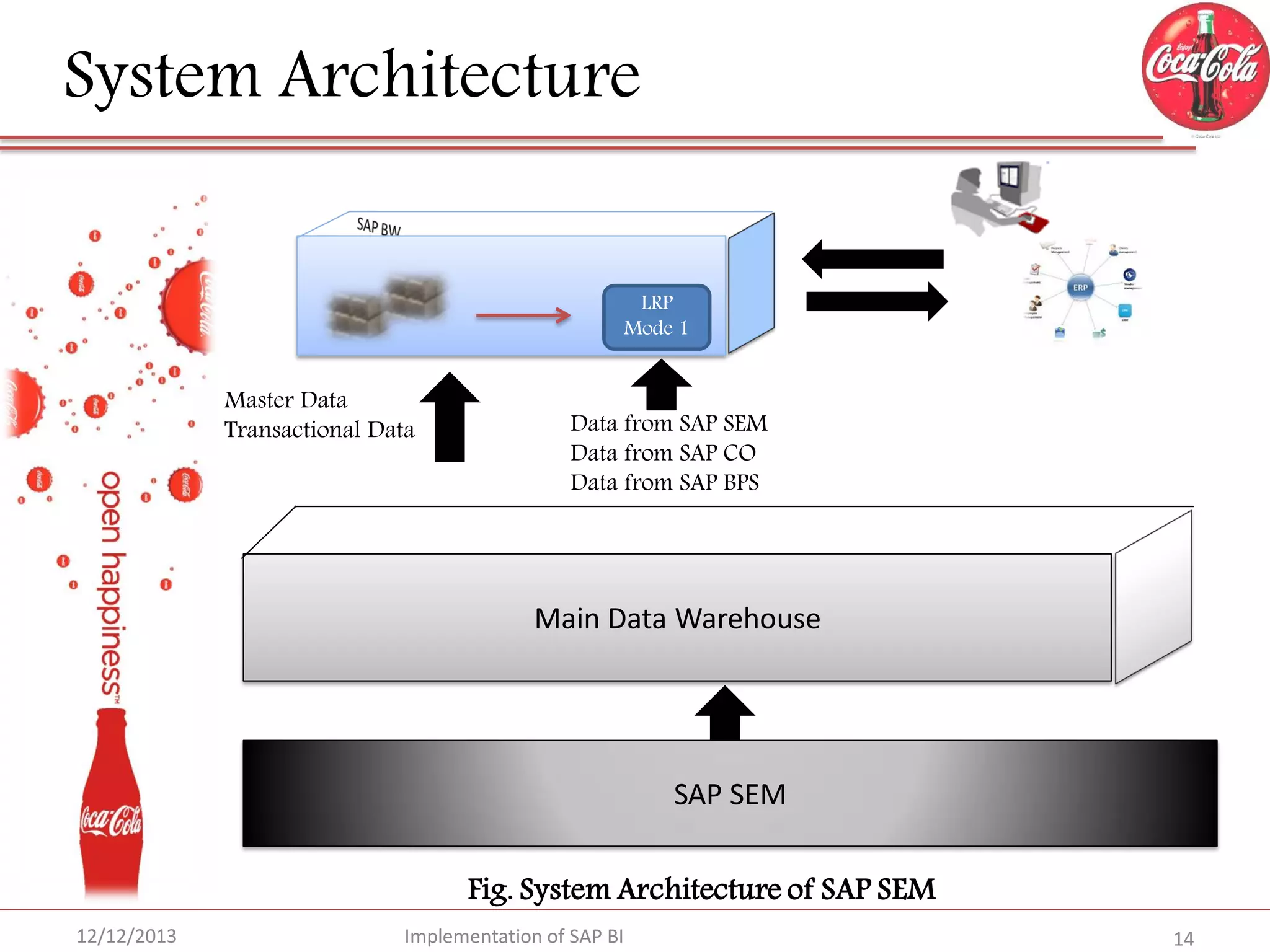
System Architecture
LRP
Mode 1

Master Data
Transactional Data

Data from SAP SEM
Data from SAP CO
Data from SAP BPS

Main Data Warehouse

SAP SEM
Fig. System Architecture of SAP SEM
12/12/2013

Implementation of SAP BI

14
System Architecture
•

•

12/12/2013

SAP SEM : SAP Strategic Enterprise Management (SAP SEM) delivers end-to-end
ERP software capabilities to support the entire performance management life
cycle, including:
 Consolidated financial reporting –The application can aggregate financial
data from SAP and non-SAP systems into a single analytical reporting
environment.
 Planning, budgeting, and forecasting – SAP SEM helps to model various
planning options such as cost center planning and sales planning.
 Corporate performance management and scorecards – To develop KPIs that
support a number of popular scorecard methodologies, including balanced
scorecard, economic value-added, and activity-based costing methods.
 Risk reporting - SAP SEM helps you identify, quantify, and analyze business
risks within individual business units and manage risk-reducing activities.

Data warehousing :
 A central repository of data created by integrating data from one or more
disparate sources.
 store current as well as historical data and are used for creating trending
reports for senior management reporting such as annual and quarterly
comparisons.
Implementation of SAP BI

15
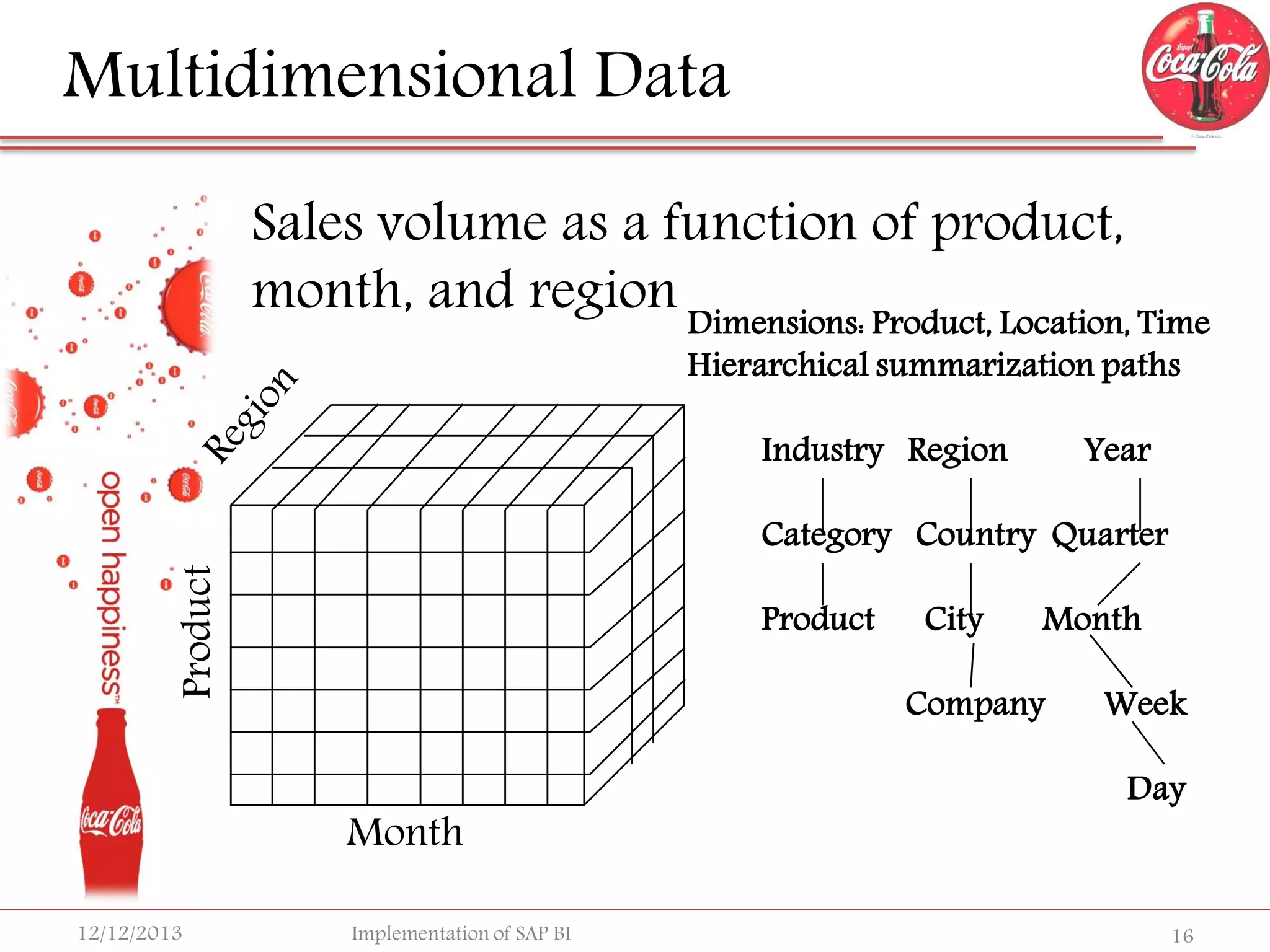
Multidimensional Data
Sales volume as a function of product,
month, and region Dimensions: Product, Location, Time
Hierarchical summarization paths
Industry Region

Year

Product

Category Country Quarter
Product

Month

Company

Month
12/12/2013

City

Implementation of SAP BI

Week
Day

16
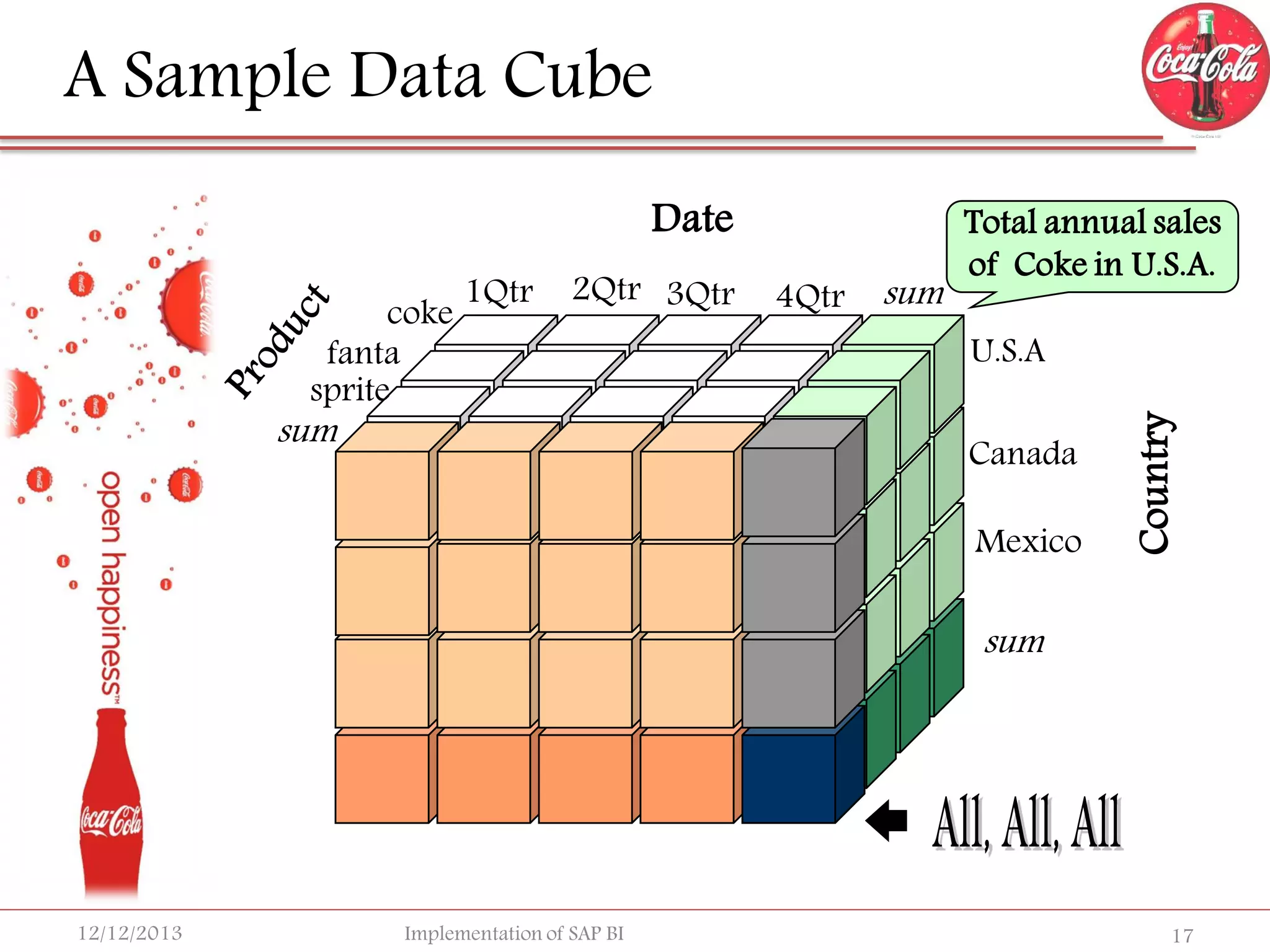
A Sample Data Cube
coke
fanta
sprite

1Qtr

2Qtr 3Qtr

sum

4Qtr

sum

Total annual sales
of Coke in U.S.A.
U.S.A
Canada

Mexico

Country

Date

sum

12/12/2013

Implementation of SAP BI

17
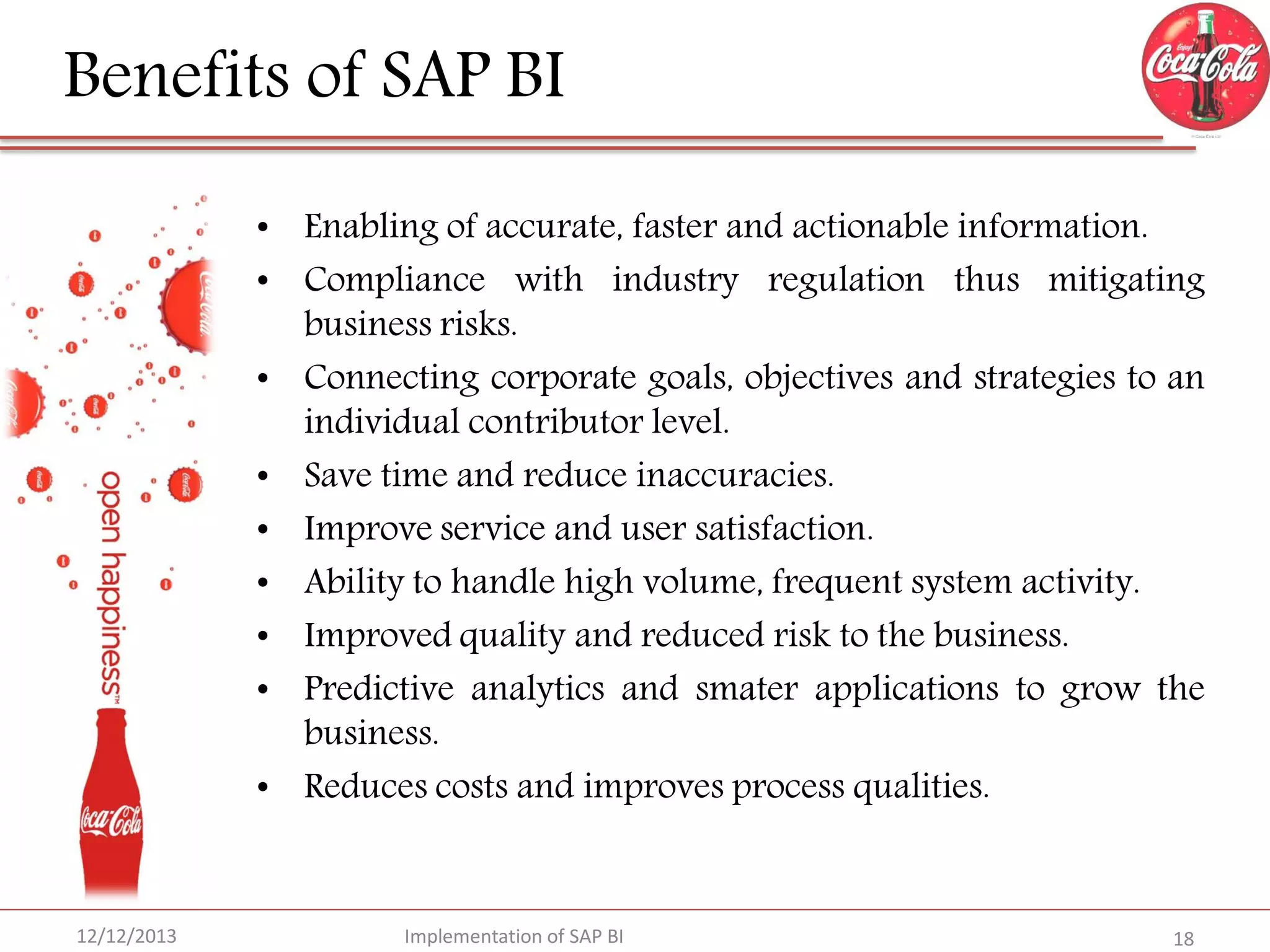
Benefits of SAP BI
• Enabling of accurate, faster and actionable information.
• Compliance with industry regulation thus mitigating
business risks.
• Connecting corporate goals, objectives and strategies to an
individual contributor level.
• Save time and reduce inaccuracies.
• Improve service and user satisfaction.
• Ability to handle high volume, frequent system activity.
• Improved quality and reduced risk to the business.
• Predictive analytics and smater applications to grow the
business.
• Reduces costs and improves process qualities.

12/12/2013

Implementation of SAP BI

18
Practical Example of
Coca-Cola Hellinic

after implementing
SAP
12/12/2013

Implementation of SAP BI

19
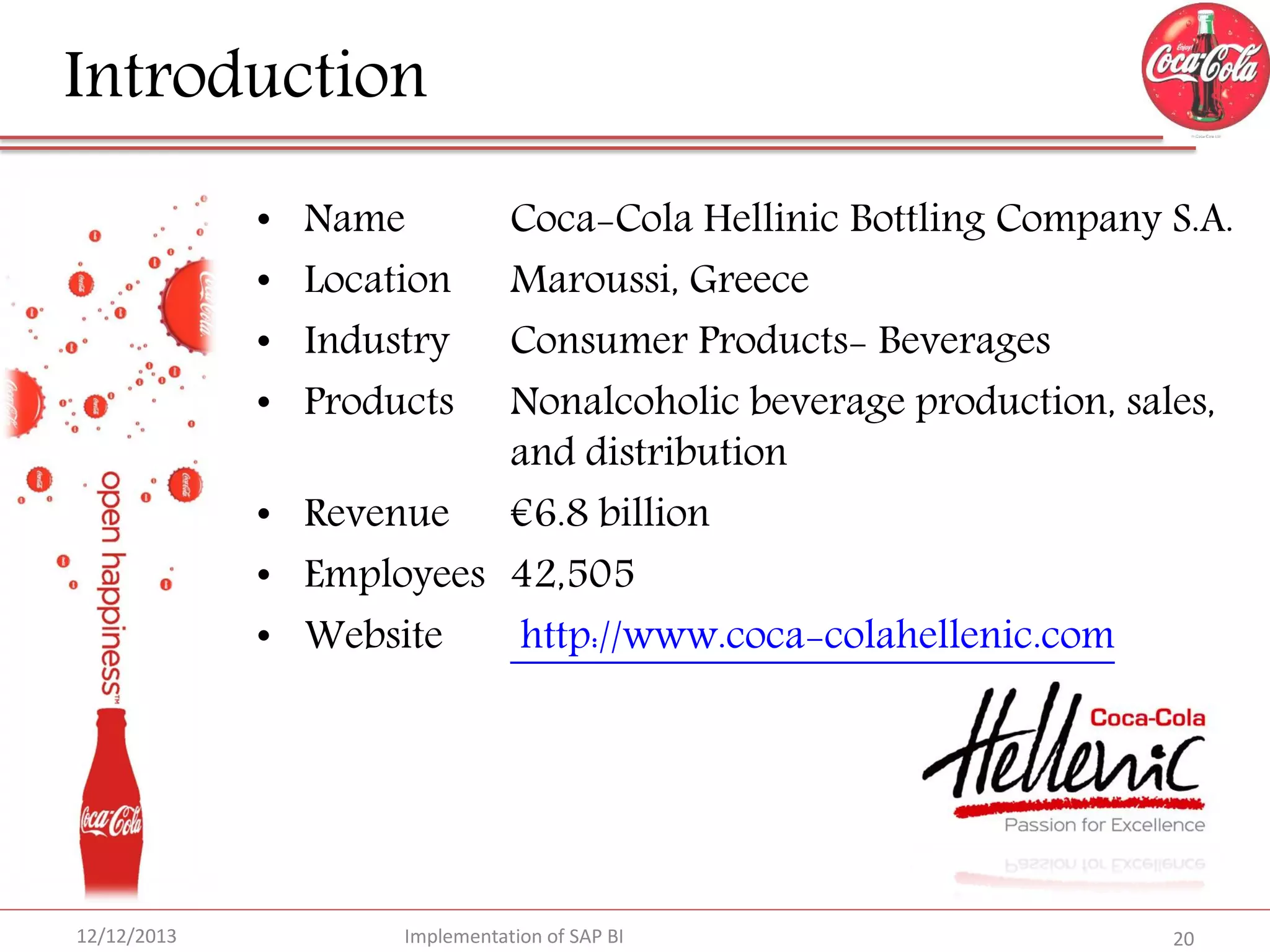
Introduction
Coca-Cola Hellinic Bottling Company S.A.
Maroussi, Greece
Consumer Products- Beverages
Nonalcoholic beverage production, sales,
and distribution
• Revenue €6.8 billion
• Employees 42,505
• Website
http://www.coca-colahellenic.com
•
•
•
•

12/12/2013

Name
Location
Industry
Products

Implementation of SAP BI

20
Challenges and Opportunities
• Develop end-to-end process support
• Expand capabilities to cover new business
requirements
• Provide a single solution for all countries
and markets

12/12/2013

Implementation of SAP BI

21
Objectives
• Build an end-to-end solution.
• deliver, to the extent possible, a single
solution.
• Define and formalize best practices in a
template and then roll it out in a pilot
implementation.
• Build new capabilities to support retail
customers.

12/12/2013

Implementation of SAP BI

22
Implementation & Success Story
Implementation Highlights

 Business-driven project, starting with an end-to-end process
approach to the technical details
 SAP Consulting services for business process design and
solution implementation

Benefits

 Efficiency improvements in several business processes.
 Support for organizational and process change.

“This is the first end-to-end SAP software implementation in the CocaCola bottling system. As such, it provides a sustainable platform for
future growth and enhancements.”
Kiril Topalov,
SAP Program director, Coca-Cola
12/12/2013

Implementation of SAP BI

23
References
 http://global.sap.com/mexico/solutions/netweaver/businessintelligence/pdf/CS
_Coca_Cola.pdf
 http://events.asug.com/2012AC/2007_Coca_Cola_Enterprise_SAP_Business_Pla
nning_and_Consolidation_NW_Version_10_Implementation_Journey.pdf
 www.slideshare.net/SoftwareAG/cocacola-enterprises
 http://www.sap.com/bin/sapcom/downloadasset.coca-cola-femsa-v1-pdf.html

12/12/2013

Implementation of SAP BI

24
12/12/2013

Implementation of SAP BI

25
Contact
Ujjwal Kumar Joshi
ujjwaljoshi1990@gmail.com

12/12/2013

Implementation of SAP BI

26

Implementation of SAP BI in Coca Cola

  • 1.
    Introduction of SAPBI In COCA-COLA Co. LTD.
  • 2.
    Agenda 1. Overview ofthe Company  Organizational Structure  Overview of the problem 2. Implementation of SAP BI  Components of SAP BI  Functions of components  System Architecture 3. Benefits  Example of Coca-Cola Hellinic 12/12/2013 Implementation of SAP BI 2
  • 3.
    Overview of thecompany 12/12/2013 Implementation of SAP BI 3
  • 4.
    Overview of thecompany  $ 8.1 Billion revenue  12 Billion bottles & cans per year But how? The world’s most comprehensive distribution system has made Coca-Cola accessible to billions of people worldwide. Coca-Cola is often available in ample supply to people in areas where other consumer goods companies would never deliver their products. 12/12/2013 Implementation of SAP BI 4
  • 5.
    Organizational Structure Headquarters Commercial Manufacturing & Research(Innovations) Strategic planning Corporate Governance Change management Supply chain Finance Plan & Integration Procurement Delivery Management Quality & Risk Management International Division Marketing Manufacturing & Research Administration Finance Sales Supply Chain Area Managers for different plants Europe 12/12/2013 Africa Implementation of SAP BI North/South Americas Middle & Far east 5
  • 6.
    Distribution system  Cocacola is comprised of large systems of a franchise company and bottling companies.  The bottling companies, buy the concentrate from the franchise company and then bottle the products. These companies then deliver the products to stores and other outlets. Local marketing is done with the assistance of the franchise company. 12/12/2013 Implementation of SAP BI 6
  • 7.
    Information system Business Challenges  Monitor service levels& sales compensation structure  Revise ordering & compensation process  Implement business suite Integrating with already existing systems  12/12/2013 • • • People/ commercial Organization/ governance TechnologyGateway; SAP BI; Mapping Implementation of SAP BI Expanding Multilevel compensation structure Innovation, communication Information System Business Solutions Increase sales Higher stock prices • • • • Enter orders: Web interface Multiple corporate systems accessibility E-commerce sites for different plants 7
  • 8.
    Overview of theProblem Legacy systems 12/12/2013 Implementation of SAP BI 8
  • 9.
    Overview of theProblem Legacy systems • System was not user friendly • Generated high costs • Difficult to maintain • Impossible to see consolidated results quickly • No standard planning tool • No reporting engine 12/12/2013 Implementation of SAP BI 9
  • 10.
    Overview of theProblem Challenges • Data inconsistency • Inefficient & iterations taking too long • Multiple versions- hard to collaborate • Time spent on consolidating the plans • Reporting is adhoc and not integrated 12/12/2013 Implementation of SAP BI 10
  • 11.
    Components of SAPBI SAP SEM (Strategic Enterprise Management) my SAPTM Financials SAP SEM Business Consolidated & Business Planning my SAPTM Business Intelligence SEM Business Planning Simulation my SAPTM Business Intelligence SAP Co (Controlling) 12/12/2013 Implementation of SAP BI 11
  • 12.
    Functions of eachSAP BI Components  SAP SEM Business Consolidated & Business Planning- solved financial information problems.  SEM Business Planning Simulation- for business information collection and analysis.  SAP BI Data Warehousing- analyze financial information to support decisionmaking.  SAP Co- extract financial actuals (on daily basis) that helps to forecast future demands as well as to generate financial reports. 12/12/2013 Implementation of SAP BI 12
  • 13.
    Design Principles • Integratedcore ERP/Data warehousing platforms and leveraging existing master data and hierarchies. • Driver-based approach with the ability to allocate, spread and extrapolate. • Perform and save multiple iterations. • Ability to manage and consolidate business unit plans quickly and efficiently. • Consolidate reports to analyze the plan data and perform plan/actual comparison. 12/12/2013 Implementation of SAP BI 13
  • 14.
    System Architecture LRP Mode 1 MasterData Transactional Data Data from SAP SEM Data from SAP CO Data from SAP BPS Main Data Warehouse SAP SEM Fig. System Architecture of SAP SEM 12/12/2013 Implementation of SAP BI 14
  • 15.
    System Architecture • • 12/12/2013 SAP SEM: SAP Strategic Enterprise Management (SAP SEM) delivers end-to-end ERP software capabilities to support the entire performance management life cycle, including:  Consolidated financial reporting –The application can aggregate financial data from SAP and non-SAP systems into a single analytical reporting environment.  Planning, budgeting, and forecasting – SAP SEM helps to model various planning options such as cost center planning and sales planning.  Corporate performance management and scorecards – To develop KPIs that support a number of popular scorecard methodologies, including balanced scorecard, economic value-added, and activity-based costing methods.  Risk reporting - SAP SEM helps you identify, quantify, and analyze business risks within individual business units and manage risk-reducing activities. Data warehousing :  A central repository of data created by integrating data from one or more disparate sources.  store current as well as historical data and are used for creating trending reports for senior management reporting such as annual and quarterly comparisons. Implementation of SAP BI 15
  • 16.
    Multidimensional Data Sales volumeas a function of product, month, and region Dimensions: Product, Location, Time Hierarchical summarization paths Industry Region Year Product Category Country Quarter Product Month Company Month 12/12/2013 City Implementation of SAP BI Week Day 16
  • 17.
    A Sample DataCube coke fanta sprite 1Qtr 2Qtr 3Qtr sum 4Qtr sum Total annual sales of Coke in U.S.A. U.S.A Canada Mexico Country Date sum 12/12/2013 Implementation of SAP BI 17
  • 18.
    Benefits of SAPBI • Enabling of accurate, faster and actionable information. • Compliance with industry regulation thus mitigating business risks. • Connecting corporate goals, objectives and strategies to an individual contributor level. • Save time and reduce inaccuracies. • Improve service and user satisfaction. • Ability to handle high volume, frequent system activity. • Improved quality and reduced risk to the business. • Predictive analytics and smater applications to grow the business. • Reduces costs and improves process qualities. 12/12/2013 Implementation of SAP BI 18
  • 19.
    Practical Example of Coca-ColaHellinic after implementing SAP 12/12/2013 Implementation of SAP BI 19
  • 20.
    Introduction Coca-Cola Hellinic BottlingCompany S.A. Maroussi, Greece Consumer Products- Beverages Nonalcoholic beverage production, sales, and distribution • Revenue €6.8 billion • Employees 42,505 • Website http://www.coca-colahellenic.com • • • • 12/12/2013 Name Location Industry Products Implementation of SAP BI 20
  • 21.
    Challenges and Opportunities •Develop end-to-end process support • Expand capabilities to cover new business requirements • Provide a single solution for all countries and markets 12/12/2013 Implementation of SAP BI 21
  • 22.
    Objectives • Build anend-to-end solution. • deliver, to the extent possible, a single solution. • Define and formalize best practices in a template and then roll it out in a pilot implementation. • Build new capabilities to support retail customers. 12/12/2013 Implementation of SAP BI 22
  • 23.
    Implementation & SuccessStory Implementation Highlights  Business-driven project, starting with an end-to-end process approach to the technical details  SAP Consulting services for business process design and solution implementation Benefits  Efficiency improvements in several business processes.  Support for organizational and process change. “This is the first end-to-end SAP software implementation in the CocaCola bottling system. As such, it provides a sustainable platform for future growth and enhancements.” Kiril Topalov, SAP Program director, Coca-Cola 12/12/2013 Implementation of SAP BI 23
  • 24.
  • 25.
  • 26.