PITS AND ITS
TYPES
PRESENTED BY:
Muhammad Sohail Riaz
PRESENTED TO:
Miss Iqra Munir
Pits
 Pits are thin portions of the cell wall that adjacent
cells can communicate or exchange fluid through
 Also known as the opening present in primary cell
wall
 Also known as primary pit field or primodial pits
Cont…..
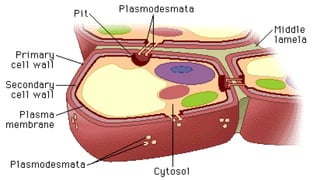
 It is the portions of the cell wall that remained thin
even as secondary wall is formed
 Pits are un-thickened areas in the secondary walls of
plant cells
 They act as the channels for the transport
of water and minerals between adjacent cell
 Plasmodesmata are abundant in pits
Pit pair
 Generally each pit has a complementary pit
opposite of it in the neighboring cell
 These complementary pits are called pit pair
STRUCTURE OF PITS
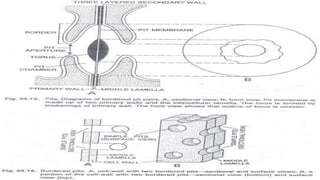
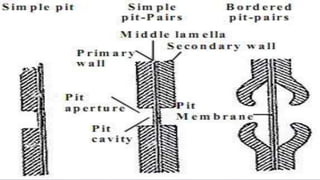
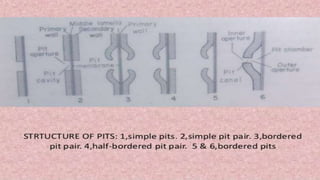
 Pit chamber
 Pit aperture
 Pit membrane
CONT…….
Pit chamber:
 The pit chamber is the hollow area where the
secondary layers of the cell wall are absent
Pit aperture:
 The pit aperture is the opening at either end of the
pit chamber
 They are of round, elliptic, linear shape
CONT……
Pit membrane:
 The pit membrane is the primary cell wall and
middle lamella, or the membrane between adjacent
cell walls, at the middle of the pit chamber
 The pit membrane is common to both pits of a pit
pair and consists of two primary walls and a middle
lamella
Types of pits
 Simple pits
 Bordered pits
 Half bordered pits
 Blind pits
 Compound pits
 Vestured pits:
CONT…….
Simple pits:
 A pit pair in which the diameter of the pit chamber
and the diameter of the pit aperture are equal
 Parenchyma cells, phloem fibers, companion cells,
and trachieds of several flowering plants have
simple pits
 Two simple pits form a simple pit pair
CONT…….
 The simple pit may be circular, oval, polygonal,
elongated
 The main function of diffusion of protoplasm takes
place through these pits
CONT……..
Bordered pit:
 A pit pair in which the pit chamber is over-arched
by the cell wall, creating a larger pit chamber and
smaller pit aperture
 Vessels of many angiosperms and tracheids of many
conifers have bordered pits abundantly
 Two bordered pits make up a bordered pit pair
 They are more complex and variable in their
structure than simple pits
Structure of Bordered pits
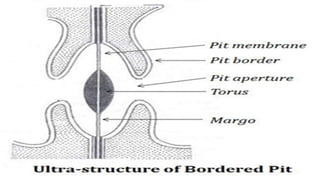
 The overarching secondary wall which encloses a
part of the pit cavity is called, the pit border, which
opens outside by a small rounded mouth known as
pit aperture
 The overarching rim forms a border around the
aperture and thus named ‘bordered pits’
 The pit aperture may be circular, lenticular, linear or
oval
CONT……..
 The space between the closing membrane and the
pit aperture may be called the pit chamber
 The pit canal opens in the pit chamber by an outer
aperture and at the same time it opens in the lumen
of the cell by an inner aperture
Patterns of bordered pits
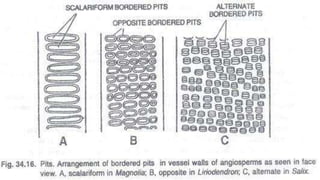
 The bordered pits in vessel walls of angiosperms
show three main types of arrangement:
 Scalariform
 Opposite and
 Alternate
CONT……
Scalariform
 If the pits are elongated or linear and make ladder-
like arrangement, it is called scalariform pitting
 The scalariform pitting is highly efficient in
conducting water
Opposite
 When the pits are arranged in horizontal pairs, it is
called opposite pitting
CONT……
Alternate
 When the pits occur in diagonal rows, the
arrangement is called alternate pitting
CONT…..
Half bordered pits:
 A pit pair in which a bordered pit has a
complementary simple pit
 Such a pit pair is called half bordered pit pair
Blind pits:
 A pit pair in which a simple pit has no
complementary pit
CONT……
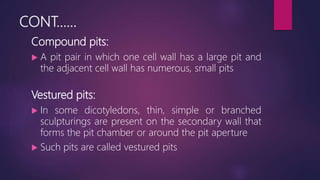
Compound pits:
 A pit pair in which one cell wall has a large pit and
the adjacent cell wall has numerous, small pits
Vestured pits:
 In some dicotyledons, thin, simple or branched
sculpturings are present on the secondary wall that
forms the pit chamber or around the pit aperture
 Such pits are called vestured pits
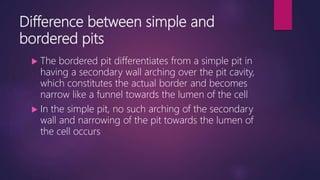
Difference between simple and
bordered pits
 The bordered pit differentiates from a simple pit in
having a secondary wall arching over the pit cavity,
which constitutes the actual border and becomes
narrow like a funnel towards the lumen of the cell
 In the simple pit, no such arching of the secondary
wall and narrowing of the pit towards the lumen of
the cell occurs
Combinations in bordered pits
 The torus and margo are characteristic features of
bordered pit-pairs in gymnosperms, such as
Coniferales, Ginkgo, and Gnetales
 In other vascular plants, the torus is rare
The pit membrane is separated into two parts:
 A thick impermeable torus at the center of the pit
membrane, and the permeable margo surrounding
it
CONT…….
 The torus regulates the functions of the bordered
pit, and the margo is a cell wall-derived porous
membrane that supports the torus
 The margo is composed of bundles of microfibrils
that radiate from the torus
 The margo is flexible and can move towards either
side of the pit while under stress
 This allows the thick, impermeable torus to block the
pit aperture
CONT……
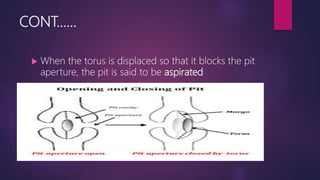
 When the torus is displaced so that it blocks the pit
aperture, the pit is said to be aspirated
Similarities Between Pits and
Plasmodesmata
 Both pits and plasmodesmata are present in
plant cells
 Plasmodesmata are abundant in pit
membranes
 Pits and plasmodesmata help plant cells to
communicate with each other and transport
substances between them
Pits and its types by Sohail

Pits and its types by Sohail

  • 1.
  • 2.
    PRESENTED BY: Muhammad SohailRiaz PRESENTED TO: Miss Iqra Munir
  • 3.
    Pits  Pits arethin portions of the cell wall that adjacent cells can communicate or exchange fluid through  Also known as the opening present in primary cell wall  Also known as primary pit field or primodial pits
  • 4.
    Cont…..  It isthe portions of the cell wall that remained thin even as secondary wall is formed  Pits are un-thickened areas in the secondary walls of plant cells  They act as the channels for the transport of water and minerals between adjacent cell  Plasmodesmata are abundant in pits
  • 6.
    Pit pair  Generallyeach pit has a complementary pit opposite of it in the neighboring cell  These complementary pits are called pit pair
  • 8.
    STRUCTURE OF PITS Pit chamber  Pit aperture  Pit membrane
  • 9.
    CONT……. Pit chamber:  Thepit chamber is the hollow area where the secondary layers of the cell wall are absent Pit aperture:  The pit aperture is the opening at either end of the pit chamber  They are of round, elliptic, linear shape
  • 10.
    CONT…… Pit membrane:  Thepit membrane is the primary cell wall and middle lamella, or the membrane between adjacent cell walls, at the middle of the pit chamber  The pit membrane is common to both pits of a pit pair and consists of two primary walls and a middle lamella
  • 12.
    Types of pits Simple pits  Bordered pits  Half bordered pits  Blind pits  Compound pits  Vestured pits:
  • 13.
    CONT……. Simple pits:  Apit pair in which the diameter of the pit chamber and the diameter of the pit aperture are equal  Parenchyma cells, phloem fibers, companion cells, and trachieds of several flowering plants have simple pits  Two simple pits form a simple pit pair
  • 14.
    CONT…….  The simplepit may be circular, oval, polygonal, elongated  The main function of diffusion of protoplasm takes place through these pits
  • 15.
    CONT…….. Bordered pit:  Apit pair in which the pit chamber is over-arched by the cell wall, creating a larger pit chamber and smaller pit aperture  Vessels of many angiosperms and tracheids of many conifers have bordered pits abundantly  Two bordered pits make up a bordered pit pair  They are more complex and variable in their structure than simple pits
  • 16.
    Structure of Borderedpits  The overarching secondary wall which encloses a part of the pit cavity is called, the pit border, which opens outside by a small rounded mouth known as pit aperture  The overarching rim forms a border around the aperture and thus named ‘bordered pits’  The pit aperture may be circular, lenticular, linear or oval
  • 17.
    CONT……..  The spacebetween the closing membrane and the pit aperture may be called the pit chamber  The pit canal opens in the pit chamber by an outer aperture and at the same time it opens in the lumen of the cell by an inner aperture
  • 19.
    Patterns of borderedpits  The bordered pits in vessel walls of angiosperms show three main types of arrangement:  Scalariform  Opposite and  Alternate
  • 20.
    CONT…… Scalariform  If thepits are elongated or linear and make ladder- like arrangement, it is called scalariform pitting  The scalariform pitting is highly efficient in conducting water Opposite  When the pits are arranged in horizontal pairs, it is called opposite pitting
  • 21.
    CONT…… Alternate  When thepits occur in diagonal rows, the arrangement is called alternate pitting
  • 23.
    CONT….. Half bordered pits: A pit pair in which a bordered pit has a complementary simple pit  Such a pit pair is called half bordered pit pair Blind pits:  A pit pair in which a simple pit has no complementary pit
  • 25.
    CONT…… Compound pits:  Apit pair in which one cell wall has a large pit and the adjacent cell wall has numerous, small pits Vestured pits:  In some dicotyledons, thin, simple or branched sculpturings are present on the secondary wall that forms the pit chamber or around the pit aperture  Such pits are called vestured pits
  • 27.
    Difference between simpleand bordered pits  The bordered pit differentiates from a simple pit in having a secondary wall arching over the pit cavity, which constitutes the actual border and becomes narrow like a funnel towards the lumen of the cell  In the simple pit, no such arching of the secondary wall and narrowing of the pit towards the lumen of the cell occurs
  • 28.
    Combinations in borderedpits  The torus and margo are characteristic features of bordered pit-pairs in gymnosperms, such as Coniferales, Ginkgo, and Gnetales  In other vascular plants, the torus is rare The pit membrane is separated into two parts:  A thick impermeable torus at the center of the pit membrane, and the permeable margo surrounding it
  • 29.
    CONT…….  The torusregulates the functions of the bordered pit, and the margo is a cell wall-derived porous membrane that supports the torus  The margo is composed of bundles of microfibrils that radiate from the torus  The margo is flexible and can move towards either side of the pit while under stress  This allows the thick, impermeable torus to block the pit aperture
  • 30.
    CONT……  When thetorus is displaced so that it blocks the pit aperture, the pit is said to be aspirated
  • 31.
    Similarities Between Pitsand Plasmodesmata  Both pits and plasmodesmata are present in plant cells  Plasmodesmata are abundant in pit membranes  Pits and plasmodesmata help plant cells to communicate with each other and transport substances between them