



PHYTOREMEDIATIO
N
Niloofar Aminian, Niayesh Forghani
December 2016
Out Line
■ DEFINITION
■ THE IMPORTANCE OF PHYTOREMEDIATION
■ TYPES
■ THE ROLE OF BIOTECHNOLOGY
■ CONCLUSION
■ REFERENCES
Definition
■ Phyton = Plant (in Greek) , Remediar = To remedy (in Latin)
■ Use of green plants and their microorganisms to reduce
environmental problems without the need to excavate the
contaminant material and dispose of it elsewhere.
The importance of
Phytoremediation
■ Because biological processes are ultimately solar-driven,
Phytoremediation is on average tenfold cheaper than
engineering-based remediation methods such as soil
excavation, soil washing or burning, or pump-and-treat systems.
■ Phytoremediation is usually carried out in situ contributes to its
cost-effectiveness and may reduce exposure of the polluted
substrate to humans, wildlife, and the environment.
■ Suited to remediation of large areas of soil
■ Responsive to a variety of organic and inorganic compounds
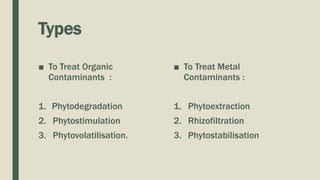
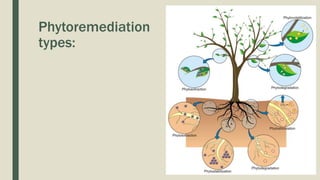
Types
■ To Treat Organic
Contaminants :
1. Phytodegradation
2. Phytostimulation
3. Phytovolatilisation.
■ To Treat Metal
Contaminants :
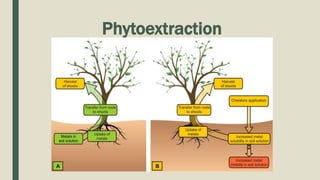
1. Phytoextraction
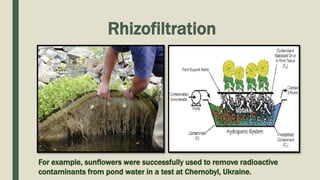
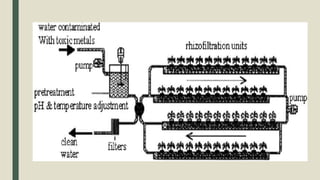
2. Rhizofiltration
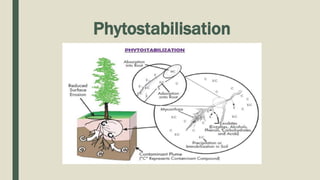
3. Phytostabilisation
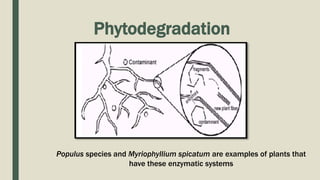
Phytodegradation
Populus species and Myriophyllium spicatum are examples of plants that
have these enzymatic systems
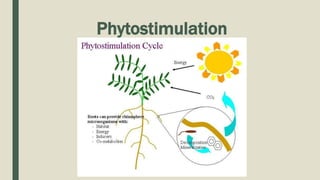
Phytostimulation
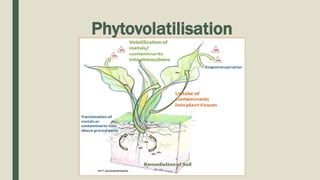
Phytovolatilisation
Phytoextraction
Rhizofiltration
For example, sunflowers were successfully used to remove radioactive
contaminants from pond water in a test at Chernobyl, Ukraine.
Whitney Water Purification Facility, New Haven, Connecticut, USA
Phytostabilisation
Phytoremediation
types:
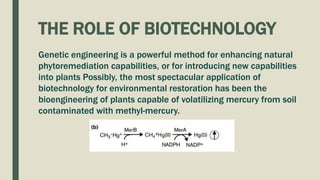
THE ROLE OF BIOTECHNOLOGY
Genetic engineering is a powerful method for enhancing natural
phytoremediation capabilities, or for introducing new capabilities
into plants Possibly, the most spectacular application of
biotechnology for environmental restoration has been the
bioengineering of plants capable of volatilizing mercury from soil
contaminated with methyl-mercury.
CONCLUSION
■ Phytoremediation is an emerging technology that employs the
use of higher plants for the cleanup of contaminated
environments.
■ The main advantage of phytoextraction is environmental
friendliness. Traditional methods which are used for cleaning up
heavy metal contaminated soil disrupt soil structure and reduce
soil productivity, whereas phytoextraction can clean up the soil
without causing any kind of harm to soil quality.
■ Another benefit of phytoextraction is that it is less expensive
than any other clean up process and the possibility of the
recovery and re-use of valuable metals .
■ The possibility of using biotechnology to improve the efficiency
of pytoremediation processes makes even better than any other
existing methods.
Refrences
■ http://www.itrcweb.org/PHYTO2.pdf
■ Phytoremediation of toxic elemental and organic pollutants, Richard B Meagher.
■ Environmental Science & Technology. 1998. Phytoremediation; forecasting.
Environmental Science & Technology. Vol. 32, issue 17, p.399A.
Thank you ! ;)

Phytoremediation

  • 1.
  • 2.
    Out Line ■ DEFINITION ■THE IMPORTANCE OF PHYTOREMEDIATION ■ TYPES ■ THE ROLE OF BIOTECHNOLOGY ■ CONCLUSION ■ REFERENCES
  • 3.
    Definition ■ Phyton =Plant (in Greek) , Remediar = To remedy (in Latin) ■ Use of green plants and their microorganisms to reduce environmental problems without the need to excavate the contaminant material and dispose of it elsewhere.
  • 4.
    The importance of Phytoremediation ■Because biological processes are ultimately solar-driven, Phytoremediation is on average tenfold cheaper than engineering-based remediation methods such as soil excavation, soil washing or burning, or pump-and-treat systems. ■ Phytoremediation is usually carried out in situ contributes to its cost-effectiveness and may reduce exposure of the polluted substrate to humans, wildlife, and the environment. ■ Suited to remediation of large areas of soil ■ Responsive to a variety of organic and inorganic compounds
  • 5.
    Types ■ To TreatOrganic Contaminants : 1. Phytodegradation 2. Phytostimulation 3. Phytovolatilisation. ■ To Treat Metal Contaminants : 1. Phytoextraction 2. Rhizofiltration 3. Phytostabilisation
  • 6.
    Phytodegradation Populus species andMyriophyllium spicatum are examples of plants that have these enzymatic systems
  • 7.
  • 8.
  • 9.
  • 10.
    Rhizofiltration For example, sunflowerswere successfully used to remove radioactive contaminants from pond water in a test at Chernobyl, Ukraine.
  • 12.
    Whitney Water PurificationFacility, New Haven, Connecticut, USA
  • 13.
  • 14.
  • 15.
    THE ROLE OFBIOTECHNOLOGY Genetic engineering is a powerful method for enhancing natural phytoremediation capabilities, or for introducing new capabilities into plants Possibly, the most spectacular application of biotechnology for environmental restoration has been the bioengineering of plants capable of volatilizing mercury from soil contaminated with methyl-mercury.
  • 16.
    CONCLUSION ■ Phytoremediation isan emerging technology that employs the use of higher plants for the cleanup of contaminated environments. ■ The main advantage of phytoextraction is environmental friendliness. Traditional methods which are used for cleaning up heavy metal contaminated soil disrupt soil structure and reduce soil productivity, whereas phytoextraction can clean up the soil without causing any kind of harm to soil quality. ■ Another benefit of phytoextraction is that it is less expensive than any other clean up process and the possibility of the recovery and re-use of valuable metals . ■ The possibility of using biotechnology to improve the efficiency of pytoremediation processes makes even better than any other existing methods.
  • 17.
    Refrences ■ http://www.itrcweb.org/PHYTO2.pdf ■ Phytoremediationof toxic elemental and organic pollutants, Richard B Meagher. ■ Environmental Science & Technology. 1998. Phytoremediation; forecasting. Environmental Science & Technology. Vol. 32, issue 17, p.399A.
  • 18.