Shoaib iqbal
In the name of Allah, the beneficent the
merciful
 What is Soil
 What is soil contamination
 Natural and anthropogenic activities
 Causes
 What is soil Remediation
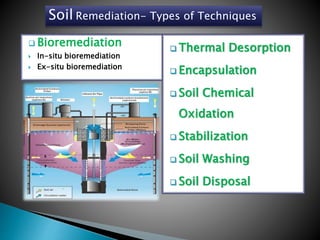
 Soil Remediation- Types of Techniques
 My point of view
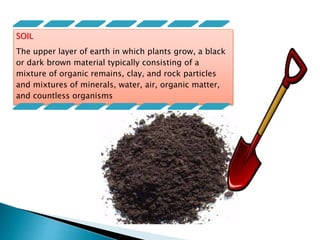
SOIL
The upper layer of earth in which plants grow, a black
or dark brown material typically consisting of a
mixture of organic remains, clay, and rock particles
and mixtures of minerals, water, air, organic matter,
and countless organisms
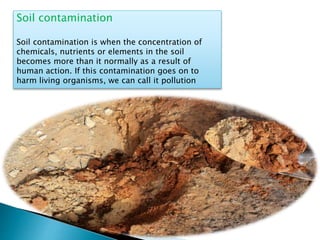
Soil contamination
Soil contamination is when the concentration of
chemicals, nutrients or elements in the soil
becomes more than it normally as a result of
human action. If this contamination goes on to
harm living organisms, we can call it pollution
Natural and anthropogenic activities
Anthropogenic
 Accidental spills and leaks during storage (transport or use
of chemicals )
 Mining activities (crushing and processing of raw materials )
 Agricultural activities (spread of herbicides/pesticides/ and fertilizers)
 Transportation activities (e.g., vehicle emissions)
 Dumping of chemicals (such as illegal dumping)
 Storage of wastes in landfills (which may leak to groundwater
or generate polluted vapors)
Natural activities
 Natural accumulation of compounds in soil: (due to imbalances
between atmospheric deposition and leaching away with precipitation
water)
 Natural production in soil under certain environmental conditions:
(natural formation of soil in the presence of a chlorine source,
metallic object and using the energy generated by a thunderstorm)
 Leaks from sewer lines into subsurface: (e.g. adding chlorine which
could generate such as chloroform)
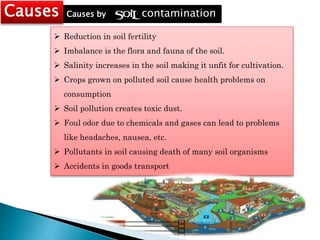
Causes by contamination
 Reduction in soil fertility
 Imbalance is the flora and fauna of the soil.
 Salinity increases in the soil making it unfit for cultivation.
 Crops grown on polluted soil cause health problems on
consumption
 Soil pollution creates toxic dust.
 Foul odor due to chemicals and gases can lead to problems
like headaches, nausea, etc.
 Pollutants in soil causing death of many soil organisms
 Accidents in goods transport
Causes
 Soil remediation, also known as soil washing
 Various processes designed to remove contaminants from soil
Like : heavy metals, pesticides, cyanides, volatiles, creosote, and
semi-volatiles from soil
Soil Remediation
 Bioremediation
 In-situ bioremediation
 Ex-situ bioremediation
 Thermal Desorption
 Encapsulation
 Soil Chemical
Oxidation
 Stabilization
 Soil Washing
 Soil Disposal
Soil Remediation- Types of Techniques
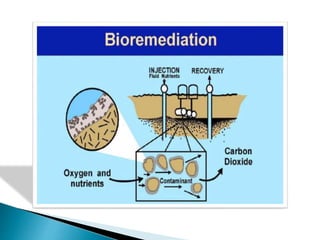
 Bio-remediation refers to the process of using micro
organism.
 To remove the environmental pollutants or prevent pollution,
 The removal of organic waste by microbes for environmental
cleanup is the essence of bioremediation.
 The other name used for bio-remediation are bio-treatment,
bio-reclamation, and bio restoration.
Bio-Remediation
Types of Bio-Remediation
In-situ bioremediation
Ex-situ bioremediation
What is In Situ Ex Situ Remediation
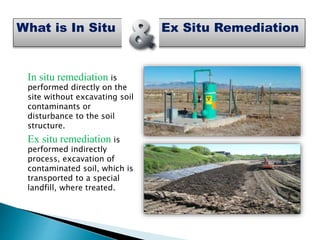
In situ remediation is
performed directly on the
site without excavating soil
contaminants or
disturbance to the soil
structure.
Ex situ remediation is
performed indirectly
process, excavation of
contaminated soil, which is
transported to a special
landfill, where treated.
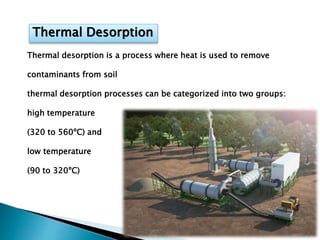
Thermal Desorption
Thermal desorption is a process where heat is used to remove
contaminants from soil
thermal desorption processes can be categorized into two groups:
high temperature
(320 to 560ºC) and
low temperature
(90 to 320ºC)
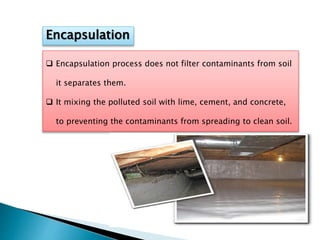
Encapsulation
 Encapsulation process does not filter contaminants from soil
it separates them.
 It mixing the polluted soil with lime, cement, and concrete,
to preventing the contaminants from spreading to clean soil.
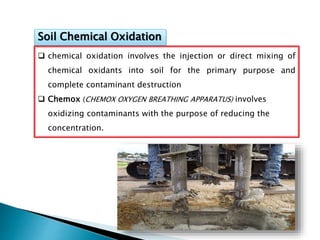
Soil Chemical Oxidation
 chemical oxidation involves the injection or direct mixing of
chemical oxidants into soil for the primary purpose and
complete contaminant destruction
 Chemox (CHEMOX OXYGEN BREATHING APPARATUS) involves
oxidizing contaminants with the purpose of reducing the
concentration.
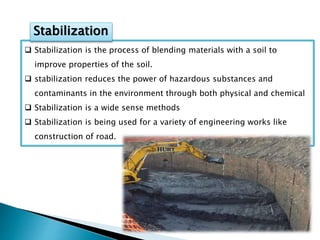
 Stabilization is the process of blending materials with a soil to
improve properties of the soil.
 stabilization reduces the power of hazardous substances and
contaminants in the environment through both physical and chemical
 Stabilization is a wide sense methods
 Stabilization is being used for a variety of engineering works like
construction of road.
Stabilization
 Soil washing is the process in which water is used to remove
contaminants from soil such an organic ,inorganic and
radioactive contaminants .
 The process works by dissolving contaminants in the wash
solution.
 Most organic and inorganic contaminants bind to clay, silt, and
organic soil particles.
 Washing separates the small particles from the large particles.
 Separated material is smaller in volume and more easily
disposed
Soil Washing
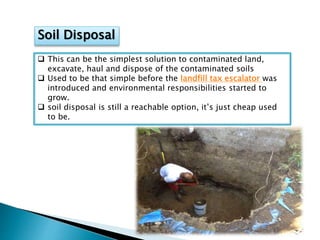
Soil Disposal
 This can be the simplest solution to contaminated land,
excavate, haul and dispose of the contaminated soils
 Used to be that simple before the landfill tax escalator was
introduced and environmental responsibilities started to
grow.
 soil disposal is still a reachable option, it’s just cheap used
to be.
 Should Ban on use of plastic bags.
 Authority should Recycling of plastic
wastes.
 Must be ban on deforestation.
 Increasing plantation programs.
 Social and agro forestry programs.
 Awareness campaign programs.
Some steps to reduce soil contamination/pollution
Soil contamination and remediation

Soil contamination and remediation

  • 1.
    Shoaib iqbal In thename of Allah, the beneficent the merciful
  • 3.
     What isSoil  What is soil contamination  Natural and anthropogenic activities  Causes  What is soil Remediation  Soil Remediation- Types of Techniques  My point of view
  • 4.
    SOIL The upper layerof earth in which plants grow, a black or dark brown material typically consisting of a mixture of organic remains, clay, and rock particles and mixtures of minerals, water, air, organic matter, and countless organisms
  • 5.
    Soil contamination Soil contaminationis when the concentration of chemicals, nutrients or elements in the soil becomes more than it normally as a result of human action. If this contamination goes on to harm living organisms, we can call it pollution
  • 6.
    Natural and anthropogenicactivities Anthropogenic  Accidental spills and leaks during storage (transport or use of chemicals )  Mining activities (crushing and processing of raw materials )  Agricultural activities (spread of herbicides/pesticides/ and fertilizers)  Transportation activities (e.g., vehicle emissions)  Dumping of chemicals (such as illegal dumping)  Storage of wastes in landfills (which may leak to groundwater or generate polluted vapors)
  • 7.
    Natural activities  Naturalaccumulation of compounds in soil: (due to imbalances between atmospheric deposition and leaching away with precipitation water)  Natural production in soil under certain environmental conditions: (natural formation of soil in the presence of a chlorine source, metallic object and using the energy generated by a thunderstorm)  Leaks from sewer lines into subsurface: (e.g. adding chlorine which could generate such as chloroform)
  • 8.
    Causes by contamination Reduction in soil fertility  Imbalance is the flora and fauna of the soil.  Salinity increases in the soil making it unfit for cultivation.  Crops grown on polluted soil cause health problems on consumption  Soil pollution creates toxic dust.  Foul odor due to chemicals and gases can lead to problems like headaches, nausea, etc.  Pollutants in soil causing death of many soil organisms  Accidents in goods transport Causes
  • 9.
     Soil remediation,also known as soil washing  Various processes designed to remove contaminants from soil Like : heavy metals, pesticides, cyanides, volatiles, creosote, and semi-volatiles from soil Soil Remediation
  • 10.
     Bioremediation  In-situbioremediation  Ex-situ bioremediation  Thermal Desorption  Encapsulation  Soil Chemical Oxidation  Stabilization  Soil Washing  Soil Disposal Soil Remediation- Types of Techniques
  • 11.
     Bio-remediation refersto the process of using micro organism.  To remove the environmental pollutants or prevent pollution,  The removal of organic waste by microbes for environmental cleanup is the essence of bioremediation.  The other name used for bio-remediation are bio-treatment, bio-reclamation, and bio restoration. Bio-Remediation Types of Bio-Remediation In-situ bioremediation Ex-situ bioremediation
  • 13.
    What is InSitu Ex Situ Remediation In situ remediation is performed directly on the site without excavating soil contaminants or disturbance to the soil structure. Ex situ remediation is performed indirectly process, excavation of contaminated soil, which is transported to a special landfill, where treated.
  • 14.
    Thermal Desorption Thermal desorptionis a process where heat is used to remove contaminants from soil thermal desorption processes can be categorized into two groups: high temperature (320 to 560ºC) and low temperature (90 to 320ºC)
  • 15.
    Encapsulation  Encapsulation processdoes not filter contaminants from soil it separates them.  It mixing the polluted soil with lime, cement, and concrete, to preventing the contaminants from spreading to clean soil.
  • 16.
    Soil Chemical Oxidation chemical oxidation involves the injection or direct mixing of chemical oxidants into soil for the primary purpose and complete contaminant destruction  Chemox (CHEMOX OXYGEN BREATHING APPARATUS) involves oxidizing contaminants with the purpose of reducing the concentration.
  • 17.
     Stabilization isthe process of blending materials with a soil to improve properties of the soil.  stabilization reduces the power of hazardous substances and contaminants in the environment through both physical and chemical  Stabilization is a wide sense methods  Stabilization is being used for a variety of engineering works like construction of road. Stabilization
  • 18.
     Soil washingis the process in which water is used to remove contaminants from soil such an organic ,inorganic and radioactive contaminants .  The process works by dissolving contaminants in the wash solution.  Most organic and inorganic contaminants bind to clay, silt, and organic soil particles.  Washing separates the small particles from the large particles.  Separated material is smaller in volume and more easily disposed Soil Washing
  • 19.
    Soil Disposal  Thiscan be the simplest solution to contaminated land, excavate, haul and dispose of the contaminated soils  Used to be that simple before the landfill tax escalator was introduced and environmental responsibilities started to grow.  soil disposal is still a reachable option, it’s just cheap used to be.
  • 20.
     Should Banon use of plastic bags.  Authority should Recycling of plastic wastes.  Must be ban on deforestation.  Increasing plantation programs.  Social and agro forestry programs.  Awareness campaign programs. Some steps to reduce soil contamination/pollution