Tando Jam
Department of Soil Science
CONTAMINATION OF SOILS WITH
  ORGANIC AND INORGANIC
       POLLUTANTS


          By


      MASHOOQ HUSSAIN ODHANO
              (PhD, Student)
Soil contamination
Soil contamination is the occurrence of pollutants in soil
above a certain level causing a deterioration or loss of
one or more soil functions. Also, Soil Contamination can
be considered as the presence of man-made chemicals
or other alteration in the natural soil environment. This
type of contamination typically arises from the rupture of
underground storage tanks, application of pesticides,
percolation of contaminated surface water to subsurface
strata, leaching of wastes from landfills or direct
discharge of industrial wastes to the soil. The most
common       chemicals     involved      are    petroleum
hydrocarbons, solvents, pesticides, lead and other heavy
metals. The occurrence of this phenomenon is correlated
with the degree of industrialization and intensity of
chemical usage.
   Corrosion of underground storage tanks (including
    piping used to transmit the contents)
   Application of fertilizers and pesticides
   Mining
   Oil and fuel dumping
   Disposal of coal ash
   Leaching from landfills
   Direct discharge of industrial wastes to the soil
   Drainage of contaminated surface water into the soil
   Discharging urine and faeces in the open

    The most common chemicals involved are petroleum
    hydrocarbons, solvents, pesticides, lead, and other
    heavy metals.
Soil pollution
•   Soil pollution is defined or can be described
    as the contamination of soil of a particular
    region.

•   Soil pollution is caused by addition of
    chemicals, which reduces it’s productive
    capacity.

•   In rural areas more fertilizers & pesticides
    are used in agricultural operations & the
    residual chemicals remain in the top layers
    of soil.
Pollutants in Pakistan
Pakistan is the seventh most populous country
of the world, having a population of more the
180 million. It is developing country with an
increasing population density in order to
develop     its  economy,      Pakistan    requires
establishment of new industries. Due to
unplanned industrial growth, much of the land
and nearby water bodies are polluted by
indiscriminate dumping of solid and liquid
wastes generated by these units increased levels
of metal ions and organic pollutants in the
environment are either due to absence of laws
for various industries to treat their wastes .
The rapid increase in population, together with the
unplanned disposal of effluent from tanneries and
textile industries have increased the threat of soil
pollution in Pakistan. Faisalabad Effect of industrial
effluents discharged by various industries in the
industrial area o f Lahore, Sheikhupura and Kala Shah
Kaku indicated soil and water contamination of salts and
heavy metals in their respective areas. Environmental
protection agency studies have been shown that
industrial effluents from electroplating and tannery
industries containing toxic metals, such as Cr, Ni, As,
Hg, Cu, Pt, etc have contaminated soil and biota of these
areas by such metals in Faisalabad and Lahore. Pakistan
reported that Faisalabad city effluent, comprising of
domestic and industrial wastes, contained toxic metals,
including Pb, Cu and Cd.
The type of pollutant

    ORGANIC POLLUTANTS

    INORGANIC POLLUTANTS
1.ORGANIC POLLUTANTS

    a. SEWAGE,WASTE FROM TANNRIES,PAPER MILLS, FOOD PROSSESING
      INDUSTRIES. SUGAR REFINERIES
              DECREASE DISSOLVED OXYGEN
              PATHOGENIC MICROORGANISM , EUTROFICATION


    b. SYNTHETIC ORGANIC CHEMICALS
               ( PLASTIC,PAINTS,PHARMA WASTE)


    c. PESTICIDES
.
2.INORGANIC POLLUTANTS
HEAVY METAL POLLUTANTS
     ENTER INTO FOOD CHAIN
     AFFINITY FOR SULPHUR;ATTACK SULPHUR BONDS IN ENZYMES
     OTHER VULNARABLE SITES ARE COOH OF PROTEIN ALSO BIND TO CELL
      MEMBRANE.
A. ORGANIC MERCURIAL: INCECTISIDES & BACTERICIDES, NEUROLOGICAL
                                 DISORDERS
B. CADMIUM: UNCOUPLER OF OXIDATIVE PHOSPHORYLATION
C. BERYLLIUM :PHOSPHATE INHIBITOR
D.STRONTIUM :COMPETITOR FOR CALCIUM IN BONE

Lead, Arsenic, Mercury, and Cadmium (all main industrial pollutants) tend to
accumulate in the human body for long periods of time, as they are difficult to
flush out of our system.
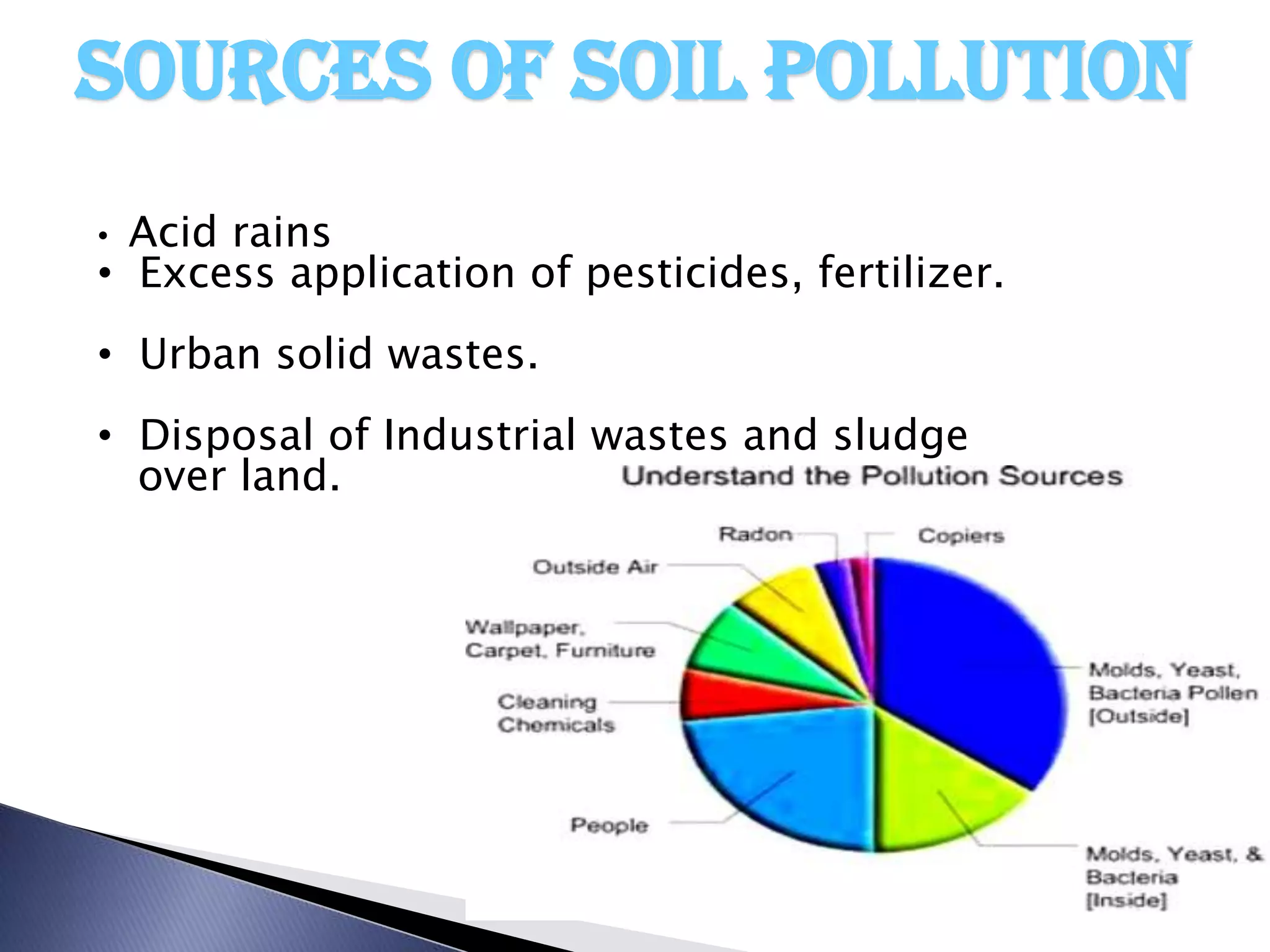
SOURCES OF SOIL POLLUTION
• Acid rains
• Excess application of pesticides, fertilizer.
• Urban solid wastes.
• Disposal of Industrial wastes and sludge
  over land.
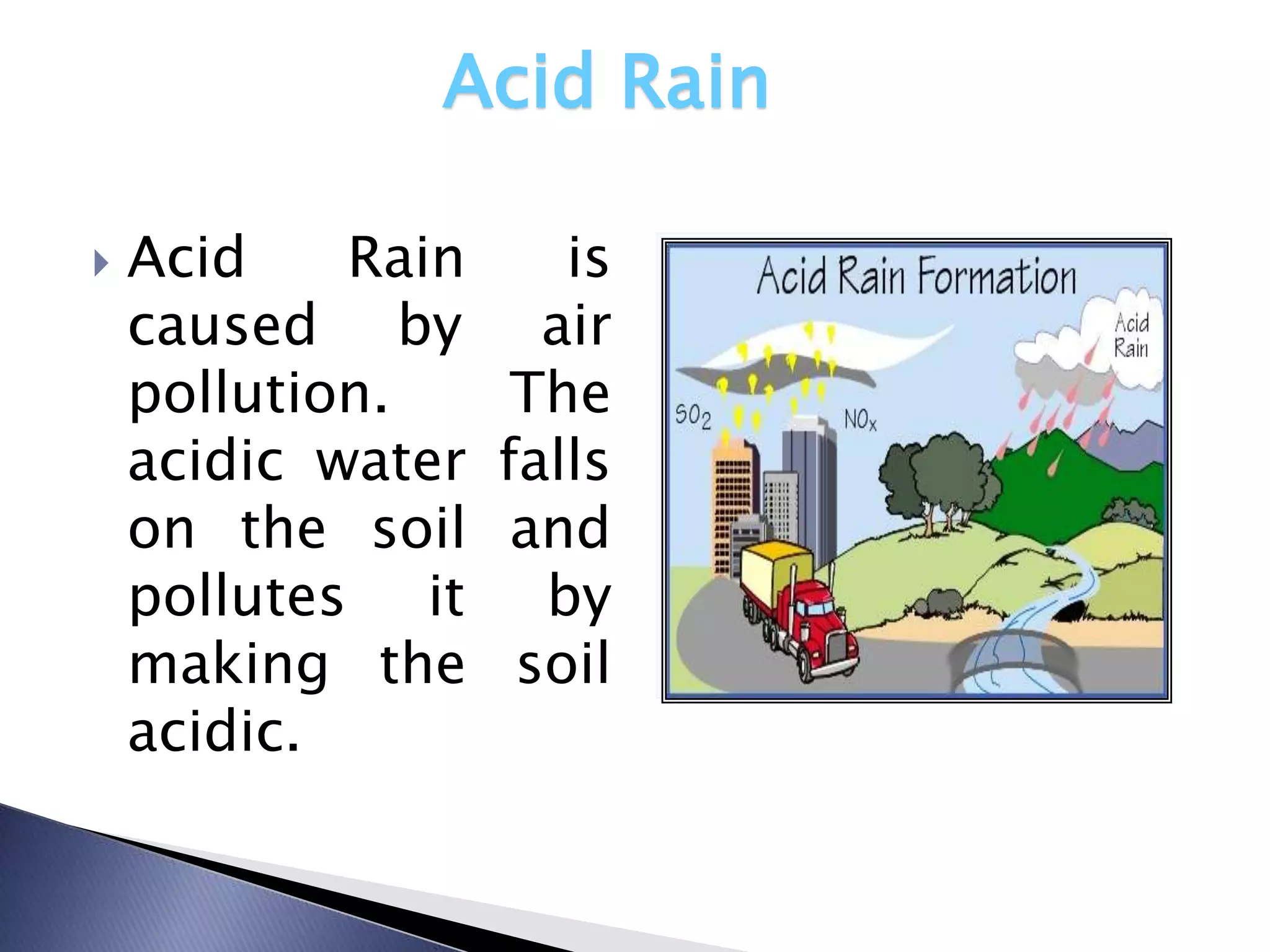
Acid Rain

   Acid    Rain      is
    caused by        air
    pollution.      The
    acidic water   falls
    on the soil     and
    pollutes it      by
    making the      soil
    acidic.
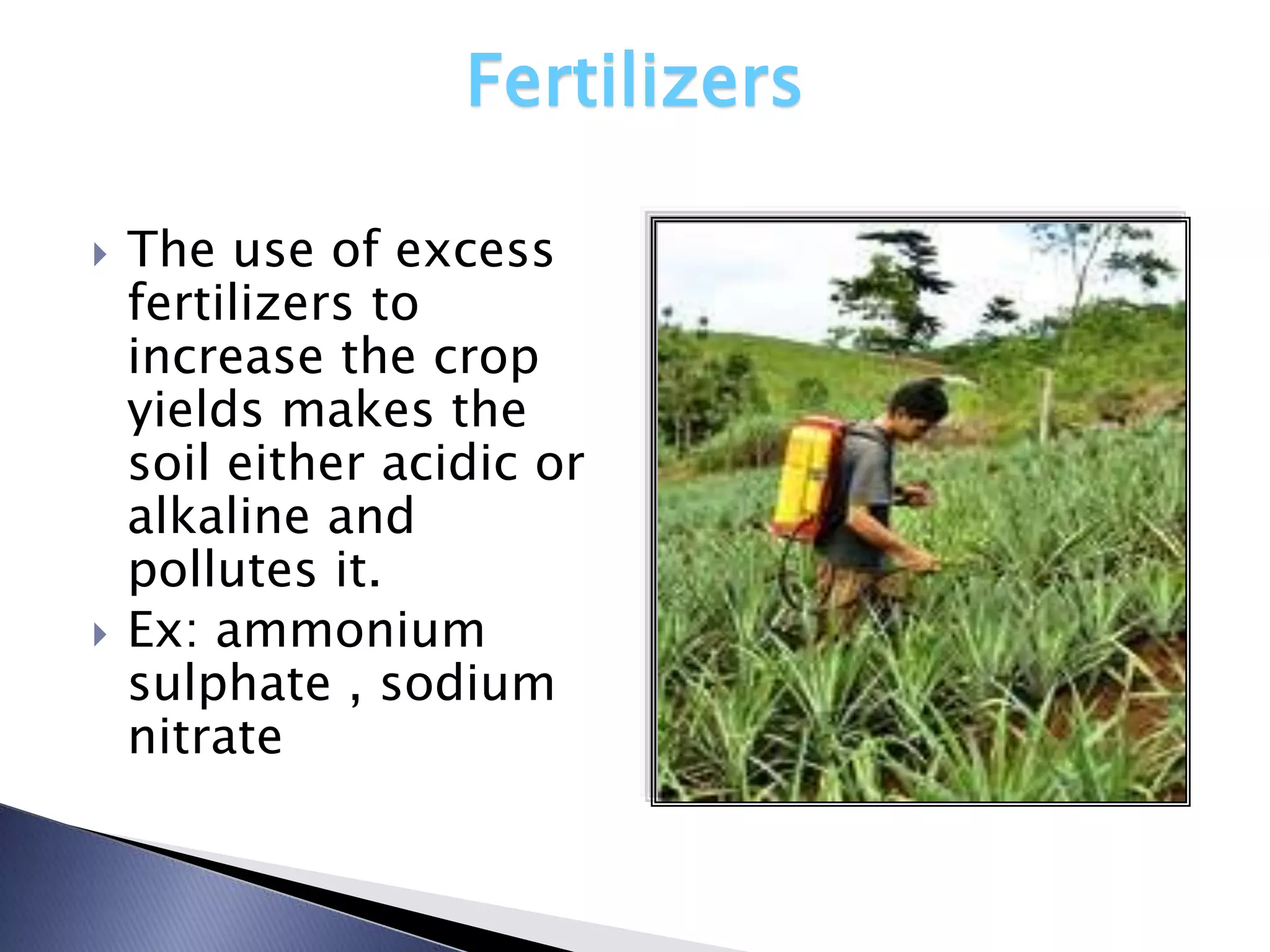
Fertilizers

   The use of excess
    fertilizers to
    increase the crop
    yields makes the
    soil either acidic or
    alkaline and
    pollutes it.
   Ex: ammonium
    sulphate , sodium
    nitrate
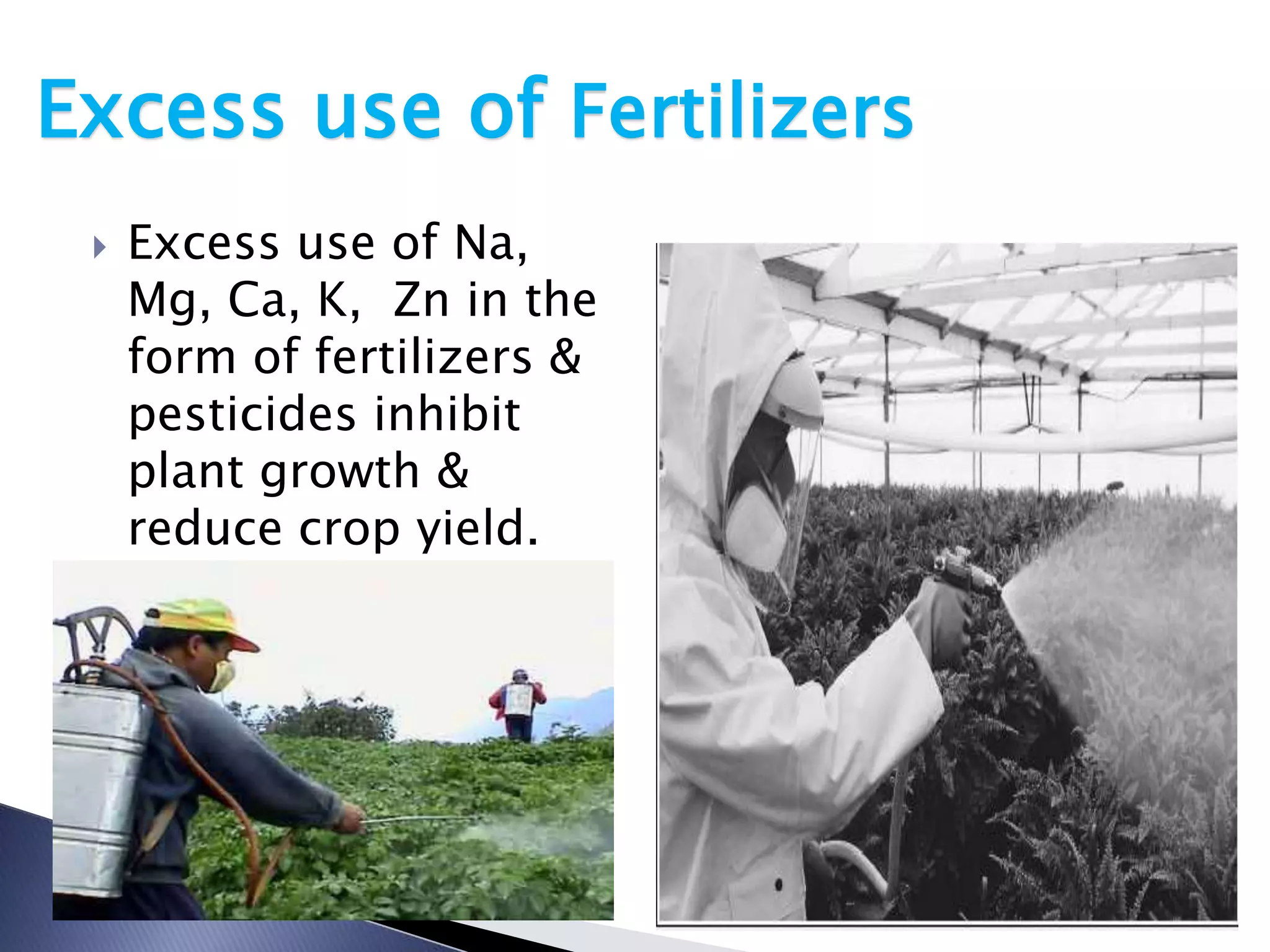
Excess use of Fertilizers
    Excess use of Na,
     Mg, Ca, K, Zn in the
     form of fertilizers &
     pesticides inhibit
     plant growth &
     reduce crop yield.
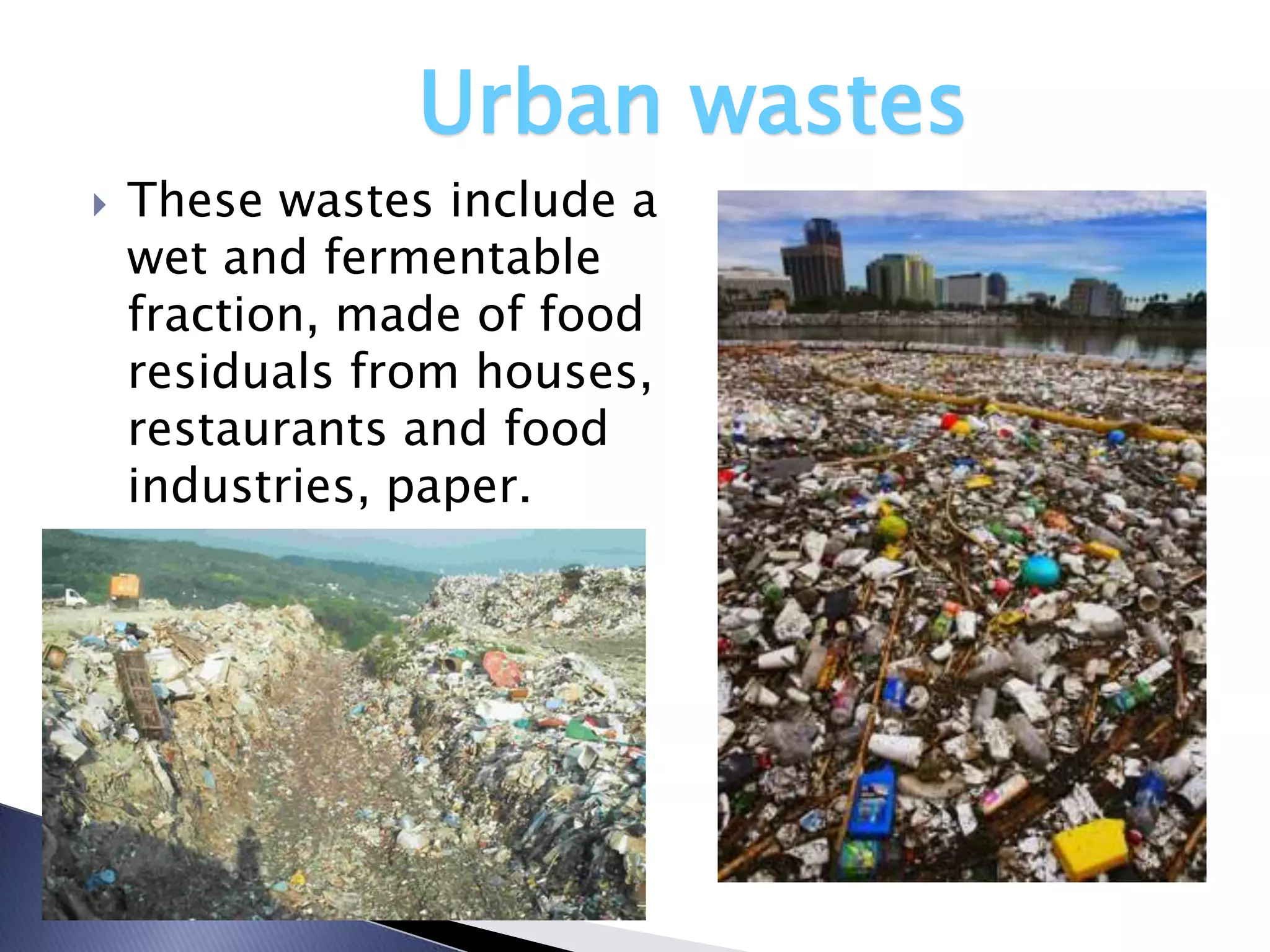
Urban wastes
   These wastes include a
    wet and fermentable
    fraction, made of food
    residuals from houses,
    restaurants and food
    industries, paper.
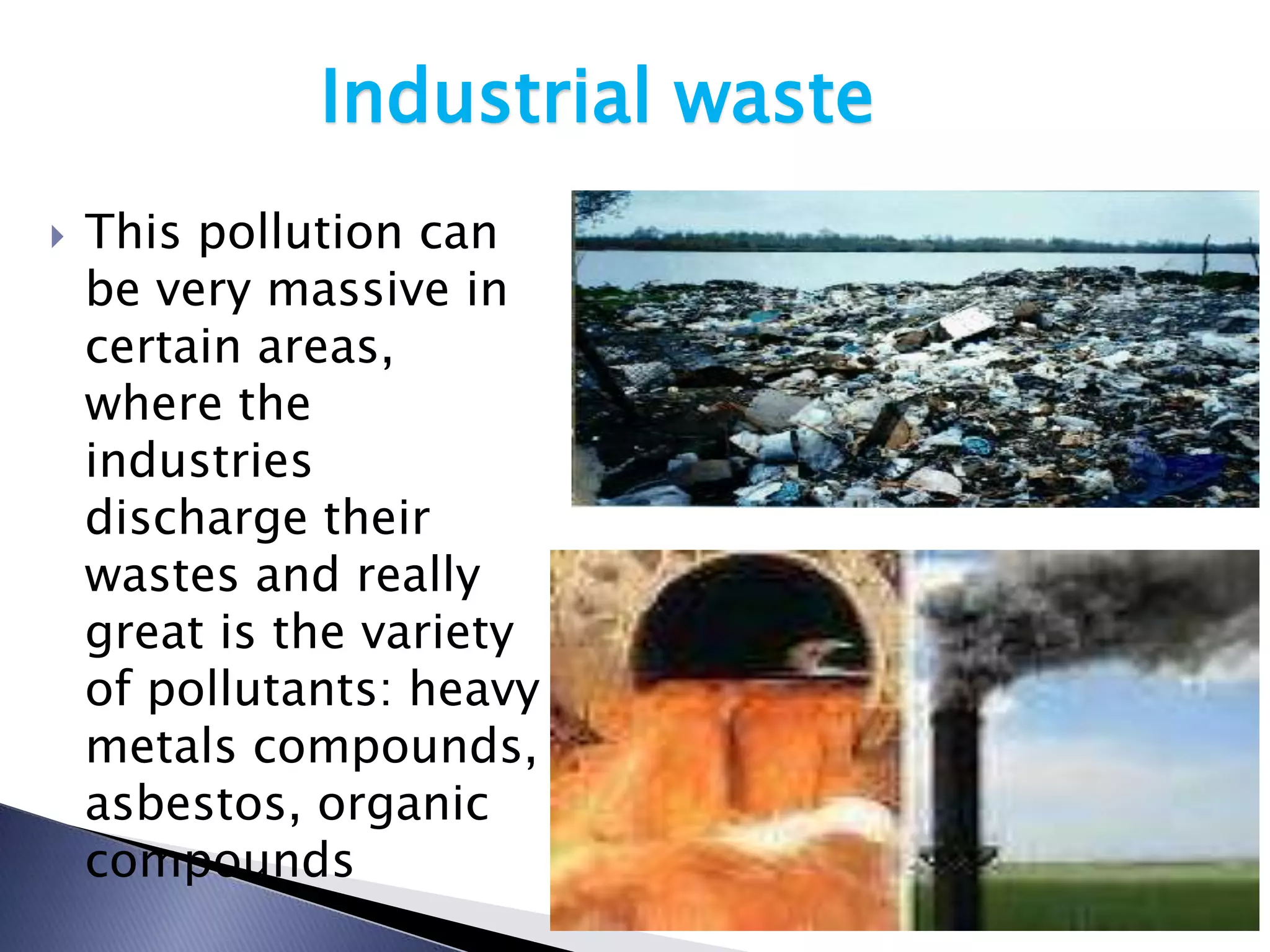
Industrial waste
   This pollution can
    be very massive in
    certain areas,
    where the
    industries
    discharge their
    wastes and really
    great is the variety
    of pollutants: heavy
    metals compounds,
    asbestos, organic
    compounds
p0llutants
Excess   use of fertilizers
    Excess use of Na, Mg, Ca, K, Zn, in the
 form of fertilizers & pesticides inhabit
 plant growth & reduce crop yield.
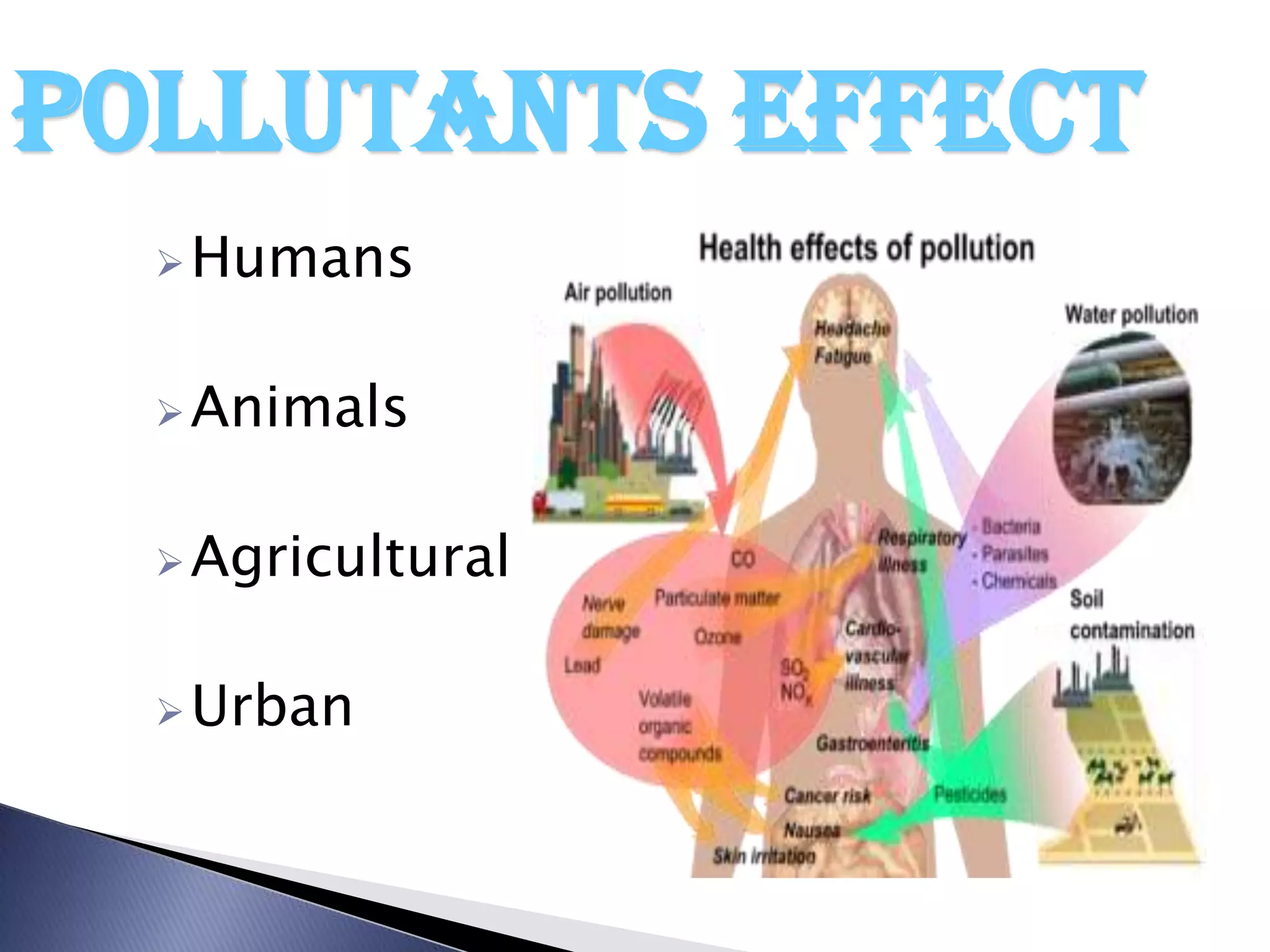
p0llutants effect
   Humans


   Animals


   Agricultural


   Urban
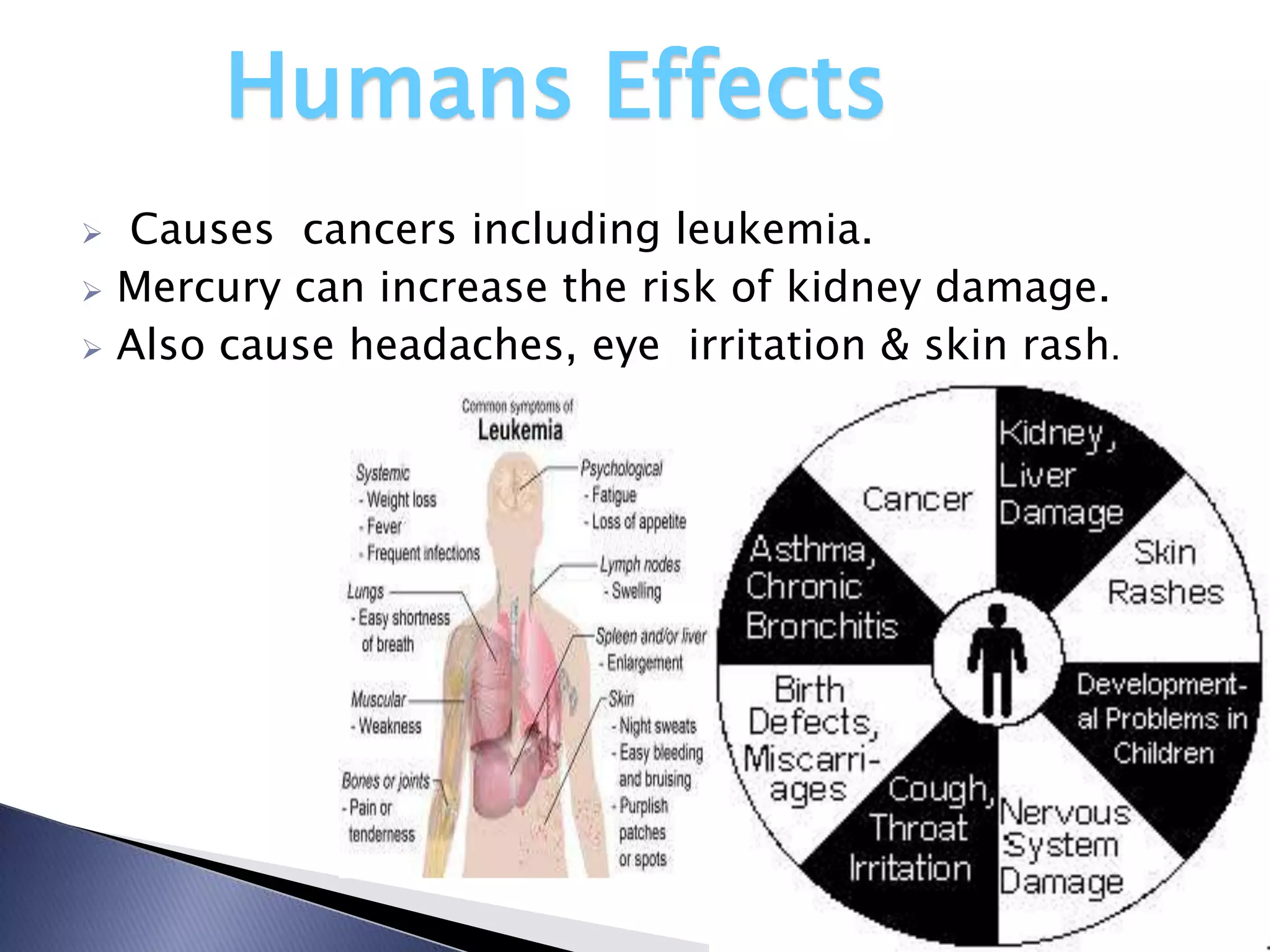
Humans Effects
 Causes cancers including leukemia.
 Mercury can increase the risk of kidney damage.

 Also cause headaches, eye irritation & skin rash.
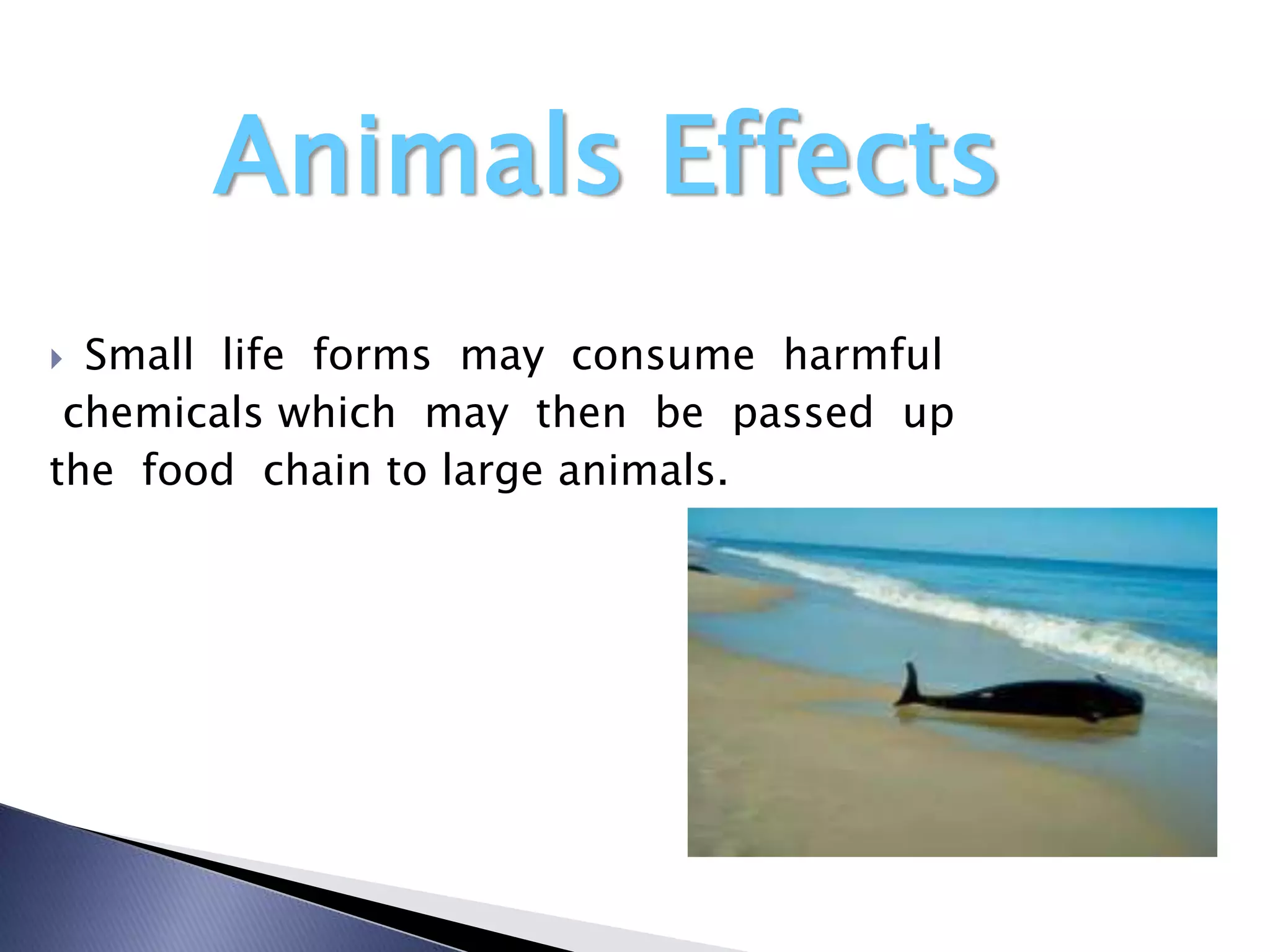
Animals Effects
 Small life forms may consume harmful
 chemicals which may then be passed up
the food chain to large animals.
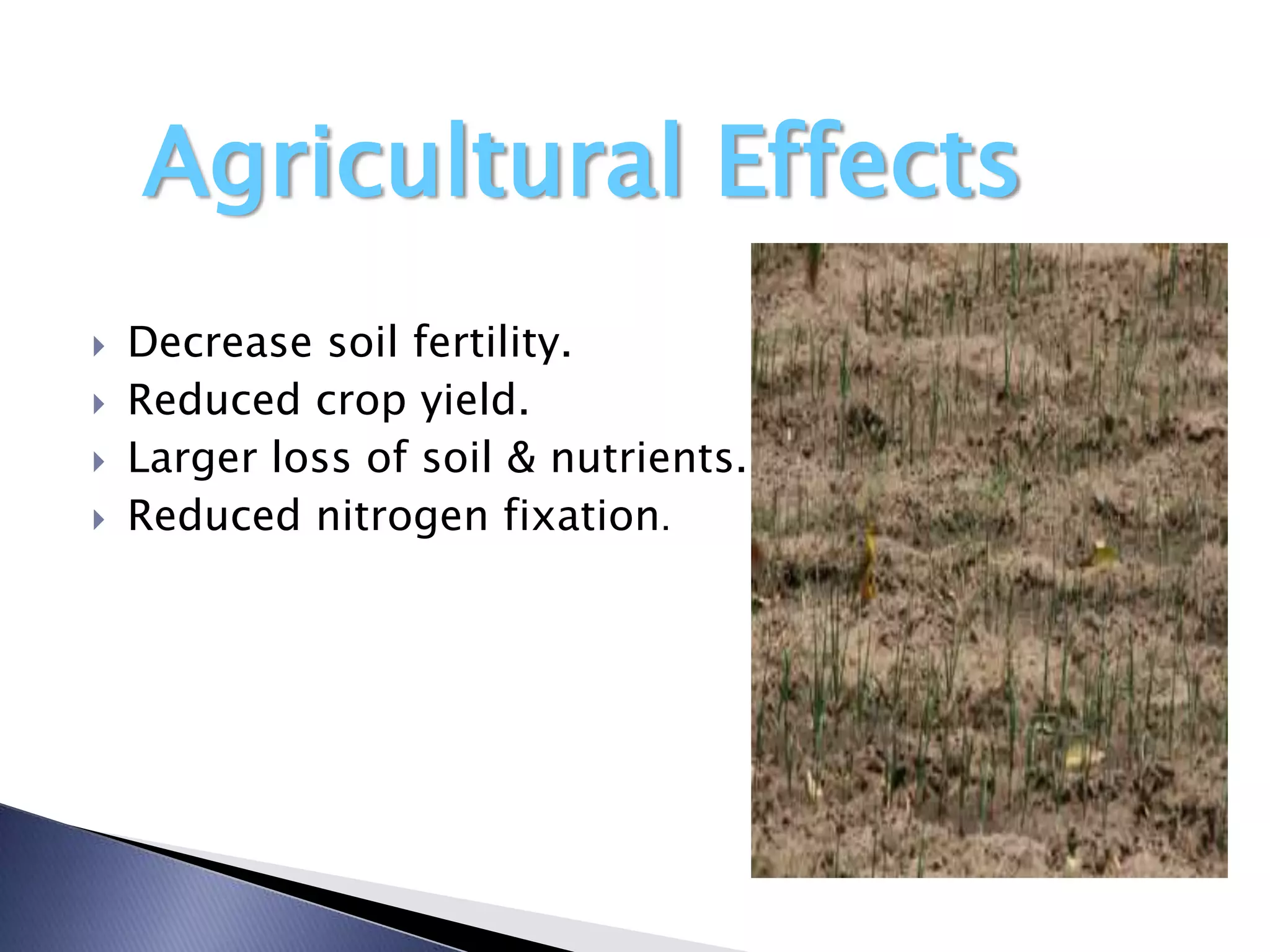
Agricultural Effects
   Decrease soil fertility.
   Reduced crop yield.
   Larger loss of soil & nutrients.
   Reduced nitrogen fixation.
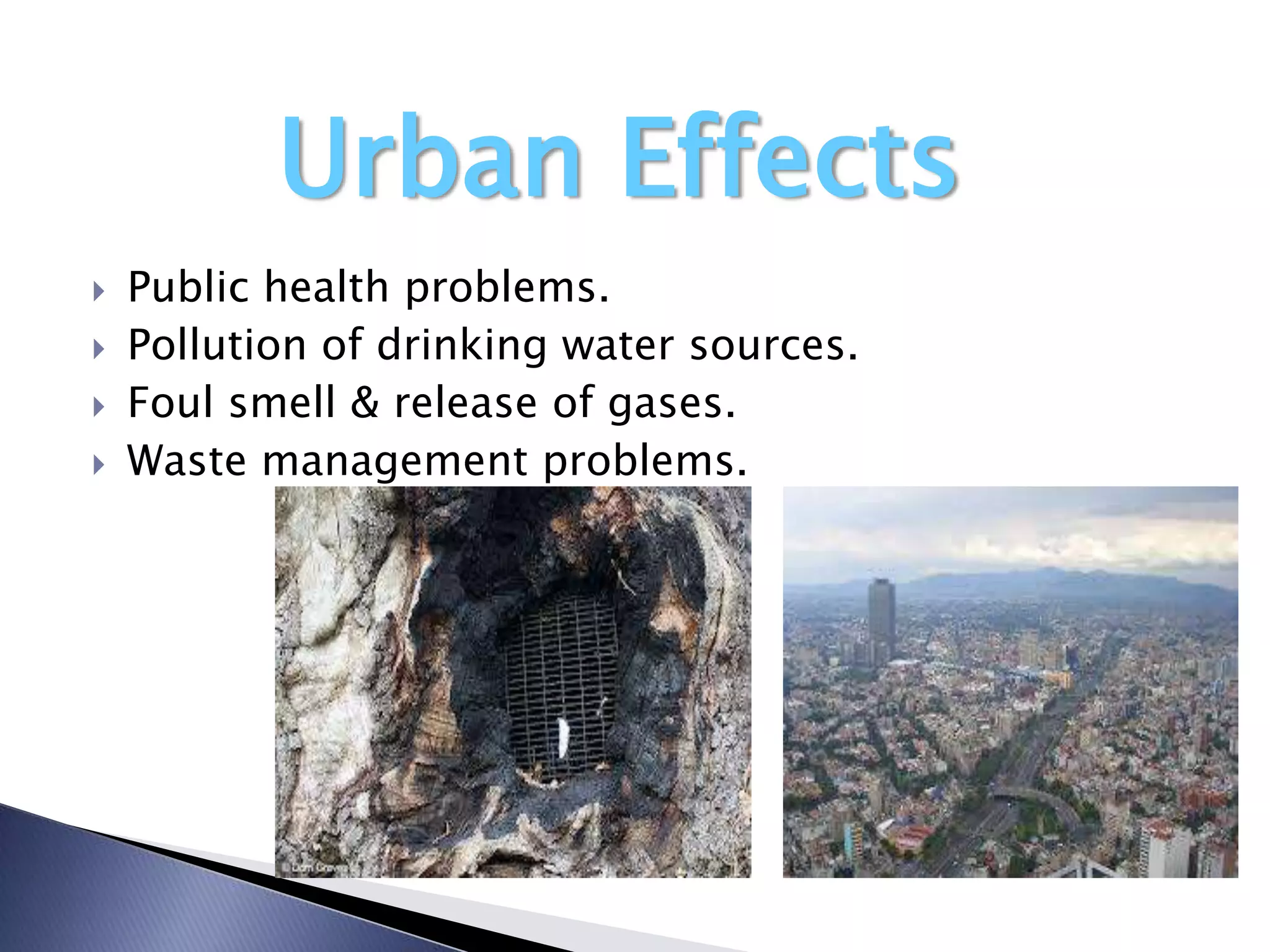
Urban Effects
   Public health problems.
   Pollution of drinking water sources.
   Foul smell & release of gases.
   Waste management problems.
Control of soil pollution

   Ban on use of plastic bags which are
    major cause of pollution in cities.
   Recycling of plastic wastes to
    manufacture many ‘remake’ items.
    Ban on deforestation.
   Encouraging forest replantation
    programmes.
   Use carefully the fertilizers & pesticides
    preferable in optimal dose.
CONTAMINATION OF SOILS WITH ORGANIC AND INORGANIC POLLUTANTS (Mashooq hussain odhano Ph.D)

CONTAMINATION OF SOILS WITH ORGANIC AND INORGANIC POLLUTANTS (Mashooq hussain odhano Ph.D)

  • 2.
  • 3.
    CONTAMINATION OF SOILSWITH ORGANIC AND INORGANIC POLLUTANTS By MASHOOQ HUSSAIN ODHANO (PhD, Student)
  • 4.
    Soil contamination Soil contaminationis the occurrence of pollutants in soil above a certain level causing a deterioration or loss of one or more soil functions. Also, Soil Contamination can be considered as the presence of man-made chemicals or other alteration in the natural soil environment. This type of contamination typically arises from the rupture of underground storage tanks, application of pesticides, percolation of contaminated surface water to subsurface strata, leaching of wastes from landfills or direct discharge of industrial wastes to the soil. The most common chemicals involved are petroleum hydrocarbons, solvents, pesticides, lead and other heavy metals. The occurrence of this phenomenon is correlated with the degree of industrialization and intensity of chemical usage.
  • 5.
    Corrosion of underground storage tanks (including piping used to transmit the contents)  Application of fertilizers and pesticides  Mining  Oil and fuel dumping  Disposal of coal ash  Leaching from landfills  Direct discharge of industrial wastes to the soil  Drainage of contaminated surface water into the soil  Discharging urine and faeces in the open The most common chemicals involved are petroleum hydrocarbons, solvents, pesticides, lead, and other heavy metals.
  • 6.
    Soil pollution • Soil pollution is defined or can be described as the contamination of soil of a particular region. • Soil pollution is caused by addition of chemicals, which reduces it’s productive capacity. • In rural areas more fertilizers & pesticides are used in agricultural operations & the residual chemicals remain in the top layers of soil.
  • 7.
    Pollutants in Pakistan Pakistanis the seventh most populous country of the world, having a population of more the 180 million. It is developing country with an increasing population density in order to develop its economy, Pakistan requires establishment of new industries. Due to unplanned industrial growth, much of the land and nearby water bodies are polluted by indiscriminate dumping of solid and liquid wastes generated by these units increased levels of metal ions and organic pollutants in the environment are either due to absence of laws for various industries to treat their wastes .
  • 8.
    The rapid increasein population, together with the unplanned disposal of effluent from tanneries and textile industries have increased the threat of soil pollution in Pakistan. Faisalabad Effect of industrial effluents discharged by various industries in the industrial area o f Lahore, Sheikhupura and Kala Shah Kaku indicated soil and water contamination of salts and heavy metals in their respective areas. Environmental protection agency studies have been shown that industrial effluents from electroplating and tannery industries containing toxic metals, such as Cr, Ni, As, Hg, Cu, Pt, etc have contaminated soil and biota of these areas by such metals in Faisalabad and Lahore. Pakistan reported that Faisalabad city effluent, comprising of domestic and industrial wastes, contained toxic metals, including Pb, Cu and Cd.
  • 9.
    The type ofpollutant  ORGANIC POLLUTANTS  INORGANIC POLLUTANTS
  • 10.
    1.ORGANIC POLLUTANTS a. SEWAGE,WASTE FROM TANNRIES,PAPER MILLS, FOOD PROSSESING INDUSTRIES. SUGAR REFINERIES DECREASE DISSOLVED OXYGEN PATHOGENIC MICROORGANISM , EUTROFICATION b. SYNTHETIC ORGANIC CHEMICALS ( PLASTIC,PAINTS,PHARMA WASTE) c. PESTICIDES .
  • 11.
    2.INORGANIC POLLUTANTS HEAVY METALPOLLUTANTS  ENTER INTO FOOD CHAIN  AFFINITY FOR SULPHUR;ATTACK SULPHUR BONDS IN ENZYMES  OTHER VULNARABLE SITES ARE COOH OF PROTEIN ALSO BIND TO CELL MEMBRANE. A. ORGANIC MERCURIAL: INCECTISIDES & BACTERICIDES, NEUROLOGICAL DISORDERS B. CADMIUM: UNCOUPLER OF OXIDATIVE PHOSPHORYLATION C. BERYLLIUM :PHOSPHATE INHIBITOR D.STRONTIUM :COMPETITOR FOR CALCIUM IN BONE Lead, Arsenic, Mercury, and Cadmium (all main industrial pollutants) tend to accumulate in the human body for long periods of time, as they are difficult to flush out of our system.
  • 12.
    SOURCES OF SOILPOLLUTION • Acid rains • Excess application of pesticides, fertilizer. • Urban solid wastes. • Disposal of Industrial wastes and sludge over land.
  • 13.
    Acid Rain  Acid Rain is caused by air pollution. The acidic water falls on the soil and pollutes it by making the soil acidic.
  • 14.
    Fertilizers  The use of excess fertilizers to increase the crop yields makes the soil either acidic or alkaline and pollutes it.  Ex: ammonium sulphate , sodium nitrate
  • 15.
    Excess use ofFertilizers  Excess use of Na, Mg, Ca, K, Zn in the form of fertilizers & pesticides inhibit plant growth & reduce crop yield.
  • 16.
    Urban wastes  These wastes include a wet and fermentable fraction, made of food residuals from houses, restaurants and food industries, paper.
  • 17.
    Industrial waste  This pollution can be very massive in certain areas, where the industries discharge their wastes and really great is the variety of pollutants: heavy metals compounds, asbestos, organic compounds
  • 18.
    p0llutants Excess use of fertilizers Excess use of Na, Mg, Ca, K, Zn, in the form of fertilizers & pesticides inhabit plant growth & reduce crop yield.
  • 19.
    p0llutants effect  Humans  Animals  Agricultural  Urban
  • 20.
    Humans Effects  Causescancers including leukemia.  Mercury can increase the risk of kidney damage.  Also cause headaches, eye irritation & skin rash.
  • 21.
    Animals Effects  Smalllife forms may consume harmful chemicals which may then be passed up the food chain to large animals.
  • 22.
    Agricultural Effects  Decrease soil fertility.  Reduced crop yield.  Larger loss of soil & nutrients.  Reduced nitrogen fixation.
  • 23.
    Urban Effects  Public health problems.  Pollution of drinking water sources.  Foul smell & release of gases.  Waste management problems.
  • 24.
    Control of soilpollution  Ban on use of plastic bags which are major cause of pollution in cities.  Recycling of plastic wastes to manufacture many ‘remake’ items.  Ban on deforestation.  Encouraging forest replantation programmes.  Use carefully the fertilizers & pesticides preferable in optimal dose.