AIR
POLLUTION
   Jelly C. Daroy
 Bea May P. Durante
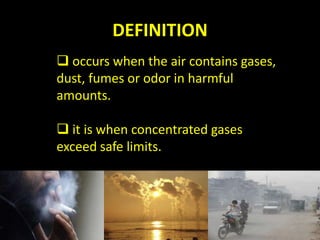
DEFINITION
 occurs when the air contains gases,
dust, fumes or odor in harmful
amounts.

 it is when concentrated gases
exceed safe limits.
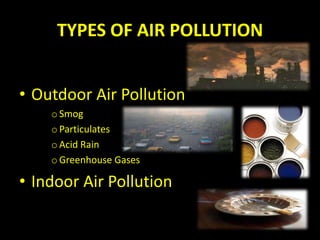
TYPES OF AIR POLLUTION


• Outdoor Air Pollution
    o Smog
    o Particulates
    o Acid Rain
    o Greenhouse Gases

• Indoor Air Pollution
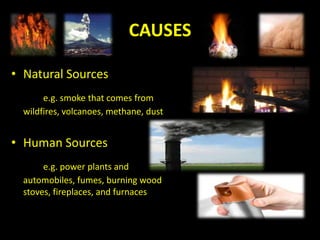
CAUSES

• Natural Sources
       e.g. smoke that comes from
  wildfires, volcanoes, methane, dust


• Human Sources
       e.g. power plants and
  automobiles, fumes, burning wood
  stoves, fireplaces, and furnaces
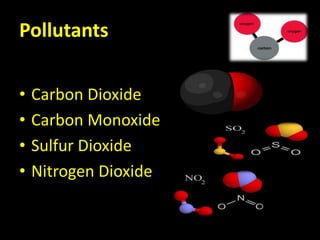
Pollutants

•   Carbon Dioxide
•   Carbon Monoxide
•   Sulfur Dioxide
•   Nitrogen Dioxide
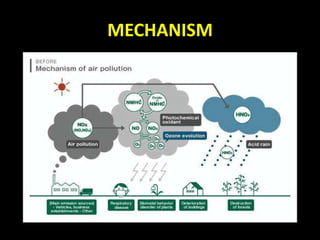
MECHANISM
Primary Mechanism
• Formation of VOC
• Biological generation of VOC
• Formation of liquid aerosol droplets
• Anthropomorphic generation of particulate
  aerosol
• Biological formation of particulate aerosols
• Particulate aerosol formation
Secondary Mechanism


• Condensation

• Adsorption

• Nucleation
EFFECTS
• Human Effects
          e.g. diseases
• Environmental Effects
           Acid rain
           Eutrophication
           Haze
           Wildlife
           Ozone Depletion
           Crop and forest damage
           Global Climate Change
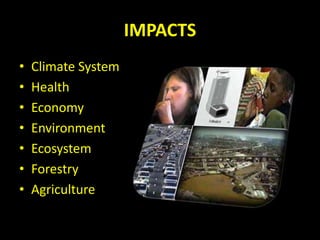
IMPACTS
•   Climate System
•   Health
•   Economy
•   Environment
•   Ecosystem
•   Forestry
•   Agriculture
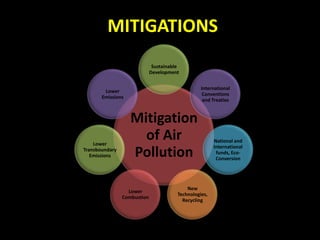
MITIGATIONS
                              Sustainable
                             Development

                                                  International
        Lower
                                                   Conventions
       Emissions
                                                   and Treaties


                   Mitigation
    Lower
                     of Air                             National and
                                                        International
Transboundary
   Emissions       Pollution                             funds, Eco-
                                                         Conversion


                                            New
                  Lower
                                        Technologies,
                Combustion
                                          Recycling
CONCLUSION AND RECOMMENDATIONS

• Air pollution has long been a serious problem
  in the world.
• Without air, Earth would be unable to sustain
  life.
• Spread the Word.

Air pollution final.ppt

  • 1.
    AIR POLLUTION Jelly C. Daroy Bea May P. Durante
  • 2.
    DEFINITION  occurs whenthe air contains gases, dust, fumes or odor in harmful amounts.  it is when concentrated gases exceed safe limits.
  • 3.
    TYPES OF AIRPOLLUTION • Outdoor Air Pollution o Smog o Particulates o Acid Rain o Greenhouse Gases • Indoor Air Pollution
  • 4.
    CAUSES • Natural Sources e.g. smoke that comes from wildfires, volcanoes, methane, dust • Human Sources e.g. power plants and automobiles, fumes, burning wood stoves, fireplaces, and furnaces
  • 5.
    Pollutants • Carbon Dioxide • Carbon Monoxide • Sulfur Dioxide • Nitrogen Dioxide
  • 6.
  • 7.
    Primary Mechanism • Formationof VOC • Biological generation of VOC • Formation of liquid aerosol droplets • Anthropomorphic generation of particulate aerosol • Biological formation of particulate aerosols • Particulate aerosol formation
  • 8.
  • 9.
    EFFECTS • Human Effects e.g. diseases • Environmental Effects  Acid rain  Eutrophication  Haze  Wildlife  Ozone Depletion  Crop and forest damage  Global Climate Change
  • 10.
    IMPACTS • Climate System • Health • Economy • Environment • Ecosystem • Forestry • Agriculture
  • 11.
    MITIGATIONS Sustainable Development International Lower Conventions Emissions and Treaties Mitigation Lower of Air National and International Transboundary Emissions Pollution funds, Eco- Conversion New Lower Technologies, Combustion Recycling
  • 12.
    CONCLUSION AND RECOMMENDATIONS •Air pollution has long been a serious problem in the world. • Without air, Earth would be unable to sustain life. • Spread the Word.

Editor's Notes

  • #4 Outdoor Air Pollution: Each year, hundreds of millions of tons of gases and particulates pour into the atmosphere. Most of this pollution results from the burning of fuel to power motor vehicles and to heat buildings. Some air pollution also comes from business and industrial processes. Indoor air pollution occurs when buildings with poorly designed ventilation systems trap pollutants inside.