AIR
POLLUTION
Presented By:
Ashhadul Islam
Content
• Introduction

• Types of air pollution
• Smog
• Acid rain & effect

• Green house & effect
• Effect on ozone layer
• Causes of air pollution

• preventions
WHAT IS AIR POLLUTION??

• Air pollution is the introduction of
chemicals, particulate matter, or biological materials
that cause harm or discomfort to humans or other
living organisms, or cause damage to the natural
environment or built environment, into the
atmosphere.
TYPES OF AIR POLLUTION
• There are several types of air pollution, Mainly
Indoor Air Pollution and Out Door Air Pollution.
These include smog, acid rain, the green house
effect and hole in the ozone layer.
• One type of air pollution is the release of particles
into the air.
• Another type of pollution is the release of poisonous
gases.
SMOG
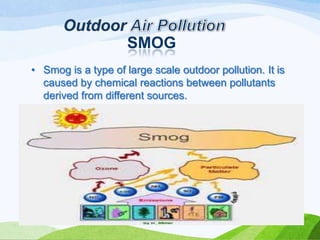
• Smog is a type of large scale outdoor pollution. It is
caused by chemical reactions between pollutants
derived from different sources.
ACID RAIN
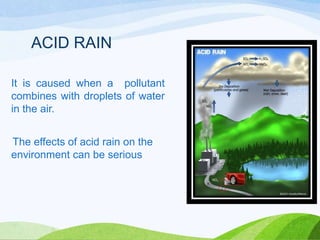
It is caused when a pollutant
combines with droplets of water
in the air.
The effects of acid rain on the
environment can be serious
EFFECTS OF ACID RAIN
 Acid rain causes acidification of lakes and streams .
 It contributes to the damage of trees and many sensitive
forest
soils.
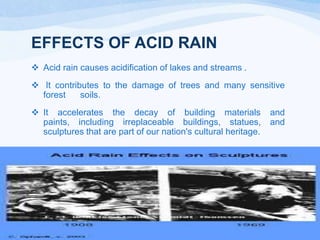
 It accelerates the decay of building materials
paints, including irreplaceable buildings, statues,
sculptures that are part of our nation's cultural heritage.

and
and
GREEN HOUSE EFFECT
•

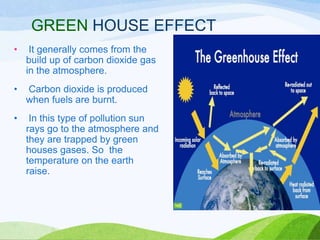
It generally comes from the
build up of carbon dioxide gas
in the atmosphere.

•

Carbon dioxide is produced
when fuels are burnt.

•

In this type of pollution sun
rays go to the atmosphere and
they are trapped by green
houses gases. So the
temperature on the earth
raise.
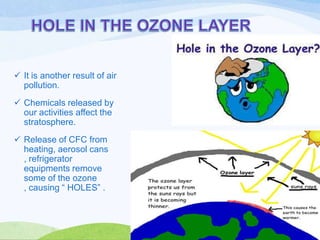
 It is another result of air
pollution.
 Chemicals released by
our activities affect the
stratosphere.
 Release of CFC from
heating, aerosol cans
, refrigerator
equipments remove
some of the ozone
, causing “ HOLES” .
INDOOR AIR POLLUTION
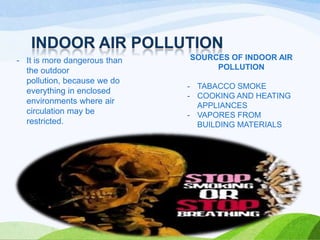
- It is more dangerous than
the outdoor
pollution, because we do
everything in enclosed
environments where air
circulation may be
restricted.

SOURCES OF INDOOR AIR
POLLUTION
- TABACCO SMOKE
- COOKING AND HEATING
APPLIANCES
- VAPORES FROM
BUILDING MATERIALS
CAUSES OF AIR POLLUTION
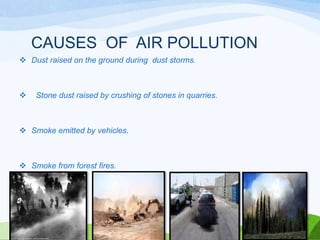
 Dust raised on the ground during dust storms.



Stone dust raised by crushing of stones in quarries.

 Smoke emitted by vehicles.

 Smoke from forest fires.
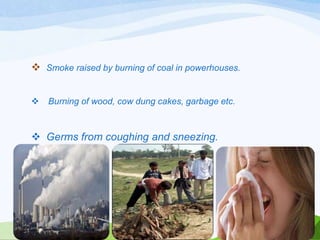
 Smoke raised by burning of coal in powerhouses.


Burning of wood, cow dung cakes, garbage etc.

 Germs from coughing and sneezing.
 Some individuals are much more sensitive to pollutants than are
others.

 Air pollution can affect our health in many ways with both short term
and long term effects.
 Many different chemicals in the air affect the human body in negative
ways.
•

Older people are highly vulnerable to diseases induced by air
pollution. Those with heart or lung disorders are under additional risk

•

Children and infants are also at serious risk.

•

Air pollutants such as ozone, nitrogen oxides, and sulfur dioxide also
have harmful effects on natural ecosystems. They can kill plants and
trees by destroying their leaves, and can kill animals, especially fish
in highly polluted rivers.
PREVENTIONS
Below are a few efforts that you can make to help clean our air

 Car Pool: Forming and implementing a car pool will reduce the
number of cars, thereby, preventing air pollution by cutting down
the use of fossil fuels. This way, it will help in the sustainable use
of fossil fuel and its conservation for the future generations.

 Vehicle Care: Timely servicing of the car helps to keep it in a
good condition, and also minimizes fuel exhaust. Driving the car
at an average speed and turning off in traffic are the thumb rules
to save fuel. Make sure to use unleaded petrol and opt for regular
pollution checking of your car.
•

Public Transport: Whenever possible, try to travel by public transports. This
helps in two ways; prevents air pollution and increases public income. If you
are going to a nearby place, go by walking or use a bicycle, instead of using
your vehicle. The objective is to minimize the use of fuels as far as possible.

•

Alternative Energy Sources: Another effective way to prevent air pollution is
to use alternative energy sources such as solar energy, hydroelectric
energy, and wind energy. Nowadays, sophisticated technologies such as wind
turbine, solar water heaters are introduced to generate electricity and other
energy forms for household uses.

•

Saving Energy: Saving energy will, of course, help to prevent air pollution.
Switch off the lights, fans, air conditioners, televisions, and other
appliances, when not in use. You can also share a room with others when the
air conditioner or fan is on, instead of switching them on in every room.
•

Minimize Air Pollution: Always try to minimize smoke emission, as
it contributes a lot to air pollution. One way is to compost dried leaves
and kitchen waste, instead of burning them. Composting will also
give you organic fertilizer for your garden. Other tips include
replacing old wood stoves or gas furnaces, avoiding solvents, and
most importantly, do not smoke in the home.

•

Recyclable Materials: Recycling is a simple approach to reduce
pollution in two ways; save energy which is required for disposing
and minimize the pollutants released during manufacturing. The list
of recyclable materials include plastic bottles, aluminum cans and
utensils, paper, craft papers, cardboard and glass bottles.

•

Smart Purchasing: Remember to carry paper bags and minimize
using plastic bags. While buying the products, always choose airfriendly and recyclable products that will minimize the emission of
pollutants. Also, shop for only energy-efficient appliances that use
less packaging.
Air pollution

Air pollution

  • 1.
  • 3.
    Content • Introduction • Typesof air pollution • Smog • Acid rain & effect • Green house & effect • Effect on ozone layer • Causes of air pollution • preventions
  • 4.
    WHAT IS AIRPOLLUTION?? • Air pollution is the introduction of chemicals, particulate matter, or biological materials that cause harm or discomfort to humans or other living organisms, or cause damage to the natural environment or built environment, into the atmosphere.
  • 5.
    TYPES OF AIRPOLLUTION • There are several types of air pollution, Mainly Indoor Air Pollution and Out Door Air Pollution. These include smog, acid rain, the green house effect and hole in the ozone layer. • One type of air pollution is the release of particles into the air. • Another type of pollution is the release of poisonous gases.
  • 6.
    SMOG • Smog isa type of large scale outdoor pollution. It is caused by chemical reactions between pollutants derived from different sources.
  • 7.
    ACID RAIN It iscaused when a pollutant combines with droplets of water in the air. The effects of acid rain on the environment can be serious
  • 8.
    EFFECTS OF ACIDRAIN  Acid rain causes acidification of lakes and streams .  It contributes to the damage of trees and many sensitive forest soils.  It accelerates the decay of building materials paints, including irreplaceable buildings, statues, sculptures that are part of our nation's cultural heritage. and and
  • 9.
    GREEN HOUSE EFFECT • Itgenerally comes from the build up of carbon dioxide gas in the atmosphere. • Carbon dioxide is produced when fuels are burnt. • In this type of pollution sun rays go to the atmosphere and they are trapped by green houses gases. So the temperature on the earth raise.
  • 10.
     It isanother result of air pollution.  Chemicals released by our activities affect the stratosphere.  Release of CFC from heating, aerosol cans , refrigerator equipments remove some of the ozone , causing “ HOLES” .
  • 11.
    INDOOR AIR POLLUTION -It is more dangerous than the outdoor pollution, because we do everything in enclosed environments where air circulation may be restricted. SOURCES OF INDOOR AIR POLLUTION - TABACCO SMOKE - COOKING AND HEATING APPLIANCES - VAPORES FROM BUILDING MATERIALS
  • 12.
    CAUSES OF AIRPOLLUTION  Dust raised on the ground during dust storms.  Stone dust raised by crushing of stones in quarries.  Smoke emitted by vehicles.  Smoke from forest fires.
  • 13.
     Smoke raisedby burning of coal in powerhouses.  Burning of wood, cow dung cakes, garbage etc.  Germs from coughing and sneezing.
  • 14.
     Some individualsare much more sensitive to pollutants than are others.  Air pollution can affect our health in many ways with both short term and long term effects.  Many different chemicals in the air affect the human body in negative ways. • Older people are highly vulnerable to diseases induced by air pollution. Those with heart or lung disorders are under additional risk • Children and infants are also at serious risk. • Air pollutants such as ozone, nitrogen oxides, and sulfur dioxide also have harmful effects on natural ecosystems. They can kill plants and trees by destroying their leaves, and can kill animals, especially fish in highly polluted rivers.
  • 15.
    PREVENTIONS Below are afew efforts that you can make to help clean our air  Car Pool: Forming and implementing a car pool will reduce the number of cars, thereby, preventing air pollution by cutting down the use of fossil fuels. This way, it will help in the sustainable use of fossil fuel and its conservation for the future generations.  Vehicle Care: Timely servicing of the car helps to keep it in a good condition, and also minimizes fuel exhaust. Driving the car at an average speed and turning off in traffic are the thumb rules to save fuel. Make sure to use unleaded petrol and opt for regular pollution checking of your car.
  • 16.
    • Public Transport: Wheneverpossible, try to travel by public transports. This helps in two ways; prevents air pollution and increases public income. If you are going to a nearby place, go by walking or use a bicycle, instead of using your vehicle. The objective is to minimize the use of fuels as far as possible. • Alternative Energy Sources: Another effective way to prevent air pollution is to use alternative energy sources such as solar energy, hydroelectric energy, and wind energy. Nowadays, sophisticated technologies such as wind turbine, solar water heaters are introduced to generate electricity and other energy forms for household uses. • Saving Energy: Saving energy will, of course, help to prevent air pollution. Switch off the lights, fans, air conditioners, televisions, and other appliances, when not in use. You can also share a room with others when the air conditioner or fan is on, instead of switching them on in every room.
  • 17.
    • Minimize Air Pollution:Always try to minimize smoke emission, as it contributes a lot to air pollution. One way is to compost dried leaves and kitchen waste, instead of burning them. Composting will also give you organic fertilizer for your garden. Other tips include replacing old wood stoves or gas furnaces, avoiding solvents, and most importantly, do not smoke in the home. • Recyclable Materials: Recycling is a simple approach to reduce pollution in two ways; save energy which is required for disposing and minimize the pollutants released during manufacturing. The list of recyclable materials include plastic bottles, aluminum cans and utensils, paper, craft papers, cardboard and glass bottles. • Smart Purchasing: Remember to carry paper bags and minimize using plastic bags. While buying the products, always choose airfriendly and recyclable products that will minimize the emission of pollutants. Also, shop for only energy-efficient appliances that use less packaging.