





POWERPOINT PRESENTATION
ON AIR POLLUTION
-HKR
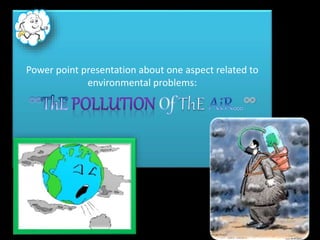
Power point presentation about one aspect related to
environmental problems:
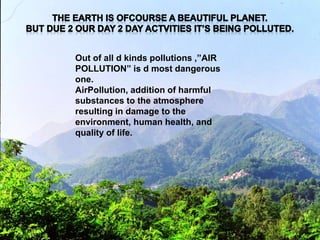
Out of all d kinds pollutions ,”AIR
POLLUTION” is d most dangerous
one.
AirPollution, addition of harmful
substances to the atmosphere
resulting in damage to the
environment, human health, and
quality of life.
What is air pollution?
-Air supplies us with oxygen which is
essential for our bodies to live.
-There are several main types of pollution.
These include smog, acid rains, the
greenhouse effect, and "hole" in the ozone
layer.
-One type of air pollution is the release of
particles into the air.
-Another type of pollution is the release of
noxious gases.
-. Pollution also needs to be considered
inside our homes, offices, and schools.
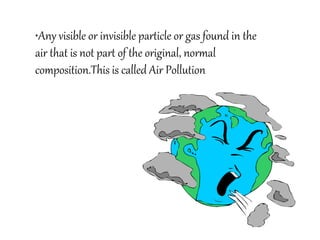
•Any visible or invisible particle or gas found in the
air that is not part of the original, normal
composition.This is called Air Pollution
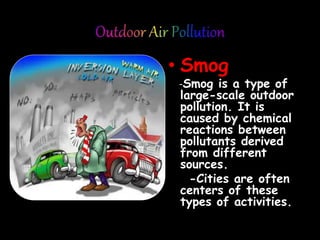
• Smog
-Smog is a type of
large-scale outdoor
pollution. It is
caused by chemical
reactions between
pollutants derived
from different
sources.
-Cities are often
centers of these
types of activities.
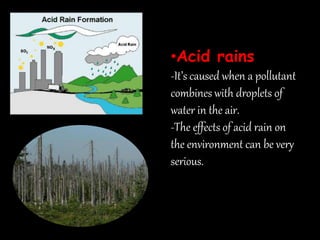
•Acid rains
-It’s caused when a pollutant
combines with droplets of
water in the air.
-The effects of acid rain on
the environment can be very
serious.
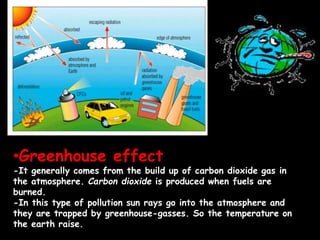
•Greenhouse effect
-It generally comes from the build up of carbon dioxide gas in
the atmosphere. Carbon dioxide is produced when fuels are
burned.
-In this type of pollution sun rays go into the atmosphere and
they are trapped by greenhouse-gasses. So the temperature on
the earth raise.
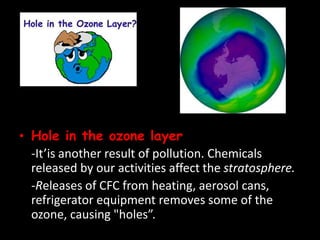
• Hole in the ozone layer
-It’is another result of pollution. Chemicals
released by our activities affect the stratosphere.
-Releases of CFC from heating, aerosol cans,
refrigerator equipment removes some of the
ozone, causing "holes”.
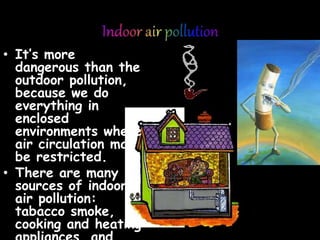
• It’s more
dangerous than the
outdoor pollution,
because we do
everything in
enclosed
environments where
air circulation may
be restricted.
• There are many
sources of indoor
air pollution:
tabacco smoke,
cooking and heating
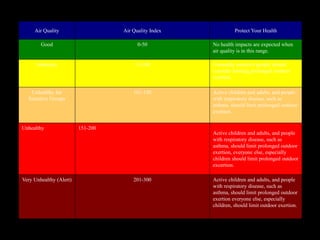
AQI: Air Quality Index
•Indicates whether pollutant levels in air may cause health concerns.
•Ranges from 0 (least concern) to 500 (greatest concern)
Air Quality Air Quality Index Protect Your Health
Good 0-50 No health impacts are expected when
air quality is in this range.
Moderate 51-100 Unusually sensitive people should
consider limiting prolonged outdoor
exertion.
Unhealthy for
Sensitive Groups
101-150 Active children and adults, and people
with respiratory disease, such as
asthma, should limit prolonged outdoor
exertion.
Unhealthy 151-200
Active children and adults, and people
with respiratory disease, such as
asthma, should limit prolonged outdoor
exertion, everyone else, especially
children should limit prolonged outdoor
excertion.
Very Unhealthy (Alert) 201-300 Active children and adults, and people
with respiratory disease, such as
asthma, should limit prolonged outdoor
exertion everyone else, especially
children, should limit outdoor exertion.
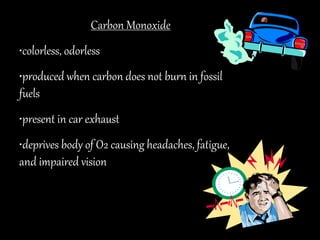
Carbon Monoxide
•colorless, odorless
•produced when carbon does not burn in fossil
fuels
•present in car exhaust
•deprives body of O2 causing headaches, fatigue,
and impaired vision
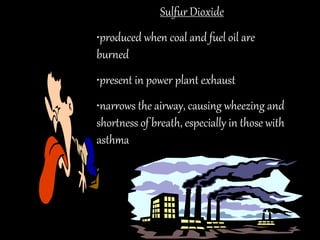
Sulfur Dioxide
•produced when coal and fuel oil are
burned
•present in power plant exhaust
•narrows the airway, causing wheezing and
shortness of breath, especially in those with
asthma
Nitrogen Dioxide
•reddish, brown gas
•produced when nitric oxide
combines with oxygen in the
atmosphere
•present in car exhaust and power
plants
•affects lungs and causes wheezing;
increases chance of respiratory
infection
Particulate Matter
•particles of different sizes and structures that are
released into the atmosphere
•present in many sources including fossil fuels,
dust, smoke, fog, etc.
•can build up in respiratory system
•aggravates heart and lung disease; increases risk
of respiratory infection
Ground Level Ozone
•at upper level, ozone shields Earth from sun’s harmful
UV rays
•at ground level, ozone is harmful pollutants
•formed from car, power and chemical plant exhaust
•irritate respiratory system and asthma; reduces lung
function by inflaming and damaging lining of lungs
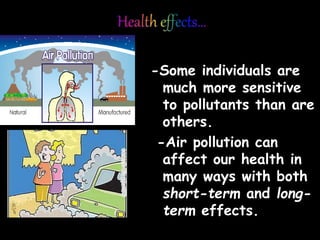
-Some individuals are
much more sensitive
to pollutants than are
others.
-Air pollution can
affect our health in
many ways with both
short-term and long-
term effects.
Australia's air pollution death toll is higher than fatalities from
road accidents.
1700 people die annually from road accidents.
2400 people die each year due to air pollution
And it’s not only humans that are slowly being poisoned; the environment is
suffering .
These chemicals are thickening the ozone layer&
the Earth gets warmer as more and more of the Sun’s rays are getting trapped
in the Earth’s atmosphere
thicker and
Carbon dioxide is the biggest contributor to the thickening of the ozone layer.
By the end of the 21st century, carbon dioxide levels will have increased by up to 75-
350% (compared to pre-industrial levels)
As the Earth heats up, our plants and animals are dying because they can’t adapt to the
high temperatures.
This problem is only getting worse.
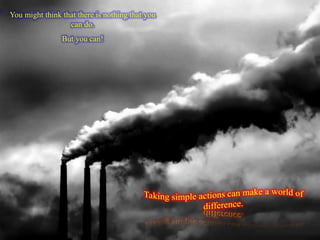
You might think that there is nothing that you
can do.
But you can!
-Air pollution prevention
efforts of companies
have generally focused
on waste reduction,
reuse and recycling.
-So to solve these
problems and to get over
them we can change our
lifestyles.
-If we do these simple
things we could have a
better world and we
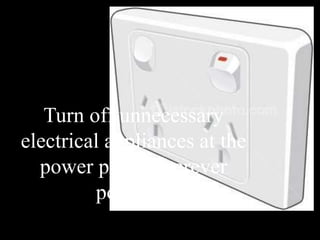
Turn off unnecessary
electrical appliances at the
power point wherever
possible.
Make it your goal to
purchase 'Green Power' -
power generated from
clean, renewable energy
such as solar or wind.
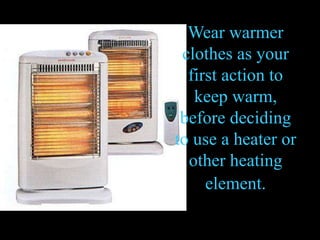
Wear warmer
clothes as your
first action to
keep warm,
before deciding
to use a heater or
other heating
element.
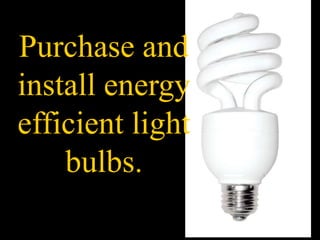
Purchase and
install energy
efficient light
bulbs.
•Ride your bike
•Tell your friends and family about pollution
•Make sure your parents get pollution checks on their cars
•Ride the school bus
•Learn more; stay up to date
•Join a group to stop pollution
•Encourage your parents to carpool to work
•Switch off lights, fan, heat, etc. when you leave the
room
**********************************
• Essentially, it is a "people's event", with colorful
activities such as
• Street Rallies,
• Bicycle Rallies,
• Green concerts,
• Essay competitions in schools,
• Tree Planting,
• Recycling and
• Clean up campaigns.
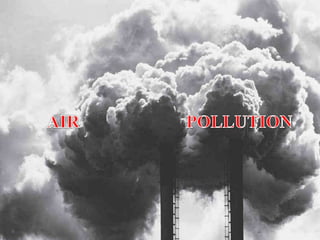
AIR POLLUTION
AIR POLLUTION
AIR POLLUTION

AIR POLLUTION

  • 1.
  • 2.
    Power point presentationabout one aspect related to environmental problems:
  • 5.
    Out of alld kinds pollutions ,”AIR POLLUTION” is d most dangerous one. AirPollution, addition of harmful substances to the atmosphere resulting in damage to the environment, human health, and quality of life.
  • 6.
    What is airpollution? -Air supplies us with oxygen which is essential for our bodies to live. -There are several main types of pollution. These include smog, acid rains, the greenhouse effect, and "hole" in the ozone layer. -One type of air pollution is the release of particles into the air. -Another type of pollution is the release of noxious gases. -. Pollution also needs to be considered inside our homes, offices, and schools.
  • 7.
    •Any visible orinvisible particle or gas found in the air that is not part of the original, normal composition.This is called Air Pollution
  • 8.
    • Smog -Smog isa type of large-scale outdoor pollution. It is caused by chemical reactions between pollutants derived from different sources. -Cities are often centers of these types of activities.
  • 10.
    •Acid rains -It’s causedwhen a pollutant combines with droplets of water in the air. -The effects of acid rain on the environment can be very serious.
  • 12.
    •Greenhouse effect -It generallycomes from the build up of carbon dioxide gas in the atmosphere. Carbon dioxide is produced when fuels are burned. -In this type of pollution sun rays go into the atmosphere and they are trapped by greenhouse-gasses. So the temperature on the earth raise.
  • 15.
    • Hole inthe ozone layer -It’is another result of pollution. Chemicals released by our activities affect the stratosphere. -Releases of CFC from heating, aerosol cans, refrigerator equipment removes some of the ozone, causing "holes”.
  • 17.
    • It’s more dangerousthan the outdoor pollution, because we do everything in enclosed environments where air circulation may be restricted. • There are many sources of indoor air pollution: tabacco smoke, cooking and heating
  • 19.
    AQI: Air QualityIndex •Indicates whether pollutant levels in air may cause health concerns. •Ranges from 0 (least concern) to 500 (greatest concern)
  • 20.
    Air Quality AirQuality Index Protect Your Health Good 0-50 No health impacts are expected when air quality is in this range. Moderate 51-100 Unusually sensitive people should consider limiting prolonged outdoor exertion. Unhealthy for Sensitive Groups 101-150 Active children and adults, and people with respiratory disease, such as asthma, should limit prolonged outdoor exertion. Unhealthy 151-200 Active children and adults, and people with respiratory disease, such as asthma, should limit prolonged outdoor exertion, everyone else, especially children should limit prolonged outdoor excertion. Very Unhealthy (Alert) 201-300 Active children and adults, and people with respiratory disease, such as asthma, should limit prolonged outdoor exertion everyone else, especially children, should limit outdoor exertion.
  • 23.
    Carbon Monoxide •colorless, odorless •producedwhen carbon does not burn in fossil fuels •present in car exhaust •deprives body of O2 causing headaches, fatigue, and impaired vision
  • 24.
    Sulfur Dioxide •produced whencoal and fuel oil are burned •present in power plant exhaust •narrows the airway, causing wheezing and shortness of breath, especially in those with asthma
  • 25.
    Nitrogen Dioxide •reddish, browngas •produced when nitric oxide combines with oxygen in the atmosphere •present in car exhaust and power plants •affects lungs and causes wheezing; increases chance of respiratory infection
  • 26.
    Particulate Matter •particles ofdifferent sizes and structures that are released into the atmosphere •present in many sources including fossil fuels, dust, smoke, fog, etc. •can build up in respiratory system •aggravates heart and lung disease; increases risk of respiratory infection
  • 27.
    Ground Level Ozone •atupper level, ozone shields Earth from sun’s harmful UV rays •at ground level, ozone is harmful pollutants •formed from car, power and chemical plant exhaust •irritate respiratory system and asthma; reduces lung function by inflaming and damaging lining of lungs
  • 28.
    -Some individuals are muchmore sensitive to pollutants than are others. -Air pollution can affect our health in many ways with both short-term and long- term effects.
  • 29.
    Australia's air pollutiondeath toll is higher than fatalities from road accidents. 1700 people die annually from road accidents. 2400 people die each year due to air pollution And it’s not only humans that are slowly being poisoned; the environment is suffering . These chemicals are thickening the ozone layer& the Earth gets warmer as more and more of the Sun’s rays are getting trapped in the Earth’s atmosphere thicker and Carbon dioxide is the biggest contributor to the thickening of the ozone layer. By the end of the 21st century, carbon dioxide levels will have increased by up to 75- 350% (compared to pre-industrial levels) As the Earth heats up, our plants and animals are dying because they can’t adapt to the high temperatures. This problem is only getting worse.
  • 30.
    You might thinkthat there is nothing that you can do. But you can!
  • 31.
    -Air pollution prevention effortsof companies have generally focused on waste reduction, reuse and recycling. -So to solve these problems and to get over them we can change our lifestyles. -If we do these simple things we could have a better world and we
  • 33.
    Turn off unnecessary electricalappliances at the power point wherever possible.
  • 34.
    Make it yourgoal to purchase 'Green Power' - power generated from clean, renewable energy such as solar or wind.
  • 35.
    Wear warmer clothes asyour first action to keep warm, before deciding to use a heater or other heating element.
  • 36.
  • 37.
    •Ride your bike •Tellyour friends and family about pollution •Make sure your parents get pollution checks on their cars •Ride the school bus
  • 38.
    •Learn more; stayup to date •Join a group to stop pollution •Encourage your parents to carpool to work •Switch off lights, fan, heat, etc. when you leave the room
  • 39.
    ********************************** • Essentially, itis a "people's event", with colorful activities such as • Street Rallies, • Bicycle Rallies, • Green concerts, • Essay competitions in schools, • Tree Planting, • Recycling and • Clean up campaigns.