Submitted To:
Dr. Sujani kamble
Department of Pharmacognosy
Government college of pharmacy
Bangalore Presented by:
Sudhindra Kini
Department of Pharmacognosy
Government college of pharmacy
Bangalore
Topic :- Tocopherol and Tocotrienols
1
Contents
1. Introduction
2. History
3. Chemistry
4. Properties
5. Characteristic Feature
6. Dietary sources
7. Isolation of Tocopherol and Tocotrienols
8. Estimation of Tocopherol and Tocotrienols
9. Biochemical Use
10. Health Benefit
11. Pharmaceutical use
12. Deficiency symptoms
13. Current market scenario for vitamin E
2
Introduction
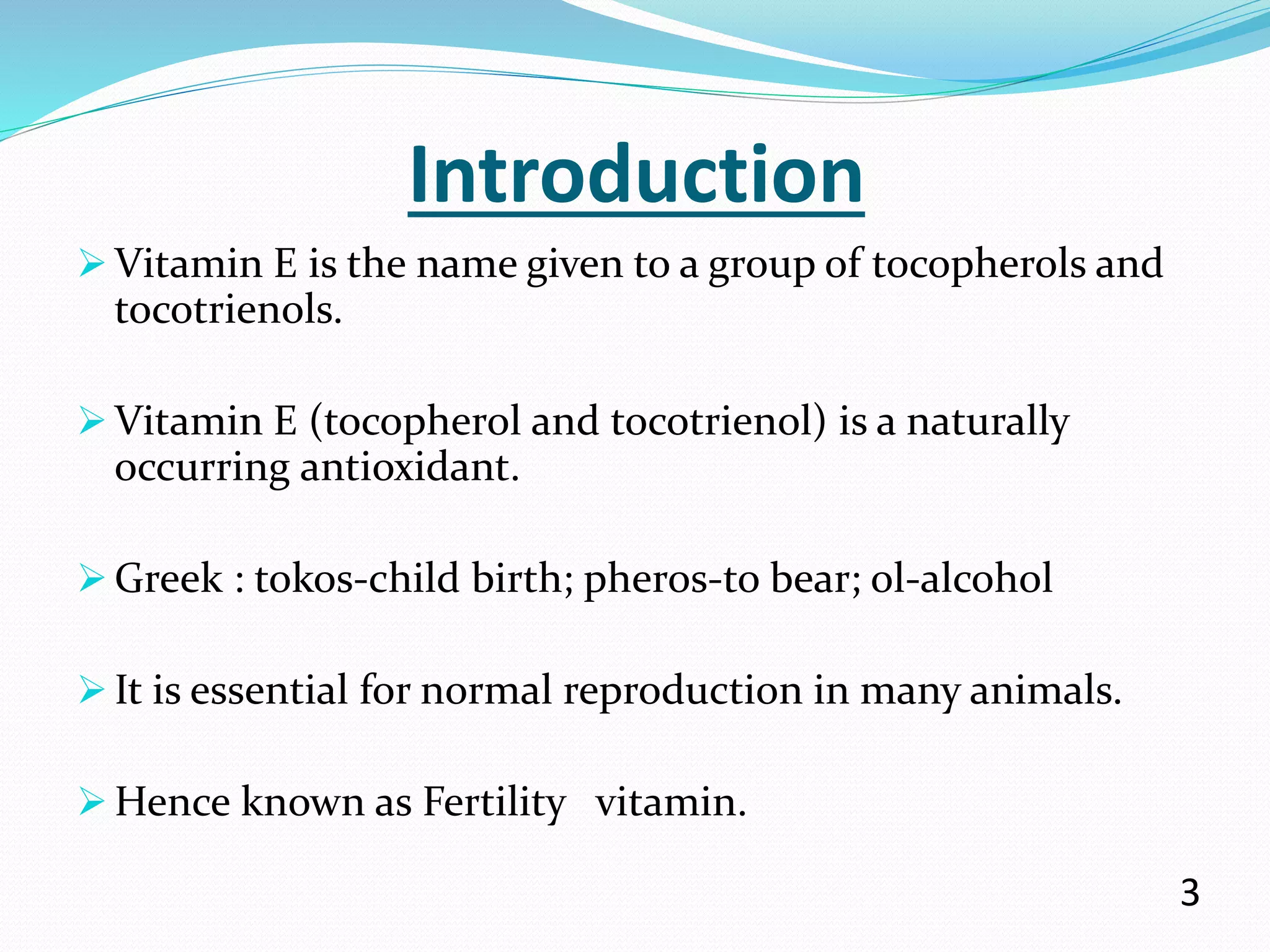
 Vitamin E is the name given to a group of tocopherols and
tocotrienols.
 Vitamin E (tocopherol and tocotrienol) is a naturally
occurring antioxidant.
 Greek : tokos-child birth; pheros-to bear; ol-alcohol
 It is essential for normal reproduction in many animals.
 Hence known as Fertility vitamin.
3
History
 Vitamin E was discovered by Herbert McLean Evans and Katharine
Scott Bishop(1922).
 It was isolated first time in pure form by Gladys Anderson Emerson,
(1935) at the University of California, Berkeley.
 Tocopherol was isolated from wheat germ in 1936
 The first use for vitamin E was as a therapeutic agent by
Widenbauer (1938).
4
Chemistry
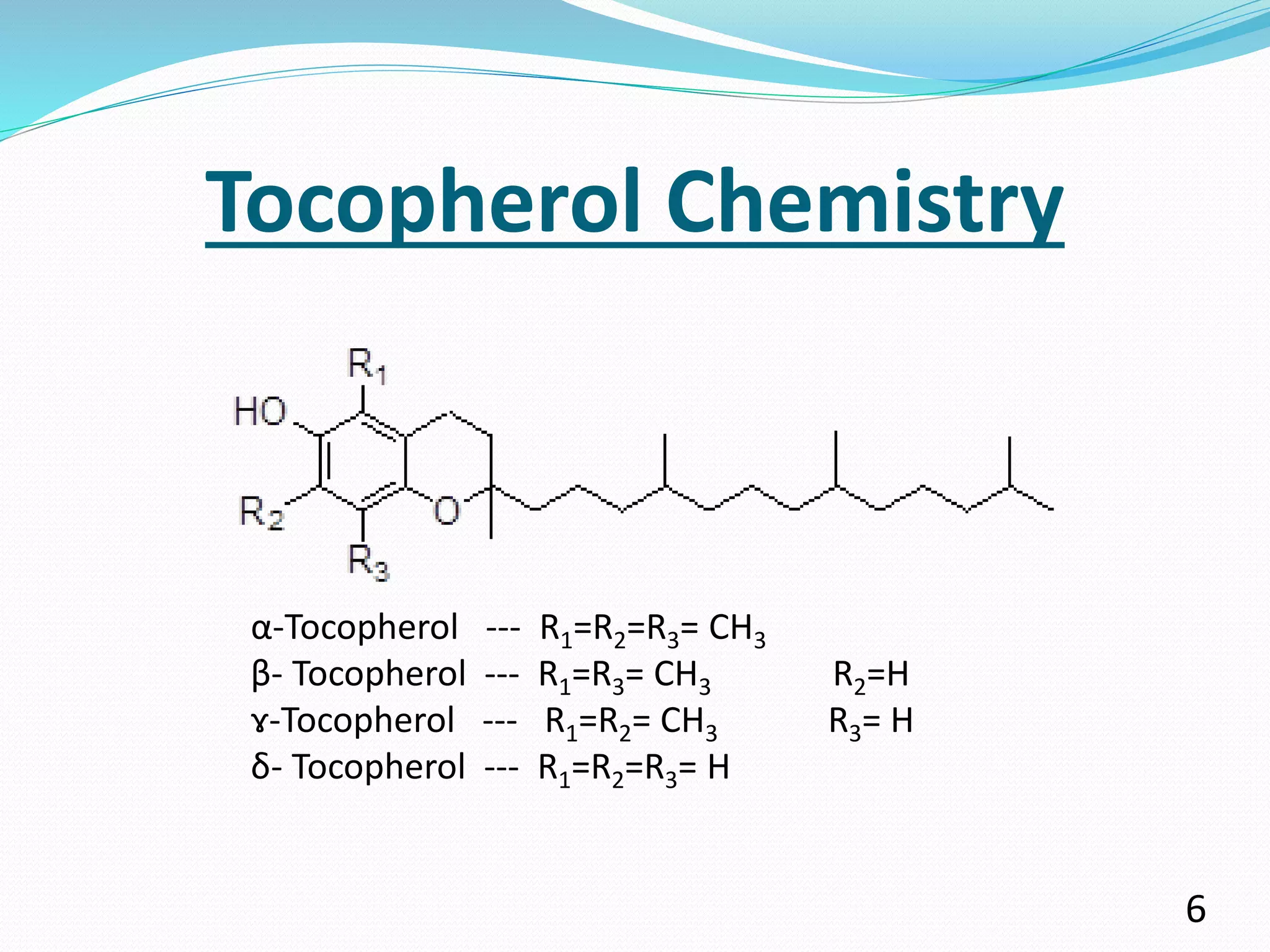
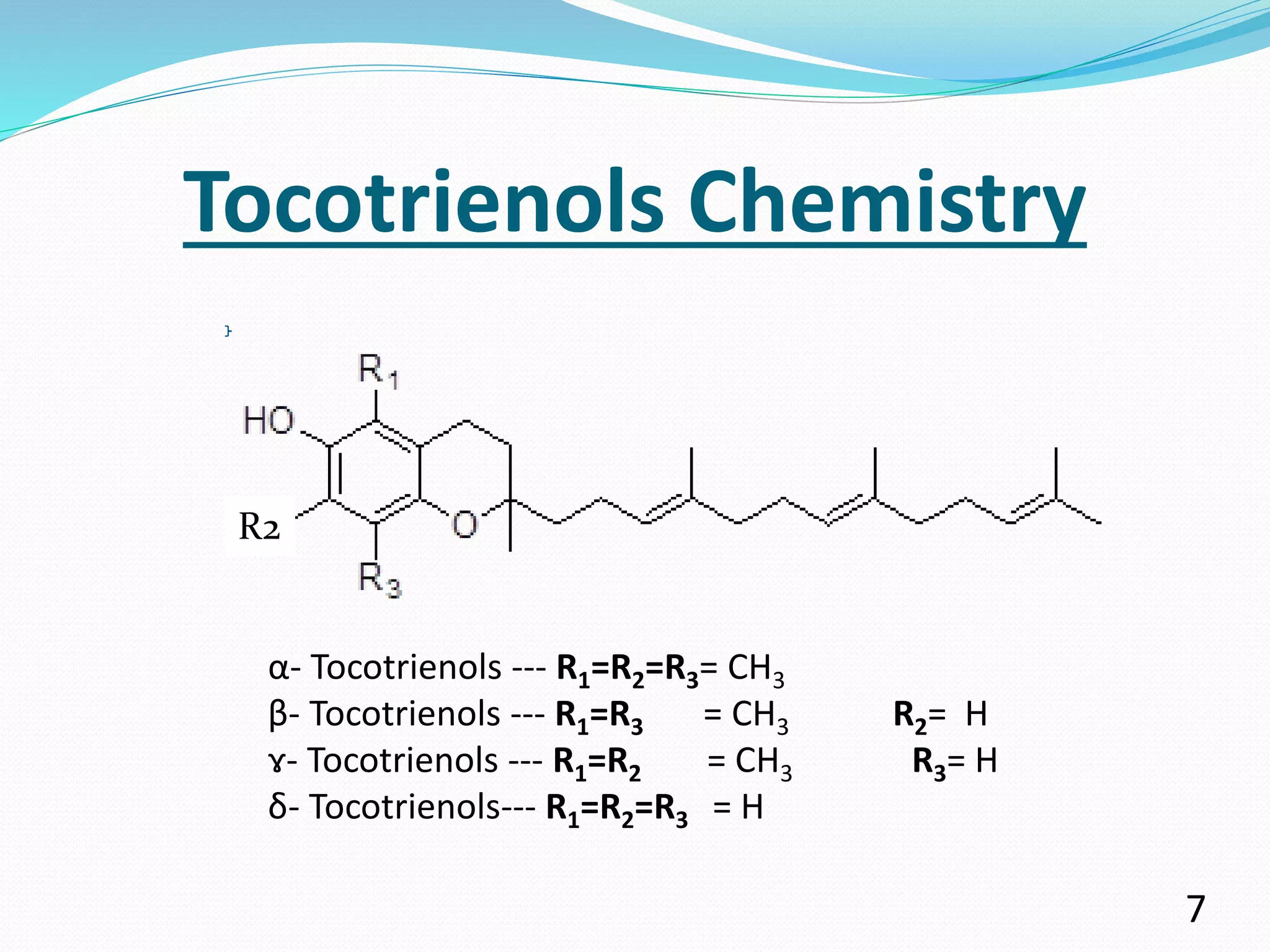
 About eight vitamin E have been identified
– α, β, ɤ, δ Tocopherol
– α, β, ɤ, δ Tocotrienol
 The Basic Nucleus called the
Chroman (tocol) nucleus.
 Chromane ring is attached to Phytyl tail
 Phytyl tail is composed of 3-units of isoprenoid.
 The position of methyl groups located on the chroman nucleus varies in
tocopherols and tocotrienols.
 The antioxidant property is due to the –OH group of chromane ring.
5
O
R1
HO
R3
R2
Tocopherol Chemistry
6
α-Tocopherol --- R1=R2=R3= CH3
β- Tocopherol --- R1=R3= CH3 R2=H
ɤ-Tocopherol --- R1=R2= CH3 R3= H
δ- Tocopherol --- R1=R2=R3= H
Tocotrienols Chemistry
7
α- Tocotrienols --- R1=R2=R3= CH3
β- Tocotrienols --- R1=R3 = CH3 R2= H
ɤ- Tocotrienols --- R1=R2 = CH3 R3= H
δ- Tocotrienols--- R1=R2=R3 = H
R2
Properties
 Form :- Transparent, Viscous, Oily liquids.
 Odour :- Characteristic odour
 Colour :- Light yellow to reddish brown.
 Solubility :- Insoluble in water
soluble in organic solvents
 Density :- 0.950 g/cu cm
 Molecular Formula: C29H50O2
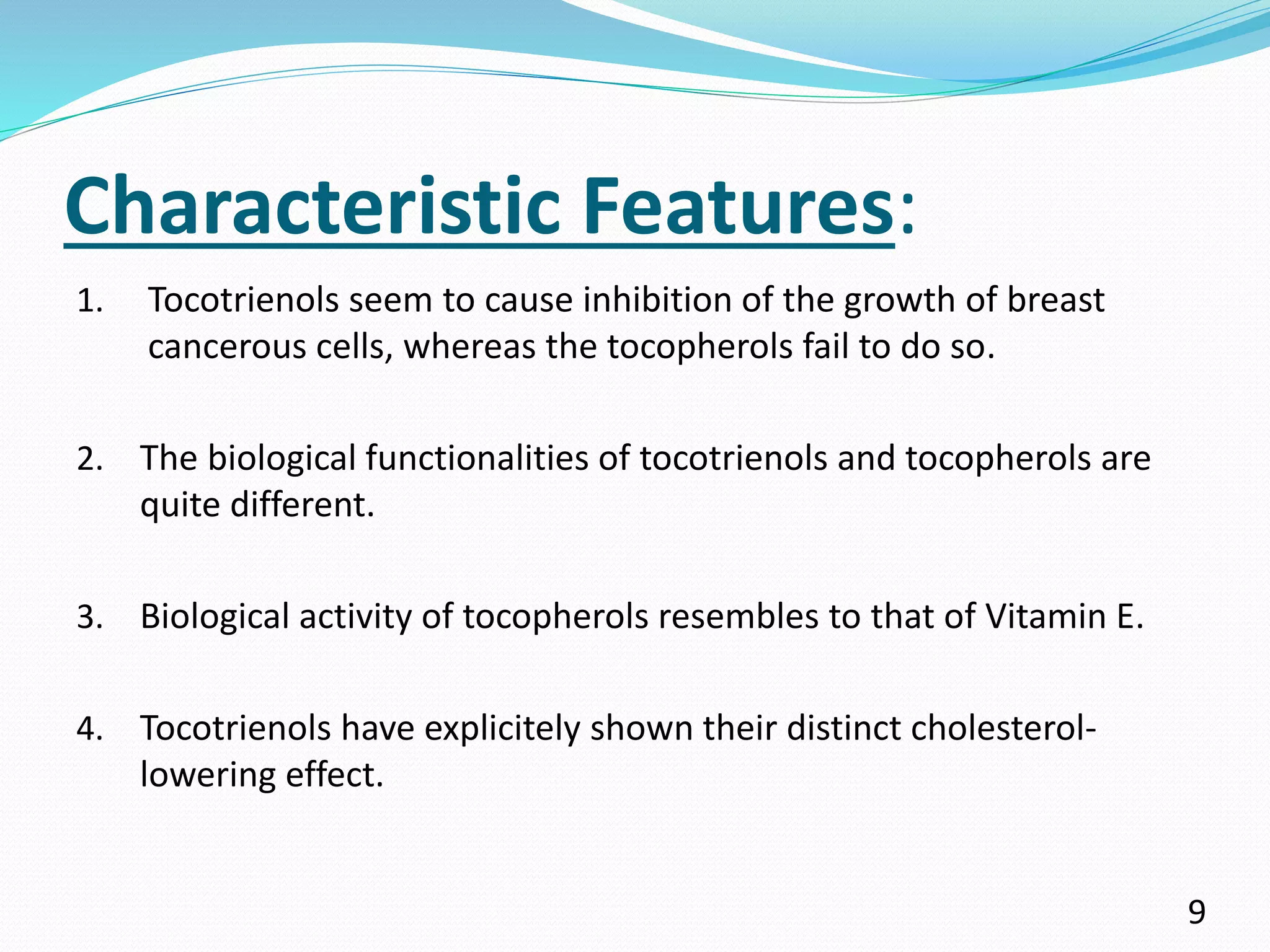
The colour may change gradually into dark brown when exposed to
direct air or light.
8
Characteristic Features:
1. Tocotrienols seem to cause inhibition of the growth of breast
cancerous cells, whereas the tocopherols fail to do so.
2. The biological functionalities of tocotrienols and tocopherols are
quite different.
3. Biological activity of tocopherols resembles to that of Vitamin E.
4. Tocotrienols have explicitely shown their distinct cholesterol-
lowering effect.
9
5. α-Tocopherol is most Bioactive compound.
6. ɤ-Tocopherol are most abundant compounds in diet.
7. The US-FDA considers only α-Tocopherol as Vitamin E.
8. α- Tocotrienols are 50 times potent than Tocopherol in antioxidant
activity.
10
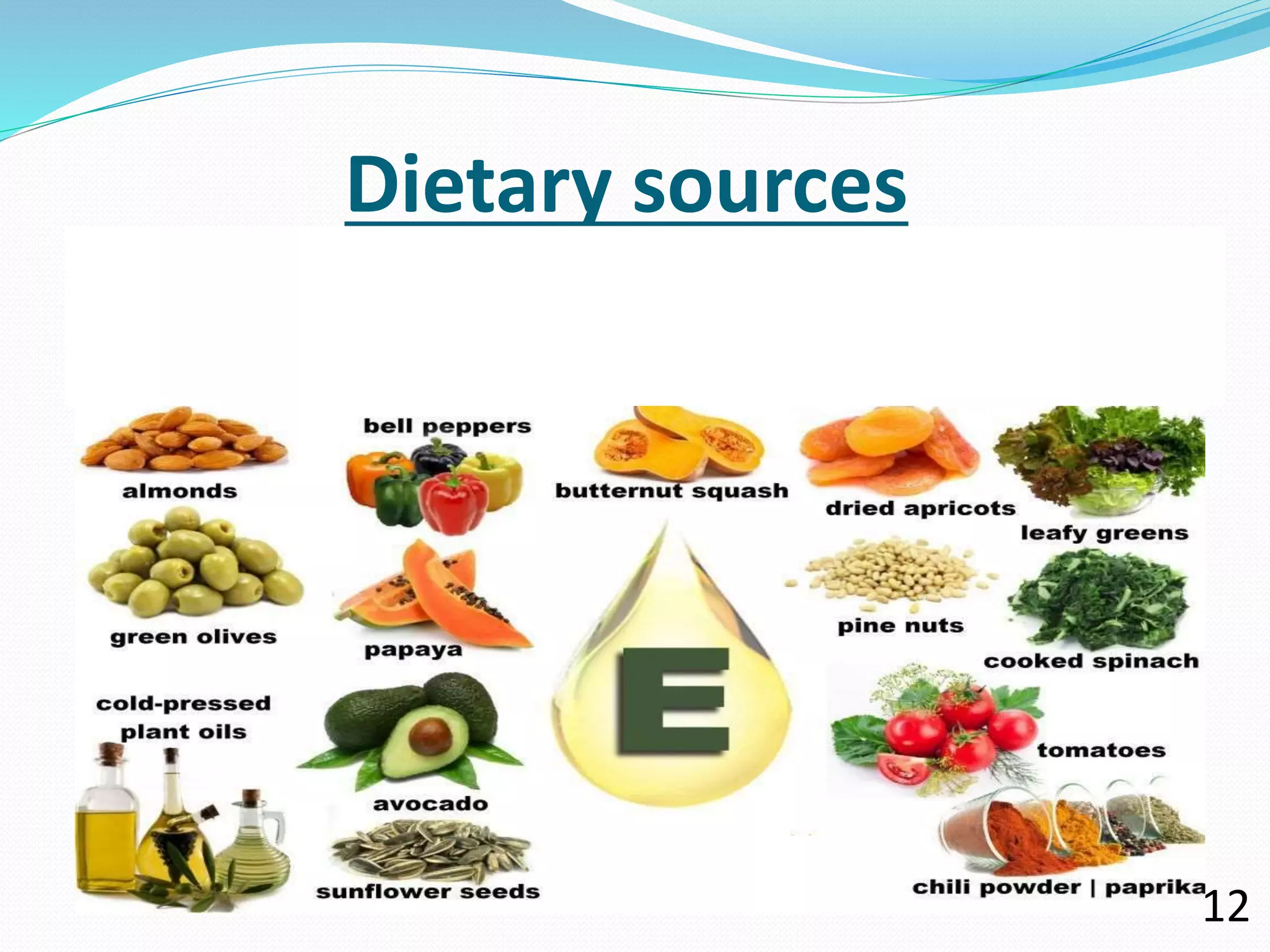
Dietary sources
1. Almond (Prunus amygdalus Batsch)
2. Amaranth oil (Amaranthus cruentus
L.)
3. Avocado (Persea americana Mill.)
4. Canola (Brassica rapa L.)
5. Cashew Nut (Anacardium
occidentale L.)
6. Castor (Ricinus communis L.)
7. Coconut (Cocos nucifera L.)
8. Corn or maize (Zea mays L.)
9. Cotton seed (Gossypium herbaceum
L.)
10. Cumin (Cuminum cyminum L.)
11. Flax seed (Linum usitatissimum
11
12. Groundnut (Arachis hypogea)
13. Mustard (Brassica juncea L.)
14. Neem (Azadirachta indica A.
Juss.)
15. Olive (Olea europaea L.)
16. Palm (Elaeis guineensis Jacq.)
17. Psyllium (Plantago ovata
Forssk.)
18. Pumpkin (Cucurbita pepo L.)
19. Rice bran (Oryza sativa L.)
20. Sesame (Sesamum indicum L.)
21. Soybean (Glycine max L.)
22. Sunflower (Helianthus annuus)
Dietary sources
12
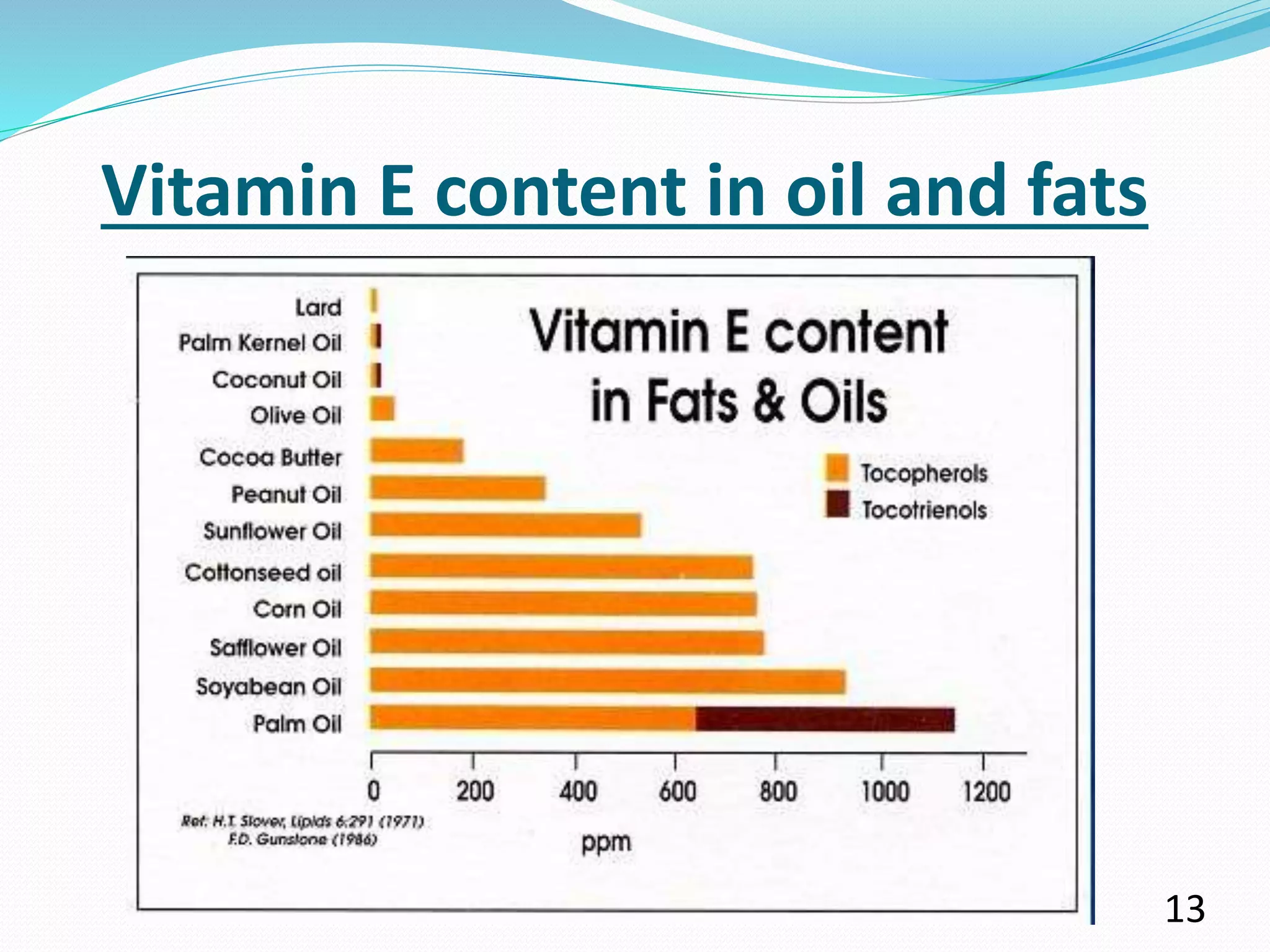
Vitamin E content in oil and fats
13
Isolation of Tocopherol and Tocotrienol
 Physical distillation for concentration and purification of tocopherol
 Chemical process for concentration and purification of tocopherol
 Enzymatic reactions process for purification of tocopherol
 Isolation of tocopherols and tocotrienols from a variety of natural
sources by semi-preparative high performance liquid chromatography
 Purification of tocopherol with super critical CO2 (SC-CO2) extraction
method
14
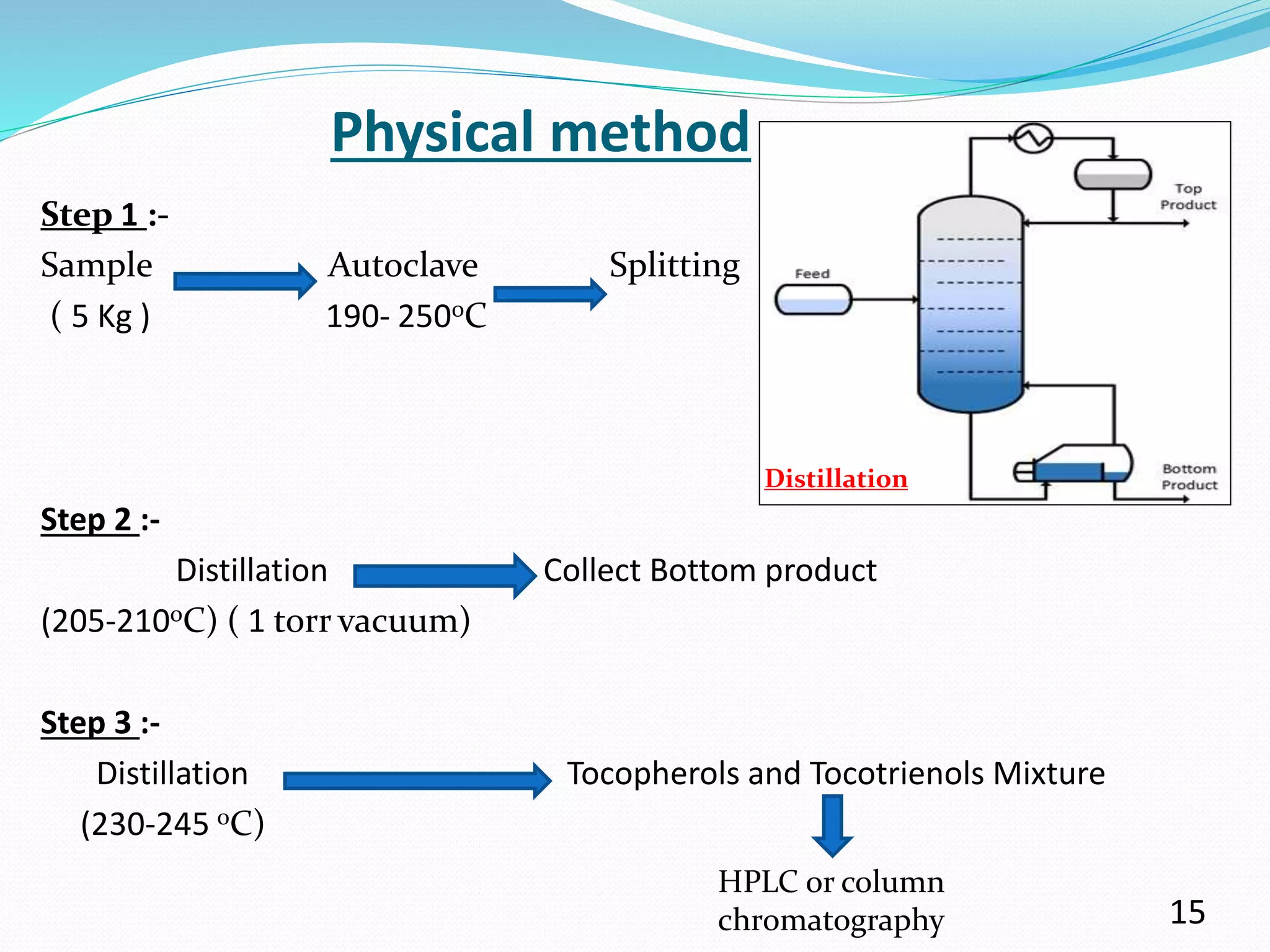
Physical method
Step 1 :-
Sample Autoclave Splitting
( 5 Kg ) 190- 2500C
Step 2 :-
Distillation Collect Bottom product
(205-2100C) ( 1 torr vacuum)
Step 3 :-
Distillation Tocopherols and Tocotrienols Mixture
(230-245 0C)
15
Distillation
HPLC or column
chromatography
Chemical method:-
16
Sample (Soya bean)
0.8 Part of MeOH +
9% NaOH Pellets
10% H2SO4
Reflux for 2 hrs @ 65 0C
Wash with Hot water
(pH – Neutral )
Distillate
(Methyl esters)
Dried at 80 -85 0C
Distillation
(210 -220 0C , 1Torr)
Residue
(Tocopherol &
tocotrienols)
Distillation
(2300C , 100-200 Torr)
Distillate
(Phytosterols )
Residue
Tocopherol and
tocotrienols
Enzymatic Method
 Here enzyme and glycerine are used for isolation.
 Enzyme act as catalyst.
 Glycerine act as solvent.
 Phytosterols are convereted to sterol esters
 Free fatty acids are removed by distillation.
 Mainly BTSA Enzyme are used
17
Procedure:-
Step 1:-
300 gms + 5% BTSA + Glycerine Reaction Temperature 64- 650C
Sample
Step 2:-
Filtration
Filtrate Mother Liquor
(Enzymes)
wash (pH Neutral)
Dried Material
Step 3:- Dried Material Distillation
18
Isolation by Semi-Preparative High
Performance Liquid Chromatography
Chemical, Apparatus and Reagent:-
HPLC grade solvents
1. 40% V/V Tetrahydrofuran
2. 100%V/V hexane
L-Ascorbic acid
Sample For extraction
Column :- 10μ Alltech Econosil silica
Guard column :- 40μ supeleco Pellicular Silica
Collection :- PTFE Bottles
Detector :- Fluorescence Detector
19
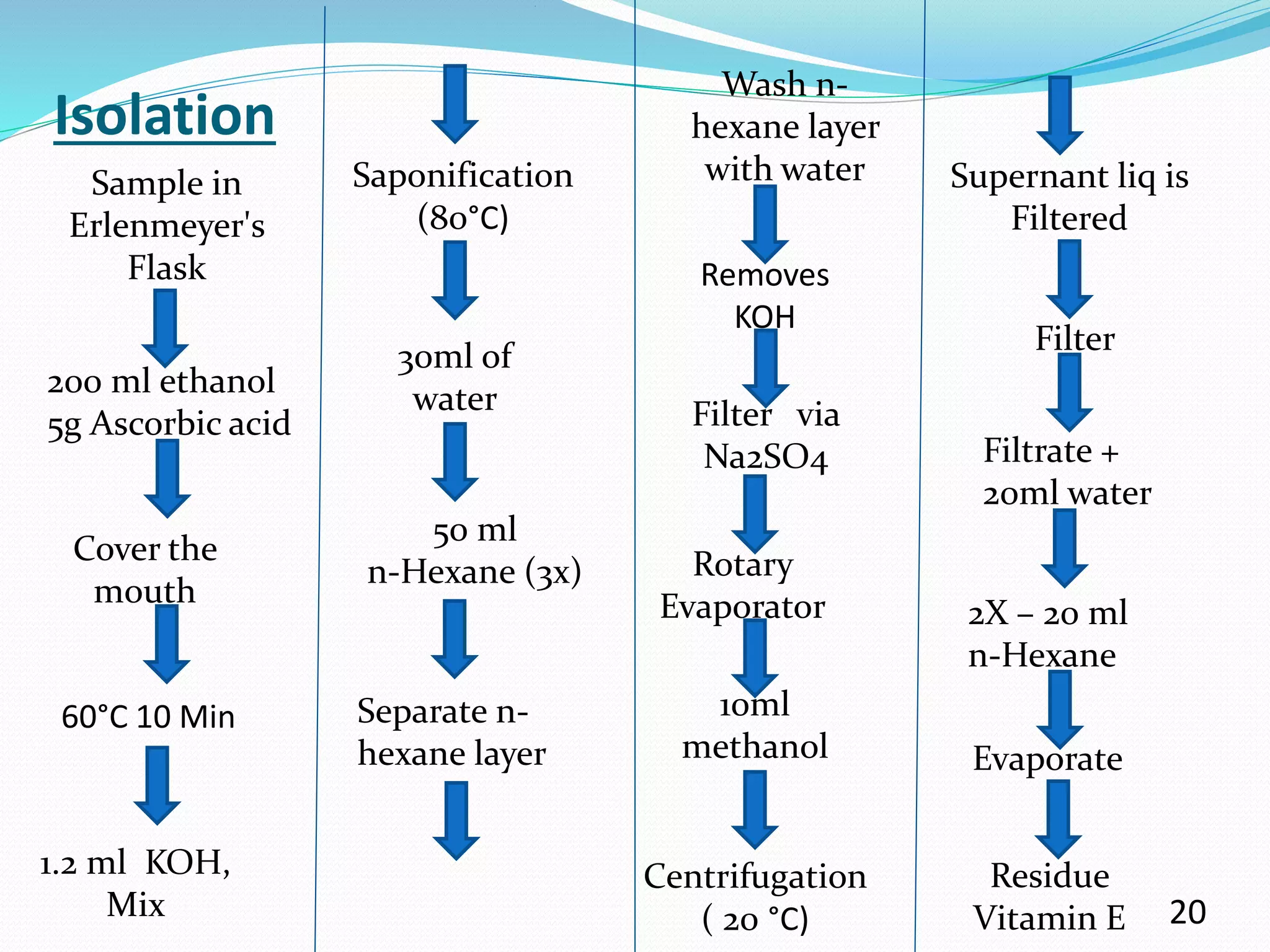
Isolation
20
Filter
200 ml ethanol
5g Ascorbic acid
30ml of
water
Wash n-
hexane layer
with water
Filter via
Na2SO4
Rotary
Evaporator
Removes
KOH
10ml
methanol
Separate n-
hexane layer
Sample in
Erlenmeyer's
Flask
50 ml
n-Hexane (3x)
Saponification
(80°C)
1.2 ml KOH,
Mix
60°C 10 Min
Cover the
mouth
Residue
Vitamin E
Evaporate
2X – 20 ml
n-Hexane
Filtrate +
20ml water
Supernant liq is
Filtered
Centrifugation
( 20 °C)
Purification
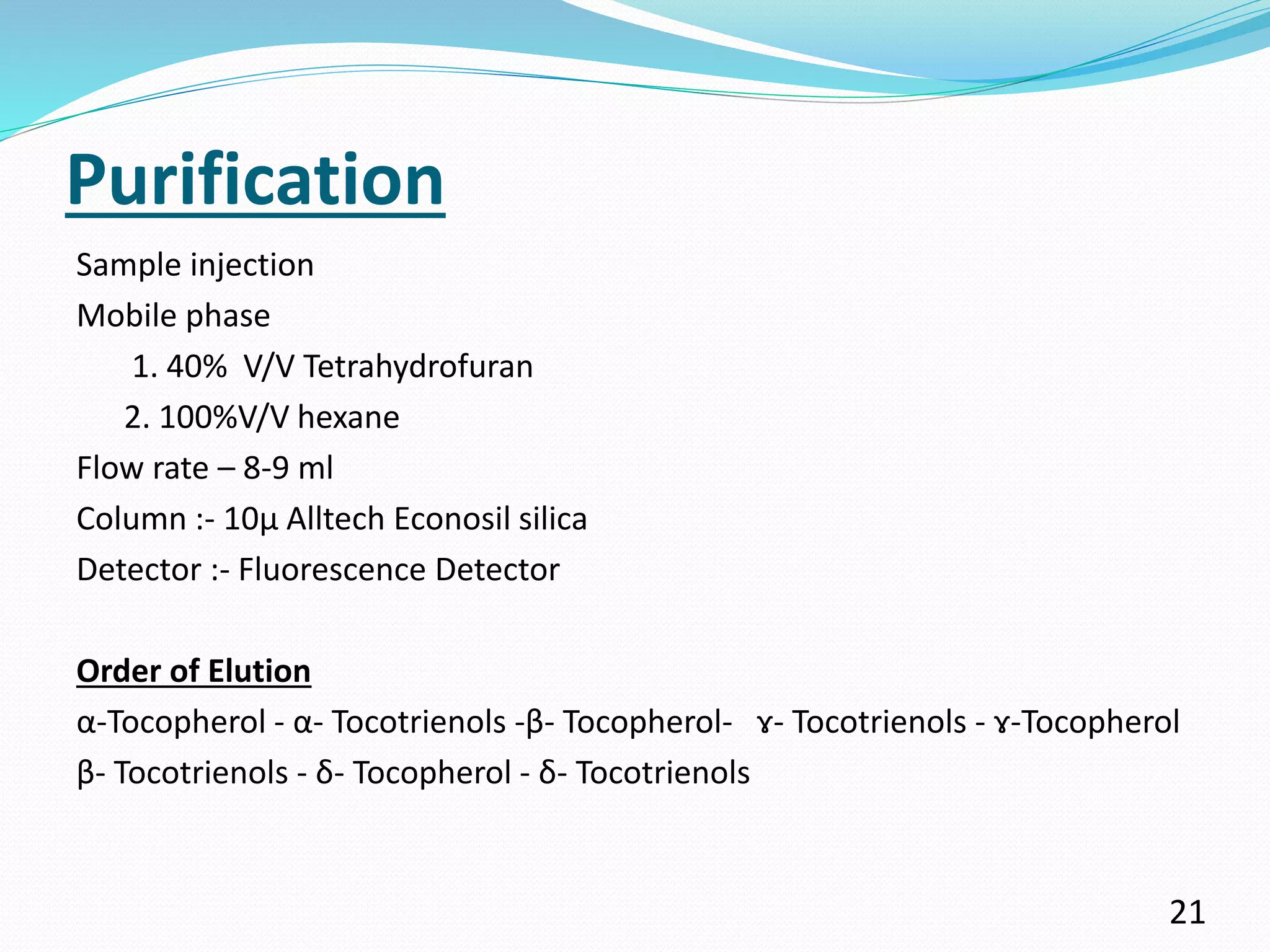
Sample injection
Mobile phase
1. 40% V/V Tetrahydrofuran
2. 100%V/V hexane
Flow rate – 8-9 ml
Column :- 10μ Alltech Econosil silica
Detector :- Fluorescence Detector
Order of Elution
α-Tocopherol - α- Tocotrienols -β- Tocopherol- ɤ- Tocotrienols - ɤ-Tocopherol
β- Tocotrienols - δ- Tocopherol - δ- Tocotrienols
21
5. Super Critical Extraction Method
 Super critical carbon dioxide extraction was conducted at two pressure
levels 200 bar and 220 bar and temperature 40 0C and 60 0C.
 The objective was to increase the concentration by removing maximum
fatty acid methyl esters.
 Specific level of pressure and temperature of extraction caused the
increase in the solubility
Procedure
1. The raw material was loaded in reactor vessel at room temperature.
2. Extraction was started only when the temperature was applied.
3. CO2 was fed by adjusting the initial pressure.
4. Different temperatures viz. 40 0C, 60 0C and 80 0C were taken at various
combinations of pressure at 150,180 and 200 bar.
5. DOD was chemically esterified for the trials to convert all the available
fatty acid to methyl esters.
6. The reaction time was adjusted for 1 hr.. 22
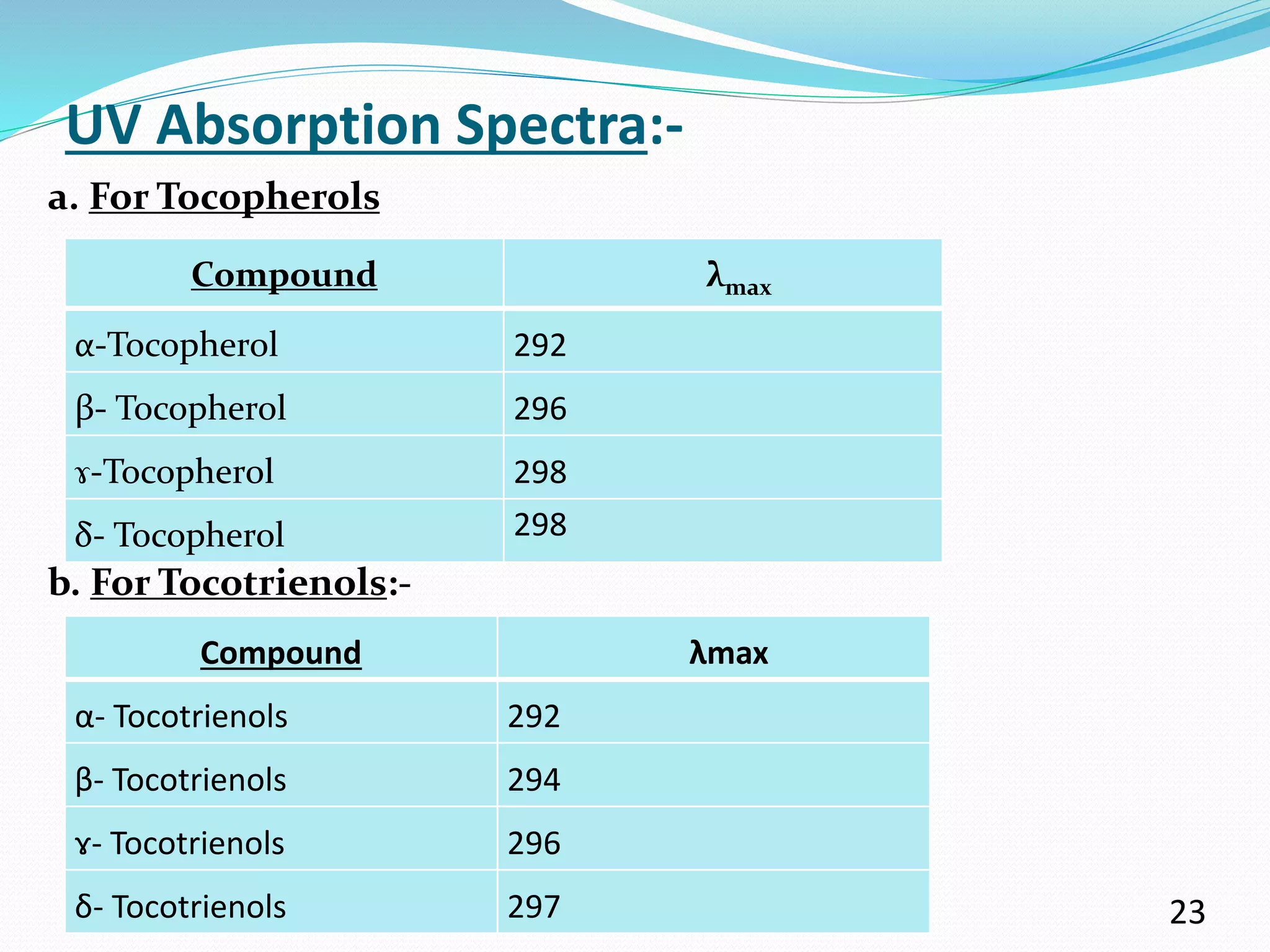
UV Absorption Spectra:-
a. For Tocopherols
b. For Tocotrienols:-
23
Compound λmax
α-Tocopherol 292
β- Tocopherol 296
ɤ-Tocopherol 298
δ- Tocopherol 298
Compound λmax
α- Tocotrienols 292
β- Tocotrienols 294
ɤ- Tocotrienols 296
δ- Tocotrienols 297
UV Absorption Spectra:-
24
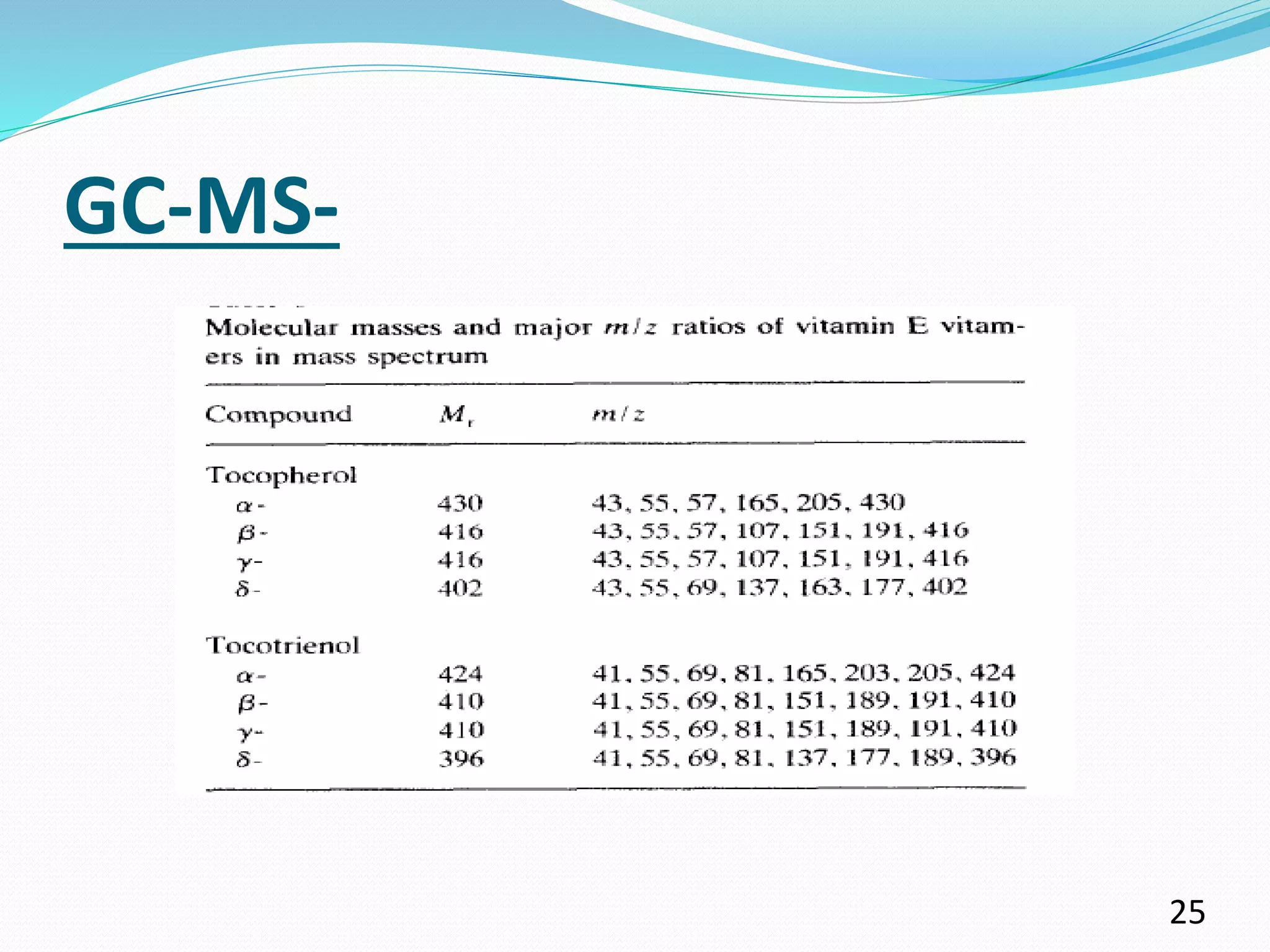
GC-MS-
25
26
Estimation by HPLC:-
INTRODUCTION
The estimation of vitamins E helps in obtaining information as to the
existence of an avitaminosis.
Apparatus
(a) Separation column, Shodex SIL-5B, 4.6 mm I.D. × 250 mm, or
equivalent column
(b) Column temperature - 30 °C
(c) Mobile phase, n-hexane-isopropanol (100:1, v/v) (Both HPLC
grade)
(d) Flow rate, 1.0 mL/min
(e) Detection, UV 300 nm
27
Preparation of standard solutions for
calibration curve
(1) Tocopherol standard stock solution
1. 25 mg of α-, β-, γ-, and δ-tocopherols into a beaker and dissolve in
n-hexane.
2. Transfer it with n-hexane into a 100-mL brown volumetric flask.
3. Dilute to volume with n-hexane.
(2) Internal standard solution
1. 25 mg of 2, 2, 5, 7, 8-pentametyl-6-hydroxychroman or 2-metyl-2-
phytyl-6-hydroxychroman into a beaker and dissolve in n-hexane.
2. Transfer it with n-hexane to a 100-mL brown volumetric flask.
3. Dilute to volume with n-hexane.
28
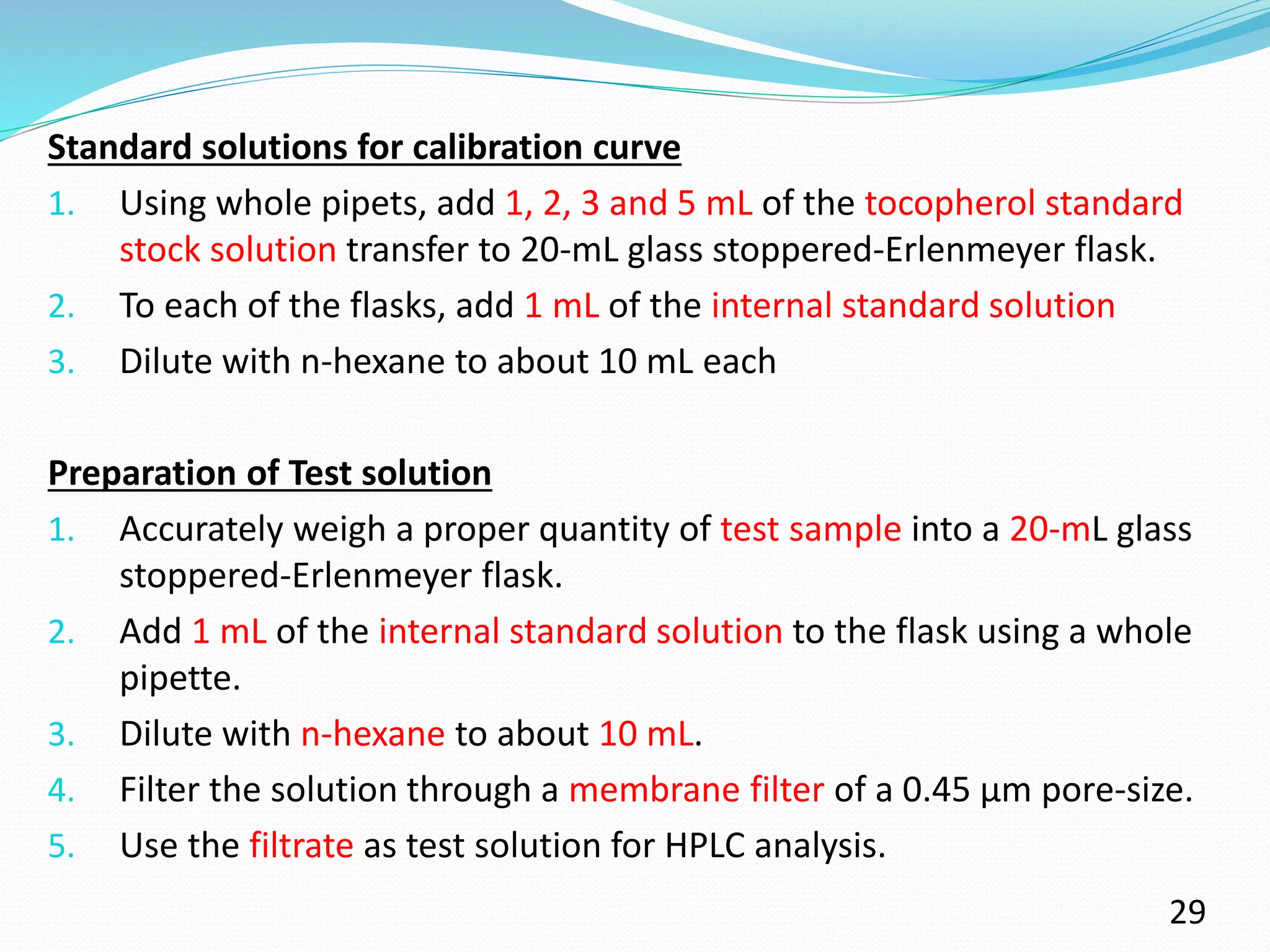
Standard solutions for calibration curve
1. Using whole pipets, add 1, 2, 3 and 5 mL of the tocopherol standard
stock solution transfer to 20-mL glass stoppered-Erlenmeyer flask.
2. To each of the flasks, add 1 mL of the internal standard solution
3. Dilute with n-hexane to about 10 mL each
Preparation of Test solution
1. Accurately weigh a proper quantity of test sample into a 20-mL glass
stoppered-Erlenmeyer flask.
2. Add 1 mL of the internal standard solution to the flask using a whole
pipette.
3. Dilute with n-hexane to about 10 mL.
4. Filter the solution through a membrane filter of a 0.45 μm pore-size.
5. Use the filtrate as test solution for HPLC analysis.
29
Preparation of calibration curve
1. Inject 20 μL each of the standard solutions prepared into HPLC.
2. From the obtained chromatograms, measure the peak areas of the
tocopherols and the internal standard substance.
3. Draw the calibration curves of the tocopherols by plotting the weight ratio
(Wx/Ws) of the tocopherols (Wx) to the internal standard substance (Ws)
against the peak area ratio (Ax/As) of the tocopherols (Ax) to the internal
standard substance (As).
Determination of tocopherols in test solution
1. Inject 20 μL of the test solution prepared in into HPLC.
2. Calculate the peak area ratios of the tocopherols to the internal standard
substance based on the peak areas of each substance from the obtained
chromatogram, and convert them to weight ratios.
3. Calculate the contents of each of the tocopherols in the test sample using
the following formula:
4. Round off fractions to the second decimal place.
30
% Each tocopherols = (Wx/Ws) × Ms
S x1000
Where -
Wx/Ws:
Weight ratio of a tocopherol to the internal standard substance
Ms:
weight of the internal standard substance contained in 1 mL of internal
standard solution (mg)
S:
Sample weight (g)
31
×100
Absorption, transport and storage:-
 Vitamin E is absorbed along with fat in the small intestine.
 Bile salts are necessary for the absorption.
 In the liver, it is incorporated into lipoproteins (VLDL and LDL)
and transported.
 Vitamin E is stored in adipose tissue, liver and muscle.
 The normal plasma level of tocopherol is less than 1 mg/dl.
32
The Biochemical functions of vitamin E
1. Essential for the membrane structure and integrity of the cell.
2. Prevents the peroxidation of polyunsaturated fatty acids in
various tissues and membranes.
3. Protects RBC from haemolysis by oxidizing agents.
4. Increases the synthesis of heme by enhancing the activity of
enzymes δ-aminolevulinic acid (ALA) synthase and ALA
dehydratase.
5. Required for cellular respiration through ETC.
33
6. Required for proper storage of creatine in skeletal muscle.
7. Optimal absorption of amino acids from the intestine.
8. Proper synthesis of nucleic acids.
9. Vitamin E has been recommended for the prevention of
chronic diseases such as cancer and heart diseases
10. Protects liver from being damaged by toxic compounds
34
Medical Benefit
1) Vitamin E as an antioxidant.
2) Vitamin E used in the treatment of cancer.
3) Prevention of Heart Disease.
4) Vitamin E as Natural Neuroprotective Vitamins.
35
Vitamin E as an antioxidant
1. Antioxidants help in eliminating free radicals ( ROS & RNS).
2. The antioxidant properties of this compound is responsible for
promoting blood circulation to the scalp.
3. Antioxidant plays a role in anti-inflammatory processes, inhibiting
platelet aggregation and increasing immunity.
36
Vitamin E used in the treatment of
cancer
1. Vitamin E helps in protecting constituents of cells from the detrimental
effects of free radicals, which is a major contributor in development of
cancer.
2. Initiate Apoptosis pathway by activation of caspases.
3. Affects on PI3K/PDK/Akt Mitogenic Signaling.
4. Vitamin E has antiproliferative activity by blocking EGF dependent
mitogensis.
5. Vitamin E also offers the potential of blocking the creation of
carcinogenic nitrosamines.
6. Vitamin E has property of DNA Polymerase Inhibition.
37
Prevention of Heart Disease
38
Lipid Peroxidation
 Antioxidants play an important role in slowing the process of
atherosclerosis, especially by preventing oxidation of LDL.
Stroke-Induced Injuries
 Oral supplementation of the tocotrienol complex acts on key
molecular checkpoints
39
Vitamin E as Natural Neuroprotective
Vitamins
vitamin E is offering protection against accumulation of
free radicals, contributing to cognitive decline and
neurodegenerative diseases
e.g. Alzheimer's disease.
Maintenance of cognitive performance or slowing its
decline in the process of normal aging.
40
Health Benefit
1. Vitamin E in the Potential Treatment of Infectious Disease.
Eg:- Chlamydia pneumonia
2) Counter measure against Radiological Threat.
3) vitamin E oil is beneficial for the skin’s healing process.
4) Vitamin E used in age-related muscular degeneration (AMD)-
oxidative stress have a major role to play in these disorders
5) Vitamin E used as a dietary supplement
41
Pharmaceutical use
Vitamin E in its synthetic form is currently being utilized by
many pharma companies in their multivitamin offerings.
Natural forms of vitamin E as mixed tocopherols can be
utilized in an array of cosmetic formulations for checking
oxidation.
42
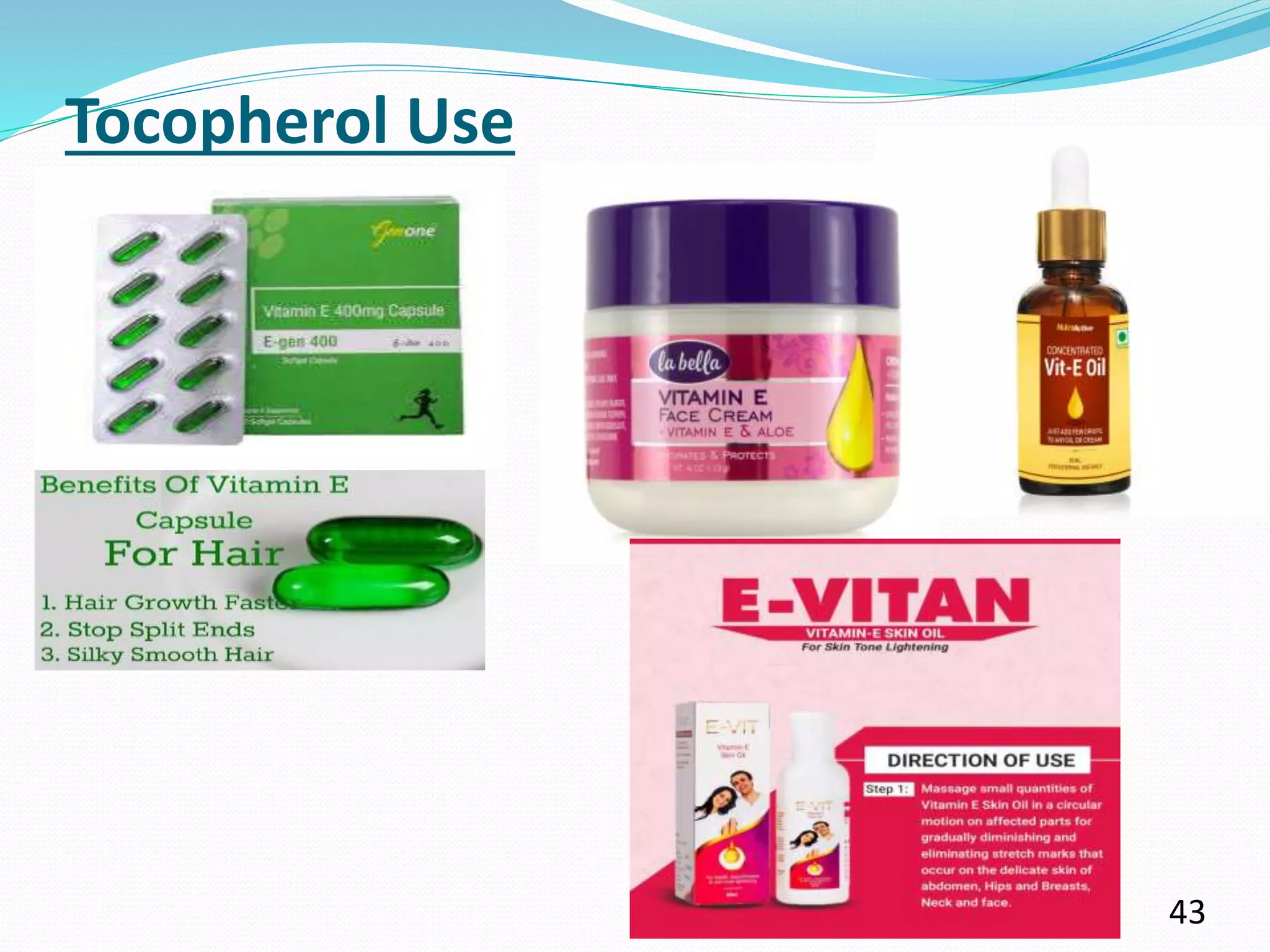
Tocopherol Use
43
44
Tocopherol Use
45
Tocotrienols Use
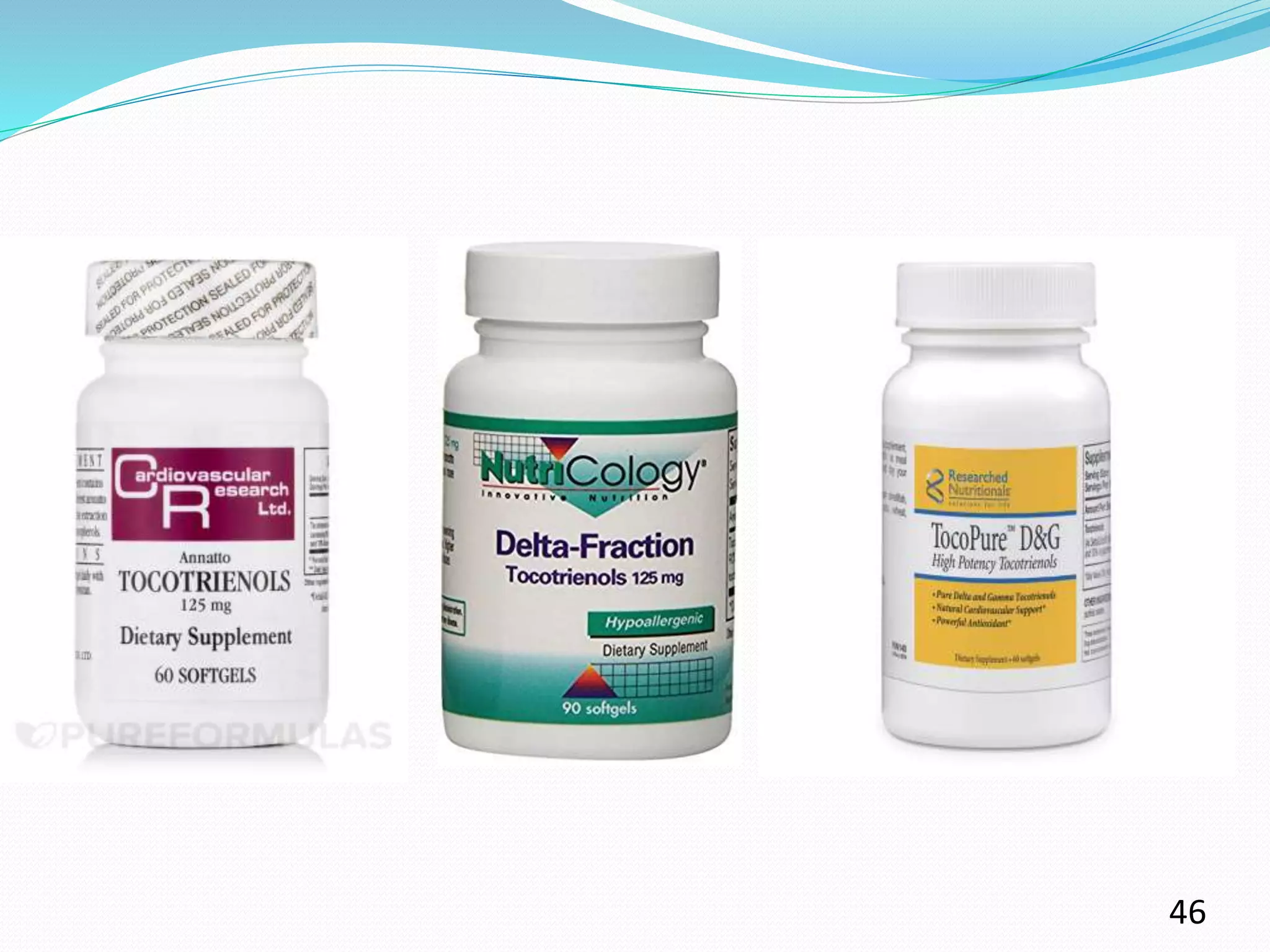
46
Deficiency symptoms
The symptoms of vitamin E deficiency vary from one animal species to
another.
 Sterility
 Degenerative changes in muscle
 Megaloblastic anaemia
 Increased fragility of erythrocytes
 Minor neurological symptoms.
47
Global scenario of production and
consumption of vitamin E
Vitamin E - 13.6 MT @ 2014
- 18.1 MT @ 2020
Value - 574.1 million $ @ 2012
- 1.05 Billion $ @ 2020
Animal feed - 18 MT @ 2012
- 30 MT @ 2020
Cosmetics -
Beverages and Food -
48
7.3% Annual Growth Rate
7.8% Annual Growth Rate
6.6% Annual Growth Rate
9.9% Annual Growth Rate
7.7% Annual Growth Rate
Reference
1. Tocotrienols Vitamin E Beyond Tocopherols, Ronald Ross Watson Victor
R. Preedy, CRC Press, 2nd edition.
2. Trease and Evans pharmacognosy ,16th edition, W.B saunders Edinburg
New-York.
3. Biochemistry, 3rd Edition, Dr. U. Satyanarayana Dr. U. Chakrapani Elsevier
Publication
4. Textbook of pharmacognosy and phytochemistry by vinod D. rangarl
part-1 career publication, Nasik India.
5. Identification, isolation, Purification and Quantification of mixed
tocopherols and natural vitamin E from various plant sources, Khamar,
Ripal R, Department of Botany, Jasrai, Yogesh T, Saurashtra University.
49
6. Standardization of Botanicals by V. Rajpal .
7. Isolation of four tocopherols and four tocotrienols from a variety of
natural sources by semi-preparative high performance liquid
chromatography, Tai-Sun Shin, J. Samuel Godber Department of Food
Science, Louisiana Agricultural Experimental Station, Louisiana State
University Agricultural Center.
8. Sunflower Oils-Reactivity and Assay Department of Food Science and
Technology, Biotechnical Faculty, University of Ljubljana,
Jamnikarjeva.
9. Quantitative Analysis of Vitamin E in Vegetable Oils, Japan Customs
Analysis Methods, Updated in June 2003 (JCAM No.107-R3).
10. Sangha, J. K. (2014): Nutraceuticals and functional foods - an
innovative approach for management of lifestyle diseases.
50
Thank-You
51

Phyto pharmaceutical - TOCOPHEROLS AND TOCOTRIENOLS (Vitamin E )

  • 1.
    Submitted To: Dr. Sujanikamble Department of Pharmacognosy Government college of pharmacy Bangalore Presented by: Sudhindra Kini Department of Pharmacognosy Government college of pharmacy Bangalore Topic :- Tocopherol and Tocotrienols 1
  • 2.
    Contents 1. Introduction 2. History 3.Chemistry 4. Properties 5. Characteristic Feature 6. Dietary sources 7. Isolation of Tocopherol and Tocotrienols 8. Estimation of Tocopherol and Tocotrienols 9. Biochemical Use 10. Health Benefit 11. Pharmaceutical use 12. Deficiency symptoms 13. Current market scenario for vitamin E 2
  • 3.
    Introduction  Vitamin Eis the name given to a group of tocopherols and tocotrienols.  Vitamin E (tocopherol and tocotrienol) is a naturally occurring antioxidant.  Greek : tokos-child birth; pheros-to bear; ol-alcohol  It is essential for normal reproduction in many animals.  Hence known as Fertility vitamin. 3
  • 4.
    History  Vitamin Ewas discovered by Herbert McLean Evans and Katharine Scott Bishop(1922).  It was isolated first time in pure form by Gladys Anderson Emerson, (1935) at the University of California, Berkeley.  Tocopherol was isolated from wheat germ in 1936  The first use for vitamin E was as a therapeutic agent by Widenbauer (1938). 4
  • 5.
    Chemistry  About eightvitamin E have been identified – α, β, ɤ, δ Tocopherol – α, β, ɤ, δ Tocotrienol  The Basic Nucleus called the Chroman (tocol) nucleus.  Chromane ring is attached to Phytyl tail  Phytyl tail is composed of 3-units of isoprenoid.  The position of methyl groups located on the chroman nucleus varies in tocopherols and tocotrienols.  The antioxidant property is due to the –OH group of chromane ring. 5 O R1 HO R3 R2
  • 6.
    Tocopherol Chemistry 6 α-Tocopherol ---R1=R2=R3= CH3 β- Tocopherol --- R1=R3= CH3 R2=H ɤ-Tocopherol --- R1=R2= CH3 R3= H δ- Tocopherol --- R1=R2=R3= H
  • 7.
    Tocotrienols Chemistry 7 α- Tocotrienols--- R1=R2=R3= CH3 β- Tocotrienols --- R1=R3 = CH3 R2= H ɤ- Tocotrienols --- R1=R2 = CH3 R3= H δ- Tocotrienols--- R1=R2=R3 = H R2
  • 8.
    Properties  Form :-Transparent, Viscous, Oily liquids.  Odour :- Characteristic odour  Colour :- Light yellow to reddish brown.  Solubility :- Insoluble in water soluble in organic solvents  Density :- 0.950 g/cu cm  Molecular Formula: C29H50O2 The colour may change gradually into dark brown when exposed to direct air or light. 8
  • 9.
    Characteristic Features: 1. Tocotrienolsseem to cause inhibition of the growth of breast cancerous cells, whereas the tocopherols fail to do so. 2. The biological functionalities of tocotrienols and tocopherols are quite different. 3. Biological activity of tocopherols resembles to that of Vitamin E. 4. Tocotrienols have explicitely shown their distinct cholesterol- lowering effect. 9
  • 10.
    5. α-Tocopherol ismost Bioactive compound. 6. ɤ-Tocopherol are most abundant compounds in diet. 7. The US-FDA considers only α-Tocopherol as Vitamin E. 8. α- Tocotrienols are 50 times potent than Tocopherol in antioxidant activity. 10
  • 11.
    Dietary sources 1. Almond(Prunus amygdalus Batsch) 2. Amaranth oil (Amaranthus cruentus L.) 3. Avocado (Persea americana Mill.) 4. Canola (Brassica rapa L.) 5. Cashew Nut (Anacardium occidentale L.) 6. Castor (Ricinus communis L.) 7. Coconut (Cocos nucifera L.) 8. Corn or maize (Zea mays L.) 9. Cotton seed (Gossypium herbaceum L.) 10. Cumin (Cuminum cyminum L.) 11. Flax seed (Linum usitatissimum 11 12. Groundnut (Arachis hypogea) 13. Mustard (Brassica juncea L.) 14. Neem (Azadirachta indica A. Juss.) 15. Olive (Olea europaea L.) 16. Palm (Elaeis guineensis Jacq.) 17. Psyllium (Plantago ovata Forssk.) 18. Pumpkin (Cucurbita pepo L.) 19. Rice bran (Oryza sativa L.) 20. Sesame (Sesamum indicum L.) 21. Soybean (Glycine max L.) 22. Sunflower (Helianthus annuus)
  • 12.
  • 13.
    Vitamin E contentin oil and fats 13
  • 14.
    Isolation of Tocopheroland Tocotrienol  Physical distillation for concentration and purification of tocopherol  Chemical process for concentration and purification of tocopherol  Enzymatic reactions process for purification of tocopherol  Isolation of tocopherols and tocotrienols from a variety of natural sources by semi-preparative high performance liquid chromatography  Purification of tocopherol with super critical CO2 (SC-CO2) extraction method 14
  • 15.
    Physical method Step 1:- Sample Autoclave Splitting ( 5 Kg ) 190- 2500C Step 2 :- Distillation Collect Bottom product (205-2100C) ( 1 torr vacuum) Step 3 :- Distillation Tocopherols and Tocotrienols Mixture (230-245 0C) 15 Distillation HPLC or column chromatography
  • 16.
    Chemical method:- 16 Sample (Soyabean) 0.8 Part of MeOH + 9% NaOH Pellets 10% H2SO4 Reflux for 2 hrs @ 65 0C Reflux for 2 hrs @ 65 0C Wash with Hot water (pH – Neutral ) Distillate (Methyl esters) Dried at 80 -85 0C Distillation (210 -220 0C , 1Torr) Residue (Tocopherol & tocotrienols) Distillation (2300C , 100-200 Torr) Distillate (Phytosterols ) Residue Tocopherol and tocotrienols
  • 17.
    Enzymatic Method  Hereenzyme and glycerine are used for isolation.  Enzyme act as catalyst.  Glycerine act as solvent.  Phytosterols are convereted to sterol esters  Free fatty acids are removed by distillation.  Mainly BTSA Enzyme are used 17
  • 18.
    Procedure:- Step 1:- 300 gms+ 5% BTSA + Glycerine Reaction Temperature 64- 650C Sample Step 2:- Filtration Filtrate Mother Liquor (Enzymes) wash (pH Neutral) Dried Material Step 3:- Dried Material Distillation 18
  • 19.
    Isolation by Semi-PreparativeHigh Performance Liquid Chromatography Chemical, Apparatus and Reagent:- HPLC grade solvents 1. 40% V/V Tetrahydrofuran 2. 100%V/V hexane L-Ascorbic acid Sample For extraction Column :- 10μ Alltech Econosil silica Guard column :- 40μ supeleco Pellicular Silica Collection :- PTFE Bottles Detector :- Fluorescence Detector 19
  • 20.
    Isolation 20 Filter 200 ml ethanol 5gAscorbic acid 30ml of water Wash n- hexane layer with water Filter via Na2SO4 Rotary Evaporator Removes KOH 10ml methanol Separate n- hexane layer Sample in Erlenmeyer's Flask 50 ml n-Hexane (3x) Saponification (80°C) 1.2 ml KOH, Mix 60°C 10 Min Cover the mouth Residue Vitamin E Evaporate 2X – 20 ml n-Hexane Filtrate + 20ml water Supernant liq is Filtered Centrifugation ( 20 °C)
  • 21.
    Purification Sample injection Mobile phase 1.40% V/V Tetrahydrofuran 2. 100%V/V hexane Flow rate – 8-9 ml Column :- 10μ Alltech Econosil silica Detector :- Fluorescence Detector Order of Elution α-Tocopherol - α- Tocotrienols -β- Tocopherol- ɤ- Tocotrienols - ɤ-Tocopherol β- Tocotrienols - δ- Tocopherol - δ- Tocotrienols 21
  • 22.
    5. Super CriticalExtraction Method  Super critical carbon dioxide extraction was conducted at two pressure levels 200 bar and 220 bar and temperature 40 0C and 60 0C.  The objective was to increase the concentration by removing maximum fatty acid methyl esters.  Specific level of pressure and temperature of extraction caused the increase in the solubility Procedure 1. The raw material was loaded in reactor vessel at room temperature. 2. Extraction was started only when the temperature was applied. 3. CO2 was fed by adjusting the initial pressure. 4. Different temperatures viz. 40 0C, 60 0C and 80 0C were taken at various combinations of pressure at 150,180 and 200 bar. 5. DOD was chemically esterified for the trials to convert all the available fatty acid to methyl esters. 6. The reaction time was adjusted for 1 hr.. 22
  • 23.
    UV Absorption Spectra:- a.For Tocopherols b. For Tocotrienols:- 23 Compound λmax α-Tocopherol 292 β- Tocopherol 296 ɤ-Tocopherol 298 δ- Tocopherol 298 Compound λmax α- Tocotrienols 292 β- Tocotrienols 294 ɤ- Tocotrienols 296 δ- Tocotrienols 297
  • 24.
  • 25.
  • 26.
  • 27.
    Estimation by HPLC:- INTRODUCTION Theestimation of vitamins E helps in obtaining information as to the existence of an avitaminosis. Apparatus (a) Separation column, Shodex SIL-5B, 4.6 mm I.D. × 250 mm, or equivalent column (b) Column temperature - 30 °C (c) Mobile phase, n-hexane-isopropanol (100:1, v/v) (Both HPLC grade) (d) Flow rate, 1.0 mL/min (e) Detection, UV 300 nm 27
  • 28.
    Preparation of standardsolutions for calibration curve (1) Tocopherol standard stock solution 1. 25 mg of α-, β-, γ-, and δ-tocopherols into a beaker and dissolve in n-hexane. 2. Transfer it with n-hexane into a 100-mL brown volumetric flask. 3. Dilute to volume with n-hexane. (2) Internal standard solution 1. 25 mg of 2, 2, 5, 7, 8-pentametyl-6-hydroxychroman or 2-metyl-2- phytyl-6-hydroxychroman into a beaker and dissolve in n-hexane. 2. Transfer it with n-hexane to a 100-mL brown volumetric flask. 3. Dilute to volume with n-hexane. 28
  • 29.
    Standard solutions forcalibration curve 1. Using whole pipets, add 1, 2, 3 and 5 mL of the tocopherol standard stock solution transfer to 20-mL glass stoppered-Erlenmeyer flask. 2. To each of the flasks, add 1 mL of the internal standard solution 3. Dilute with n-hexane to about 10 mL each Preparation of Test solution 1. Accurately weigh a proper quantity of test sample into a 20-mL glass stoppered-Erlenmeyer flask. 2. Add 1 mL of the internal standard solution to the flask using a whole pipette. 3. Dilute with n-hexane to about 10 mL. 4. Filter the solution through a membrane filter of a 0.45 μm pore-size. 5. Use the filtrate as test solution for HPLC analysis. 29
  • 30.
    Preparation of calibrationcurve 1. Inject 20 μL each of the standard solutions prepared into HPLC. 2. From the obtained chromatograms, measure the peak areas of the tocopherols and the internal standard substance. 3. Draw the calibration curves of the tocopherols by plotting the weight ratio (Wx/Ws) of the tocopherols (Wx) to the internal standard substance (Ws) against the peak area ratio (Ax/As) of the tocopherols (Ax) to the internal standard substance (As). Determination of tocopherols in test solution 1. Inject 20 μL of the test solution prepared in into HPLC. 2. Calculate the peak area ratios of the tocopherols to the internal standard substance based on the peak areas of each substance from the obtained chromatogram, and convert them to weight ratios. 3. Calculate the contents of each of the tocopherols in the test sample using the following formula: 4. Round off fractions to the second decimal place. 30
  • 31.
    % Each tocopherols= (Wx/Ws) × Ms S x1000 Where - Wx/Ws: Weight ratio of a tocopherol to the internal standard substance Ms: weight of the internal standard substance contained in 1 mL of internal standard solution (mg) S: Sample weight (g) 31 ×100
  • 32.
    Absorption, transport andstorage:-  Vitamin E is absorbed along with fat in the small intestine.  Bile salts are necessary for the absorption.  In the liver, it is incorporated into lipoproteins (VLDL and LDL) and transported.  Vitamin E is stored in adipose tissue, liver and muscle.  The normal plasma level of tocopherol is less than 1 mg/dl. 32
  • 33.
    The Biochemical functionsof vitamin E 1. Essential for the membrane structure and integrity of the cell. 2. Prevents the peroxidation of polyunsaturated fatty acids in various tissues and membranes. 3. Protects RBC from haemolysis by oxidizing agents. 4. Increases the synthesis of heme by enhancing the activity of enzymes δ-aminolevulinic acid (ALA) synthase and ALA dehydratase. 5. Required for cellular respiration through ETC. 33
  • 34.
    6. Required forproper storage of creatine in skeletal muscle. 7. Optimal absorption of amino acids from the intestine. 8. Proper synthesis of nucleic acids. 9. Vitamin E has been recommended for the prevention of chronic diseases such as cancer and heart diseases 10. Protects liver from being damaged by toxic compounds 34
  • 35.
    Medical Benefit 1) VitaminE as an antioxidant. 2) Vitamin E used in the treatment of cancer. 3) Prevention of Heart Disease. 4) Vitamin E as Natural Neuroprotective Vitamins. 35
  • 36.
    Vitamin E asan antioxidant 1. Antioxidants help in eliminating free radicals ( ROS & RNS). 2. The antioxidant properties of this compound is responsible for promoting blood circulation to the scalp. 3. Antioxidant plays a role in anti-inflammatory processes, inhibiting platelet aggregation and increasing immunity. 36
  • 37.
    Vitamin E usedin the treatment of cancer 1. Vitamin E helps in protecting constituents of cells from the detrimental effects of free radicals, which is a major contributor in development of cancer. 2. Initiate Apoptosis pathway by activation of caspases. 3. Affects on PI3K/PDK/Akt Mitogenic Signaling. 4. Vitamin E has antiproliferative activity by blocking EGF dependent mitogensis. 5. Vitamin E also offers the potential of blocking the creation of carcinogenic nitrosamines. 6. Vitamin E has property of DNA Polymerase Inhibition. 37
  • 38.
  • 39.
    Lipid Peroxidation  Antioxidantsplay an important role in slowing the process of atherosclerosis, especially by preventing oxidation of LDL. Stroke-Induced Injuries  Oral supplementation of the tocotrienol complex acts on key molecular checkpoints 39
  • 40.
    Vitamin E asNatural Neuroprotective Vitamins vitamin E is offering protection against accumulation of free radicals, contributing to cognitive decline and neurodegenerative diseases e.g. Alzheimer's disease. Maintenance of cognitive performance or slowing its decline in the process of normal aging. 40
  • 41.
    Health Benefit 1. VitaminE in the Potential Treatment of Infectious Disease. Eg:- Chlamydia pneumonia 2) Counter measure against Radiological Threat. 3) vitamin E oil is beneficial for the skin’s healing process. 4) Vitamin E used in age-related muscular degeneration (AMD)- oxidative stress have a major role to play in these disorders 5) Vitamin E used as a dietary supplement 41
  • 42.
    Pharmaceutical use Vitamin Ein its synthetic form is currently being utilized by many pharma companies in their multivitamin offerings. Natural forms of vitamin E as mixed tocopherols can be utilized in an array of cosmetic formulations for checking oxidation. 42
  • 43.
  • 44.
  • 45.
  • 46.
  • 47.
    Deficiency symptoms The symptomsof vitamin E deficiency vary from one animal species to another.  Sterility  Degenerative changes in muscle  Megaloblastic anaemia  Increased fragility of erythrocytes  Minor neurological symptoms. 47
  • 48.
    Global scenario ofproduction and consumption of vitamin E Vitamin E - 13.6 MT @ 2014 - 18.1 MT @ 2020 Value - 574.1 million $ @ 2012 - 1.05 Billion $ @ 2020 Animal feed - 18 MT @ 2012 - 30 MT @ 2020 Cosmetics - Beverages and Food - 48 7.3% Annual Growth Rate 7.8% Annual Growth Rate 6.6% Annual Growth Rate 9.9% Annual Growth Rate 7.7% Annual Growth Rate
  • 49.
    Reference 1. Tocotrienols VitaminE Beyond Tocopherols, Ronald Ross Watson Victor R. Preedy, CRC Press, 2nd edition. 2. Trease and Evans pharmacognosy ,16th edition, W.B saunders Edinburg New-York. 3. Biochemistry, 3rd Edition, Dr. U. Satyanarayana Dr. U. Chakrapani Elsevier Publication 4. Textbook of pharmacognosy and phytochemistry by vinod D. rangarl part-1 career publication, Nasik India. 5. Identification, isolation, Purification and Quantification of mixed tocopherols and natural vitamin E from various plant sources, Khamar, Ripal R, Department of Botany, Jasrai, Yogesh T, Saurashtra University. 49
  • 50.
    6. Standardization ofBotanicals by V. Rajpal . 7. Isolation of four tocopherols and four tocotrienols from a variety of natural sources by semi-preparative high performance liquid chromatography, Tai-Sun Shin, J. Samuel Godber Department of Food Science, Louisiana Agricultural Experimental Station, Louisiana State University Agricultural Center. 8. Sunflower Oils-Reactivity and Assay Department of Food Science and Technology, Biotechnical Faculty, University of Ljubljana, Jamnikarjeva. 9. Quantitative Analysis of Vitamin E in Vegetable Oils, Japan Customs Analysis Methods, Updated in June 2003 (JCAM No.107-R3). 10. Sangha, J. K. (2014): Nutraceuticals and functional foods - an innovative approach for management of lifestyle diseases. 50
  • 51.