PHYSIOLOGICAL BASIS OF
CORONARY
REVASCULARISATION
Chairperson -Prof.(Dr.) S. Mukherjee
Speaker -Dr. Abhishek Das,
PGT
AREAS OF DISCUSSION
• Coronary physiology
• Myocardial viability and its assessment
• Coronary revascularisation
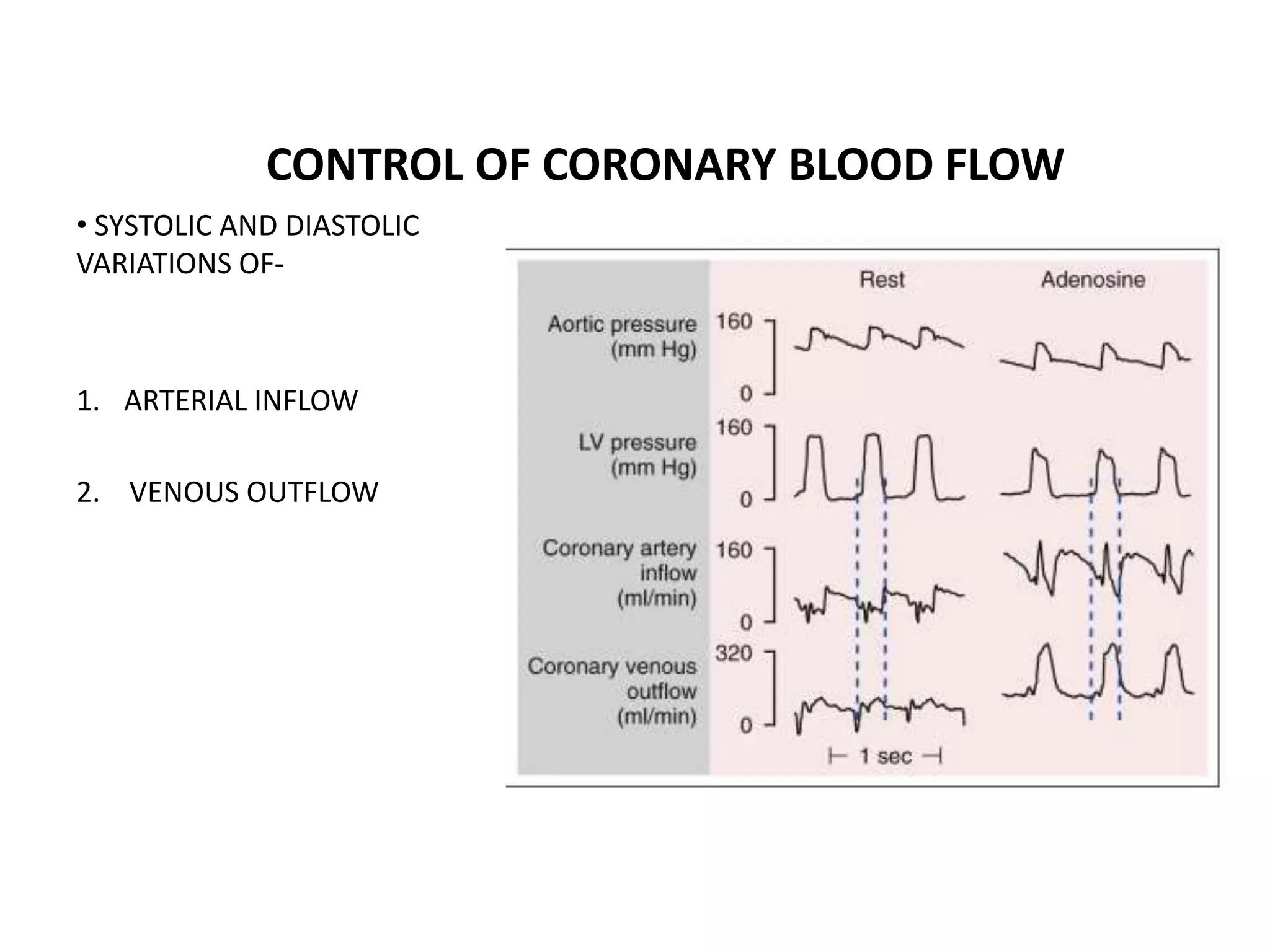
CONTROL OF CORONARY BLOOD FLOW
• SYSTOLIC AND DIASTOLIC
VARIATIONS OF-
1. ARTERIAL INFLOW
2. VENOUS OUTFLOW
Basic Principles
• myocardial cells have to do only 2 things: contract and relax; both are
aerobic, O2 requiring processes
• oxygen extraction in the coronary bed is maximal in the baseline state;
therefore to increase O2 delivery, flow must increase
• large visible epicardial arteries are conduit vessels not responsible for
resistance to flow (when normal)
• small, distal arterioles make up the major resistance to flow in the normal
state
• atherosclerosis (an abnormal state) affects the proximal, large epicardial
arteries
• once arteries are stenotic (narrowed) resistance to flow increases unless
distal, small arterioles are able to dilate to compensate
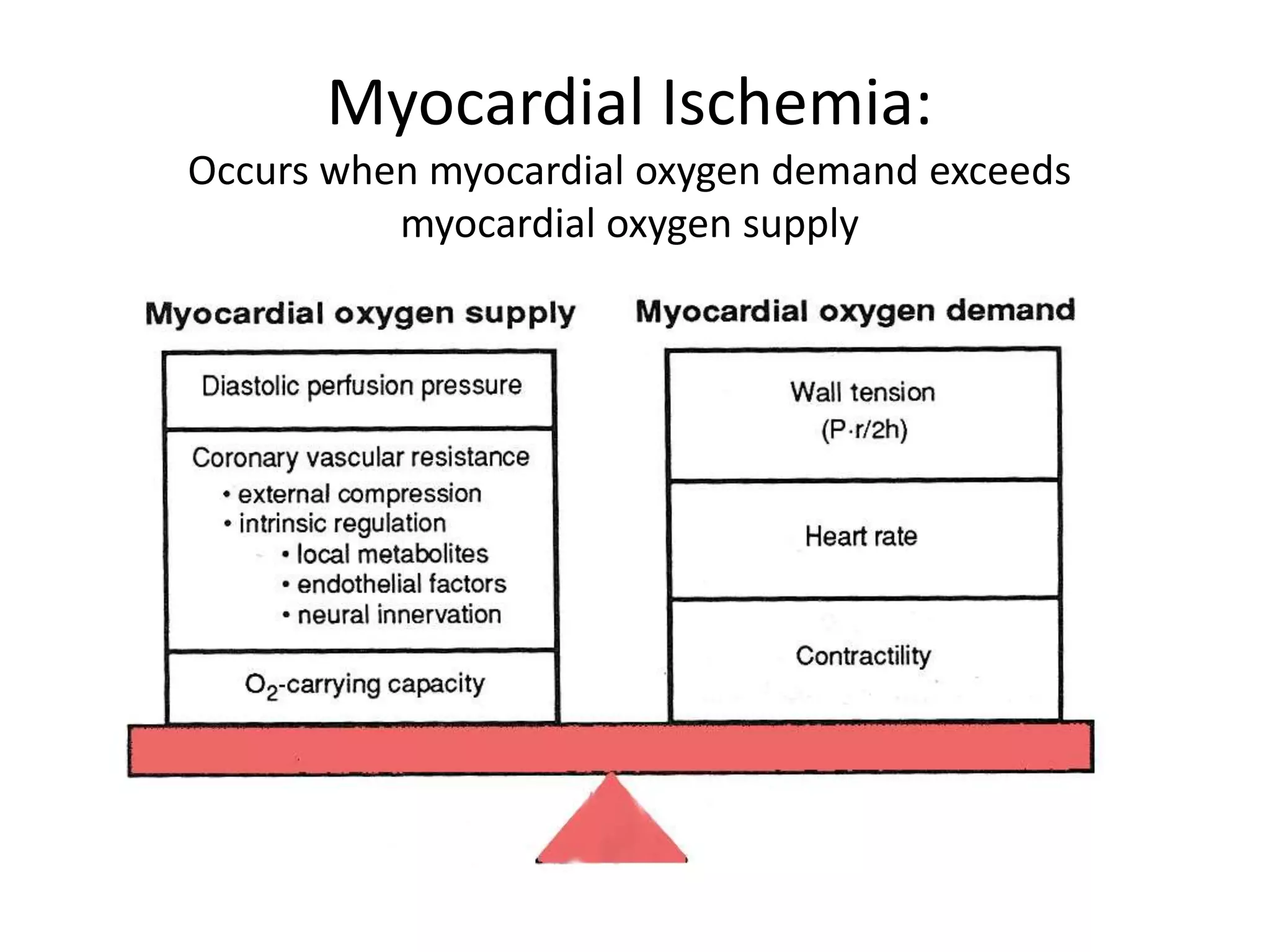
Myocardial Ischemia:
Occurs when myocardial oxygen demand exceeds
myocardial oxygen supply
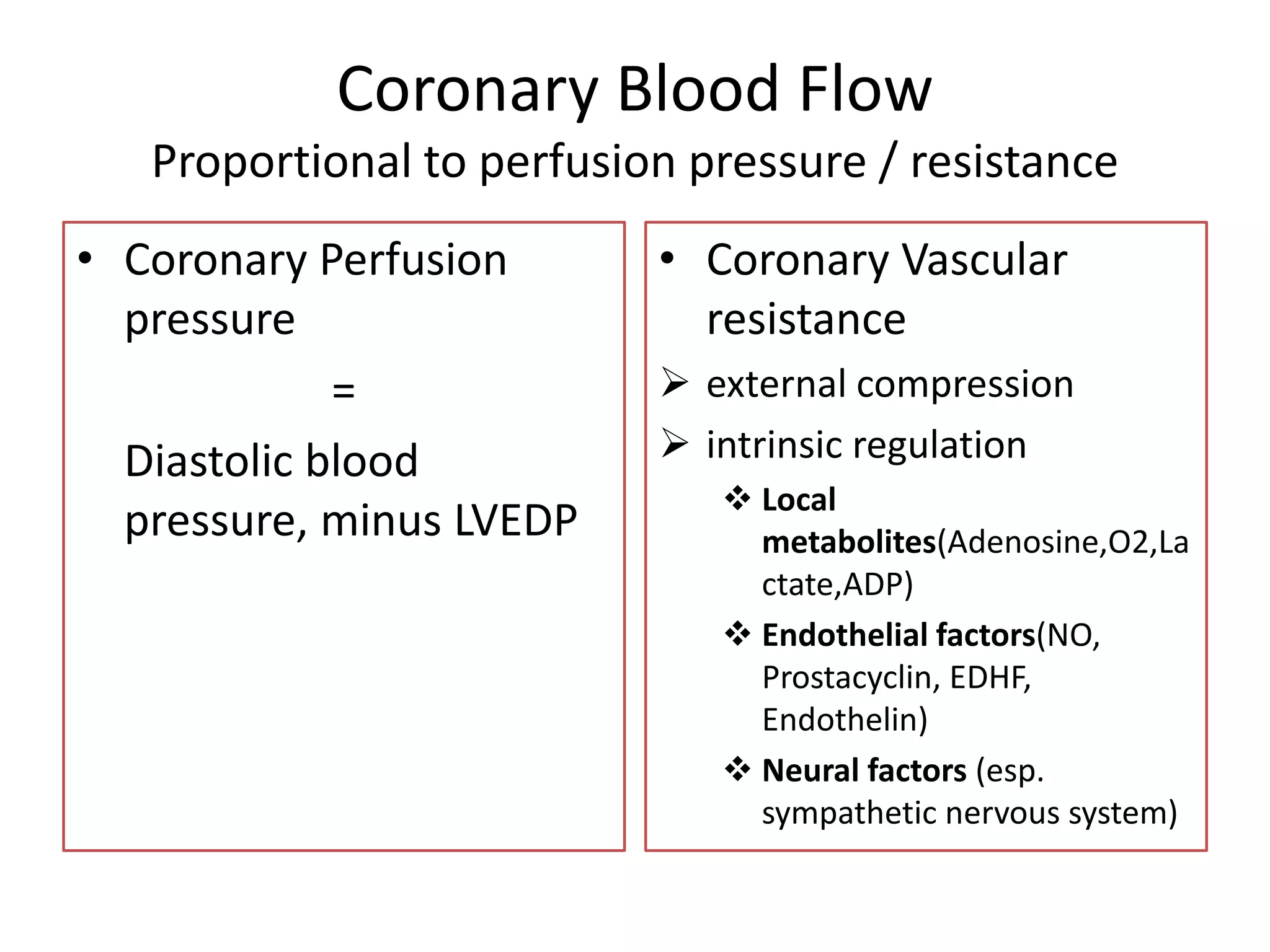
Coronary Blood Flow
Proportional to perfusion pressure / resistance
• Coronary Perfusion
pressure
=
Diastolic blood
pressure, minus LVEDP
• Coronary Vascular
resistance
 external compression
 intrinsic regulation
 Local
metabolites(Adenosine,O2,La
ctate,ADP)
 Endothelial factors(NO,
Prostacyclin, EDHF,
Endothelin)
 Neural factors (esp.
sympathetic nervous system)
CORONARY AUTOREGULATION
• Regional coronary blood flow remains constant at a wide range
• Resting flow- .7-1 ml/min/g
• May increase upto 5 times
• Flow in maximally vasodilated heart depends on coronary pressure
• CORONARY RESERVE- ability to increase flow above baseline in response to
pharmacological vasodilatation.
• Maximum flow and coronary reserve are reduced-
1. Diastolic time for subendocardial perfusion decreased (tachycardia)
2. Compressive determinants of diastolic perfusion (preload) increased
3. Increased resting flow- d/t increased MVO2 or decreased arterial O2 supply(
anemia, hypoxia)
CORONARY AUTOREGULATION
SUBENDOCARDIAL VS SUBEPICARDIAL FLOW
•Greater shortening/ thickening,
higher wall tension--- increased
MVO2
•Greater Compressive resistance
•Reduced perfusion pressure
•Less collateral
•NET RESULT- More
compensatory arterial
vasodilation at baseline,
therefore reduced CFR
Principle of flow through stenosed artery
•Follows Bernoulli’s
principle(30%-90%)
•Total pressure drop=
viscous loss+ separation
loss+ turbulence
•Resistance inversely
proportional to square of
cross sectional area
•Separation losses
determine the steepness
of prss-flo relationship
•no significant pressure drop
across a stenosis or stenosis-
related alteration in maximal
myocardial perfusion until stenosis
severity exceeds a 50% diameter
reduction (75% cross-sectional
area).
•Above a value of 70% diameter
reduction, small increases in
stenosis severity are accompanied
by further increases in stenosis
pressure drop
•A critical stenosis, one in which
subendocardial flow reserve is
completely exhausted at rest(
>90% stenosis)
Coronary Flow Reserve
• Arteriolar autoregulatory vasodilatory capacity in response to increased MVO2 or
pharmacologic agents
• Expressed as a ratio of Maximum flow / Baseline flow
• ~ 4-5 / 1 (experimentally)
• ~ 2.25 - 2.5 (when measured clinically)
• Stenosis in large epicardial (capacitance) vessel  decreased perfusion pressure 
arterioles downstream dilate to maintain normal resting flow
• As stenosis progresses, arteriolar dilation becomes chronic, decreasing potential to
augment flow and thus decreasing CFR
• Endocardial CFR < Epicardial CFR
• As CFR approaches 1.0 (vasodilatory capacity “maxxed out”), any further decrease
in PP or increase in MVO2  ischemia
Microcirculatory coronary flow reserve
LV hypertrophy
Impaired NO mediated
Vasodilatation
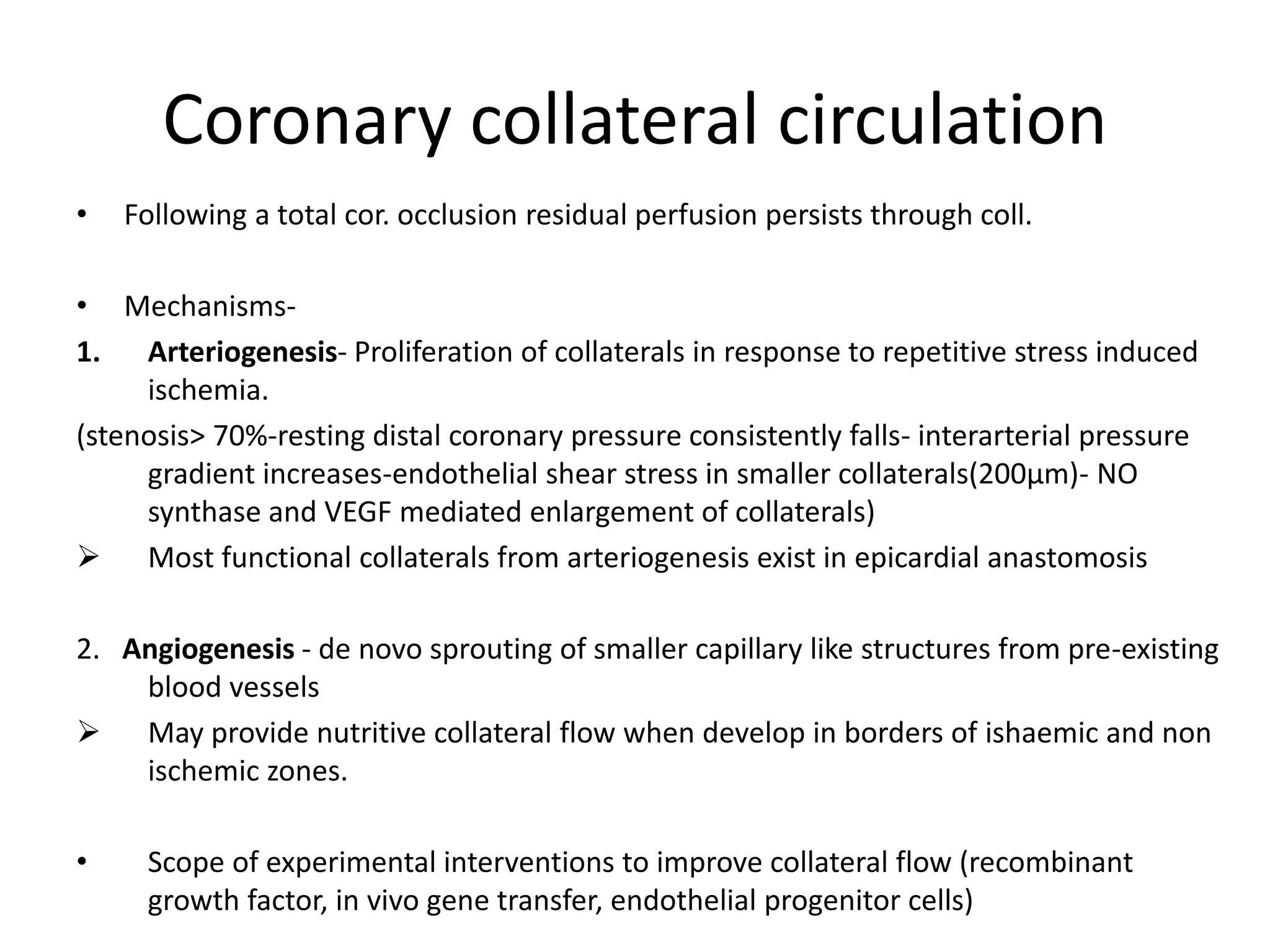
Coronary collateral circulation
• Following a total cor. occlusion residual perfusion persists through coll.
• Mechanisms-
1. Arteriogenesis- Proliferation of collaterals in response to repetitive stress induced
ischemia.
(stenosis> 70%-resting distal coronary pressure consistently falls- interarterial pressure
gradient increases-endothelial shear stress in smaller collaterals(200µm)- NO
synthase and VEGF mediated enlargement of collaterals)
 Most functional collaterals from arteriogenesis exist in epicardial anastomosis
2. Angiogenesis - de novo sprouting of smaller capillary like structures from pre-existing
blood vessels
 May provide nutritive collateral flow when develop in borders of ishaemic and non
ischemic zones.
• Scope of experimental interventions to improve collateral flow (recombinant
growth factor, in vivo gene transfer, endothelial progenitor cells)
Clinical implications
• Useful prognostic
marker in coronary
artery disease
•Reduces infarct size
•Retrograde
angioplasty in Chronic
Total Occlusion( CTO)
through collaterals
Myocardial viability and its
assessment
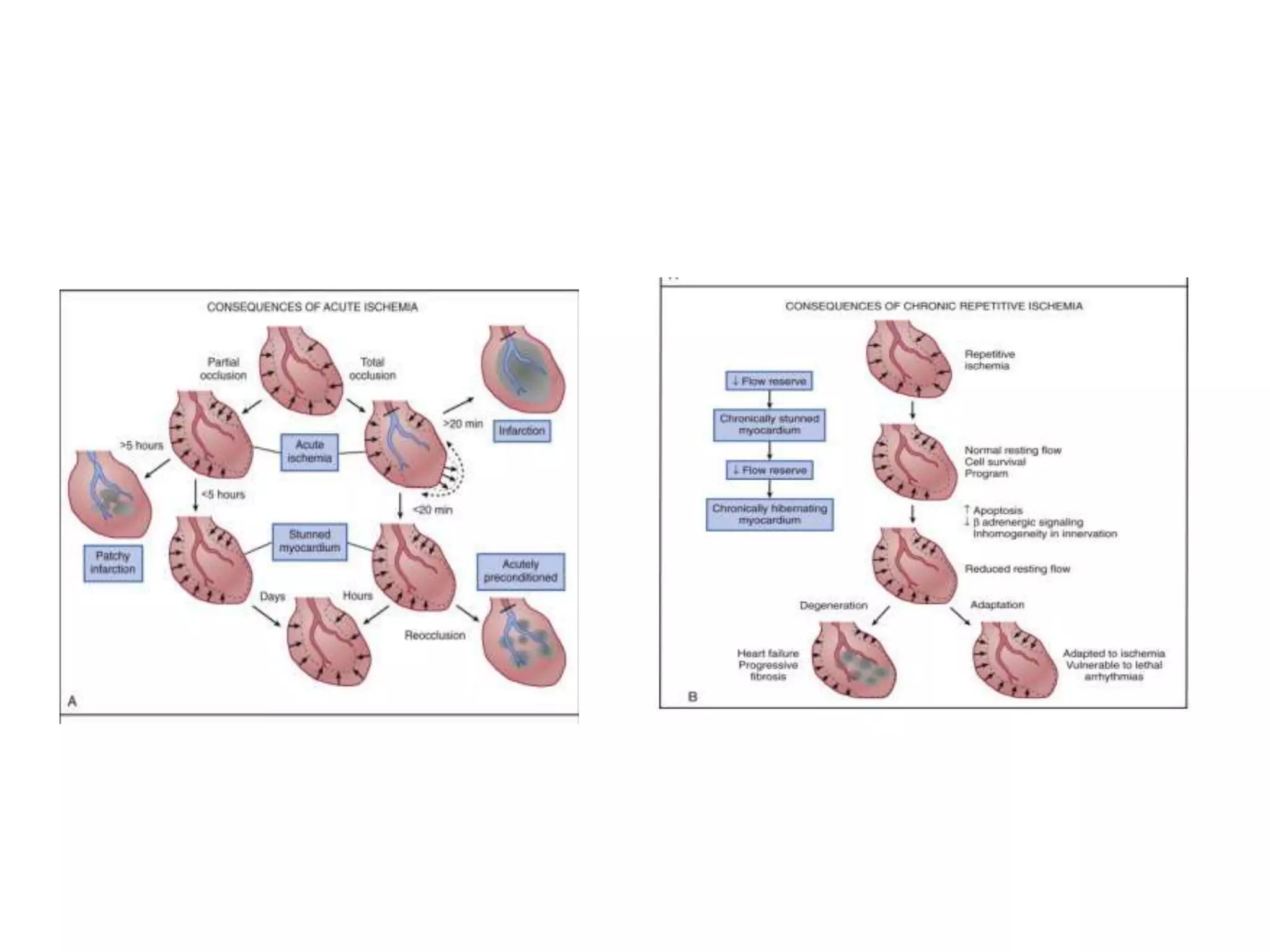
Metabolic and functional consequences of ischaemia
Aerobic metabolism stops
Onset of anaerobic glycolysis
Accumulation of lactate, reduced ATP
Development of tissue acidosis
Irreversible injury and myocyte death-
>20 min of coronary occlusion in the absence of
significant collaterals
Subendocardium to subepicardium
Increased MVO2( tachycardia) or reduced O2 delivery(
anemia, hypotension) accelerates progression.
Repetitive reversible ischaemia reduce irreversible
injury.
Residual coronary flow is an important determinant.
Reversible ischaemia
• More frequent
• Supply induced vs. demand induced
• Sequence of events-
 Regional contractile dysfunction within 1 min
 Reduction in global LV contractility(dP/dT)
 Progressive increase in LV end diastolic pressure with reduced SBP
 Chest pain occurs last in the sequence
• On restoring perfusion-
 chest pain resolution first
 Followed by resolution of haemodynamic changes
 Regional contraction remain depressed (stunned)
Myocardial viability
• Myocardium that demonstrates contractile
dysfunction that shows functional improvement
after revascularisation.
So, it comprises of-
Dysfunctional myocardium subtended by
diseased coronary arteries
Limited or absent scarring
Potential for functional recovery
Preconditioning
Acute preconditioning-
• Brief reversible ischemia preceding a coronary artery occlusion reduces
myocyte necrosis.
• Endogenous mechanism to delay evolution of irreversible myocyte injury
• Induced pharmacologically ( adenosine A1 receptor stimulation, agonists
of PKC or opening of K+ ATP channels)
• Clinical relevance- during angioplasty, reduced subjective and objective
ischemia during subsequent coronary occlusions
Delayed preconditioning-
• Develops in a chronic basis, persist upto 4 days
• Reduce myocardial infarct size and protects heart from ischaemia induced
stunning
• Mechanism- Protein synthesis, upregulation of iNOS,COX2, opening of
K+ATP channel
Postconditioning
• Final protective mechanism
• Cardioprotection by producing intermittent
ischaemia and pharmacological agonists at the
time of reperfusion
• Less extensively studied
• Greater potential to affect irreversible injury
as it has induced after myocardial ischemia is
established.
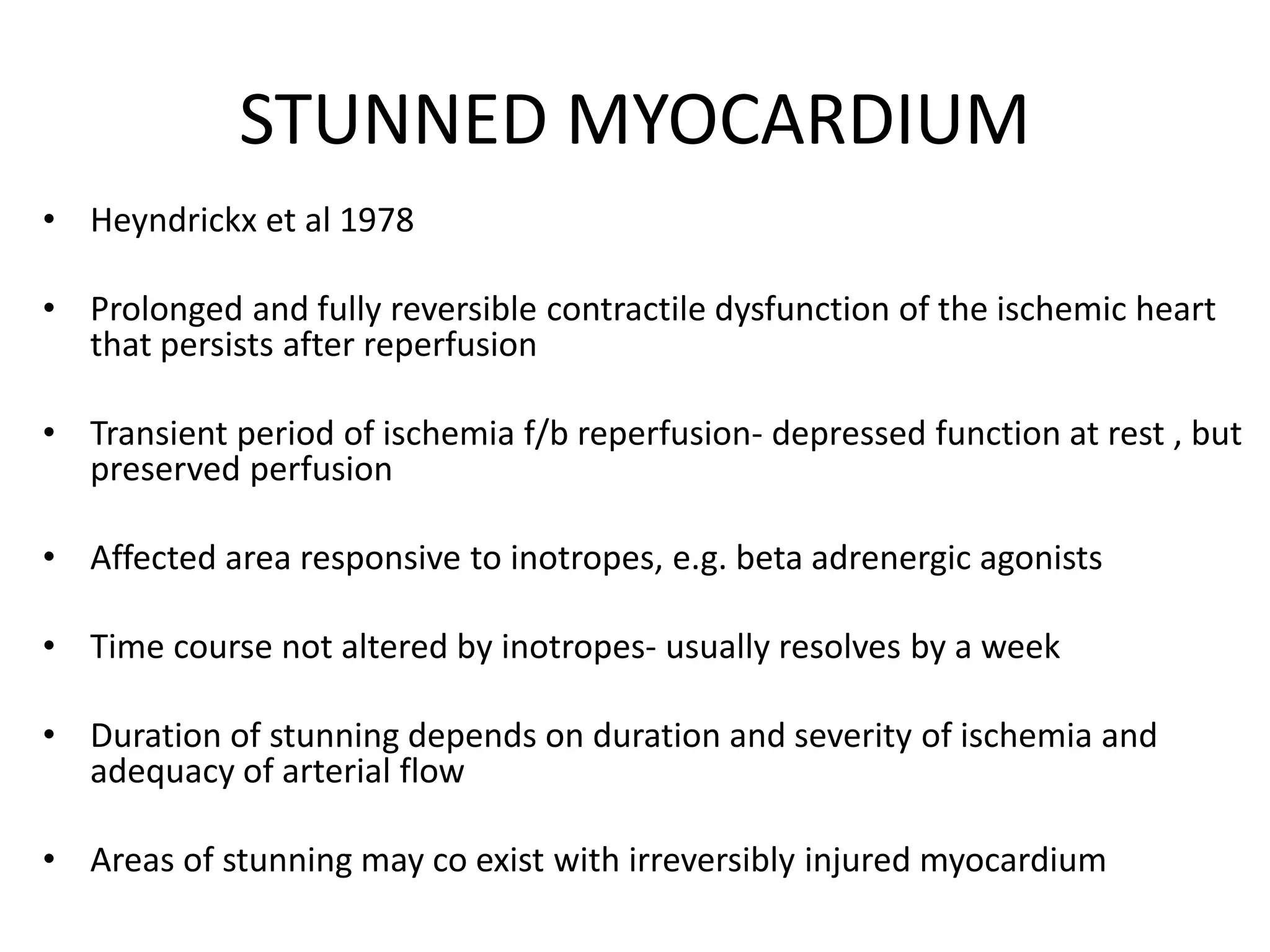
STUNNED MYOCARDIUM
• Heyndrickx et al 1978
• Prolonged and fully reversible contractile dysfunction of the ischemic heart
that persists after reperfusion
• Transient period of ischemia f/b reperfusion- depressed function at rest , but
preserved perfusion
• Affected area responsive to inotropes, e.g. beta adrenergic agonists
• Time course not altered by inotropes- usually resolves by a week
• Duration of stunning depends on duration and severity of ischemia and
adequacy of arterial flow
• Areas of stunning may co exist with irreversibly injured myocardium
Mechanism of stunning-
1. Calcium hypothesis- reduced
myofilament Ca2+ sensitivity
2. Oxyradical hypothesis- ROS
during reperfusion impairs Ca2+
handling
Clinical relevance-
1. Exercise induced ischemia
2. Acute coronary syndrome
3. Angioplasty balloon inflation
4. Post cardiopulmonary bypass
Myocardial hibernation
• Diamond et al 1978
• Persistent LV contractile dysfunction when myocardial
perfusion is chronically reduced but sufficient to maintain
viability of tissue
• Depressed function and perfusion at rest
• Progressively reversible after revascularisation
• Time to restoration-
– Months to one year
– Depend on duration and severity of flow reduction &
ultrastructural changes
Mechanisms
• Smart heart hypothesis-
– Myocardial function &metabolism reduced to match a
reduction in blood flow
• Repetitive stunning hypothesis-
– Repetitive episodes of ischemia reperfusion from
supply demand mismatch leading to sustained
depression of contractile function
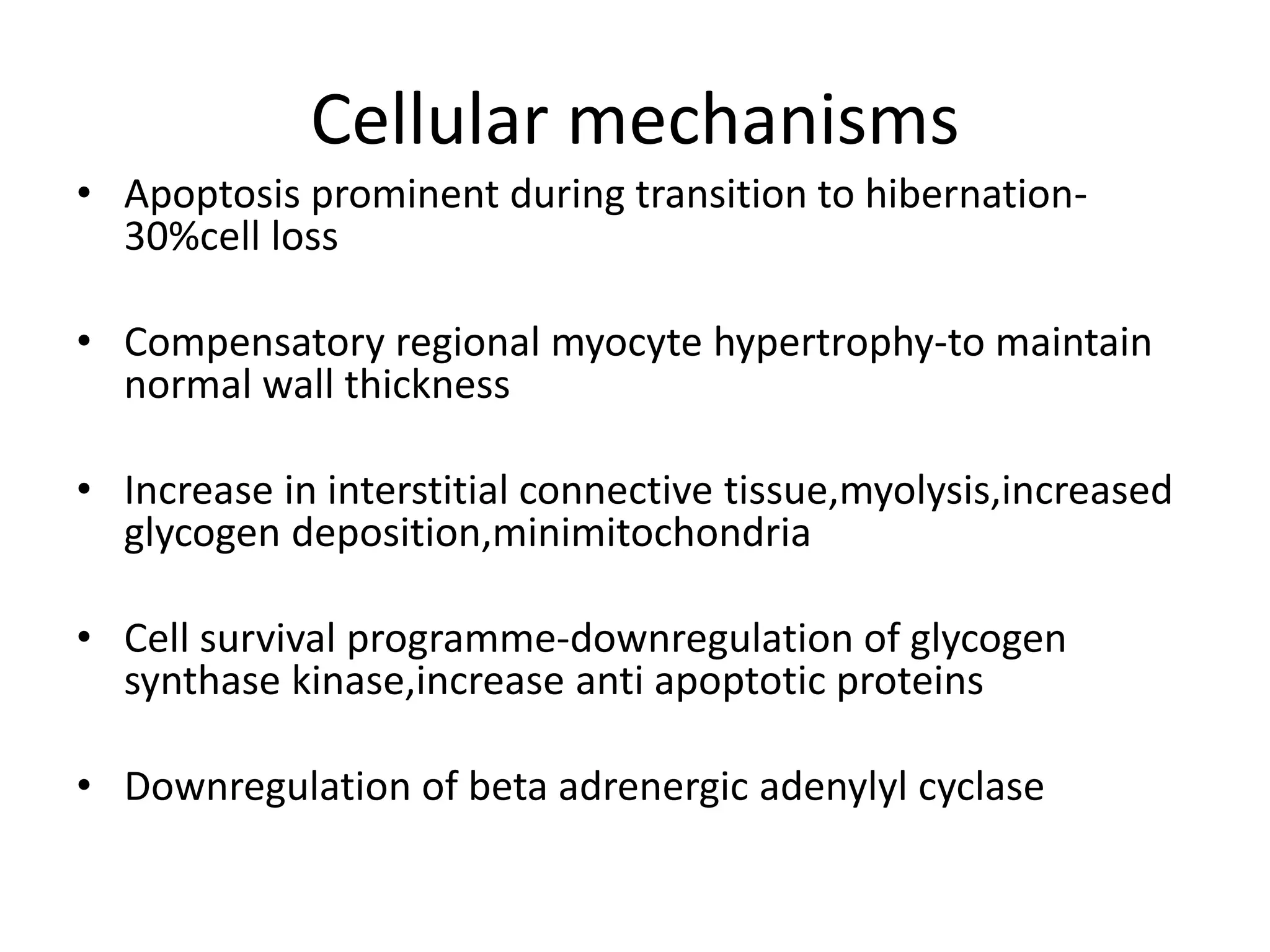
Cellular mechanisms
• Apoptosis prominent during transition to hibernation-
30%cell loss
• Compensatory regional myocyte hypertrophy-to maintain
normal wall thickness
• Increase in interstitial connective tissue,myolysis,increased
glycogen deposition,minimitochondria
• Cell survival programme-downregulation of glycogen
synthase kinase,increase anti apoptotic proteins
• Downregulation of beta adrenergic adenylyl cyclase
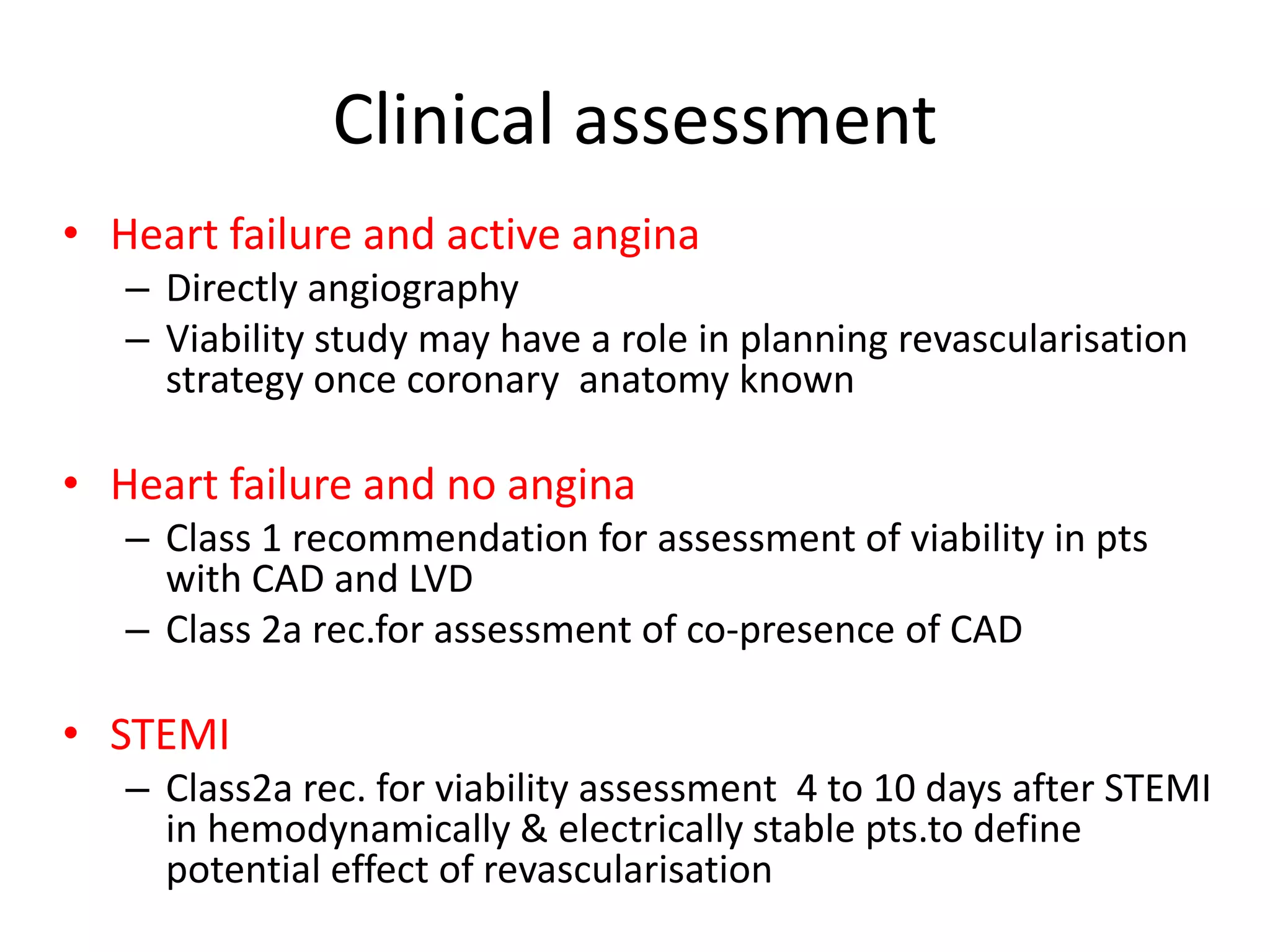
Clinical assessment
• Heart failure and active angina
– Directly angiography
– Viability study may have a role in planning revascularisation
strategy once coronary anatomy known
• Heart failure and no angina
– Class 1 recommendation for assessment of viability in pts
with CAD and LVD
– Class 2a rec.for assessment of co-presence of CAD
• STEMI
– Class2a rec. for viability assessment 4 to 10 days after STEMI
in hemodynamically & electrically stable pts.to define
potential effect of revascularisation
• Strong association b/w myocardial viability and
improved survival after revascularization in pts
with chronic CAD and LV dysfunction.
– Allmann KC et al;JACC 2002
• Pts with viability-revascularization a/w 79%
reduction in mortality (16% vs. 3.2%) as
compared to conserv.Rx
• Pts without viability-no significant difference in
revasc. Vs medical therapy (7.7% vs. 6.2%)
Techniques for assessment of viability
• Myocardial glucose utilisation-PET FDG
• Cell membrane integrity-SPECT Thallium
• Intact mitochondria-SPECT Tc
• Contractile reserve-dob.echo and dob.MRI
• Scar tissue-DEMRI,MSCT
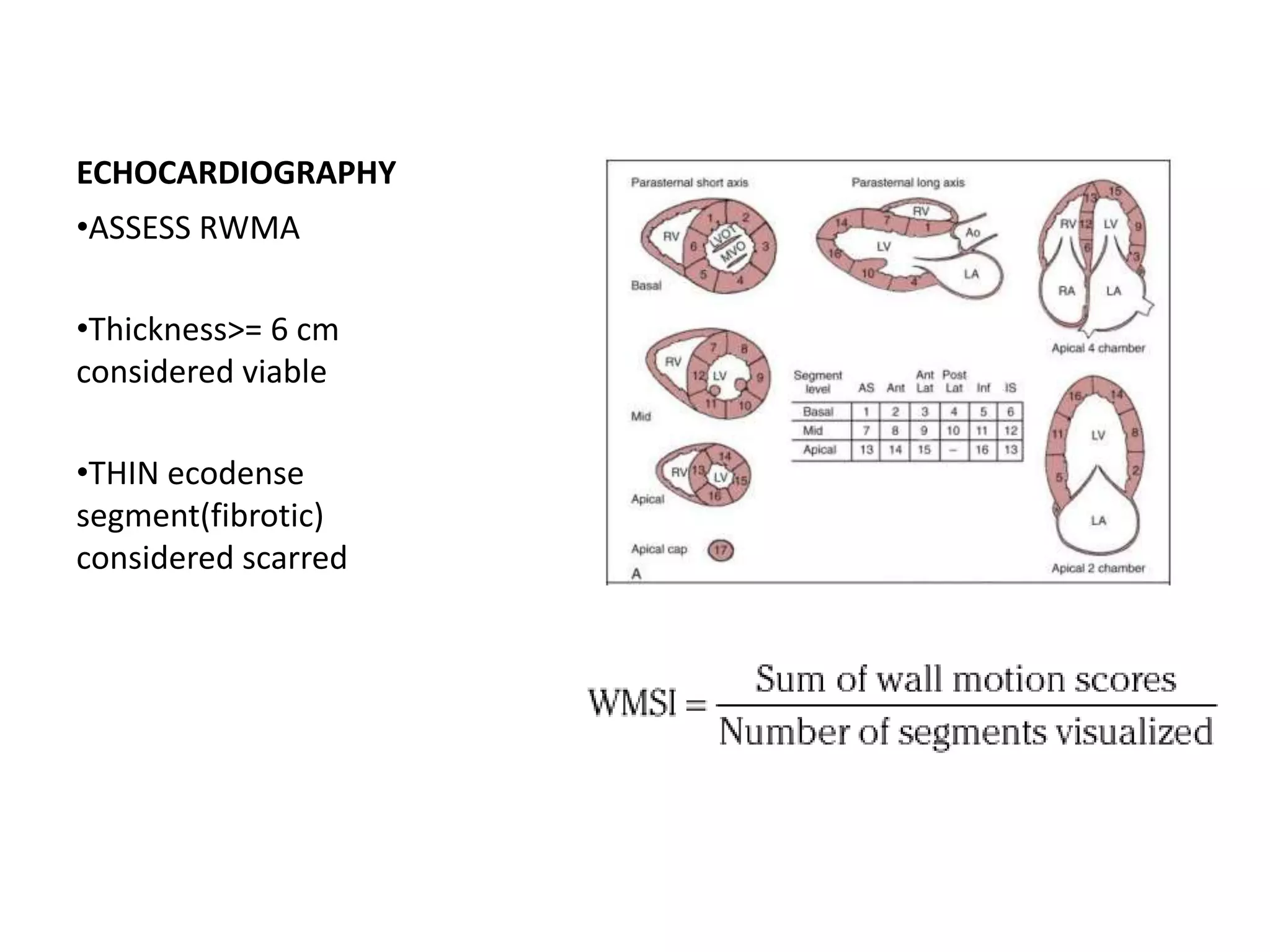
ECHOCARDIOGRAPHY
•ASSESS RWMA
•Thickness>= 6 cm
considered viable
•THIN ecodense
segment(fibrotic)
considered scarred
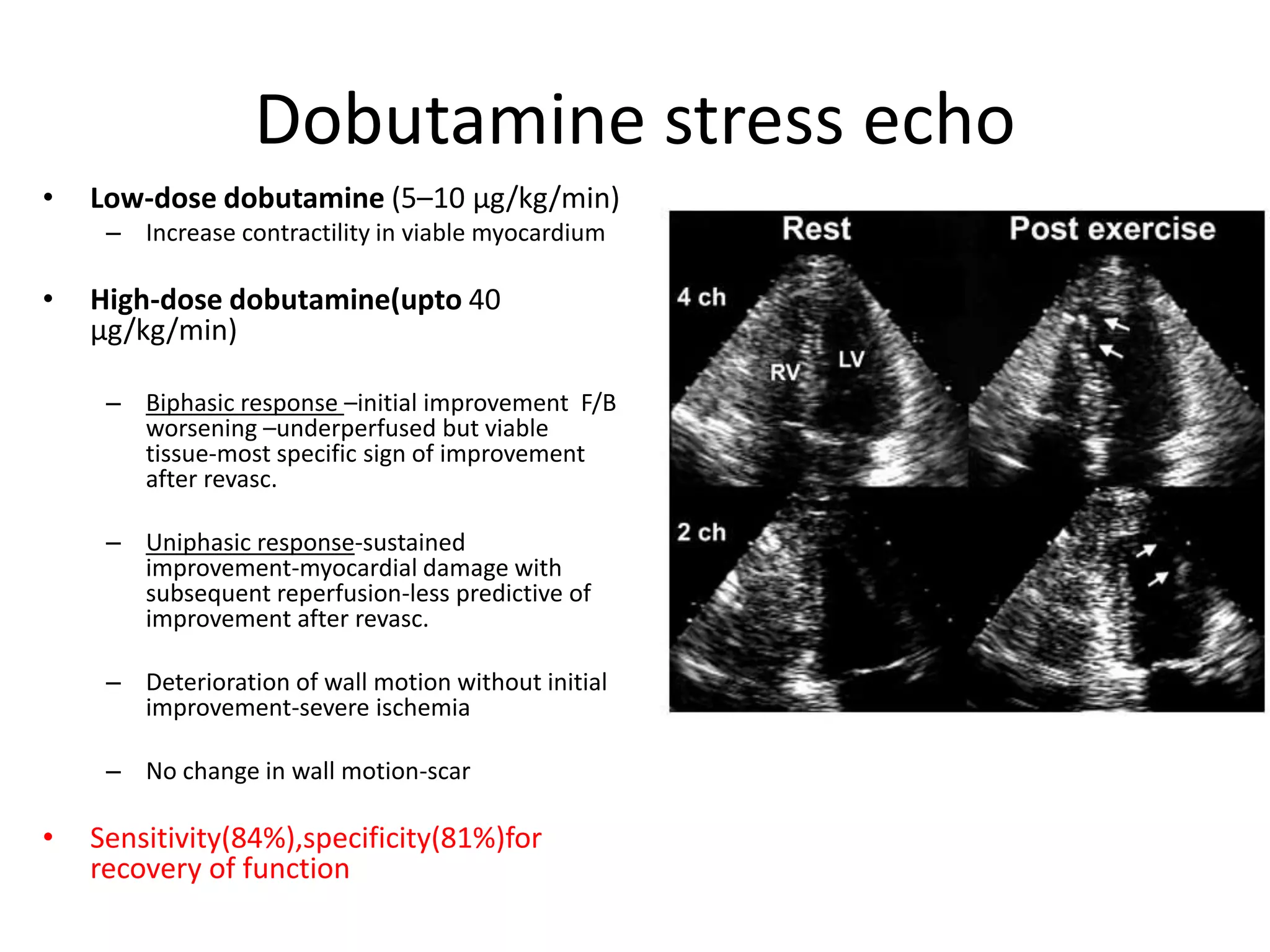
Dobutamine stress echo
• Low-dose dobutamine (5–10 μg/kg/min)
– Increase contractility in viable myocardium
• High-dose dobutamine(upto 40
μg/kg/min)
– Biphasic response –initial improvement F/B
worsening –underperfused but viable
tissue-most specific sign of improvement
after revasc.
– Uniphasic response-sustained
improvement-myocardial damage with
subsequent reperfusion-less predictive of
improvement after revasc.
– Deterioration of wall motion without initial
improvement-severe ischemia
– No change in wall motion-scar
• Sensitivity(84%),specificity(81%)for
recovery of function
SPECT-Th-201
• K+ analogue utilizes active cellular transport system-relies on
intact cell
• Uptake depends on viability &regional perfusion
• Redistribution-gradual accumulation of tracer in
hypoperfused areas ,rapid washout from normally perfused
areas
• Segments with tracer uptake >60%-viable
• Subendocardial scar tissue may be labelled as viable-lower
specificity
• Rest redistribution protocols-
– Defects in initial images that improve in 4 hour
image-viable myocardium
– Additional 24 hr image if fixed defects in 4 hr
image
– S/L NTG prior to injection
– Less sensitive-86%,specificity 47%
PET
• Positron emitting isotopes releasing 2 photons at
angle180,detected by camera by coincidence counting to
give a higher resolution
• Perfusion tracers-N13 ammonia,Rb 82,O15 water
• Metabolic tracers- F18DG,C11acetate,C11 palmitate
• FDG taken up by viable cells,phoshorylated&trapped inside
• Poor uptake in diabetics
Interpretation
• Normal perfusion-viability
• Flow metabolism mismatch-reduced perfusion
with intact metabolism-hibernating viable
myocardium
• Flow metabolism match-impaired FDG uptake
with reduced perfusion-scar
• Gold standard for assessment of viability
Perfusion metabolism mismatch-apex,anterior
anterolateral wall
Limitations of non invasive testing
•Diagnostic accuracy not optimal- esp not in intermediate
stenosis
•Limited spatial resolution- esp in pts with more complex
disease-
Multivessel disease
Several stenosis within same artery
Uncertainty about exact perfusion territories
• No discrimination between epicardial vs microvascular
disease or local stenosis vs diffuse epicardial disease
REPERFUSION THERAPY
General concepts
• Spontaneous reperfusion- usually late
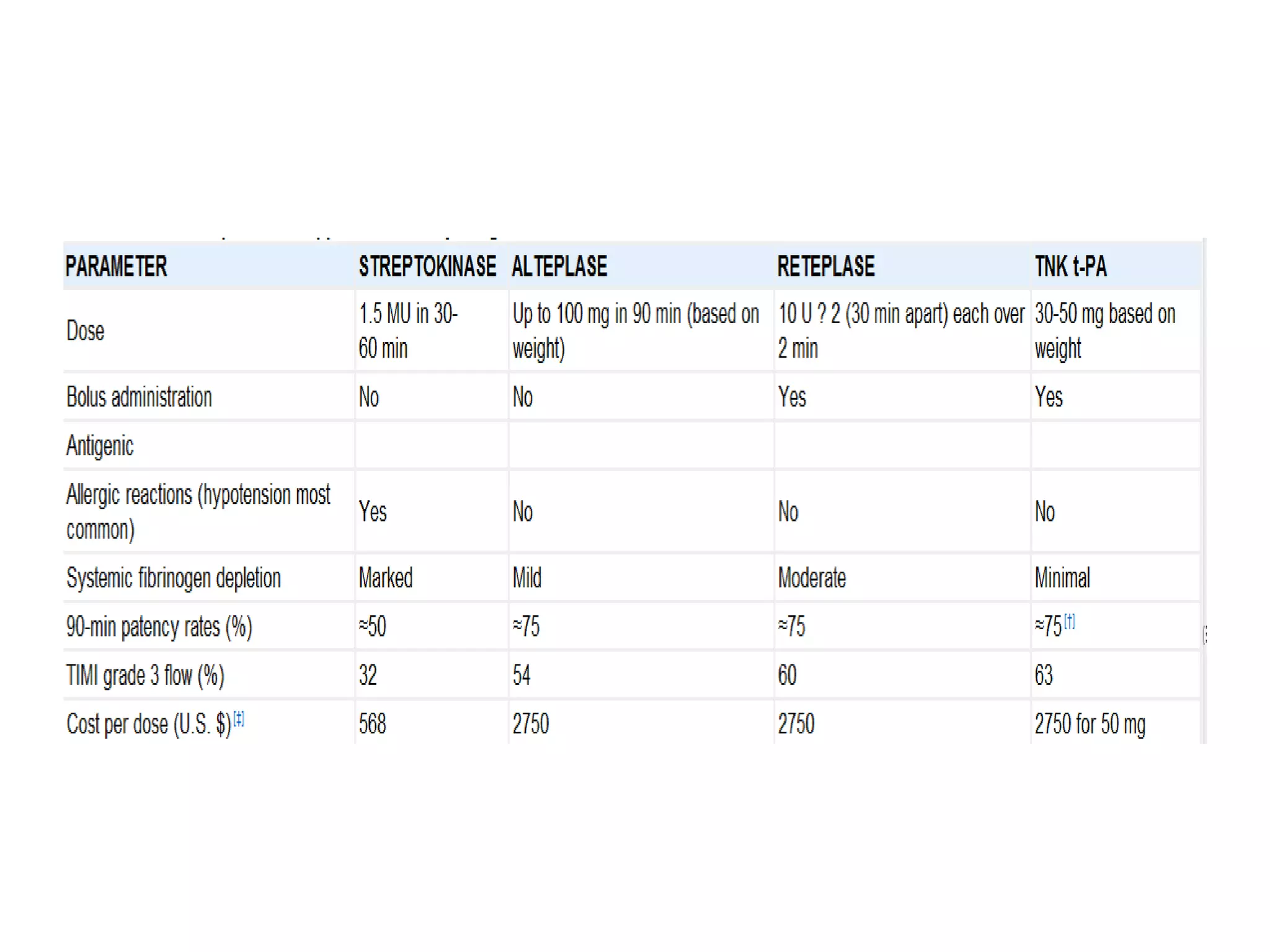
• Pharmacological- fibrinolysis
• PCI
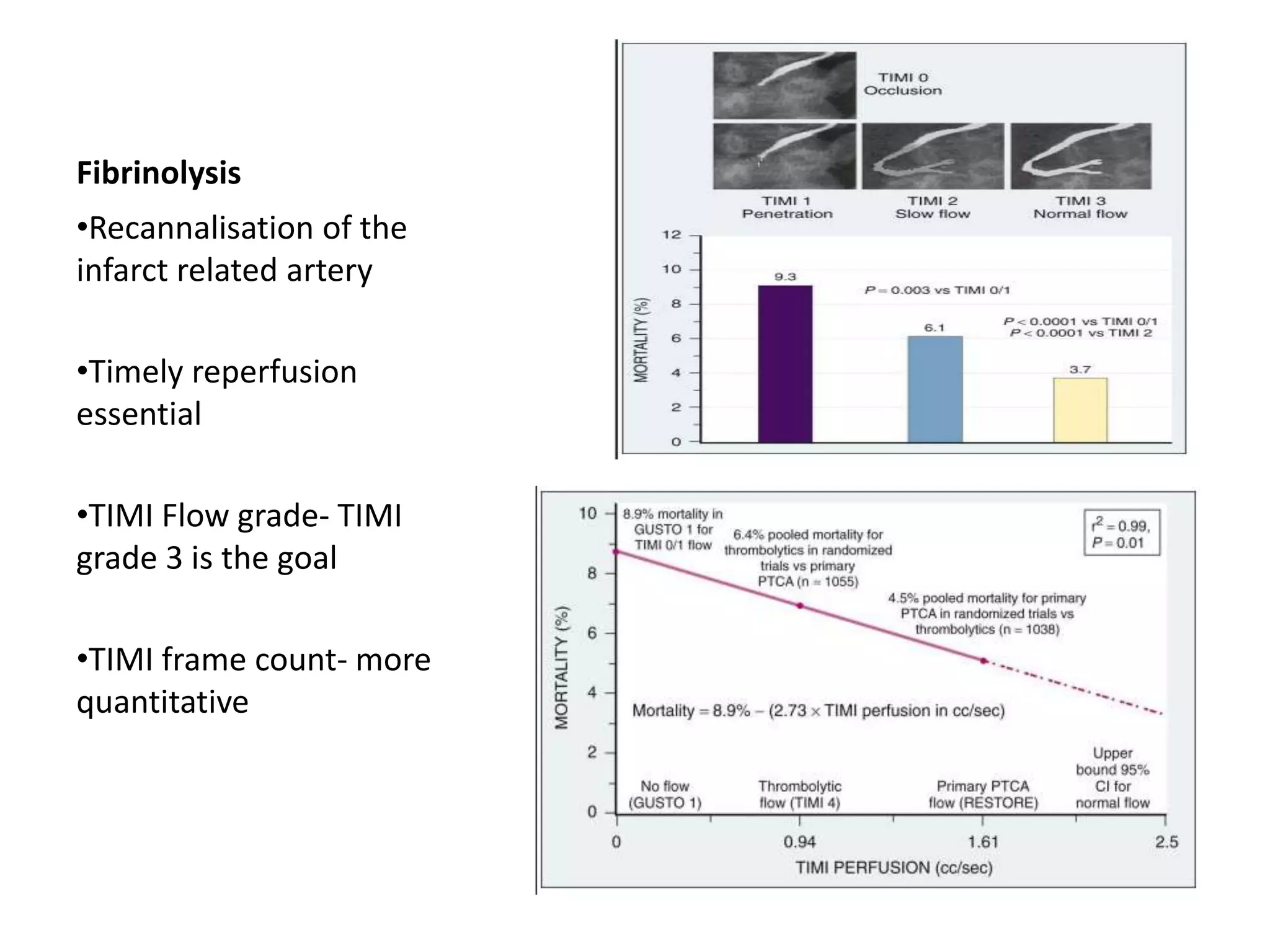
Fibrinolysis
•Recannalisation of the
infarct related artery
•Timely reperfusion
essential
•TIMI Flow grade- TIMI
grade 3 is the goal
•TIMI frame count- more
quantitative
Myocardial perfusion
‘myocardial no reflow’ –
1. Microvascular damage
2. Reperfusion injury
Assess myocardial perfusion-
1. ECG- ST resolution
2. Cardiac biomarkers
3. Echocardiography
4. Others-doppler flow
wire,CMR,PET
5. CAG- TIMI myocardial
perfusion
grade(myocardial blush)-
TMP
Choice of reperfusion strategy
• Time from the onset of symptoms to initiation of
reperfusion therapy
• Risk of death after STEMI.
• Risk of bleeding
• Time required for transportation to a skilled PCI
center
PCI
• Indications- stable angina,ACS
• STEMI- Primary PCI, Rescue PCI, Facilitated PCI, PCI after
successful thrombolysis
• Consider-
1. Extent of jeopardized myocardium
2. Baseline lesion morphology(SCAI)- CTO, Bifurcation
lesion,calcification
3. Underlying cardiac function(LV function,rhythm, valve)
4. Associated renal dysfunction
5. Pre existing medical comorbidities
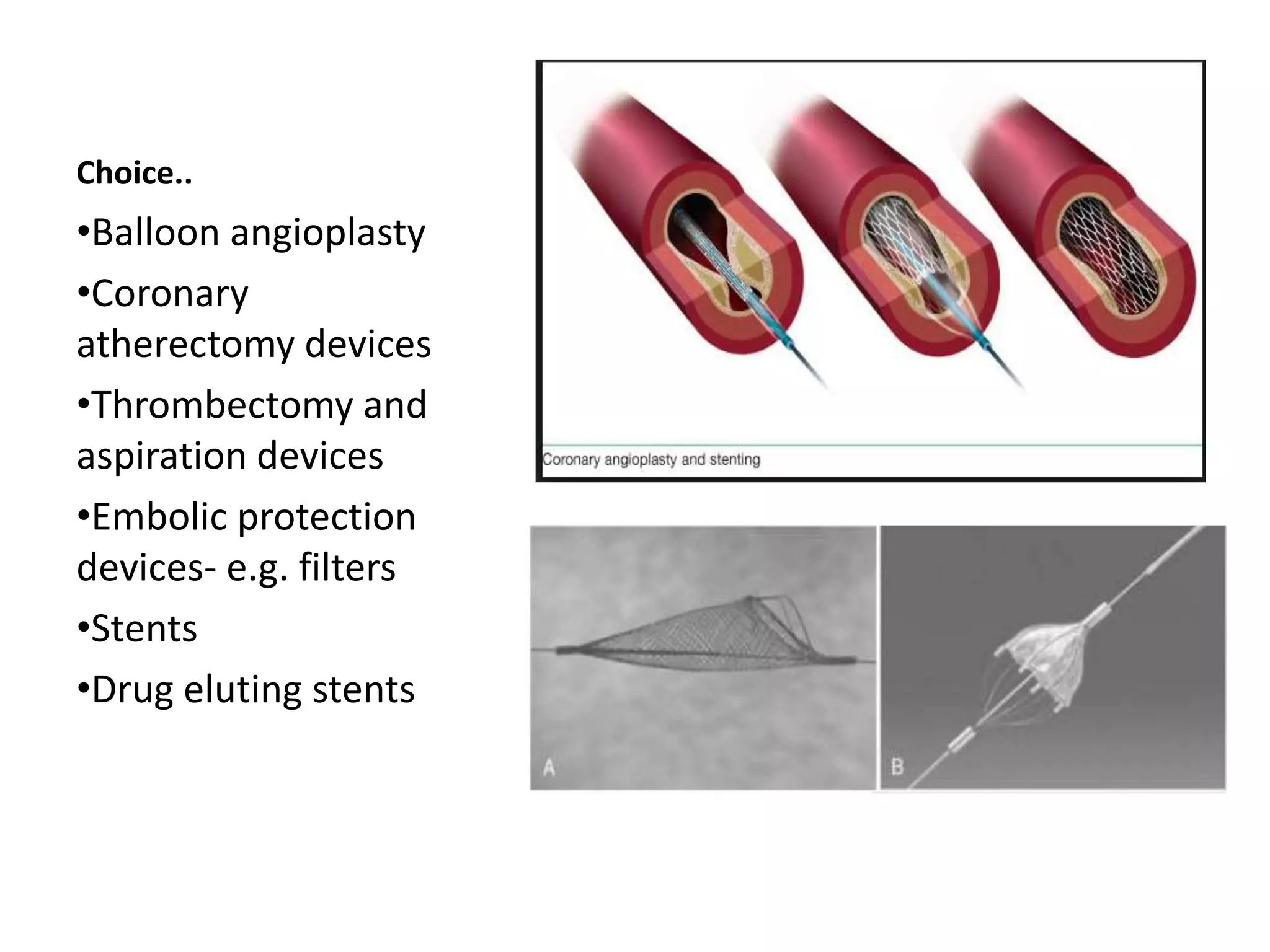
Choice..
•Balloon angioplasty
•Coronary
atherectomy devices
•Thrombectomy and
aspiration devices
•Embolic protection
devices- e.g. filters
•Stents
•Drug eluting stents
Reperfusion Injury
• Reperfusion, although beneficial in terms of myocardial salvage, may come at a cost
because of a process known as reperfusion injury.
• Types of reperfusion injury
• (1) lethal reperfusion injury—reperfusion-induced death of cells that were still viable
at the time of restoration of coronary blood flow
• (2) vascular reperfusion injury—progressive damage to the microvasculature so that
there is an expanding area of no reflow and loss of coronary vasodilatory reserve
• (3) stunned myocardium—salvaged myocytes display a prolonged period of
contractile dysfunction following restoration of blood flow because of abnormalities
of intracellular metabolism leading to reduced energy production
• (4) reperfusion arrhythmias—bursts of ventricular tachycardia and, on occasion,
ventricular fibrillation—that occur within seconds of reperfusio
• Increased incidence of hemorrhagic infarct , esp with fibrinolytic therapy
Protection against reperfusion injury
(1) Preservation of microvascular integrity by using antiplatelet agents and
antithrombins to minimize embolization of atheroembolic debris
(1) Prevention of inflammatory damage
(3) Metabolic support of the ischemic myocardium.
• The effectiveness of agents directed against reperfusion injury rapidly
declines the later they are administered after reperfusion; eventually, no
beneficial effect is detectable in animal models after 45 to 60 minutes of
reperfusion has elapsed.
• Postconditioning, which involves introducing brief repetitive episodes of
ischemia alternating with reperfusion. This appears to activate a number
of cellular protective mechanisms centering around prosurvival kinases.
THANK YOU

Physiological basis of coronary revascularisation

  • 1.
    PHYSIOLOGICAL BASIS OF CORONARY REVASCULARISATION Chairperson-Prof.(Dr.) S. Mukherjee Speaker -Dr. Abhishek Das, PGT
  • 2.
    AREAS OF DISCUSSION •Coronary physiology • Myocardial viability and its assessment • Coronary revascularisation
  • 3.
    CONTROL OF CORONARYBLOOD FLOW • SYSTOLIC AND DIASTOLIC VARIATIONS OF- 1. ARTERIAL INFLOW 2. VENOUS OUTFLOW
  • 4.
    Basic Principles • myocardialcells have to do only 2 things: contract and relax; both are aerobic, O2 requiring processes • oxygen extraction in the coronary bed is maximal in the baseline state; therefore to increase O2 delivery, flow must increase • large visible epicardial arteries are conduit vessels not responsible for resistance to flow (when normal) • small, distal arterioles make up the major resistance to flow in the normal state • atherosclerosis (an abnormal state) affects the proximal, large epicardial arteries • once arteries are stenotic (narrowed) resistance to flow increases unless distal, small arterioles are able to dilate to compensate
  • 5.
    Myocardial Ischemia: Occurs whenmyocardial oxygen demand exceeds myocardial oxygen supply
  • 7.
    Coronary Blood Flow Proportionalto perfusion pressure / resistance • Coronary Perfusion pressure = Diastolic blood pressure, minus LVEDP • Coronary Vascular resistance  external compression  intrinsic regulation  Local metabolites(Adenosine,O2,La ctate,ADP)  Endothelial factors(NO, Prostacyclin, EDHF, Endothelin)  Neural factors (esp. sympathetic nervous system)
  • 8.
    CORONARY AUTOREGULATION • Regionalcoronary blood flow remains constant at a wide range • Resting flow- .7-1 ml/min/g • May increase upto 5 times • Flow in maximally vasodilated heart depends on coronary pressure • CORONARY RESERVE- ability to increase flow above baseline in response to pharmacological vasodilatation. • Maximum flow and coronary reserve are reduced- 1. Diastolic time for subendocardial perfusion decreased (tachycardia) 2. Compressive determinants of diastolic perfusion (preload) increased 3. Increased resting flow- d/t increased MVO2 or decreased arterial O2 supply( anemia, hypoxia)
  • 9.
  • 10.
    SUBENDOCARDIAL VS SUBEPICARDIALFLOW •Greater shortening/ thickening, higher wall tension--- increased MVO2 •Greater Compressive resistance •Reduced perfusion pressure •Less collateral •NET RESULT- More compensatory arterial vasodilation at baseline, therefore reduced CFR
  • 11.
    Principle of flowthrough stenosed artery •Follows Bernoulli’s principle(30%-90%) •Total pressure drop= viscous loss+ separation loss+ turbulence •Resistance inversely proportional to square of cross sectional area •Separation losses determine the steepness of prss-flo relationship
  • 12.
    •no significant pressuredrop across a stenosis or stenosis- related alteration in maximal myocardial perfusion until stenosis severity exceeds a 50% diameter reduction (75% cross-sectional area). •Above a value of 70% diameter reduction, small increases in stenosis severity are accompanied by further increases in stenosis pressure drop •A critical stenosis, one in which subendocardial flow reserve is completely exhausted at rest( >90% stenosis)
  • 13.
    Coronary Flow Reserve •Arteriolar autoregulatory vasodilatory capacity in response to increased MVO2 or pharmacologic agents • Expressed as a ratio of Maximum flow / Baseline flow • ~ 4-5 / 1 (experimentally) • ~ 2.25 - 2.5 (when measured clinically) • Stenosis in large epicardial (capacitance) vessel  decreased perfusion pressure  arterioles downstream dilate to maintain normal resting flow • As stenosis progresses, arteriolar dilation becomes chronic, decreasing potential to augment flow and thus decreasing CFR • Endocardial CFR < Epicardial CFR • As CFR approaches 1.0 (vasodilatory capacity “maxxed out”), any further decrease in PP or increase in MVO2  ischemia
  • 16.
    Microcirculatory coronary flowreserve LV hypertrophy Impaired NO mediated Vasodilatation
  • 17.
    Coronary collateral circulation •Following a total cor. occlusion residual perfusion persists through coll. • Mechanisms- 1. Arteriogenesis- Proliferation of collaterals in response to repetitive stress induced ischemia. (stenosis> 70%-resting distal coronary pressure consistently falls- interarterial pressure gradient increases-endothelial shear stress in smaller collaterals(200µm)- NO synthase and VEGF mediated enlargement of collaterals)  Most functional collaterals from arteriogenesis exist in epicardial anastomosis 2. Angiogenesis - de novo sprouting of smaller capillary like structures from pre-existing blood vessels  May provide nutritive collateral flow when develop in borders of ishaemic and non ischemic zones. • Scope of experimental interventions to improve collateral flow (recombinant growth factor, in vivo gene transfer, endothelial progenitor cells)
  • 18.
    Clinical implications • Usefulprognostic marker in coronary artery disease •Reduces infarct size •Retrograde angioplasty in Chronic Total Occlusion( CTO) through collaterals
  • 19.
  • 20.
    Metabolic and functionalconsequences of ischaemia Aerobic metabolism stops Onset of anaerobic glycolysis Accumulation of lactate, reduced ATP Development of tissue acidosis Irreversible injury and myocyte death- >20 min of coronary occlusion in the absence of significant collaterals Subendocardium to subepicardium Increased MVO2( tachycardia) or reduced O2 delivery( anemia, hypotension) accelerates progression. Repetitive reversible ischaemia reduce irreversible injury. Residual coronary flow is an important determinant.
  • 21.
    Reversible ischaemia • Morefrequent • Supply induced vs. demand induced • Sequence of events-  Regional contractile dysfunction within 1 min  Reduction in global LV contractility(dP/dT)  Progressive increase in LV end diastolic pressure with reduced SBP  Chest pain occurs last in the sequence • On restoring perfusion-  chest pain resolution first  Followed by resolution of haemodynamic changes  Regional contraction remain depressed (stunned)
  • 22.
    Myocardial viability • Myocardiumthat demonstrates contractile dysfunction that shows functional improvement after revascularisation. So, it comprises of- Dysfunctional myocardium subtended by diseased coronary arteries Limited or absent scarring Potential for functional recovery
  • 23.
    Preconditioning Acute preconditioning- • Briefreversible ischemia preceding a coronary artery occlusion reduces myocyte necrosis. • Endogenous mechanism to delay evolution of irreversible myocyte injury • Induced pharmacologically ( adenosine A1 receptor stimulation, agonists of PKC or opening of K+ ATP channels) • Clinical relevance- during angioplasty, reduced subjective and objective ischemia during subsequent coronary occlusions Delayed preconditioning- • Develops in a chronic basis, persist upto 4 days • Reduce myocardial infarct size and protects heart from ischaemia induced stunning • Mechanism- Protein synthesis, upregulation of iNOS,COX2, opening of K+ATP channel
  • 24.
    Postconditioning • Final protectivemechanism • Cardioprotection by producing intermittent ischaemia and pharmacological agonists at the time of reperfusion • Less extensively studied • Greater potential to affect irreversible injury as it has induced after myocardial ischemia is established.
  • 26.
    STUNNED MYOCARDIUM • Heyndrickxet al 1978 • Prolonged and fully reversible contractile dysfunction of the ischemic heart that persists after reperfusion • Transient period of ischemia f/b reperfusion- depressed function at rest , but preserved perfusion • Affected area responsive to inotropes, e.g. beta adrenergic agonists • Time course not altered by inotropes- usually resolves by a week • Duration of stunning depends on duration and severity of ischemia and adequacy of arterial flow • Areas of stunning may co exist with irreversibly injured myocardium
  • 27.
    Mechanism of stunning- 1.Calcium hypothesis- reduced myofilament Ca2+ sensitivity 2. Oxyradical hypothesis- ROS during reperfusion impairs Ca2+ handling Clinical relevance- 1. Exercise induced ischemia 2. Acute coronary syndrome 3. Angioplasty balloon inflation 4. Post cardiopulmonary bypass
  • 28.
    Myocardial hibernation • Diamondet al 1978 • Persistent LV contractile dysfunction when myocardial perfusion is chronically reduced but sufficient to maintain viability of tissue • Depressed function and perfusion at rest • Progressively reversible after revascularisation • Time to restoration- – Months to one year – Depend on duration and severity of flow reduction & ultrastructural changes
  • 29.
    Mechanisms • Smart hearthypothesis- – Myocardial function &metabolism reduced to match a reduction in blood flow • Repetitive stunning hypothesis- – Repetitive episodes of ischemia reperfusion from supply demand mismatch leading to sustained depression of contractile function
  • 30.
    Cellular mechanisms • Apoptosisprominent during transition to hibernation- 30%cell loss • Compensatory regional myocyte hypertrophy-to maintain normal wall thickness • Increase in interstitial connective tissue,myolysis,increased glycogen deposition,minimitochondria • Cell survival programme-downregulation of glycogen synthase kinase,increase anti apoptotic proteins • Downregulation of beta adrenergic adenylyl cyclase
  • 31.
    Clinical assessment • Heartfailure and active angina – Directly angiography – Viability study may have a role in planning revascularisation strategy once coronary anatomy known • Heart failure and no angina – Class 1 recommendation for assessment of viability in pts with CAD and LVD – Class 2a rec.for assessment of co-presence of CAD • STEMI – Class2a rec. for viability assessment 4 to 10 days after STEMI in hemodynamically & electrically stable pts.to define potential effect of revascularisation
  • 32.
    • Strong associationb/w myocardial viability and improved survival after revascularization in pts with chronic CAD and LV dysfunction. – Allmann KC et al;JACC 2002 • Pts with viability-revascularization a/w 79% reduction in mortality (16% vs. 3.2%) as compared to conserv.Rx • Pts without viability-no significant difference in revasc. Vs medical therapy (7.7% vs. 6.2%)
  • 33.
    Techniques for assessmentof viability • Myocardial glucose utilisation-PET FDG • Cell membrane integrity-SPECT Thallium • Intact mitochondria-SPECT Tc • Contractile reserve-dob.echo and dob.MRI • Scar tissue-DEMRI,MSCT
  • 34.
    ECHOCARDIOGRAPHY •ASSESS RWMA •Thickness>= 6cm considered viable •THIN ecodense segment(fibrotic) considered scarred
  • 35.
    Dobutamine stress echo •Low-dose dobutamine (5–10 μg/kg/min) – Increase contractility in viable myocardium • High-dose dobutamine(upto 40 μg/kg/min) – Biphasic response –initial improvement F/B worsening –underperfused but viable tissue-most specific sign of improvement after revasc. – Uniphasic response-sustained improvement-myocardial damage with subsequent reperfusion-less predictive of improvement after revasc. – Deterioration of wall motion without initial improvement-severe ischemia – No change in wall motion-scar • Sensitivity(84%),specificity(81%)for recovery of function
  • 36.
    SPECT-Th-201 • K+ analogueutilizes active cellular transport system-relies on intact cell • Uptake depends on viability &regional perfusion • Redistribution-gradual accumulation of tracer in hypoperfused areas ,rapid washout from normally perfused areas • Segments with tracer uptake >60%-viable • Subendocardial scar tissue may be labelled as viable-lower specificity
  • 37.
    • Rest redistributionprotocols- – Defects in initial images that improve in 4 hour image-viable myocardium – Additional 24 hr image if fixed defects in 4 hr image – S/L NTG prior to injection – Less sensitive-86%,specificity 47%
  • 39.
    PET • Positron emittingisotopes releasing 2 photons at angle180,detected by camera by coincidence counting to give a higher resolution • Perfusion tracers-N13 ammonia,Rb 82,O15 water • Metabolic tracers- F18DG,C11acetate,C11 palmitate • FDG taken up by viable cells,phoshorylated&trapped inside • Poor uptake in diabetics
  • 40.
    Interpretation • Normal perfusion-viability •Flow metabolism mismatch-reduced perfusion with intact metabolism-hibernating viable myocardium • Flow metabolism match-impaired FDG uptake with reduced perfusion-scar • Gold standard for assessment of viability
  • 41.
  • 42.
    Limitations of noninvasive testing •Diagnostic accuracy not optimal- esp not in intermediate stenosis •Limited spatial resolution- esp in pts with more complex disease- Multivessel disease Several stenosis within same artery Uncertainty about exact perfusion territories • No discrimination between epicardial vs microvascular disease or local stenosis vs diffuse epicardial disease
  • 43.
  • 44.
    General concepts • Spontaneousreperfusion- usually late • Pharmacological- fibrinolysis • PCI
  • 46.
    Fibrinolysis •Recannalisation of the infarctrelated artery •Timely reperfusion essential •TIMI Flow grade- TIMI grade 3 is the goal •TIMI frame count- more quantitative
  • 47.
    Myocardial perfusion ‘myocardial noreflow’ – 1. Microvascular damage 2. Reperfusion injury Assess myocardial perfusion- 1. ECG- ST resolution 2. Cardiac biomarkers 3. Echocardiography 4. Others-doppler flow wire,CMR,PET 5. CAG- TIMI myocardial perfusion grade(myocardial blush)- TMP
  • 49.
    Choice of reperfusionstrategy • Time from the onset of symptoms to initiation of reperfusion therapy • Risk of death after STEMI. • Risk of bleeding • Time required for transportation to a skilled PCI center
  • 50.
    PCI • Indications- stableangina,ACS • STEMI- Primary PCI, Rescue PCI, Facilitated PCI, PCI after successful thrombolysis • Consider- 1. Extent of jeopardized myocardium 2. Baseline lesion morphology(SCAI)- CTO, Bifurcation lesion,calcification 3. Underlying cardiac function(LV function,rhythm, valve) 4. Associated renal dysfunction 5. Pre existing medical comorbidities
  • 51.
    Choice.. •Balloon angioplasty •Coronary atherectomy devices •Thrombectomyand aspiration devices •Embolic protection devices- e.g. filters •Stents •Drug eluting stents
  • 52.
    Reperfusion Injury • Reperfusion,although beneficial in terms of myocardial salvage, may come at a cost because of a process known as reperfusion injury. • Types of reperfusion injury • (1) lethal reperfusion injury—reperfusion-induced death of cells that were still viable at the time of restoration of coronary blood flow • (2) vascular reperfusion injury—progressive damage to the microvasculature so that there is an expanding area of no reflow and loss of coronary vasodilatory reserve • (3) stunned myocardium—salvaged myocytes display a prolonged period of contractile dysfunction following restoration of blood flow because of abnormalities of intracellular metabolism leading to reduced energy production • (4) reperfusion arrhythmias—bursts of ventricular tachycardia and, on occasion, ventricular fibrillation—that occur within seconds of reperfusio • Increased incidence of hemorrhagic infarct , esp with fibrinolytic therapy
  • 53.
    Protection against reperfusioninjury (1) Preservation of microvascular integrity by using antiplatelet agents and antithrombins to minimize embolization of atheroembolic debris (1) Prevention of inflammatory damage (3) Metabolic support of the ischemic myocardium. • The effectiveness of agents directed against reperfusion injury rapidly declines the later they are administered after reperfusion; eventually, no beneficial effect is detectable in animal models after 45 to 60 minutes of reperfusion has elapsed. • Postconditioning, which involves introducing brief repetitive episodes of ischemia alternating with reperfusion. This appears to activate a number of cellular protective mechanisms centering around prosurvival kinases.
  • 54.