Lesson 4
Prepared by: Cristy Joy L. Aranas
These describe the atomic
orbitals as well as the
properties of the electrons in
those orbitals.
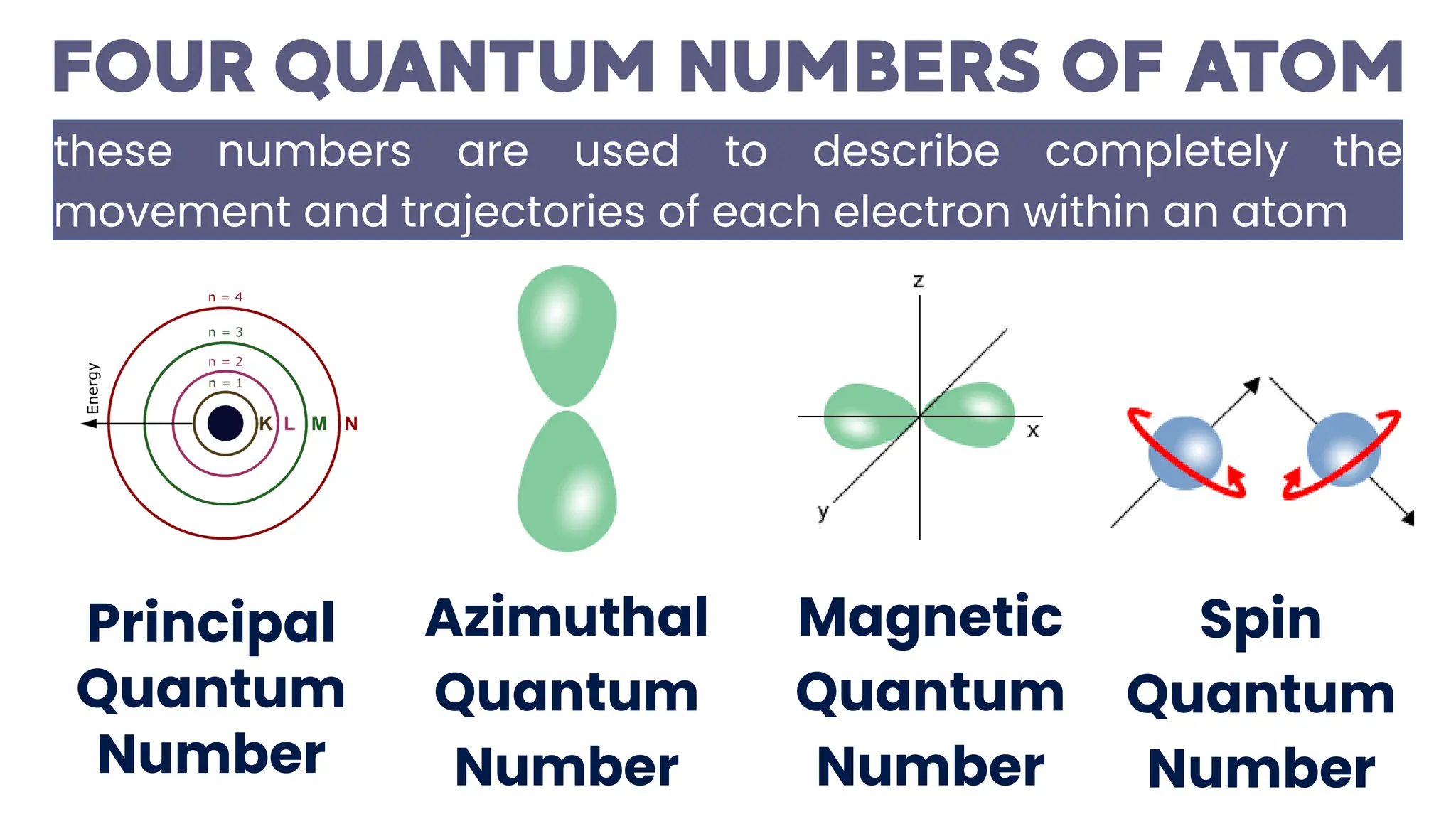
these numbers are used to describe completely the
movement and trajectories of each electron within an atom
Principal
Quantum
Number
Azimuthal
Quantum
Number
Magnetic
Quantum
Number
Spin
Quantum
Number
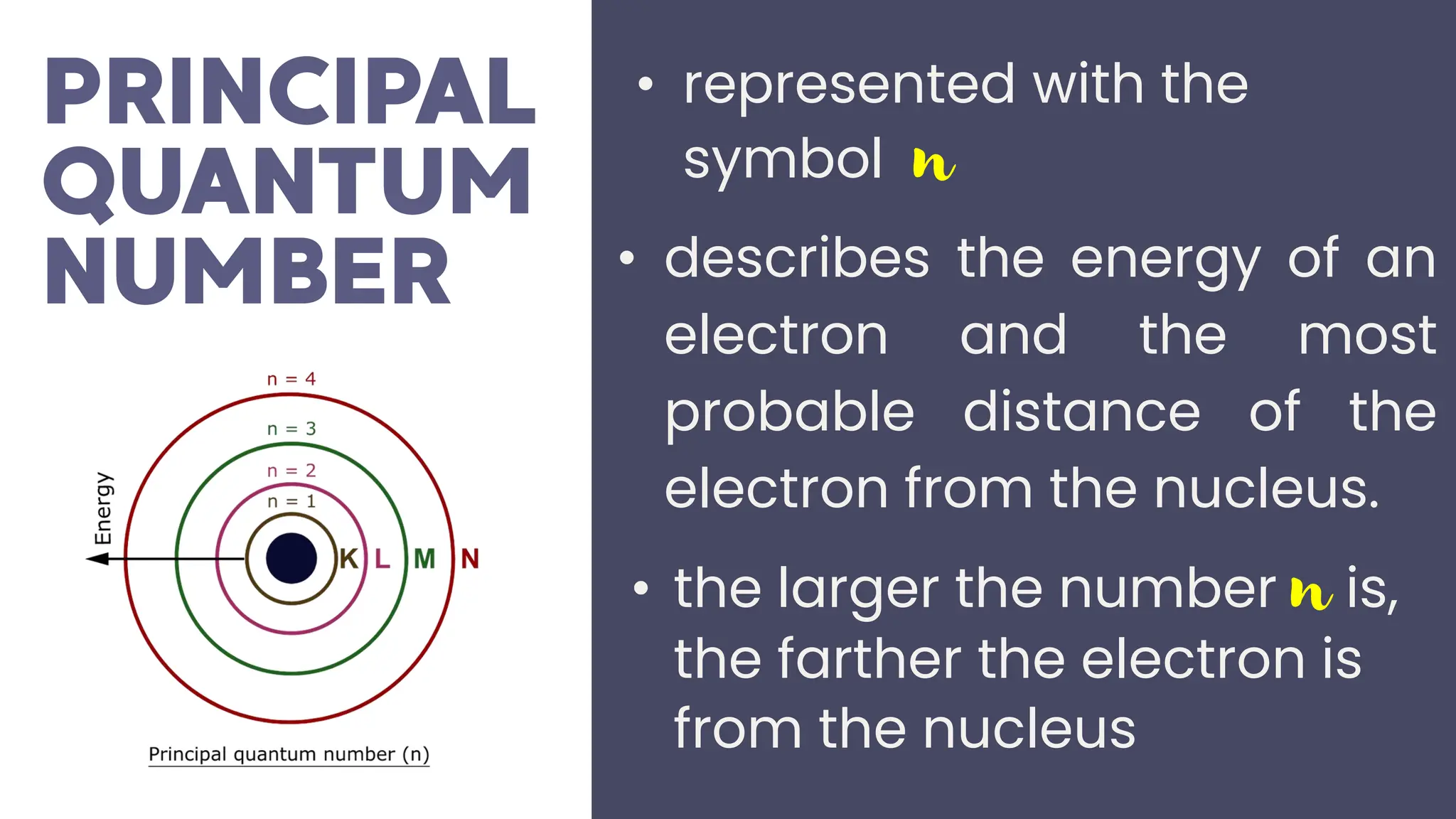
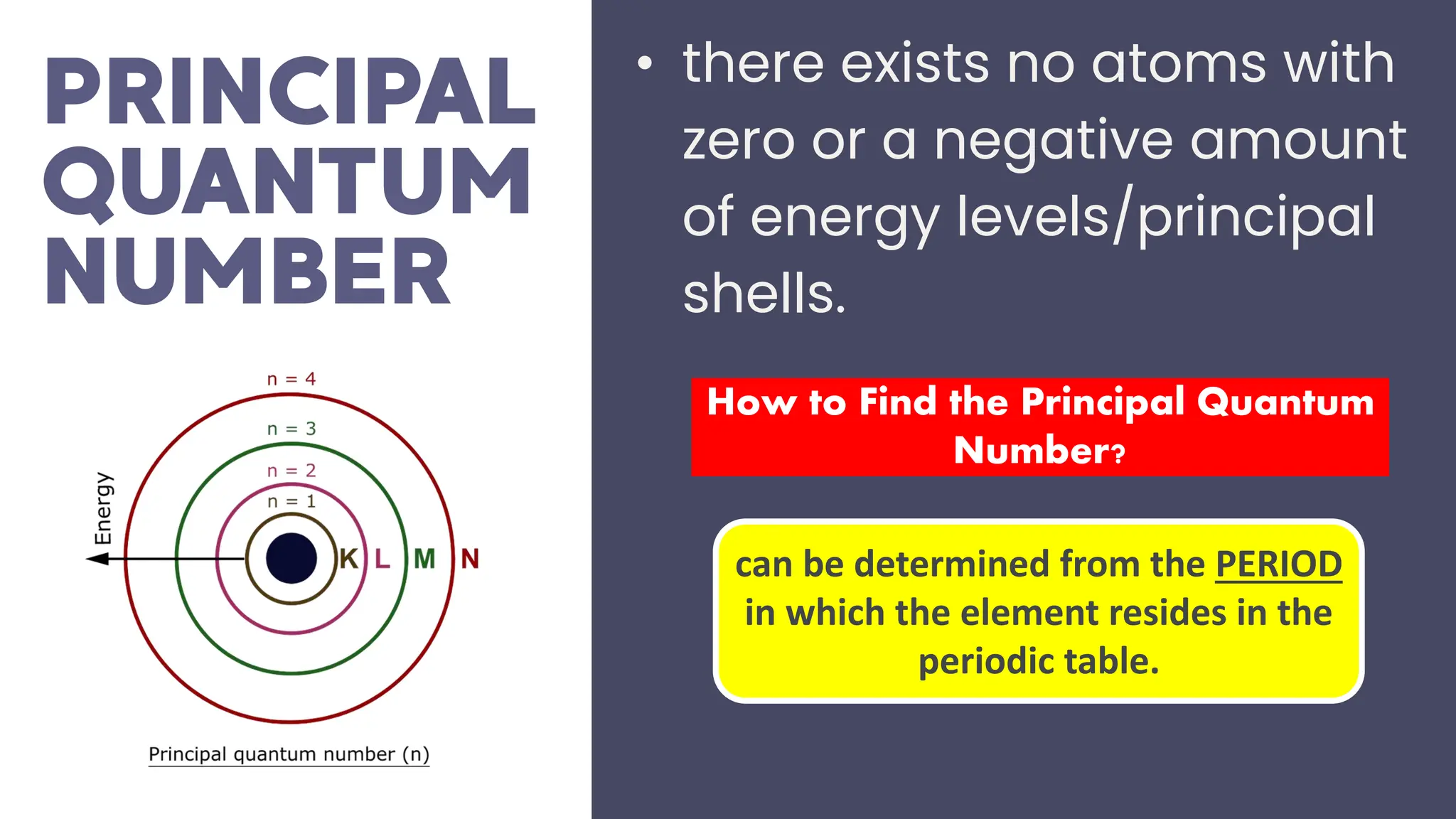
• describes the energy of an
electron and the most
probable distance of the
electron from the nucleus.
• represented with the
symbol n
• the larger the number n is,
the farther the electron is
from the nucleus
• there exists no atoms with
zero or a negative amount
of energy levels/principal
shells.
How to Find the Principal Quantum
Number?
can be determined from the PERIOD
in which the element resides in the
periodic table.
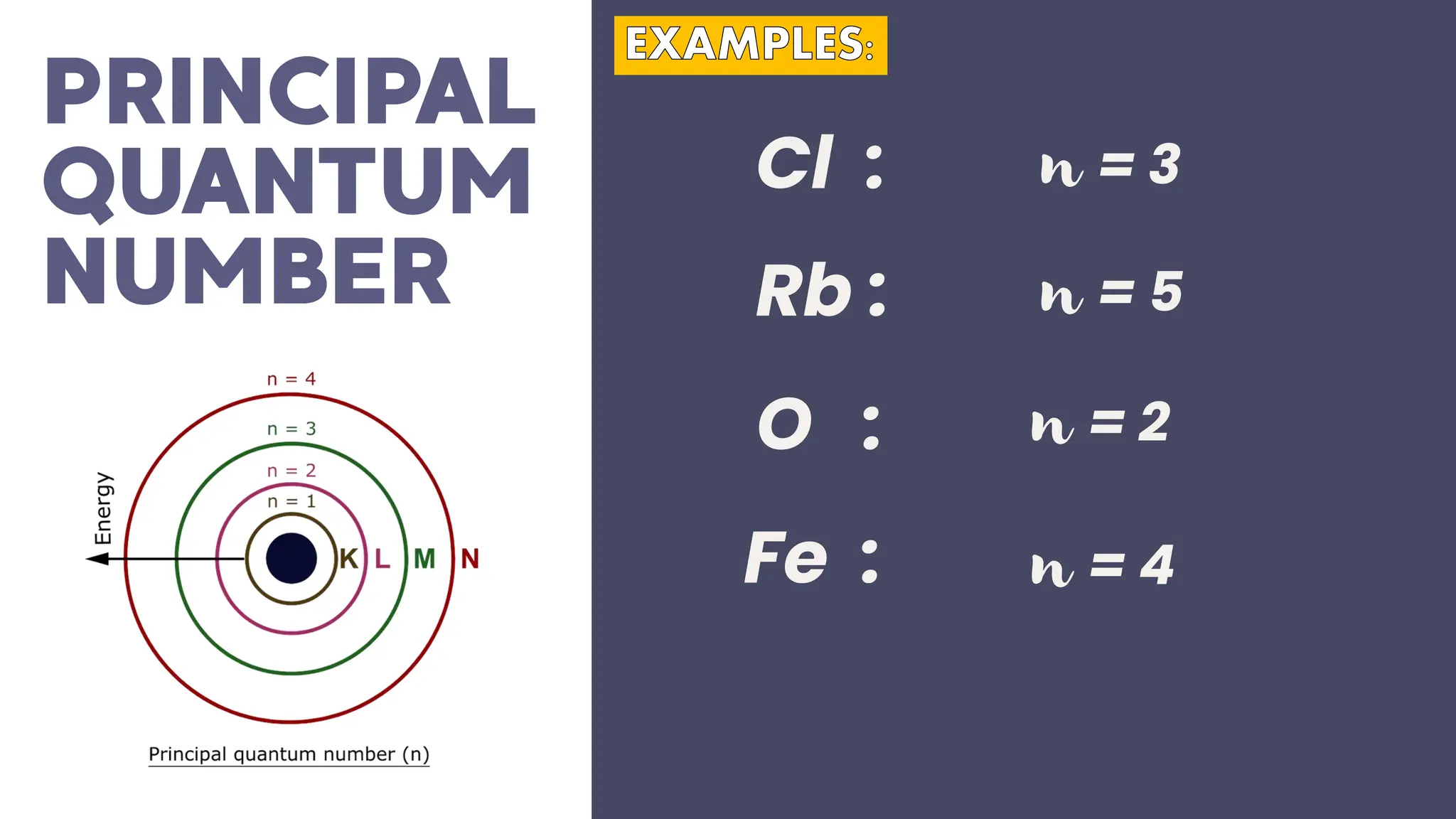
Cl :
Rb :
O :
Fe :
n = 3
n = 5
n = 2
n = 4
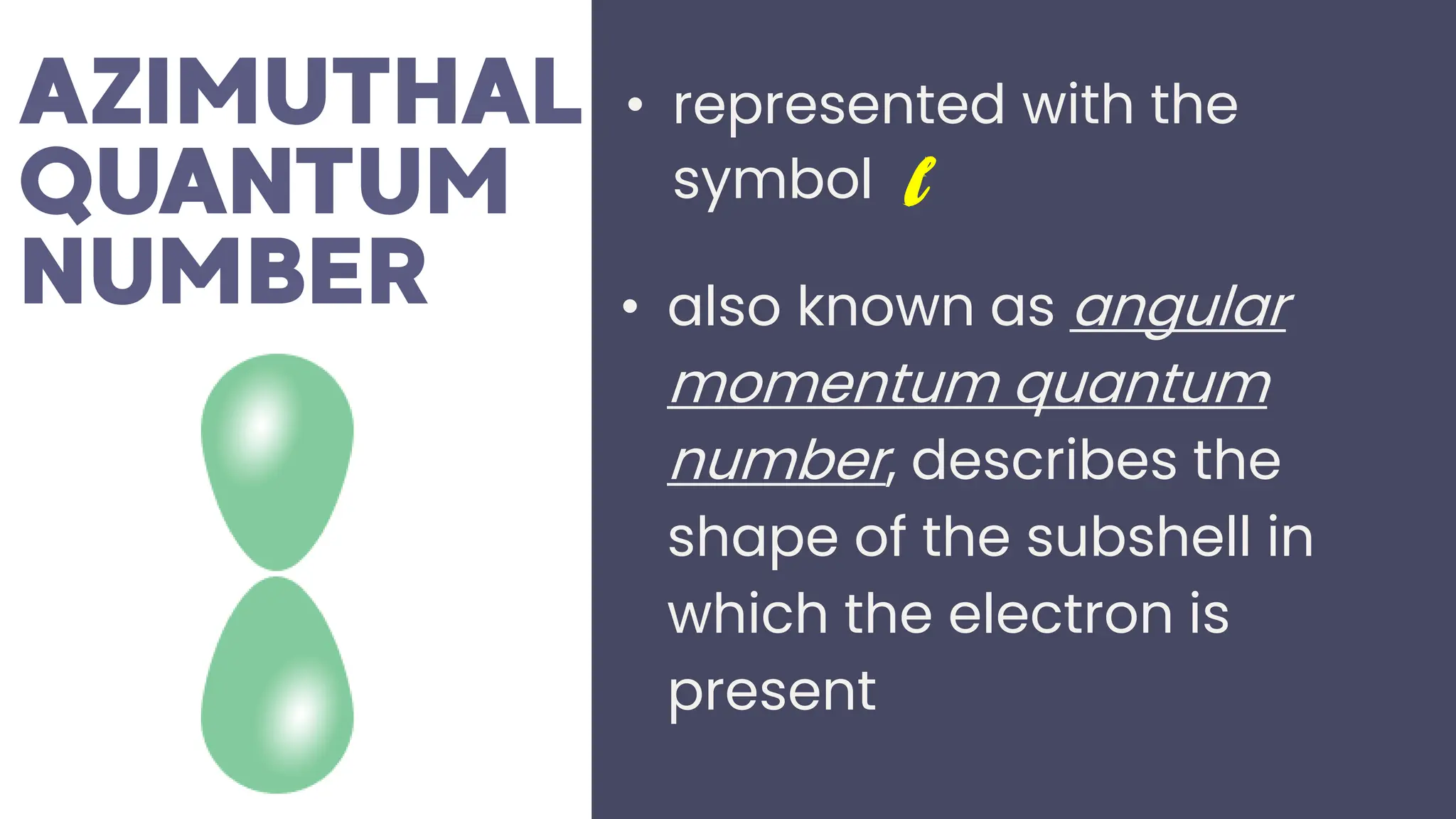
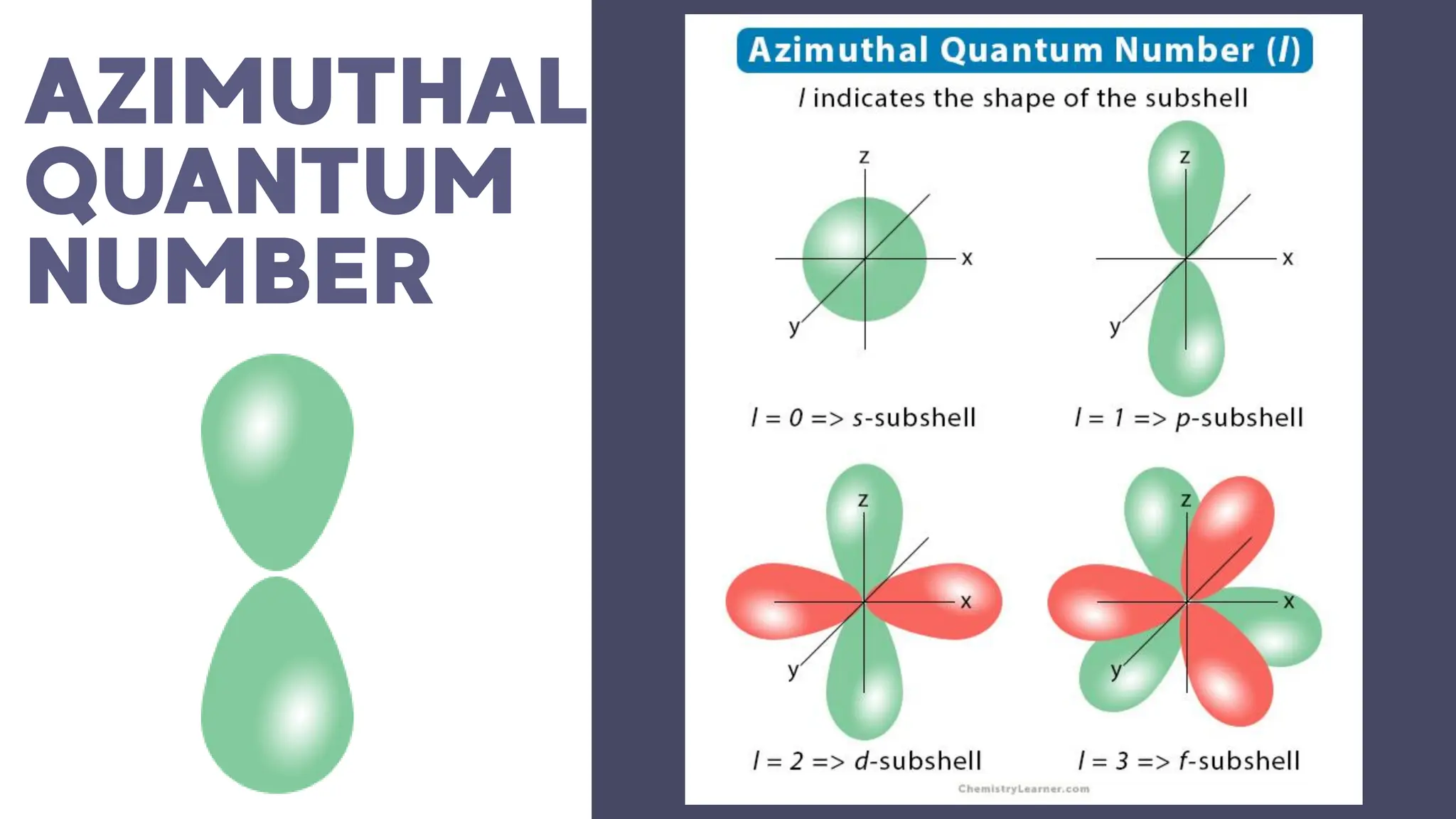
• also known as angular
momentum quantum
number, describes the
shape of the subshell in
which the electron is
present
• represented with the
symbol l
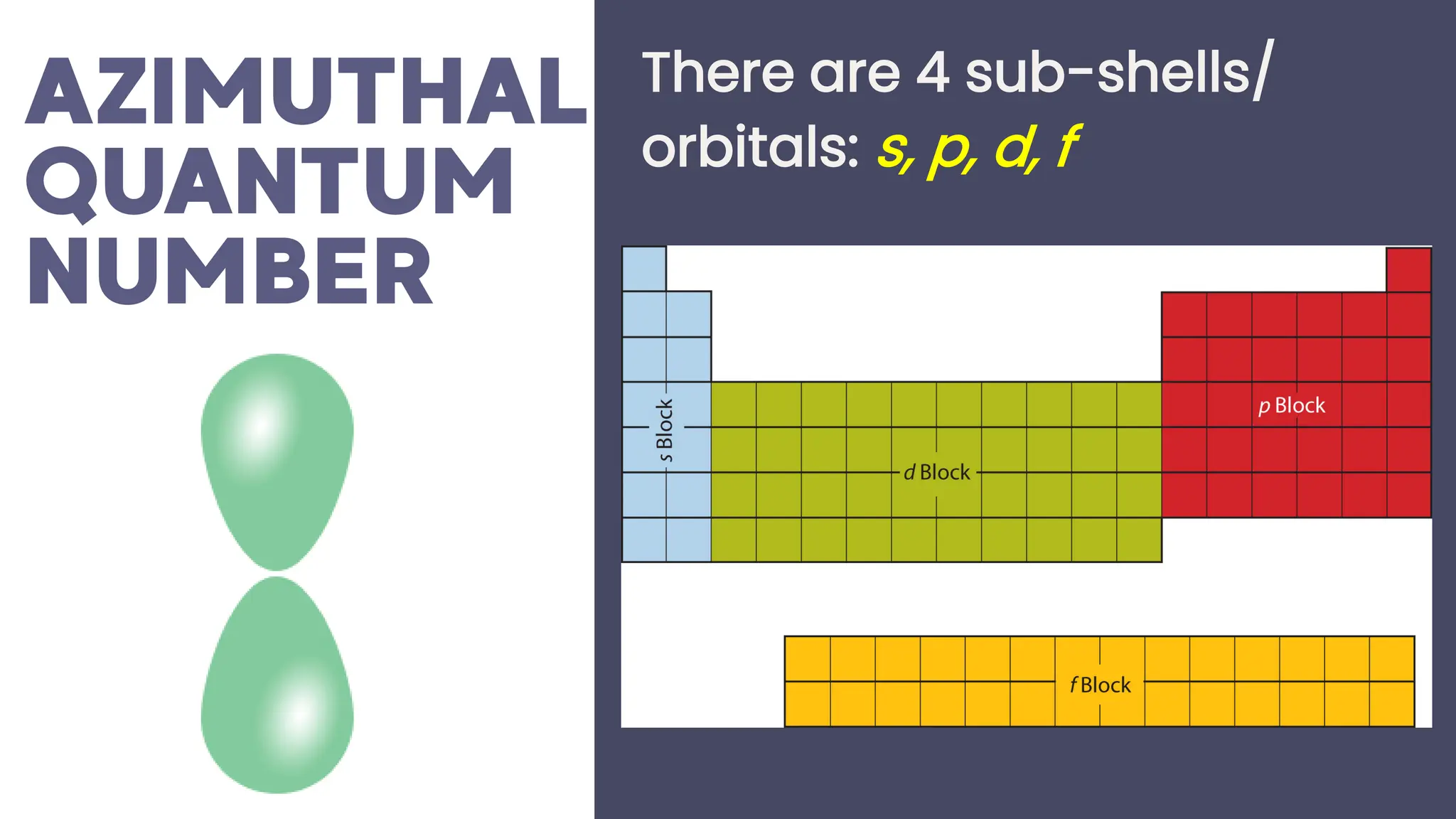
There are 4 sub-shells/
orbitals: s, p, d, f
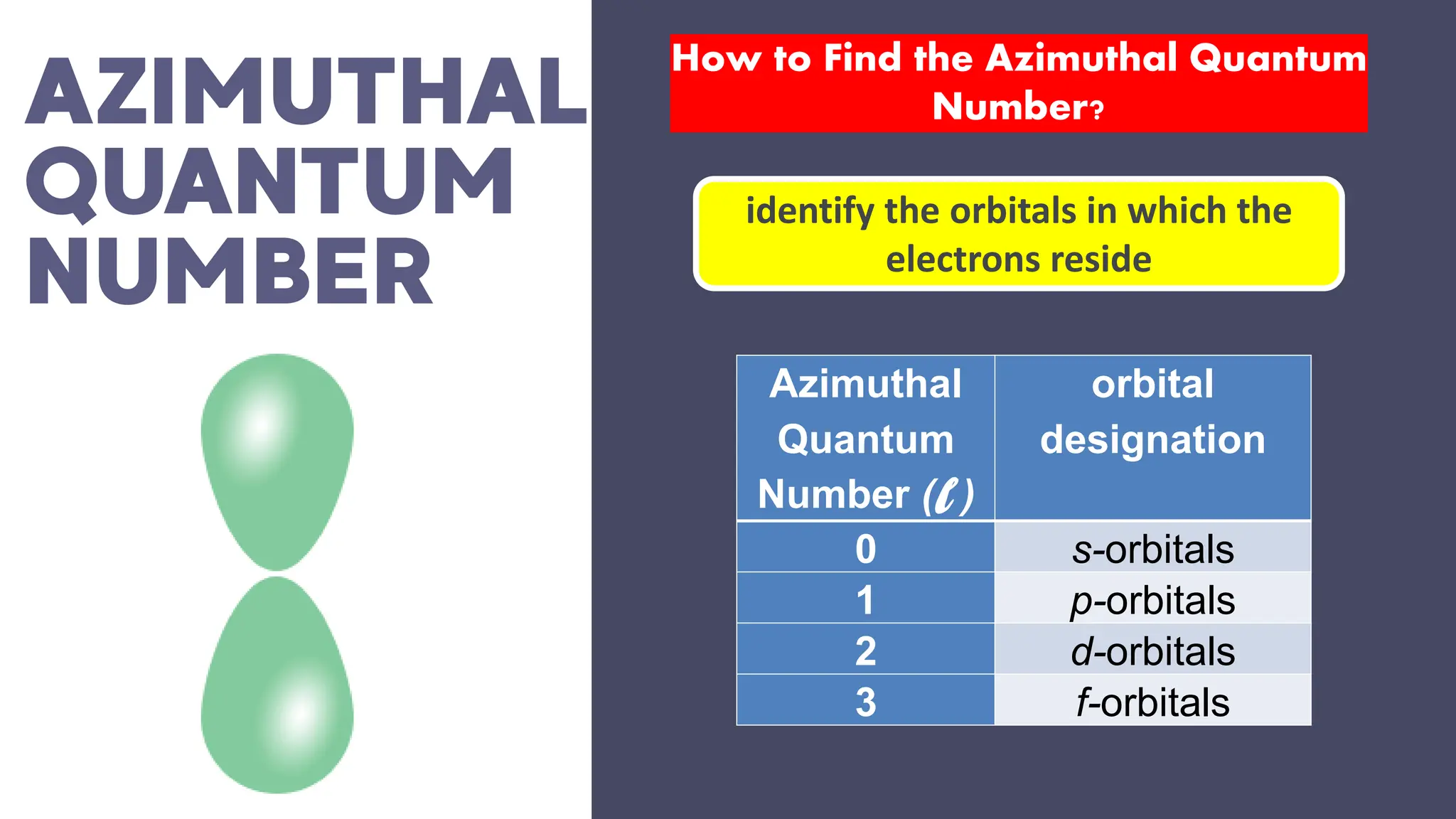
How to Find the Azimuthal Quantum
Number?
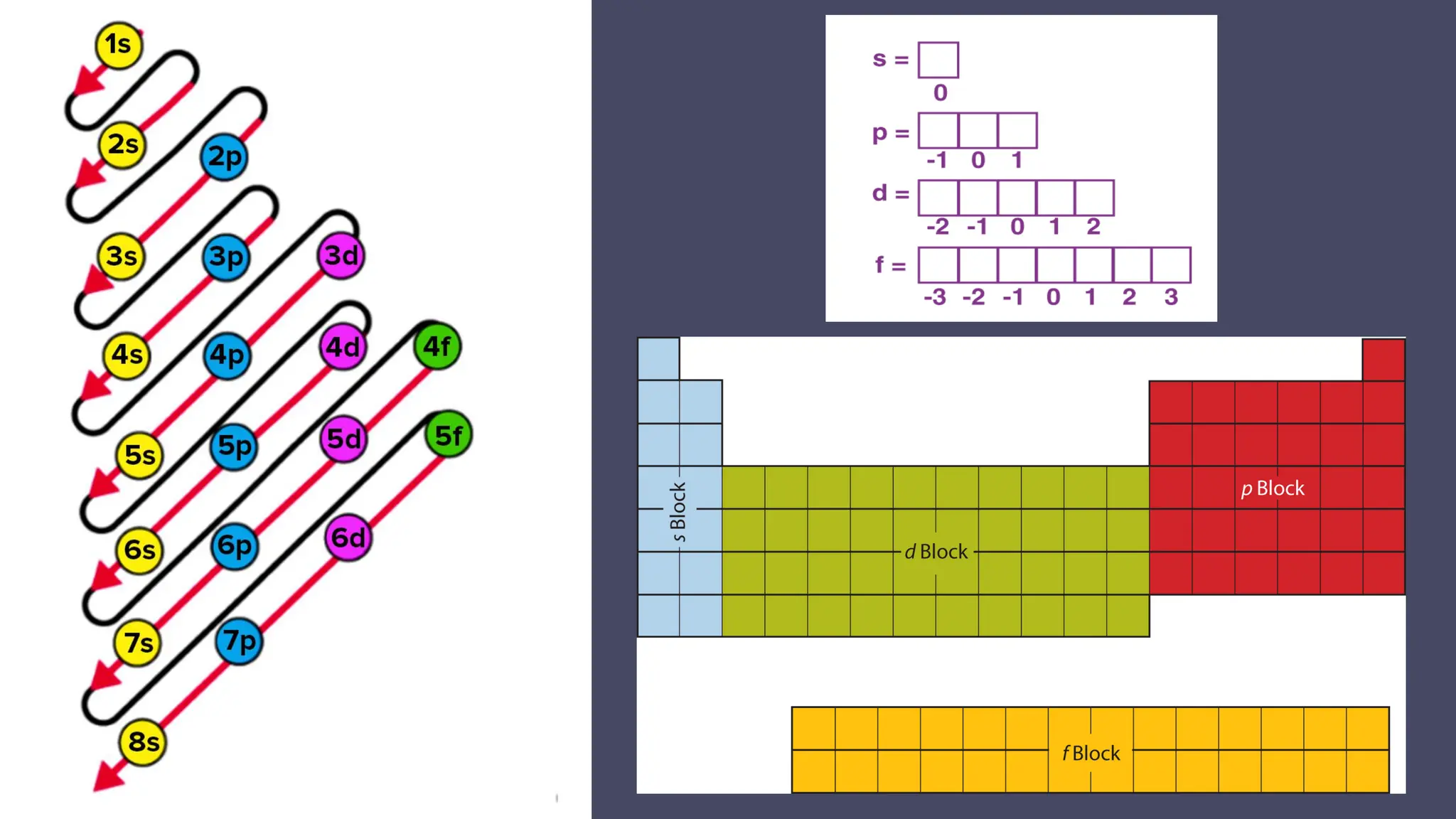
identify the orbitals in which the
electrons reside
Azimuthal
Quantum
Number (l )
orbital
designation
0 s-orbitals
1 p-orbitals
2 d-orbitals
3 f-orbitals
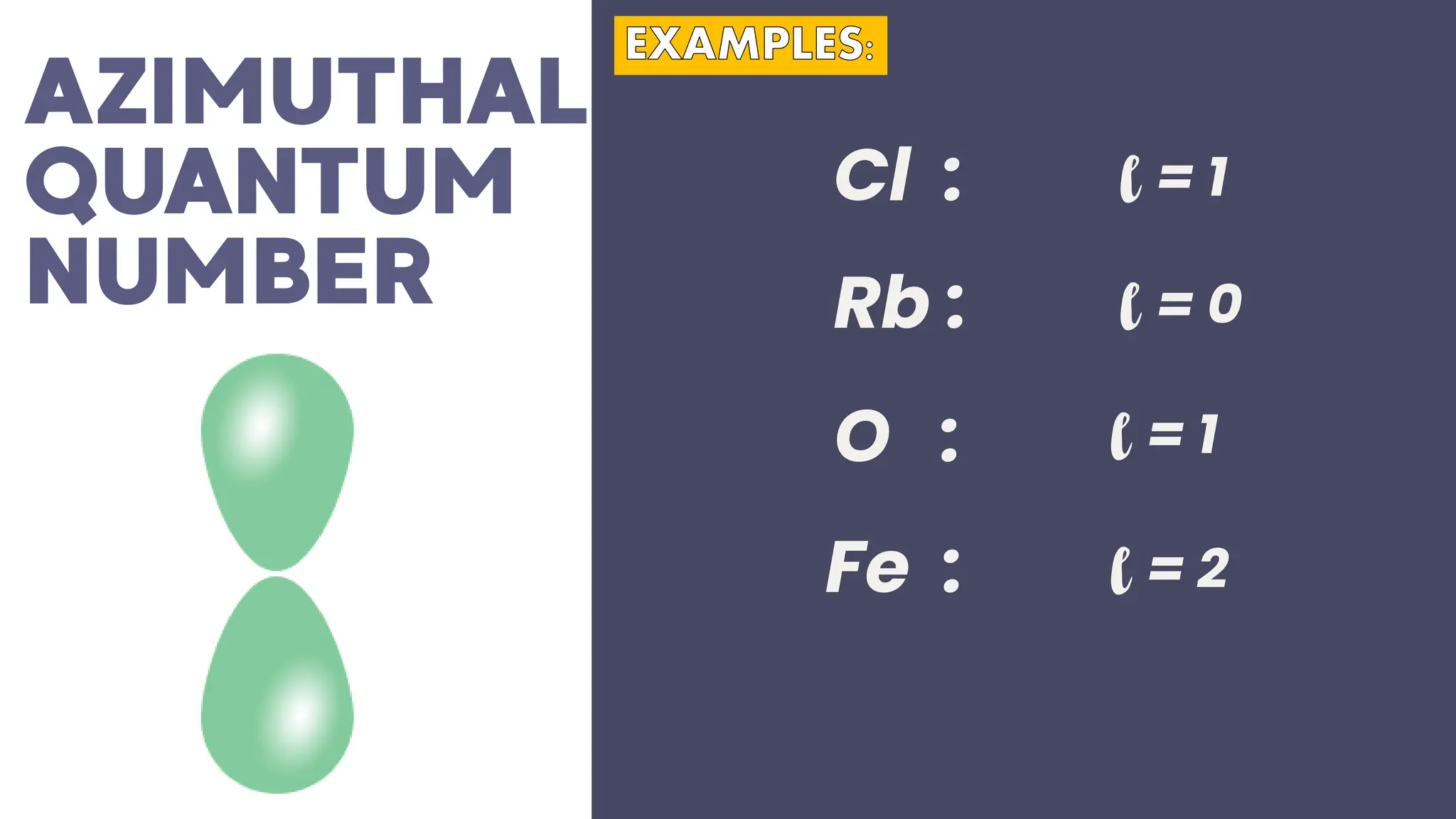
Cl :
Rb :
O :
Fe :
l = 1
l = 0
l = 1
l = 2
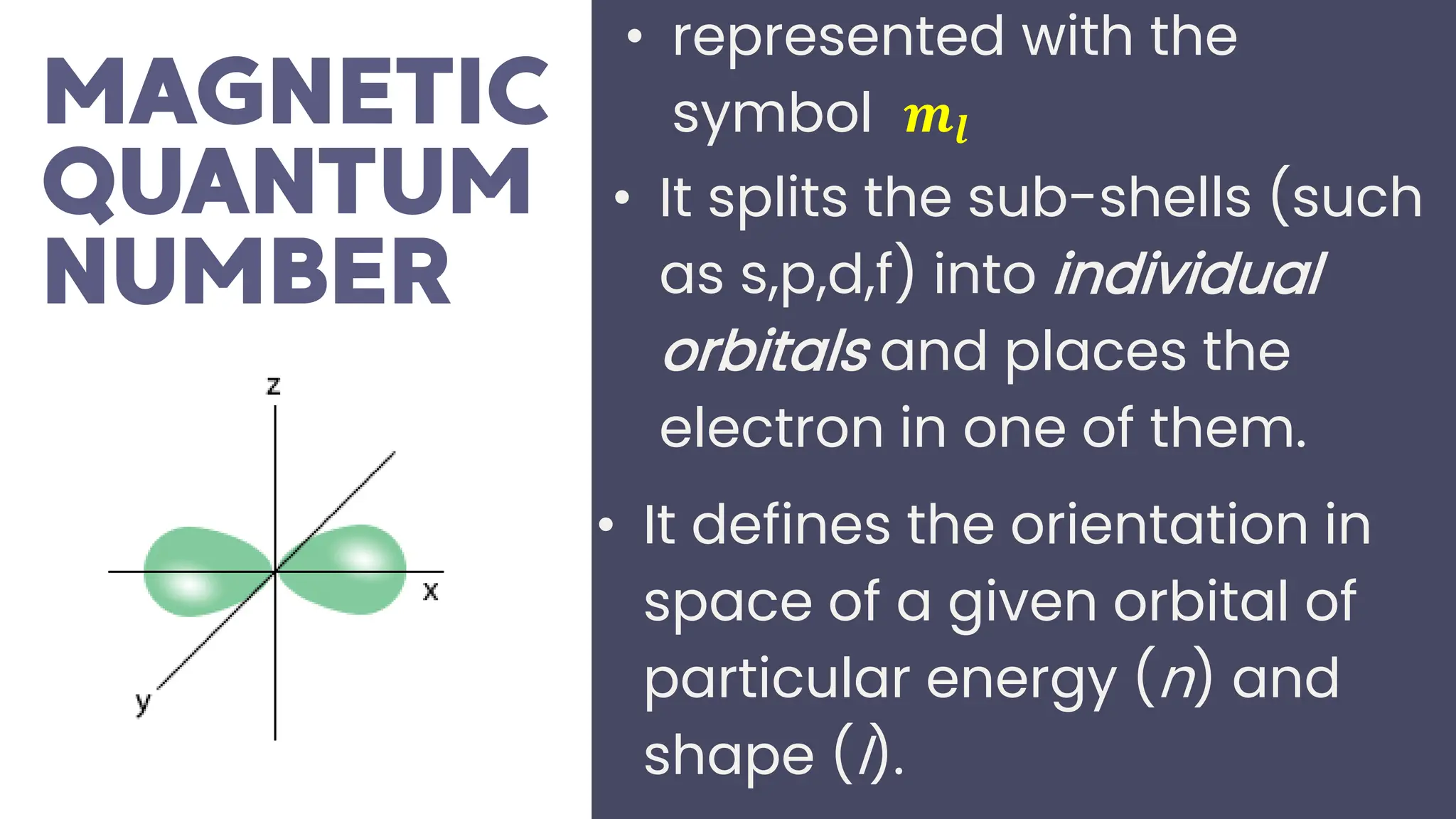
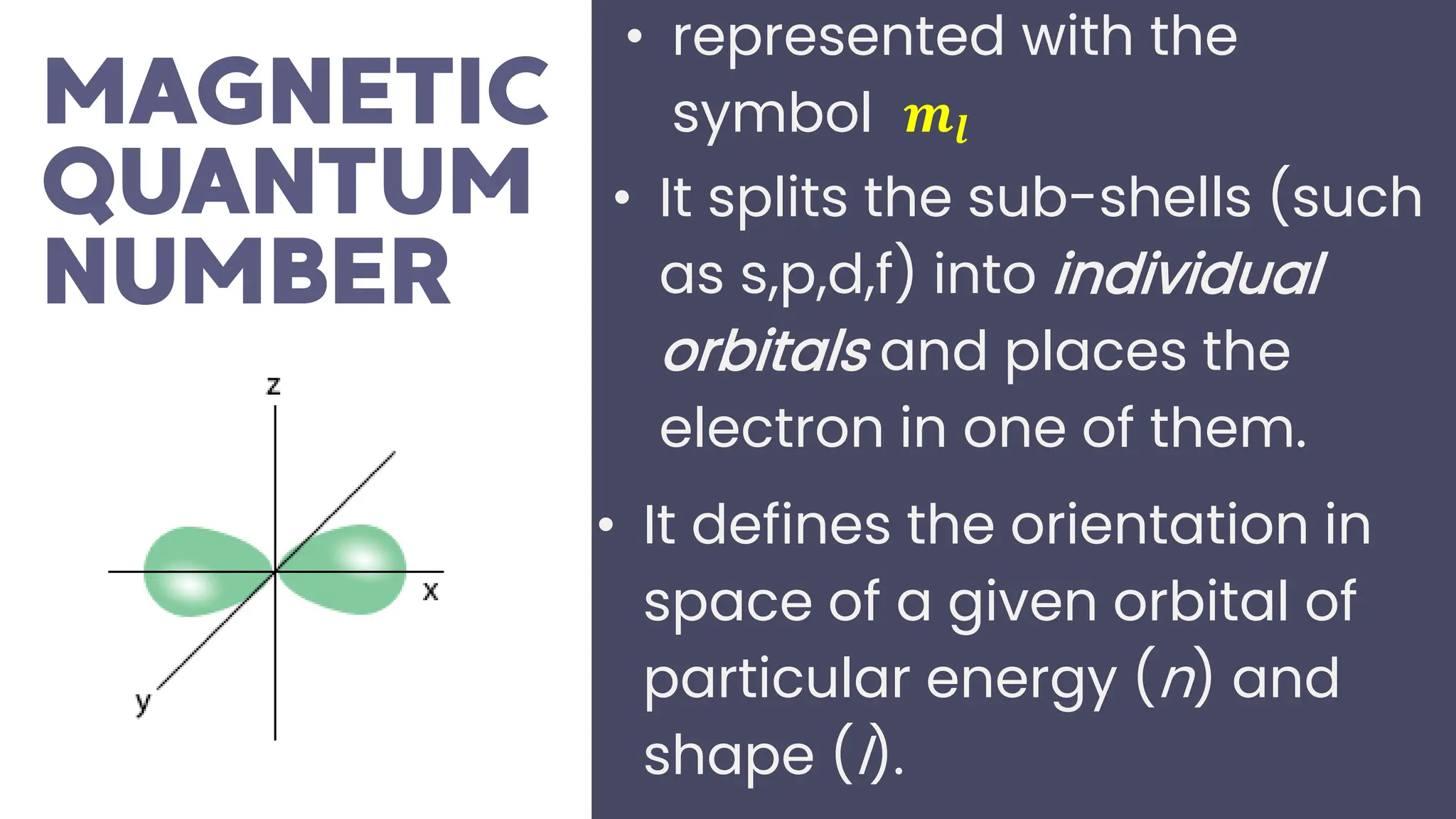
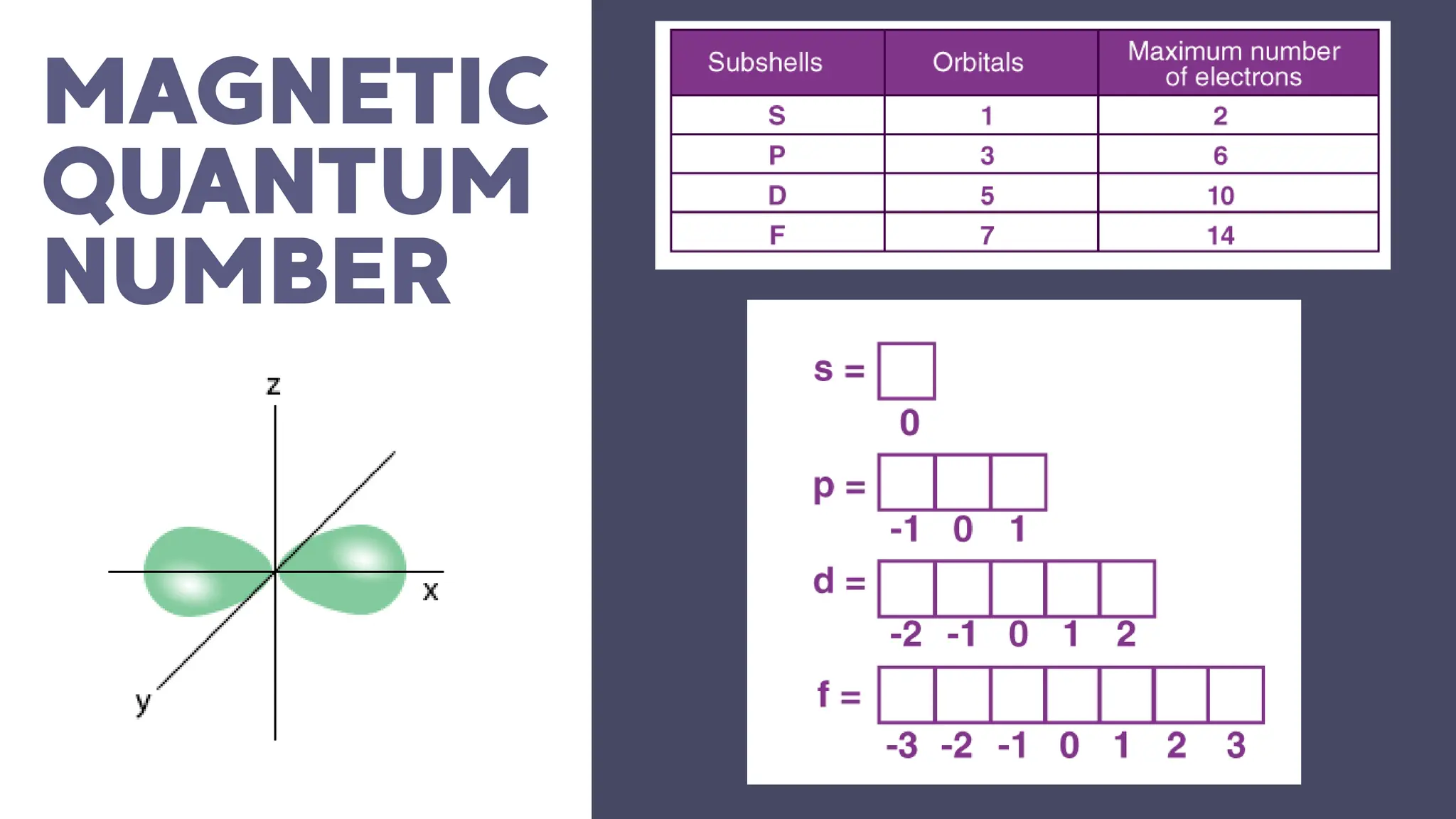
• It splits the sub-shells (such
as s,p,d,f) into individual
orbitals and places the
electron in one of them.
• represented with the
symbol 𝒎𝒍
• It defines the orientation in
space of a given orbital of
particular energy (n) and
shape (I).
• It splits the sub-shells (such
as s,p,d,f) into individual
orbitals and places the
electron in one of them.
• represented with the
symbol 𝒎𝒍
• It defines the orientation in
space of a given orbital of
particular energy (n) and
shape (I).
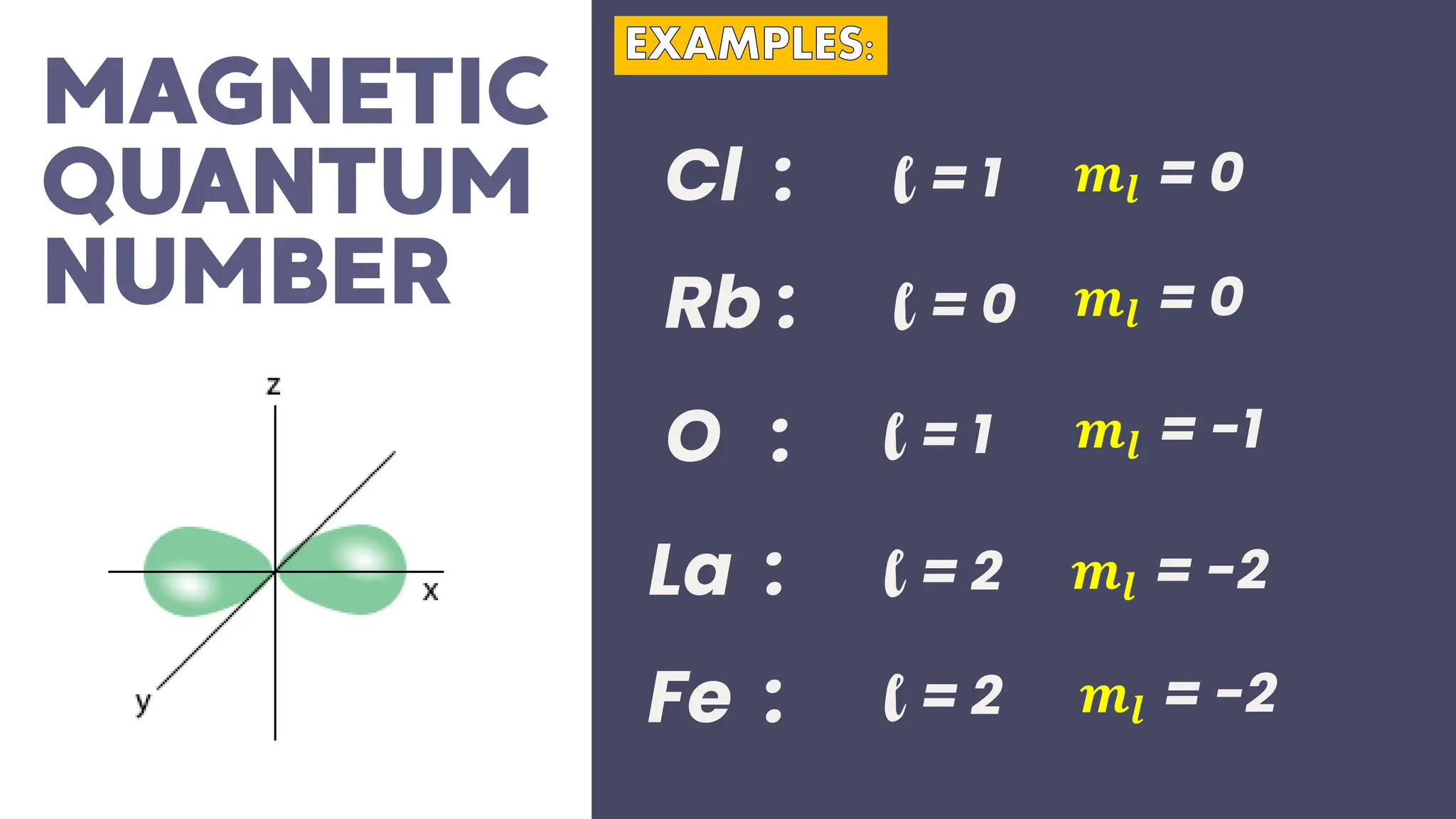
Cl :
Rb :
O :
La :
Fe :
l = 0
l = 1
l = 2
l = 2
l = 1 𝒎𝒍 = 0
𝒎𝒍 = 0
𝒎𝒍 = -1
𝒎𝒍 = -2
𝒎𝒍 = -2
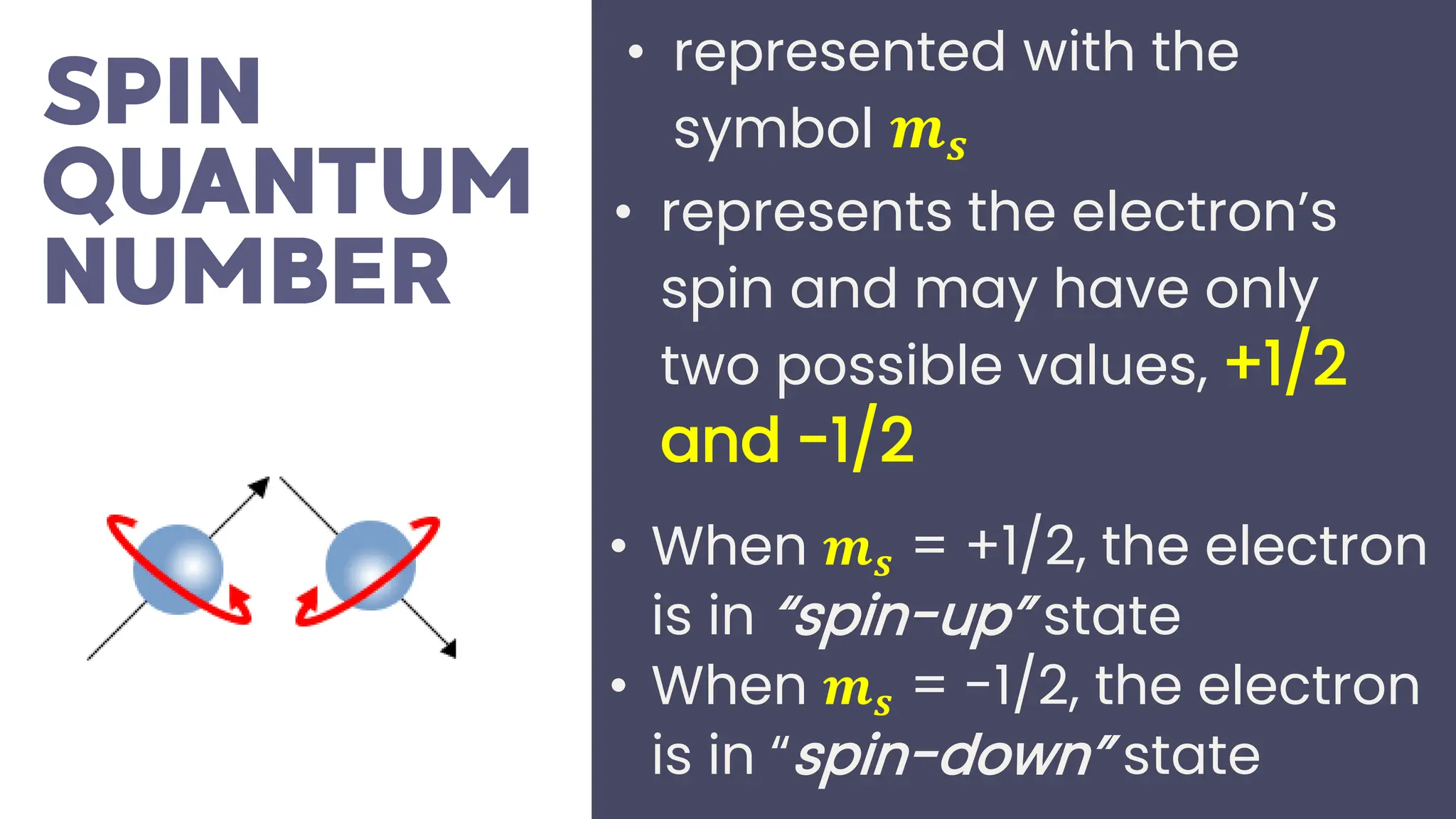
• represents the electron’s
spin and may have only
two possible values, +1/2
and -1/2
• represented with the
symbol 𝒎𝒔
• When 𝒎𝒔 = +1/2, the electron
is in “spin-up” state
• When 𝒎𝒔 = -1/2, the electron
is in “spin-down” state
O :
La :
Fe :

Physical Science: Lesson 4 - Quantum Numbers

  • 1.
    Lesson 4 Prepared by:Cristy Joy L. Aranas
  • 2.
    These describe theatomic orbitals as well as the properties of the electrons in those orbitals.
  • 3.
    these numbers areused to describe completely the movement and trajectories of each electron within an atom Principal Quantum Number Azimuthal Quantum Number Magnetic Quantum Number Spin Quantum Number
  • 4.
    • describes theenergy of an electron and the most probable distance of the electron from the nucleus. • represented with the symbol n • the larger the number n is, the farther the electron is from the nucleus
  • 5.
    • there existsno atoms with zero or a negative amount of energy levels/principal shells. How to Find the Principal Quantum Number? can be determined from the PERIOD in which the element resides in the periodic table.
  • 6.
    Cl : Rb : O: Fe : n = 3 n = 5 n = 2 n = 4
  • 7.
    • also knownas angular momentum quantum number, describes the shape of the subshell in which the electron is present • represented with the symbol l
  • 8.
    There are 4sub-shells/ orbitals: s, p, d, f
  • 9.
    How to Findthe Azimuthal Quantum Number? identify the orbitals in which the electrons reside Azimuthal Quantum Number (l ) orbital designation 0 s-orbitals 1 p-orbitals 2 d-orbitals 3 f-orbitals
  • 11.
    Cl : Rb : O: Fe : l = 1 l = 0 l = 1 l = 2
  • 12.
    • It splitsthe sub-shells (such as s,p,d,f) into individual orbitals and places the electron in one of them. • represented with the symbol 𝒎𝒍 • It defines the orientation in space of a given orbital of particular energy (n) and shape (I).
  • 13.
    • It splitsthe sub-shells (such as s,p,d,f) into individual orbitals and places the electron in one of them. • represented with the symbol 𝒎𝒍 • It defines the orientation in space of a given orbital of particular energy (n) and shape (I).
  • 15.
    Cl : Rb : O: La : Fe : l = 0 l = 1 l = 2 l = 2 l = 1 𝒎𝒍 = 0 𝒎𝒍 = 0 𝒎𝒍 = -1 𝒎𝒍 = -2 𝒎𝒍 = -2
  • 16.
    • represents theelectron’s spin and may have only two possible values, +1/2 and -1/2 • represented with the symbol 𝒎𝒔 • When 𝒎𝒔 = +1/2, the electron is in “spin-up” state • When 𝒎𝒔 = -1/2, the electron is in “spin-down” state
  • 17.