OBJECTIVES
Understanding phobia along with its
various presentations and how to
manage such cases.
HISTORY
intense, persistent irrational and
recurrent fear
avoid the
dreaded object, place or situation despite the
awareness and reassurance
FEAR VERSES PHOBIA
• FEAR CAN BE EXPLAINED AS A NORMAL RESPONSE
TO GENUINE DANGER
• A PHOBIA IS AN EXTREME IRRITATIONAL FEAR TO
SPECIFIC THING OR SITUATION
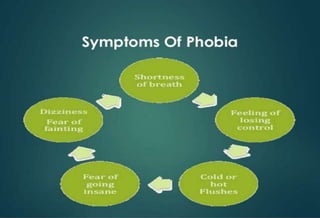
SYMPTOMS
• Dread
• Panic
• Terror
• Dizziness
• Light-headed
• Difficulty Breathing
• Racing Heart Rate
• Sweating
• Hot and Cold Flashes
TYPES
• Specific Phobia or Simple Phobia
• Social Phobia
• Agoraphobia
SPECIFIC PHOBIA
• The DSM-IV identifies subtypes of the most
common specific phobias.
• Animal type
• Natural Environment type
• Blood-injection-injury type
• Situational type
• Other type
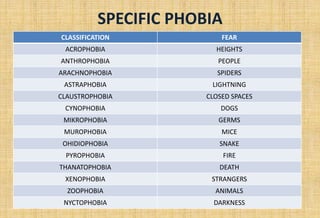
SPECIFIC PHOBIA
CLASSIFICATION FEAR
ACROPHOBIA HEIGHTS
ANTHROPHOBIA PEOPLE
ARACHNOPHOBIA SPIDERS
ASTRAPHOBIA LIGHTNING
CLAUSTROPHOBIA CLOSED SPACES
CYNOPHOBIA DOGS
MIKROPHOBIA GERMS
MUROPHOBIA MICE
OHIDIOPHOBIA SNAKE
PYROPHOBIA FIRE
THANATOPHOBIA DEATH
XENOPHOBIA STRANGERS
ZOOPHOBIA ANIMALS
NYCTOPHOBIA DARKNESS
SOCIAL PHOBIA
• DSM- a marked and persistent fear of one or more social or
performance situations in which the person is exposed to
unfamiliar people or to possible scrutiny by others.
• The individual fears that he or she will act in a way that will
be humiliating.
• The presence of social phobia may be associated with a
higher morbid risk for major depression.
• Symptoms associated with social phobia usually involve
blushing, muscle twitching, and anxiety about scrutiny.
AGAROPHOBIA
Typical fear of public places or crowds.
ETIOLOGY
• PSYCHOANALYTIC THEORY
• CONDITIONED REFLEX THEORY
• BIOLOGICAL THEORIES
MANAGEMENT
• PSYCHOTHERAPHY
• BEHAVIOUR THERAPHY
• HOMOEOPATHIC MANAGEMENT
conclusion
• Phobia is an intense, persistent irrational and
recurrent fear of specific object, activity or
situation.
• Three major types:
• Specific Phobia or Simple Phobia
• Social Phobia
• Agoraphobia
REFERENCES
• SHORT TEXT BOOK OF PSYCHIATRY – AHUJA
• SYNOPSIS OF PSYCHIATRY – KAPLANA AND SODOCK
 phobia

phobia

  • 2.
    OBJECTIVES Understanding phobia alongwith its various presentations and how to manage such cases.
  • 3.
  • 4.
    intense, persistent irrationaland recurrent fear avoid the dreaded object, place or situation despite the awareness and reassurance
  • 5.
    FEAR VERSES PHOBIA •FEAR CAN BE EXPLAINED AS A NORMAL RESPONSE TO GENUINE DANGER • A PHOBIA IS AN EXTREME IRRITATIONAL FEAR TO SPECIFIC THING OR SITUATION
  • 6.
    SYMPTOMS • Dread • Panic •Terror • Dizziness • Light-headed • Difficulty Breathing • Racing Heart Rate • Sweating • Hot and Cold Flashes
  • 7.
    TYPES • Specific Phobiaor Simple Phobia • Social Phobia • Agoraphobia
  • 8.
    SPECIFIC PHOBIA • TheDSM-IV identifies subtypes of the most common specific phobias. • Animal type • Natural Environment type • Blood-injection-injury type • Situational type • Other type
  • 9.
    SPECIFIC PHOBIA CLASSIFICATION FEAR ACROPHOBIAHEIGHTS ANTHROPHOBIA PEOPLE ARACHNOPHOBIA SPIDERS ASTRAPHOBIA LIGHTNING CLAUSTROPHOBIA CLOSED SPACES CYNOPHOBIA DOGS MIKROPHOBIA GERMS MUROPHOBIA MICE OHIDIOPHOBIA SNAKE PYROPHOBIA FIRE THANATOPHOBIA DEATH XENOPHOBIA STRANGERS ZOOPHOBIA ANIMALS NYCTOPHOBIA DARKNESS
  • 10.
    SOCIAL PHOBIA • DSM-a marked and persistent fear of one or more social or performance situations in which the person is exposed to unfamiliar people or to possible scrutiny by others. • The individual fears that he or she will act in a way that will be humiliating. • The presence of social phobia may be associated with a higher morbid risk for major depression. • Symptoms associated with social phobia usually involve blushing, muscle twitching, and anxiety about scrutiny.
  • 11.
    AGAROPHOBIA Typical fear ofpublic places or crowds.
  • 12.
    ETIOLOGY • PSYCHOANALYTIC THEORY •CONDITIONED REFLEX THEORY • BIOLOGICAL THEORIES
  • 13.
    MANAGEMENT • PSYCHOTHERAPHY • BEHAVIOURTHERAPHY • HOMOEOPATHIC MANAGEMENT
  • 14.
    conclusion • Phobia isan intense, persistent irrational and recurrent fear of specific object, activity or situation. • Three major types: • Specific Phobia or Simple Phobia • Social Phobia • Agoraphobia
  • 15.
    REFERENCES • SHORT TEXTBOOK OF PSYCHIATRY – AHUJA • SYNOPSIS OF PSYCHIATRY – KAPLANA AND SODOCK