Phobia
B Y : Z A H R A M A D A N I P O U R
1 1 9 I - 1 B
What is phobia?
∙ A phobia is a persistent, excessive,
unrealistic fear of an object, person,
animal, activity or situation. It is a type of
anxiety disorder. A person with a phobia
either tries to avoid the thing that triggers
the fear, or endures it with great anxiety
and distress.
∙ Some phobias are very specific and limited. For example, a
person may fear only spiders (arachnophobia) or cats
(ailurophobia). In this case, the person lives relatively free of
anxiety by avoiding the thing he or she fears. Some phobias
cause trouble in a wider variety of places or situations. For
example, symptoms of acrophobia (fear of heights) can be
triggered by looking out the window of an office building or by
driving over a high bridge. The fear of confined spaces
(claustrophobia) can be triggered by riding in an elevator or
by using a small restroom. People with these phobias may
need to alter their lives drastically. In extreme cases, the
phobia may dictate the person's employment, job location,
driving route, recreational and social activities, or home
environment.
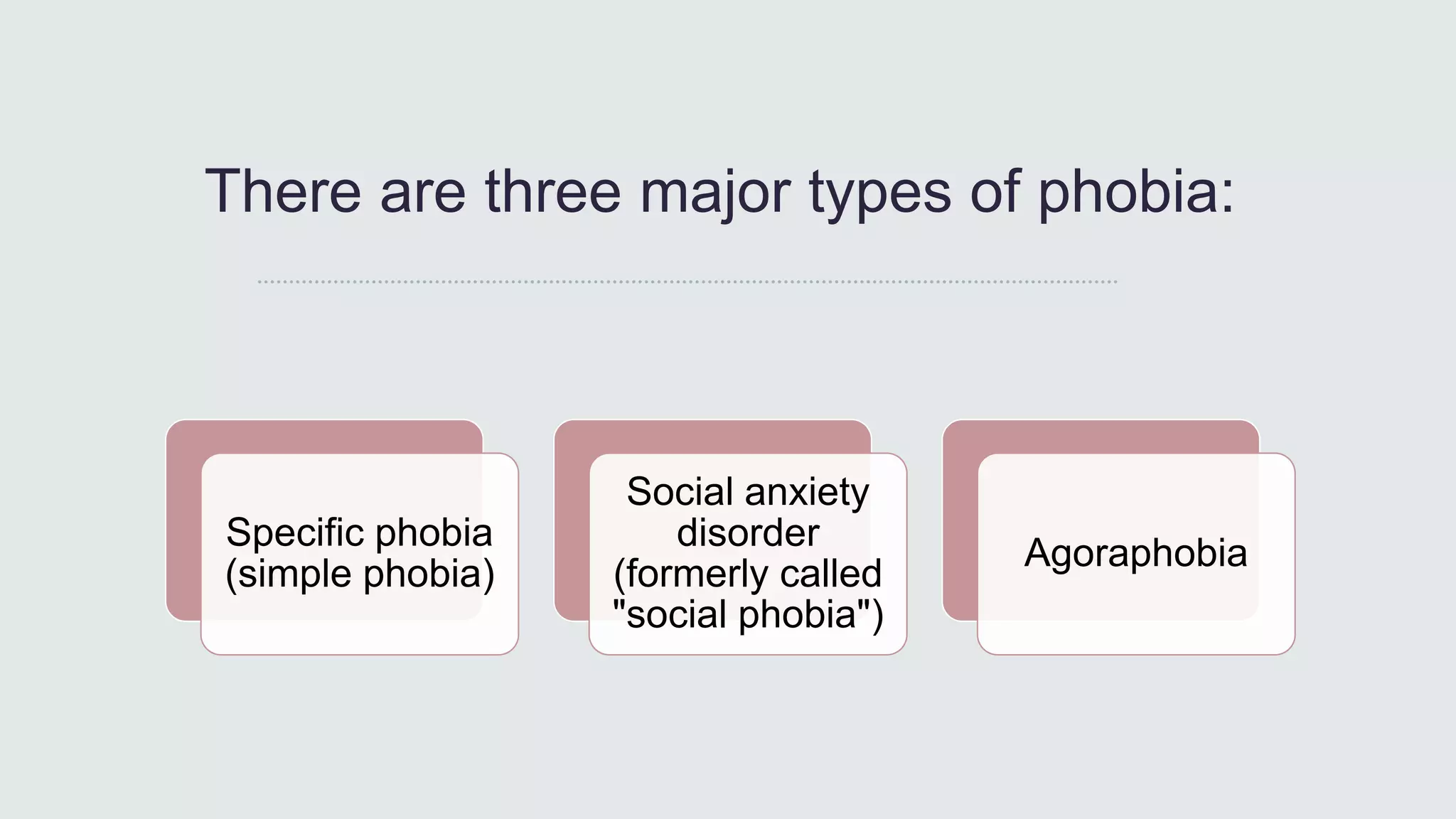
There are three major types of phobia:
Specific phobia
(simple phobia)
Social anxiety
disorder
(formerly called
"social phobia")
Agoraphobia
Specific phobia
(simple phobia)
∙ With this most common form of phobia,
people may fear specific animals (such as
dogs, cats, spiders, snakes), people (such
as clowns, dentists, doctors), environments
(such as dark places, thunderstorms, high
places) or situations (such as flying in a
plane, riding on a train, being in a confined
space). These conditions are at least partly
genetic (inherited) and seem to run in
families.
Social anxiety
disorder
∙ People with social anxiety disorder fear social
situations where they may be humiliated,
embarrassed or judged by others. They become
particularly anxious when unfamiliar people are
involved. The fear may be limited to performance,
such as giving a lecture, concert or business
presentation. Or it may be more generalized, so that
the phobic person avoids many social situations, such
as eating in public or using a public restroom. Social
phobia seems to run in families. People who have
been shy or solitary as children, or who have a history
of unhappy or negative social experiences in
childhood, seem more likely to develop this disorder
Agoraphobia
∙ Agoraphobia is a fear of being in public
places where it would be difficult or
embarrassing to make a sudden exit. A
person with agoraphobia may avoid going
to a movie or a concert, or traveling on a
bus or a train. Many people with
agoraphobia also have panic symptoms or
panic disorder (which involves intense fear
plus uncomfortable physical symptoms,
such as trembling, heart palpitations and
sweating).
∙ Childhood phobias occur most commonly between the
ages of 5 and 9, and tend to last a short while. Most
longer-lasting phobias begin later in life, especially in
people in their 20s. Adult phobias tend to last for many
years, and they are less likely to go away on their own,
unless they are treated. Phobia can increase an adult's
risk of other types of psychiatric illness, especially other
anxiety disorders, depression and substance abuse.
Symptoms
Excessive, unreasonable, persistent
feelings of fear or anxiety
Feelings are either irrational or out of
proportion
Avoidance of the object, activity or
situation that triggers the phobia
Anxiety-related physical symptoms
Excessive, unreasonable,
persistent feelings of fear or
anxiety that are triggered by a
particular object, activity or
situation.
Feelings are either irrational or
out of proportion to any actual
threat. For example, while
anyone may be afraid of an
unrestrained, menacing dog,
most people do not run away
from a calm, quiet animal on a
leash.
Avoidance of the object, activity or
situation that triggers the
phobia. Because people who have
phobias recognize that their fears
are exaggerated, they are often
ashamed or embarrassed about
their symptoms. To prevent anxiety
symptoms or embarrassment, they
avoid the triggers for the phobia.
Anxiety-related physical
symptoms. These can include
tremors, palpitations, sweating,
shortness of breath, dizziness,
nausea or other symptoms that
reflect the body's "fight or flight"
response to danger. (Symptoms
such as these may lead to a
diagnosis of panic disorder.)
Expected Duration
∙ In children, specific phobias can be short-
term problems that disappear within a few
months. In adults, about 80% of new
phobias become chronic (long-term)
conditions that do not go away without
proper treatment.
Treatment
∙ Treatment usually includes some
combination of psychotherapy and
medication depending on the type of
phobia
Thanks for your attention

phobia .pptx

  • 1.
    Phobia B Y :Z A H R A M A D A N I P O U R 1 1 9 I - 1 B
  • 2.
    What is phobia? ∙A phobia is a persistent, excessive, unrealistic fear of an object, person, animal, activity or situation. It is a type of anxiety disorder. A person with a phobia either tries to avoid the thing that triggers the fear, or endures it with great anxiety and distress.
  • 3.
    ∙ Some phobiasare very specific and limited. For example, a person may fear only spiders (arachnophobia) or cats (ailurophobia). In this case, the person lives relatively free of anxiety by avoiding the thing he or she fears. Some phobias cause trouble in a wider variety of places or situations. For example, symptoms of acrophobia (fear of heights) can be triggered by looking out the window of an office building or by driving over a high bridge. The fear of confined spaces (claustrophobia) can be triggered by riding in an elevator or by using a small restroom. People with these phobias may need to alter their lives drastically. In extreme cases, the phobia may dictate the person's employment, job location, driving route, recreational and social activities, or home environment.
  • 4.
    There are threemajor types of phobia: Specific phobia (simple phobia) Social anxiety disorder (formerly called "social phobia") Agoraphobia
  • 5.
    Specific phobia (simple phobia) ∙With this most common form of phobia, people may fear specific animals (such as dogs, cats, spiders, snakes), people (such as clowns, dentists, doctors), environments (such as dark places, thunderstorms, high places) or situations (such as flying in a plane, riding on a train, being in a confined space). These conditions are at least partly genetic (inherited) and seem to run in families.
  • 6.
    Social anxiety disorder ∙ Peoplewith social anxiety disorder fear social situations where they may be humiliated, embarrassed or judged by others. They become particularly anxious when unfamiliar people are involved. The fear may be limited to performance, such as giving a lecture, concert or business presentation. Or it may be more generalized, so that the phobic person avoids many social situations, such as eating in public or using a public restroom. Social phobia seems to run in families. People who have been shy or solitary as children, or who have a history of unhappy or negative social experiences in childhood, seem more likely to develop this disorder
  • 7.
    Agoraphobia ∙ Agoraphobia isa fear of being in public places where it would be difficult or embarrassing to make a sudden exit. A person with agoraphobia may avoid going to a movie or a concert, or traveling on a bus or a train. Many people with agoraphobia also have panic symptoms or panic disorder (which involves intense fear plus uncomfortable physical symptoms, such as trembling, heart palpitations and sweating).
  • 8.
    ∙ Childhood phobiasoccur most commonly between the ages of 5 and 9, and tend to last a short while. Most longer-lasting phobias begin later in life, especially in people in their 20s. Adult phobias tend to last for many years, and they are less likely to go away on their own, unless they are treated. Phobia can increase an adult's risk of other types of psychiatric illness, especially other anxiety disorders, depression and substance abuse.
  • 10.
    Symptoms Excessive, unreasonable, persistent feelingsof fear or anxiety Feelings are either irrational or out of proportion Avoidance of the object, activity or situation that triggers the phobia Anxiety-related physical symptoms
  • 11.
    Excessive, unreasonable, persistent feelingsof fear or anxiety that are triggered by a particular object, activity or situation. Feelings are either irrational or out of proportion to any actual threat. For example, while anyone may be afraid of an unrestrained, menacing dog, most people do not run away from a calm, quiet animal on a leash.
  • 12.
    Avoidance of theobject, activity or situation that triggers the phobia. Because people who have phobias recognize that their fears are exaggerated, they are often ashamed or embarrassed about their symptoms. To prevent anxiety symptoms or embarrassment, they avoid the triggers for the phobia. Anxiety-related physical symptoms. These can include tremors, palpitations, sweating, shortness of breath, dizziness, nausea or other symptoms that reflect the body's "fight or flight" response to danger. (Symptoms such as these may lead to a diagnosis of panic disorder.)
  • 13.
    Expected Duration ∙ Inchildren, specific phobias can be short- term problems that disappear within a few months. In adults, about 80% of new phobias become chronic (long-term) conditions that do not go away without proper treatment.
  • 14.
    Treatment ∙ Treatment usuallyincludes some combination of psychotherapy and medication depending on the type of phobia
  • 15.
    Thanks for yourattention