PSYCHOTHERAPY
Objectives
• What can psychotherapy accomplish
• Classification of psychotherapy
• Treatment modes
Definition
 A process which attempts to help the
patient relieve symptoms, resolve
problems or seek personal growth
through a structured relation (i.e.
specified goals and methods) with a
trained professional therapist.
Psychotherapy
• It can not alter the problem of world in
which patient lives
• But it can enhance self acceptance,
empower the patient to make life changes
and help patient to cope with enviroment
more effectively
What can psychotherapy accomplish?
• Learn to identify and change behaviors or
thoughts that adversely affect life
• Explore and improve relationships
• Find better ways to cope and solve problems
• Learn to set realistic goals
• Can be combined with other types of treatment,
such as medications
All psychotherapies provide:
• A working alliance between patient and therapist
• An emotionally safe setting where the patient
can feel accepted, supported, un-criticized
• A therapeutic approach that may either be
strictly adhered to or modified according to
patient needs
• Confidentiality as integral to therapeutic
relationship except with safety issues
Who seeks therapy…and why?
• Children: behavioral, school, family issues
• Adolescents: as above and issues of separation
and peer relationships
• Young adults: all of above plus career issues
• Mature adults: all of above plus issues of
changing relationships, family alignments, health,
work and social status
• Older adults: all of above plus end of life issues
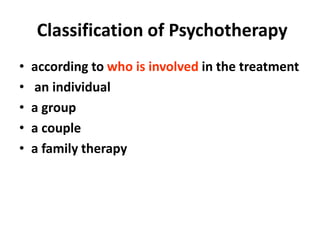
Classification of Psychotherapy
• according to who is involved in the treatment
• an individual
• a group
• a couple
• a family therapy
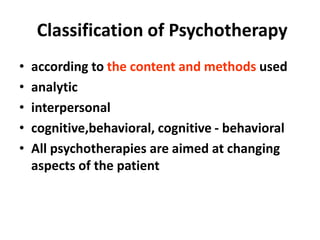
Classification of Psychotherapy
• according to the content and methods used
• analytic
• interpersonal
• cognitive,behavioral, cognitive - behavioral
• All psychotherapies are aimed at changing
aspects of the patient
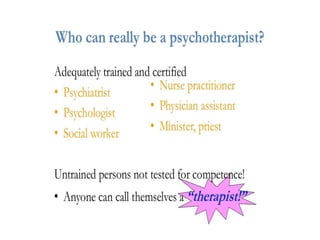
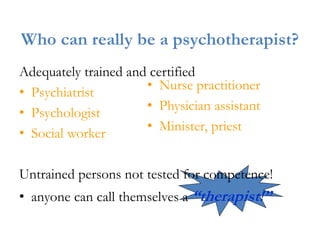
Who can really be a psychotherapist?
Adequately trained and certified
• Psychiatrist
• Psychologist
• Social worker
Untrained persons not tested for competence!
• anyone can call themselves a “therapist!”
• Nurse practitioner
• Physician assistant
• Minister, priest
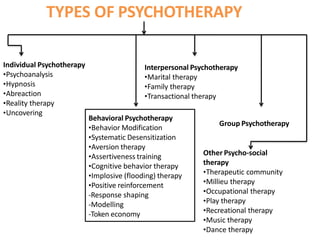
TYPES OF PSYCHOTHERAPY
Individual Psychotherapy
•Psychoanalysis
•Hypnosis
•Abreaction
•Reality therapy
•Uncovering
Behavioral Psychotherapy
•Behavior Modification
•Systematic Desensitization
•Aversion therapy
•Assertiveness training
•Cognitive behavior therapy
•Implosive (flooding) therapy
•Positive reinforcement
-Response shaping
-Modelling
-Token economy
Interpersonal Psychotherapy
•Marital therapy
•Family therapy
•Transactional therapy
Group Psychotherapy
Other Psycho-social
therapy
•Therapeutic community
•Millieu therapy
•Occupational therapy
•Play therapy
•Recreational therapy
•Music therapy
•Dance therapy
Psychotherapy

Psychotherapy

  • 1.
  • 2.
    Objectives • What canpsychotherapy accomplish • Classification of psychotherapy • Treatment modes
  • 3.
    Definition  A processwhich attempts to help the patient relieve symptoms, resolve problems or seek personal growth through a structured relation (i.e. specified goals and methods) with a trained professional therapist.
  • 4.
    Psychotherapy • It cannot alter the problem of world in which patient lives • But it can enhance self acceptance, empower the patient to make life changes and help patient to cope with enviroment more effectively
  • 5.
    What can psychotherapyaccomplish? • Learn to identify and change behaviors or thoughts that adversely affect life • Explore and improve relationships • Find better ways to cope and solve problems • Learn to set realistic goals • Can be combined with other types of treatment, such as medications
  • 6.
    All psychotherapies provide: •A working alliance between patient and therapist • An emotionally safe setting where the patient can feel accepted, supported, un-criticized • A therapeutic approach that may either be strictly adhered to or modified according to patient needs • Confidentiality as integral to therapeutic relationship except with safety issues
  • 7.
    Who seeks therapy…andwhy? • Children: behavioral, school, family issues • Adolescents: as above and issues of separation and peer relationships • Young adults: all of above plus career issues • Mature adults: all of above plus issues of changing relationships, family alignments, health, work and social status • Older adults: all of above plus end of life issues
  • 13.
    Classification of Psychotherapy •according to who is involved in the treatment • an individual • a group • a couple • a family therapy
  • 14.
    Classification of Psychotherapy •according to the content and methods used • analytic • interpersonal • cognitive,behavioral, cognitive - behavioral • All psychotherapies are aimed at changing aspects of the patient
  • 15.
    Who can reallybe a psychotherapist? Adequately trained and certified • Psychiatrist • Psychologist • Social worker Untrained persons not tested for competence! • anyone can call themselves a “therapist!” • Nurse practitioner • Physician assistant • Minister, priest
  • 16.
    TYPES OF PSYCHOTHERAPY IndividualPsychotherapy •Psychoanalysis •Hypnosis •Abreaction •Reality therapy •Uncovering Behavioral Psychotherapy •Behavior Modification •Systematic Desensitization •Aversion therapy •Assertiveness training •Cognitive behavior therapy •Implosive (flooding) therapy •Positive reinforcement -Response shaping -Modelling -Token economy Interpersonal Psychotherapy •Marital therapy •Family therapy •Transactional therapy Group Psychotherapy Other Psycho-social therapy •Therapeutic community •Millieu therapy •Occupational therapy •Play therapy •Recreational therapy •Music therapy •Dance therapy