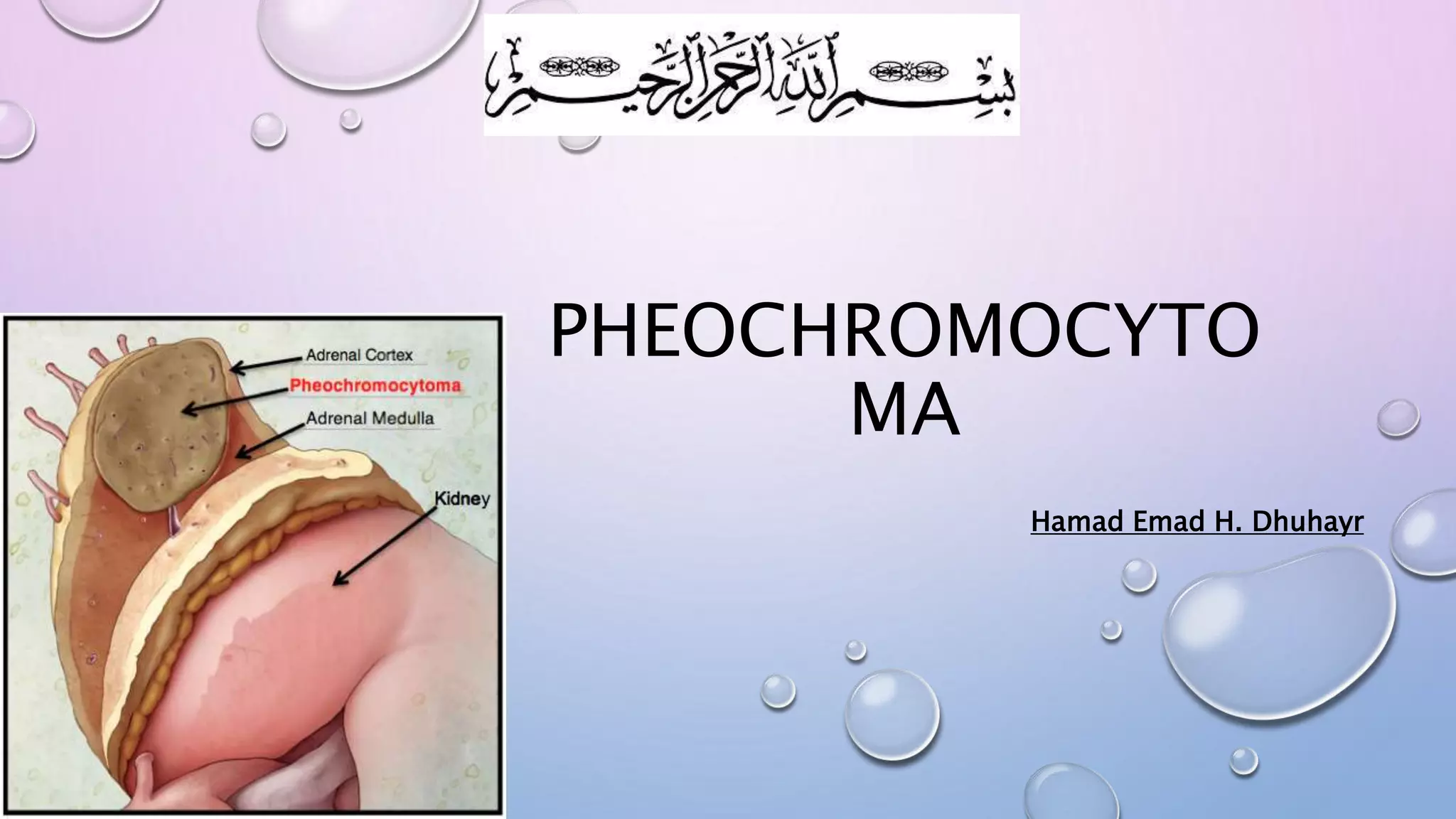
PHEOCHROMOCYTO 
MA 
Hamad Emad H. Dhuhayr
CONTENTS 
• SOEPEL 
• PHEOCHROMOCYTOMA 
• REFFERENCES
SOEPEL 
S A 35-year-old husband and father of three children, has been experiencing headaches 
and palpitations of increasing frequency and severity over the past six months. In 
addition, he has had periods of intense anxiety and panic attacks. 
• O taking history and physical examination. 
• E Anxiety disorders, hyperthyroidism and pheonchomocytoma 
• P Echo and ecg 
• E medication. 
• L pheonchomocytoma
PHEONCHOMOCYTOMA
DEFINITION 
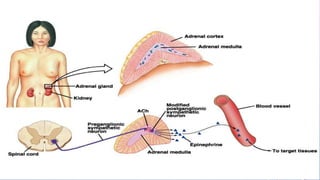
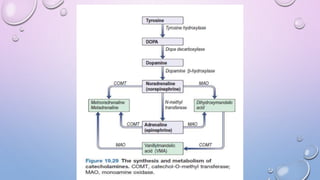
• Catecholamine-secreting tumors that arise from chromaffin cells of theAdrenal 
medulla and the sympathetic ganglia are referred to as pheochromocytomas 
And extra-adrenal catecholamine-secreting paragangliomas, respectively. 
• Because the tumors have similar clinical presentations and are treated With 
similar approaches, many clinicians use the term pheochromocytoma to Refer to 
both entities. 
• However, the distinction between pheochromocytoma And paraganglioma is an 
important one because there are differences in the Risk for associated 
neoplasms, risk for malignant transformation, and type of Genetic testing that 
should be considered. 
• Rare but treatable.
PATHOLOGY 
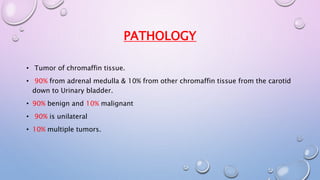
• Tumor of chromaffin tissue. 
• 90% from adrenal medulla & 10% from other chromaffin tissue from the carotid 
down to Urinary bladder. 
• 90% benign and 10% malignant 
• 90% is unilateral 
• 10% multiple tumors.
CLINICAL PICTURE
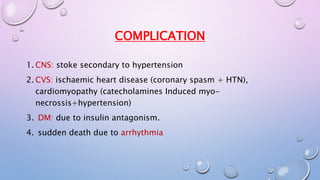
COMPLICATION 
1. CNS: stoke secondary to hypertension 
2. CVS: ischaemic heart disease (coronary spasm + HTN), 
cardiomyopathy (catecholamines Induced myo-necrossis+ 
hypertension) 
3. DM: due to insulin antagonism. 
4. sudden death due to arrhythmia
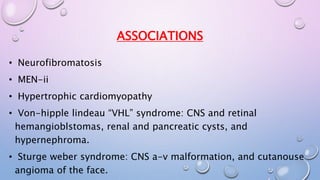
ASSOCIATIONS 
• Neurofibromatosis 
• MEN-ii 
• Hypertrophic cardiomyopathy 
• Von-hipple lindeau “VHL” syndrome: CNS and retinal 
hemangioblstomas, renal and pancreatic cysts, and 
hypernephroma. 
• Sturge weber syndrome: CNS a-v malformation, and cutanouse 
angioma of the face.
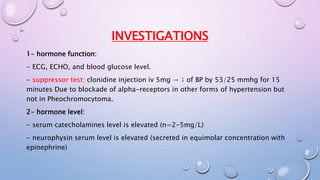
INVESTIGATIONS 
1- hormone function: 
- ECG, ECHO, and blood glucose level. 
- suppressor test: clonidine injection iv 5mg → ↓ of BP by 53/25 mmhg for 15 
minutes Due to blockade of alpha-receptors in other forms of hypertension but 
not in Pheochromocytoma. 
2- hormone level: 
- serum catecholamines level is elevated (n=2-5mg/L) 
- neurophysin serum level is elevated (secreted in equimolar concentration with 
epinephrine)
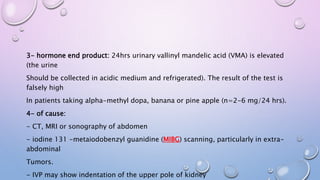
3- hormone end product: 24hrs urinary vallinyl mandelic acid (VMA) is elevated 
(the urine 
Should be collected in acidic medium and refrigerated). The result of the test is 
falsely high 
In patients taking alpha-methyl dopa, banana or pine apple (n=2-6 mg/24 hrs). 
4- of cause: 
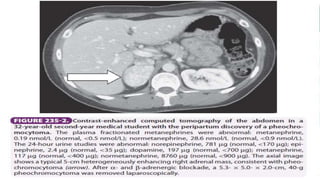
- CT, MRI or sonography of abdomen 
- iodine 131 -metaiodobenzyl guanidine (MIBG) scanning, particularly in extra-abdominal 
Tumors. 
- IVP may show indentation of the upper pole of kidney
TREATMENT 
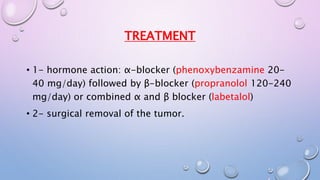
• 1- hormone action: α-blocker (phenoxybenzamine 20- 
40 mg/day) followed by β-blocker (propranolol 120-240 
mg/day) or combined α and β blocker (labetalol) 
• 2- surgical removal of the tumor.
FOLLOW UP 
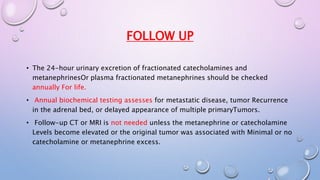
• The 24-hour urinary excretion of fractionated catecholamines and 
metanephrinesOr plasma fractionated metanephrines should be checked 
annually For life. 
• Annual biochemical testing assesses for metastatic disease, tumor Recurrence 
in the adrenal bed, or delayed appearance of multiple primaryTumors. 
• Follow-up CT or MRI is not needed unless the metanephrine or catecholamine 
Levels become elevated or the original tumor was associated with Minimal or no 
catecholamine or metanephrine excess.
REFFERENCES 
• KUMAR 
• CEICEL 
• DAVIDSONE 
• WEBSITE

Pheochromocytoma

  • 1.
    PHEOCHROMOCYTO MA HamadEmad H. Dhuhayr
  • 2.
    CONTENTS • SOEPEL • PHEOCHROMOCYTOMA • REFFERENCES
  • 3.
    SOEPEL S A35-year-old husband and father of three children, has been experiencing headaches and palpitations of increasing frequency and severity over the past six months. In addition, he has had periods of intense anxiety and panic attacks. • O taking history and physical examination. • E Anxiety disorders, hyperthyroidism and pheonchomocytoma • P Echo and ecg • E medication. • L pheonchomocytoma
  • 4.
  • 5.
    DEFINITION • Catecholamine-secretingtumors that arise from chromaffin cells of theAdrenal medulla and the sympathetic ganglia are referred to as pheochromocytomas And extra-adrenal catecholamine-secreting paragangliomas, respectively. • Because the tumors have similar clinical presentations and are treated With similar approaches, many clinicians use the term pheochromocytoma to Refer to both entities. • However, the distinction between pheochromocytoma And paraganglioma is an important one because there are differences in the Risk for associated neoplasms, risk for malignant transformation, and type of Genetic testing that should be considered. • Rare but treatable.
  • 8.
    PATHOLOGY • Tumorof chromaffin tissue. • 90% from adrenal medulla & 10% from other chromaffin tissue from the carotid down to Urinary bladder. • 90% benign and 10% malignant • 90% is unilateral • 10% multiple tumors.
  • 9.
  • 10.
    COMPLICATION 1. CNS:stoke secondary to hypertension 2. CVS: ischaemic heart disease (coronary spasm + HTN), cardiomyopathy (catecholamines Induced myo-necrossis+ hypertension) 3. DM: due to insulin antagonism. 4. sudden death due to arrhythmia
  • 11.
    ASSOCIATIONS • Neurofibromatosis • MEN-ii • Hypertrophic cardiomyopathy • Von-hipple lindeau “VHL” syndrome: CNS and retinal hemangioblstomas, renal and pancreatic cysts, and hypernephroma. • Sturge weber syndrome: CNS a-v malformation, and cutanouse angioma of the face.
  • 12.
    INVESTIGATIONS 1- hormonefunction: - ECG, ECHO, and blood glucose level. - suppressor test: clonidine injection iv 5mg → ↓ of BP by 53/25 mmhg for 15 minutes Due to blockade of alpha-receptors in other forms of hypertension but not in Pheochromocytoma. 2- hormone level: - serum catecholamines level is elevated (n=2-5mg/L) - neurophysin serum level is elevated (secreted in equimolar concentration with epinephrine)
  • 13.
    3- hormone endproduct: 24hrs urinary vallinyl mandelic acid (VMA) is elevated (the urine Should be collected in acidic medium and refrigerated). The result of the test is falsely high In patients taking alpha-methyl dopa, banana or pine apple (n=2-6 mg/24 hrs). 4- of cause: - CT, MRI or sonography of abdomen - iodine 131 -metaiodobenzyl guanidine (MIBG) scanning, particularly in extra-abdominal Tumors. - IVP may show indentation of the upper pole of kidney
  • 15.
    TREATMENT • 1-hormone action: α-blocker (phenoxybenzamine 20- 40 mg/day) followed by β-blocker (propranolol 120-240 mg/day) or combined α and β blocker (labetalol) • 2- surgical removal of the tumor.
  • 16.
    FOLLOW UP •The 24-hour urinary excretion of fractionated catecholamines and metanephrinesOr plasma fractionated metanephrines should be checked annually For life. • Annual biochemical testing assesses for metastatic disease, tumor Recurrence in the adrenal bed, or delayed appearance of multiple primaryTumors. • Follow-up CT or MRI is not needed unless the metanephrine or catecholamine Levels become elevated or the original tumor was associated with Minimal or no catecholamine or metanephrine excess.
  • 17.
    REFFERENCES • KUMAR • CEICEL • DAVIDSONE • WEBSITE