pheochromocytoma 
Kholoud Alharbi 
King Faisal University
Case B 
36 year old woman is seen at the outpatient clinic 
because of intermittent high blood pressure. 
She complains about periodic sweating and 
panic attacks. 
there is intermittent tremor, palpitation and 
elevated blood pressure. 
During these attacks blood pressure is 210/110
Objective 
What initial medical 
treatment would you 
start ? and why
Treatment 
is surgical excision of the tumor, 
following preoperative treatment 
of hypertension, which is usually 
curative (unless metastatic)
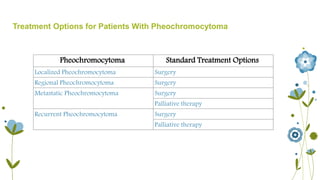
Treatment Options for Patients With Pheochromocytoma 
Pheochromocytoma Standard Treatment Options 
Localized Pheochromocytoma Surgery 
Regional Pheochromocytoma Surgery 
Metastatic Pheochromocytoma Surgery 
Palliative therapy 
Recurrent Pheochromocytoma Surgery 
Palliative therapy
Preoperative Medical Preparation 
• Alpha-adrenergic blockade 
• should be initiated at the time of diagnosis and 
maximized preoperatively to prevent potentially life-threatening 
cardiovascular complications, which can 
occur as a result of excess catecholamine secretion 
during surgery. 
 Complications may include the following: 
• Hypertensive crisis. 
• Arrhythmia. 
• Myocardial infarction. 
• Pulmonary edema.
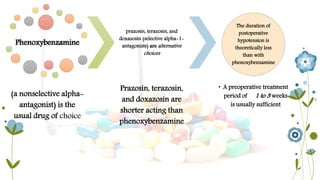
Phenoxybenzamine 
(a nonselective alpha-antagonist) 
is the 
usual drug of choice 
prazosin, terazosin, and 
doxazosin (selective alpha-1- 
antagonists) are alternative 
choices 
Prazosin, terazosin, 
and doxazosin are 
shorter acting than 
phenoxybenzamine 
The duration of 
postoperative 
hypotension is 
theoretically less 
than with 
phenoxybenzamine 
• A preoperative treatment 
period of 1 to 3 weeks 
is usually sufficient
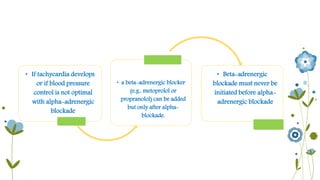
• If tachycardia develops 
or if blood pressure 
control is not optimal 
with alpha-adrenergic 
blockade 
• a beta-adrenergic blocker 
(e.g., metoprolol or 
propranolol) can be added 
but only after alpha-blockade. 
• Beta-adrenergic 
blockade must never be 
initiated before alpha-adrenergic 
blockade
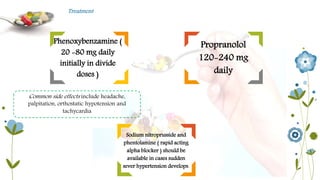
Sodium nitroprusside and 
phentolamine ( rapid acting 
alpha blocker ) should be 
available in cases sudden 
sever hypertension develops. 
Propranolol 
120-240 mg 
daily 
Treatment 
Phenoxybenzamine ( 
20 -80 mg daily 
initially in divide 
doses ) 
Common side effects include headache, 
palpitation, orthostatic hypotension and 
tachycardia
surgery 
• Laparoscopic surgery is being used 
more often for tumors smaller than 6 
than 6 cm but for larger tumors, an 
an open operation is probably safer. 
safer. 
• Both anterior transabdominal 
laparoscopic adrenalectomy as well 
well as posterior retroperitoneoscopic 
retroperitoneoscopic adrenalectomy 
adrenalectomy have been 
demonstrated to be safe for the 
majority of patients with a modestly 
modestly sized.
Surgical outcome and post-operative follow-up 
 Following surgical removal of Pheochromocytoma 80% of patients 
are expected to become normotensive. 
 Around 20% of patients will remain hypertensive without 
biochemical evidence of residual tumor, however, due to associated 
essential hypertension or due to acquired renovascular changes. 
 Plasma catecholamine or urinary metanephrines should be 
measured two weeks after surgery. If the biochemical tests are still 
diagnostically high, residual or metastatic tumor should be 
suspected. 
 Plasma catecholamines or urinary metanephrines should be 
measured every three months for the first year and then annually 
even in normotensive patients.
Summary: 
 Alpha blockade with phenoxybenzamine is started at least 7 to 10 days 
before operation to allow for expansion of blood volume. 
 Only once this is achieved is beta blockade considered. If beta blockade 
is started too soon, unopposed alpha stimulation can precipitate a 
hypertensive crisis. 
 Laparoscopic surgery is being used more often for tumors smaller than 6 
cm but for larger tumors, an open operation is probably safer.
References 
http://www.cancer.gov/cancertopics/pdq/treatment/pheochromocytoma/HealthProfessional/page 4 
http://emedicine.medscape.com/article/124059-medication 
http://www.ncbi.nlm.nih.gov/books/NBK7002/ 
Clinical medicine KUMAR book

Pheochromocytoma

  • 1.
    pheochromocytoma Kholoud Alharbi King Faisal University
  • 2.
    Case B 36year old woman is seen at the outpatient clinic because of intermittent high blood pressure. She complains about periodic sweating and panic attacks. there is intermittent tremor, palpitation and elevated blood pressure. During these attacks blood pressure is 210/110
  • 3.
    Objective What initialmedical treatment would you start ? and why
  • 4.
    Treatment is surgicalexcision of the tumor, following preoperative treatment of hypertension, which is usually curative (unless metastatic)
  • 5.
    Treatment Options forPatients With Pheochromocytoma Pheochromocytoma Standard Treatment Options Localized Pheochromocytoma Surgery Regional Pheochromocytoma Surgery Metastatic Pheochromocytoma Surgery Palliative therapy Recurrent Pheochromocytoma Surgery Palliative therapy
  • 6.
    Preoperative Medical Preparation • Alpha-adrenergic blockade • should be initiated at the time of diagnosis and maximized preoperatively to prevent potentially life-threatening cardiovascular complications, which can occur as a result of excess catecholamine secretion during surgery.  Complications may include the following: • Hypertensive crisis. • Arrhythmia. • Myocardial infarction. • Pulmonary edema.
  • 7.
    Phenoxybenzamine (a nonselectivealpha-antagonist) is the usual drug of choice prazosin, terazosin, and doxazosin (selective alpha-1- antagonists) are alternative choices Prazosin, terazosin, and doxazosin are shorter acting than phenoxybenzamine The duration of postoperative hypotension is theoretically less than with phenoxybenzamine • A preoperative treatment period of 1 to 3 weeks is usually sufficient
  • 8.
    • If tachycardiadevelops or if blood pressure control is not optimal with alpha-adrenergic blockade • a beta-adrenergic blocker (e.g., metoprolol or propranolol) can be added but only after alpha-blockade. • Beta-adrenergic blockade must never be initiated before alpha-adrenergic blockade
  • 9.
    Sodium nitroprusside and phentolamine ( rapid acting alpha blocker ) should be available in cases sudden sever hypertension develops. Propranolol 120-240 mg daily Treatment Phenoxybenzamine ( 20 -80 mg daily initially in divide doses ) Common side effects include headache, palpitation, orthostatic hypotension and tachycardia
  • 10.
    surgery • Laparoscopicsurgery is being used more often for tumors smaller than 6 than 6 cm but for larger tumors, an an open operation is probably safer. safer. • Both anterior transabdominal laparoscopic adrenalectomy as well well as posterior retroperitoneoscopic retroperitoneoscopic adrenalectomy adrenalectomy have been demonstrated to be safe for the majority of patients with a modestly modestly sized.
  • 11.
    Surgical outcome andpost-operative follow-up  Following surgical removal of Pheochromocytoma 80% of patients are expected to become normotensive.  Around 20% of patients will remain hypertensive without biochemical evidence of residual tumor, however, due to associated essential hypertension or due to acquired renovascular changes.  Plasma catecholamine or urinary metanephrines should be measured two weeks after surgery. If the biochemical tests are still diagnostically high, residual or metastatic tumor should be suspected.  Plasma catecholamines or urinary metanephrines should be measured every three months for the first year and then annually even in normotensive patients.
  • 12.
    Summary:  Alphablockade with phenoxybenzamine is started at least 7 to 10 days before operation to allow for expansion of blood volume.  Only once this is achieved is beta blockade considered. If beta blockade is started too soon, unopposed alpha stimulation can precipitate a hypertensive crisis.  Laparoscopic surgery is being used more often for tumors smaller than 6 cm but for larger tumors, an open operation is probably safer.
  • 13.
    References http://www.cancer.gov/cancertopics/pdq/treatment/pheochromocytoma/HealthProfessional/page 4 http://emedicine.medscape.com/article/124059-medication http://www.ncbi.nlm.nih.gov/books/NBK7002/ Clinical medicine KUMAR book

Editor's Notes

  • #7 Catecholamines are hormones that increase the heart rate, blood pressure, rate of breathing and amount of energy available to the body. Adrenaline is the most common and well-known catecholamine. The adrenal medulla releases extra adrenaline in response to stress. This increase is known as the "fight or flight response"—i.e. the body is ready to fight or run. Pheochromocytomas are rare tumors that make too much adrenaline.
  • #8 Adequate α-blockade is defined as supine arterial pressure not greater than 160/90
  • #9 Beta-adrenergic receptor blockade with proranolol is contraindicated until alpha-adrenergic receptor blockade is complete, to avoid unopposed α- Vasoconstriction doing so blocks beta-adrenergic receptor-mediated vasodilation and results in unopposed alpha-adrenergic receptor-mediated vasoconstriction, which can lead to a life-threatening crisis