Pheochromocytoma
Javad ghahremani
Medical student at shahid beheshti university
Introduction:
 Pheochromocytomas and paragangliomas are
catecholamine- producing tumors derived from the
sympathetic or parasympathetic nervous system.
 The diagnosis of pheochromocytomas provides a
potentially correctable cause of hypertension, and
their removal can prevent hypertensive crises that
can be lethal.
Epidemiology:
• Pheochromocytoma is estimated to occur in 2–8 of 1 million
persons per year
• about 0.1% of hypertensive patients harbor a
pheochromocytoma
• The mean age at diagnosis is about 40 years
• The "rule of tens" for pheochromocytomas states that about
10% are bilateral, 10% are extraadrenal, and 10% are
malignant. However, these percentages are higher in the
inherited syndromes.
Pathogenesis:
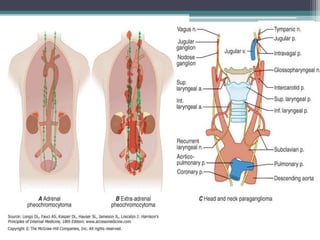
• Pheochromocytomas and paragangliomas are well-
vascularized tumors that arise from cells derived from the
sympathetic (e.g., adrenal medulla) or parasympathetic
(e.g., carotid body, glomus vagale) paraganglia.
• The name pheochromocytoma reflects the black-colored
staining caused by chromaffin oxidation of
catecholamines
Etiology:
• The etiology of sporadic pheochromocytomas
and paragangliomas is unknown.
• However, about 25% of patients have an
inherited condition, including germ-line
mutations in the RET, VHL, NF1, SDHB, SDHC,
SDHD, or SDHAF2 genes.
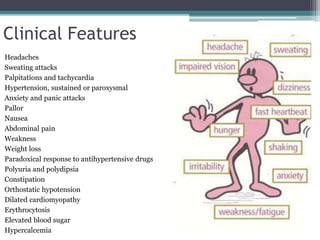
Clinical Features
Headaches
Sweating attacks
Palpitations and tachycardia
Hypertension, sustained or paroxysmal
Anxiety and panic attacks
Pallor
Nausea
Abdominal pain
Weakness
Weight loss
Paradoxical response to antihypertensive drugs
Polyuria and polydipsia
Constipation
Orthostatic hypotension
Dilated cardiomyopathy
Erythrocytosis
Elevated blood sugar
Hypercalcemia
Diagnosis:
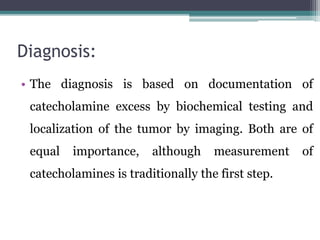
• The diagnosis is based on documentation of
catecholamine excess by biochemical testing and
localization of the tumor by imaging. Both are of
equal importance, although measurement of
catecholamines is traditionally the first step.
Biochemical Testing:
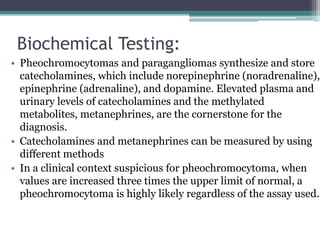
• Pheochromocytomas and paragangliomas synthesize and store
catecholamines, which include norepinephrine (noradrenaline),
epinephrine (adrenaline), and dopamine. Elevated plasma and
urinary levels of catecholamines and the methylated
metabolites, metanephrines, are the cornerstone for the
diagnosis.
• Catecholamines and metanephrines can be measured by using
different methods
• In a clinical context suspicious for pheochromocytoma, when
values are increased three times the upper limit of normal, a
pheochromocytoma is highly likely regardless of the assay used.
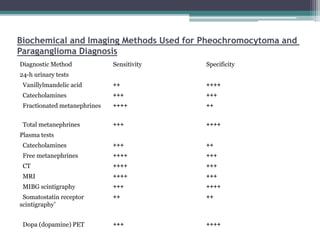
Biochemical and Imaging Methods Used for Pheochromocytoma and
Paraganglioma Diagnosis
Diagnostic Method Sensitivity Specificity
24-h urinary tests
Vanillylmandelic acid ++ ++++
Catecholamines +++ +++
Fractionated metanephrines ++++ ++
Total metanephrines +++ ++++
Plasma tests
Catecholamines +++ ++
Free metanephrines ++++ +++
CT ++++ +++
MRI ++++ +++
MIBG scintigraphy +++ ++++
Somatostatin receptor
scintigraphy*
++ ++
Dopa (dopamine) PET +++ ++++
Differential Diagnosis:
• essential hypertension
• anxiety attacks
• use of cocaine or amphetamines
• mastocytosis or carcinoid syndrome (usually lacking hypertension)
• intracranial lesions
• clonidine withdrawal
• autonomic epilepsy
• factitious crises (usually from sympathomimetic amines).
When an asymptomatic adrenal mass is identified,
likely diagnoses other than pheochromocytoma include:
1. a nonfunctioning adrenal adenoma
2. Aldosteronoma
3. cortisol-producing adenoma (Cushing's syndrome).
Treatment:
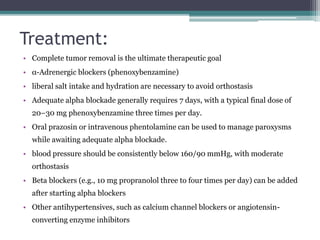
• Complete tumor removal is the ultimate therapeutic goal
• α-Adrenergic blockers (phenoxybenzamine)
• liberal salt intake and hydration are necessary to avoid orthostasis
• Adequate alpha blockade generally requires 7 days, with a typical final dose of
20–30 mg phenoxybenzamine three times per day.
• Oral prazosin or intravenous phentolamine can be used to manage paroxysms
while awaiting adequate alpha blockade.
• blood pressure should be consistently below 160/90 mmHg, with moderate
orthostasis
• Beta blockers (e.g., 10 mg propranolol three to four times per day) can be added
after starting alpha blockers
• Other antihypertensives, such as calcium channel blockers or angiotensin-
converting enzyme inhibitors
:Resources
18th edition of Harrison's Principles of
Internal Medicine
Pheochromocytoma

Pheochromocytoma

  • 1.
  • 2.
    Introduction:  Pheochromocytomas andparagangliomas are catecholamine- producing tumors derived from the sympathetic or parasympathetic nervous system.  The diagnosis of pheochromocytomas provides a potentially correctable cause of hypertension, and their removal can prevent hypertensive crises that can be lethal.
  • 3.
    Epidemiology: • Pheochromocytoma isestimated to occur in 2–8 of 1 million persons per year • about 0.1% of hypertensive patients harbor a pheochromocytoma • The mean age at diagnosis is about 40 years • The "rule of tens" for pheochromocytomas states that about 10% are bilateral, 10% are extraadrenal, and 10% are malignant. However, these percentages are higher in the inherited syndromes.
  • 4.
    Pathogenesis: • Pheochromocytomas andparagangliomas are well- vascularized tumors that arise from cells derived from the sympathetic (e.g., adrenal medulla) or parasympathetic (e.g., carotid body, glomus vagale) paraganglia. • The name pheochromocytoma reflects the black-colored staining caused by chromaffin oxidation of catecholamines
  • 6.
    Etiology: • The etiologyof sporadic pheochromocytomas and paragangliomas is unknown. • However, about 25% of patients have an inherited condition, including germ-line mutations in the RET, VHL, NF1, SDHB, SDHC, SDHD, or SDHAF2 genes.
  • 7.
    Clinical Features Headaches Sweating attacks Palpitationsand tachycardia Hypertension, sustained or paroxysmal Anxiety and panic attacks Pallor Nausea Abdominal pain Weakness Weight loss Paradoxical response to antihypertensive drugs Polyuria and polydipsia Constipation Orthostatic hypotension Dilated cardiomyopathy Erythrocytosis Elevated blood sugar Hypercalcemia
  • 8.
    Diagnosis: • The diagnosisis based on documentation of catecholamine excess by biochemical testing and localization of the tumor by imaging. Both are of equal importance, although measurement of catecholamines is traditionally the first step.
  • 9.
    Biochemical Testing: • Pheochromocytomasand paragangliomas synthesize and store catecholamines, which include norepinephrine (noradrenaline), epinephrine (adrenaline), and dopamine. Elevated plasma and urinary levels of catecholamines and the methylated metabolites, metanephrines, are the cornerstone for the diagnosis. • Catecholamines and metanephrines can be measured by using different methods • In a clinical context suspicious for pheochromocytoma, when values are increased three times the upper limit of normal, a pheochromocytoma is highly likely regardless of the assay used.
  • 10.
    Biochemical and ImagingMethods Used for Pheochromocytoma and Paraganglioma Diagnosis Diagnostic Method Sensitivity Specificity 24-h urinary tests Vanillylmandelic acid ++ ++++ Catecholamines +++ +++ Fractionated metanephrines ++++ ++ Total metanephrines +++ ++++ Plasma tests Catecholamines +++ ++ Free metanephrines ++++ +++ CT ++++ +++ MRI ++++ +++ MIBG scintigraphy +++ ++++ Somatostatin receptor scintigraphy* ++ ++ Dopa (dopamine) PET +++ ++++
  • 11.
    Differential Diagnosis: • essentialhypertension • anxiety attacks • use of cocaine or amphetamines • mastocytosis or carcinoid syndrome (usually lacking hypertension) • intracranial lesions • clonidine withdrawal • autonomic epilepsy • factitious crises (usually from sympathomimetic amines). When an asymptomatic adrenal mass is identified, likely diagnoses other than pheochromocytoma include: 1. a nonfunctioning adrenal adenoma 2. Aldosteronoma 3. cortisol-producing adenoma (Cushing's syndrome).
  • 12.
    Treatment: • Complete tumorremoval is the ultimate therapeutic goal • α-Adrenergic blockers (phenoxybenzamine) • liberal salt intake and hydration are necessary to avoid orthostasis • Adequate alpha blockade generally requires 7 days, with a typical final dose of 20–30 mg phenoxybenzamine three times per day. • Oral prazosin or intravenous phentolamine can be used to manage paroxysms while awaiting adequate alpha blockade. • blood pressure should be consistently below 160/90 mmHg, with moderate orthostasis • Beta blockers (e.g., 10 mg propranolol three to four times per day) can be added after starting alpha blockers • Other antihypertensives, such as calcium channel blockers or angiotensin- converting enzyme inhibitors
  • 13.
    :Resources 18th edition ofHarrison's Principles of Internal Medicine