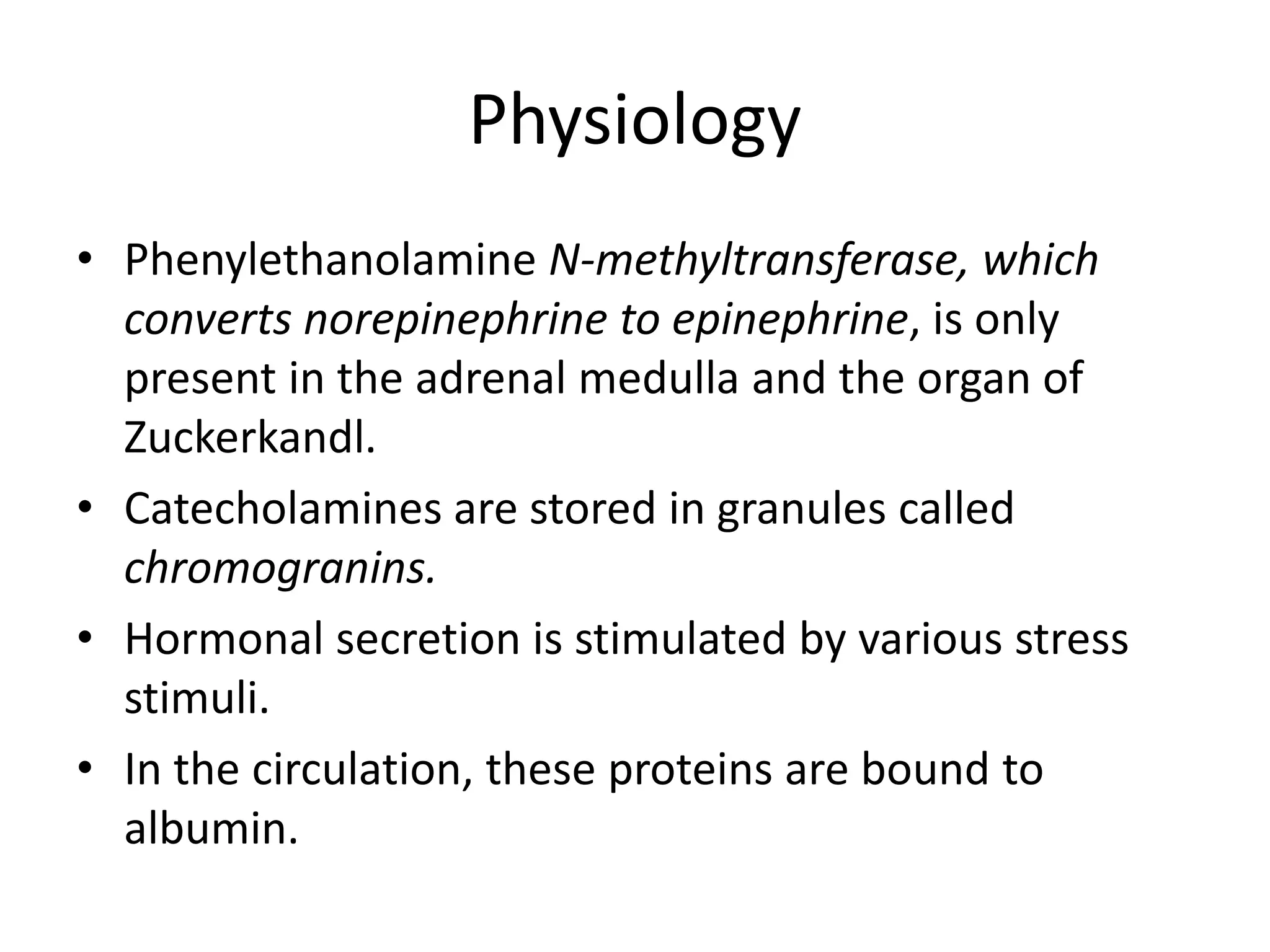
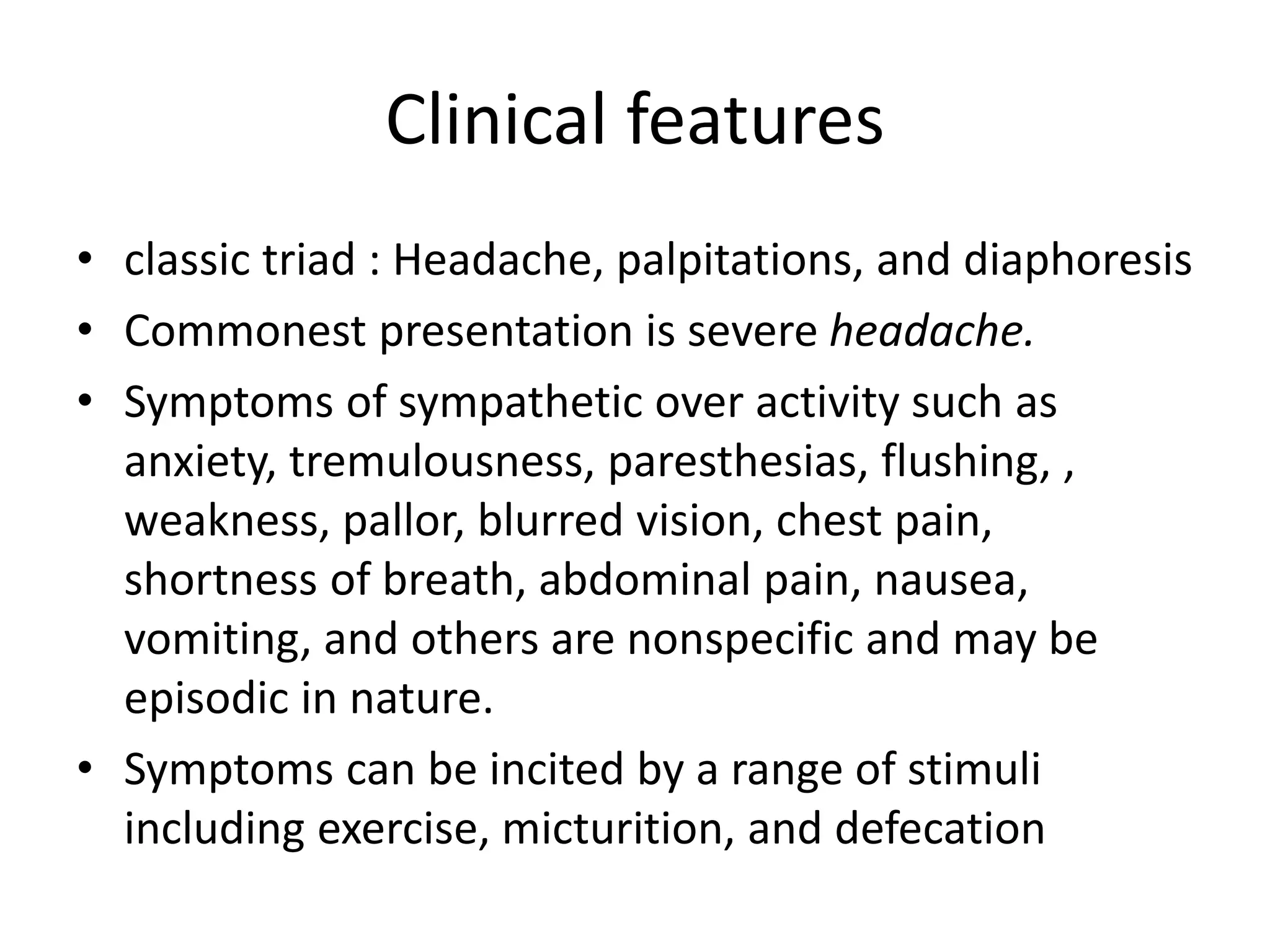
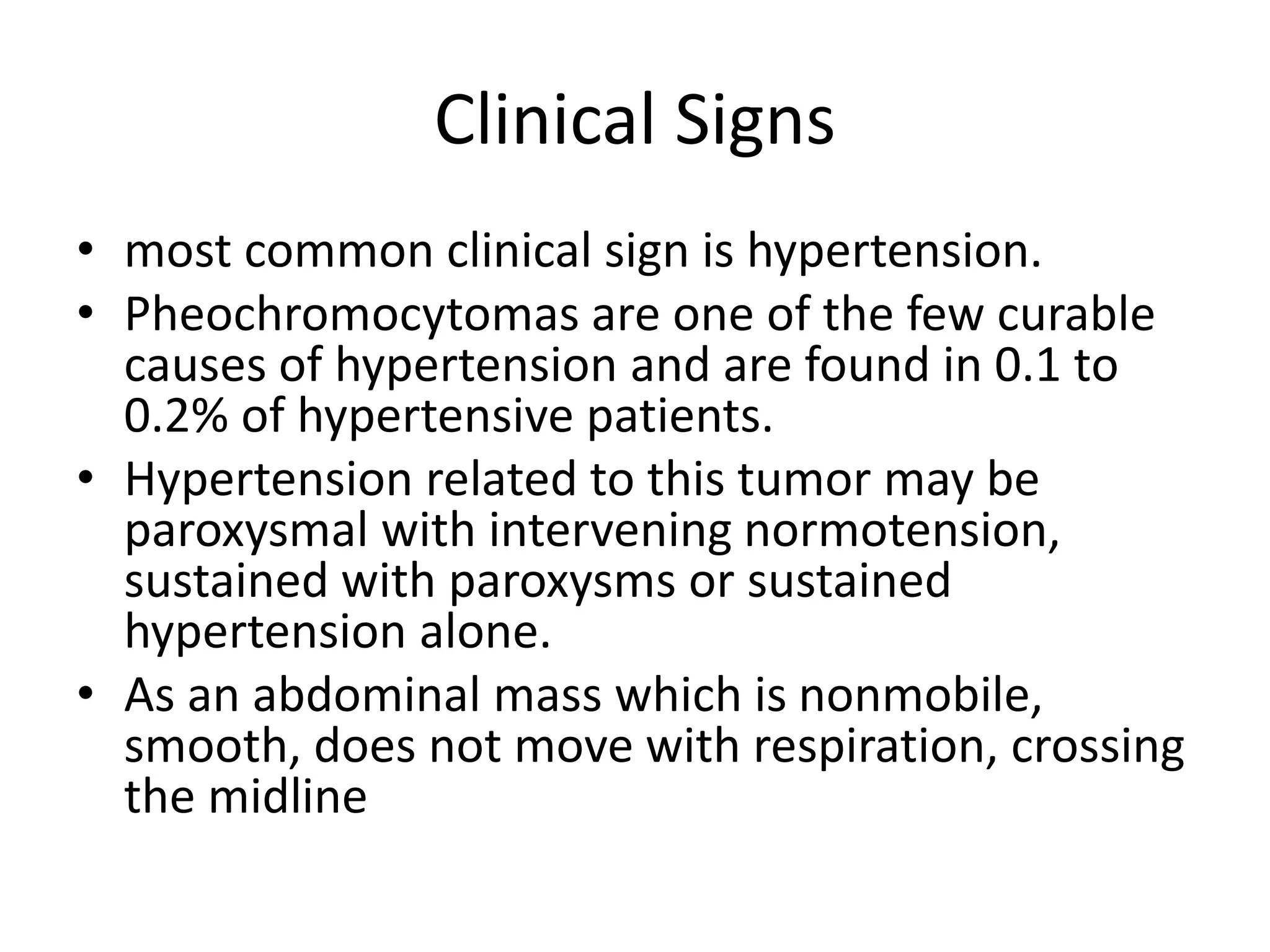
Pheochromocytoma
Dr. Rajshree Singh
Intern doctor
Shree Birendra Hospital
Chaunni, Kathmanu
Outline
• Anatomy
• Embryology
• Physiology &
biochemistry
• Disease of adrenal
gland
• Pheochromocytoma
– Introduction
– Epidemiology
– Risk factors
– Clinical features
– Investigation
– Treatment
• Case presentation
• Published papers and
researches
• References
Anatomy
Anatomy
• measures 5 x 3 x 1 cm and weighs 4 to 5 g
• Right gland is pyramidal shaped ; in close proximity to
the right hemidiaphragm, liver, and inferior vena cava
(IVC)
• Left adrenal is closely associated with the aorta,spleen,
and tail of the pancreas.
• Divided into
– Cortex—85%
– Medulla—15%
Embryology
• Mesodermal cells form the adrenal cortex
• Neuroectodermal cells migrate to the cortex from
the neural crest during embryogenesis and form the
adrenal medulla.
• neural crest cells also migrate to the para-aortic and
paravertebral areas
• Most extra-adrenal neural tissue regresses but may
persist at several sites.
Embryology
• Largest of these is located
to the left of the aortic
bifurcation near the
inferior mesenteric artery
origin and is designated
as the organ of
Zuckerkandl.
• Adrenal medullary tissue
also may be found in
neck, urinary bladder, and
para-aortic regions.
Physiology
• Adrenal cortex contains three layers:
– Zona glomerulosa secretes mineralocorticoids.
– Zona fasciculata secretes glucocorticoids.
– Zona reticularis secretes sex hormones.
• Adrenal medulla
– up to 10 to 20% of the gland's volume and is reddish
brown in color
– produces the catecholamine : epinephrine and
norepinephrine.
– cells are arranged in cords and are polyhedral in shape
– often are referred to as chromaffin cells because they
stain specifically with chromium salts.
Physiology
• Phenylethanolamine N-methyltransferase, which
converts norepinephrine to epinephrine, is only
present in the adrenal medulla and the organ of
Zuckerkandl.
• Catecholamines are stored in granules called
chromogranins.
• Hormonal secretion is stimulated by various stress
stimuli.
• In the circulation, these proteins are bound to
albumin.
Physiology
• Catecholamines are cleared by reuptake by
sympathetic nerve endings & peripheral inactivation
by catechol O-methyltransferase and monoamine
oxidase & excretion by kidneys.
• Metabolism of catecholamines takes place in the
liver and kidneys by the formation of metabolites
such as metanephrines, normetanephrines, and
VMA, which may undergo further glucuronidation or
sulfation before being excreted in the urine
Disease of adrenal glands
Adrenal cortex
• Incidentaloma
• Non-functioning adenoma
• Cushing’s adenoma
• Adrenocortical carcinoma
• Myelolipoma
• Cyst
• Metastases
• Conn’s adenoma
Adrenal medulla
• Pheochromocytoma
• Malignant
pheochromocytoma
• Neuroblastoma
Pheochromocytoma
• It is a tumour arising from chromaffin cells, from the
adrenal medulla but can also arise from extraadrenal
chromaffin tissues (Organ of Zuckerkandl).
• It is catecholamine secreting tumours
• Pheochromocytomas were first identified by Frankel in
1885, but were not named as such until 1912 by Pick,
who noted the characteristic chromaffin reaction of
the tumor cells.
• The first successful adrenalectomies for
pheochromocytoma were performed by Roux in
Switzerland, and Charles Mayo in the United States.
Epidemiology
• prevalence of phaeochromocytoma in patients
with hypertension is 0.1–0.6 per cent
• an overall prevalence of 0.05 per cent in autopsy
series.
• In total, 4 per cent of incidentalomas are
phaeochromocytomas.
• They can occur at any age with a peak incidence
in the fourth and fifth decades of life
• Have no gender predilection
the 10 percent tumor
• 10% are bilateral
• 10% are malignant
• 10% occur in pediatric patients
• 10% are extra-adrenal
• 10% are familial
• 10% multiple
• 10% not associated with hypertension
• 10% calcified
Risk factors
• occur in families with MEN2A and MEN2B, in
approximately 50% of patients
• von Hippel-Lindau (VHL) disease
• included within the tumor spectrum of
neurofibromatosis type 1 (NF1 gene) and other
neuroectodermal disorders (Sturge-Weber syndrome
and tuberous sclerosis), Carney's syndrome, MEN1
syndrome
• familial paraganglioma & pheochromocytoma syndrome
caused by mutations in the succinyl dehydrogenase
family of genes (SDHB, SDHC, and SDHD).
Clinical features
• classic triad : Headache, palpitations, and diaphoresis
• Commonest presentation is severe headache.
• Symptoms of sympathetic over activity such as
anxiety, tremulousness, paresthesias, flushing, ,
weakness, pallor, blurred vision, chest pain,
shortness of breath, abdominal pain, nausea,
vomiting, and others are nonspecific and may be
episodic in nature.
• Symptoms can be incited by a range of stimuli
including exercise, micturition, and defecation
Symptoms
Clinical Signs
• most common clinical sign is hypertension.
• Pheochromocytomas are one of the few curable
causes of hypertension and are found in 0.1 to
0.2% of hypertensive patients.
• Hypertension related to this tumor may be
paroxysmal with intervening normotension,
sustained with paroxysms or sustained
hypertension alone.
• As an abdominal mass which is nonmobile,
smooth, does not move with respiration, crossing
the midline
Complications
• Cardiovascular complications such as
myocardial infarction and arrhythmias
• Sudden death may occur in patients with
undiagnosed tumors who undergo other
surgeries or biopsy.
• precipitate hypertensive encephalopathy &
cerebral haemorrhage.
• Panic attacks
Differential diagnosis
• Hyperthyroidism
• Anxiety status
• Cardiac conditions
• Carcinoids (functioning)
Investigations
• 24-hour urine samples for catecholamines and their
metabolites
• plasma metanephrine levels.
• Urinary metanephrines are highly senisitive &
specific, whereas VMA measurements are slightly
less in so.
• False-positive VMA tests may result from ingestion of
caffeine, raw fruits, or medications ( -methyldopa).
• Fractionated urinary catecholamines also are very
sensitive but less specific for pheochromocytomas.
Investigations
• Many physiologic and pathologic states can alter the
levels of plasma catecholamines. Hence, they are
less accurate than urinary tests.
• Both epinephrine and norepinephrine should be
measured, as tumors often secrete one or the other
hormone. They have cutoff values of 2000 pg/mL for
norepinephrine and 200 pg/mL for epinephrine.
• Clonidine is an agent that suppresses neurogenically
mediated catecholamine excess but not secretion
from pheochromocytomas.
Investigations
• A normal clonidine suppression test is defined by a
decrease of basal catecholamine levels to <500 pg/mL
within 2 to 3 hours after an oral dose of 0.3 mg of
clonidine.
• Chromogranin A is a monomeric, acidic protein, which is
stored in the adrenal medulla and other neuroendocrine
tumors and released along with catecholamine
hormones. It is useful in conjunction with catecholamine
measurement for diagnosing pheochromocytomas.
• Recent studies have shown that plasma metanephrines
are the most reliable tests to identify
pheochromocytomas, with sensitivity approaching 100%.
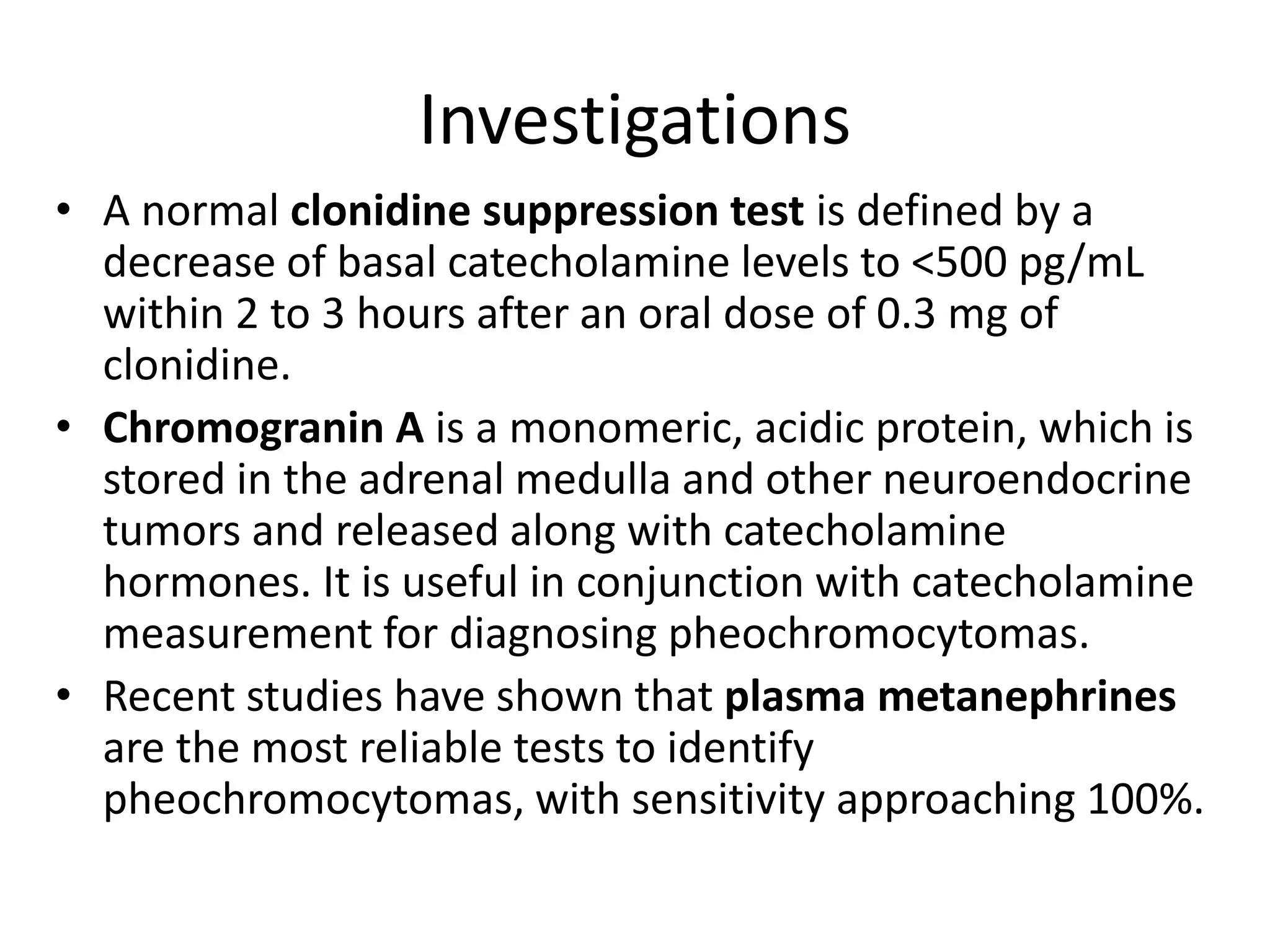
• Add the table with cutoff biochemical values
which is table 41-4
Radiologic Studies
• CT scans are 85 to 95% sensitive and 70 to 100%
specific for pheochromocytomas.
• Images should include the region from the
diaphragm to the aortic bifurcation so as to include
the organ of Zuckerkandl.
• CT scans do not provide functional information and
cannot definitively diagnose pheochromocytomas.
• MRI scans are 95% sensitive and almost 100%
specific for pheochromocytomas because these
tumors have a characteristic appearance on T2-
weighted images or after gadolinium.
A left-sided pheochromocytoma (arrows) imaged by a
computed tomography scan of the abdomen
Radiologic Studies
• Metaiodobenzylguanidine (MIBG) is taken up and
concentrated by vesicles in the adrenal medullar cells
because its structure is similar to norepinephrine.
• Normal adrenal medullary tissue does not take up
appreciable MIBG.
• 131I radiolabeled MIBG is, therefore, useful for
localizing pheochromocytomas, especially those in
ectopic positions.
• This test has a reported sensitivity of 77 to 89% and
specificity ranging from 88 to 100%.
A left-sided pheochromocytoma (arrows)
MIBG scan viewed posteriorly
Treatment
Malignant pheochromocytoma
Case presentation
Newer concepts in approach to
Pheochromocytoma
References
• Sabiston Textbook of Surgery, 20th edition
• Schwartz's Principles of Surgery, 9th Edition
• Bailey And Love's Short Practice of Surgery
26th Ed
• SRB's Manual of Surgery, 4E
• PubMed
Thank you

Pheochromocytoma

  • 1.
    Pheochromocytoma Dr. Rajshree Singh Interndoctor Shree Birendra Hospital Chaunni, Kathmanu
  • 2.
    Outline • Anatomy • Embryology •Physiology & biochemistry • Disease of adrenal gland • Pheochromocytoma – Introduction – Epidemiology – Risk factors – Clinical features – Investigation – Treatment • Case presentation • Published papers and researches • References
  • 3.
  • 4.
    Anatomy • measures 5x 3 x 1 cm and weighs 4 to 5 g • Right gland is pyramidal shaped ; in close proximity to the right hemidiaphragm, liver, and inferior vena cava (IVC) • Left adrenal is closely associated with the aorta,spleen, and tail of the pancreas. • Divided into – Cortex—85% – Medulla—15%
  • 5.
    Embryology • Mesodermal cellsform the adrenal cortex • Neuroectodermal cells migrate to the cortex from the neural crest during embryogenesis and form the adrenal medulla. • neural crest cells also migrate to the para-aortic and paravertebral areas • Most extra-adrenal neural tissue regresses but may persist at several sites.
  • 6.
    Embryology • Largest ofthese is located to the left of the aortic bifurcation near the inferior mesenteric artery origin and is designated as the organ of Zuckerkandl. • Adrenal medullary tissue also may be found in neck, urinary bladder, and para-aortic regions.
  • 7.
    Physiology • Adrenal cortexcontains three layers: – Zona glomerulosa secretes mineralocorticoids. – Zona fasciculata secretes glucocorticoids. – Zona reticularis secretes sex hormones. • Adrenal medulla – up to 10 to 20% of the gland's volume and is reddish brown in color – produces the catecholamine : epinephrine and norepinephrine. – cells are arranged in cords and are polyhedral in shape – often are referred to as chromaffin cells because they stain specifically with chromium salts.
  • 8.
    Physiology • Phenylethanolamine N-methyltransferase,which converts norepinephrine to epinephrine, is only present in the adrenal medulla and the organ of Zuckerkandl. • Catecholamines are stored in granules called chromogranins. • Hormonal secretion is stimulated by various stress stimuli. • In the circulation, these proteins are bound to albumin.
  • 9.
    Physiology • Catecholamines arecleared by reuptake by sympathetic nerve endings & peripheral inactivation by catechol O-methyltransferase and monoamine oxidase & excretion by kidneys. • Metabolism of catecholamines takes place in the liver and kidneys by the formation of metabolites such as metanephrines, normetanephrines, and VMA, which may undergo further glucuronidation or sulfation before being excreted in the urine
  • 10.
    Disease of adrenalglands Adrenal cortex • Incidentaloma • Non-functioning adenoma • Cushing’s adenoma • Adrenocortical carcinoma • Myelolipoma • Cyst • Metastases • Conn’s adenoma Adrenal medulla • Pheochromocytoma • Malignant pheochromocytoma • Neuroblastoma
  • 11.
    Pheochromocytoma • It isa tumour arising from chromaffin cells, from the adrenal medulla but can also arise from extraadrenal chromaffin tissues (Organ of Zuckerkandl). • It is catecholamine secreting tumours • Pheochromocytomas were first identified by Frankel in 1885, but were not named as such until 1912 by Pick, who noted the characteristic chromaffin reaction of the tumor cells. • The first successful adrenalectomies for pheochromocytoma were performed by Roux in Switzerland, and Charles Mayo in the United States.
  • 12.
    Epidemiology • prevalence ofphaeochromocytoma in patients with hypertension is 0.1–0.6 per cent • an overall prevalence of 0.05 per cent in autopsy series. • In total, 4 per cent of incidentalomas are phaeochromocytomas. • They can occur at any age with a peak incidence in the fourth and fifth decades of life • Have no gender predilection
  • 13.
    the 10 percenttumor • 10% are bilateral • 10% are malignant • 10% occur in pediatric patients • 10% are extra-adrenal • 10% are familial • 10% multiple • 10% not associated with hypertension • 10% calcified
  • 14.
    Risk factors • occurin families with MEN2A and MEN2B, in approximately 50% of patients • von Hippel-Lindau (VHL) disease • included within the tumor spectrum of neurofibromatosis type 1 (NF1 gene) and other neuroectodermal disorders (Sturge-Weber syndrome and tuberous sclerosis), Carney's syndrome, MEN1 syndrome • familial paraganglioma & pheochromocytoma syndrome caused by mutations in the succinyl dehydrogenase family of genes (SDHB, SDHC, and SDHD).
  • 15.
    Clinical features • classictriad : Headache, palpitations, and diaphoresis • Commonest presentation is severe headache. • Symptoms of sympathetic over activity such as anxiety, tremulousness, paresthesias, flushing, , weakness, pallor, blurred vision, chest pain, shortness of breath, abdominal pain, nausea, vomiting, and others are nonspecific and may be episodic in nature. • Symptoms can be incited by a range of stimuli including exercise, micturition, and defecation
  • 16.
  • 17.
    Clinical Signs • mostcommon clinical sign is hypertension. • Pheochromocytomas are one of the few curable causes of hypertension and are found in 0.1 to 0.2% of hypertensive patients. • Hypertension related to this tumor may be paroxysmal with intervening normotension, sustained with paroxysms or sustained hypertension alone. • As an abdominal mass which is nonmobile, smooth, does not move with respiration, crossing the midline
  • 18.
    Complications • Cardiovascular complicationssuch as myocardial infarction and arrhythmias • Sudden death may occur in patients with undiagnosed tumors who undergo other surgeries or biopsy. • precipitate hypertensive encephalopathy & cerebral haemorrhage. • Panic attacks
  • 19.
    Differential diagnosis • Hyperthyroidism •Anxiety status • Cardiac conditions • Carcinoids (functioning)
  • 20.
    Investigations • 24-hour urinesamples for catecholamines and their metabolites • plasma metanephrine levels. • Urinary metanephrines are highly senisitive & specific, whereas VMA measurements are slightly less in so. • False-positive VMA tests may result from ingestion of caffeine, raw fruits, or medications ( -methyldopa). • Fractionated urinary catecholamines also are very sensitive but less specific for pheochromocytomas.
  • 21.
    Investigations • Many physiologicand pathologic states can alter the levels of plasma catecholamines. Hence, they are less accurate than urinary tests. • Both epinephrine and norepinephrine should be measured, as tumors often secrete one or the other hormone. They have cutoff values of 2000 pg/mL for norepinephrine and 200 pg/mL for epinephrine. • Clonidine is an agent that suppresses neurogenically mediated catecholamine excess but not secretion from pheochromocytomas.
  • 22.
    Investigations • A normalclonidine suppression test is defined by a decrease of basal catecholamine levels to <500 pg/mL within 2 to 3 hours after an oral dose of 0.3 mg of clonidine. • Chromogranin A is a monomeric, acidic protein, which is stored in the adrenal medulla and other neuroendocrine tumors and released along with catecholamine hormones. It is useful in conjunction with catecholamine measurement for diagnosing pheochromocytomas. • Recent studies have shown that plasma metanephrines are the most reliable tests to identify pheochromocytomas, with sensitivity approaching 100%.
  • 23.
    • Add thetable with cutoff biochemical values which is table 41-4
  • 24.
    Radiologic Studies • CTscans are 85 to 95% sensitive and 70 to 100% specific for pheochromocytomas. • Images should include the region from the diaphragm to the aortic bifurcation so as to include the organ of Zuckerkandl. • CT scans do not provide functional information and cannot definitively diagnose pheochromocytomas. • MRI scans are 95% sensitive and almost 100% specific for pheochromocytomas because these tumors have a characteristic appearance on T2- weighted images or after gadolinium.
  • 25.
    A left-sided pheochromocytoma(arrows) imaged by a computed tomography scan of the abdomen
  • 27.
    Radiologic Studies • Metaiodobenzylguanidine(MIBG) is taken up and concentrated by vesicles in the adrenal medullar cells because its structure is similar to norepinephrine. • Normal adrenal medullary tissue does not take up appreciable MIBG. • 131I radiolabeled MIBG is, therefore, useful for localizing pheochromocytomas, especially those in ectopic positions. • This test has a reported sensitivity of 77 to 89% and specificity ranging from 88 to 100%.
  • 28.
    A left-sided pheochromocytoma(arrows) MIBG scan viewed posteriorly
  • 29.
  • 31.
  • 32.
  • 33.
    Newer concepts inapproach to Pheochromocytoma
  • 34.
    References • Sabiston Textbookof Surgery, 20th edition • Schwartz's Principles of Surgery, 9th Edition • Bailey And Love's Short Practice of Surgery 26th Ed • SRB's Manual of Surgery, 4E • PubMed
  • 35.

Editor's Notes

  • #15 Pheochromocytomas are rare tumors with prevalence rates ranging from 0.3 to 0.95% in autopsy series and approximately 1.9% in series using biochemical screening. They can occur at any age with a peak incidence in the fourth and fifth decades of life and have no gender predilection. Extra-adrenal tumors, also called functional paragangliomas, may be found at sites of sympathetic ganglia in the organ of Zuckerkandl, neck, mediastinum, abdomen, and pelvis. Pheochromocytomas often are called the 10 percent tumor because 10% are bilateral, 10% are malignant, 10% occur in pediatric patients, 10% are extra-adrenal, and 10% are familial. Pheochromocytomas occur in families with MEN2A and MEN2B, in approximately 50% of patients. Both syndromes are inherited in an autosomal dominant fashion and are caused by germline mutations in the RET proto-oncogene. Another syndrome with an increased risk of pheochromocytomas is von Hippel-Lindau (VHL) disease, which also is inherited in an autosomal dominant manner. This syndrome also includes retinal angioma, hemangioblastomas of the central nervous system, renal cysts and carcinomas, pancreatic cysts, and epididymal cystadenomas. The incidence of pheochromocytomas in the syndrome is approximately 14%. The gene causing VHL has been mapped to chromosome 3p and is a tumor-suppressor gene. Pheochromocytomas also are included within the tumor spectrum of neurofibromatosis type 1 (NF1 gene) and other neuroectodermal disorders (Sturge-Weber syndrome and tuberous sclerosis), Carney's syndrome (gastric epithelioid leiomyosarcoma, pulmonary chondroma, and extra-adrenal paraganglioma), MEN1 syndrome, and the familial paraganglioma and pheochromocytoma syndrome caused by mutations in the succinyl dehydrogenase family of genes (SDHB, SDHC, and SDHD).92
  • #21 *Fractionated urinary catecholamines also are very sensitive but less specific for pheochromocytomas.. Because extra-adrenal sites lack phenylethanolamine N-methyltransferase, these tumors secrete norepinephrine whereas epinephrine is the main hormone secreted from adrenal pheochromocytomas
  • #25 Schwartz says : The scans should be performed without contrast to minimize the risk of precipitating a hypertensive crisis although some recent studies suggest that IV contrast may be used. * MRI is also the study of choice in pregnant women as there is no risk of radiation exposure.