PELVIC INFLAMMATORY
DISEASE
(PID)
Ms. SAHELI C
LECTURER
IACN
INTRODUCTION
• Pelvic inflammatory disease (PID) is an inflammatory condition
of the pelvic cavity that may begin with cervicitis and may
involve the uterus (endometritis), fallopian tubes (salpingitis),
ovaries (oophoritis), pelvic peritoneum, or pelvic vascular
system.
• Infection which may be acute , sub acute, recurrent, or chronic
and localized or widespread, is usually caused by—
• Bacteria.
• Virus.
• fungus or parasites.
Organism most commonly associated are-
1. GONORRHEAL.
2. CHLAMYDIAL.
3. MYCOPLASMA.
INCIDENCE RATE
• About 1 million women are diagnosed with PID each
year in U.S.
• Most are younger than 25 years of age.
• One fourth of them have serious sequelae e.g.
infertility, ectopic pregnancy.
• Rupture of tubo -ovarian abscess has a 5% to 10%
mortality rate.
• Many of them need a total hysterectomy.
CAUSE
• The exact cause is idiopathic.
• It is presumed that organisms usually enter the body through the vagina, and
move upward through the cervical canal, colonize the endocervix and move
upward into uterus.
• This all usually occurs after-
I. Childbirth
II. Abortion
III. Surgical procedures.
IV. Sexually transmitted.
V. IUD insertion.
VI. Endometrial biopsy.
RISK FACTORS
• Early age at first intercourse.
• Multiple sexual partner’s.
• Frequent intercourse.
• Intercourse with a partner with an STD.
• History of STD
• History of previous pelvic infection.
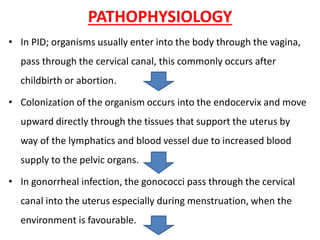
PATHOPHYSIOLOGY
• In PID; organisms usually enter into the body through the vagina,
pass through the cervical canal, this commonly occurs after
childbirth or abortion.
• Colonization of the organism occurs into the endocervix and move
upward directly through the tissues that support the uterus by
way of the lymphatics and blood vessel due to increased blood
supply to the pelvic organs.
• In gonorrheal infection, the gonococci pass through the cervical
canal into the uterus especially during menstruation, when the
environment is favourable.
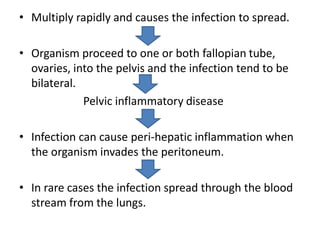
• Multiply rapidly and causes the infection to spread.
• Organism proceed to one or both fallopian tube,
ovaries, into the pelvis and the infection tend to be
bilateral.
Pelvic inflammatory disease
• Infection can cause peri-hepatic inflammation when
the organism invades the peritoneum.
• In rare cases the infection spread through the blood
stream from the lungs.
CLINICAL MANIFESTATION
• Vaginal discharge.
• Dyspareunia.
• Lower abdominal pelvic pain and tenderness that occurs after
menses.
• Pain usually increase during voiding or defecation.
• Others are –fever, general malaise, anorexia, nausea , headache,
possibly vomiting.
• On pelvic examination- intense tenderness may be noted on
palpation of the uterus or movement of the cervix (cervical motion
tenderness).
• Symptoms may be acute and severe or low grade and subtle.
DIAGNOSIS
• History taking.
• Physical examination of gynocological
importance (it reveals tenderness on
palpation and movement of cervix and
uterus).
• Blood culture.
• Sonography.
MANAGEMENT
• Patient’s with mild infection are treated in out
patient department but hospitalization may be
necessary in some cases.
• Bed rest.
• Intravenous fluids.
• Broad spectrum iv antibiotic such as Ceftriaxone
(Ceftin), Azithromycin or doxycycline are started.
• If patient has abdominal distension or ileus than
nasogastric intubation and suction are initiated.
• Treatment of sexual partner is also needed to
prevent infection.
• Careful monitoring of vital signs and symptoms
assists in evaluating the status of the infection.
NURSING MANAGEMENT
• Monitoring vital signs.
• Maintaining bed rest and fowler’s position during hospital stay.
• Note amount and characteristics of vaginal discharge.
• Administer analgesic agents as prescribed for pain relief.
• Heat applied safely to the abdomen may also provide some pain
relief and comfort.
• Minimizes the transmission of infection to others by carefully
handling perineal pads with gloves, discarding the soiled pad
according to hospital guidelines for disposal of bio hazardous
material and performing meticulous hand hygiene.
• Health education regarding safe sex and on personal hygiene.
Promoting home and community based care
Teaching patients self care:
 The patient must be informed of the need for precautions and must
be encouraged to take part in procedures to prevent infecting others
and protect herself from re-infection.
 advice patient to use the barrier techniques to prevent the infection
spreads.
 If re-infection occurs or if the infection spreads symptoms may
include abdominal pain, nausea, vomiting, fever, malaise, malodorous
purulent vaginal discharge and leukocytosis.
 Patient teaching consists of explaining how pelvic infections occur,
how they can be controlled and avoided, and their signs and
symptoms.
• All patients who have had PID need to be
informed of the signs and symptoms of
ectopic pregnancy (pain, abnormal bleeding,
delayed menses, faintness, dizziness and
shoulder pain) because they are prone to this
complication.
COMPLICATION
• Pelvic and generalized peritonitis.
• Abscess
• Strictures
• Fallopian tube obstruction
• Ectopic pregnancy.
• Sterility due to occlusion of the fallopian tube.
• Adhesion
• Chronic pelvic pain.
• Bacteraemia with septic shock
• Thrombophlebitis with possible embolization.

Pelvic inflammatory disease (PID)

  • 1.
  • 2.
    INTRODUCTION • Pelvic inflammatorydisease (PID) is an inflammatory condition of the pelvic cavity that may begin with cervicitis and may involve the uterus (endometritis), fallopian tubes (salpingitis), ovaries (oophoritis), pelvic peritoneum, or pelvic vascular system. • Infection which may be acute , sub acute, recurrent, or chronic and localized or widespread, is usually caused by— • Bacteria. • Virus. • fungus or parasites.
  • 3.
    Organism most commonlyassociated are- 1. GONORRHEAL. 2. CHLAMYDIAL. 3. MYCOPLASMA.
  • 4.
    INCIDENCE RATE • About1 million women are diagnosed with PID each year in U.S. • Most are younger than 25 years of age. • One fourth of them have serious sequelae e.g. infertility, ectopic pregnancy. • Rupture of tubo -ovarian abscess has a 5% to 10% mortality rate. • Many of them need a total hysterectomy.
  • 5.
    CAUSE • The exactcause is idiopathic. • It is presumed that organisms usually enter the body through the vagina, and move upward through the cervical canal, colonize the endocervix and move upward into uterus. • This all usually occurs after- I. Childbirth II. Abortion III. Surgical procedures. IV. Sexually transmitted. V. IUD insertion. VI. Endometrial biopsy.
  • 6.
    RISK FACTORS • Earlyage at first intercourse. • Multiple sexual partner’s. • Frequent intercourse. • Intercourse with a partner with an STD. • History of STD • History of previous pelvic infection.
  • 7.
    PATHOPHYSIOLOGY • In PID;organisms usually enter into the body through the vagina, pass through the cervical canal, this commonly occurs after childbirth or abortion. • Colonization of the organism occurs into the endocervix and move upward directly through the tissues that support the uterus by way of the lymphatics and blood vessel due to increased blood supply to the pelvic organs. • In gonorrheal infection, the gonococci pass through the cervical canal into the uterus especially during menstruation, when the environment is favourable.
  • 8.
    • Multiply rapidlyand causes the infection to spread. • Organism proceed to one or both fallopian tube, ovaries, into the pelvis and the infection tend to be bilateral. Pelvic inflammatory disease • Infection can cause peri-hepatic inflammation when the organism invades the peritoneum. • In rare cases the infection spread through the blood stream from the lungs.
  • 9.
    CLINICAL MANIFESTATION • Vaginaldischarge. • Dyspareunia. • Lower abdominal pelvic pain and tenderness that occurs after menses. • Pain usually increase during voiding or defecation. • Others are –fever, general malaise, anorexia, nausea , headache, possibly vomiting. • On pelvic examination- intense tenderness may be noted on palpation of the uterus or movement of the cervix (cervical motion tenderness). • Symptoms may be acute and severe or low grade and subtle.
  • 10.
    DIAGNOSIS • History taking. •Physical examination of gynocological importance (it reveals tenderness on palpation and movement of cervix and uterus). • Blood culture. • Sonography.
  • 11.
    MANAGEMENT • Patient’s withmild infection are treated in out patient department but hospitalization may be necessary in some cases. • Bed rest. • Intravenous fluids. • Broad spectrum iv antibiotic such as Ceftriaxone (Ceftin), Azithromycin or doxycycline are started.
  • 12.
    • If patienthas abdominal distension or ileus than nasogastric intubation and suction are initiated. • Treatment of sexual partner is also needed to prevent infection. • Careful monitoring of vital signs and symptoms assists in evaluating the status of the infection.
  • 13.
    NURSING MANAGEMENT • Monitoringvital signs. • Maintaining bed rest and fowler’s position during hospital stay. • Note amount and characteristics of vaginal discharge. • Administer analgesic agents as prescribed for pain relief. • Heat applied safely to the abdomen may also provide some pain relief and comfort. • Minimizes the transmission of infection to others by carefully handling perineal pads with gloves, discarding the soiled pad according to hospital guidelines for disposal of bio hazardous material and performing meticulous hand hygiene. • Health education regarding safe sex and on personal hygiene.
  • 14.
    Promoting home andcommunity based care Teaching patients self care:  The patient must be informed of the need for precautions and must be encouraged to take part in procedures to prevent infecting others and protect herself from re-infection.  advice patient to use the barrier techniques to prevent the infection spreads.  If re-infection occurs or if the infection spreads symptoms may include abdominal pain, nausea, vomiting, fever, malaise, malodorous purulent vaginal discharge and leukocytosis.  Patient teaching consists of explaining how pelvic infections occur, how they can be controlled and avoided, and their signs and symptoms.
  • 15.
    • All patientswho have had PID need to be informed of the signs and symptoms of ectopic pregnancy (pain, abnormal bleeding, delayed menses, faintness, dizziness and shoulder pain) because they are prone to this complication.
  • 16.
    COMPLICATION • Pelvic andgeneralized peritonitis. • Abscess • Strictures • Fallopian tube obstruction • Ectopic pregnancy. • Sterility due to occlusion of the fallopian tube. • Adhesion • Chronic pelvic pain. • Bacteraemia with septic shock • Thrombophlebitis with possible embolization.