Basic concept of pharmacovigilance,
Hemovigilance, Materiovigilance and AEFI
Submitted To :
Mrs. KANCHAN VOHRA
Assistant Professor
Submitted By :
Mohd. Rafi Bhat
PHARMACOVIGILANCE
WHO defines Pharmacovigilance (PV) as the science and
activities relating to the detection, assessment,
understanding and prevention of adverse effects or any
other drug-related problem.
WHO established its Programme for International Drug
Monitoring in response to the thalidomide disaster
detected in 1961.
Together with the WHO Collaborating Centre for
International Drug Monitoring, Uppsala, WHO promotes
PV at the country level. At the end of 2010, 134
countries were part of the WHO PV Programme.
Events such as the thalidomide tragedy highlight the extreme
importance of effective drug monitoring systems for all medicines.
The principal aims of pharmacovigilance programmes are:
• to improve patient care and safety in relation to the use of
medicines, and all medical and paramedical interventions;
• to improve public health and safety in relation to the use of
medicines;
• to contribute to the assessment of benefit, harm, effectiveness and
risk of medicines, encouraging their safe, rational and more
effective (including cost-effective) use;
• to promote understanding, education and clinical training in
pharmacovigilance and its effective communication to health
professionals and the public.
Aims of pharmacovigilance
MATERIOVIGILANCE
Materiovigilance means close monitoring of any
undesirable occurrence resulting from a medical
device by means of having a system in place which
comprises identifying, collecting, reporting, and
estimating undesirable occurrences and reacting to
them, or safety corrective actions after their post-
marketing phase.
objective: To protect the health and safety of patients,
users and others by reducing the reoccurrence of an
adverse incident.
HAEMOVIGIlANCE
 Haemovigilance is the set of surveillance procedures covering the
entire blood transfusion chain, from the donation and processing of
blood and its components, through to their provision and
transfusion to patients, and including their follow-up.
 It includes the monitoring, reporting, investigation and analysis of
adverse events related to the donation, processing and transfusion of
blood, and taking action to prevent their occurrence or recurrence.
The reporting systems play a fundamental role in enhancing patient
safety by learning from failures and then putting in place system
changes to prevent them in future.
 The Haemovigilance Programme of India (HvPI) was launched on
10th December, 2012 in the country.
 The haemovigilance system should involve all relevant
stakeholders and should be coordinated between the
blood transfusion service, hospital clinical staff and
transfusion laboratories, hospital transfusion
committees, the national regulatory agency and
national health authorities.
 The resulting modifications to transfusion policies,
standards and guidelines, as well as improvements to
processes in blood services and transfusion practices
in hospitals, lead to improved patient safety.
• Haemovigilance is a continuous process of data collection and
analysis of Transfusion-related Adverse Reactions in order to
investigate their causes and outcomes and prevent their
occurrence or recurrence.
• Indian Pharmacopoeia Commission in collaboration with National
Institute of Biologicals has launched a Haemovigilance
Programme of India (HvPI) across the country under its
Pharmacovigilance Programme of India (PvPI) with following
Terms of References:
• To track Adverse Reactions/ Events and incidence associated
with Blood Transfusion and Blood Product Administration
(Haemovigilance).
• To help identify trends, recommend best practices and
interventions required to improve patient care and safety, while
reducing overall cost of the healthcare system.
Haemovigilance Programme was launched on 10th Dec
2012 in already enrolled 90 Medical Colleges under PvPI
as an integral part of Pharmacovigilance Programme of
India. NIB is the Coordinating Centre for HvPI to collate
& analyze data with respect to Adverse Reactions/
Events associated with Blood Transfusion and Blood
Product Administration.
Haemovigilance is an essential component of quality
management in a blood system and is needed for the
continual enhancement of quality and safety of blood
products and transfusion process by monitoring and
safeguarding the adverse events associated with the use
of blood products.
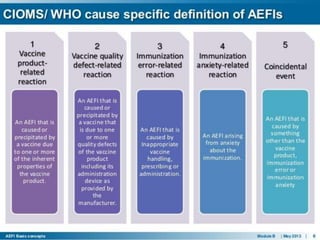
AEFI : Adverse events following immunization
A medical incident that takes place after an
immunization, causes concern, and is believed to be
caused by immunization
AEFI surveillance: monitoring, detecting and
responding to adverse events following immunization
(AEFI); Implementing appropriate and immediate
action to correct any unsafe practices detected
through the AEFI surveillance system, in order to
lessen the negative impact on the health of individuals
and the reputation of the immunization programme.
Thank You

Pharmacovigilance

  • 1.
    Basic concept ofpharmacovigilance, Hemovigilance, Materiovigilance and AEFI Submitted To : Mrs. KANCHAN VOHRA Assistant Professor Submitted By : Mohd. Rafi Bhat
  • 2.
    PHARMACOVIGILANCE WHO defines Pharmacovigilance(PV) as the science and activities relating to the detection, assessment, understanding and prevention of adverse effects or any other drug-related problem. WHO established its Programme for International Drug Monitoring in response to the thalidomide disaster detected in 1961. Together with the WHO Collaborating Centre for International Drug Monitoring, Uppsala, WHO promotes PV at the country level. At the end of 2010, 134 countries were part of the WHO PV Programme.
  • 3.
    Events such asthe thalidomide tragedy highlight the extreme importance of effective drug monitoring systems for all medicines. The principal aims of pharmacovigilance programmes are: • to improve patient care and safety in relation to the use of medicines, and all medical and paramedical interventions; • to improve public health and safety in relation to the use of medicines; • to contribute to the assessment of benefit, harm, effectiveness and risk of medicines, encouraging their safe, rational and more effective (including cost-effective) use; • to promote understanding, education and clinical training in pharmacovigilance and its effective communication to health professionals and the public. Aims of pharmacovigilance
  • 16.
    MATERIOVIGILANCE Materiovigilance means closemonitoring of any undesirable occurrence resulting from a medical device by means of having a system in place which comprises identifying, collecting, reporting, and estimating undesirable occurrences and reacting to them, or safety corrective actions after their post- marketing phase. objective: To protect the health and safety of patients, users and others by reducing the reoccurrence of an adverse incident.
  • 24.
    HAEMOVIGIlANCE  Haemovigilance isthe set of surveillance procedures covering the entire blood transfusion chain, from the donation and processing of blood and its components, through to their provision and transfusion to patients, and including their follow-up.  It includes the monitoring, reporting, investigation and analysis of adverse events related to the donation, processing and transfusion of blood, and taking action to prevent their occurrence or recurrence. The reporting systems play a fundamental role in enhancing patient safety by learning from failures and then putting in place system changes to prevent them in future.  The Haemovigilance Programme of India (HvPI) was launched on 10th December, 2012 in the country.
  • 25.
     The haemovigilancesystem should involve all relevant stakeholders and should be coordinated between the blood transfusion service, hospital clinical staff and transfusion laboratories, hospital transfusion committees, the national regulatory agency and national health authorities.  The resulting modifications to transfusion policies, standards and guidelines, as well as improvements to processes in blood services and transfusion practices in hospitals, lead to improved patient safety.
  • 26.
    • Haemovigilance isa continuous process of data collection and analysis of Transfusion-related Adverse Reactions in order to investigate their causes and outcomes and prevent their occurrence or recurrence. • Indian Pharmacopoeia Commission in collaboration with National Institute of Biologicals has launched a Haemovigilance Programme of India (HvPI) across the country under its Pharmacovigilance Programme of India (PvPI) with following Terms of References: • To track Adverse Reactions/ Events and incidence associated with Blood Transfusion and Blood Product Administration (Haemovigilance). • To help identify trends, recommend best practices and interventions required to improve patient care and safety, while reducing overall cost of the healthcare system.
  • 27.
    Haemovigilance Programme waslaunched on 10th Dec 2012 in already enrolled 90 Medical Colleges under PvPI as an integral part of Pharmacovigilance Programme of India. NIB is the Coordinating Centre for HvPI to collate & analyze data with respect to Adverse Reactions/ Events associated with Blood Transfusion and Blood Product Administration. Haemovigilance is an essential component of quality management in a blood system and is needed for the continual enhancement of quality and safety of blood products and transfusion process by monitoring and safeguarding the adverse events associated with the use of blood products.
  • 28.
    AEFI : Adverseevents following immunization A medical incident that takes place after an immunization, causes concern, and is believed to be caused by immunization AEFI surveillance: monitoring, detecting and responding to adverse events following immunization (AEFI); Implementing appropriate and immediate action to correct any unsafe practices detected through the AEFI surveillance system, in order to lessen the negative impact on the health of individuals and the reputation of the immunization programme.
  • 34.