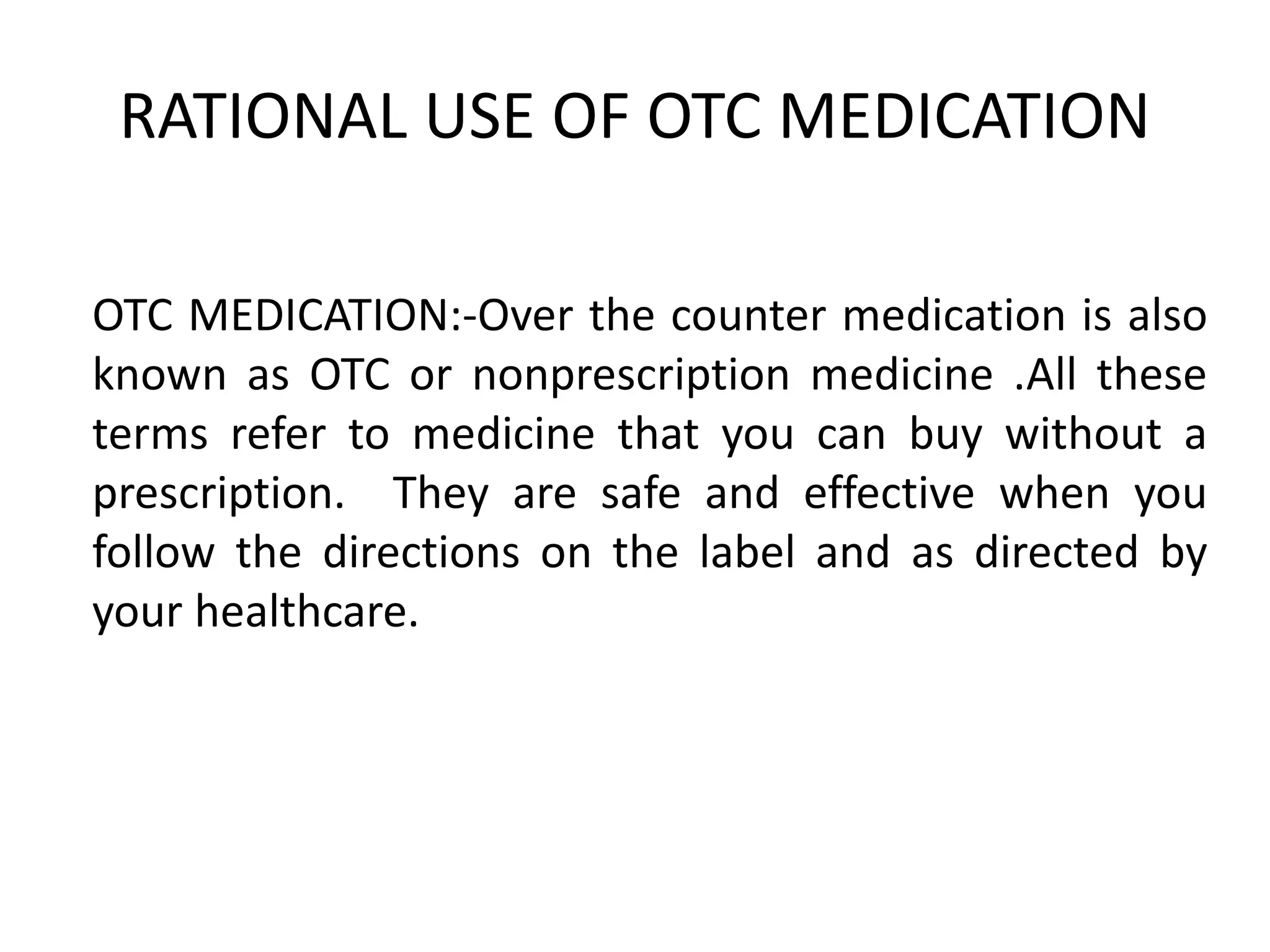
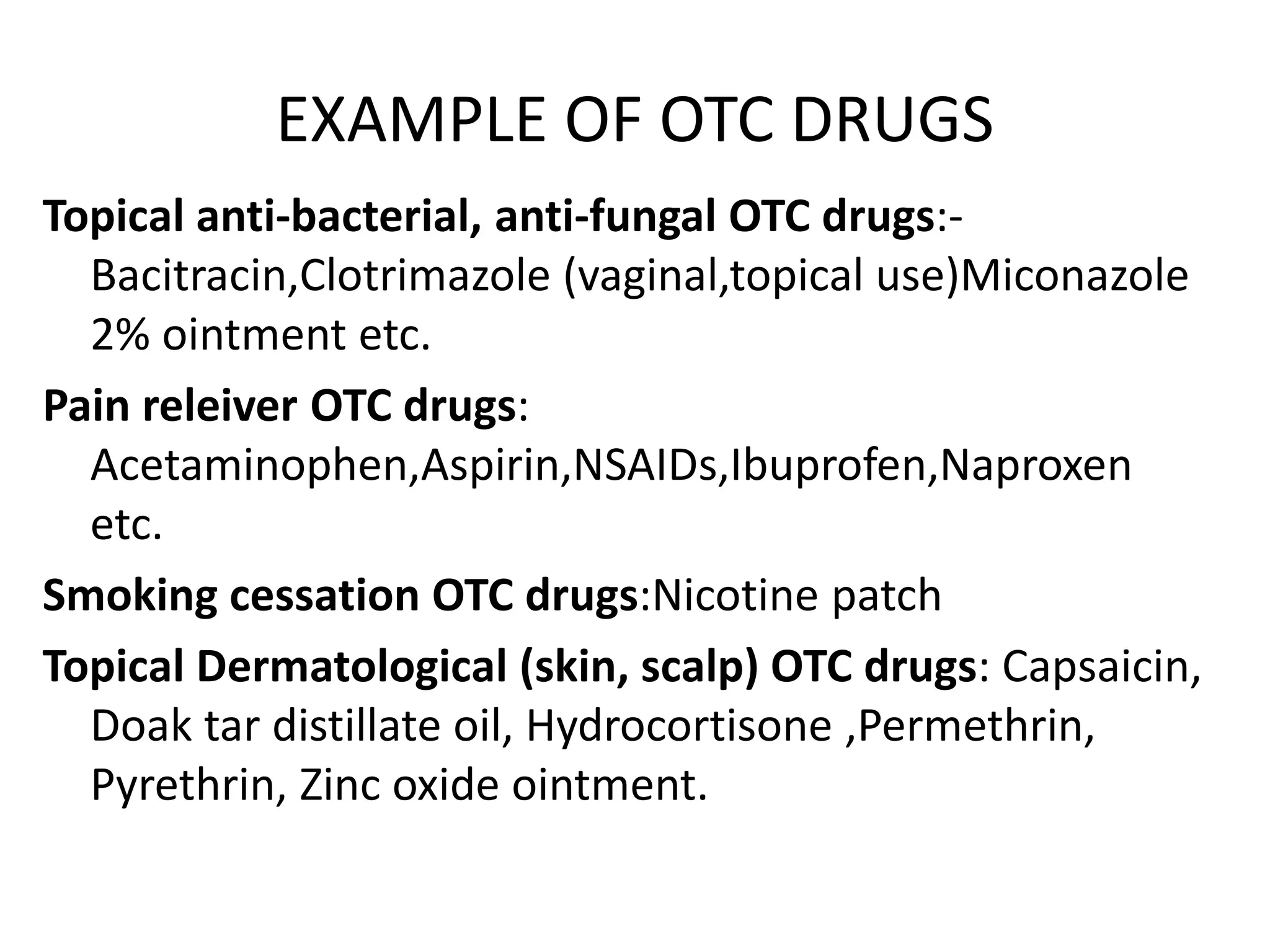
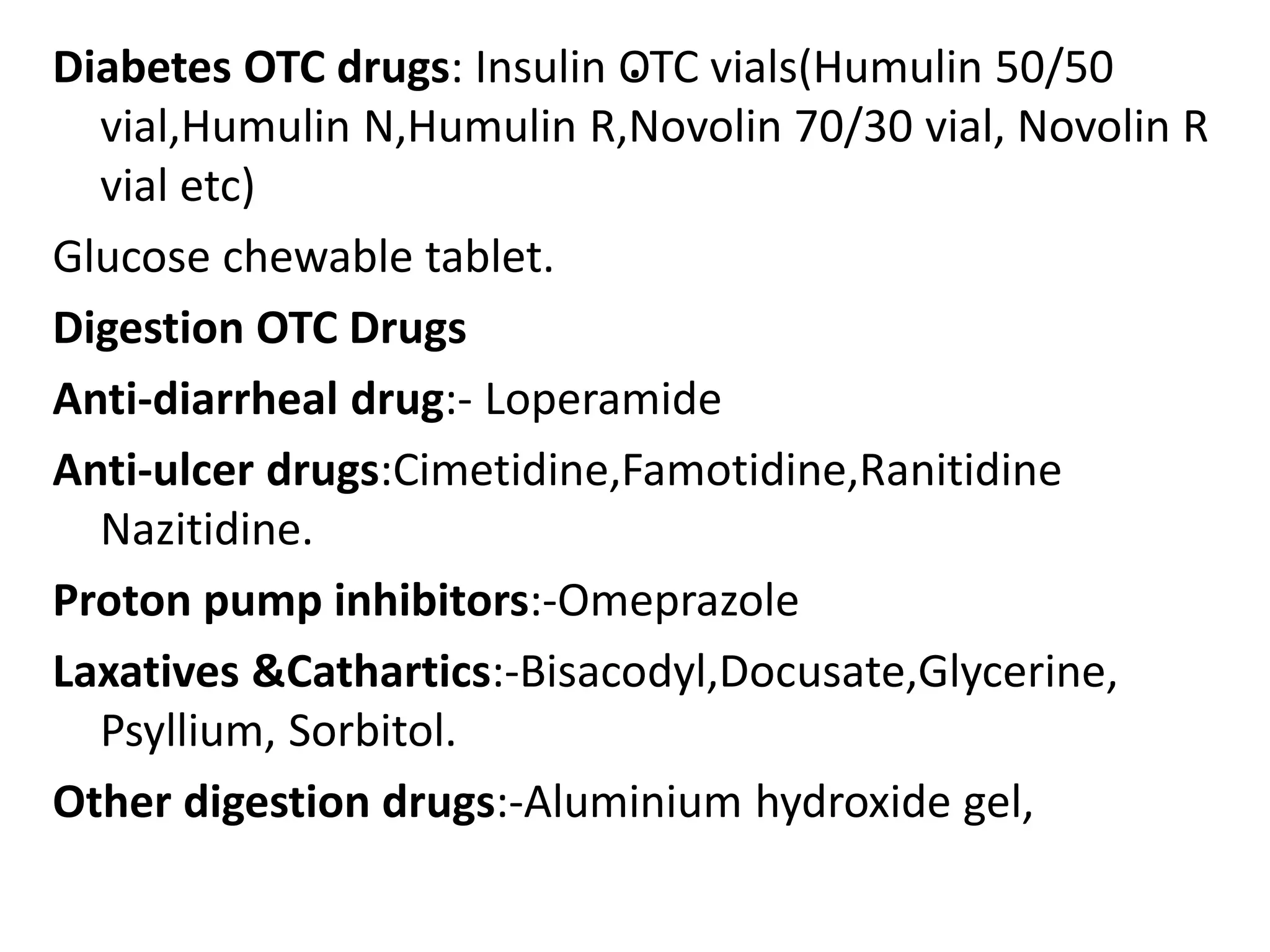
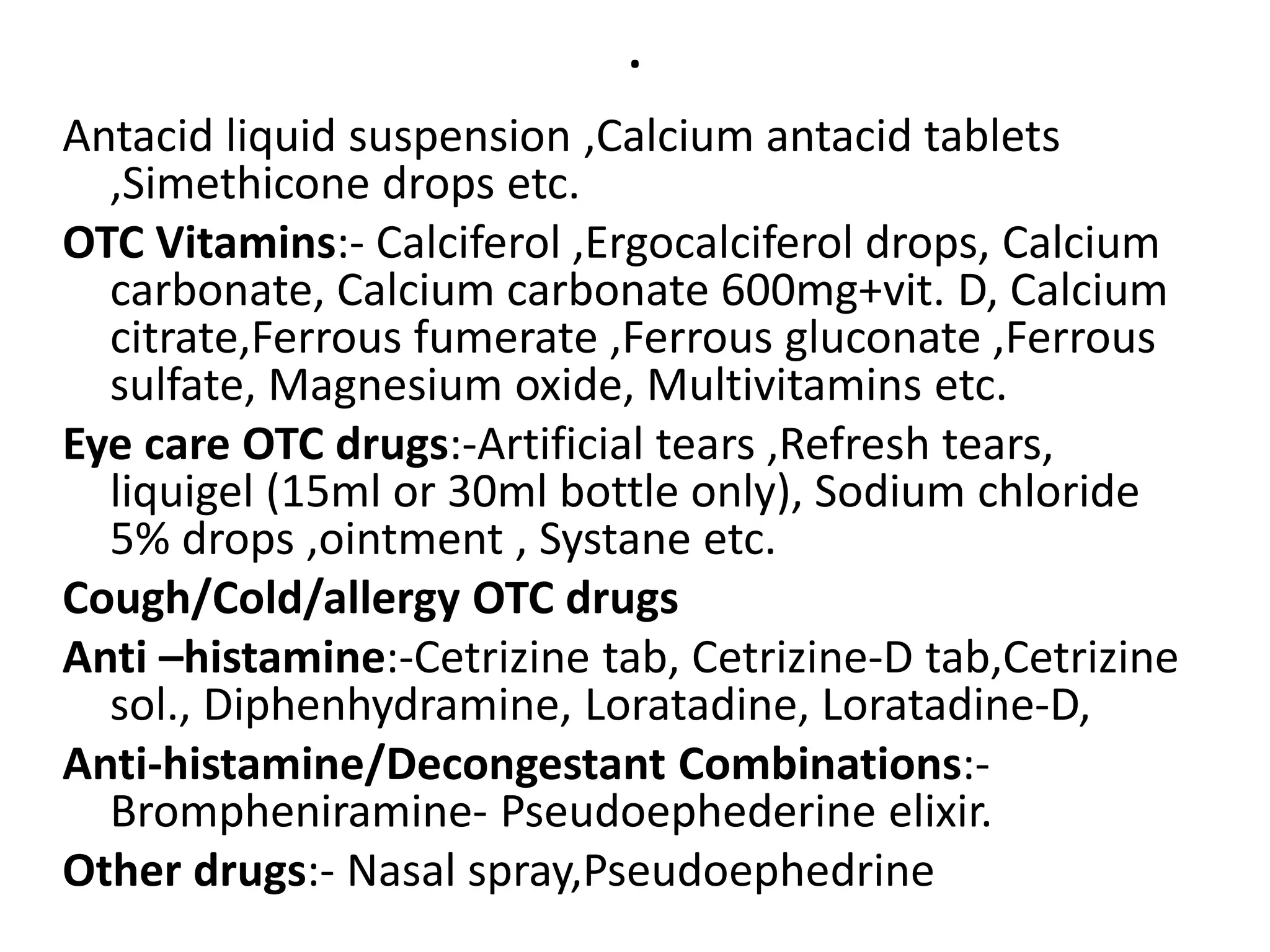
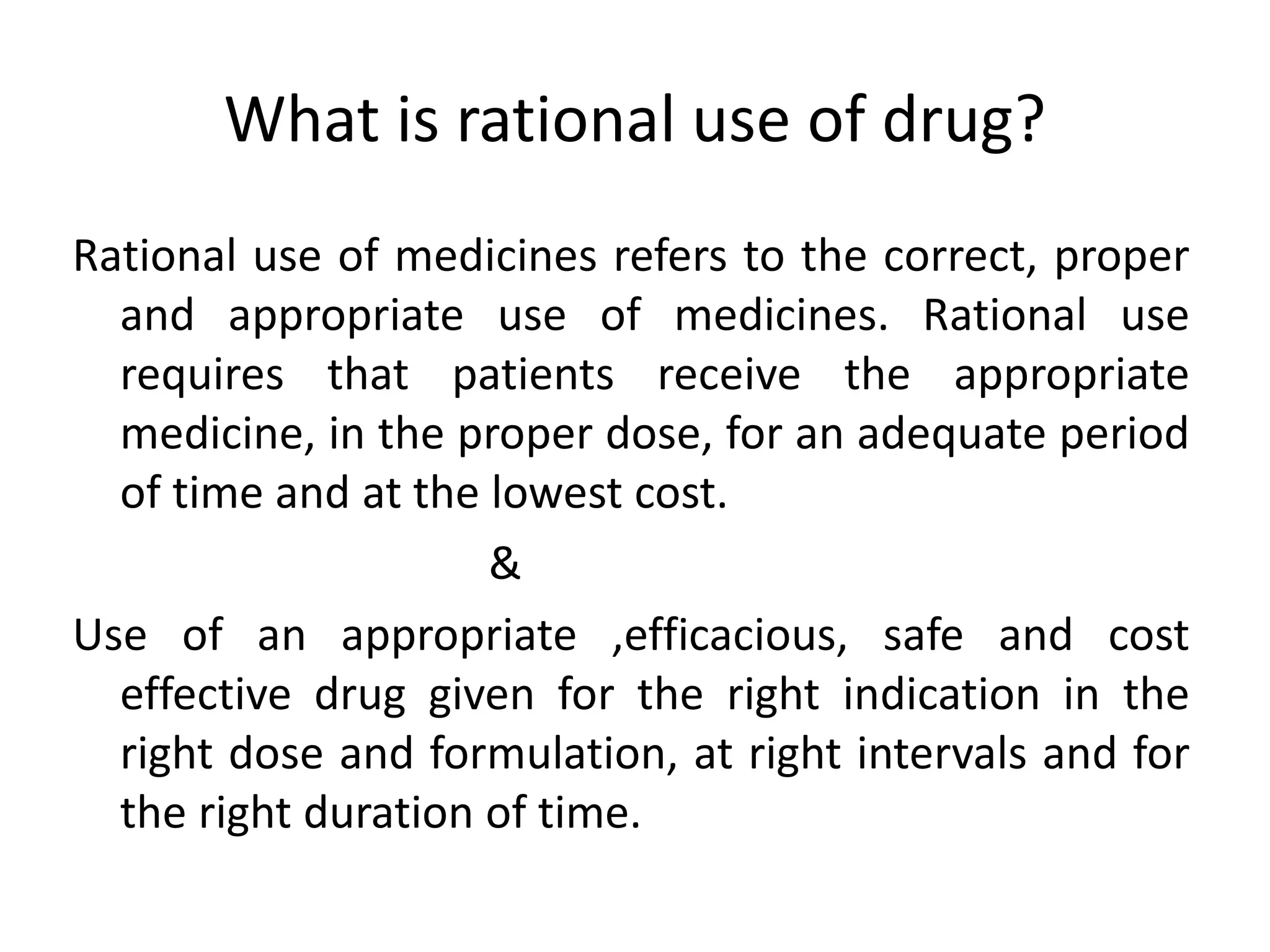
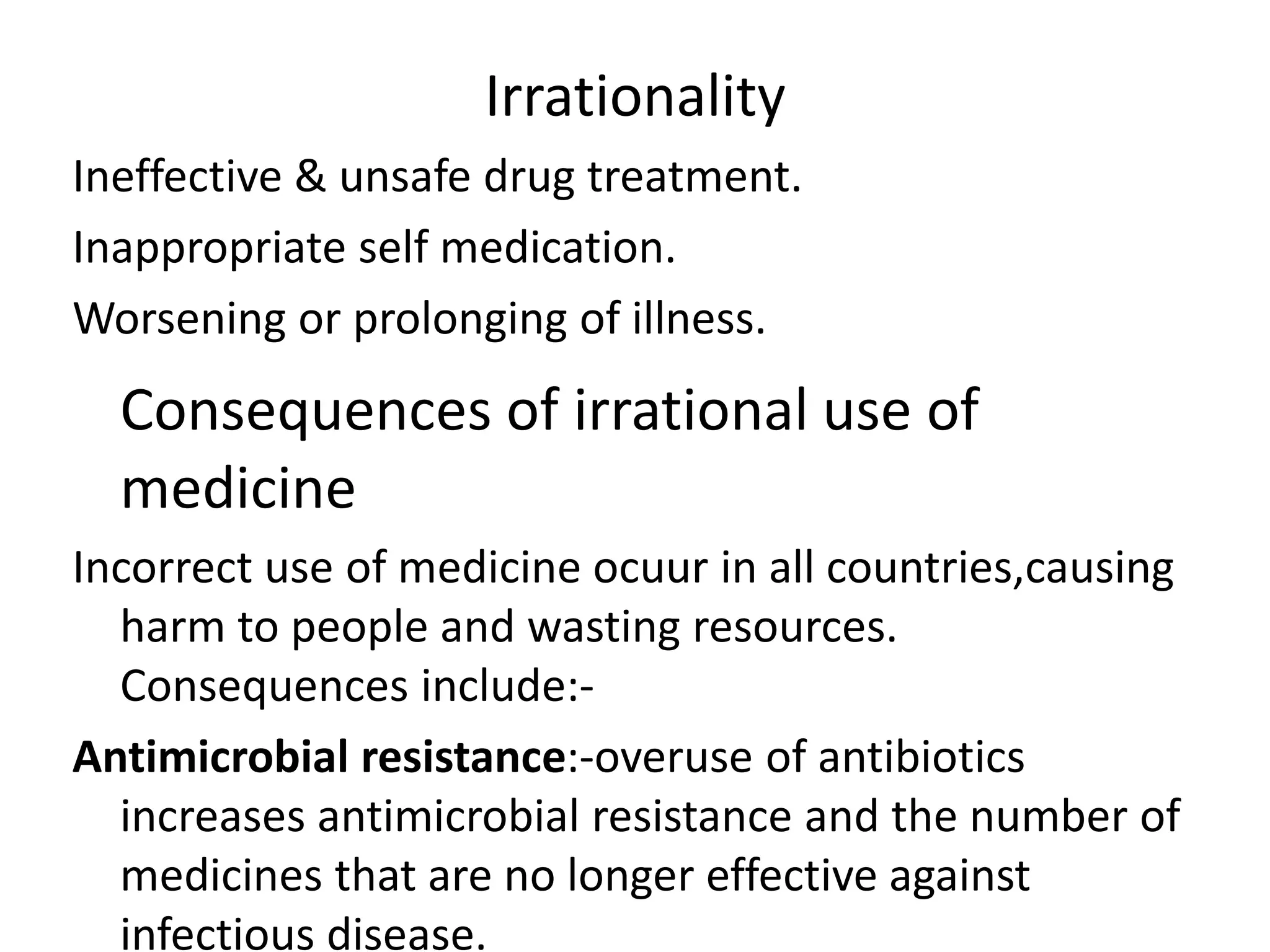
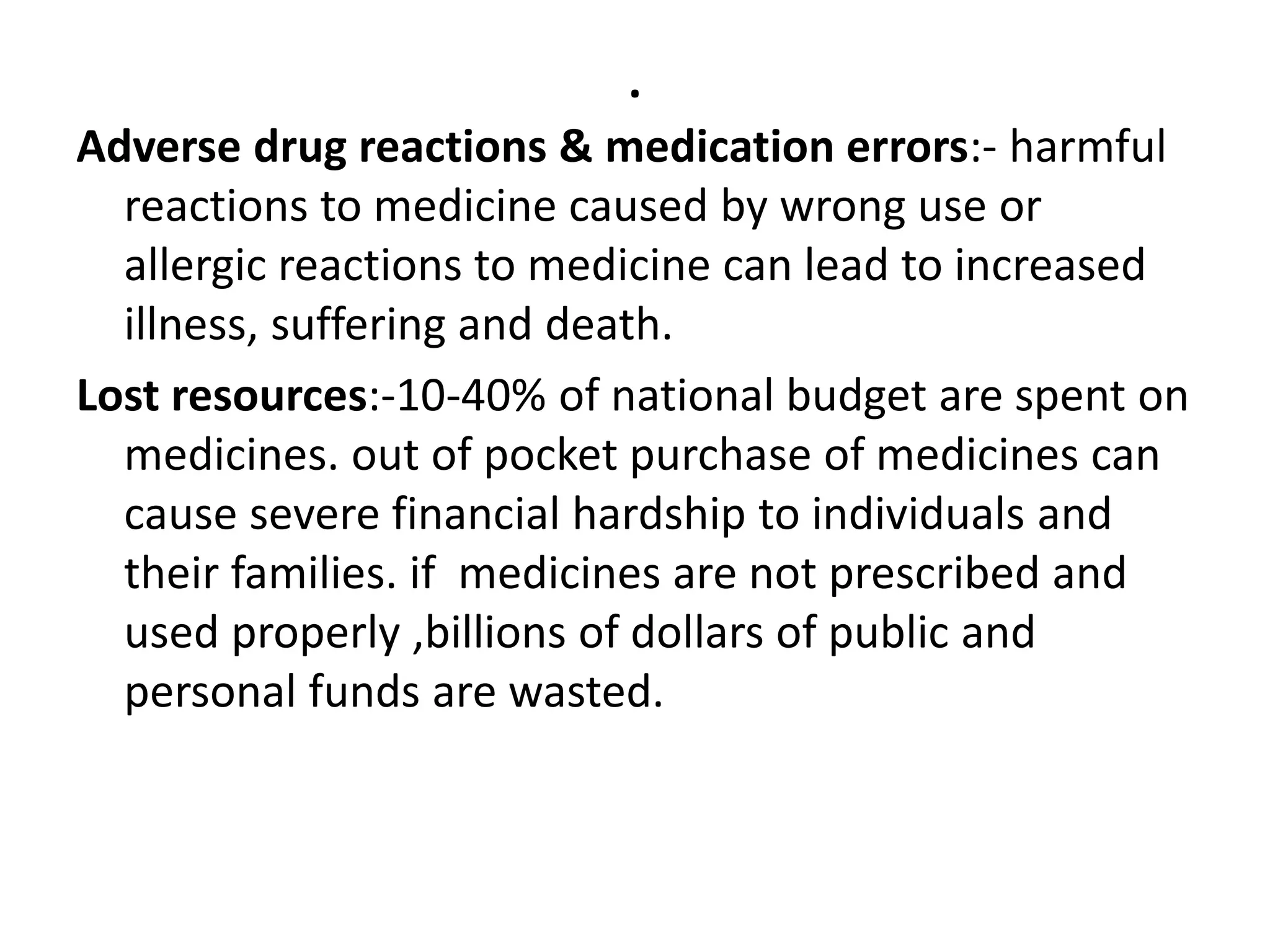
This document discusses rational use of over-the-counter (OTC) medications. It provides examples of common OTC drug categories and explains that rational use means using the appropriate medication, in the proper dose, for the right duration and indication. Irrational or improper use can lead to antimicrobial resistance, adverse reactions, financial costs, and erosion of patient confidence in the healthcare system. Factors contributing to irrational use include lack of knowledge and unethical drug promotion. Improving rational use requires guidelines, education, availability of essential medicines, and eliminating financial incentives for improper prescribing. Several examples of irrational fixed-dose drug combinations are also provided that combine drugs with different mechanisms or indications.



![Rational Use Anti-infectives CPC rational [Autosaved]_123252.pptx](https://cdn.slidesharecdn.com/ss_thumbnails/rationaluseanti-infectivescpcrationalautosaved123252-240628021551-a1872eeb-thumbnail.jpg?width=640&height=640&fit=bounds)


