ADVERSE DRUG REACTIONS (ADRs)
&
ITS MONITORING
Submitted To :
Dr. KANCHAN VOHRA
Assistant Professor
Submitted By :
Mohd. Rafi Bhat
Any response to a drug which is noxious and unintended,
and which occurs at doses normally used in man for
prophylaxis, diagnosis, or therapy of disease, or for the
modification of physiological function
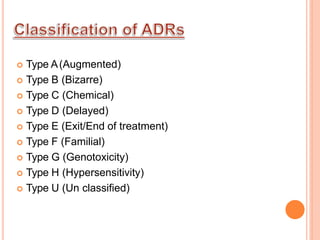
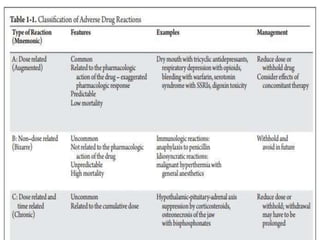
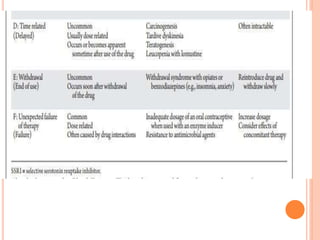
 Type A(Augmented)
 Type B (Bizarre)
 Type C (Chemical)
 Type D (Delayed)
 Type E (Exit/End of treatment)
 Type F (Familial)
 Type G (Genotoxicity)
 Type H (Hypersensitivity)
 Type U (Un classified)
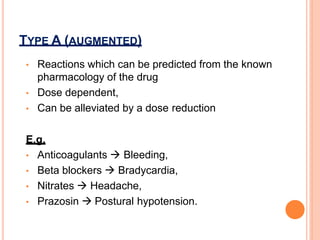
• Reactions which can be predicted from the known
pharmacology of the drug
• Dose dependent,
• Can be alleviated by a dose reduction
E.g.
• Anticoagulants  Bleeding,
• Beta blockers  Bradycardia,
• Nitrates  Headache,
• Prazosin  Postural hypotension.
TYPE A (AUGMENTED)
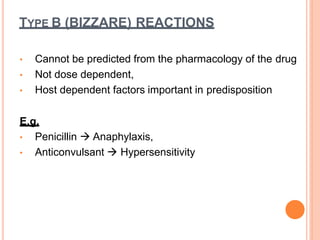
• Cannot be predicted from the pharmacology of the drug
• Not dose dependent,
• Host dependent factors important in predisposition
E.g.
• Penicillin  Anaphylaxis,
• Anticonvulsant  Hypersensitivity
TYPE B (BIZZARE) REACTIONS
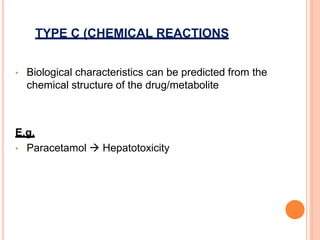
• Biological characteristics can be predicted from the
chemical structure of the drug/metabolite
E.g.
• Paracetamol  Hepatotoxicity
TYPE C (CHEMICAL REACTIONS
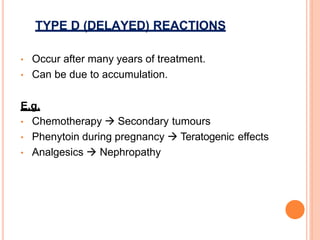
• Occur after many years of treatment.
• Can be due to accumulation.
E.g.
• Chemotherapy  Secondary tumours
• Phenytoin during pregnancy  Teratogenic effects
• Analgesics  Nephropathy
TYPE D (DELAYED) REACTIONS
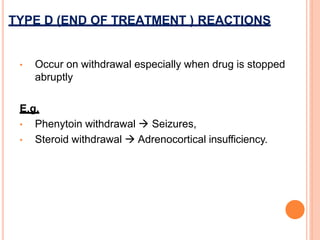
• Occur on withdrawal especially when drug is stopped
abruptly
E.g.
• Phenytoin withdrawal  Seizures,
• Steroid withdrawal  Adrenocortical insufficiency.
TYPE D (END OF TREATMENT ) REACTIONS
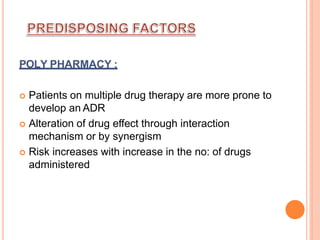
POLY PHARMACY :
 Patients on multiple drug therapy are more prone to
develop an ADR
 Alteration of drug effect through interaction
mechanism or by synergism
 Risk increases with increase in the no: of drugs
administered
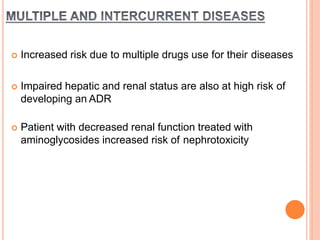
 Increased risk due to multiple drugs use for their diseases
 Impaired hepatic and renal status are also at high risk of
developing an ADR
 Patient with decreased renal function treated with
aminoglycosides increased risk of nephrotoxicity
AGE
 Elderly and pediatric patients are more vulnerable to
ADRs
 In elderly patients physiological changes
 Eg: nitrate or ACE inhibitor induce postural
hypotension
 In neonates drug handling capacity differ compared
to adults
 Eg: grey baby syndrome with chloramphenicol
DRUG CHARACTERISTICS:
 Some drugs are highly toxic in nature
 Eg: cytotoxic drugs result in nausea and
vomiting
 Narrow therapeutic range drugs like digoxin
and gentamicin slight increase in concentration
may result in toxicity
GENDER
 Womens are more susceptible to ADRs than
males, reasons are physiological,
pharmacokinetic, pharmacodynamic and
hormonal.
 Eg: chloramphenicol induced aplastic
anaemia and phenylbutazone induced
agranulocytosis are twice and thrice as
common in women as in man,respectivley
RACE AND GENETIC FACTORS
 ADRs are more common in genetically predispose
individuals
 Eg : G6PD deficient patient high risk of devoleping
heamolysis due to primaquine
DETECTION OF ADRS
1. pre- marketing studies
2. Post –marketing surveillance
3. Under reporting
4. Communicating ADRs
 Identifying adverse drug reaction
(ADR).
 Assessing causality between drug and
suspected reaction by using various
algorithms.
 Documentation of ADR in patient’s medical
records.
 Reporting serious ADRs to pharmacovigilance
centers /ADR regulating authorities
 During the development of new medicines, their
safety is tested in animal models.
 Specific animal studies for carcinogenicity,
teratogenicity and mutagenicity are also
available.
 Clinical trials are carried out in 3 different
phases prior to the submission of a marketing
authorization application.
 Clinical trials normally identifies ADRs of
frequency greater that .5-1.0%
 Pharmavigilance methodologies are used for detection of
risk and for the collection of risk information
 Powerful and cost effective system for the
identification of unknown drug-related risk is
spontaneous adverse drug reactions reporting
 Health care practitioner should see it as a part of
professional duty report ADR result in a patient under
his care.
 Concerned identifying product defect, intoxicants and
abuse and unexpected lack of therapeutic effect.
The health care professionals should be
very vigilant in detectingADRs.
ADR may be detected during ward
rounds with medical team.
ADRs detected during review of patient
chart , patient counseling, medication
history review, communicating with other
health professionals.
 To assist ADR health care professionals
should closely monitor patients who are at
high risk include:
1. Patients with renal or hepatic impairment
2. Patients taking drugs which have potential to
cause ADR . Eg: DIGITOXIN
3. Patient who have had previous allergic
reactions
4. Patient taking multiple drugs
5. Pregnant and breast feeding women
 First step in the detection of ADRs is collection of
data.
 Data collected includes ,
1. patients demographic information
2. Presenting complaints
3. Past medication history
4. Drug therapy details including over the
counter, current medications , medication on
admission
5. Lab data such as hematological, liver and
renal function test.
 The information can be obtained from the following
sources:
1. Patient’s case note and treatment chart
2. Patient interview
3. Laboratory data sources
4. Communication with healthcare professionals
REFERENCE
Text book of clinical pharmacy practice – G
Parthasarathy . Page no: 105-118
Ad rs ppt

Ad rs ppt

  • 1.
    ADVERSE DRUG REACTIONS(ADRs) & ITS MONITORING Submitted To : Dr. KANCHAN VOHRA Assistant Professor Submitted By : Mohd. Rafi Bhat
  • 2.
    Any response toa drug which is noxious and unintended, and which occurs at doses normally used in man for prophylaxis, diagnosis, or therapy of disease, or for the modification of physiological function
  • 3.
     Type A(Augmented) Type B (Bizarre)  Type C (Chemical)  Type D (Delayed)  Type E (Exit/End of treatment)  Type F (Familial)  Type G (Genotoxicity)  Type H (Hypersensitivity)  Type U (Un classified)
  • 4.
    • Reactions whichcan be predicted from the known pharmacology of the drug • Dose dependent, • Can be alleviated by a dose reduction E.g. • Anticoagulants  Bleeding, • Beta blockers  Bradycardia, • Nitrates  Headache, • Prazosin  Postural hypotension. TYPE A (AUGMENTED)
  • 5.
    • Cannot bepredicted from the pharmacology of the drug • Not dose dependent, • Host dependent factors important in predisposition E.g. • Penicillin  Anaphylaxis, • Anticonvulsant  Hypersensitivity TYPE B (BIZZARE) REACTIONS
  • 6.
    • Biological characteristicscan be predicted from the chemical structure of the drug/metabolite E.g. • Paracetamol  Hepatotoxicity TYPE C (CHEMICAL REACTIONS
  • 7.
    • Occur aftermany years of treatment. • Can be due to accumulation. E.g. • Chemotherapy  Secondary tumours • Phenytoin during pregnancy  Teratogenic effects • Analgesics  Nephropathy TYPE D (DELAYED) REACTIONS
  • 8.
    • Occur onwithdrawal especially when drug is stopped abruptly E.g. • Phenytoin withdrawal  Seizures, • Steroid withdrawal  Adrenocortical insufficiency. TYPE D (END OF TREATMENT ) REACTIONS
  • 11.
    POLY PHARMACY : Patients on multiple drug therapy are more prone to develop an ADR  Alteration of drug effect through interaction mechanism or by synergism  Risk increases with increase in the no: of drugs administered
  • 12.
     Increased riskdue to multiple drugs use for their diseases  Impaired hepatic and renal status are also at high risk of developing an ADR  Patient with decreased renal function treated with aminoglycosides increased risk of nephrotoxicity
  • 13.
    AGE  Elderly andpediatric patients are more vulnerable to ADRs  In elderly patients physiological changes  Eg: nitrate or ACE inhibitor induce postural hypotension  In neonates drug handling capacity differ compared to adults  Eg: grey baby syndrome with chloramphenicol
  • 14.
    DRUG CHARACTERISTICS:  Somedrugs are highly toxic in nature  Eg: cytotoxic drugs result in nausea and vomiting  Narrow therapeutic range drugs like digoxin and gentamicin slight increase in concentration may result in toxicity
  • 15.
    GENDER  Womens aremore susceptible to ADRs than males, reasons are physiological, pharmacokinetic, pharmacodynamic and hormonal.  Eg: chloramphenicol induced aplastic anaemia and phenylbutazone induced agranulocytosis are twice and thrice as common in women as in man,respectivley
  • 16.
    RACE AND GENETICFACTORS  ADRs are more common in genetically predispose individuals  Eg : G6PD deficient patient high risk of devoleping heamolysis due to primaquine
  • 17.
    DETECTION OF ADRS 1.pre- marketing studies 2. Post –marketing surveillance 3. Under reporting 4. Communicating ADRs
  • 18.
     Identifying adversedrug reaction (ADR).  Assessing causality between drug and suspected reaction by using various algorithms.  Documentation of ADR in patient’s medical records.  Reporting serious ADRs to pharmacovigilance centers /ADR regulating authorities
  • 19.
     During thedevelopment of new medicines, their safety is tested in animal models.  Specific animal studies for carcinogenicity, teratogenicity and mutagenicity are also available.  Clinical trials are carried out in 3 different phases prior to the submission of a marketing authorization application.  Clinical trials normally identifies ADRs of frequency greater that .5-1.0%
  • 20.
     Pharmavigilance methodologiesare used for detection of risk and for the collection of risk information  Powerful and cost effective system for the identification of unknown drug-related risk is spontaneous adverse drug reactions reporting  Health care practitioner should see it as a part of professional duty report ADR result in a patient under his care.  Concerned identifying product defect, intoxicants and abuse and unexpected lack of therapeutic effect.
  • 21.
    The health careprofessionals should be very vigilant in detectingADRs. ADR may be detected during ward rounds with medical team. ADRs detected during review of patient chart , patient counseling, medication history review, communicating with other health professionals.
  • 22.
     To assistADR health care professionals should closely monitor patients who are at high risk include: 1. Patients with renal or hepatic impairment 2. Patients taking drugs which have potential to cause ADR . Eg: DIGITOXIN 3. Patient who have had previous allergic reactions 4. Patient taking multiple drugs 5. Pregnant and breast feeding women
  • 23.
     First stepin the detection of ADRs is collection of data.  Data collected includes , 1. patients demographic information 2. Presenting complaints 3. Past medication history 4. Drug therapy details including over the counter, current medications , medication on admission 5. Lab data such as hematological, liver and renal function test.
  • 24.
     The informationcan be obtained from the following sources: 1. Patient’s case note and treatment chart 2. Patient interview 3. Laboratory data sources 4. Communication with healthcare professionals
  • 26.
    REFERENCE Text book ofclinical pharmacy practice – G Parthasarathy . Page no: 105-118