Bacteriphage, Define lysogeny, lytic cell, lysogenic
cycle, prophage,induction and transduction.
Md. Aminul Islam
Department of Pharmacy
World University of Bangladesh
D’Herelle first gave the name bacteriophase to an agent
, which could produce lysis of the dysentery bacillus
shigella shiga. They are much easier to handle in the
laboratory and have rapid multiplication cycles and
hence used extensively as the experimental models for
elucidating the biochemical mechanisms of viral
replication. The work on phage-bacterium systems is
responsible for the discovery of messenger RNA, the
understanding of the genetic code and the way in which
genes are controlled have come from.
Usually phages exhibit a marked specificity in selecting
host cells, attacking only organisms belonging to a
single species. For example, a staphylococcus
epidermidis cells. Mostly phages are strain-specific.
The biological process in which a bacterium is infected
by a bacteriophage that integrates its DNA into that of
the host such that the host is not destroyed.
A phase of the virus life cycle during which the virus
replicates within the host cell, releasing a new
generation of viruses when the infected cell lyses.
Once inside the host cell, some viruses, such as herpes
and HIV, do not reproduce right away. Instead, they
mix their genetic instructions into the host cell's genetic
instructions. When the host cell reproduces, the viral
genetic instructions get copied into the host cell's
offspring.
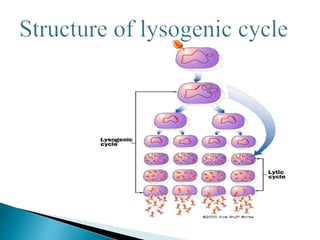
The host cells may undergo many rounds of
reproduction, and then some environmental or
predetermined genetic signal will stir the "sleeping"
viral instructions. The viral genetic instructions will
then take over the host's machinery and make new
viruses as described above. This cycle, called
the lysogenic cycle, is shown in the accompanying
figure.
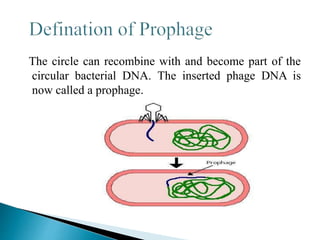
The circle can recombine with and become part of the
circular bacterial DNA. The inserted phage DNA is
now called a prophage.
A rare spontaneous event, or the action of UV light or
certain chemicals, can lead to the excision of the phage
DNA, and to initiation of the lytic cycle. This is known
as induction.
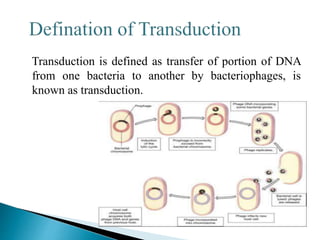
Transduction is defined as transfer of portion of DNA
from one bacteria to another by bacteriophages, is
known as transduction.
THANK YOU….That,s all.

Pharmaceutical microbiology

  • 1.
    Bacteriphage, Define lysogeny,lytic cell, lysogenic cycle, prophage,induction and transduction. Md. Aminul Islam Department of Pharmacy World University of Bangladesh
  • 2.
    D’Herelle first gavethe name bacteriophase to an agent , which could produce lysis of the dysentery bacillus shigella shiga. They are much easier to handle in the laboratory and have rapid multiplication cycles and hence used extensively as the experimental models for elucidating the biochemical mechanisms of viral replication. The work on phage-bacterium systems is responsible for the discovery of messenger RNA, the understanding of the genetic code and the way in which genes are controlled have come from.
  • 3.
    Usually phages exhibita marked specificity in selecting host cells, attacking only organisms belonging to a single species. For example, a staphylococcus epidermidis cells. Mostly phages are strain-specific.
  • 5.
    The biological processin which a bacterium is infected by a bacteriophage that integrates its DNA into that of the host such that the host is not destroyed.
  • 6.
    A phase ofthe virus life cycle during which the virus replicates within the host cell, releasing a new generation of viruses when the infected cell lyses.
  • 7.
    Once inside thehost cell, some viruses, such as herpes and HIV, do not reproduce right away. Instead, they mix their genetic instructions into the host cell's genetic instructions. When the host cell reproduces, the viral genetic instructions get copied into the host cell's offspring.
  • 8.
    The host cellsmay undergo many rounds of reproduction, and then some environmental or predetermined genetic signal will stir the "sleeping" viral instructions. The viral genetic instructions will then take over the host's machinery and make new viruses as described above. This cycle, called the lysogenic cycle, is shown in the accompanying figure.
  • 10.
    The circle canrecombine with and become part of the circular bacterial DNA. The inserted phage DNA is now called a prophage.
  • 11.
    A rare spontaneousevent, or the action of UV light or certain chemicals, can lead to the excision of the phage DNA, and to initiation of the lytic cycle. This is known as induction.
  • 12.
    Transduction is definedas transfer of portion of DNA from one bacteria to another by bacteriophages, is known as transduction.
  • 13.