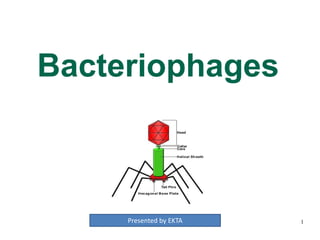
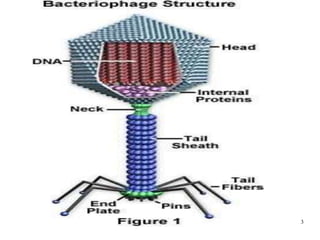
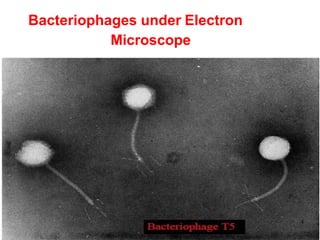
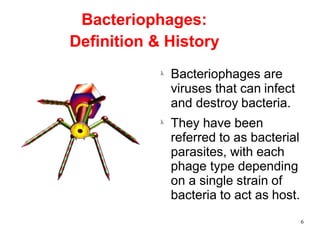
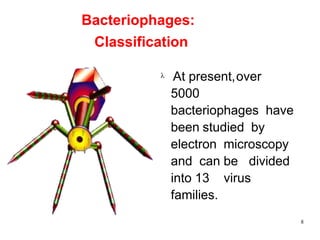
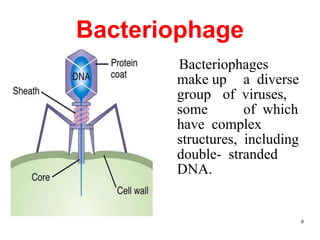
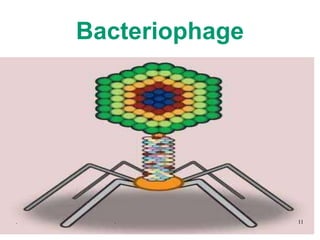
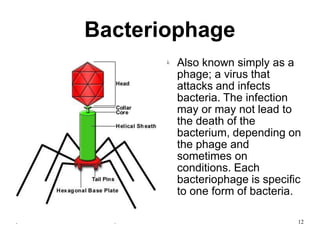
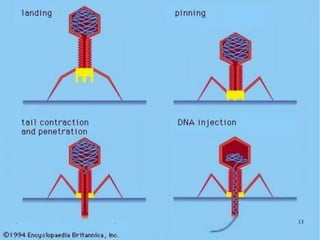
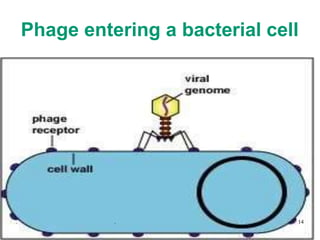
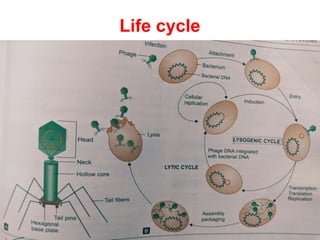
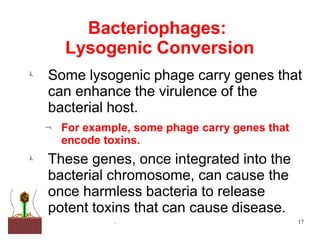
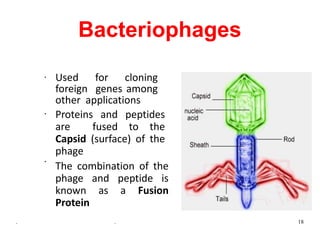
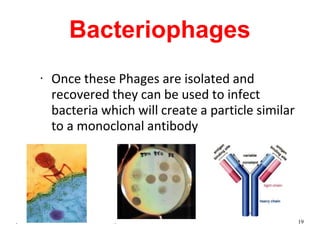
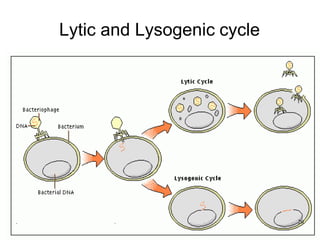
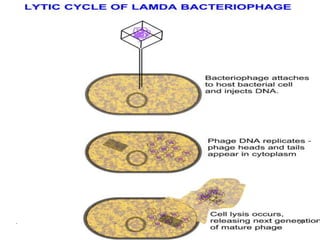
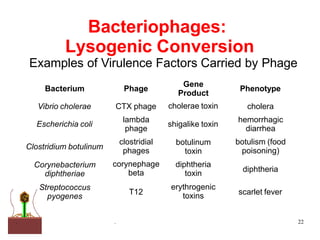
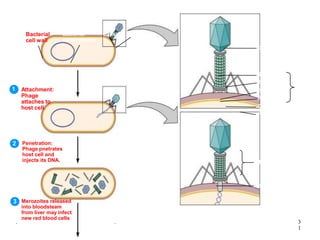
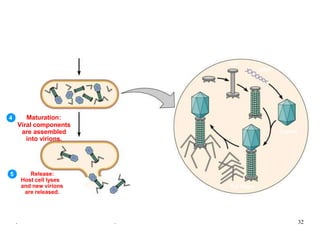
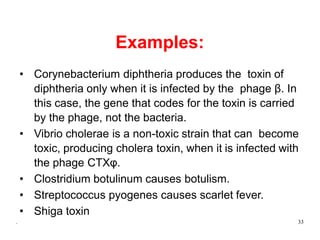
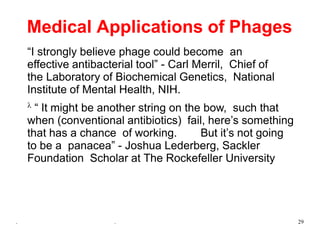
Bacteriophages are viruses that infect and replicate inside bacteria. They were first observed in 1917 by Twort and d'Herelle who noticed that bacterial cultures could be dissolved by adding filtrate from sewage. Bacteriophages have complex structures when viewed under electron microscopes and there are over 5000 types classified into 13 families. They carry only the genetic information needed for replication and use the host cell's machinery. Bacteriophages can induce lysogenic conversion by integrating their DNA into the host chromosome, which may enhance the host's virulence by allowing it to produce toxins. They have potential medical applications as alternatives to antibiotics.