Virus
Replication
What is a Virus?


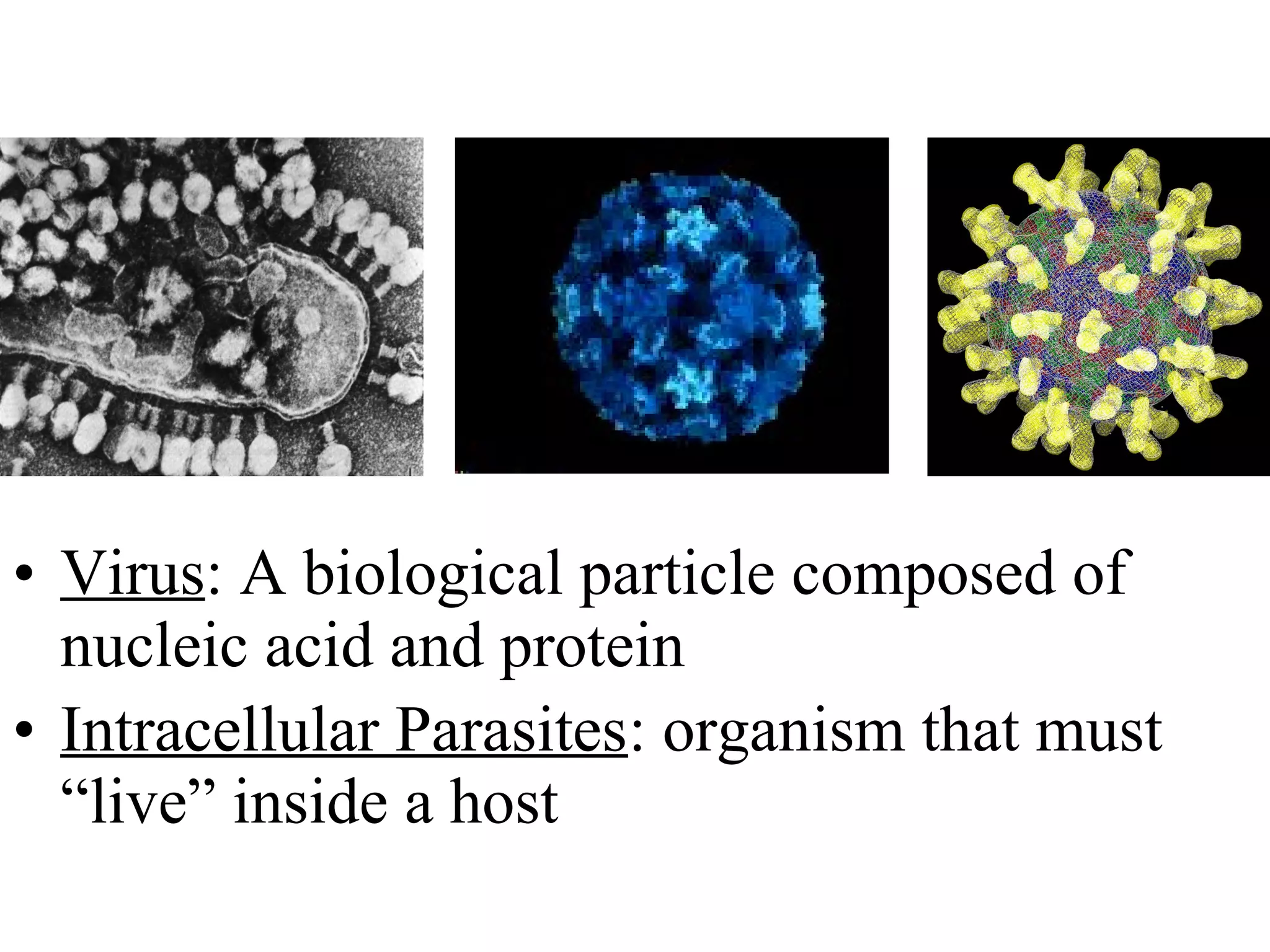
• Virus: A biological particle composed of
  nucleic acid and protein
• Intracellular Parasites: organism that must
  “live” inside a host
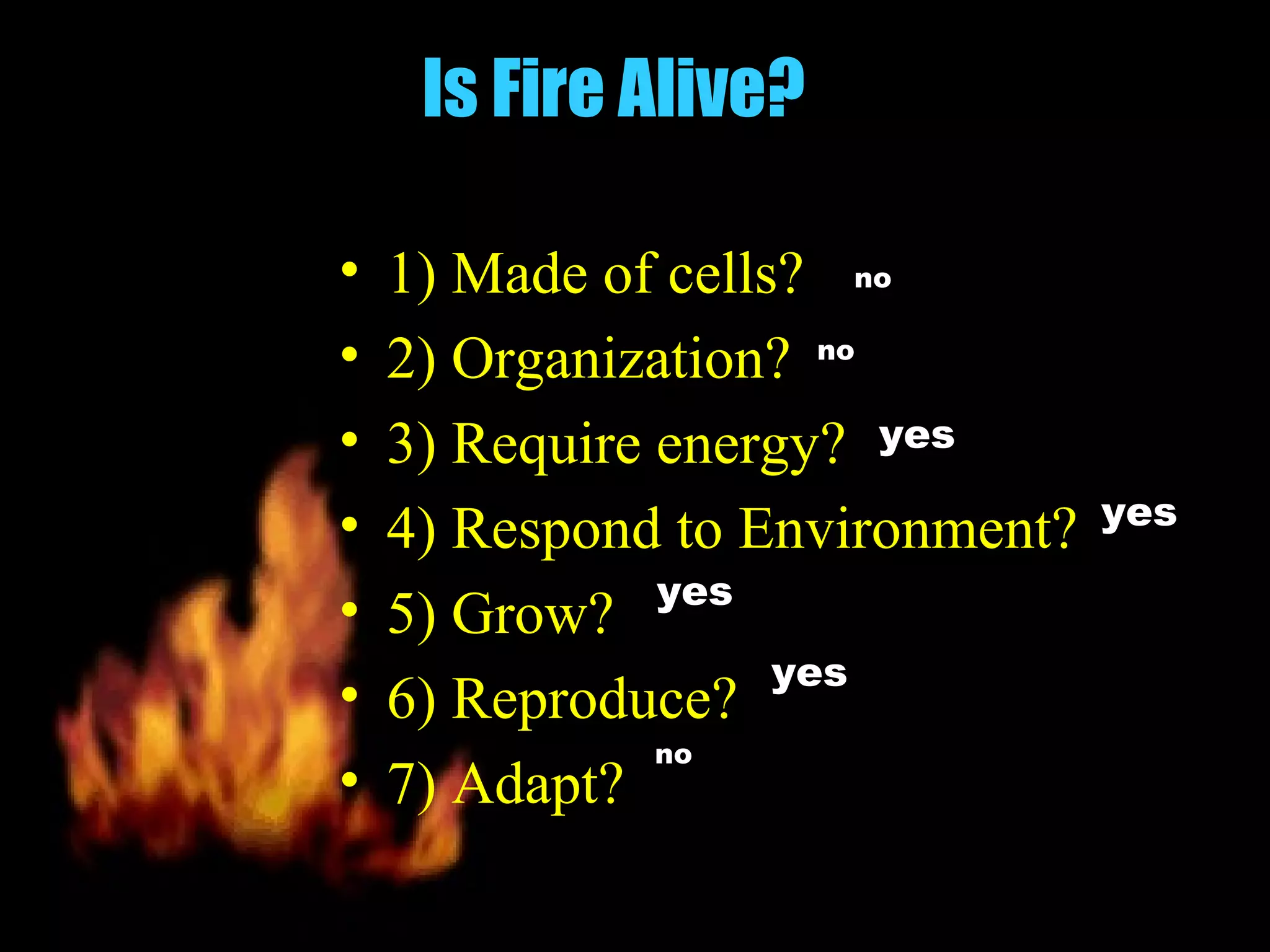
Is Fire Alive?

•   1) Made of cells? no
•   2) Organization? no
•   3) Require energy? yes
•                                yes
    4) Respond to Environment?
               yes
•   5) Grow?
                    yes
•   6) Reproduce?
               no
•   7) Adapt?
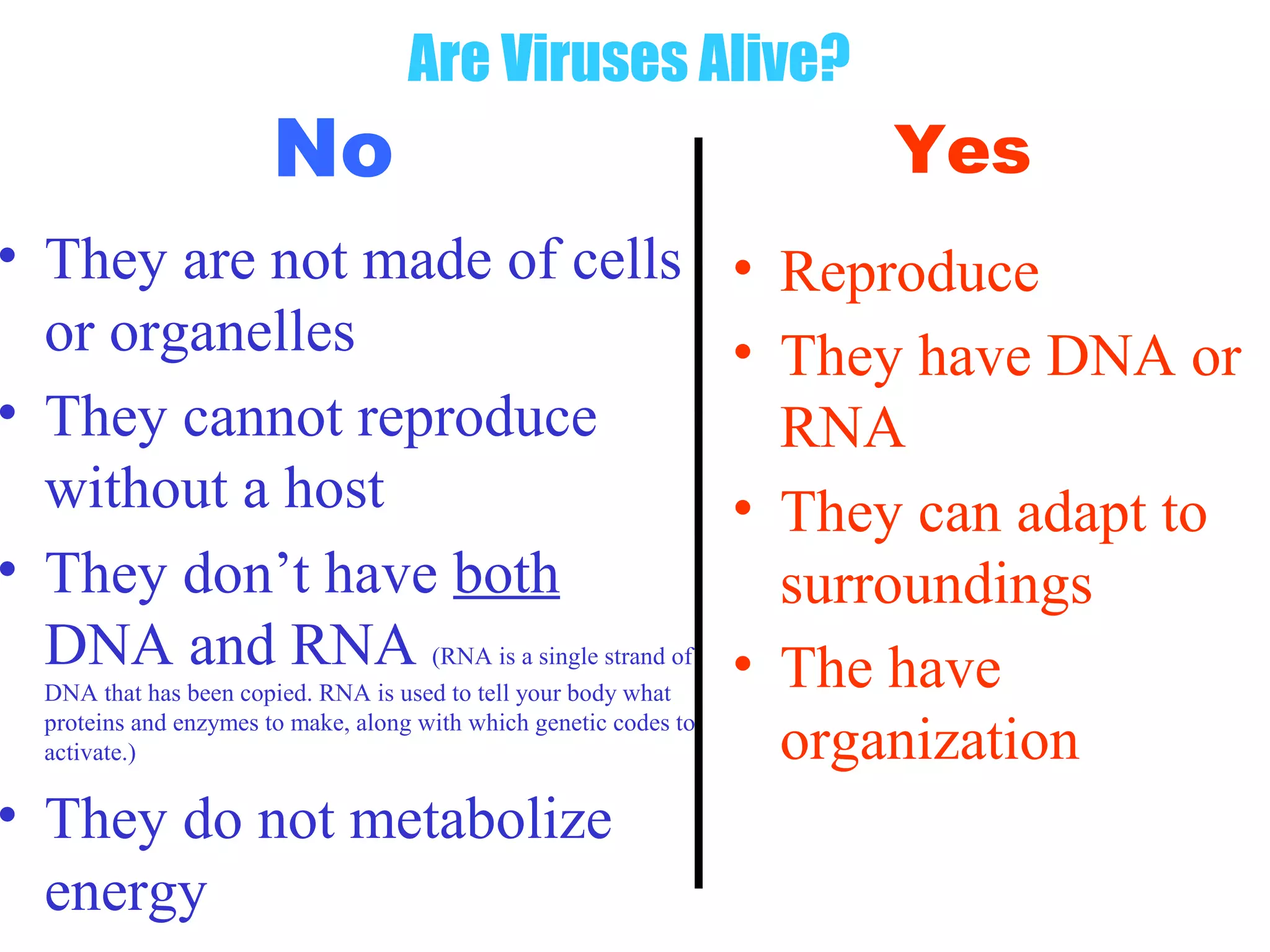
Are Viruses Alive?
                        No                                                Yes
• They are not made of cells                                        • Reproduce
  or organelles                                                     • They have DNA or
• They cannot reproduce                                               RNA
  without a host                                                    • They can adapt to
• They don’t have both                                                surroundings
  DNA and RNA (RNA is a single strand of                            • The have
  DNA that has been copied. RNA is used to tell your body what
  proteins and enzymes to make, along with which genetic codes to
  activate.)                                                          organization
• They do not metabolize
  energy
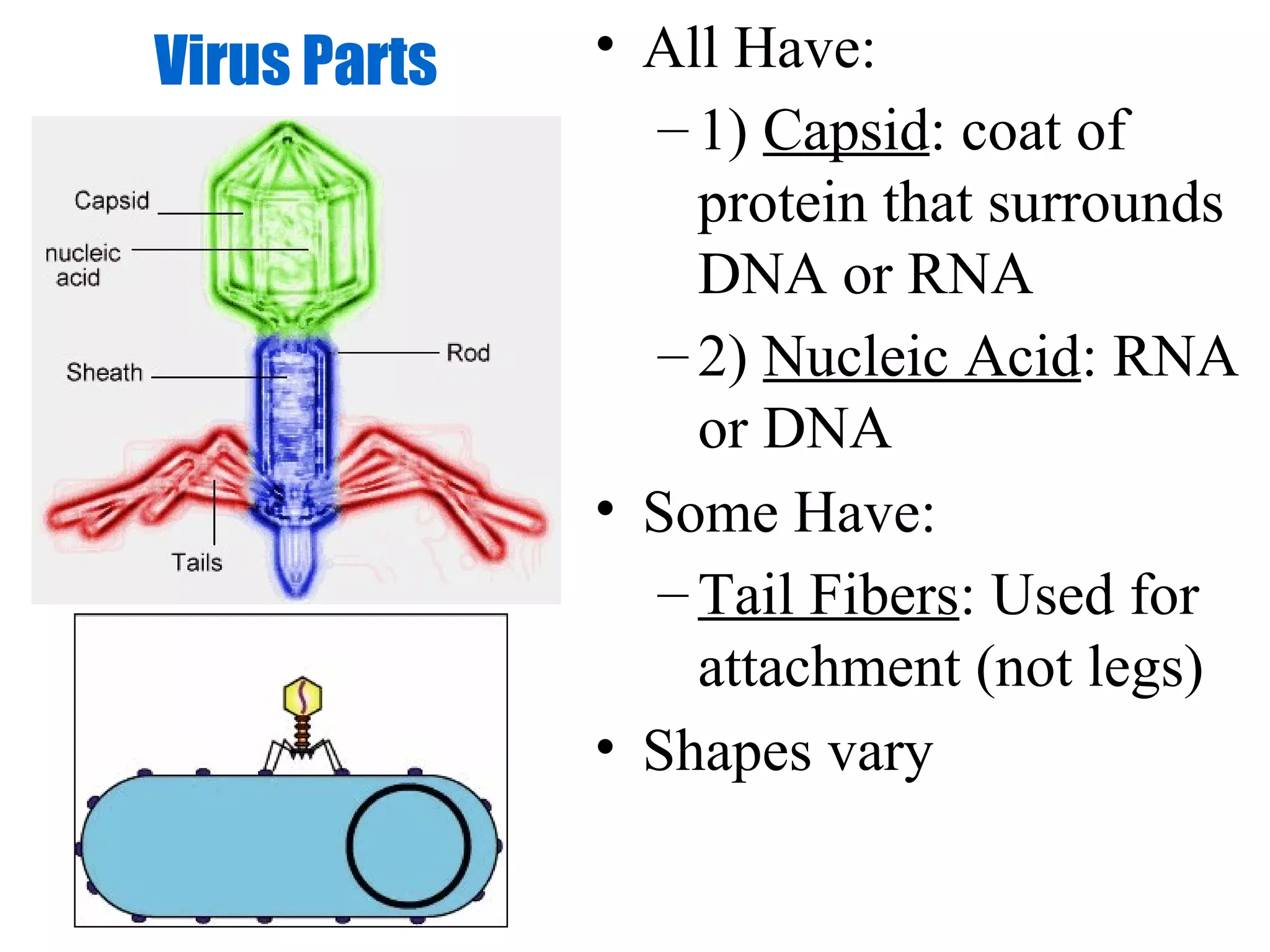
Virus Parts   • All Have:
                – 1) Capsid: coat of
                  protein that surrounds
                  DNA or RNA
                – 2) Nucleic Acid: RNA
                  or DNA
              • Some Have:
                – Tail Fibers: Used for
                  attachment (not legs)
              • Shapes vary
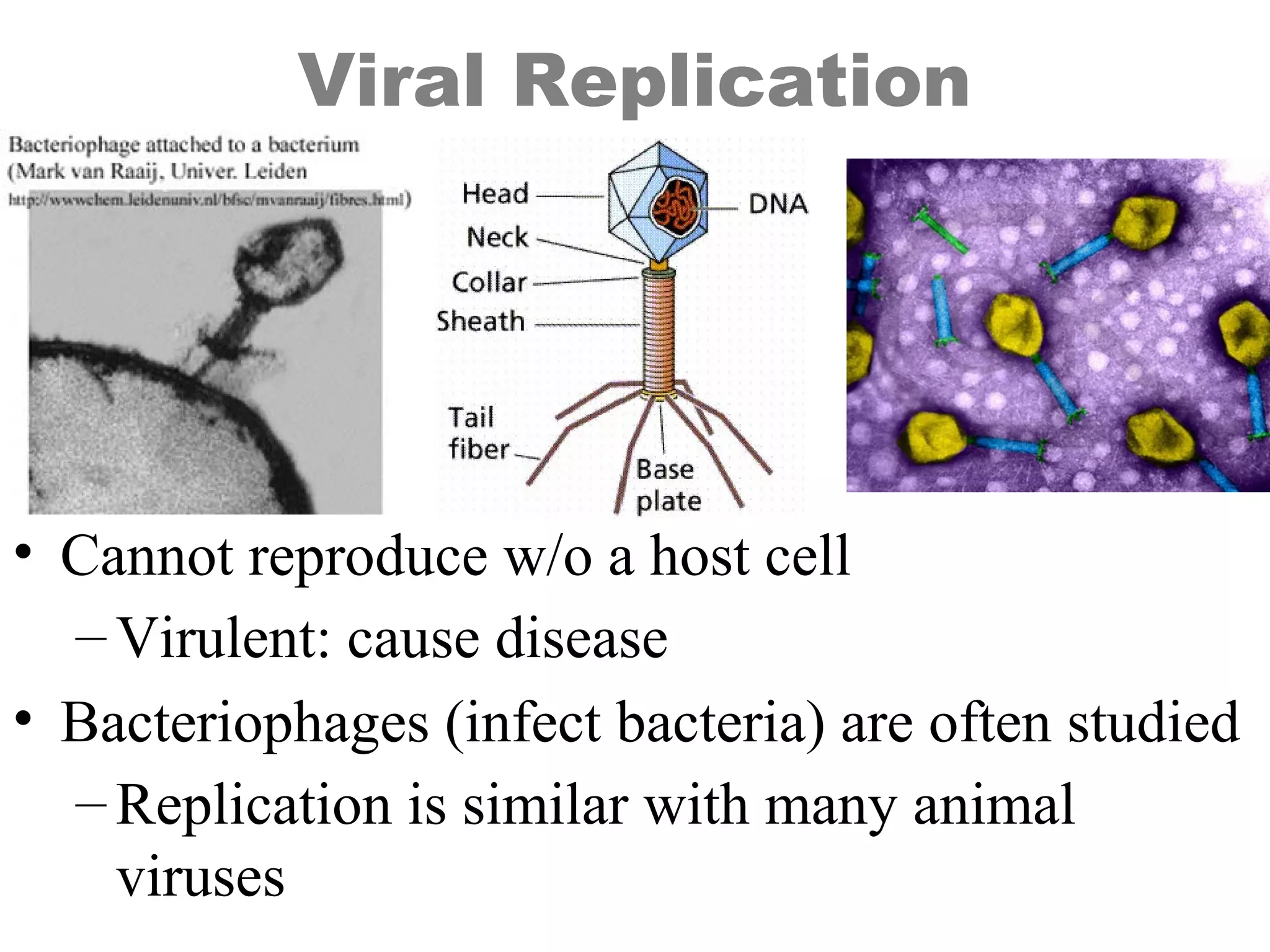
Viral Replication


• Cannot reproduce w/o a host cell
  – Virulent: cause disease
• Bacteriophages (infect bacteria) are often studied
  – Replication is similar with many animal
    viruses
The Lytic Cycle
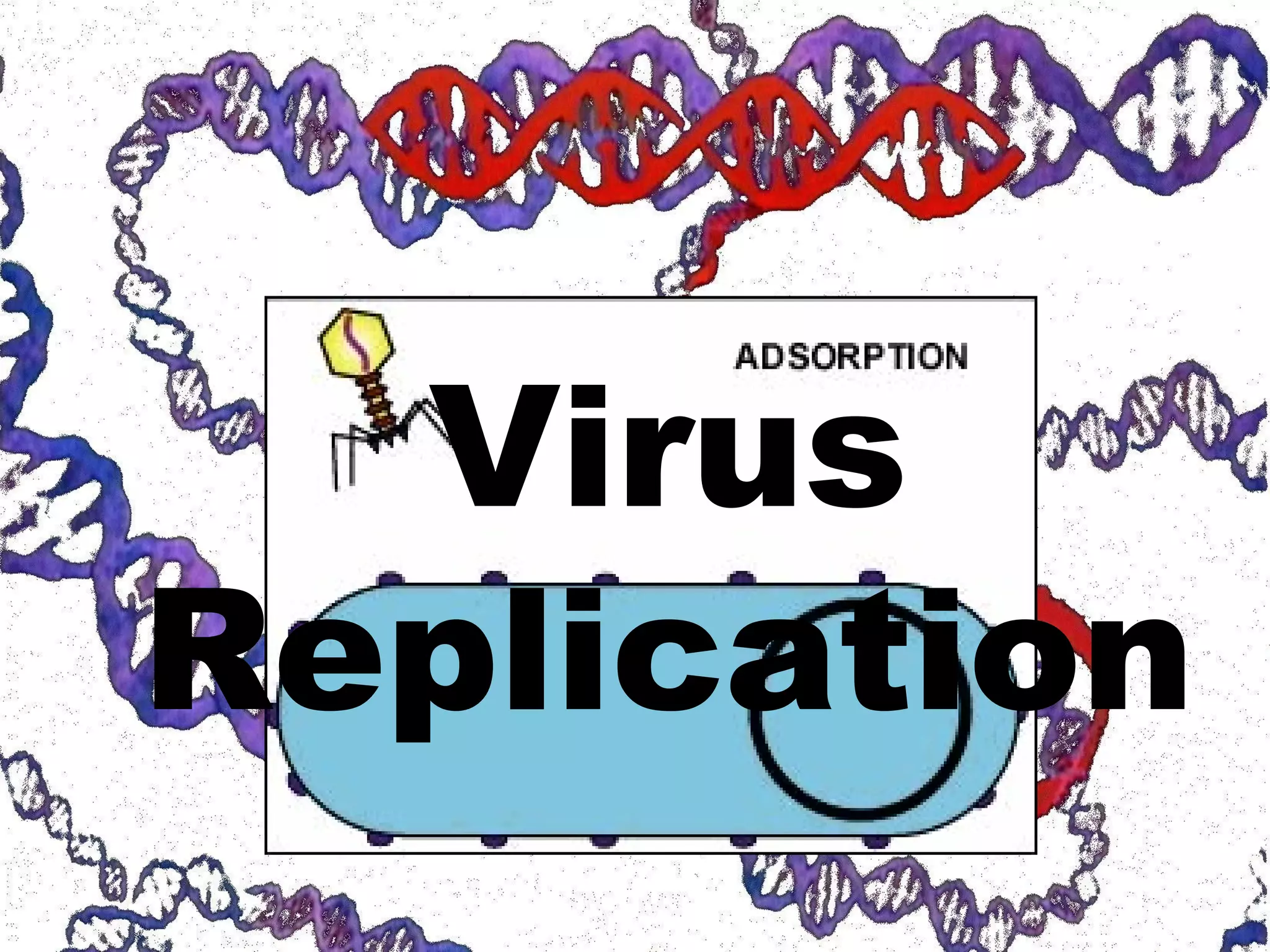
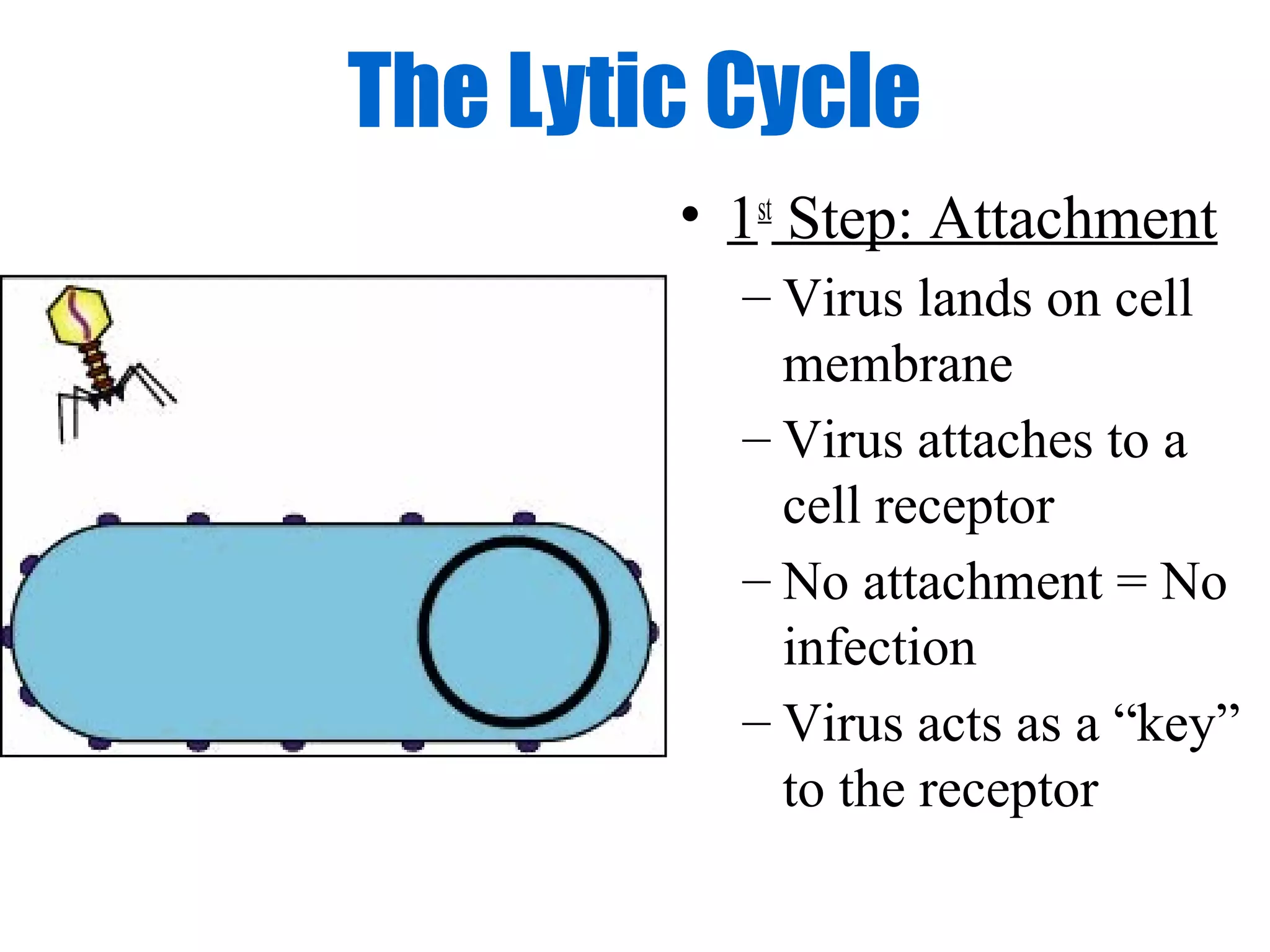
        • 1st Step: Attachment
          – Virus lands on cell
            membrane
          – Virus attaches to a
            cell receptor
          – No attachment = No
            infection
          – Virus acts as a “key”
            to the receptor
The Lytic Cycle


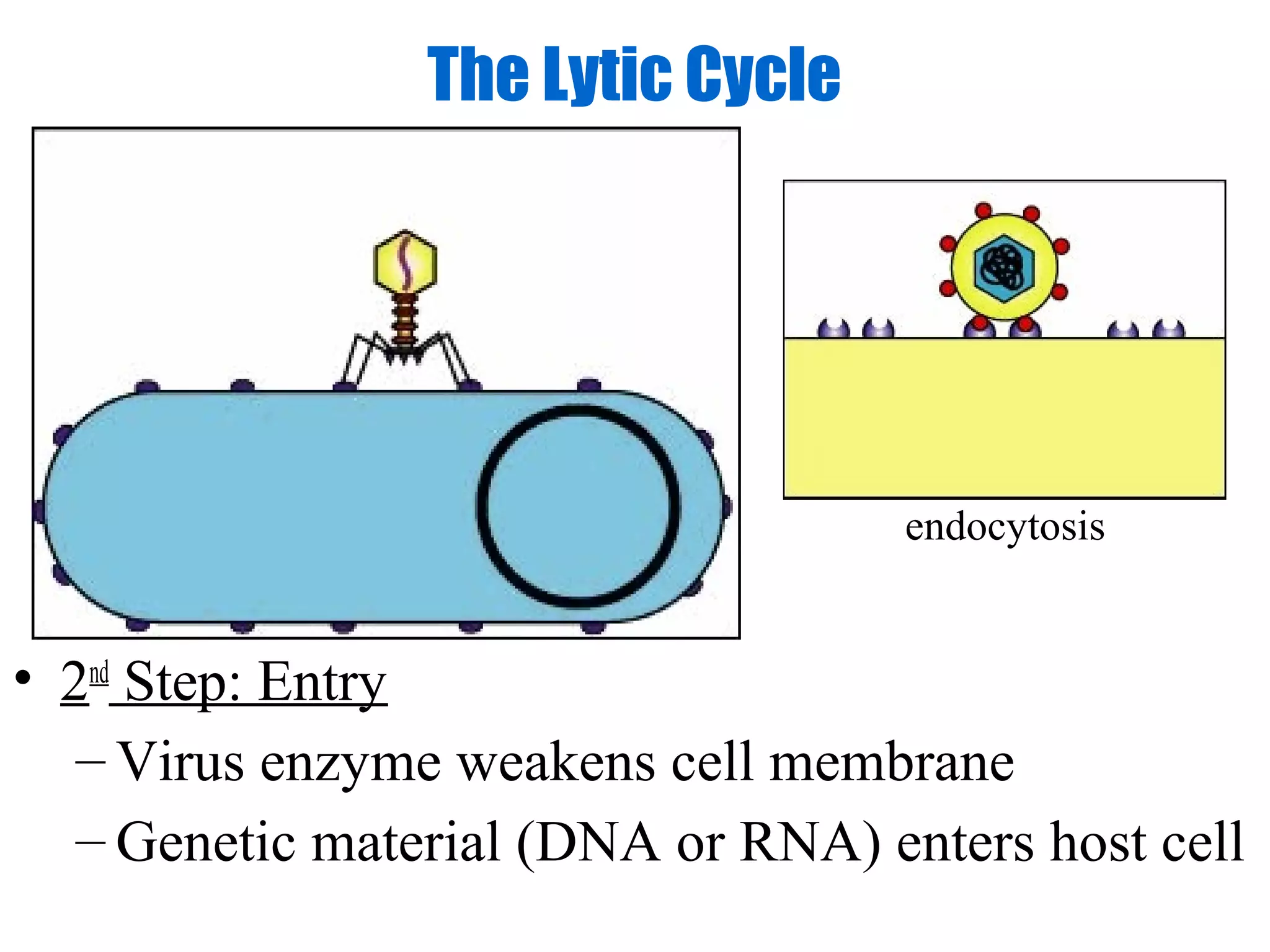
                                    endocytosis


• 2nd Step: Entry
   – Virus enzyme weakens cell membrane
   – Genetic material (DNA or RNA) enters host cell
The Lytic Cycle
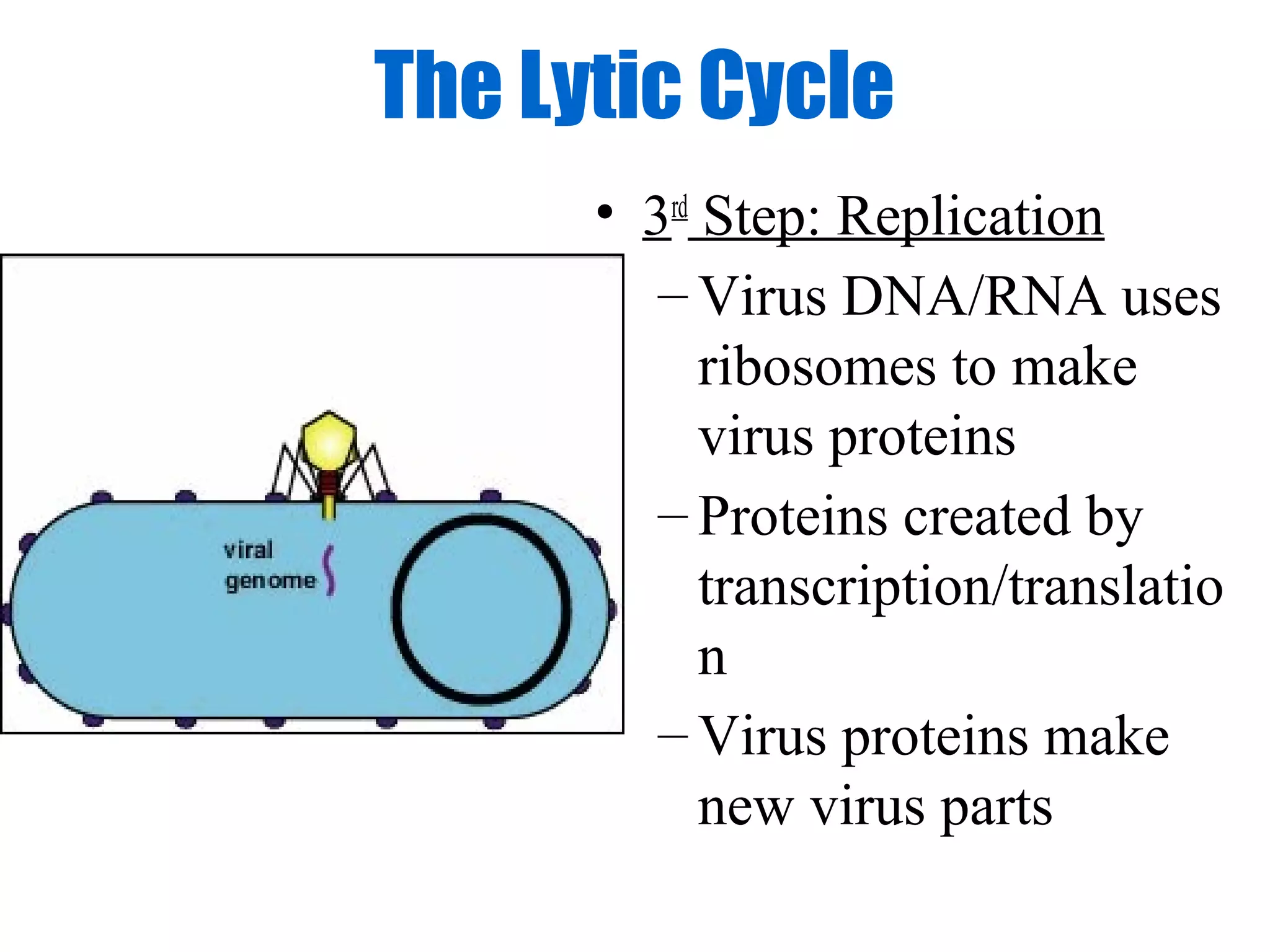
      • 3rd Step: Replication
         – Virus DNA/RNA uses
            ribosomes to make
            virus proteins
         – Proteins created by
            transcription/translatio
            n
         – Virus proteins make
            new virus parts
The Lytic Cycle
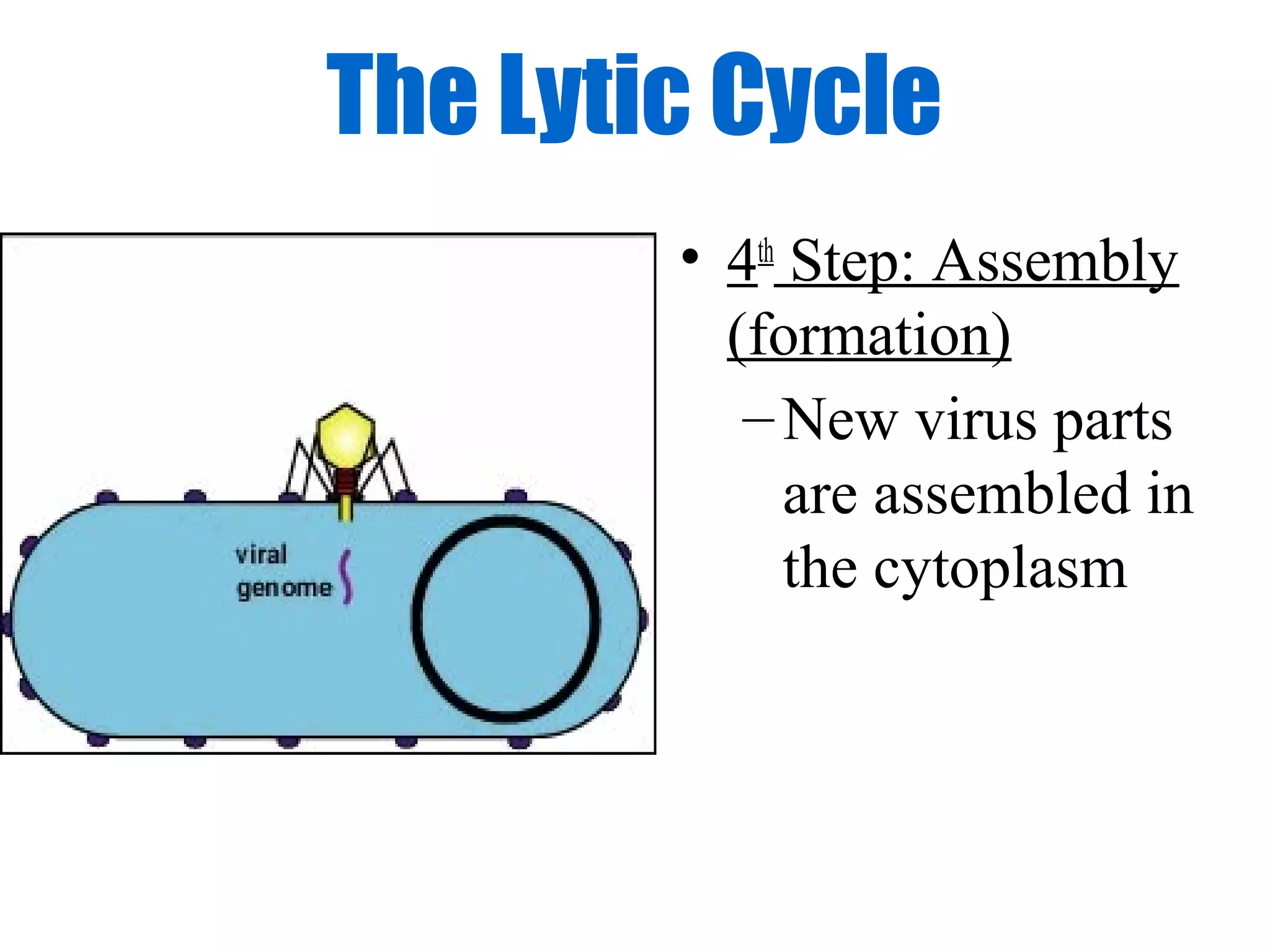
        • 4th Step: Assembly
          (formation)
           – New virus parts
              are assembled in
              the cytoplasm
The Lytic Cycle


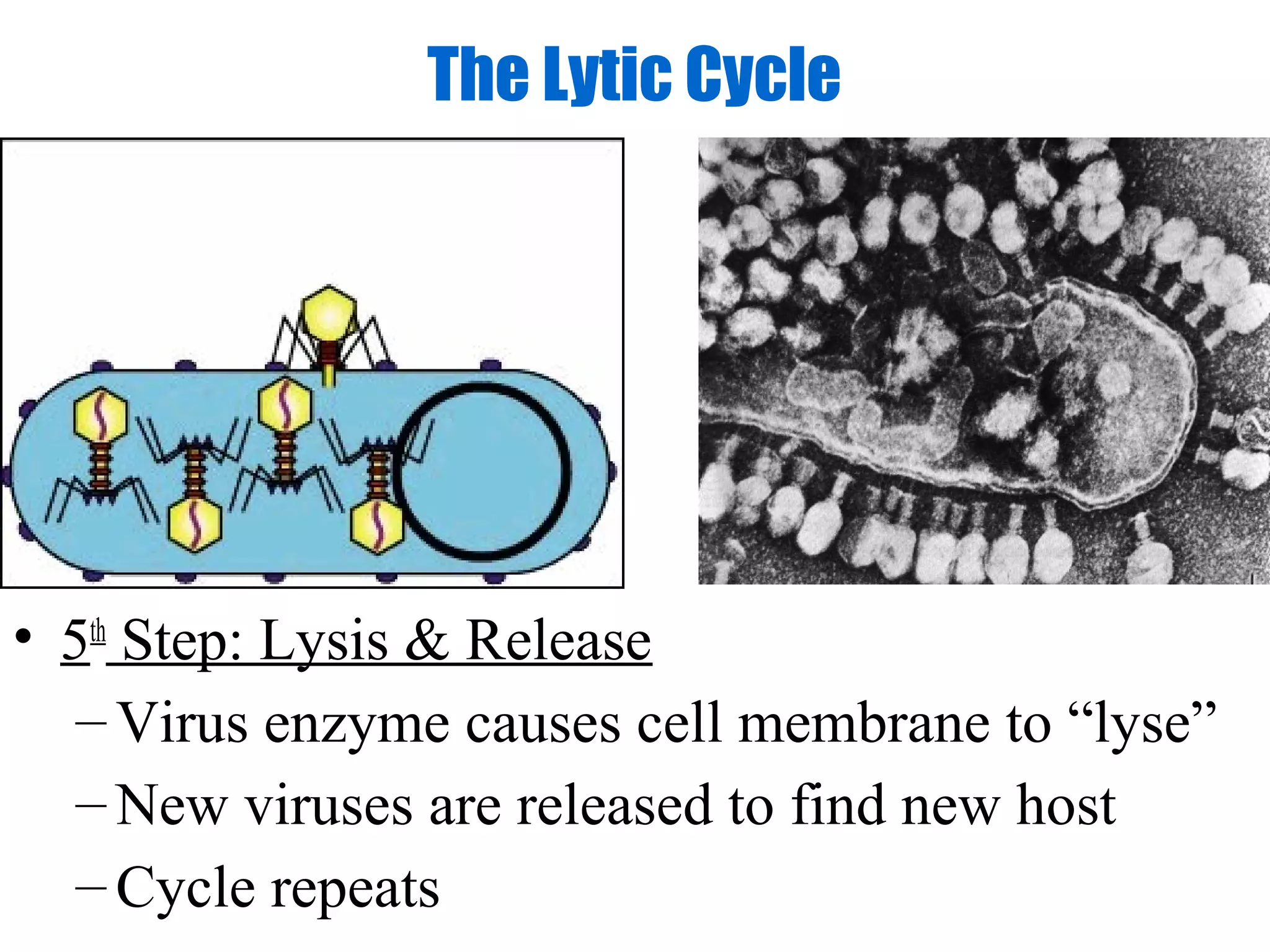
• 5th Step: Lysis & Release
   – Virus enzyme causes cell membrane to “lyse”
   – New viruses are released to find new host
   – Cycle repeats

Lytic cycle

  • 1.
  • 2.
    What is aVirus? • Virus: A biological particle composed of nucleic acid and protein • Intracellular Parasites: organism that must “live” inside a host
  • 3.
    Is Fire Alive? • 1) Made of cells? no • 2) Organization? no • 3) Require energy? yes • yes 4) Respond to Environment? yes • 5) Grow? yes • 6) Reproduce? no • 7) Adapt?
  • 4.
    Are Viruses Alive? No Yes • They are not made of cells • Reproduce or organelles • They have DNA or • They cannot reproduce RNA without a host • They can adapt to • They don’t have both surroundings DNA and RNA (RNA is a single strand of • The have DNA that has been copied. RNA is used to tell your body what proteins and enzymes to make, along with which genetic codes to activate.) organization • They do not metabolize energy
  • 5.
    Virus Parts • All Have: – 1) Capsid: coat of protein that surrounds DNA or RNA – 2) Nucleic Acid: RNA or DNA • Some Have: – Tail Fibers: Used for attachment (not legs) • Shapes vary
  • 6.
    Viral Replication • Cannotreproduce w/o a host cell – Virulent: cause disease • Bacteriophages (infect bacteria) are often studied – Replication is similar with many animal viruses
  • 7.
    The Lytic Cycle • 1st Step: Attachment – Virus lands on cell membrane – Virus attaches to a cell receptor – No attachment = No infection – Virus acts as a “key” to the receptor
  • 8.
    The Lytic Cycle endocytosis • 2nd Step: Entry – Virus enzyme weakens cell membrane – Genetic material (DNA or RNA) enters host cell
  • 9.
    The Lytic Cycle • 3rd Step: Replication – Virus DNA/RNA uses ribosomes to make virus proteins – Proteins created by transcription/translatio n – Virus proteins make new virus parts
  • 10.
    The Lytic Cycle • 4th Step: Assembly (formation) – New virus parts are assembled in the cytoplasm
  • 11.
    The Lytic Cycle •5th Step: Lysis & Release – Virus enzyme causes cell membrane to “lyse” – New viruses are released to find new host – Cycle repeats